Créé par Emilie, le 17 nov. 2026
Votre guide Ryo
Bordeaux, France
The Sleeping Beauty
Parcours audioguidé pour visiter Bordeaux en 1 jour
This walk through the historic heart of Bordeaux immerses you in the city’s story and unmistakable charm, where elegant squares, honey-colored stone façades, and character-filled lanes set the scene. As you follow the route, you’ll come across architectural treasures recognized by UNESCO, stroll along the lively banks of the Garonne River, and pass cafés that capture the very essence of Bordeaux’s art of living. It’s an easy, immersive way to explore the historic center at your own pace, where heritage, culture, and a relaxed way of life come together effortlessly.
Quand partir à Bordeaux ?
Jan.
8°
12
Feb.
8°
10
March
11°
10
April
14°
10
May
17°
10
June
20°
9
July
23°
7
Aug.
23°
7
Sept.
20°
8
Oct.
16°
10
Nov.
11°
11
Dec.
8°
12
The climate is Mediterranean, with mild winters around 5 to 15 °C and hot summers, often ranging from 28 to 35 °C, and sometimes higher during heatwaves. The best times to visit generally span from April to June and from September to October, when temperatures remain very pleasant without reaching the summer peaks, allowing visitors to fully enjoy the cities, villages, and coastline under more comfortable conditions than in mid-summer. As a guideline, cities located south of Lyon, Clermont-Ferrand, or Limoges are considered part of the south, while the others belong to the central/northern regions, which roughly reflects the climatic differences.
Départ conseillé
No need to worry about where to begin! Our tours are designed as a loop, so you can jump in wherever you are. The navigation system and audio-guide will automatically adjust to your location. However, if you happen to be nearby, we do have a preferred starting point: Quincunx square, opposite the Girondins monument
Parking à proximité
METPARK public car park - Chartres avenues - Hôtel de Ville - Quinconces
In Bordeaux, you can park on the street by paying at a parking meter. Everything is computerised, so you don't need to leave a ticket on your windshield. You just need to enter your license plate number at the parking meter. You can also pay via the mobile apps Flowbird and Easypark.
Whether you park in the red or green zone (prices vary slightly), parking is limited to 24 consecutive hours, and you cannot pay for more than 4 hours at a time. Parking is free on Sundays and public holidays, and at night from 7pm to 9am.
À savoir
Please note that Cours Mably and Palais Rohan are closed on Sundays.
The route also passes through Passage Sarget, which is open from 9:00 am to 7:30 pm. If you take the tour outside these hours, please use Rue Martignac instead.
Découvrez 30 lieux d'intérêt pour visiter Bordeaux


4. Parliament Square







What to see in Bordeaux on your 2h30 tour?
This 6.1 km loop takes about 2 hours and 30 minutes and links 29 sights. From the Quinconces esplanade, it follows the Garonne to the Bourse square and its water mirror, crosses old Bordeaux and Saint-Pierre, crosses the Pont de Pierre towards Saint-Michel, climbs back past the cathedral, then reaches the Golden Triangle and the Grand Théâtre before returning to the Quinconces. With the Ryo app in your ears, every façade or bridge tells its story, at your own pace.
Information checked in October 2026 and subject to change.
1 - Quincunx Esplanade
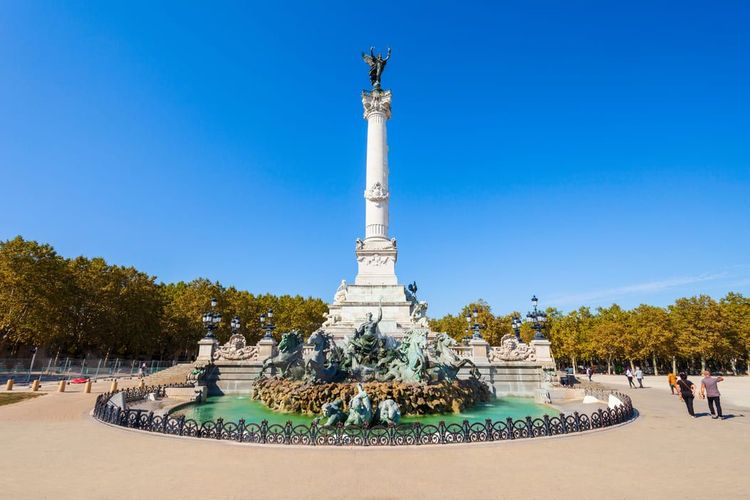
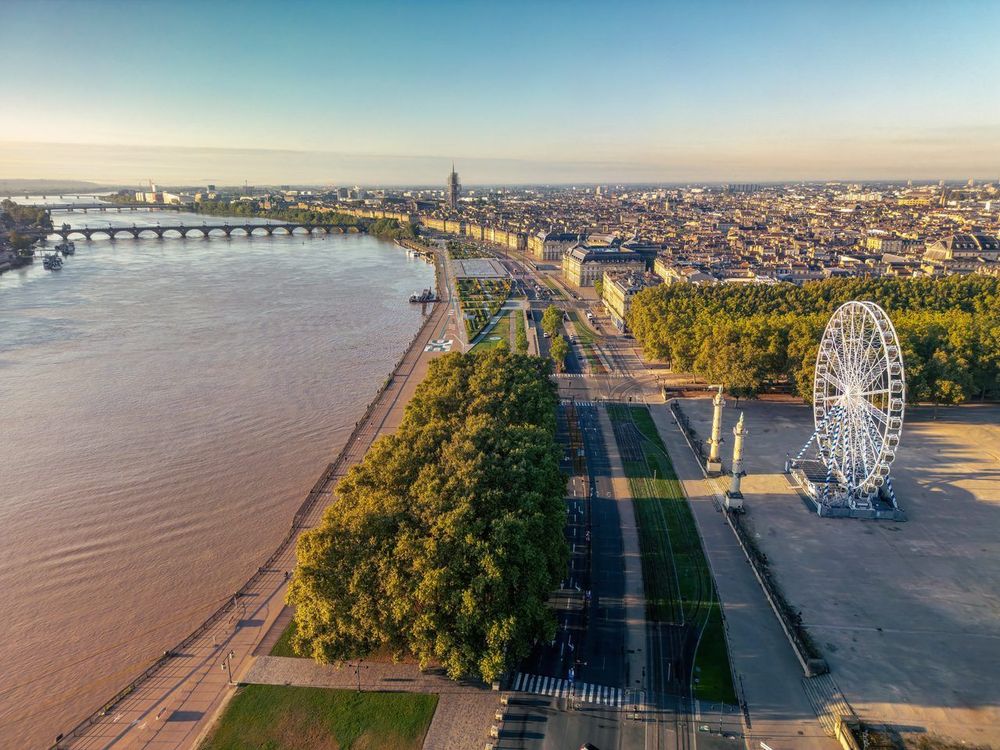
The walk begins on the Quinconces esplanade, the largest square in Europe at 12 hectares. Planted with trees in staggered rows, it has hosted major events since it was created and holds, at its centre, 2 statues of Montaigne and Montesquieu. It stands on the site of the old Château Trompette, a fortress built in the 15th century by Charles VII and later reinforced by Vauban, sold off by Louis XVI and torn down between 1782 and 1816 to make way for this giant square opening onto the Garonne.
Free entry
2 - Rostral columns and a secret bunker
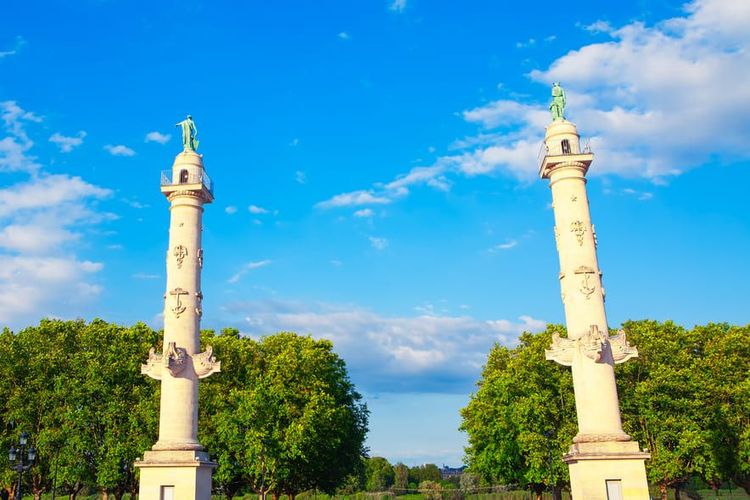
Two neoclassical rostral columns stand facing the Garonne, decorated with navigation symbols in a tradition that honours naval victories. At their top sit 2 bronze statues: Artemis, linked to the moon and to Bordeaux's nickname, the Port of the Moon, and Mercury, symbol of trade. Beneath the square lie the remains of a German bunker from the Second World War, buried after the war and only rediscovered in 1998.
Free entry
3 - Water Mirror and Exchange Square
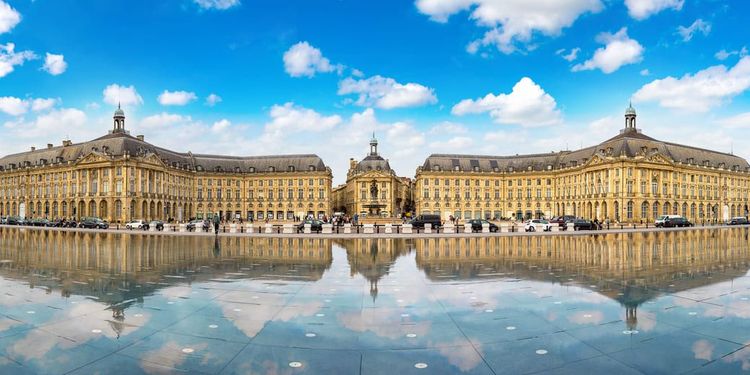
The water mirror, listed as contemporary world heritage, faces the Place de la Bourse, which Victor Hugo once described as half a Place Vendôme by the water. Created by landscape architect Michel Corajoud and inspired by the flooded Saint Mark's Square in Venice, it is the largest water mirror ever built, alternating a mirror effect with a cloud of mist every 15 minutes. The square, built in the early 18th century by architect Jacques Gabriel, is adorned at its centre with the Three Graces fountain.
Free entry · Best late in the day
4 - Parliament Square
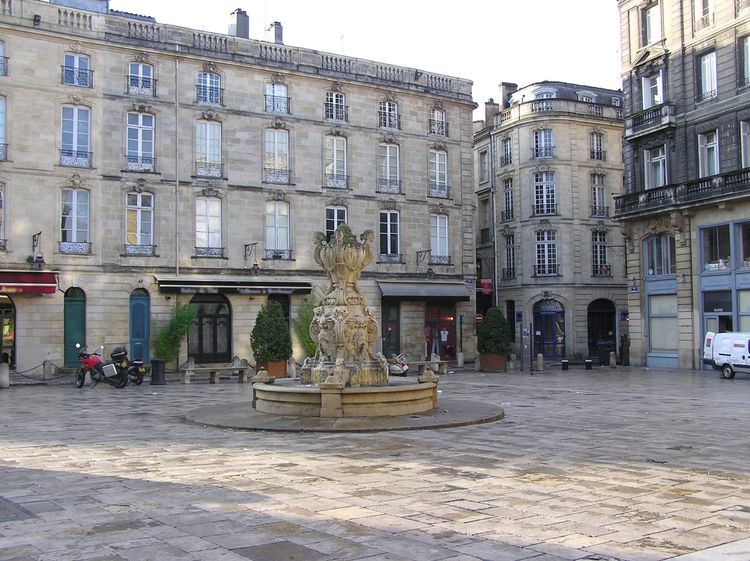
Place du Parlement, with its harmonious architecture reminiscent of Italian squares, was created in 1760 as the Royal Market Square before becoming Parliament Square. Its fountain, made in 1865 by Bordeaux architect Louis-Michel Garros, is decorated with mascarons, the sculpted faces typical of the city, which reflect its history, right down to its darkest chapters linked to the triangular trade and the slave trade, which can be explored further at the Musée d'Aquitaine.
Free entry · Best in the evening
5 - Saint-Catherine Street
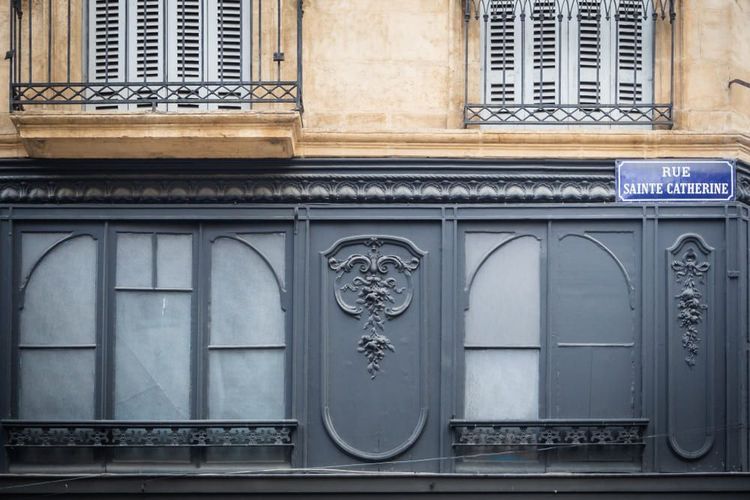
Rue Sainte-Catherine, 1,250 metres long, is the longest pedestrian shopping street in Europe, running from the opera house down to Place de la Victoire. Trade has been rooted here for centuries: millers and butchers were already selling their goods under the old monarchy. During the Fronde uprisings, it even turned into a battlefield. Since 2007, it has been part of the areas of Bordeaux listed as a UNESCO World Heritage Site.
Free entry
6 - Camille Jullian square
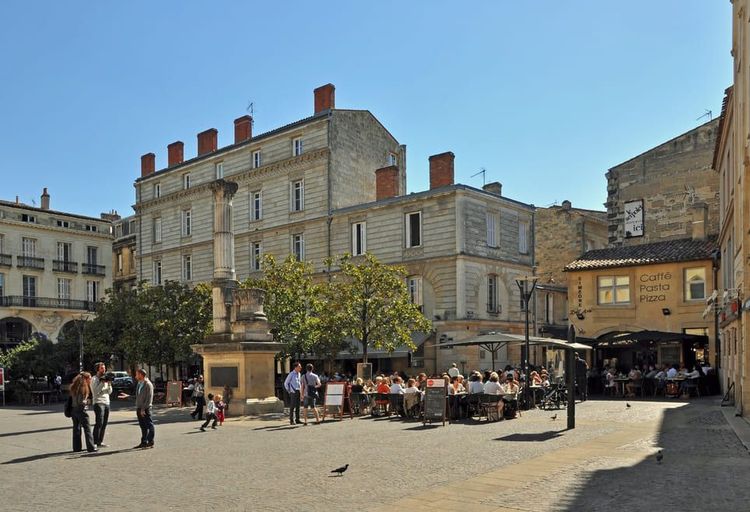
Place Camille-Jullian and Rue du Pas-Saint-Georges form a lively hub of Bordeaux social life, popular with students and artists. The Utopia cinema, housed in a former deconsecrated church, was in turn a cannery and then a naval school for orphans before becoming an arthouse screen. The square honours the historian Camille Jullian, and its central monument is built from ancient stones found in 1921, remnants of the old Roman city wall.
Free entry · Best in the evening
7 - Saint Peter Church
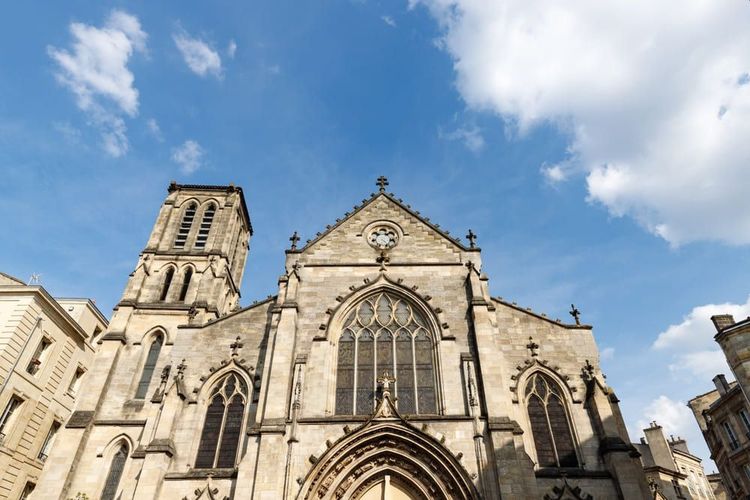
The forecourt of Saint-Pierre church marks the site of Bordeaux's old Gallo-Roman port, where excavations in 1832 uncovered a bronze statue of Hercules, now on display at the Musée d'Aquitaine. The church itself, built in the 14th and 15th centuries and later remodelled in the 19th, has kept its original flamboyant gothic portal, along with a 17th-century wooden pietà and fine ribbed vaults inside.
Free entry
8 - Gassie Tower Pathway
This little-known passage sits on the site of a 3rd-century defensive tower, built after Burdigala was sacked and burned by barbarian invaders in 276. The city, which until then had no walls at all, rebuilt itself on the model of a fortified castrum. The small mound of stones visible here is one of the few remaining traces of this first Roman rampart.
Free entry
9 - Palace Square
Place du Palais, charming and pedestrian, takes its name from the old Palais de l'Ombrière, the vanished medieval residence of the dukes of Aquitaine, where the Bordeaux parliament later settled. In 1575, that parliament freed the enslaved people aboard a ship that had reached the port, declaring that France, mother of liberty, allowed none, even though slavery was legalised a few years later. The palace, later used as a prison and too damaged by fires, was demolished in 1800, opening up this pretty square lined with terraces.
Free entry · Best in the evening
10 - Cailhau Gate
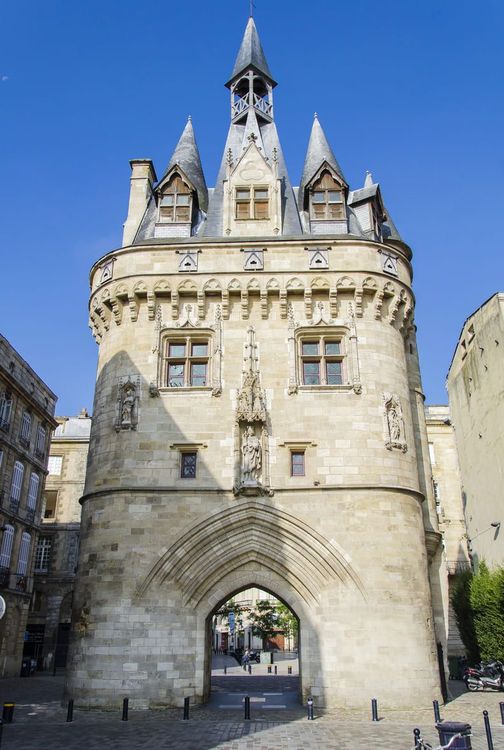
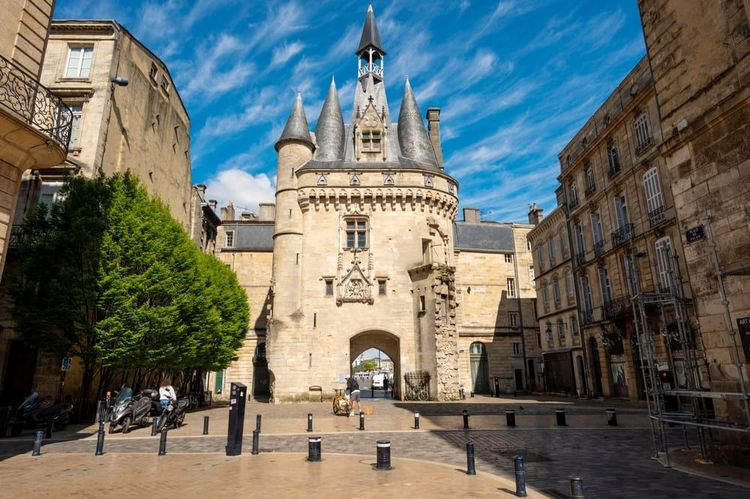
Porte Cailhau, with the look of a small castle, was built in the 15th century to celebrate King Charles VIII's victory. It combines defensive features, a portcullis, a crenellated gallery, a stone drop-hole, with decorative ones, carved windows, dormers, a statue of the king, in a single building that is both fortified gate and triumphal arch. Visiting it, which costs a small fee and needs no booking, reveals how those who once guarded the city lived and defended it.
Paid entry (about €7)
11 - Garonne view
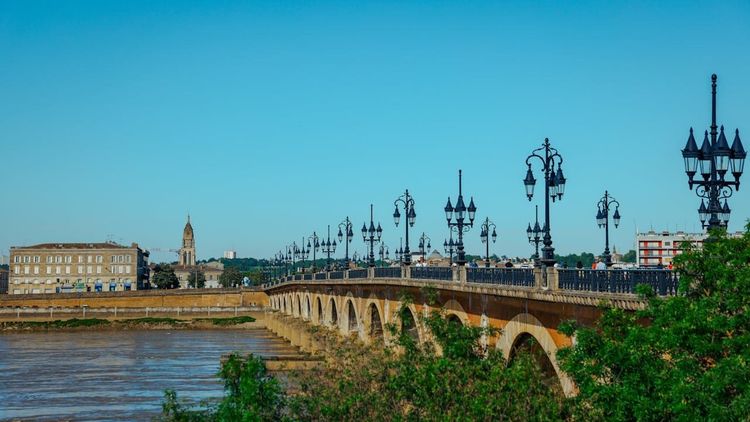
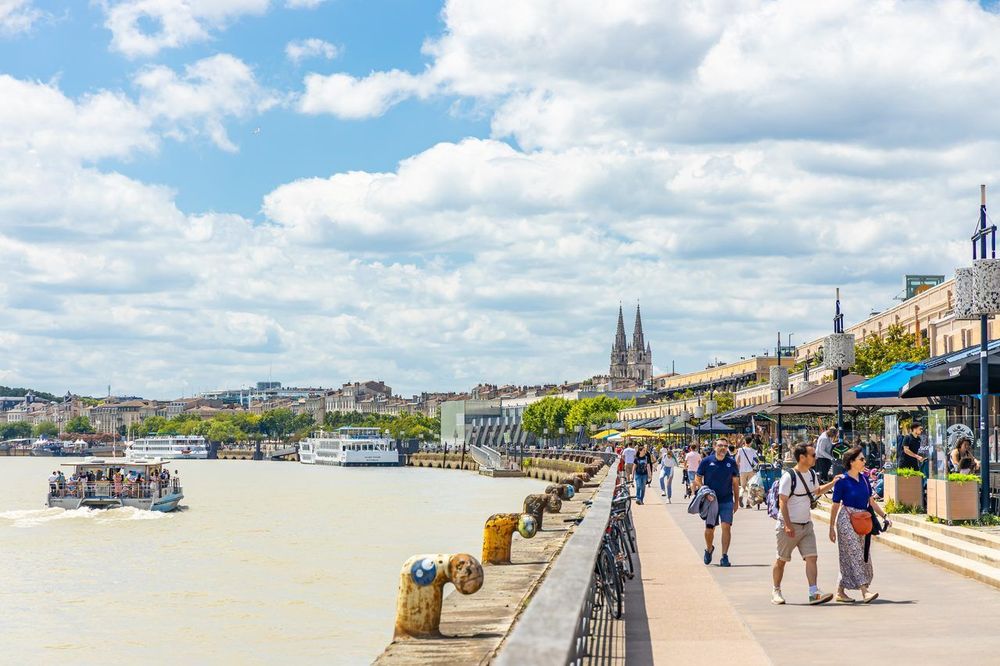
Here is a fine view of the Garonne and the Pont de Pierre. Rising in Spain, this river runs for 529 km to the Atlantic Ocean and was once a vital trade route: thanks to it, Bordeaux became, in the 18th century, the leading port of France and the second busiest in the world after London. Flat-bottomed boats called gabarres once transferred their cargo here onto bigger ships, until the bridge was built in 1822, ending maritime traffic upstream of the city.
Free entry · Best late in the day
12 - Martin Luther King walk
A request from the American consulate explains why this riverside promenade carries the name of Martin Luther King, the non-violent pastor who fought tirelessly for the equality of African Americans before being assassinated in Memphis in April 1968. The youngest-ever winner of the Nobel Peace Prize, he remains tied to his 'I have a Dream' speech, still remembered today.
Free entry
13 - The Stone Bridge
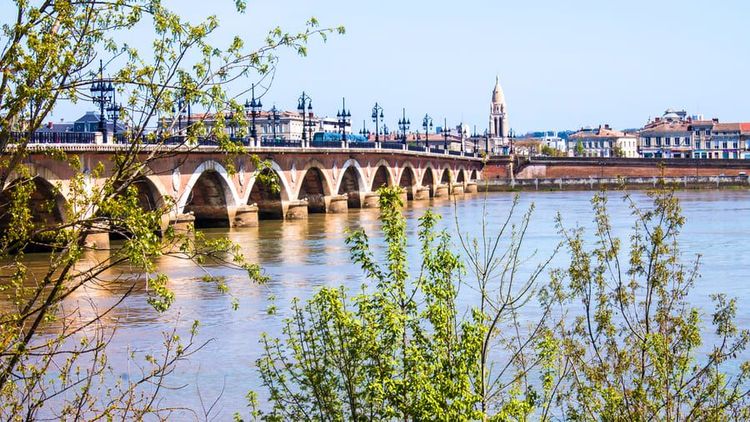
The Pont de Pierre was the first bridge ever built in Bordeaux, financed by a company that promised shareholders a quick return thanks to tolls. Its 17 arches are said to match the 17 letters of 'Napoléon Bonaparte', even though 2 arches were actually dropped from the original plan for lack of budget. Its construction allowed the city to expand onto the right bank for the first time, towards the alternative district of La Bastide.
Free entry
14 - Burgundy Gate
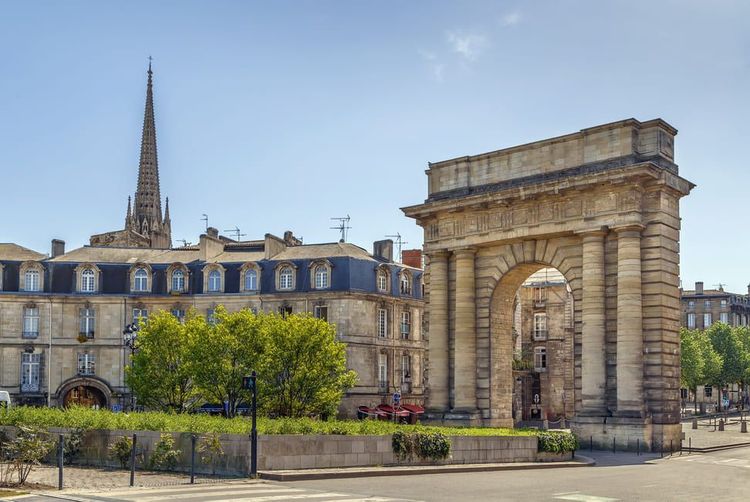
Porte de Bourgogne marks the entrance to Bordeaux for those arriving from Paris, on Place Bir-Hakeim. Named in honour of the Duke of Burgundy, grandson of Louis XV who never actually became king, it was built in the mid-18th century as part of intendant Tourny's grand plan to encircle the city with tree-lined promenades and squares framed by gates. It was even briefly renamed Porte Napoléon, for the Emperor's visit in 1808.
Free entry
15 - Saint Michel Basilica
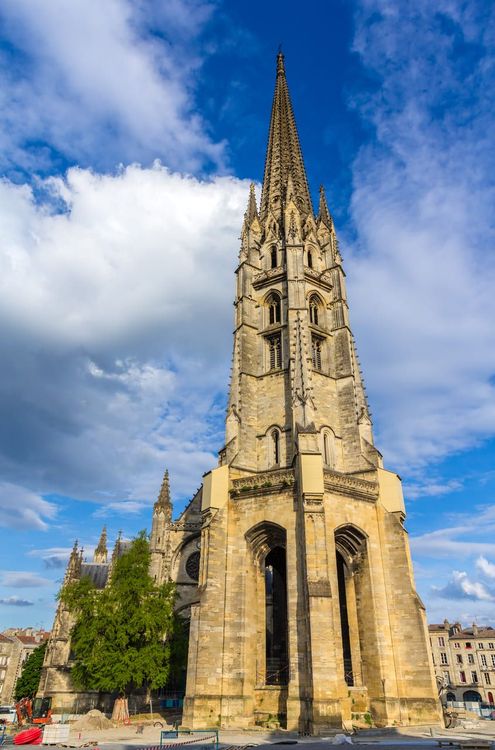
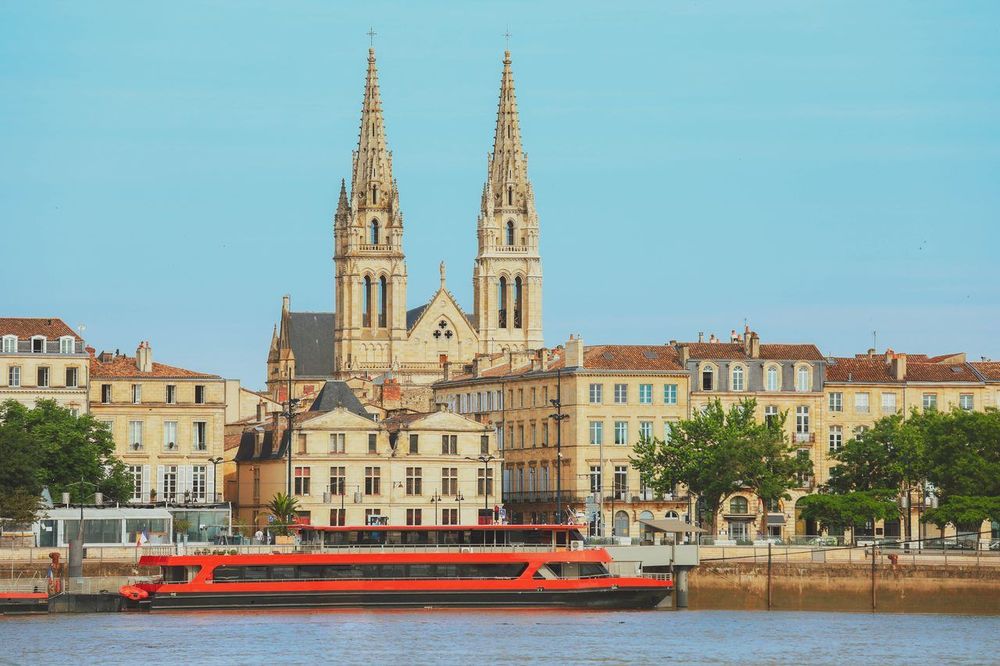
Basilique Saint-Michel, a UNESCO World Heritage site, rose over the 15th and 16th centuries in flamboyant gothic style, a stop along the Camino de Santiago pilgrim route. Its bell tower, detached from the main building so as not to weaken its foundations on marshy ground, is the 3rd tallest in France. The crypt, which long held well-preserved mummies that fascinated writers and visitors alike, was emptied in 1979: the remains now rest in the Chartreuse cemetery.
Free to see from outside
16 - The Big Bell
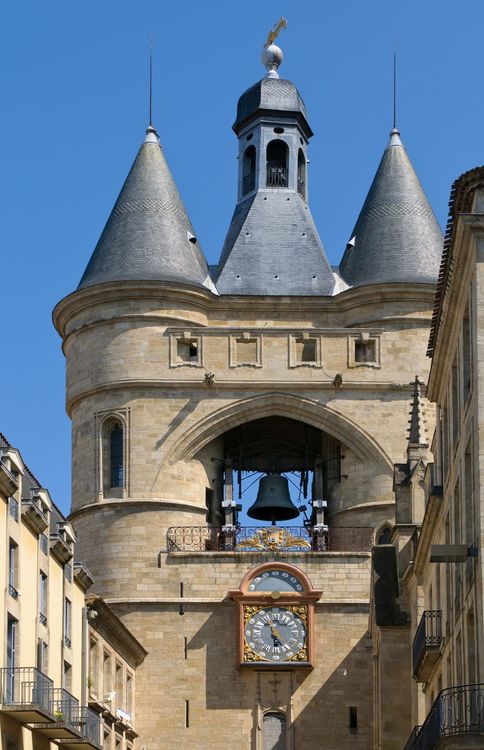
The Grosse Cloche, one of the oldest belfries in France, rose in the 15th century where an older 13th-century gate once stood, through which pilgrims heading to Compostela used to pass. Its bell, named Armande Louise and cast in 1775, weighs more than 7 tons and still rings for major celebrations. A symbol of the city's liberties, featured on its coat of arms, it was even taken down by Henri II in 1548 to punish a revolt, before returning to the great relief of the people.
Free to see from outside
17 - Panoramic view from the Victor Hugo car park
This car park holds a double surprise: a Jaguar embedded in the wall, looking as if it might come crashing down onto the street, and, on its top level, free to reach, a sweeping view over the rooftops of Bordeaux. An unusual detour, far from the crowds, offering another perspective on the city before heading on towards the Musée d'Aquitaine.
Free entry
18 - Aquitaine Museum
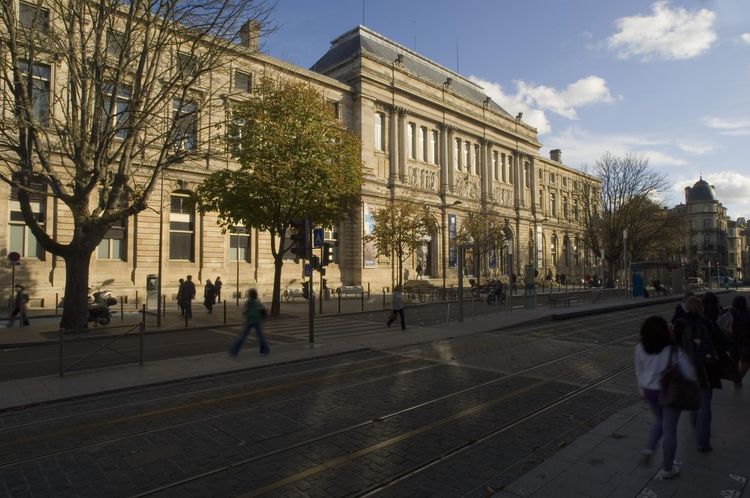
The Musée d'Aquitaine, housed on the site of the old Feuillants convent destroyed during the Revolution, traces the history of Bordeaux and its region since prehistory. Visitors can see the famous Venus of Laussel, Iron Age artefacts and Montaigne's cenotaph, as well as, since 2009, rooms devoted to the city's role in the slave trade, an honest and necessary reckoning with a painful past.
Paid entry (about €6)
19 - Pey Berland tower
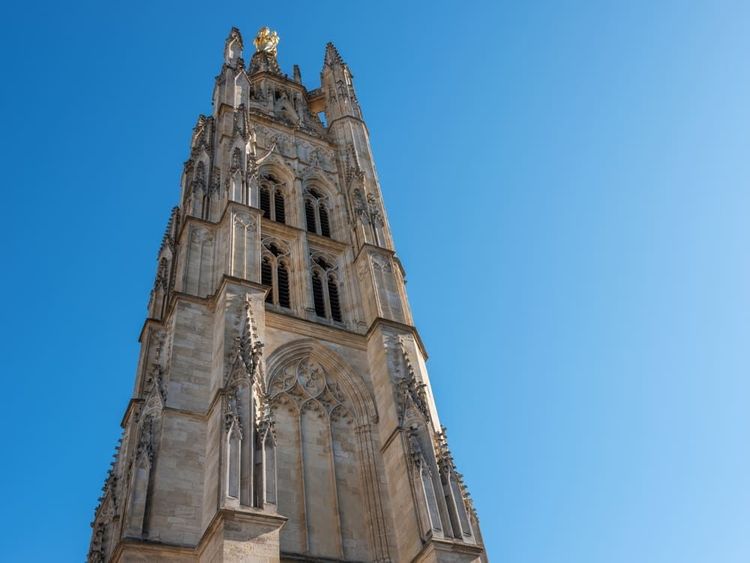
The Pey-Berland tower, the cathedral's detached bell tower, built apart so as not to weaken its foundations on marshy ground, was begun in 1440 by the archbishop whose name it bears. Designed to hold 4 bells, it had to wait nearly 2 centuries before receiving them, as Bordeaux ended up on the losing side at the close of the Hundred Years' War. At the top, a gilded statue of Notre-Dame watches over the city, and 2 terraces, at 40 and 50 metres, offer a striking panorama.
Paid entry (about €9)
20 - Saint-André cathedral
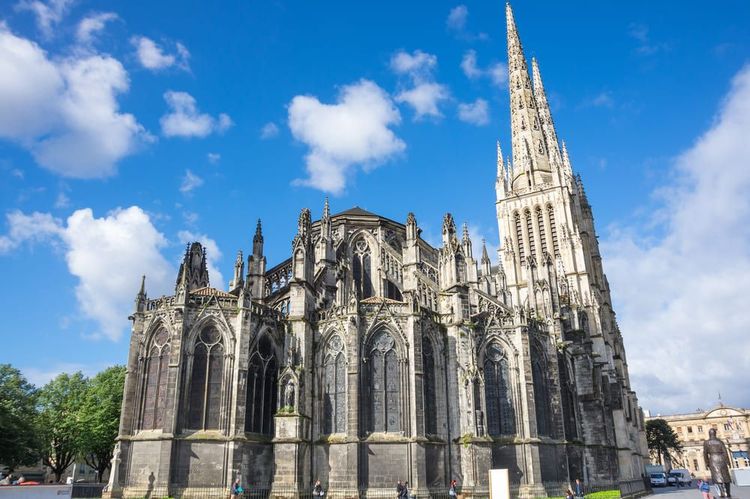
Cathédrale Saint-André, seat of the archdiocese of Bordeaux, traces its origins to a church founded in the 3rd century, destroyed by barbarian invasions and later rebuilt and consecrated in 1096. In 1305, its archbishop became Pope Clement V, the first of the Avignon popes, who funded its transformation into a gothic cathedral. Within its walls was celebrated the marriage of Aliénor of Aquitaine to the future Louis VII. Listed by UNESCO since 1998, it remains the city's grandest religious building.
Free entry
21 - Rohan palace
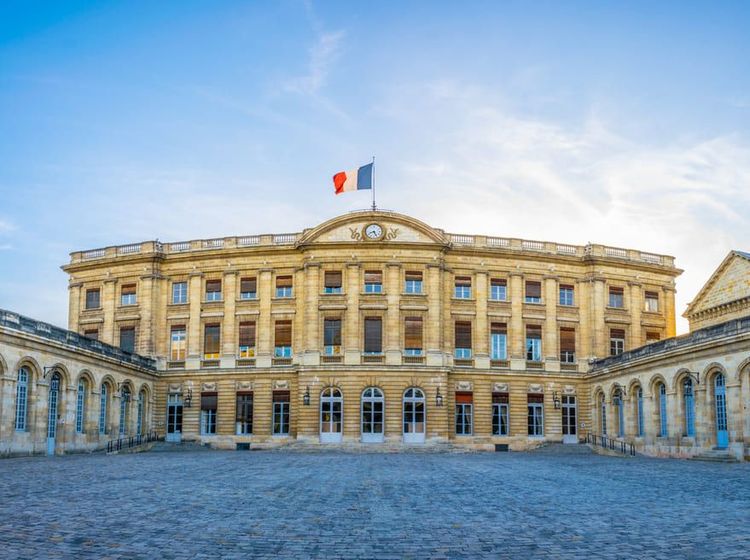
Palais Rohan was built in the 18th century for the archbishop of Bordeaux, the Prince de Rohan. Turned into a prefecture and later a seat of imperial and royal power through successive regimes, it has since housed Bordeaux's city hall. Behind its classical façade hides one of the finest staircases in France, regarded as a masterpiece of stone-carving, which can be explored in detail through guided tours offered by the tourist office.
Free to see from outside
22 - Dijeaux gate
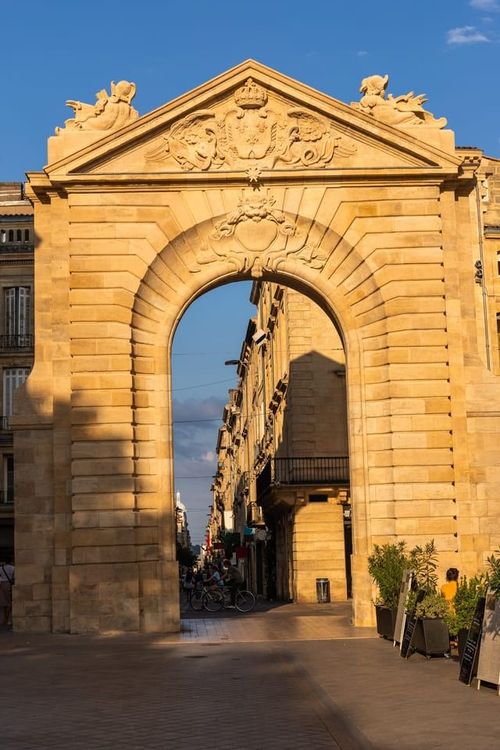
Porte Dijeaux leads to Place Gambetta, once home to the guillotine and to Bordeaux's kilometre-zero marker. Heir to a long line of gates that followed the city walls as they expanded, it already stood on this spot under the name Porta Jovia in Roman times. Rebuilt in 1746 to give the city a more handsome face, it had earlier withstood a 12-day siege during the Fronde uprisings, and gained heritage status in 1921.
Free entry
23 - CGR Cinema
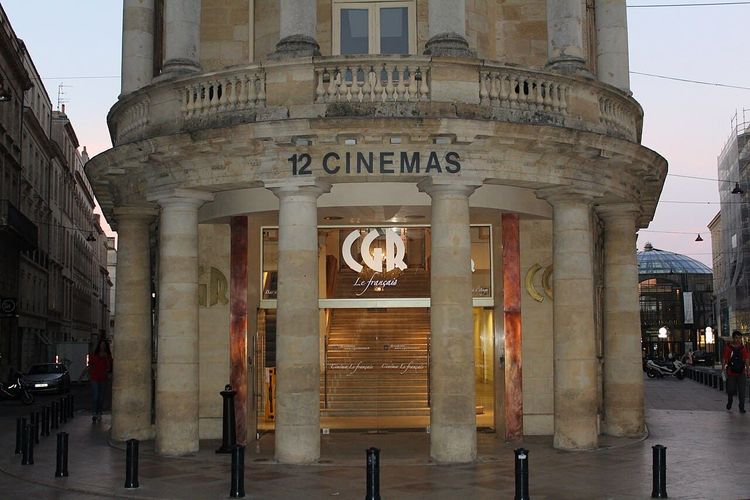
Right at the foot of Rue Montesquieu sits one of Bordeaux's most beautiful cinemas, a former theatre raised in a pointed shape in 1801 by architect Dufart, a collaborator of Victor Louis. Destroyed by fire in 1855 and later rebuilt, it hosted some of the earliest cinematograph screenings. Visitors today step inside to admire the painted ceiling and the fine staircase leading upstairs, in a setting that has stayed true to the 18th century.
Free entry
24 - The Great Men Square
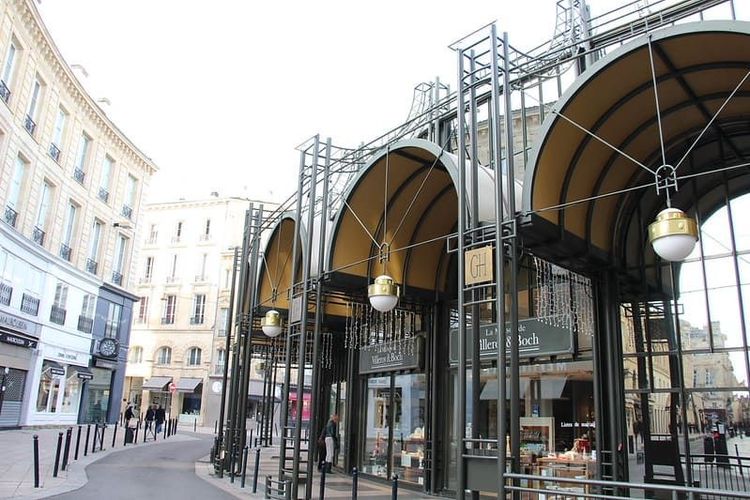
Place des Grands Hommes, circular in shape, takes its name from the streets converging on it, Montesquieu, Voltaire, Diderot, Rousseau and Montaigne. Until 1960 it held a majestic covered market, now turned into a shopping arcade at the heart of the Golden Triangle. Nearby stands the restaurant Le Chapon Fin, the first establishment ever to earn three Michelin stars, which once welcomed kings, princes and leading artistic figures drawn by its cuisine.
Free entry
25 - Notre Dame church
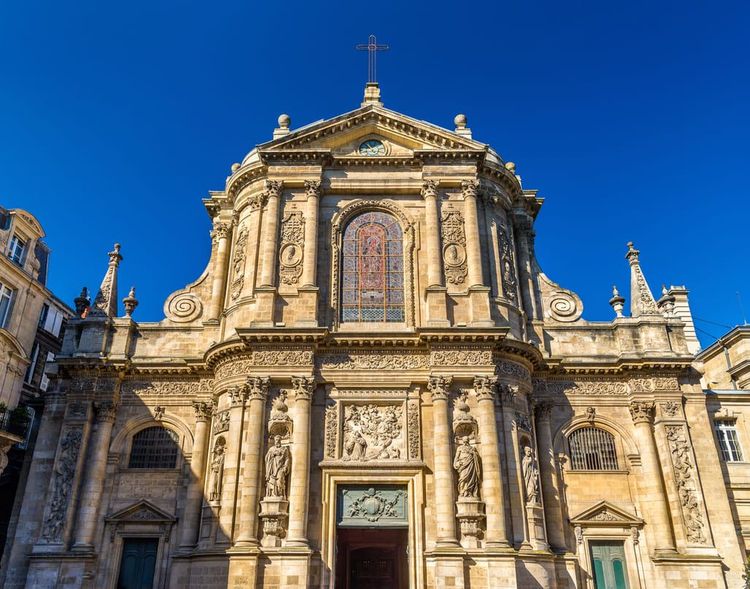
Église Notre-Dame, in baroque style, draws inspiration from the Gesù church in Rome and is the only surviving trace of the Dominican convent founded in the 13th century. Razed by Louis XIV in 1675 and rebuilt 10 years later in flamboyant style, it hosted the funeral of the painter Goya in 1828, who died in exile in Bordeaux and whose skull mysteriously vanished before his body was returned to Madrid. The nearby Cour Mably, a former cloister, now hosts cultural events.
Free entry
26 - The Golden Triangle
The route now enters the Golden Triangle, so named for its exceptional concentration of fine architecture and monuments. The Allées de Tourny, Cours Georges-Clemenceau and Cours de l'Intendance trace out a near-equilateral triangle, on land once mostly occupied by convents. It was at the Revolution, once those grounds were freed up, that intendant Tourny launched the great urban redevelopment that still shapes this elegant district today.
Free entry
27 - The Great Theatre
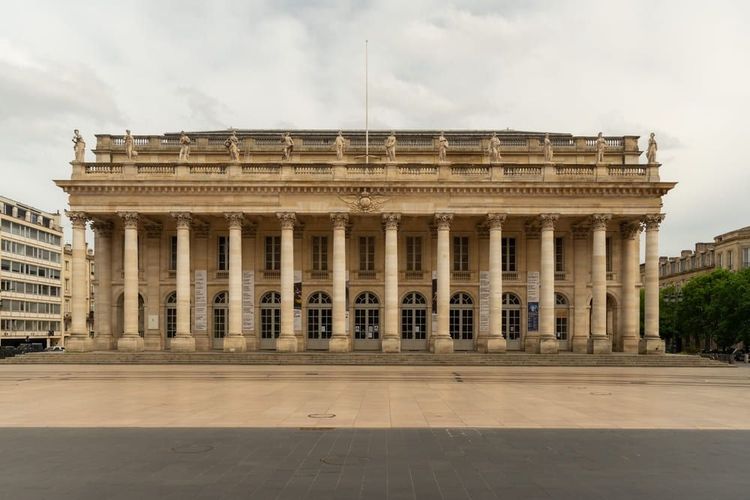
On Place de la Comédie, the Grand Théâtre rises on the site of an old Gallo-Roman temple torn down by Vauban in 1677. Built in the 18th century and financed by Bordeaux's freemasons, whose symbols can still be found inside, it boasts a peristyle of 12 Corinthian columns topped with muses and goddesses. Its grand staircase inspired Charles Garnier for the Paris Opera, and the hall even briefly served as France's capital in 1870, hosting the first assembly of the Third Republic.
Free to see from outside · Allow 50 min
28 - Tourny Avenues
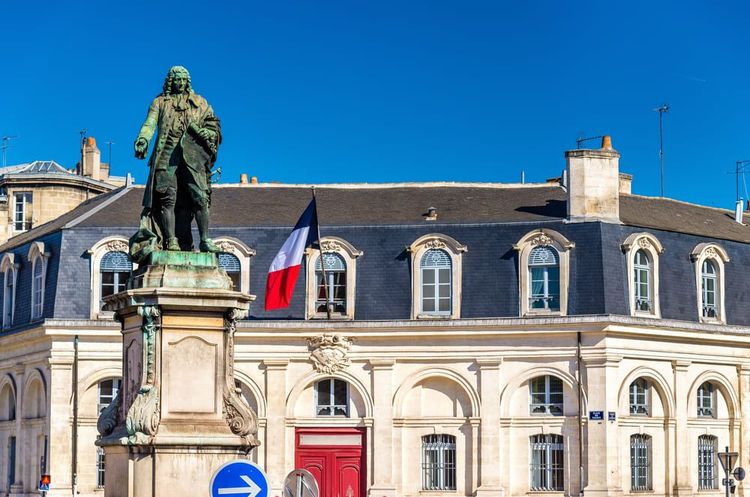
The Allées de Tourny were conceived in the late 18th century by the Marquis de Tourny, the intendant who deeply transformed Bordeaux, along the edge of the former slopes of the Château Trompette. Lined with Louis XV façades on one side and 19th-century buildings on the other, they lost their 2 sculpted fountains, sold off for lack of maintenance budget, one now standing in Soulac-sur-Mer, the other in Quebec City. It remains a much-loved promenade, especially during the Christmas market.
Free entry
29 - The Girondins monument
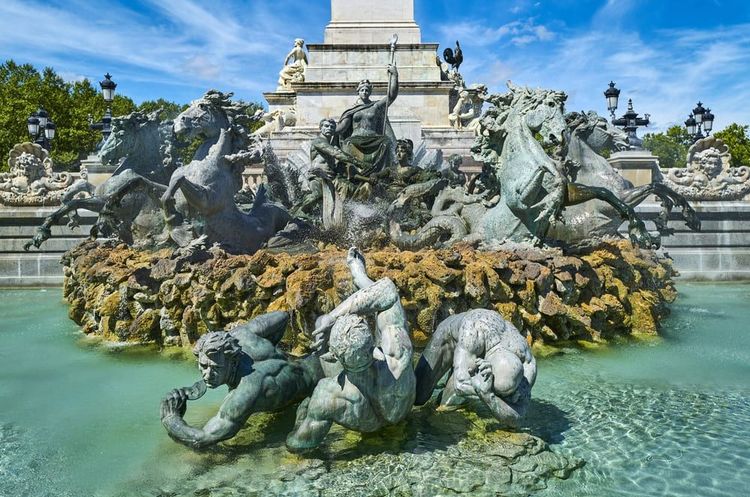
The Monument aux Girondins is easy to spot from afar thanks to the winged figure crowning its top, raised in honour of the Girondin deputies, condemned without a fair trial and guillotined in June 1793. Finished in 1901, it is made up of a tall column and 2 bronze fountains rich in allegorical symbols. Seized by the occupying forces to be melted into scrap, the statues were fortunately found in Angers in 1944 and only returned to their place in 1983.
Free entry
What to do in Bordeaux in 2 or 3 days?
One day is enough to take in the essentials of old Bordeaux on this tour: 6.1 km and 29 stops in around 2h30, from the Quinconces esplanade to the Golden Triangle, by way of the Water Mirror and old Saint-Pierre. With 2 or 3 days ahead of you, the city opens up further, between vineyards and ocean.
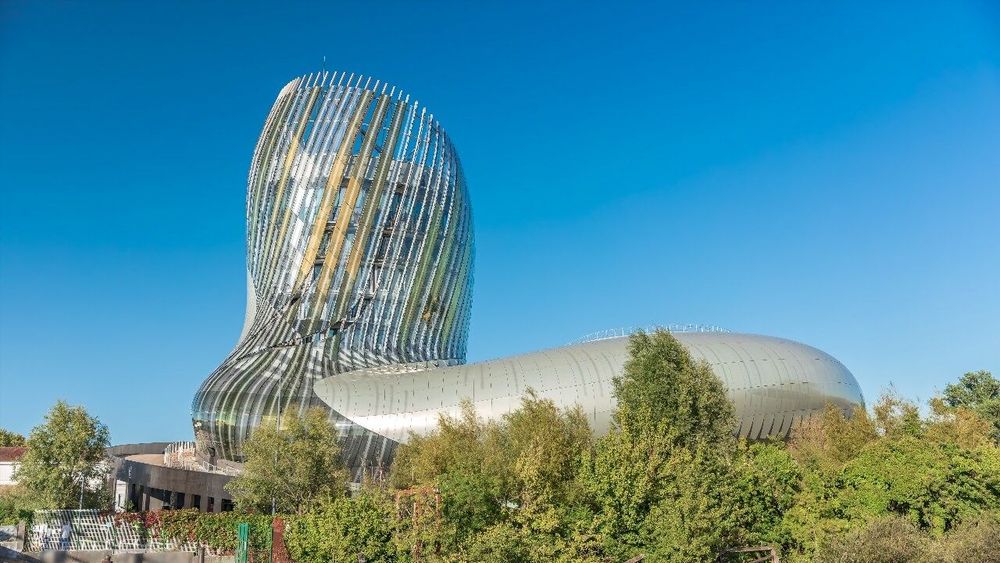
The next day, head to the Bacalan docks for the Cité du Vin, a glass and gold-aluminium building that evokes a giant decanter, opened in 2016 facing the Garonne. Then cross back to the left bank and up to the Chartrons, the city's former trading hub, where old wine warehouses now house cocktail bars. If you're leaving that same evening, our guide to visiting Bordeaux in 2 days will help you fit it all in.
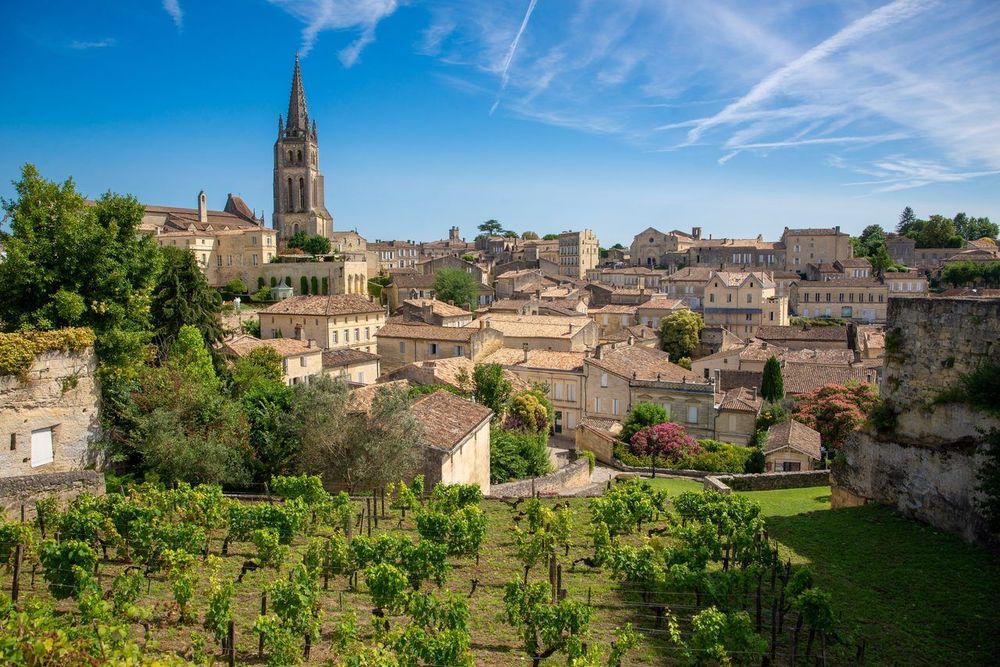
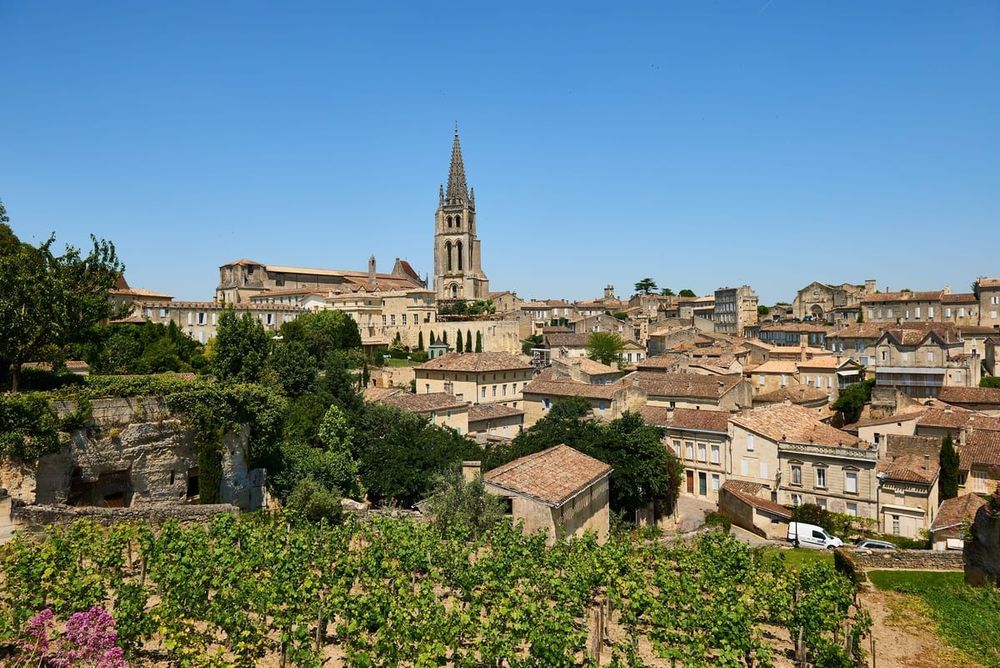
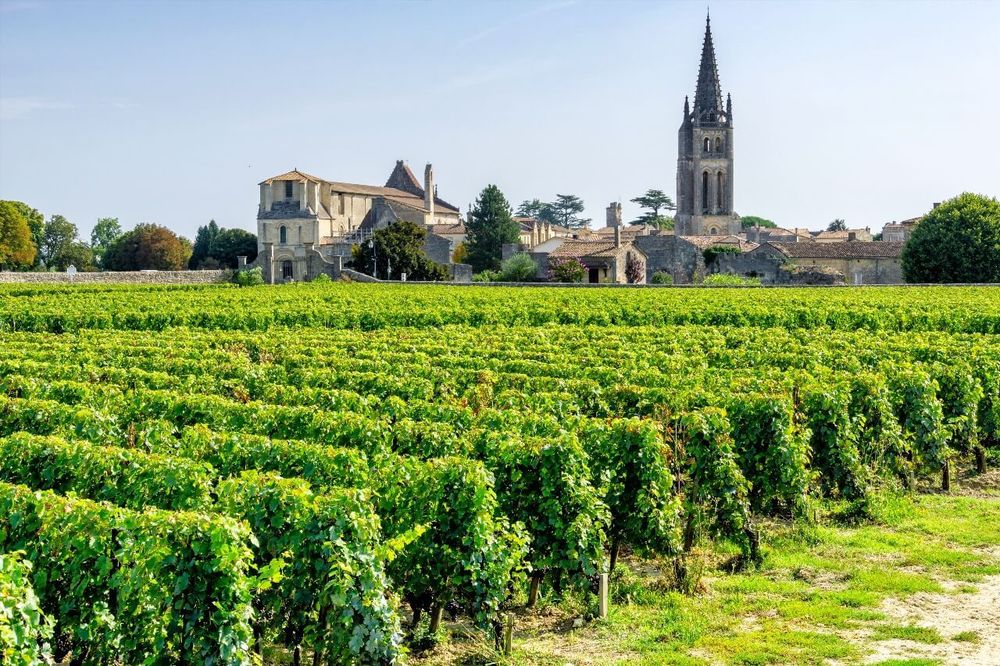
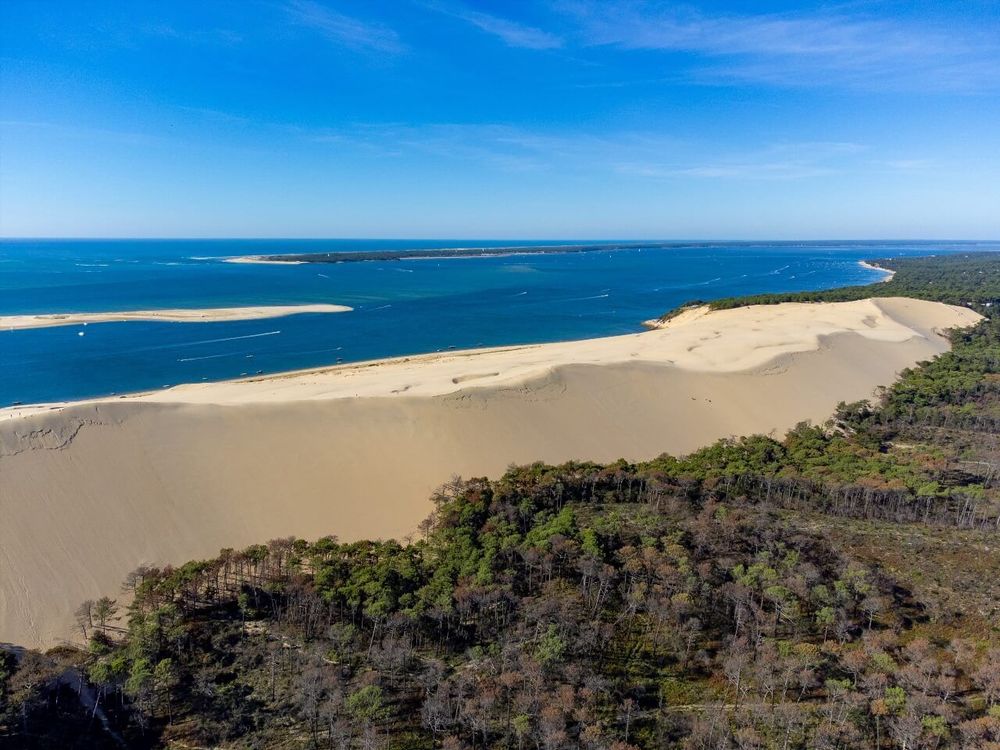
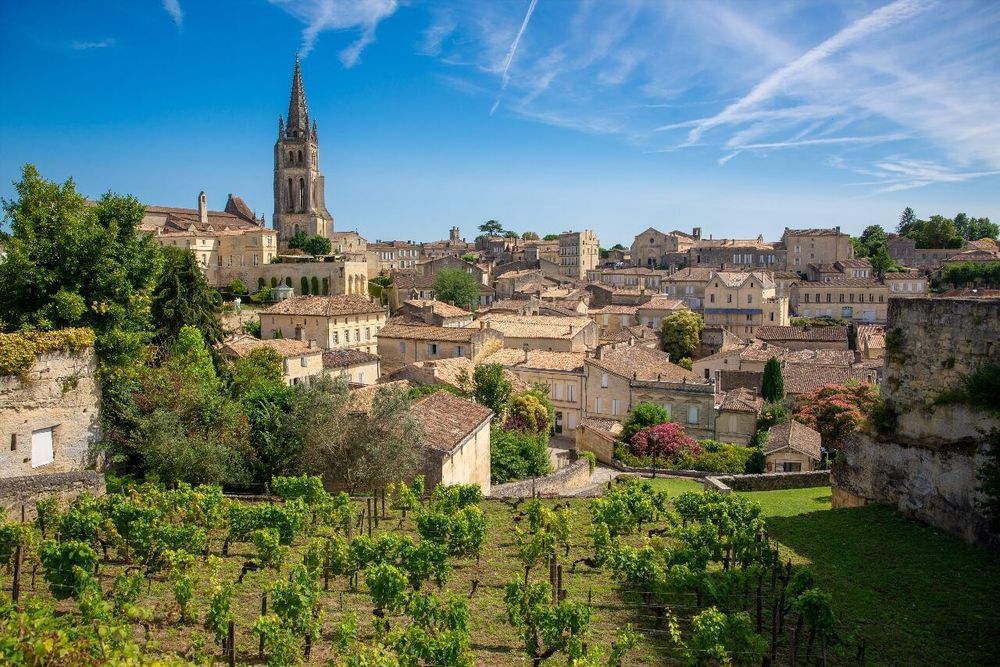
On the third day, head for the vineyards: Saint-Émilion, 40 minutes by road, with its church carved straight into the rock, or the Arcachon Bay and its Dune du Pilat, under an hour away. Our guide to visiting Bordeaux in 3 days lays out this itinerary in full.
Which neighbourhoods does the tour cross?
Looped as it is, the tour links the great chapters of Bordeaux's history, from the Gallo-Roman port to the avenues of the Age of Enlightenment.
It starts at the Quinconces esplanade, one of the largest squares in Europe, follows the Garonne past the rostral columns to the Water Mirror and Exchange Square, built facing the river in the 18th century, before entering the Saint-Pierre quarter, the oldest part of the city: the café terraces of Parliament Square, the Gallo-Roman remains on Camille-Jullian Square, the gothic Saint Peter Church, then out through the Cailhau Gate, a fortified 15th-century gate (stops 1 to 10).
The quays then run past the Stone Bridge, the first bridge ever built over the Garonne, before reaching the Saint-Michel quarter, around its basilica and gothic spire, then back up past the Big Bell, the oldest belfry in France, to the Aquitaine Museum (stops 11 to 18).
The last stretch passes the Saint-André Cathedral and the former archbishop's palace turned city hall, before crossing the Golden Triangle, the smart quarter laid out in the 18th century around the Grand Théâtre, then back along the Tourny Avenues to the Quinconces (stops 19 to 29).
How much does it cost to visit Bordeaux?
None of the 29 stops on this tour require a ticket just to admire them. Twenty-two can be visited entirely for free, and six others can be seen from the street, with an optional paid entry:
- the Cailhau Gate, where entry costs €7;
- the spire of the Saint-Michel Basilica, for €7;
- the Big Bell belfry, for €6;
- the Aquitaine Museum, where entry is €6;
- a guided tour of the Palais Rohan, now the city hall, for €10;
- a guided tour of the Grand Théâtre, around 50 minutes, for €10.
The Pey-Berland Tower, meanwhile, remains closed for now after lightning damaged its electrical network: check whether it has reopened before budgeting for its €9 ticket.
To get into the other museums, the Bordeaux Métropole CityPass costs €37 for 24 hours and covers public transport, around 15 museums and monuments including the Cité du Vin, plus one guided tour of your choice. And to stretch the day without spending anything, our guide to free things to do in Bordeaux has plenty of ideas.
Information checked in October 2026 and subject to change.
Where to stop for a bite along the tour?
The tour happens to pass right by a spot made for a break: Palace Square, a pedestrian square lined with café and restaurant terraces, just before the Cailhau Gate (stop 9).
Try a cannelé bordelais there, a rum-flavoured treat that's soft inside and caramelised outside, the city's sweet trademark. For a quirkier break, among tea rooms, literary cafés and cat cafés, our pick of unusual spots for a break in Bordeaux rounds up the best addresses.
What to do in Bordeaux with children?
Bordeaux works well for a family outing, as long as you turn the walk into a game: the city carries more than 3,000 carved mascarons on its façades, stone faces just waiting to be spotted, especially around Parliament Square.
The Water Mirror, for its part, turns into a giant paddling pool on Sunday afternoons, with hundreds of children playing in the mist between two reflections on Exchange Square. The nearby Quinconces esplanade leaves plenty of open space for them to run around.
What should you know before visiting Bordeaux?
Two closures can break up your loop, depending on the day and time you pass through.
The Palais Rohan, now the city hall, and Cours Mably close on Sundays. The route also runs through the Passage Sarget, open from 9:00 am to 7:30 pm: outside those hours, take Rue Martignac instead to carry on.
One more thing worth checking before you set off: the Pey-Berland Tower is closed for now, after lightning damaged its electrical network. Best to confirm it has reopened before counting on climbing it.
What to see around Bordeaux?
Bordeaux is a great base for branching out, between vineyards, ocean and villages of golden stone.
40 minutes by road, Saint-Émilion and its church carved into the rock rank among the most admired villages around Bordeaux; allow under an hour to reach Arcachon Bay and its Dune du Pilat, or the Vauban citadel at Blaye, 50 minutes away, two of the trips covered in our pick of excursions around Bordeaux.
Several neighbouring towns have their own audio-guided tour too: Arcachon, 51 km away, plays on the Belle Époque villas of its Ville d'Hiver facing the ocean, while Bergerac, 83 km away, stretches along the banks of the Dordogne. Further on, Royan, 94 km away, stakes its identity on its rebuilt post-war architecture, and Agen, 118 km away, pairs pink brick with views over the Garonne.
Le plein d'inspirations
Explorez le monde en totale liberté, à pied au cœur des villes ou au fil des routes. Nos guides audios transforment chaque destination en une découverte culturelle immersive et unique.
FAQ for visiting Bordeaux
When is the best time to visit Bordeaux?
The best time to visit Bordeaux runs from April to June and then from September to October. During these months, you'll enjoy mild, pleasant temperatures, ideal for wandering the cobbled streets and along the banks of the Garonne. Summers can be very hot, with temperatures often exceeding 30 degrees, which makes walking tours more tiring. Winters remain mild but can be rainy. Spring and autumn will also let you discover the surrounding vineyards in their finest colours, with fewer tourists than at the height of summer.
How many days do you need to visit Bordeaux?
Two to three days is generally an ideal length to discover the essentials of Bordeaux. This time lets you calmly explore the UNESCO-listed historic centre, enjoy the redeveloped quays and soak up the Bordeaux atmosphere. If you also wish to visit the surrounding vineyards or venture as far as the Arcachon basin, plan instead for four to five days. One day is enough to get a first glimpse of the city, but you risk missing many hidden treasures and the art of living that gives the Gironde capital its charm.
How do you get around Bordeaux?
Bordeaux has an excellent public transport network, with its four tram lines efficiently serving the whole metropolis. The historic town centre remains very accessible on foot, and many streets are pedestrianised. Cycling is also an excellent option thanks to the many cycle paths and the bike-sharing system. To reach the vineyards or explore the surroundings, the car remains practical, but shuttles and organised excursions also exist. In the centre, it's better to avoid the car as parking can be difficult and expensive. Public transport generally remains the most convenient and economical solution.
What are the must-sees in Bordeaux?
Bordeaux is full of architectural and cultural marvels to discover. The Place de la Bourse with its water mirror is a must, as are the majestic Place des Quinconces and the Grand Théâtre. The banks of the Garonne offer a magnificent promenade, while the Saint-Pierre district will charm you with its medieval streets and lively terraces. Saint-André Cathedral and the Pey-Berland tower also deserve your attention. For a complete, narrated discovery of these treasures, the Ryo audioguide accompanies you along a carefully designed route that reveals the history and secrets of the Belle Endormie.
How can you visit the vineyards from Bordeaux?
The prestigious Bordeaux vineyards are generally located about thirty minutes from the town centre. Several options are available to discover them. Renting a car remains the most flexible way to freely explore the different appellations such as Saint-Émilion, the Médoc or the Graves. Organised bus excursions leave daily from the centre and often include several tastings. Some estates are accessible by train, notably towards Saint-Émilion. Bike tours are also offered for a more sporty and eco-friendly approach. It's generally recommended to book your château visits in advance, especially in high season.
Is Bordeaux an expensive city to visit?
Bordeaux sits in the upper-middle range of French cities in terms of cost. Accommodation can be expensive, especially in the town centre and during high season. For meals, you'll find a wide range of prices, from affordable little bistros to gourmet restaurants. Visits to monuments generally remain accessible, and many free activities exist, such as strolling along the quays or admiring the water mirror. Wine tastings vary considerably from one estate to another. To save money, favour public transport, local markets for your meals, and book your accommodation in advance or slightly on the outskirts.
Can you visit Bordeaux on foot?
Bordeaux lends itself wonderfully to discovery on foot. The historic centre, a UNESCO World Heritage site, remains compact and easily explored on foot. The main monuments, squares and districts of interest are generally less than twenty minutes' walk from one another. The redeveloped quays offer a continuous promenade of several kilometres along the Garonne. Many streets in the centre are pedestrianised, making the walk even more pleasant. The Ryo audioguide offers you a route designed specifically for walking, guiding you through the emblematic streets and squares while telling you the fascinating history of the Belle Endormie.
What are the best day trips from Bordeaux?
Bordeaux makes an ideal base for exploring the region, and our selection covers 15 destinations less than 2.5 hours' drive away. Saint-Émilion, 40 km east, has been a UNESCO site since 1999 and hides a monolithic church carved into the rock. The Arcachon Bay is 1 hour 5 minutes away by regional train, with the Dune du Pilat, Europe's tallest dune at 106 m, and oysters at Le Canon for under €15. The Médoc and Pauillac line the great wine route, Lacanau draws surfers, and Blaye keeps its listed Vauban citadel.
Find all 15 ideas in our guide to day trips around Bordeaux.
What is there to see at the Cité du Vin in Bordeaux, and how long should you allow?
Opened in 2016 on the former Bacalan docks, the Cité du Vin welcomes over 400,000 visitors a year. Its immersive permanent exhibition spans 3,000 m² and twenty themed areas, including the 270° Sensory Odyssey, the virtual wine cellar and the globe of flavours. Your ticket includes a tasting at the eighth-floor Belvedere, with a 360° view over the Garonne; under-18s get grape juice instead. Top tip: head up to the Belvedere first, in the morning. Allow two and a half to three hours for the full visit.
Plan your visit with our complete guide to the Cité du Vin.
What can you do at Darwin, the alternative hub on Bordeaux's right bank?
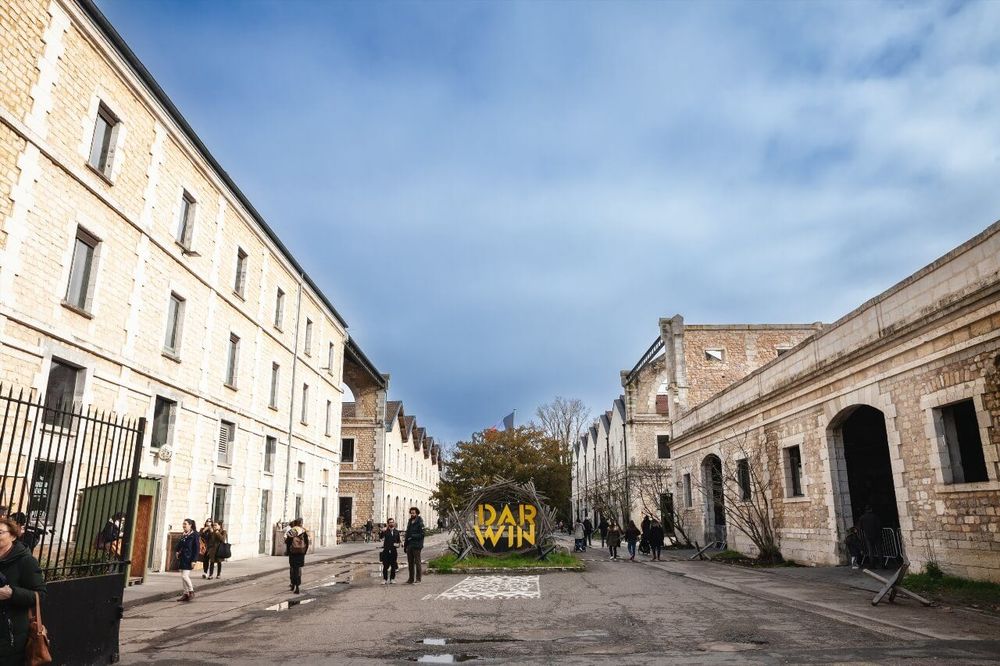
Set in the former Niel barracks, the Darwin eco-system covers 6 hectares on the right bank. Open to the public since 2012, it brings together more than 80 organisations committed to the ecological transition, an organic market on Saturdays, an organic restaurant and the Magasin Général, packed by noon on Saturdays. Its walls form an ever-changing street art gallery by Stew, Tilt, Peb and Remed. The Hangar Darwin, an indoor skatepark of around 2,600 m² run by the La Brigade association, has affordable rates and weekend workshops for children.
Explore the site with our guide to the Darwin eco-system.
Which events shouldn't you miss in Bordeaux throughout the year?
Three highlights set the pace of the Bordeaux year. In June, Bordeaux Fête le Vin runs for four free days, with exhibitions, concerts and a food village along the Garonne quays; a tasting pass can be booked on the official website. Every first Sunday in March, the Carnaval des 2 Rives, created in 1996 and listed as French intangible cultural heritage, fills the streets and quays with floats, giants and parades. In late May, the Weekend des Grands Crus brings winemakers and enthusiasts together for five days of paid tastings.
Save the dates with our pick of the best events in Bordeaux.
Which picturesque villages are worth visiting around Bordeaux?
Less than an hour from Bordeaux, a dozen villages each deserve at least half a day. Saint-Émilion is home to Europe's largest monolithic church, 38 metres long, beneath a bell tower nearly 68 metres high. Saint-Macaire, a bastide frozen in the 15th century, keeps its ramparts and the arcaded Place du Mercadiou. Blaye's Vauban citadel is a genuine 38-hectare fortified village, while Bourg-sur-Gironde, the 'balcony of the Gironde', lies close to the Pair-non-Pair caves and their engravings around 30,000 years old.
Pick your next stop in our guide to the most beautiful villages around Bordeaux.
Which are the most beautiful beaches near Bordeaux?
Our guide covers twelve beaches within 120 km. Arcachon, 49 minutes away by regional train, is the only one you can reach without a car: its Grande Plage, with water at 22 to 24 °C in summer, suits families, while Le Moulleau is quieter. On Cap Ferret, the Pointe offers a view of the Dune du Pilat but swimming is strongly discouraged; the Petit Nice beach is lifeguarded. Lacanau Océan, about an hour's drive, is the surfers' spot, with lessons from €35 to €60 per half-day.
Plan your day by the ocean with our guide to the best beaches near Bordeaux.
Where can you enjoy a drink with a view over Bordeaux?
Several rooftops look out over Bordeaux. The Renaissance's, on the 9th floor, faces the Cité du Vin and the Garonne; the Mama Shelter's, on the 6th, offers a rare view of Saint-André cathedral. There is also the roof of the MECA on Quai de Paludate, the Wallace Bar on the 5th floor of the Radisson Blu, La Bodega at the Canopée Café in Mérignac, billed as the largest rooftop in the metropolitan area, and the Night Beach at the Grand Hôtel Intercontinental on Place de la Comédie, the most popular in town.
Get opening hours and addresses in our guide to Bordeaux's best rooftops.
Where can you find a cat café or an unusual tea room in Bordeaux?
Bordeaux has several quirky spots for a break. Le Comptoir des Chats, opened in 2016, is the city's pioneering cat café: allow €12 to €15 an hour, drink included. Nekomata Café, near the Grand Théâtre, blends manga culture, Japanese teas and nine rescue cats, from about €10 an hour. Les Ronrons des Chartrons, on Quai de Bacalan, is home to cats awaiting adoption and serves a vegetarian and vegan menu. The guide also lists tea rooms and literary cafés.
Find your spot in our guide to Bordeaux's cat cafés and tea rooms.
What unusual activities can you try during a stay in Bordeaux?
Our selection offers seven experiences for every kind of traveller. For foodies: a class to master canelés and gâteau basque, or a gourmet tour of bakeries, chocolate makers and cheese shops ending with a Bordeaux-style meal. On the water: a fishing trip on the Garonne with Jean-Marie, the last professional fisherman in Bordeaux, or a canoe outing between the Chaban-Delmas bridge and the Pont de Pierre. You can also follow the wine route by coach from the tourist office, tackle an escape game or try axe throwing.
Make your pick from our top 7 activities in Bordeaux.
Where can you go for a weekend break from Bordeaux?
Bordeaux is the perfect starting point for 20 weekend getaways, most of them under two hours' drive. For wine lovers, there is Saint-Émilion and the 80 km Médoc wine route. For the ocean, the Arcachon Bay and the Dune du Pilat, Lacanau, Royan or, further south, Biarritz and Saint-Jean-de-Luz. Heritage fans can choose La Rochelle and the Île de Ré, Sarlat and the Périgord Noir, Périgueux and its Saint-Front cathedral, or Bayonne and its Basque museum.
Get inspired by our 20 weekend ideas around Bordeaux.
What can you do for free in Bordeaux?
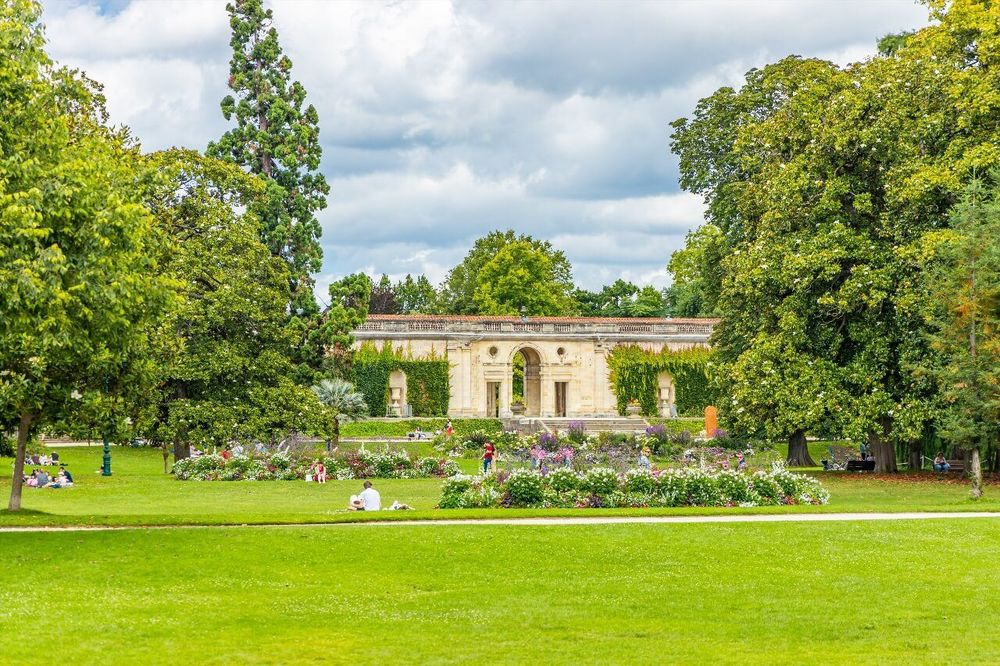
A UNESCO World Heritage city since 2007, Bordeaux offers 25 experiences that cost nothing. The Miroir d'eau on Place de la Bourse alternates between mirror effect and mist from May to October, 10am to 10pm. The 4.5 km of redeveloped quays can be explored on foot or by bike, with memorable sunsets over the Garonne. Entry to Saint-André cathedral is free, as is the Jardin Public and its botanical garden. Five museums also open their doors free of charge on the first Sunday of the month.
Discover all 25 ideas in our guide to free things to do in Bordeaux.
What itinerary should you follow to see Bordeaux in 2 or 3 days?
Over two days, the first is spent exploring old Bordeaux on foot: the Miroir d'eau, Place de la Bourse, the Grosse Cloche, Saint-André cathedral and the 231 steps of the Pey-Berland tower. The second moves on to the Cité du Vin and the Bassins de Lumières, then the right bank and the Chartrons. With three days, the listed historic centre fills the first, the wine districts and the alternative right bank the second, and an outing to the vineyards the third. The centre spans about 3 km and is easily covered on foot.
Follow our itineraries to visit Bordeaux in 2 days or visit Bordeaux in 3 days.
What is there to do in Bordeaux when travelling solo?
Bordeaux is an easy city to explore on your own. The UNESCO-listed historic centre is walkable: Place de la Bourse and the Miroir d'eau, Saint-André Cathedral and the Pey-Berland Tower (231 steps for a 360-degree panorama). The Chartrons, Saint-Michel and Grand Parc each make a half-day outing.
For culture, the Cité du Vin with its 8th-floor belvedere and the Bassins des Lumières work well for a solo visitor. To go off the beaten track, try the Darwin ecosystem and the Bassins à flot footpaths, and take a break in the Jardin Public.
Find the full itinerary in our guide to visiting Bordeaux solo.
What are the best things to do in Bordeaux with kids and teens?
Find all the tips and stops for every age in our guide to visiting Bordeaux with your family.
Vos commentaires, idées et suggestions
Aucun avis pour le moment