© Shutterstock
 Votre guide Ryo
Visiting Bordeaux with Family in 2026: A Complete Guide for Little and Big Adventurers
Bordeaux has long cultivated a reputation as a sensible, almost austere city, made for wine lovers and classical architecture. And yet, as soon as the youngest travelers enter the equation, the city transforms: its quays become improvised cycling tracks, its squares open-air playgrounds, and its museums sensory exploration grounds. Visiting Bordeaux with family means discovering a human-scale city where everything, or almost everything, is done on foot, often with less than ten minutes of walking from one monument to the next. The Ryo audio-guided tour of Bordeaux traces precisely this itinerary: 29 audio stops over 6.2 km, enough to keep young and old busy between two gourmet detours.
Expect to splash barefoot in the largest water mirror in the world, to solve riddles as a team in an escape game, and to picnic under the foliage of the Jardin Public before heading off to a dune rising more than 100 meters above the ocean. Between the historic center, the banks of the Garonne and getaways to the Arcachon Bay, this guide details what you can reasonably fit into one day, a weekend or more, with 3-year-old toddlers as well as with 15-year-old teens.
Bordeaux, a City Made for Families
The Port de la Lune, historic heart of Bordeaux, has been a UNESCO World Heritage Site since 2007, covering about 1,800 hectares: one of the largest listed urban ensembles in the world. In practical terms, that means wide sidewalks, quays returned to pedestrians and a tramway gliding silently between 18th-century façades. With a stroller, that is a rarity: you can do almost every visit on foot, without ever grumbling about a sidewalk that is too narrow.
The following sections detail, neighborhood by neighborhood, what is worth the detour with a tribe aged 3 to 13.
Iconic Monuments of the Historic Center to Discover with Family
The Water Mirror, Place de la Bourse and Porte Cailhau
First, settle in front of the Water Mirror, this 3,450 m² granite slab facing the Place de la Bourse, often presented as the largest water mirror in the world. Every fifteen minutes or so, the thin liquid film gives way to an artificial mist before forming again: from the first rays of sunshine, the little ones rush in barefoot, and no one will tell them to stop.
Just behind, the Place de la Bourse lines up its 18th-century classical façades facing the river: a good photo stop before heading to the Porte Cailhau, a fortified gate from the late 15th century that once marked the entrance to the city on the port side. Climbing its spiral staircase to the top remains one of the favorite little challenges for kids under 10.
The Grosse Cloche and Saint-André Cathedral
Walking up Rue Saint-James, the Grosse Cloche marks the former belfry of the medieval town hall: two round towers frame the Armande-Louise bell, cast in 1775 and weighing nearly 7.8 tons. It rings only on the first Sunday of the month at noon and on a few commemorative dates: if your stay falls on that day, stand beneath it at 11:55 a.m., the effect is guaranteed.
Next, head to Saint-André Cathedral, also listed as a World Heritage Site as part of the Routes of Santiago de Compostela, flanked by the Pey-Berland Tower, its freestanding 50-meter bell tower. We wouldn't necessarily recommend the 231 steps with a 4-year-old in your arms, but the Gothic nave, cool in summer, is worth a ten-minute break, even for those less inclined toward religious heritage.
The Grand Théâtre and Place des Quinconces
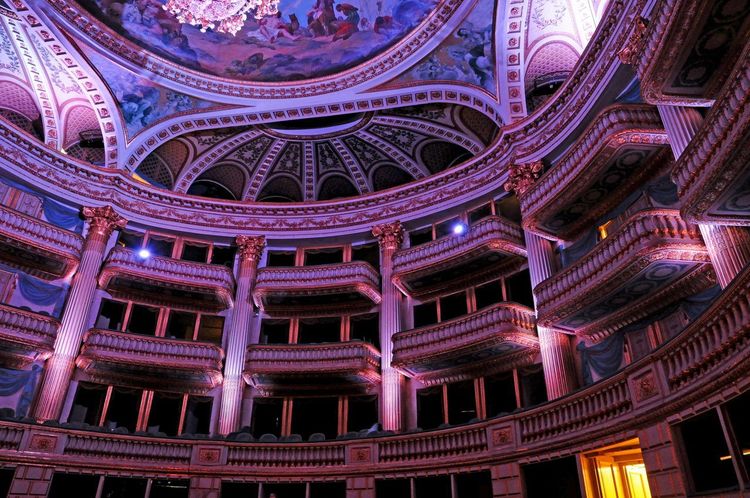
The Grand Théâtre, inaugurated in 1780, stands out with its twelve Corinthian columns on the Place de la Comédie: it houses the Opéra national de Bordeaux and offers guided tours outside performance times. Right next to it begins Rue Sainte-Catherine, about 1.2 km long and often cited as the longest pedestrian shopping street in Europe, while the Cours de l'Intendance heads west with its chic boutiques. To reach the Quinconces, simply walk up the Allées de Tourny or the Cours du 30-Juillet: five minutes on foot.
The Place des Quinconces (Place des Quinconces, 33000 Bordeaux, rated 4.6/5 on Google from 2,691 reviews) spreads over about twelve hectares, making it one of the largest urban squares in Europe: plenty of room to run from one rostral column to the other, then stop in front of the sea horses of the Monument aux Girondins. It is also the most convenient starting point for heading back down to the quays.
Rather than playing improvised guide in front of every façade, let the Ryo audio-guided tour tell the story of these monuments for you: a commented audio stop is triggered in front of each one, and your walkers in short pants feel more like they're listening to a story than enduring a visit.
Strolling and Cruising on the Garonne with Family
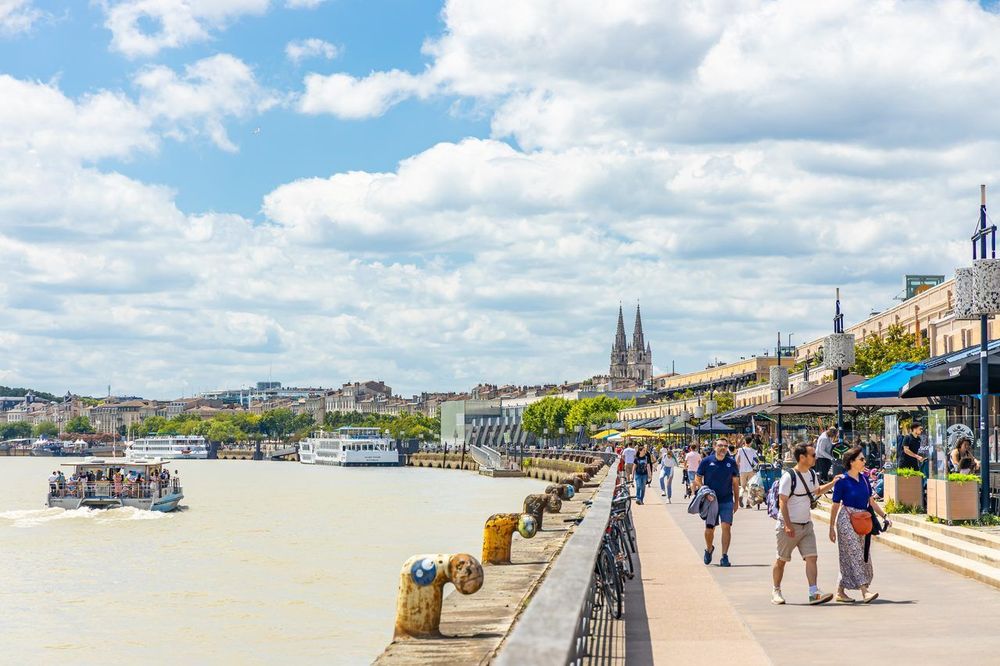
Coming down from the Quinconces, the quays open onto several kilometers of continuous promenade along the river, between skateparks, playgrounds and lawns. This is where most Bordeaux locals spend their Sundays, and there are good reasons for that.
The Pont de Pierre and Parc aux Angéliques on Foot or by Bike
Cross the Pont de Pierre, the first bridge built over the Garonne in Bordeaux, ordered by Napoleon and completed in 1822: its 17 arches, as many as the letters in "Napoléon Bonaparte", span a river nearly 500 meters wide at this point. Have the little ones count the arches during the crossing, they will check for themselves.
On the other side, the Parc aux Angéliques (Quai de Queyries, 33100 Bordeaux, rated 4.3/5 on Google from 2,458 reviews) unfolds its lawns and rows of trees down to the river, with the finest view of the quays' façade. Allow a good hour for the full loop of Pont de Pierre, right bank, Pont Chaban-Delmas on foot, half that by bike (the V3 bikes of the TBM network are available for self-service rental), and zero euros in either case.
Guided Cruises and the Bat³ River Shuttle
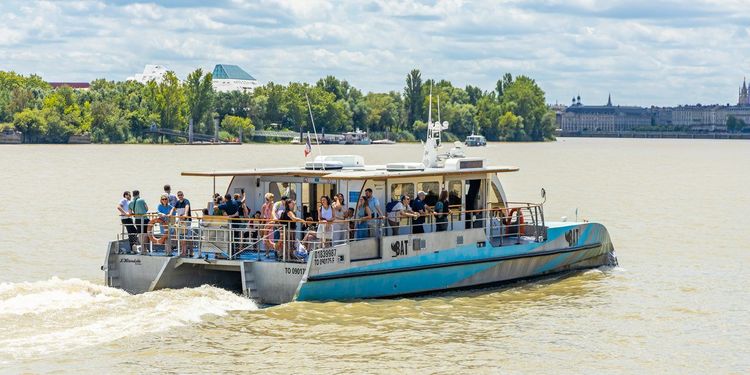
For a change of perspective, two paid options exist. The guided cruises on the Garonne, aboard boats such as Le Bato, offer outings of about an hour with anecdotes about the port's history, sometimes accompanied by a local drink and a cannelé for those already asking for a snack.
Less touristy and much cheaper, the Bat³ river shuttle of the TBM network crosses and runs up the river for the price of a standard tram ticket. It is the simplest way to reach the right bank and the former Garonne shipyards, without booking or queuing.
The Pont de Pierre is one of the stops commented on by the Ryo audio-guided tour, along with the history of the Port de la Lune and its quays: ideal for listening to the anecdotes while walking, with no paper guide to hold in one hand and a snack in the other.
Jardin Public and Large Green Spaces to Burn Off Energy
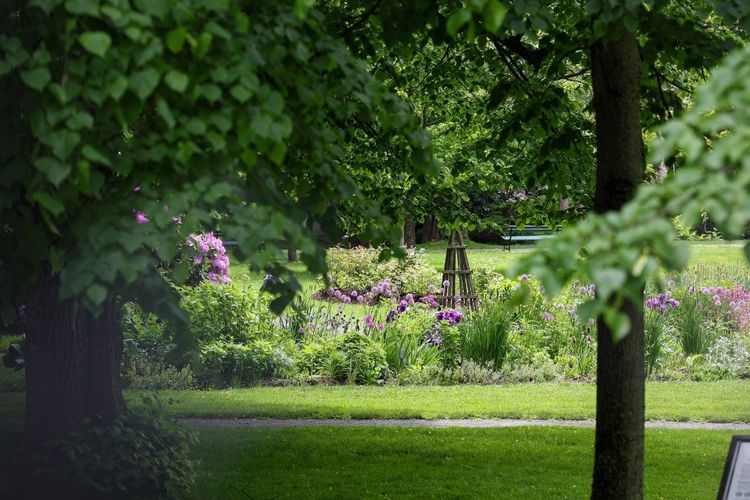
After the blond stone of the historic center, it's time for the great green lungs: two parks that Bordeaux locals themselves use as a Sunday playground, and that cost exactly zero euros.
The Jardin Public, Play and Nature in the Heart of the City
Created in the mid-18th century and then redesigned in the English style under the Second Empire, the Jardin Public covers about ten hectares a stone's throw from the Chartrons. There you'll find a well-equipped playground, a puppet theater, ducks to watch on the artificial river, a botanical garden with free access and enough lawns to improvise a picnic.
The Ryo audio-guided tour stops in front of its gates to tell the story of the place: you listen to the anecdote while the little ones dash off to the slide. And if the weather turns, the Museum located in the park offers an immediate refuge.
The Parc Bordelais, the Family Green Lung
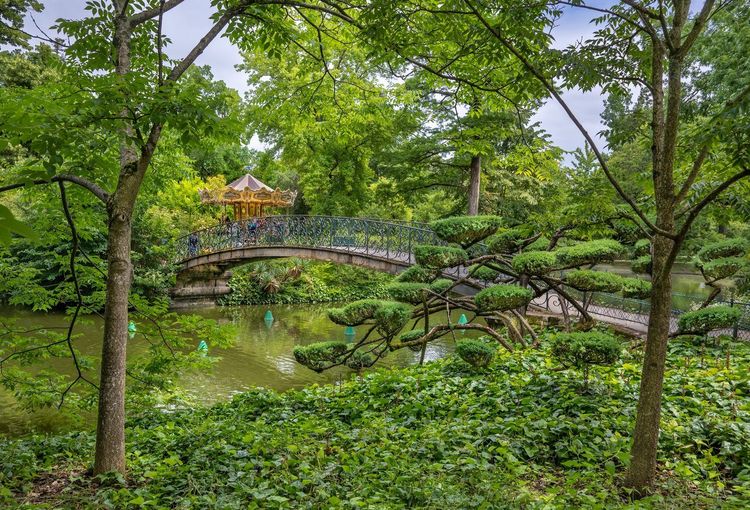
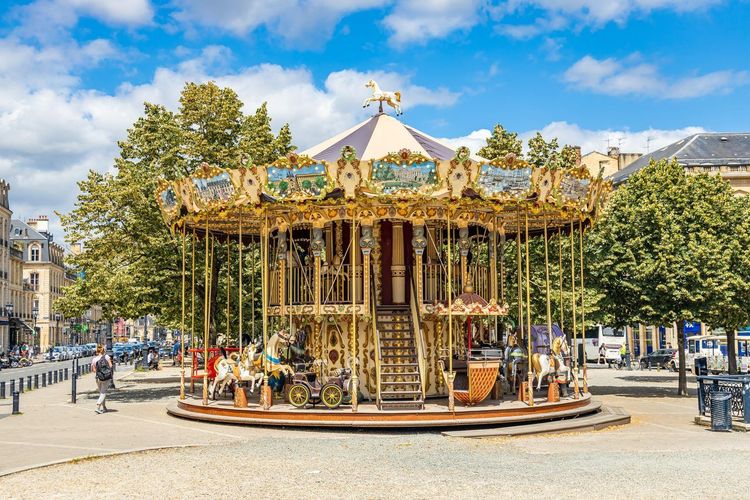
A little farther out, in the Caudéran neighborhood, the Parc Bordelais (Rue du Bocage, 33200 Bordeaux, rated 4.5/5 on Google from 6,616 reviews) spreads over 28 hectares in the English landscape style, with a petting farm, an old carousel, playgrounds, ponds and several kilometers of paths. Plan a whole morning with young children, especially if the petting farm is on the agenda: the dwarf goats there rarely need convincing to pose for a photo.
A cooler bag, a blanket, and the afternoon's program can wait a good hour.
Museums and Exhibitions at Kids' Eye Level

When July heat or Bordeaux rain crashes the program, head to the museums: several were designed to capture the attention of children under 12, not just that of adults.
Musée Mer Marine and the Natural History Museum / Sciences and Nature
The Musée Mer Marine, a vast contemporary building opened in 2019 near the Bassins à Flot, traces maritime history and ocean exploration through models, navigation objects and major temporary exhibitions. Allow 1.5 to 2 hours for the visit, best from age 5-6.
In the very heart of the Jardin Public, the Muséum de Bordeaux - Sciences et Nature reopened in 2019 after a long renovation, with its zoology collections, stuffed animals and a space dedicated to toddlers: the ideal complement after a picnic on the neighboring lawn.
Museum of Illusion, Musée d'Aquitaine and Bassins des Lumières
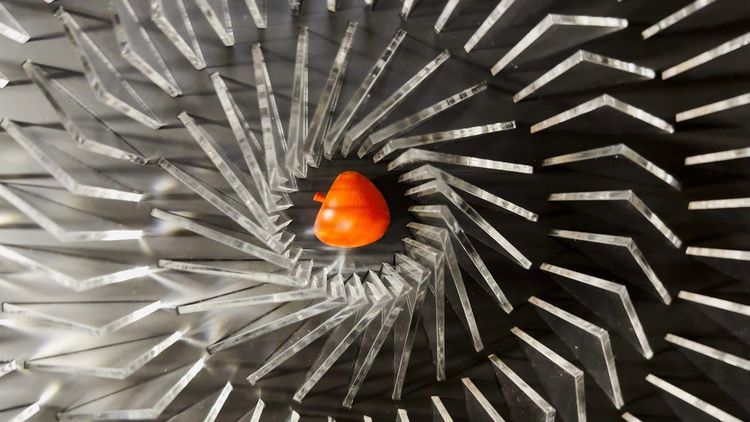
For a downright playful break, the Museum of Illusion, facing the Mériadeck shopping center, lines up mirror games, trompe-l'œil rooms and inverted-perspective halls: the photos there invariably become the funniest of the trip.
More classic but accessible from primary school age, the Musée d'Aquitaine unfolds regional history from prehistory to the present day, from the Venus with the Horn to port trade, with activity booklets and workshops offered during school holidays.
Finally, the Bassins des Lumières (Esplanade John Kennedy, 33300 Bordeaux, rated 4.7/5 on Google from 19,782 reviews), housed since 2020 in the former submarine base built during the Second World War, project immersive exhibitions on the works of great painters, reflected on the water of the basins. The theme changes from one season to the next, but the effect remains constant: you sit on the floor and let the images captivate you for a good forty minutes.
Darwin and Offbeat Activities on the Right Bank
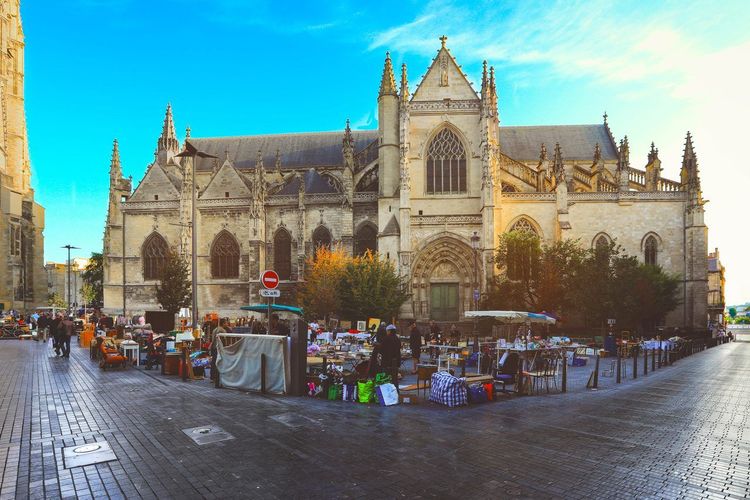
A complete change of atmosphere on the right bank: no more classical façades, but a former military barracks turned into an alternative living space, with a skatepark, thrift stores and restaurants set up in renovated warehouses.
The Darwin Ecosystem, an Unmissable Site
Darwin occupies the former Niel barracks, taken over since 2010 and converted into an urban ecosystem combining coworking, urban agriculture, an organic grocery and one of the largest covered skateparks in France. Access to the site is free. With teens who are starting to find classical heritage a bit dull, it is often the highlight of the trip: XXL graffiti, raw wood structures and an atmosphere unlike anything else in Bordeaux.
Our dedicated article on the Darwin ecosystem details the spaces to see and the best time slots to avoid the weekend crowds.
Street Art and the Saint-Michel Flea Market
On the walls of Darwin as in the streets of the Bastide, Bordeaux street art covers entire stretches of industrial façades: turn the walk into a mural hunt, and whoever spots the most chooses the snack.
Back on the left bank, the Saint-Michel neighborhood hosts the Sunday morning flea market at the foot of the Saint-Michel spire, where you can find a rare item for a few euros, and the Capucins market (Place des Capucins, 33800 Bordeaux, rated 4.4/5 on Google from 4,635 reviews), nicknamed the "belly of Bordeaux", open every morning except Monday: the perfect place to buy picnic supplies before heading back to the quays.
Fun and Offbeat Activities for Little Adventurers
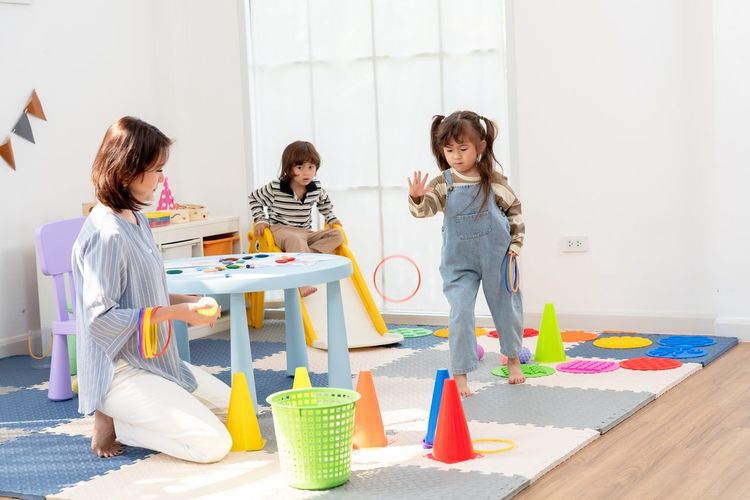
If your crew quickly tires of pure contemplation, Bordeaux offers several more active formats, designed as games rather than visits.
Treasure Hunts and Family Escape Games
Several treasure hunt routes let you rediscover the city center through riddles to solve as a team, with a booklet or app: a way to turn a 2-hour walk into a mission, very effective between ages 7 and 12, when a concrete goal is needed. A lesser-known option takes you to Lormont, on the right bank, for a treasure hunt in the middle of nature.
On scorching or rainy days, an escape game in central Bordeaux offers a sheltered alternative, with scenarios accessible from around age 8: allow 60 to 75 minutes per game, booking recommended on weekends.
Tourist Train and Double-Decker Bus for Sightseeing Without Tiring Out
With very young walkers or grandparents on the team, the tourist train tours the historic center in a commented hour or so, without having to walk a single meter.
An open-air variant, the hop-on hop-off double-decker bus lets you get on and off freely at about ten stops spread between the center and the quays, with a pass valid for 24 or 48 hours: handy when walking motivation collapses in the middle of the afternoon.
For a more complete list of ideas that cost nothing, our article on free activities to do in Bordeaux lists about twenty additional options, useful for rounding out a stay without blowing the budget.
Nature and Wine Getaways from Bordeaux with Family
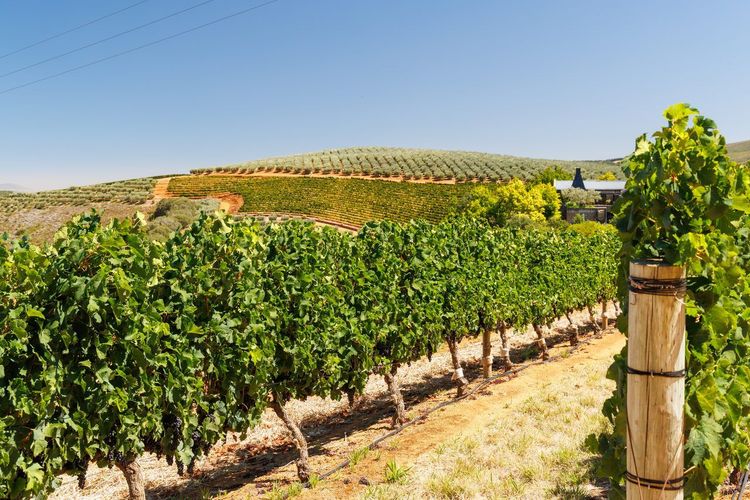
For stays of more than a day, two types of getaways naturally complement the city: the vineyards less than an hour away, and the ocean about an hour away.
The Cité du Vin and Saint-Émilion, Vineyards with Family
The Cité du Vin, a swirling silhouette set on the quays since 2016, offers a permanent exhibition that is largely digital and sensory: aromas to guess, touch devices, immersive projections. Children over 8 generally have more fun than expected, even with no particular interest in wine, and grape juice replaces the tasting glass at the belvedere for minors.
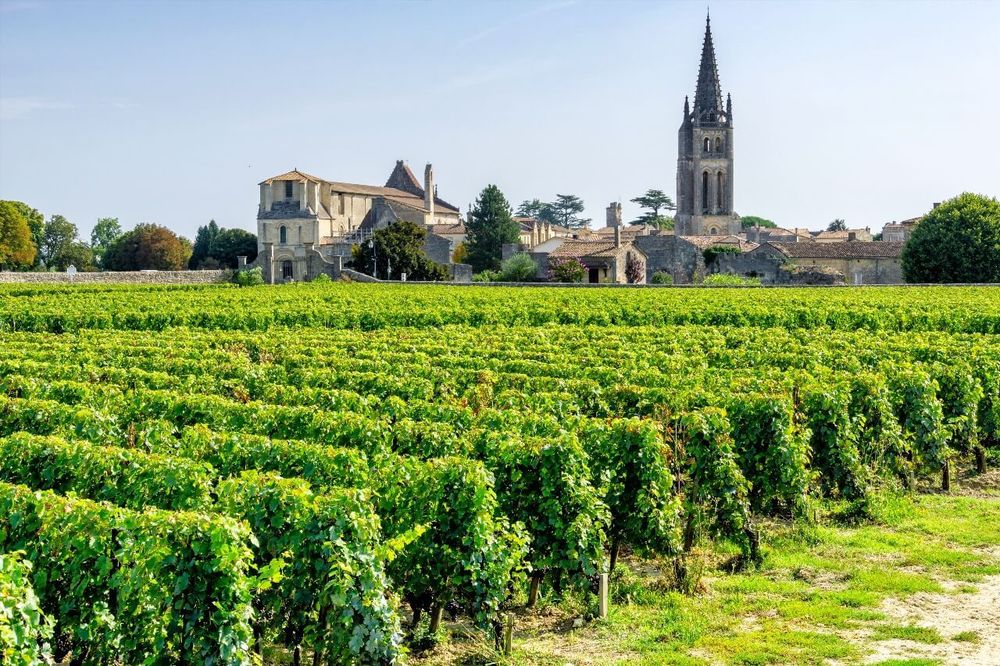
45 minutes to 1 hour away by road, the village of Saint-Émilion (33330 Saint-Émilion), whose wine jurisdiction has been a World Heritage Site since 1999, deserves a half-day: steep cobbled lanes, a monolithic church carved into the limestone, and the King's Tower to climb for the view over a sea of vines. The little foodies will mostly remember the artisanal macarons, a local specialty since the 17th century.
Our article on the Cité du Vin and the one devoted to the most beautiful villages in Gironde detail the opening hours and visiting options. And if you stay only one day in the city before heading to the vineyards, the 29 audio stops of the Ryo audio-guided tour condense the essentials of the center into 2.5 hours of walking, before you hit the road again.
Dune du Pilat, Arcachon Bay, Cap Ferret and Lacanau, the Ocean Within Reach
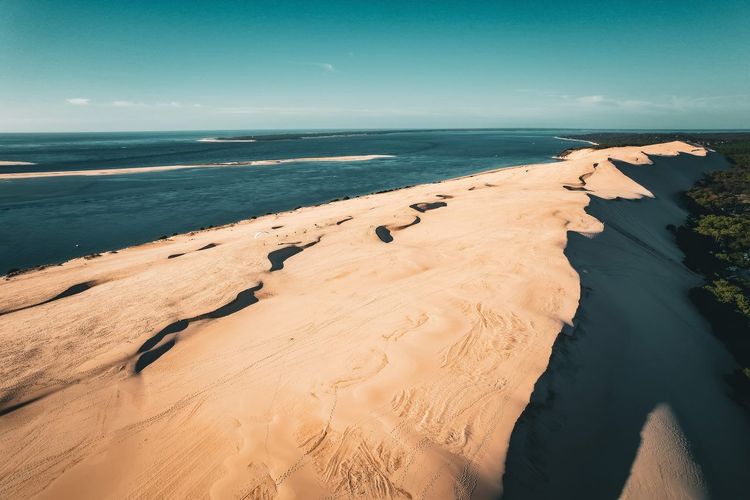
If the ocean is part of the plan, the Dune du Pilat remains the undisputed star: just over 100 meters high, the tallest sand dune in Europe, about 1 hour by road from Bordeaux. The climb through the sand is exhausting for small legs, but a staircase installed for a good part of the year makes the ascent easier.
Around it, the Arcachon Bay and Cap Ferret offer sheltered beaches, oyster huts and bike rides on almost flat trails, ideal for alternating swimming and gentle activity. Further north, Lacanau is aimed more at those who want to try the joys of board sports: surf schools welcome beginners from around age 7, on supervised beaches in summer.
To go further, our selection of the most beautiful beaches near Bordeaux details the distances and the best spots by age.
Where to Stay, How to Get Around and What Budget to Plan with Family
Three practical questions systematically come up once the itinerary is chosen: where to drop your bags, how to get around, and how much to budget.
Which Neighborhood to Choose for Staying with Children
The Saint-Pierre neighborhood and the Triangle d'Or, in the middle of the historic center, remain the most practical choice: everything is done on foot, but prices are the highest and the streets are sometimes lively late into the evening. For more calm without going far, the Chartrons offer kid-friendly places, often apartments with equipped kitchens, 15-20 minutes on foot from the center and very close to the Jardin Public. If your budget is tighter, look at the Bastide, on the right bank: prices drop noticeably for equally quick access via tram line A or the Bat³ shuttle.
Bordeaux CityPass and Tips for Getting Around
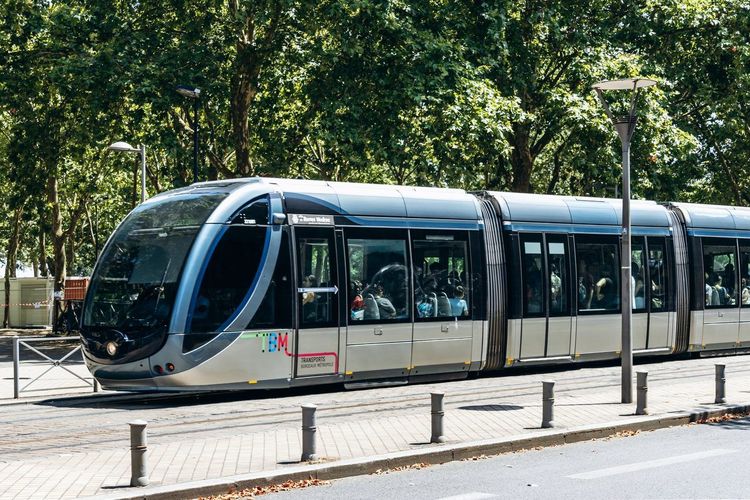
The Bordeaux CityPass, sold by the tourist office in 24h, 48h, 72h and 96h versions, combines unlimited transport on the TBM network (tram, bus, river shuttle), access to about fifteen museums and monuments, the Cité du Vin, the Bassins des Lumières and a guided tour of your choice. If you plan at least two paid sites and several tram trips per day, it quickly becomes cost-effective.
Without the pass, the single tram ticket remains valid for 1 hour, and the day ticket costs barely more than three single trips: calculate according to your travel plans. The historic center is in any case very largely explored on foot, which makes Bordeaux one of the easiest cities in France to visit on foot with a stroller.
As for the overall budget, allow on average 120 to 180 euros per day for four people in mid-range accommodation, meals included, excluding paid excursions such as the Cité du Vin or a cruise on the Garonne. The free outings listed above (parks, quays, street art, Jardin Public) noticeably lower this average.
For a multi-day format with a detailed schedule, our guide to visiting Bordeaux in 3 days offers a complete organization, adaptable to everyone's pace.
How Many Days and Which Season to Visit Bordeaux with Family
To visit Bordeaux in 1 day (monuments, water mirror, a park, a museum), you need to chain the stops well and plan frequent breaks. To also enjoy a getaway, vineyards or ocean, allow rather 2 to 3 days: the first for the city, the second for an excursion, and a third in reserve for unexpected weather or last-minute whims.
Bordeaux can be visited all year round. Spring and early autumn offer mild temperatures, ideal for walking without the sometimes crushing heat of July-August. Summer remains the liveliest season, with the water mirror in full swing and the ocean an hour away, but also the busiest and the most expensive for accommodation. During school holidays, most museums offer workshops and activities for 6-12-year-olds, to be checked according to your dates.
For a detailed program over two full days, our guide to visiting Bordeaux in 2 days offers a ready-to-use itinerary, easy to adapt to a slower pace.



FAQ
How many days do you need to visit Bordeaux with family?
One day is enough for the essentials of the historic center. Allow 2 to 3 days if you add a getaway to the vineyards or the ocean, with some margin for breaks and unexpected weather.
What budget should you plan for a stay in Bordeaux with children?
On average, 120 to 180 euros per day for a family of four, accommodation and meals included, excluding paid excursions such as a cruise or the Cité du Vin. Many outings (parks, quays, water mirror) remain free.
Which neighborhood should you choose to stay in Bordeaux?
The Triangle d'Or and Saint-Pierre to have everything within walking distance, the Chartrons for more calm at a reasonable distance, or the Bastide on the right bank for gentler prices with quick tram access.
How do you get around Bordeaux with a stroller?
The historic center is very largely explored on foot. For the rest, the tram and the Bat³ river shuttle are enough, possibly complemented by the Bordeaux CityPass if several museums are on the agenda.
What can you do in Bordeaux on a rainy day?
Head to the museums: Bassins des Lumières, the Museum of Illusion, the Musée d'Aquitaine or the Muséum de Bordeaux - Sciences et Nature fill several hours under shelter, without ever boring the youngest.
What is the best time to visit Bordeaux with family?
Spring and early autumn offer the best conditions for walking. Summer gives access to the ocean but also brings crowds and higher accommodation prices.
Between monuments to climb, a river to cross and a dune to run down, Bordeaux is ultimately less a classic heritage visit than an open-air playground. The city suits an express one-day visit just as well as a full stay with a vineyard or ocean getaway, and most of the center's must-sees remain accessible on foot, stroller included.
To link the major monuments without spending the day looking for your way, follow the Ryo audio-guided tour of Bordeaux: 29 commented stops over 6.2 km, at your own pace, snack break and impromptu detour included.
À lire également