© Shutterstock
 Votre guide Ryo
The Darwin Eco-System in Bordeaux: Complete Guide 2026
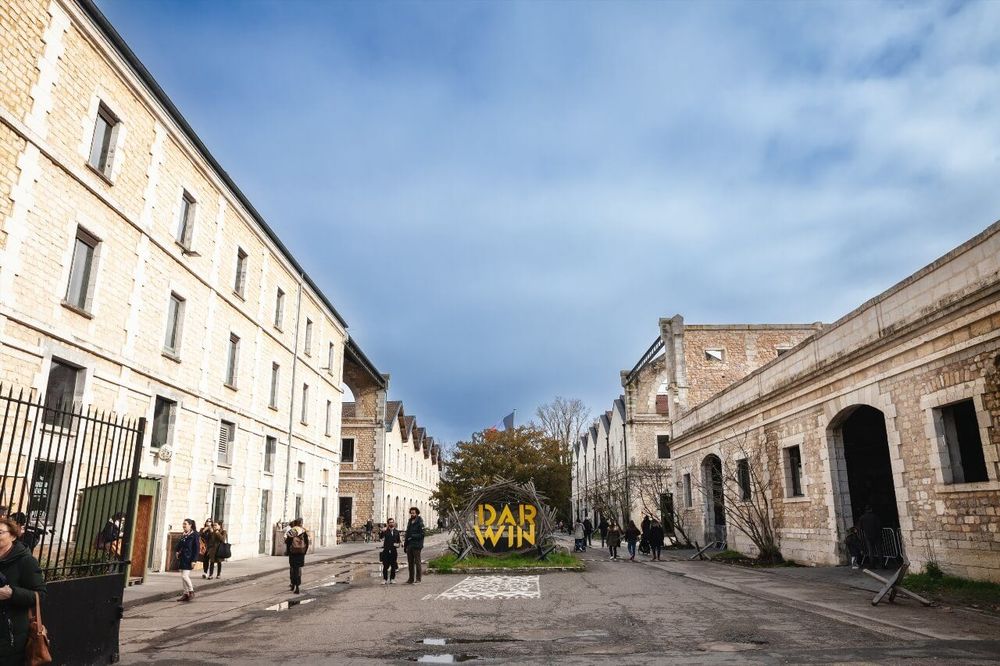
You don't cross the Garonne to visit the Darwin eco-system: you stumble upon it by accident, looking for something else, and end up coming back every week. This 6-hectare complex, housed in a former military barracks on the right bank of Bordeaux, has become within a decade one of the most cited urban regeneration projects in France: an organic market on Saturdays, a renowned covered skate park, mural artworks that change with the seasons, an organic restaurant seating several hundred covers, and more than eighty organisations committed to ecological transition that have made it their home. If you're exploring Bordeaux with the Ryo audio guide, Darwin naturally fits into a right-bank itinerary that goes well beyond museums and vineyards.
This guide gives you everything you need to make the most of Darwin: the history of the Caserne Niel and the vision behind its transformation, the artists who painted its facades, and the addresses to know for eating, drinking and shopping. You'll discover why the Magasin Général is fully booked from noon on Saturdays, what time to arrive at the organic market to avoid leaving empty-handed, and how Darwin fits into the broader transformation of the Bastide neighbourhood. The right bank has changed beyond recognition since 2010, and Darwin is both the cause and the symbol of that change.
Caserne Niel: the Story of an Extraordinary Regeneration
The story of Darwin begins with a paradox: buildings designed for military discipline and hierarchy have become one of the freest and most experimental spaces in Bordeaux. The Caserne Niel was built in the mid-nineteenth century to house the troops of the Bordeaux garrison, on a plot of land enclosed between the quai des Queyries and the boulevard Alfred-de-Vigny. For more than a century and a half, its thick walls sheltered soldiers, horses and military equipment. Then the army left, and the buildings slowly began to fall into disrepair.
In 2009, Philippe Barre, a Bordeaux-based social entrepreneur, put forward a proposal to the city that was equal parts gamble and manifesto: to lease the dilapidated buildings in order to develop an economic model rooted in the circular economy, ecological transition and sharing. The right bank was undervalued at the time. The concept of a "third place" did not yet exist in the vocabulary of French urban planning. Bordeaux said yes.
The first activities moved in as early as 2010. Darwin officially opened its doors to the general public in 2012. The rehabilitation followed a deliberately raw philosophy: metal roof structures were left exposed, concrete floors were not concealed, and available walls were handed over to artists. Nothing is overloaded. Everything is functional and honest. This restraint, which might have seemed like a communication weakness, has become the site's most distinctive aesthetic signature.
The name "Darwin" is a tribute to Charles Darwin and his theory of evolution: adapt, mutate, survive in a changing environment. The philosophy runs through every decision made since the beginning, including the choice not to fix the walls so that murals can be renewed, or to select resident organisations according to their values rather than their financial capacity alone.
Today, the site is home to more than 80 permanent organisations: green economy startups, artistic collectives, food cooperatives, community radio stations and committed designers. The period buildings — red-brick pavilions, former stables, troop storehouses — coexist with lightweight extensions in metal and glass. The Caserne Niel has become something more than a place: it is an ongoing process.
Street Art at Darwin: Facades as a Permanent Gallery
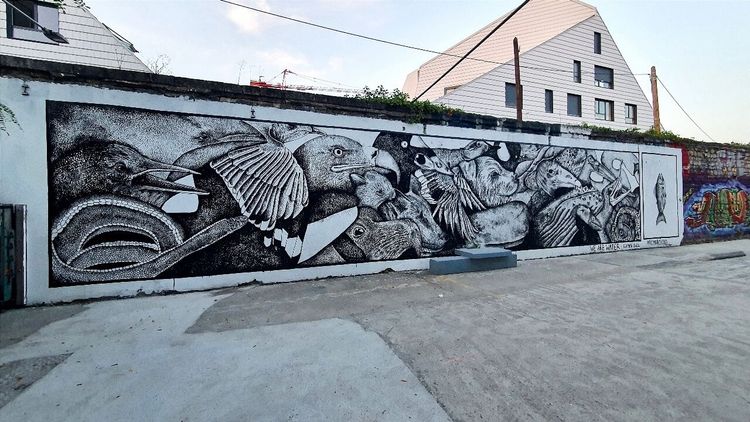
Setting foot in Darwin means entering an open-air gallery that reinvents itself several times a year. Since 2012, artists invited by the Darwin collective have painted, pasted, engraved and covered the barracks facades with monumental murals. Some span dozens of square metres; others fit into a corridor corner that you only notice by looking up at the right moment.
Stew is the most visible figure at the site. His mural compositions blend gestural typography, bold flat colours and poetic inscriptions; they run across several facades and have forged an immediately recognisable visual identity for Darwin. Other artists have left their mark: Tilt, Peb, Remed, not forgetting Stéphane Carricondo, founder of the 9e Concept collective, and international contributors invited during special festivals. The list grows every year.
What sets Darwin apart from an open-air museum is its deliberate policy of renewal. The walls change. A mural can be covered by a new work if the artist returns, if the current theme calls for it, or simply if the mood strikes. A visitor who comes back every six months never sees exactly the same Darwin. This temporality is rare in the world of public art, which generally favours conservation over transformation.
To fully appreciate the murals, wander rather than search for them methodically. They appear on the main facades, in the inner courtyards, on the skate park pillars and on the walls of covered corridors. Some are monumental and visible from the quai des Queyries. Others, more intimate, slip between two metal doors. With the Ryo audio-guided tour of Bordeaux's right bank, you can extend this reading of the walls to the murals on the cours de la Marne, less than five minutes away on foot.
The Hangar Darwin: a Covered Skate Park in a Former Military Warehouse
The Hangar Darwin is hard to miss: you hear it before you see it, that crack of a board on concrete echoing beneath the metal roof structure. Housed in a former military warehouse, this covered skate park spans around 2,600 m², built 90% from recycled materials, making it one of the largest covered skate parks in France. It has been managed since 2012 by the La Brigade association, which drives a loyal community of skaters, BMX riders and inline skaters from Bordeaux.
Its design makes the most of the existing industrial volume: a wooden bowl, a series of mini-ramps, a vert ramp and a large street zone spread out beneath the roof, sheltered from both rain and sun, allowing riding year-round. There is something for everyone, from beginners picking up their first board to seasoned riders who come to get footage.
Access requires a La Brigade membership plus a day pass or annual pass, at deliberately affordable rates (a few euros). Supervised sessions and children's workshops take place regularly at weekends, making it a family-friendly spot on Saturday mornings while parents do their shopping at the organic market just steps away.
Eating at Darwin: the Magasin Général, an Organic Brasserie
The Magasin Général is what you might call an organic brasserie — a concept that would have seemed marginal twenty years ago but that now draws several hundred covers every day. Set in the former tank hall of the barracks, the restaurant occupies a monumental space: exposed metal roof trusses, industrial skylights overhead, solid wood tables arranged in several rows. The dining room opens onto a terrace in the main courtyard, eagerly sought out from the first sunny days of spring.
The menu philosophy rests on a simple rule: almost all of the produce — around 92% — is certified organic. Most of it comes from producers in the Gironde or the wider South-West. The beer is brewed on site: Biobière Darwin. Juices are pressed in the morning. The menu changes every week according to what the partner market gardeners deliver, which means sometimes surprising variations between visits. Budget between 12 and 22 euros for a full lunch, more in the evening when the menu expands.
At the weekend, the Magasin Général shifts up a gear. The terrace spills into the courtyard, the music gets louder, and finding a table without a reservation after 12:30pm becomes a real challenge. If you're coming on a Saturday for the organic market, book online the day before or arrive before noon.
The Sunday brunch deserves a special mention: a set-price menu (around 25 euros), generous, with egg dishes, sourdough tartines, fresh juices and a relaxed end-of-week atmosphere that few restaurants in Bordeaux manage to recreate. Booking the day before is essential.
Other dining options round out the offer on site: a snack counter for weekday takeaway meals, food trucks during events, and several community spaces with a café corner open to visitors on a drop-in basis.
The Saturday Organic Market: the Right Bank at the Table
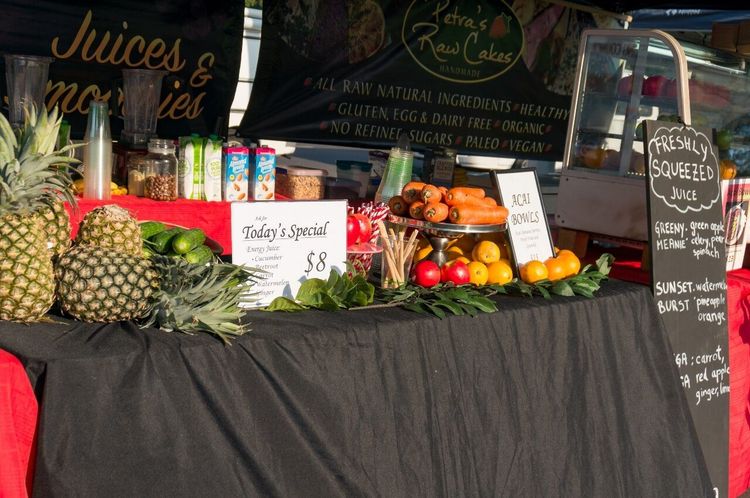
Every Saturday morning from 9am, Gironde producers and artisans set up their stalls in Darwin's main courtyard. Seasonal vegetables, farm cheeses, sourdough breads, artisan jams, free-range meats, aromatic plants — around fifty regular vendors make the Darwin organic market (Quai des Queyries, 33100 Bordeaux, rated 3.7/5 on Google from 935 reviews) one of the most popular food destinations on the right bank.
What sets this market apart from a conventional one is the direct relationship with the producers. Many of those running a stall also supply the Magasin Général, creating a rare coherence between the restaurant's kitchen and the morning stalls. You can buy something at 9:30am that you'll eat at noon, just a few dozen metres away.
The market closes around 1pm, but the best items are often gone before 11am, especially at the cheese stalls and seasonal fruit vendors. For families, it's a wonderful opportunity to introduce children to forgotten vegetable varieties and to understand what "short supply chain" really means in practice.
Outside of Saturdays, permanent shops extend the spirit of conscious consumption throughout the week: second-hand clothing, an independent bookshop, zero-waste products. Darwin practises alternative retail seven days a week.
Coworking and Startups: Darwin's Entrepreneurial Ecosystem
Darwin is home to more than 80 permanent organisations: green economy startups, cultural associations, service cooperatives and artistic collectives. This ecosystem is the reason the site remains alive during the week, well beyond the tourist weekend.
Several coworking spaces are open to the public. Darwin Cowork offers day or monthly desks in a former converted armoury, with meeting rooms and internet access. Other operators occupy specific wings of the site with their own arrangements. The profiles you encounter there reflect the philosophy of the venue: rooftop market gardening, furniture made from recycled materials, low-carbon digital practices, organisational transition consulting.
For organisations wishing to establish themselves permanently at Darwin, applications are selected according to their alignment with the project's values. This filter maintains a rare coherence in third places, where proximity between overly disparate actors can dilute the identity of the venue.
For a passing digital nomad, the Magasin Général offers power sockets and wifi from the terrace — a free option for working a few hours during the week, far from the bustle of the historic centre. The centre itself unfolds over two and a half hours of audio-guided walking from the Quinconces.
Cultural Programme: Darwin Never Stops
The Halle Darwin is the heart of the site's cultural events: an industrial volume of several hundred square metres, adaptable to any need, capable of hosting intimate concerts as well as large-scale evenings. Formats vary from week to week: contemporary music, live arts performances, temporary contemporary art exhibitions, ecological transition talks, outdoor cinema screenings in summer.
Some events are free, including Friday evening events organised by local collectives that have found a trusted space at Darwin. Others are ticketed, generally between 8 and 25 euros, with online booking recommended in advance. For busier evenings, it is best to leave the car at home and come by bike or river shuttle.
The two highlights of the year are the Darwin festivals, which are generally held in May and December. For two or three days, the entire site is transformed: a special market, concerts across several spaces simultaneously, open workshops in the resident organisations, and ephemeral outdoor installations. These events draw several thousand visitors and are worth planning ahead for.
The full calendar is available at darwin.camp, updated regularly. For those who want to combine an evening at Darwin with a broader exploration of the right bank, the Ryo app offers an audio-guided tour of the Bastide neighbourhood that includes the emerging addresses around the site.
The Bastide Neighbourhood, Starting from Darwin
Darwin is the catalyst for a broader transformation. The Bastide neighbourhood (Quai des Queyries, 33100 Bordeaux, rated 4.4/5 on Google from 107 reviews), long considered the forgotten right bank of Bordeaux, has undergone a rapid metamorphosis since 2010 of which Darwin has been the symbolic accelerator. Heading north from the site, the cours de la Marne lines up its new shops, bars and art galleries. The pont de Pierre, five minutes away on foot, offers the most photographed view of the Bordeaux church towers on the left bank. The river shuttles allow you to cross back to the left bank in just a few minutes from the quai des Queyries, making for the most pleasant way to round off your visit.
How to Get to Darwin
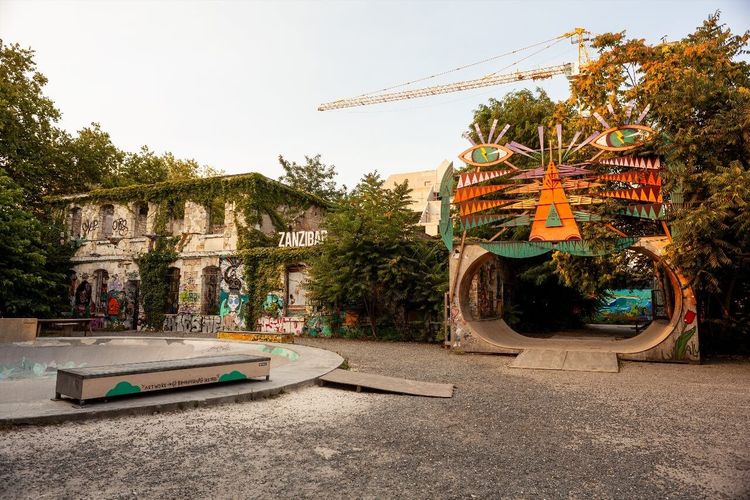
The Darwin eco-system (87 Quai des Queyries, 33100 Bordeaux, rated 4.4/5 on Google from 9,418 reviews) is located at 87 quai des Queyries, 33100 Bordeaux, on the right bank of the Garonne. From the historic centre, walking remains the most enjoyable option: cross the pont de Pierre or the pont Jacques-Chaban-Delmas, then walk north along the quay (15 to 20 minutes approximately).
By TBM public transport, lines 9 and 27 serve the quai des Queyries. The Bat3 river shuttle (departing from the Quinconces boat landing) reaches the quai des Queyries in just a few minutes — the most enjoyable option in good weather, and it avoids any parking concerns entirely.
By bike, Darwin is directly accessible via the quayside cycle paths. The nearest Vcub stations are a few minutes' walk away. The site has a secure bike parking area at the main entrance. By car, a car park is available on site but fills up quickly at weekends: best avoided on Saturday mornings during the market.
Opening Hours and Prices at a Glance
Access to Darwin's outdoor spaces — the main courtyard and mural artworks — is free every day; the covered skate park in the Hangar Darwin requires a La Brigade membership and a small entry fee of a few euros. The Magasin Général is open Tuesday to Sunday, lunch from 11:30am, dinner from 7pm, Sunday brunch from 10:30am. The organic market takes place every Saturday from 9am to 1pm. Cultural events vary: some are free, others range from 8 to 25 euros. Day coworking typically starts from 15 euros depending on the operator.
FAQ
Is Darwin Bordeaux free?
Access to the Darwin eco-system site is free. The outdoor courtyard, the mural artworks and the walking areas are accessible without a ticket or reservation, seven days a week. The covered skate park in the Hangar Darwin, however, requires a membership to the La Brigade association and a small entry fee of a few euros. Dining at the Magasin Général is paid (approximately 12 to 22 euros per person), and some cultural events require a ticket. It is entirely possible to spend several hours at Darwin without spending a cent.
How do you get to Darwin from the centre of Bordeaux?
From the place de la Bourse or the quays on the left bank, the most pleasant route is on foot: cross the pont de Pierre, then walk north along the quai des Queyries (around 15 to 20 minutes). The Bat3 river shuttle, departing from the Quinconces boat landing, reaches Darwin in about ten minutes — the most enjoyable option in good weather. By TBM bus, lines 9 and 27 serve the neighbourhood.
What time should you arrive at Darwin's organic market?
The market opens at 9am and closes around 1pm. If you want the best selection, especially from the aged cheese producers and seasonal fruit stalls, arrive before 10:30am. The Magasin Général tables fill up from noon on Saturdays; book in advance if you plan to have lunch there after the market.
Is Darwin suitable for families with children?
Yes, Darwin is a particularly family-friendly place. The skate park welcomes riders of all levels, children's workshops are regularly organised by partner associations, and the Saturday market is a great way to introduce younger visitors to local food. The Magasin Général has child-friendly options. The site is all on one level and easily accessible with pushchairs.
Can you organise a private event at Darwin?
Darwin has several event spaces, including the Halle Darwin, which can be used for concerts, conferences or private evenings. To organise an event on site, you need to contact the team directly via darwin.camp. Requests are assessed on a case-by-case basis according to availability and how well the project aligns with the values of the venue.
Is there a car park at Darwin?
A car park is accessible at 87 quai des Queyries, but it fills up quickly on busy days, especially on Saturday mornings during the organic market or during major cultural events. At the weekend, it is strongly recommended to come by bike, river shuttle or TBM bus. On weekdays, parking by car is much easier.
Darwin resists a simple definition: it is not a restaurant, not a park, not a cultural venue, not a market. It is a little of all of these at once, but above all an ongoing process — a city within the city that continues to transform itself according to the desires of those who inhabit it. The Caserne Niel has mutated, true to its name.
Whether you come for the Saturday market, an evening on the terrace, a skate session in the sun or to discover Stew's murals around a corridor corner, Darwin offers a Bordeaux experience well off the beaten track. To continue exploring the right bank and the rest of the city, the Ryo audio-guided tour of Bordeaux accompanies you with stories and itineraries crafted by local experts. Bordeaux deserves to be seen from both its banks, and Darwin is a compelling reason to cross the Garonne.
À lire également