© Shutterstock
 Votre guide Ryo
15 Must-Do Day Trips around Bordeaux in 2026
Bordeaux is an ideal base for exploring one of France's richest regions: between UNESCO-listed vineyards, wild Atlantic coastline, and medieval villages forgotten in the Landes pine forests, day trips around Bordeaux hold surprises at every point of the compass. Some visitors arrive for one night and leave three days later, unable to choose between the sound of the waves at Lacanau, the amber light over the hillsides of Saint-Émilion, and the ruins of a thousand-year-old abbey in the middle of the vines. Before venturing beyond the quays, the Ryo audio-guided tour of Bordeaux gives you the keys to understanding why this Gironde city draws so many visitors — 29 audio stops, 6.2 km of route, to grasp the essentials before setting out to discover the surrounding area.
Here you will find 15 destinations within less than 2h30 by road: a village perched on a limestone rock where wines worth €500 a bottle are born, a sand dune as tall as a ten-storey building, pine forests stretching as far as the eye can see, a Vauban citadel on the edge of the estuary, and a few addresses that standard travel guides consistently overlook.
Saint-Émilion: The World Capital of Wine
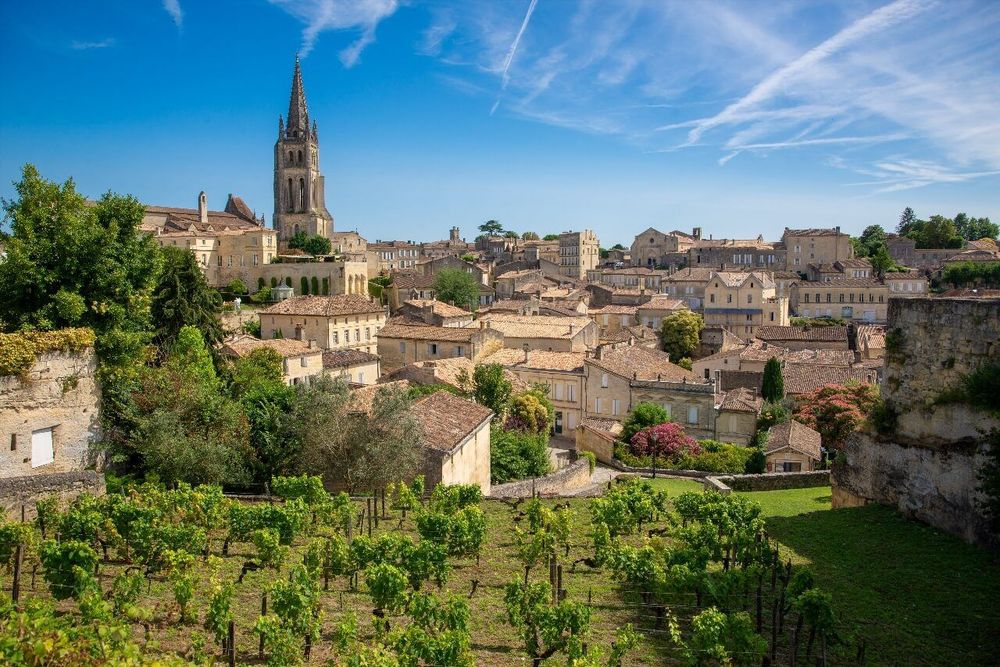
Just 40 km east of Bordeaux, Saint-Émilion is probably the most photographed destination in the Gironde. The medieval village, perched on limestone hillsides riddled with underground galleries, has been listed as a UNESCO World Heritage Site since 1999 — not merely for its Romanesque bell tower or cobbled streets, but for the entire viticultural cultural landscape: vines, châteaux, cellars, and villages form a coherent whole two millennia in the making.
The monolithic church is the village's most striking feature: carved entirely out of rock by monks between the 9th and 12th centuries, it extends 20 metres high and 38 metres long, invisible from the outside and accessible only to visitors who descend beneath the Place du Marché. Above ground, the Romanesque bell tower offers a panorama over the Gironde vineyard: on a clear day, the rooftops of Libourne can be seen in the distance.
For wine enthusiasts, around twenty châteaux open their doors for tastings without prior booking in season. Château Beau-Séjour Bécot (Beau-Séjour Bécot, 33330 Saint-Émilion, rated 4.6/5 on Google from 49 reviews) and Château Canon are among the Premiers Grands Crus Classés accessible to independent visitors. Allow 45 minutes by car from Bordeaux, or 35 minutes by TER from Gare Saint-Jean, with departures every hour on weekdays. Arrive before 10:30 or after 16:00 to avoid peak tourist crowds in July and August.
The Arcachon Basin and the Dune du Pilat
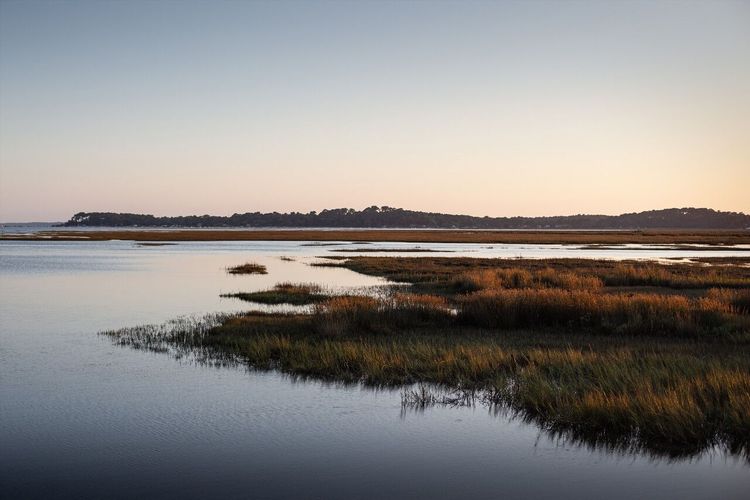
The Arcachon Basin lies around 60 km south-west of Bordeaux, reachable by car (50 minutes) or by TER from Gare Saint-Jean (1h05 direct, trains every hour). This 155 km² body of water, semi-enclosed from the Atlantic Ocean, combines radically different atmospheres depending on the shore chosen and the season.
The town of Arcachon deserves an hour's stroll for its Quartier d'Hiver, a collection of Victorian villas built in the 1860s by wealthy Bordeaux families who came to spend the summer season there. The architecture is eclectic: Alpine chalets, neo-Gothic, neo-Moorish — a world's fair frozen in the pines.
But the highlight of the excursion lies 8 km to the south: the Dune du Pilat, the highest dune in Europe at 106 metres high, 500 metres wide, and nearly 3 km long. The climb through the sand (10–15 minutes) is demanding, but the view from the top — pine forest on one side, the basin and ocean on the other — more than justifies the effort. In July and August, the dune welcomes up to 10,000 visitors per day: arrive before 9:00 or after 18:00 for a very different experience.
The basin's oysters are the other reason to make this trip. The oyster village of Le Canon, on the northern shore, lines up colourful huts where oyster farmers serve their produce directly with buttered bread and a glass of dry white wine — lunch for under €15 per person, hard to beat in the region.
Pauillac and the Médoc: The Route of the Grands Crus
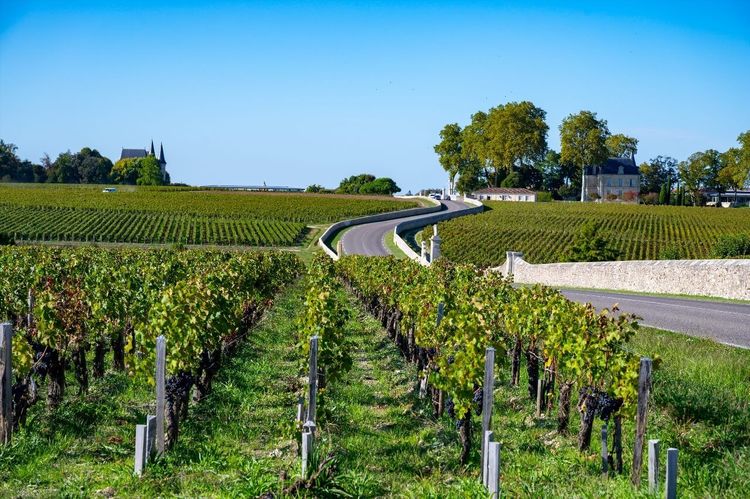
The Médoc stretches north-west of Bordeaux along a peninsula wedged between the Gironde estuary and the Atlantic. This is where Mouton Rothschild, Latour, and Margaux are born — wines that have set the global benchmark since Napoleon's 1855 classification. Pauillac, 50 km north of Bordeaux (45 minutes by car), is a small port town surrounded by three Premiers Grands Crus Classés: Château Latour, Château Mouton Rothschild (Route du Château, 33250 Pauillac, rated 4.5/5 on Google from 158 reviews), and Château Pichon Baron.
A visit to Mouton Rothschild includes its wine art museum, one of the most unexpected in the region: labels designed by Picasso, Braque, Miró, and Bacon sit alongside wine-related art objects spanning several centuries. Booking is essential, as guided tours depart at fixed times. Allow €25 for entry with tasting.
For those who want to combine the wine route with scenic landscapes, the Route des Châteaux (D2) runs along the estuary between Bordeaux and Pauillac through 80 km of terraced vineyards. By electric bike from Bordeaux, this route can be covered in a day at a leisurely tasting pace — several Bordeaux operators offer rentals with luggage racks and a breakdown assistance service.
Lacanau and the Atlantic Coast Beaches
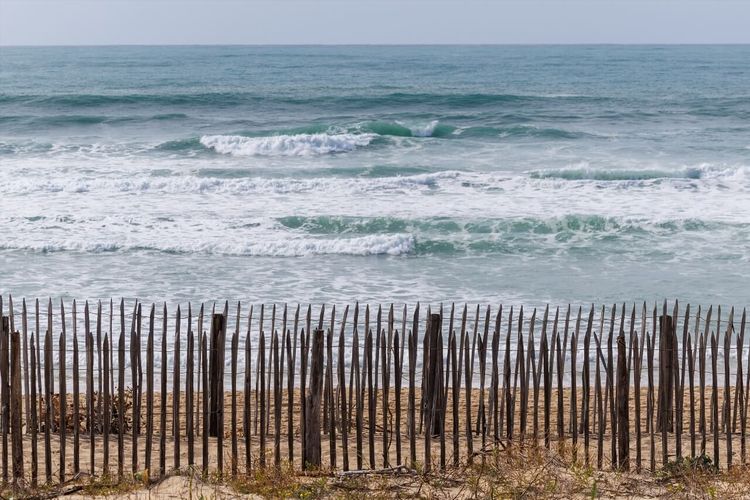
Lacanau is the Bordelais answer to the question 'where to go when it's hot'. Just 55 km north-west of Bordeaux (45 minutes), this Landes town is surrounded by a 2,000-hectare lake, a forest of century-old pines, and 13 km of ocean beaches pounded by consistent waves. The resort hosts a stage of the World Surf League every summer, which gives an idea of the quality of the breaks.
For those who do not surf, the options remain plentiful: bike rental to follow the cycle path around the lake, supervised swimming in season (June to September), kayaking on the calm lake waters sheltered from the wind. If you continue south, the beaches of Carcans and Maubuisson are less crowded, framed by dunes covered in marram grass that naturally slow coastal erosion.
Blaye: The Vauban Citadel on the Estuary
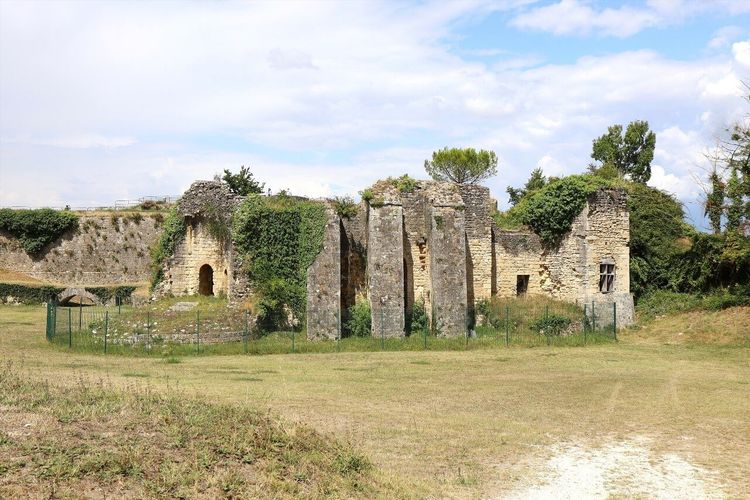
Blaye is a destination too often overlooked in favour of Saint-Émilion or Arcachon. Yet the Citadelle de Blaye (Citadelle, 33390 Blaye, rated 4.6/5 on Google from 4,502 reviews), listed as a UNESCO World Heritage Site alongside France's other Vauban fortifications, is one of the best-preserved examples of 17th-century military architecture. 50 km north of Bordeaux, reachable in 45 minutes by car or via the ferry from Lamarque.
The citadel is inhabited: around a hundred people still live within the ramparts, alongside artisan workshops and a hotel. The ramparts offer a direct view over the Gironde estuary — the largest estuary in Western Europe, at 75 km long and up to 12 km wide. On a clear day, the limestone cliffs of Saintonge are visible on the opposite bank. The return journey can include the Blaye–Lamarque ferry, a 20-minute crossing that offers a different perspective on the Médoc vineyards.
Cap Ferret: The Other Shore of the Arcachon Basin
Cap Ferret is the anti-Arcachon. Where the basin-side town has developed a dense tourist infrastructure, the Cap Ferret peninsula has preserved its fishing-village character: wooden huts, improvised oyster bars, cyclists in shorts. 70 km south-west of Bordeaux (1h10 by car), also accessible by ferry from Arcachon (20-minute crossing).
The Cap Ferret lighthouse (Avenue de l'Océan, 33970 Lège-Cap-Ferret, rated 4.4/5 on Google from 9,729 reviews) rises to 57 metres and offers a 360° view over the basin, the ocean, the Dune du Pilat, and the Landes forest — one of the most striking viewpoints on the Gironde coastline. The climb (258 steps) is included with the €7 entry ticket. Below, several oyster huts serve their produce directly facing the water, with a view of the dune.
On the ocean side, the Horizon beach (beach 44) is one of the wildest and least crowded in the area, reachable in 10 minutes by bike from the lighthouse, with an unobstructed view of the Atlantic and no buildings on the horizon.
The Landes de Gascogne Regional Natural Park
Western Europe's largest forest is within easy reach of Bordeaux. The Landes de Gascogne Regional Natural Park covers 315,000 hectares of pine forests, heathlands, peat bogs, and wetland valleys. The village of Hostens, 50 km south of Bordeaux, is a good entry point: its departmental estate offers waymarked trails around former quarry lakes converted into a nature reserve, with free admission.
Along the Leyre, the river that runs through the park to the Arcachon Basin, canoe-kayak routes allow you to paddle for one or several days in unspoilt nature. For a day trip, the section between Pont de Lavergne and Le Teich (around 15 km) is suitable for beginner paddlers and ends at the Leyre delta.
The Parc Ornithologique du Teich (Rue du Port, 33470 Le Teich, rated 4.5/5 on Google from 3,283 reviews), at the end of the route, is one of France's main migratory bird observatories: 330 species recorded, including white storks, spoonbills, and avocets. Half a day is enough to walk the observation trails along the basin's edge. Admission: €9.90 for adults, free for under-5s.
The Arès and Lège Salt Marshes Nature Reserve
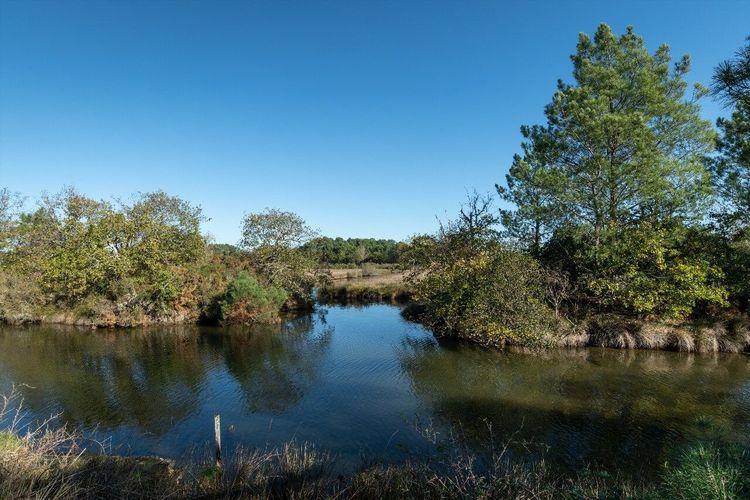
Between Bordeaux and Cap Ferret, the northern shore of the Arcachon Basin conceals a little-known national nature reserve: the salt marshes of Arès and Lège-Cap-Ferret (Route du Bétey, 33740 Arès, rated 4.4/5 on Google from 1,347 reviews). These 485 hectares of marshes, mudflats, and halophytic grasslands form a protected natural habitat for the black-tailed godwit, the ruff, and the black-headed gull. Access is on foot from the Arès car park, along a waymarked interpretation trail, free admission year-round.
The best observation periods are autumn and spring, during migration. At the end of the day, the low-angled light transforms the mudflats into a golden mirror — a photographic spectacle hard to match anywhere on the Gironde coastline. To round off this excursion, check out our selection of the most beautiful beaches near Bordeaux, which also covers beach access points in this area.
La Sauve-Majeure: The Abbey Ruins
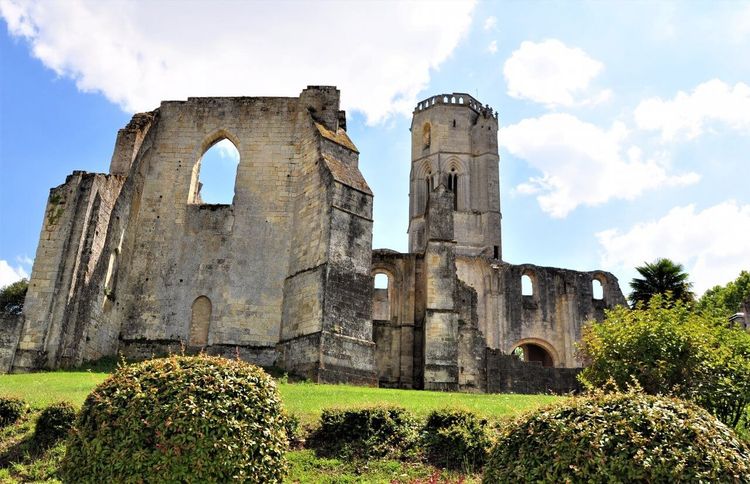
Just 25 km east of Bordeaux, the village of La Sauve is home to the ruins of the Abbaye de La Sauve-Majeure (La Sauve, 33760 La Sauve, rated 4.5/5 on Google from 1,013 reviews), founded in 1079 and listed as a UNESCO World Heritage Site as part of the pilgrimage routes to Santiago de Compostela. What remains — round arches, sculpted capitals depicting biblical scenes and medieval bestiaries — is particularly beautiful precisely because the walls are open to the sky.
The view from the tower (accessible in season) sweeps across the Entre-Deux-Mers vineyards to the Garonne. The abbey pairs naturally with a visit to the Entre-Deux-Mers vineyards, an appellation less well known than Pauillac but producing remarkable dry whites at accessible prices. Abbey admission: €8.60. Recommended visit duration: 1h30. By car, allow 25 minutes from central Bordeaux. Back in town, our audio walking tour takes over with 30 stops, from the Quinconces to the Saint-Pierre quarter.
Château de Roquetaillade
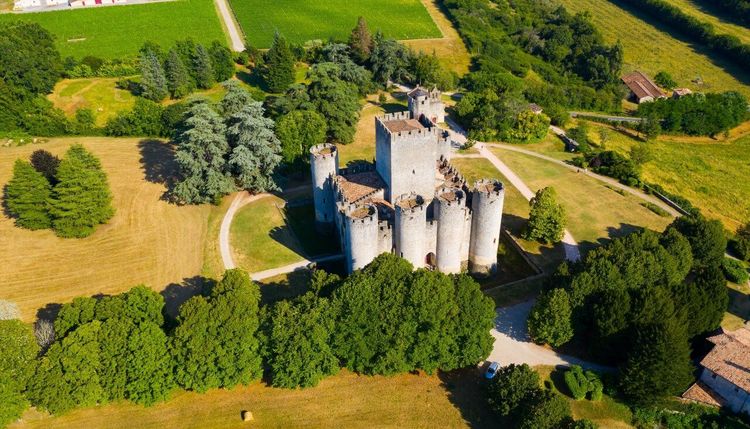
In the commune of Mazères, 50 km south-east of Bordeaux (40 minutes by road), stands one of the best-preserved medieval castles in France. Château de Roquetaillade (Château de Roquetaillade, 33210 Mazères, rated 4.4/5 on Google from 1,140 reviews) has a rare distinction: its interior apartments were restored in the 19th century by Eugène Viollet-le-Duc, the same architect who rebuilt Carcassonne and oversaw the restoration of Notre-Dame de Paris. The painted ceilings, Second Empire furniture, and interior décor have remained virtually intact ever since.
The château is still inhabited by the same family since its construction in the 14th century, and guided tours led by a family member bring a living dimension to the discovery of the place. Adult admission: €11.50. Open year-round except in January. Ideally combined with the châteaux and vineyards of Sauternes, 15 km to the east.
Nérac and the Baïse Valley
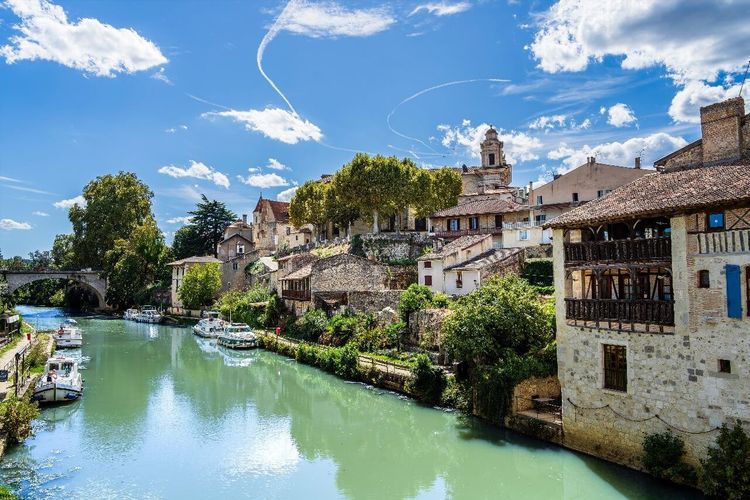
Nérac is the least-known destination in this selection, and perhaps the most charming. This small town in Lot-et-Garonne, 100 km south-east of Bordeaux (1h15 by car), was one of the capitals of the Kingdom of Navarre in the 16th century. Henri IV spent part of his childhood and youth here; his château, partially preserved, now houses a museum dedicated to that period of French history.
The Baïse river runs through the town, and its riverside, animated by terraces in summer, is one of the most pleasant spots for lunch away from the tourist trail. The Parc de la Garenne, a former royal hunting reserve, follows the river for 8 km and remains freely accessible year-round. For those seeking an unusual getaway in Aquitaine, Nérac is a reliable choice rarely mentioned in standard itineraries.
Bergerac: Between Vines and Bastides of the Périgord
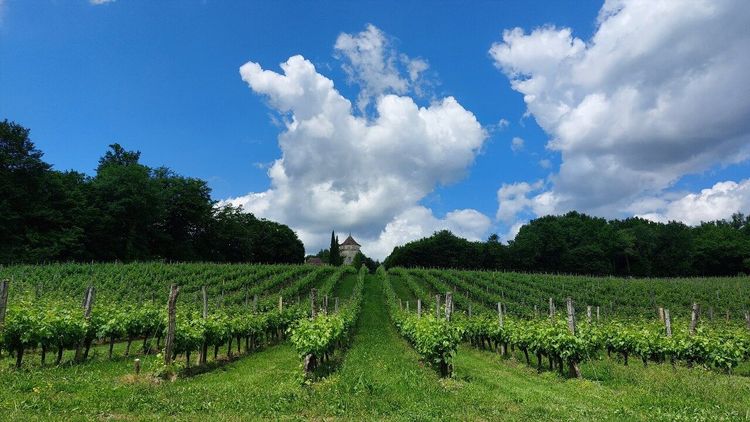
Bergerac, 100 km east of Bordeaux (1h15 by car or 1h by TER from Gare Saint-Jean), is the unofficial capital of the Périgord wine country. Its vineyards produce full-bodied reds (Pécharmant) and rare sweet wines (Monbazillac), set in hillside landscapes gentler than those of the Médoc. The historic centre, with its half-timbered streets around Place Pelissière, deserves an hour's gentle stroll before taking the road to the châteaux.
The Château de Monbazillac (Route du Château de Monbazillac, 24240 Monbazillac, rated 4.2/5 on Google from 1,693 reviews), 5 km from the centre, is the symbol of the appellation: its gently sloping vines produce late-harvest grapes affected by noble rot, which yield deep amber-coloured sweet wines. Château visit with tasting: €12. The Bergerac–Monbazillac combination makes an excellent full-day excursion, particularly for wine tourism enthusiasts who want to venture beyond the well-trodden Médoc circuit.
Périgueux: Gallo-Roman Heritage and a Byzantine Cathedral
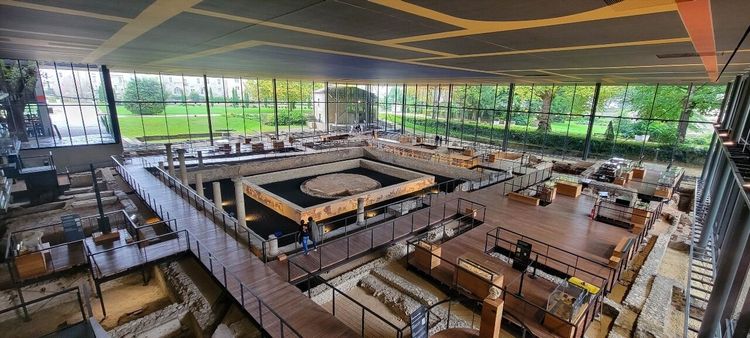
Périgueux is often overshadowed by its more photogenic neighbours. Yet this Dordogne prefecture, 130 km north-east of Bordeaux (1h30 by car), is home to one of France's finest Gallo-Roman museums: the Musée Vesunna (Rue du 26e RI, 24000 Périgueux, rated 4.6/5 on Google from 2,302 reviews), designed by Jean Nouvel around the remains of a 2nd-century Roman villa, with mosaics and frescoes preserved in situ beneath a glass roof.
The Saint-Front cathedral, with its five Byzantine domes visible from across the city, is listed as a UNESCO World Heritage Site as part of the pilgrimage routes to Santiago de Compostela. The Saturday morning market on Place de la Clautre is one of the liveliest in the region: black truffles in winter, foie gras, walnuts, and Périgord cheeses side by side. Recommended excursion duration: a full day.
Bayonne: The Gateway to the Basque Country
The cultural border between Gascony and the Basque Country runs through Bayonne, 185 km south of Bordeaux (2h by car or 2h10 by TER). It is not the closest destination, but the city justifies the journey through its unique character: red-and-green half-timbered architecture, cured ham in the covered market, artisan chocolate in the historic workshops of Rue du Port-Neuf.
The Cathédrale Sainte-Marie de Bayonne, a 13th-century Gothic structure, houses exceptional cloisters whose sculpted capitals depict scenes from the Old Testament. The Musée Basque, housed in a 17th-century mansion, traces the culture and history of the Northern Basque Country through rare ethnographic collections. Bayonne pairs ideally with Biarritz (8 km away) for a full day on the Basque coast.
Royan and the Côte de Beauté
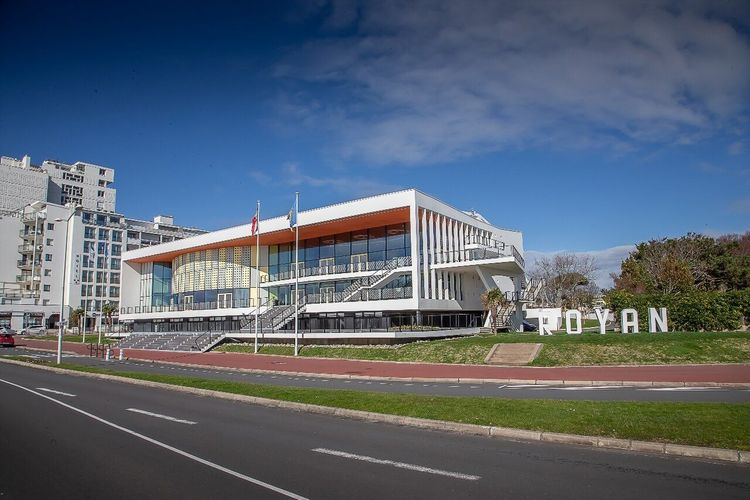
Often forgotten in Bordeaux-centric guides, Royan is well worth the detour. 120 km north of Bordeaux (1h20 by car), this seaside resort is known for its 1950s architecture: 85% destroyed by the 1945 bombings, it was entirely rebuilt in a Modernist style that today earns it the status of 20th-century architectural heritage.
The Église Notre-Dame de Royan, the work of Guillaume Gillet and Adrien Courtois (1958), is particularly striking: a shell-shaped concrete hull that bathes the interior in light filtered through giant stained-glass windows. The seafront, with its 5 km of beach and terraces overlooking the mouth of the Gironde, provides the setting for a lunch or a seaside afternoon away from the crowds of the Côte d'Argent. The journey from Bordeaux can include the Royan–Pointe de Grave ferry, adding a maritime dimension to the excursion.
How to Organise Your Day Trips from Bordeaux
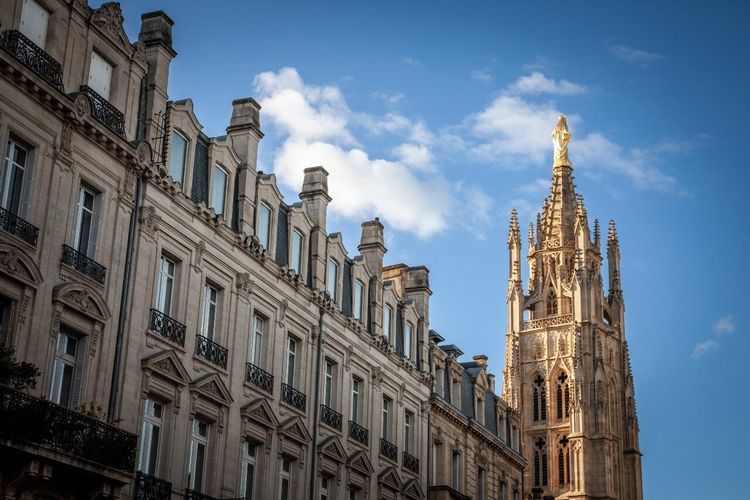
Most destinations in this article are easiest to reach by car, but several are accessible without one:
- By TER: Saint-Émilion (35 min), Arcachon (1h05), Bergerac (1h), Périgueux (1h30), Bayonne (2h10) — frequent departures from Gare Saint-Jean, fixed-price tickets bookable on the SNCF website.
- By bus: Lacanau (1h15 from the Bordeaux tram network), Blaye (Transgirodine line 601, 1h30).
- By bike: the Route des Châteaux du Médoc (D2) and the cycle path along the Garonne make it possible to reach Pauillac or Saint-Émilion by bike from Bordeaux — rentals available in several city districts.
- By rental car: essential for Roquetaillade, Nérac, Royan, and circuits through the Entre-Deux-Mers.
For weekends around Bordeaux, the optimal strategy is to group nearby destinations: Arcachon + Dune du Pilat + Teich in a single day, or Saint-Émilion + La Sauve + Entre-Deux-Mers. Most excursions can be done in a day from Bordeaux without an overnight stay, leaving the evening free to enjoy Bordeaux's nightlife.
If you are discovering Bordeaux for the first time, the Ryo audio guide helps you explore the city before heading out to the surrounding area: a 2h30 route with 29 listening stops, to understand how the city was built between river and vineyard.



FAQ
What is the best day trip from Bordeaux?
Saint-Émilion is the easiest to organise: 35 minutes by TER from Gare Saint-Jean, the village can be explored entirely on foot in 3 to 4 hours, and there is no shortage of quality restaurants for lunch. For those who prefer nature, the combination of Arcachon and the Dune du Pilat (1 hour by train) offers more variety in a single day — beach, dune, oysters, and the Quartier d'Hiver.
Can you visit the Dune du Pilat without a car from Bordeaux?
Yes. Take the TER to Arcachon (1h05), then Transdev bus 1 to La Teste-de-Buch (25 minutes). From there, summer shuttles connect directly to the dune in July and August. Outside the season, a taxi from Arcachon station costs around €25 for the 8 km between the station and the dune.
How far are the day trips around Bordeaux?
The destinations in this article range from 25 km (La Sauve-Majeure) to 185 km (Bayonne). Saint-Émilion (40 km), Arcachon (60 km), and Lacanau (55 km) are the quickest to reach. Nérac, Bergerac, Périgueux, and Royan require 1h15 to 1h30 of travel, best suited for long days or weekends with an overnight stay.
Which day trip is best with children around Bordeaux?
The Dune du Pilat is the most popular destination for families: climbing the sand, the view from the top, and the fast descent appeal to all ages. The Parc Ornithologique du Teich (€9.90, free for under-5s) makes an excellent complementary half-day. Lacanau, with its calm lake and supervised beaches in season, is ideal for family stays looking for swimming and water activities.
Can you explore the area around Bordeaux by bike?
Several cycling routes connect Bordeaux to its nearby surroundings. La Médocaine follows the estuary towards Pauillac over 80 km, with some shorter variants. For more distant destinations such as Cap Ferret or the Dune du Pilat, the bike-train (bike on the TER) is permitted on most Gironde lines — check for mandatory booking on the Bordeaux–Arcachon TER in summer.
Which vineyards should you visit around Bordeaux in half a day?
Saint-Émilion for great reds, Sauternes for sweet wines, and Entre-Deux-Mers for accessible dry whites. For the more ambitious, the Route des Châteaux du Médoc (D2) between Bordeaux and Pauillac passes in front of the most famous estates — some châteaux such as Château Kirwan or Château d'Issan welcome visits without prior booking on weekdays. A few remarkable villages near Bordeaux also border these vineyards and are worth a stop.
Bordeaux is not just a city: it is a gateway to one of France's most diverse regions, capable of lining up in under 2 hours' drive a UNESCO-listed village, the largest estuary in Western Europe, the highest dune on the continent, and forests that stretch all the way to Spain. These 15 day trips around Bordeaux cover the essentials, but the surrounding area still holds many discoveries for those who take the time to linger.
Before or after your excursions, the Bordeaux audio-guided tour helps you explore the city from a new angle: the Ryo app turns the quays, the alleyways of the Saint-Pierre quarter, and the Allées du Tourny into a living story, so you will never look at the façades the same way again.
À lire également