© Shutterstock
 Votre guide Ryo
La Cité du Vin in Bordeaux: Complete Visitor's Guide 2026
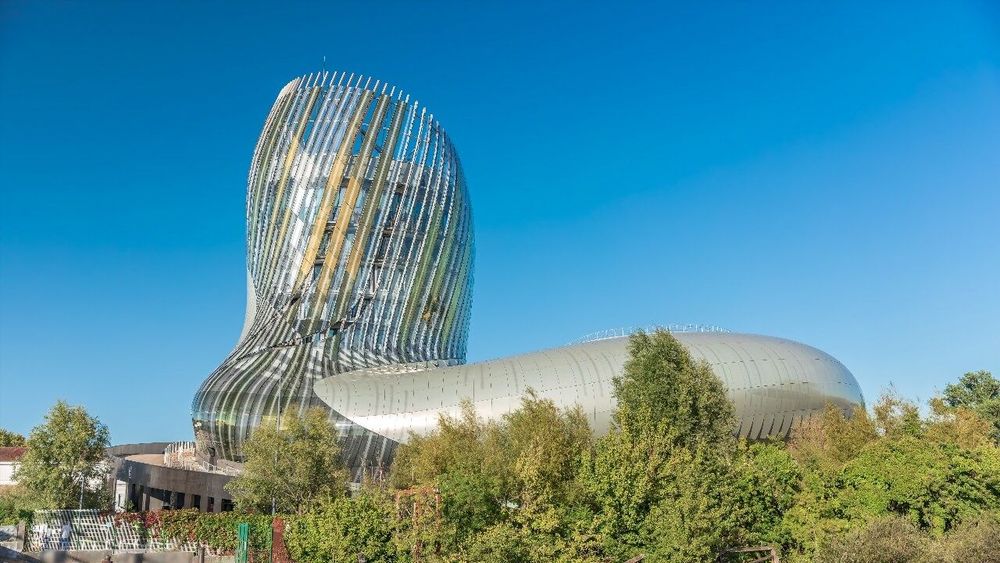
The Cité du Vin rises on the Bordeaux waterfront as an unprecedented architectural gesture: a swirling silhouette of glass and golden aluminum, half decanter, half wave, whose reflections shift with the light on the Garonne. Inaugurated in 2016 on the former docks of the Bacalan district, it now welcomes more than 400,000 visitors a year and has established itself as one of the most-visited cultural destinations in southwest France. Before booking your ticket for la Cité du Vin in Bordeaux, here is everything you need to know to make the most of your day: the immersive permanent exhibition, the panoramic belvedere with tasting included, up-to-date prices, opening hours, and the practical tips that official websites always forget to mention. And if you plan to extend the day with an audio-guided exploration of the rest of the city, the Ryo audio-guided tour of Bordeaux is just a stone's throw away, with 29 listening points across 6.2 km to discover the UNESCO-listed waterfront, the cathédrale Saint-André, and the historic districts at your own pace.
The place is not a wine museum in the traditional sense. No rows of dusty bottles or sleep-inducing panels: it is an immersive experience spread across 3,000 m² divided into twenty thematic worlds that tell the story of wine through civilizations, continents, and centuries. From the first Georgian fermentations of antiquity to contemporary Chilean vineyards, each space raises a distinct question about what wine reveals about human societies. Allow between two and a half and three hours for the full visit, including the belvedere and tasting.
An Architecture Worth Admiring before You Even Go In
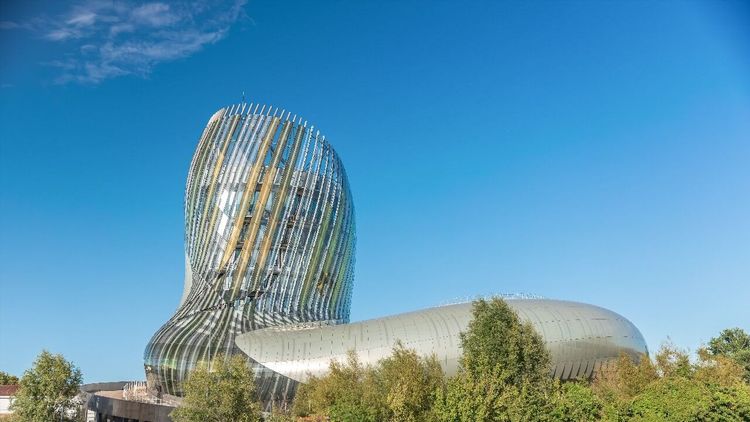
The firm XTU Architects, Anouk Legendre and Nicolas Desmazières, delivered in 2016 a 55-metre-tall building that carefully avoids any overly literal reference to wine. The facade, clad in golden aluminum panels and glass strips, adopts an organic form that recalls at once the motion of wine swirling in a glass, the sinuous meanders of the Garonne, and the twist of a ripening cluster of grapes. At night, the interior lighting transforms the building into a luminous landmark visible from the opposite bank.
Before going in, walk all the way around the building on the waterfront side. L'Esplanade de Pontac, the public square in front of the entrance, is freely accessible at any time without a ticket. This is where you get the best photo of the building, with the Garonne as a backdrop. At low tide, the river reveals sandbanks that further enhance the presence of water in the frame.
The Permanent Exhibition: Twenty Spaces, One World
The heart of the visit occupies the second and third levels of the building. 3,000 m² of permanent exhibition across twenty thematic worlds: it is both a lot and a little — a lot because it takes time to move through everything, a little because each space has been designed to hold attention without overwhelming it. The audio guide is integrated into the museum's official app, available free of charge before your visit in eight languages and functional offline once the content has been downloaded.
The exhibition imposes no set route. You can start with "Civilizations and Wine," a journey across 8,000 years of history from the first Anatolian fermentations to the great Phoenician trade routes, or dive straight into "Vineyards of the World," a sensory mapping that links each wine-producing region to its climatic, cultural, and gastronomic characteristics. This freedom of movement changes the experience: you are not following a lesson, you are exploring a territory.
Three spaces stand out for their design.
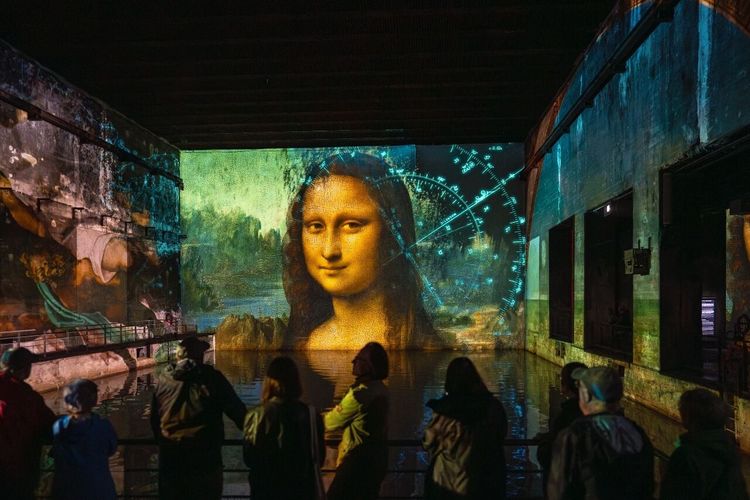
The Sensory Odyssey is a 270° immersive projection room. For several minutes, wine-growing landscapes from five continents come to life around you with remarkable visual and audio quality. Heat and aromas complete the image. It is the most spectacular space in the entire tour, the most memorable for children, and often the most crowded in high season — arrive early.
The Virtual Cellar puts visitors in the shoes of a cellar master, from receiving the harvest to bottling. Decisions to be made at every stage, with immediate feedback on the consequences: ten minutes that give a concrete sense of what making a wine involves, even for someone who has never set foot on an estate.
The Globe of Flavors is an interactive olfactory profiling station. By answering a series of questions about your aromatic preferences — fruit, spice, minerality, oak — you receive a sensory profile that points you toward wine styles likely to suit you. The idea: giving a vocabulary to those who enjoy wine without knowing how to describe it. The station sends the results directly to your phone, so you can keep them after your visit.
The permanent exhibition is fully included in the standard entry ticket. Allow at least two hours, more if you are visiting with very curious children or decide to linger in the interactive spaces.
The Belvedere: The Garonne at 360°, a Glass in Hand
This is the moment most visitors remember longest. The belvedere occupies the eighth floor and offers a circular view over Bordeaux: the Garonne, the pont d'Aquitaine, the pont Chaban-Delmas, the UNESCO-listed historic centre, the rooftops of les Chartrons, and on a clear day, the first rows of vines of the Médoc to the north.
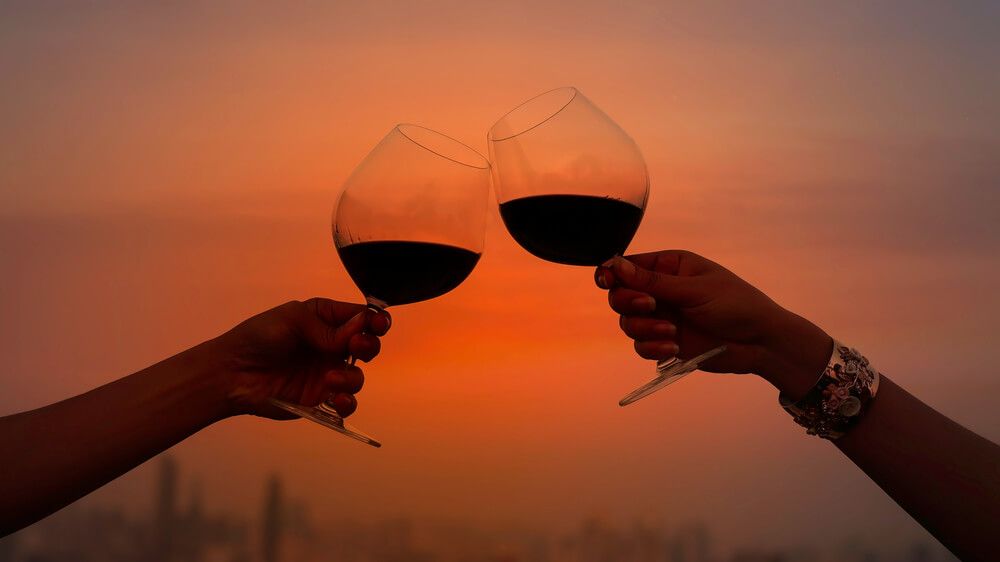
What sets it apart from a simple tourist panorama: a wine tasting is included with the entry ticket. On arriving at the 8th floor, you choose from a selection of wines from various origins depending on the current rotation — France, Spain, Italy, Georgia, Chile. Sommeliers are present and available to answer your questions, without any heavy-handed pedagogy. Minors and those who do not wish to drink alcohol receive a grape juice instead.
A tip that genuinely changes the order of your visit: head up to the belvedere first of all, before starting the permanent exhibition. In the morning, the raking light on the Garonne is at its finest, the room is far less crowded, and you begin the visit with a full tank of energy. The geographic reading of the city from above also enriches the rest of the tour.
Temporary Exhibitions and Events
The venue programmes two to three temporary exhibitions each year on themes that bring together the world of wine and contemporary art, the history of a specific wine region, or a cultural tradition little known to the general public. These exhibitions are not systematically included in the standard ticket — check the details at the time of booking.
The 2026 events calendar — evenings, concerts, thematic workshops — is published on the official website several weeks in advance. The museum organises belvedere evenings in summer in particular, with live music and a special menu: a very different experience from the standard visit, and an interesting option if you return to Bordeaux several times a year.
Wine Tasting at La Cité du Vin
Beyond the glass included at the belvedere, the museum offers several more in-depth tasting formats.
The Saveurs du Monde workshops are held several times a week in a dedicated space on the ground floor. A guide-caviste presents three to four wines around a specific theme: grape varieties from the left bank versus the right bank of Bordeaux, natural wines versus conventional wines, dessert wines from the four corners of the world. Duration: approximately 45 minutes. Level required: none — these workshops are expressly designed for beginners who want to ask questions without feeling judged. Additional charge applies; online booking is advised.
The wine cellar on the ground floor offers a selection chosen by the museum's team for sale and by-the-glass tasting. The distinguishing feature: you will find wines from regions rarely seen in mainstream retail — Jura, Croatia, Georgia, Armenia — at reasonable prices for the quality on offer. It is also the place to bring home a bottle that is a little less conventional than a classic Bordeaux.
To continue your gastronomic exploration beyond wine once you are out in the city, the Ryo guide to Bordeaux's culinary specialties lists the must-try addresses and flagship products of the region, from cannelés to oysters from the Bassin d'Arcachon.
Restaurant Le 7 and On-Site Dining
On the 7th floor, Le 7 is the establishment's panoramic restaurant. The floor-to-ceiling windows offer a direct view over the Garonne and the Bacalan quays. The menu focuses on market produce and carefully crafted food-and-wine pairings, with starters around €12–16 and main courses between €22 and €35.
Le 7 is accessible without a museum entry ticket. If you are not visiting the exhibition, you can still have lunch or dinner there — an appealing option for a meal with a view over the Garonne without committing to the full visit. Reservations are strongly advised at weekends and during the summer season.
On the ground floor, the café-bistro offers lighter options: quality sandwiches, cheese and charcuterie boards, wines by the glass. A suitable break before or after the exhibition, with no reservation required.
2026 Prices and Tickets
The 2026 prices are as follows (check on the official website, as they may change during the year):
| Category | Indicative Price | |-----------|------------------| | Adult (18 and over) | €23 | | Reduced rate (students, seniors 65+, job seekers) | €17 | | Young person (6 to 17 years) | €10 | | Child under 6 | Free | | Bordeaux CityPass (24h, 48h or 72h) | Included |
The standard ticket includes access to the permanent exhibition, entry to the belvedere, and a glass of wine or grape juice during the tasting on the 8th floor. Temporary exhibitions may incur a surcharge — check at the time of purchase.
If you have a Bordeaux CityPass, admission is included, belvedere tasting included. It is one of the most valuable inclusions in the pass. Online ticketing is available on the official website: in high season, it allows you to avoid queues that can exceed 40 minutes at the entrance. To fill the rest of the day, the historic centre unfolds over 6.1 km of commented walking.
Opening Hours and Getting There
The museum is open every day of the year, with the sole exception of December 25 (early closing at 4 p.m. on December 24).
Usual opening hours:
- Weekdays and Sundays: 10 a.m. – 6 p.m.
- Saturdays: 10 a.m. – 7 p.m.
- December 26 to January 2: 10 a.m. – 7 p.m.
- Later closings on certain event evenings (see calendar on the official website)
By tram: line B, stop "Cité du Vin", approximately 15 to 20 minutes from place de la Victoire or Gare Saint-Jean. The tram runs along the Garonne quays and drops you directly in front of the esplanade. It is the most practical option for avoiding parking problems.
On foot from les Chartrons: 10 to 12 minutes walking north along the quays. A pleasant route that takes you through the antique dealers' and galleries' district.
By car: Parking Bacalan, immediately adjacent to the esplanade, is a paid car park. Allow 2 to 3 hours of parking depending on the length of your visit and a possible stop at the restaurant.
Contact: +33 (0)5 56 16 20 20
Practical Tips for Making the Most of Your Visit
Book online. In July and August, queues at the entrance can exceed 40 minutes. Buying online gives access to a dedicated lane that is considerably faster. Outside peak season, you can generally walk in without a prior reservation on most weekdays.
Choose a weekday morning. Spring weekends and school holidays concentrate a large proportion of visitor numbers. On a Tuesday or Thursday morning between September and November, you will have the interactive spaces almost to yourself, and the belvedere sommeliers will have far more time to answer your questions.
Go up to the belvedere first. Before starting the permanent exhibition, take the lift up to the 8th floor. The morning light on the Garonne is at its best, the room is less crowded, and the tasting at the start of your visit puts you in better spirits for exploring the floors below.
Download the official app before you arrive. It provides a complete audio guide for each space in the permanent exhibition, available in eight languages and functional offline once the content has been downloaded. Without the app, the visit is still worthwhile, but some context is missing.
Allow half a day. The majority of visitors stay longer than expected. Between the permanent exhibition, the belvedere, a stop at the wine cellar, and a glass at the ground-floor café, three hours disappear easily. Add lunch time if you are booking at restaurant Le 7.
For families with children: the museum is well suited from the age of 6–7. The interactive spaces, immersive projections, and sensory simulations hold children's attention far beyond what a traditional museum would allow. Children under 6 enter free but may find some content less accessible for their age.
The gift shop is worth a visit even if you are not planning to buy anything: the selection of books on oenology, tasting glasses, and accessories is one of the most comprehensive in the city, with references you will not easily find elsewhere.
What to Do around the Museum
The Bacalan district has changed profoundly since 2016. The industrial wastelands of the former docks have given way to landscaped public spaces, local shops, and restaurants that make the area a destination in its own right, not merely a gateway to the site.
Les Chartrons begin just a few hundred metres to the south. This district, historically home to the great Bordeaux wine merchants, today houses art galleries, antique dealers, second-hand shops, and independent wine cellars. The Marché des Chartrons, held at weekends on the quays, is one of the most authentic producers' markets in Bordeaux, featuring local market gardeners and winemakers selling direct.
To the north, the Parc aux Angéliques (Quai Deschamps, 33300 Bordeaux, rated 4.3/5 on Google with 2,432 reviews) offers a riverside walk along the Garonne, ideal for unwinding after several hours of visiting. The landscaped quays allow you to stroll all the way to the pont Chaban-Delmas, the 77-metre lift bridge inaugurated in 2013, whose industrial silhouette contrasts sharply with the classicism of the historic quays in the city centre.
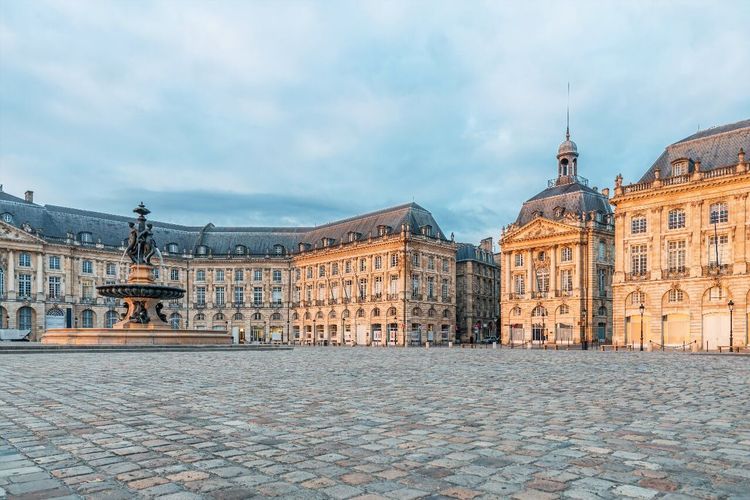
To continue exploring Bordeaux the same day or the next, the Ryo audio-guided tour of Bordeaux takes you into the historic centre with a route of 30 listening stops across 6.1 km, from the quays of the Port de la Lune to the cathédrale Saint-André, via the place de la Bourse and its famous Miroir d'eau.
FAQ
Is La Cité du Vin open every day?
Yes, it is open every day of the year, with the sole exception of December 25 (early closing at 4 p.m. on December 24). Opening hours are generally 10 a.m. to 6 p.m. on weekdays and Sundays, and until 7 p.m. on Saturdays as well as from December 26 to January 2. Later closings are possible during certain events — check the calendar on the official website before your visit.
What is the admission price for La Cité du Vin in 2026?
The adult ticket is around €23, with a reduced rate of approximately €17 for students, seniors aged 65 and over, and job seekers. Young people aged 6 to 17 pay around €10, and children under 6 enter free. This ticket includes the permanent exhibition, the belvedere, and a tasting. If you have a Bordeaux CityPass, admission is included in the pass. Check the exact prices on the official website, as they may change during the year.
How long should I allow for the visit?
Allow between 2 and 3 hours for a complete visit of the permanent exhibition and the belvedere with tasting. If you are visiting with young children or taking part in a Saveurs du Monde workshop, half a day is more realistic. Many visitors stay longer than expected: the interactive spaces hold attention well beyond initial estimates.
How do I get to the museum from Gare Saint-Jean?
Tram line B, stop "Cité du Vin", is the most direct option: about 20 minutes from Gare Saint-Jean, 15 minutes from place de la Victoire. The tram runs along the quays and drops you directly in front of the esplanade. On foot from les Chartrons, allow 10 to 12 minutes walking north along the quays.
Do I need to book in advance to visit the museum?
It is not mandatory, but strongly recommended in July and August and during off-season weekends. Online ticketing allows you to avoid queues that can exceed 40 minutes at the entrance during peak season, and guarantees your time slot. On weekdays outside school holidays, you can generally turn up without a prior reservation.
Is the belvedere accessible without an entry ticket?
No, the belvedere is not accessible without a ticket — it is part of the visit. However, restaurant Le 7 (7th floor) is open without a ticket for those who simply wish to have lunch or dinner with a view over the Garonne.
Is the museum suitable for children?
Yes, from the age of 6–7. The permanent exhibition features numerous interactive elements, immersive projections, and sensory simulations that captivate children far more than a traditional museum would. Children under 6 enter free but may find some content less suited to their age. The belvedere tasting is replaced by grape juice for minors.
Conclusion
La Cité du Vin achieves a difficult feat: making the world of wine accessible without simplifying it, spectacular without being superficial. Whether you are a complete beginner or a passionate enthusiast, the visit has spaces that match your level and your curiosity. The belvedere remains the strongest image: a glass in hand, the Garonne below, Bordeaux spreading out in all its breadth.
To continue the day beyond Bacalan, the Ryo Bordeaux audio guide awaits with 29 audio stops that tell the story of this port city from its Roman origins to its contemporary transformation. A fitting continuation after your visit.
À lire également