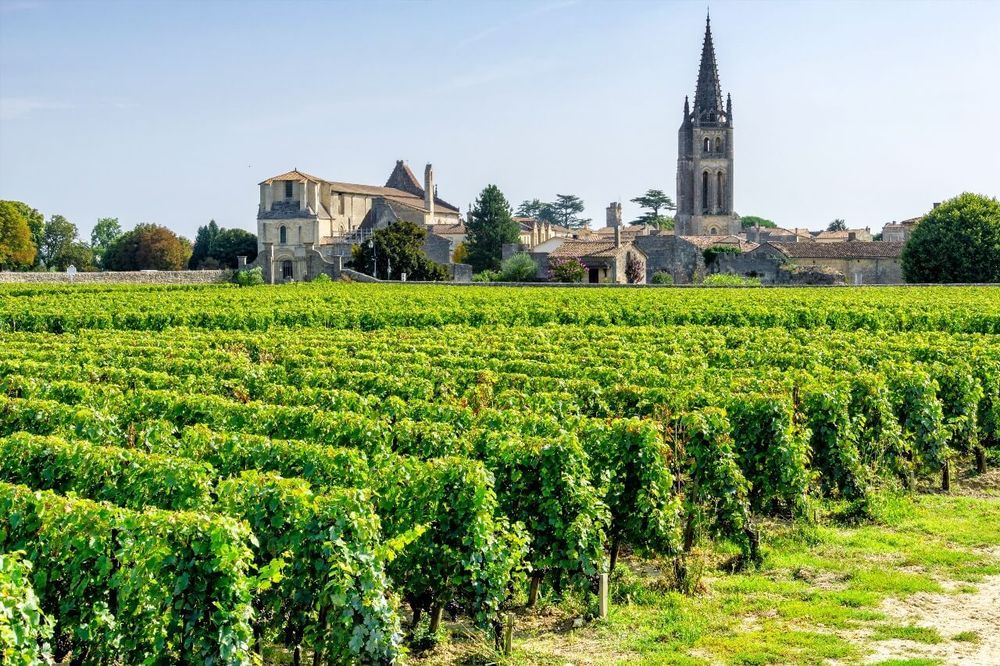
© Shutterstock
 Votre guide Ryo
Things to Do in Blaye in 2026: 15 Experiences between the Vauban Citadel and the Gironde Estuary
What to do in Blaye when the town fits almost entirely behind golden stone ramparts overlooking the widest estuary in Europe? The question arises the moment you step out of your car: here, Vauban's military history coexists with winemakers who open their cellars and a river island accessible only by boat. If you're working your way through the Bordeaux region's audio-guided tours, headphones on, Blaye deserves a stop of its own, just over half an hour's drive from the city.
Across fifteen stages, you'll encounter a fort that has remained virtually intact since 1685, a Roman villa sheltered under a glass canopy, a road nicknamed the Corniche Fleurie that follows the river for sixteen kilometres, and a ferry that crosses the Gironde in twenty minutes to reach the Médoc. Add to that wine tastings in the Côtes de Blaye, a sandy beach in the middle of the countryside, and night markets that bring the Place d'Armes to life throughout the summer. Enough to fill an entire weekend — or even two.
1. The Citadel of Blaye
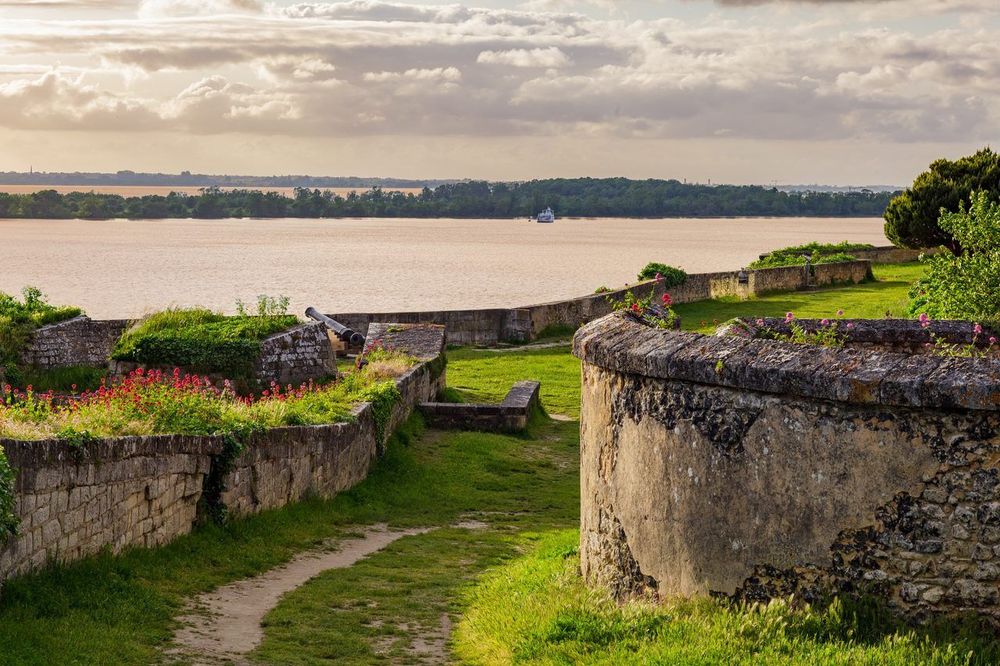
The Citadel of Blaye (Place d'Armes, 33390 Blaye, rated 4.6/5 on Google with 4,525 reviews) occupies nearly 35 hectares on a rocky spur overlooking the Gironde. Built from 1685 on the orders of Louis XIV, it was entrusted to Vauban to secure the estuary against a potential English or Dutch attack. The site has been listed as a UNESCO World Heritage Site since 2008, as part of the Vauban fortifications, alongside eleven other French ensembles.
What strikes you on arrival is that the citadel is not a frozen monument but a living town: around 300 residents still live within the walls, in houses built against the curtain walls. You'll find a baker, a grocer, guest rooms set up in former barracks, and several kilometres of ramparts open for free exploration, with no set hours or admission ticket.
For the guided tour of the underground passages and powder magazines, allow around an hour and a half. Budget-wise, expect around €7.50 per adult and €5.50 for children aged 5 to 12, with free entry for younger children; free access to the ramparts costs nothing at all. In high season, departures are staggered morning and afternoon, but it's best to book your slot with the tourist office to avoid queuing at the entrance. And if you can, save this visit for the end of the day: the raking light catches the slate rooftops and sculpts the estuary. A tip that few visitors follow: climb the North Bastion at sunset, far less crowded than the main esplanade.
2. The Museum of Art and History of the Pays Blayais
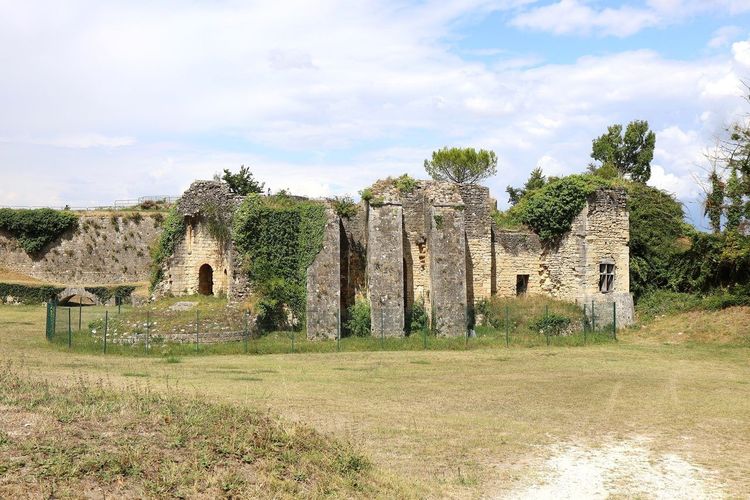
Housed in the Governor's Pavilion, inside the citadel itself, the Museum of Art and History of the Pays Blayais (Place d'Armes, 33390 Blaye, rated 4.3/5 on Google with 10 reviews) traces nearly two thousand years of occupation of the site, from Gallo-Roman remains to the garrisons of the Second World War.
The collections blend ancient ceramics, fortification models and a collection dedicated to the daily life of the artillerymen stationed there in the 19th century. An entire room is devoted to Vauban's original plans, with period drawings that convey the scale of the initial construction project: more than 5,000 workers are said to have taken part over roughly thirty years.
Allow 45 minutes to an hour to go through all the rooms. The combined ticket with access to the citadel's underground passages remains the most economical option if you plan to visit both sites on the same day. Opening hours are reduced in the low season (closed on Tuesdays), so be sure to check before visiting on a public holiday.
Good to know: the explanatory panels are accessible even without a guide, allowing you to visit at your own pace. Military history enthusiasts will happily spend more than an hour here, while a family visit wraps up in about three quarters of an hour without losing the children's attention, thanks to the models and objects displayed at eye level.
3. Fort Pâté, the Vauban Lock on the Estuary
In the middle of the river, facing the citadel, stands Fort Pâté, built on an artificial islet to complete the defensive system alongside Fort Médoc on the opposite bank. The three fortresses form what historians call the "lock of the Gironde estuary", a triangle of fire that allowed cannons to be trained on any enemy vessel making its way upstream towards Bordeaux.
Access to Fort Pâté is by boat only, as part of organised visits departing from the Blaye landing stage (Quai de la Gironde, 33390 Blaye, rated 4.3/5 on Google with 1,692 reviews), generally during the summer season. The crossing takes around ten minutes and offers a rare view of the citadel seen from the water — an angle that very few land-based visitors ever experience.
While places for the interior visit are limited and must be booked in advance, you can also simply observe it from the ramparts with binoculars: the fort's massive silhouette, almost unchanged since the 17th century, stands out clearly on the water, especially in the late morning once the mist has lifted.
4. The Corniche Fleurie
The Corniche Fleurie (Route de la Corniche, 33390 Plassac) connects Blaye to Bourg-sur-Gironde over roughly sixteen kilometres, hugging the bends of the river. The road climbs and descends through a succession of small hilltop villages — Plassac, Villeneuve, Comps — each clinging to its limestone cliff overlooking the estuary.
The name comes from the masses of flowers that adorn façades and retaining walls every spring, the result of a floral competition held between municipalities for several decades. But the interest of the route goes well beyond its decorative appeal: several purpose-built viewpoints allow you to see both banks of the Gironde simultaneously, more than three kilometres wide at this point, making it the largest estuary in Western Europe.
You can drive the route in just under an hour without stopping, but it is equally well suited to cycling for fit riders, with a few gentle gradients that require a little effort. A stop at the Plassac belvedere — usually deserted on weekdays — is a must for a picnic overlooking the river. Aim for the late afternoon: the low-angle light sculpts the cliffs and traffic drops off noticeably after 5pm.
5. Cruises and Boat Trips on the Gironde Estuary
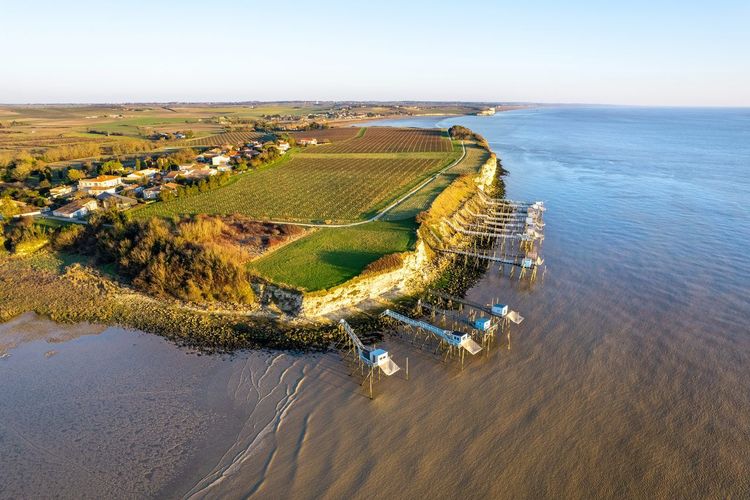
From the landing stage at the foot of the citadel, several companies offer cruises on the Gironde estuary, ranging from a simple one-hour commentary cruise to lunch or sunset aperitif packages.
These outings allow you to see the citadel and Fort Pâté from an angle impossible to achieve from dry land, and often to spot the carrelets — those stilted fishing huts typical of the Gironde estuary. Some boats sail as far as the Bec d'Ambès, the confluence of the Dordogne and the Garonne that gives birth to the Gironde proper.
Departures are concentrated mainly between April and October, with increased frequency in July and August. Book on a weekday if possible: Saturday slots fill up several days in advance from June onwards. For families, the one-hour option is the most suitable, as young children tend to get restless beyond that.
6. Île Pâtiras and Its Lighthouse
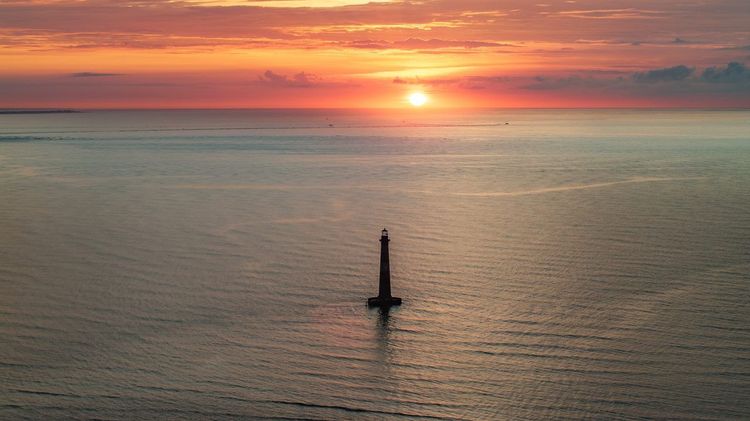
Off the coast of Blaye, île Pâtiras (Estuaire de la Gironde, 33390 Blaye, rated 4.7/5 on Google with 35 reviews) barely rises above the waterline, topped by a 19th-century lighthouse repainted in white and red. Long used as a quarantine zone for vessels arriving from the open sea, it now serves as a stopover for certain river cruises, with an on-site restaurant in season.
The island can only be visited by boat, as part of organised trips from Blaye or Bourg-sur-Gironde. The crossing takes about twenty minutes, often punctuated by the passage of a cargo ship heading upstream towards the port of Bordeaux, several kilometres away.
If the name Pâtiras sounds intriguing, it is said to derive from the Gascon term for a meadow or pasture, as the island long served as grazing land before becoming a sanitary surveillance post. A geological curiosity rounds out the picture: the island's sandy soil shifts slightly with each flood, requiring regular reinforcement of the lighthouse foundations.
To make the most of the visit, book a package that includes lunch on the island: you'll then have a few hours to climb to the top of the lighthouse, walk along the recently replanted vines and watch the migratory birds that stop over on the mudflats. Bring a hat and water in summer, as shade is scarce once you've left the restaurant.
7. The Blaye Vineyards: Visits and Tastings
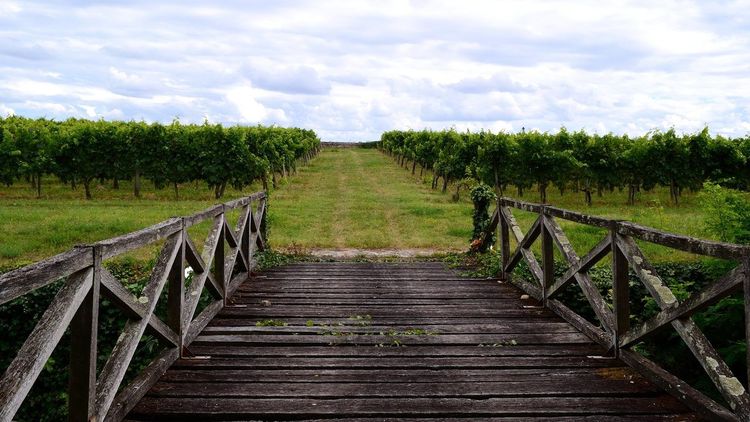
Blaye lends its name to two appellations, Côtes de Blaye and Blaye Côtes de Bordeaux, which cover around 6,000 hectares of vines on the right bank of the Gironde. The vineyard spreads in an amphitheatre around the citadel, with a majority of red grape varieties (Merlot leading the way) and a more discreet production of dry whites.
The Maison des Vins de Blaye Côtes de Bordeaux (Allées Marines, 33390 Blaye, rated 4.4/5 on Google with 145 reviews), located under the Allées Marines at the foot of the ramparts, centralises information on around thirty châteaux open for visits. You can taste a rotating selection of cuvées free of charge, with an advisor on hand to point you towards a specific estate based on your tastes and budget.
In the surrounding area, several family-owned estates open their cellars year-round by appointment, with tasting prices that remain considerably more accessible than in the neighbouring Médoc. Some estates organise winemaker dinners, bringing producers and visitors together around regional dishes — a formula that must be booked several weeks in advance in high season. You can also follow a signposted wine route from the tourist office, which winds through the wine-growing villages between Blaye and Cars over the course of a leisurely day.
8. The Gallo-Roman Villa of Plassac
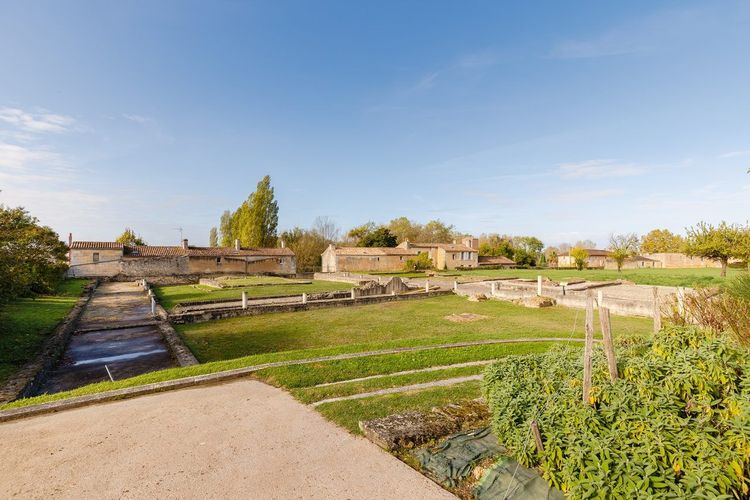
About ten minutes from Blaye, the village of Plassac is home to the remains of a Gallo-Roman villa (Le Bourg, 33390 Plassac, rated 4.4/5 on Google with 470 reviews) occupied from the 1st to the 4th century AD. The site, protected under a modern canopy, reveals sections of mosaic flooring, a hypocaust heating system and the foundations of several successive buildings.
What sets Plassac apart from other ancient sites in the region is the continuity of occupation: archaeologists have uncovered four superimposed villas, built and rebuilt over nearly four centuries, offering a rare insight into the evolution of Gallo-Roman rural dwellings. A small adjacent museum displays everyday objects found during excavations — coins, ceramics and agricultural tools.
The visit often ends with the Villa Romana, a full-scale reconstruction of an ancient living room decorated using period techniques. Allow about an hour for the full tour, preferably in the morning if you plan to follow it up with the Corniche Fleurie in the afternoon.
9. The Blaye Market
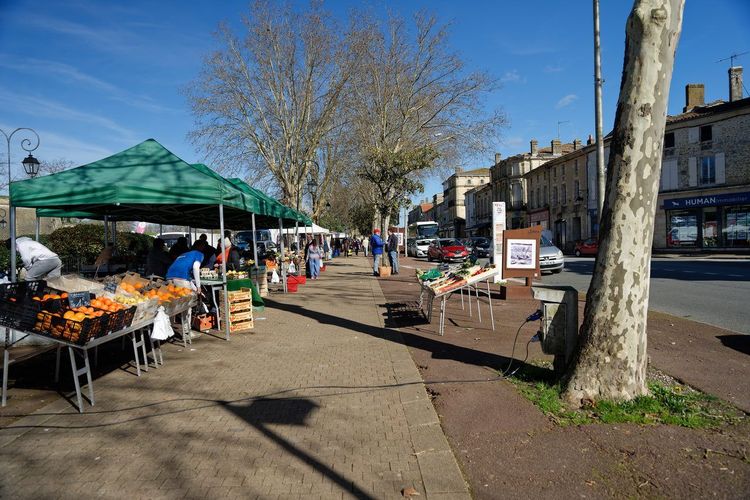
The Blaye market is held every Wednesday and Saturday morning under the market hall and on the adjacent square, right in the town centre. You'll find the classics of local produce: market gardeners from the Blayais, goat's cheese, free-range poultry and a few bottles of Côtes de Blaye sold directly by the winemakers.
Saturday draws larger crowds and more stalls, sometimes including a fishmonger from the estuary offering lamprey or eel depending on the season. Arriving before 10am is the best way to avoid the rush and make the most of the busiest stalls.
Take the time to chat with the producers: many have been working the Blayais for generations and will happily slip you the address of a château to visit in the afternoon, or the best way to cook a lamprey. It's also the ideal opportunity to put together a complete picnic before heading off to the Corniche Fleurie — goat's cheese, fresh bread and a bottle of dry white bought directly from the winemaker, before saving room on the itinerary for Bordeaux's own audio-guided tour just down the road.
10. Cycling along the Estuary
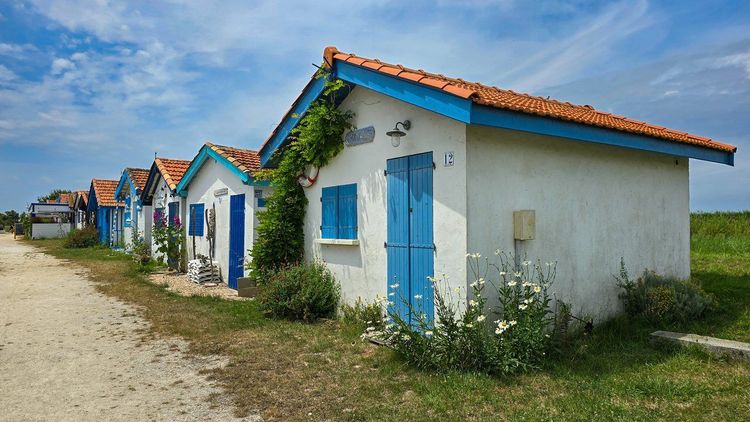
Blaye lies on the Vélodyssée route, the long-distance cycling trail that runs along the Atlantic coast from Roscoff to Hendaye. The local section follows the banks of the Gironde and is broadly flat, punctuated by a few climbs towards the villages of the Corniche.
Several bike hire companies, including electric bikes, set up near the landing stage in season — convenient for visitors arriving by train or bus from Bordeaux. You can put together a loop of around twenty kilometres towards Plassac and Cars, with a possible stop at the Gallo-Roman villa along the way.
More experienced cyclists sometimes push all the way to Bourg-sur-Gironde along the corniche road — around forty kilometres there and back, with more noticeable elevation changes. Remember to bring water: refill points are scarce once you leave the centre of Blaye.
11. The Maison forte du Prat, in Cars
In Cars, a few kilometres north-east of Blaye, stands the Maison forte du Prat (Le Bourg, 33390 Cars, rated 4.2/5 on Google with 45 reviews), a 15th-century fortified building that is rare in the region for its state of preservation. Moats, corner turrets and machicolations make it an almost intact example of medieval defensive architecture in the Blayais.
Public opening times are limited, often during the Heritage Days or at events organised by the owners. Check the calendar before making the trip — the exterior façade is worth the detour even on days when it is closed.
12. Swimming and Relaxing by the Water
Contrary to the image of a purely industrial estuary, several designated swimming spots exist along the Gironde near Blaye and in the surrounding municipalities, with water that is calmer and fresher than you might expect compared to the ocean.
The landscaped riverbanks near the landing stage are perfect for a picnic on the grass, with a direct view of the citadel and the comings and goings of the ferry. For a proper supervised swim, head to the river beaches further north towards Saint-Ciers-sur-Gironde, reachable in about twenty minutes by car.
Bear in mind that swimming in the estuary depends heavily on the tides and water quality: check locally before taking the plunge, and stick to supervised areas in summer. For children, nearby leisure centres often provide a safer alternative, with freshwater lakes, play areas and sometimes pedalo hire to extend the afternoon.
13. The Blaye–Lamarque Ferry, an Unusual Crossing
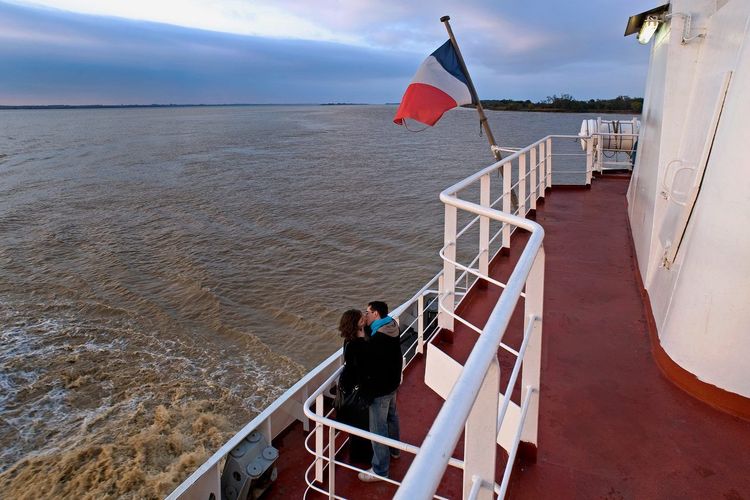
For generations, a ferry has linked Blaye to the village of Lamarque in the Médoc, crossing the estuary in around twenty minutes. The service carries cars, pedestrians and cyclists alike, several times a day depending on the tide schedule.
Beyond its practical value for connecting the two banks without a detour via Bordeaux, the crossing is an activity in its own right: a head-on view of the citadel receding into the distance, seagulls for company, and the sensation of a river far wider than it appears from dry land. Expect a modest fare for pedestrians, higher for vehicles, and check the last crossing time if you plan to return the same evening.
A local tip: stand at the front of the ferry when leaving Blaye to keep the citadel in view for as long as possible. The crossing costs only a few euros on foot and allows you to switch in an instant from the wine-growing right bank to the grand crus classés of the Médoc — a shortcut that regulars use to avoid the more than one-hour detour via the Bordeaux bridge.
14. The Ramparts and Gardens of the Citadel
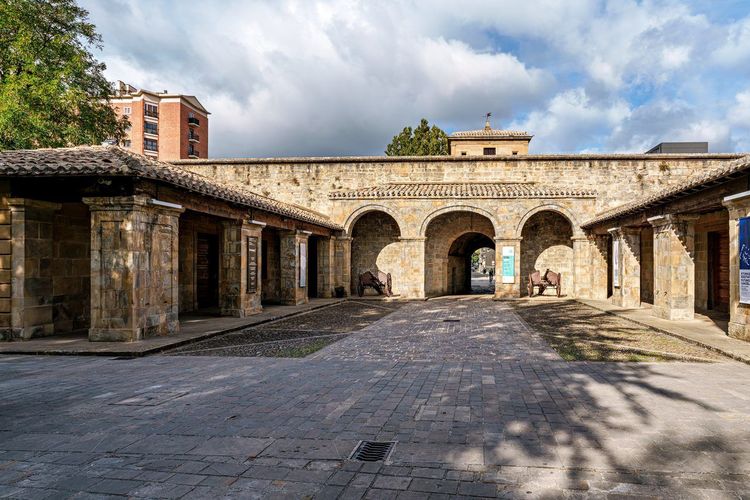
Beyond the guided tour of the underground passages, the citadel can be freely explored on foot along several kilometres of ramparts, with well-tended gardens punctuating the chemin de ronde. The Jardin de l'Éperon, in particular, offers an unobstructed vantage point over the estuary and the surrounding countryside.
This free walk, accessible year-round, is without doubt the best way to appreciate the scale of the site before embarking on a more detailed visit of the museum or the underground passages. Wear sturdy shoes: some sections remain cobbled and slightly uneven.
Each season brings its own atmosphere: in spring, the gardens burst into blossom and the flowerbeds fill with colour; in autumn, the golden light and reduced visitor numbers make the walk feel almost intimate. Bring a map from the tourist office, as signage is discreet and it would be a shame to miss the Porte Dauphine or the less obvious viewpoints, among the most photogenic spots on the site.
15. Night Markets and Summer Events
Every summer, the Place d'Armes and the citadel's allées host weekly night markets, usually on Thursday or Friday evenings depending on the year, combining local crafts and open-air food stalls.
These evenings draw both locals from the Blayais and passing visitors, in a noticeably livelier atmosphere than the rest of the week. Impromptu concerts, children's games and stalls run by local winemakers make up the bulk of the programme, which varies from one season to the next.
Beyond the night markets, the citadel regularly serves as a backdrop for more occasional events: historical re-enactments, sound-and-light shows projected onto the walls, and medieval festivals organised by local associations. Checking with the tourist office before your stay allows you to time your visit around the events calendar, which is particularly busy between June and September.
Good to know: most of these events are free of charge, making them an ideal outing for families or groups of friends without stretching the holiday budget. Arrive early on busy evenings, as parking around the citadel fills up quickly once night falls.
FAQ
What can you do in Blaye this weekend?
A typical weekend combines a visit to the citadel and its museum on the first day, followed by a cruise on the estuary or a trip to île Pâtiras on the second. Round it off with a visit to the Saturday morning market and a tasting at a nearby château.
What can you do in Blaye today, without advance booking?
The citadel ramparts, the museum (depending on opening days) and the Corniche Fleurie can all be visited without a reservation. Cruises and access to Fort Pâté, however, require advance booking, especially in summer.
What is the admission price for the Blaye citadel?
Free access to the ramparts and gardens is available year-round. The guided tour of the underground passages costs around €7.50 per adult and €5.50 per child aged 5 to 12, with free entry for under-5s and reduced rates for groups. The combined ticket with the museum is the most economical option if you plan to visit both.
Where is the Blaye market held?
The market is held under the central market hall and on the adjacent square, in the town centre, every Wednesday and Saturday morning. Saturday offers a wider selection than Wednesday.
What are the most unusual places near Blaye?
Île Pâtiras, accessible only by boat, Fort Pâté in the middle of the river, and the Maison forte du Prat in Cars are among the least-visited and most surprising sites in the area.
Is Blaye suitable for a family visit?
Yes: the ramparts can be explored freely, one-hour cruises are suitable for young children, and the river beach at Saint-Ciers-sur-Gironde offers a swimming break at the end of the day.
How do you get to île Pâtiras from Blaye?
The island can only be reached by boat, as part of organised cruises departing from the Blaye or Bourg-sur-Gironde landing stages, with a crossing of around twenty minutes.
Blaye, a Destination in Its Own Right on the Wine Route
Between Vauban ramparts, an ancient villa and river crossings, Blaye packs centuries of history and a direct relationship with the water into a compact area — something that is sometimes missing from better-known towns in the Bordeaux region. Two days are enough to cover the essentials, but there's nothing to stop you returning for another tasting or a new cruise as the seasons change.
If you're extending your stay towards Bordeaux, consider complementing your discovery of Blaye with the audio-guided tour of Bordeaux: this Ryo tour lets you explore the city on foot, headphones on, without depending on the schedules of traditional guided tours. A simple way to move seamlessly from a Gironde citadel to a great city without losing time on preparation, keeping the same Ryo audio guide in your pocket from one site to the next.
À lire également