© Shutterstock
 Votre guide Ryo
The Most Beautiful Villages in Gironde in 2026: A Complete Tour of the Department
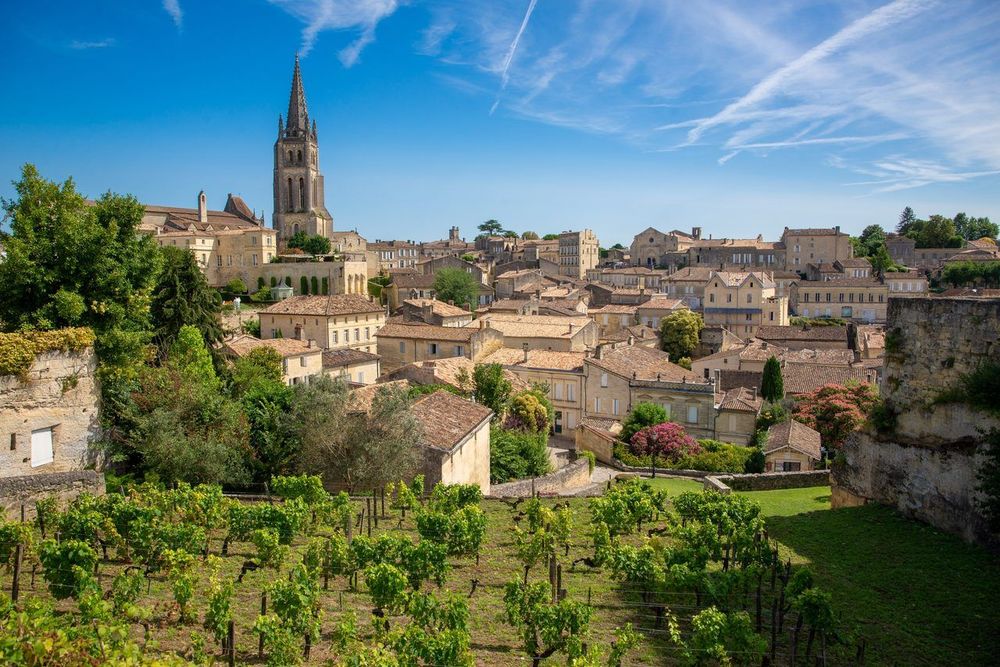
The most beautiful villages in Gironde go far beyond Saint-Émilion, and certainly beyond Talmont-sur-Gironde or Meschers, two undeniable gems that are actually located… in Charente-Maritime, on the other bank of the estuary. Here, we are talking about the department of Gironde as a whole: the Bordeaux wine region, the Médoc, the Entre-deux-Mers, the South Gironde and the Bassin d'Arcachon. A territory where charming villages number in the dozens, from the medieval town built around a church carved from limestone to the smallest village in France, sitting on barely three and a half hectares.
On the programme for this tour of the department: a UNESCO-listed city where you descend underground to visit hand-hewn catacombs, a line of Vauban fortifications that once locked the estuary against enemy fleets, arcaded bastides founded in the 13th century, and a village perched on a cliff of fossilised oysters from which you can see the slopes of the Sauternais as far as the eye can reach. Reason enough to understand why so many visitors stop at Saint-Émilion when Gironde has at least 19 villages that are well worth the trip. Staying in Bordeaux and planning to explore from there? Start with the Ryo audio-guided tour of Bordeaux: 29 audio stops over 6.2 km to grasp the history of the Port de la Lune before heading out into the wine country.
Saint-Émilion, the Medieval City of the Great Bordeaux Wine Region
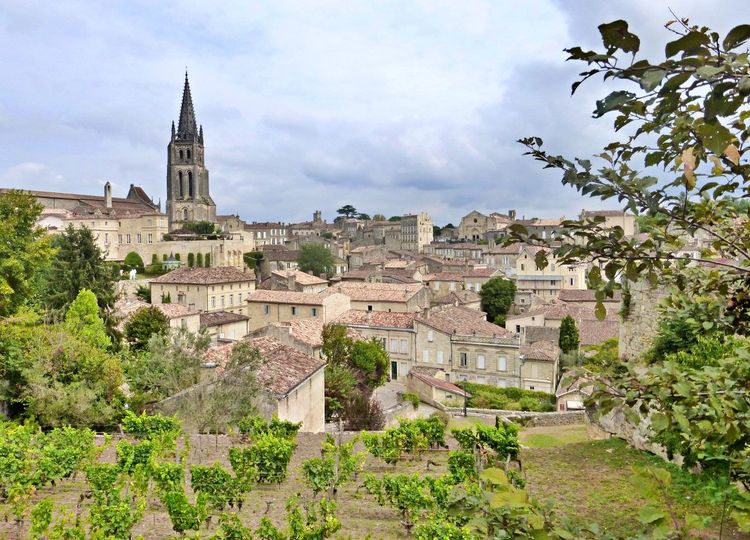
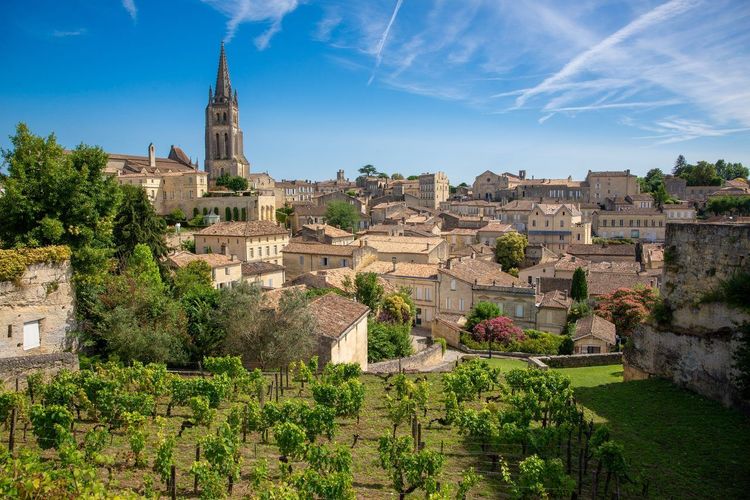
Listed as a UNESCO World Heritage Site since 1999 under the title of the "Jurisdiction of Saint-Émilion", this city perched on its limestone hillside remains the most photographed landmark in the Bordeaux wine region. Visitors come for the cobbled lanes and the famous "tertres" — steep streets climbing between golden-stone houses — but the real curiosity lies beneath your feet: the Monolithic Church (Place des Créneaux, 33330 Saint-Émilion, rated 4.6/5 on Google with 5,719 reviews) of Saint-Émilion, hewn directly from the rock between the 11th and 12th centuries, ranks among the largest monolithic churches in Europe.
Around the church, a network of catacombs, the Chapel of the Trinity and the hermitage where the monk Émilion is said to have retreated can only be visited with a guide from the tourist office — a must-do that you would be wise to book as soon as you arrive in summer. The Tour du Roy, a 13th-century keep still standing at the heart of the village, then offers a 360-degree panorama over the rows of vines. Climbing its spiral staircase takes just a few minutes — a good way to spot the bell towers of neighbouring villages before heading back down to browse the macaron shops, a local speciality whose recipe reportedly dates to 1620 and the Ursuline sisters.
The vineyard encircling the city is home to several hundred châteaux, from the most modest family estate to the premiers grands crus classés that have earned the appellation its worldwide reputation. Many domaines open their cellars for visits, often by reservation, and some offer tastings directly in former underground quarries. If you can only make one stop on a first express visit, this is probably it — if only for the density of heritage per square metre. A practical tip: park lower down and walk up through the Porte de la Cadène, as the historic centre is very steep and packed with cars in season.
Blaye, Bourg-sur-Gironde and Cussac-Fort-Médoc: the Fortified Lock of the Estuary
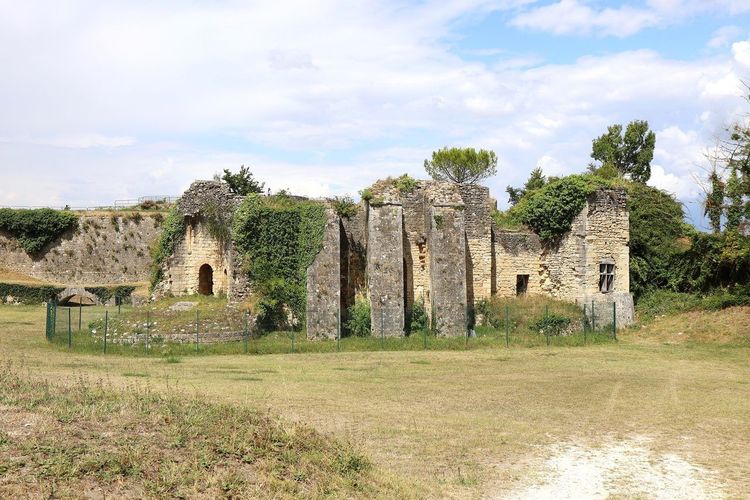
North of Bordeaux, the Gironde estuary forms a strategic passage that Vauban fortified from 1685 onwards to prevent any enemy fleet from sailing upriver towards the port. This "lock of the estuary", listed as a UNESCO World Heritage Site in 2008 alongside Vauban's other fortifications, deserves a full day's attention, as its three sites echo one another from bank to bank.
Blaye and Cussac-Fort-Médoc, the Vauban Line That Locks the Estuary
The Citadel of Blaye stands on a rocky spur directly above the river. Its ramparts, casemates and powder magazines can be explored freely, and the view from the bastions sweeps across the entire estuary meander to the Médoc vineyards on the opposite bank. A ferry even crosses to Lamarque in about twenty minutes — a crossing that many visitors overlook, even though it saves a long road detour via Bordeaux.
Vauban's enclosure absorbed a much older site: inside the ramparts stand the ruins of the Château des Rudel, home to the family of the troubadour Jaufré Rudel, Prince of Blaye in the 12th century and poet of "distant love". You will also find the former Minim convent, craft workshops and a few café terraces set within the walls, which are inhabited year-round. Allow at least two hours if you want to complete the full circuit of the ramparts, ideally in the late afternoon when the sun sets over the Médoc.
Opposite, on the Médoc bank, the Fort Médoc at Cussac-Fort-Médoc completes the defensive triangle with Fort Pâté, built on an islet in the middle of the river. Constructed from 1689, it served as a garrison before falling into disuse and later being restored. You reach it along an avenue flanked by marshes and vines, a setting that is radically different from the atmosphere at Blaye. Allow about an hour for the visit, longer if you linger over the information boards along the moats.
Bourg-sur-Gironde and Le Verdon-sur-Mer, Panoramas over the Mingled Waters
Bourg-sur-Gironde, often simply called Bourg, stands on the right bank of the Dordogne, a few kilometres from the Bec d'Ambès where the Dordogne and the Garonne meet to form the estuary. The upper town, perched on the cliff, contrasts with the port at the water's edge, connected by staircases and sloping lanes. Former quarries carved into the limestone now serve as wine cellars, and the terrace of the citadel offers one of the finest viewpoints over the mingled waters.
Further north, at the very tip of the Médoc, Le Verdon-sur-Mer marks the point where the estuary opens onto the Atlantic Ocean. From the Pointe de Grave (33123 Le Verdon-sur-Mer, rated 4.6/5 on Google with 411 reviews), you can make out the Cordouan lighthouse in the distance, the oldest lighthouse in France still in operation, listed as a UNESCO World Heritage Site in 2021. The village itself is modest, but its wild beaches and marina make it a pleasant stop before or after the ferry crossing to Royan. This is also where the Médoc wine route ends — or begins, depending on your direction. From April to October, boats depart from Port-Médoc to land at the foot of Cordouan at low tide: a half-day excursion that must be booked well in advance, as places fill up quickly in summer.
Cadillac-sur-Garonne, Sainte-Croix-du-Mont, Rions and La Brède: the Garonne Valley and the Sauternais
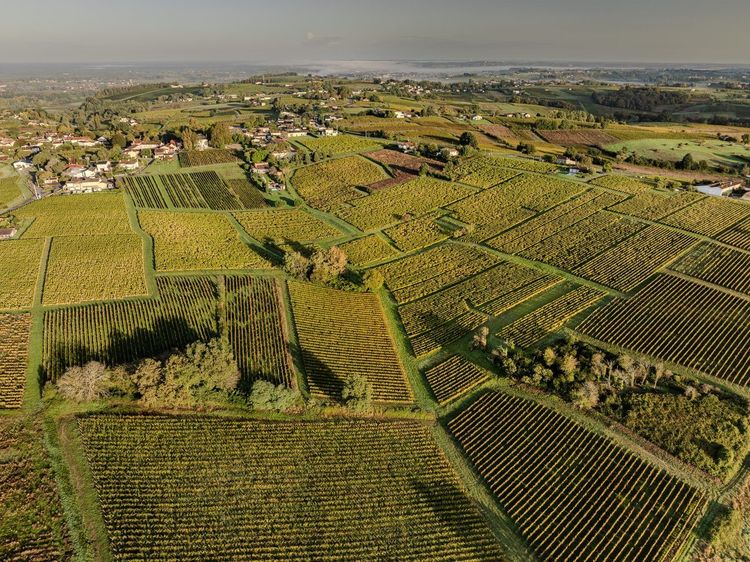
Heading up the Garonne towards the south-east, the right bank lines up a succession of bastides and hilltop villages looking out over the river and, on the opposite bank, the slopes of the Sauternais. La Brède, for its part, lies on the left bank, on the Graves side.
Cadillac-sur-Garonne and Rions, Royal Bastides along the Garonne
Cadillac was founded in 1280 by Jean de Grailly, seneschal of the King of England who was then master of Guyenne, on the classic bastide model: grid layout, ramparts and fortified gates. The town later left its mark on French history through a very different chapter — that of the Château des Ducs d'Épernon, an imposing residence built between 1599 and 1634 by a former favourite of King Henri III. Converted in the 19th century into a women's central prison, and then into a supervised education facility until 1952, the château retains monumental fireplaces and painted ceilings that contrast sharply with its carceral past.
A few minutes' drive away, Rions preserves one of the best-maintained fortified enclosures in the valley, including the Porte du Lhyan, a gatehouse tower built in 1330 that once defended the southern entrance to the city. The village, tiny and little visited, offers a half-hour stroll through narrow lanes lined with stone houses, far from the crowds of Saint-Émilion.
Sainte-Croix-du-Mont and La Brède, Valley Views and Montesquieu's Château
Sainte-Croix-du-Mont occupies a spectacular position, perched on a steep hillside that dominates the entire Garonne valley and the Sauternais slopes on the opposite bank. Its cliff is formed by a bed of fossilised oysters some 20 million years old, into which caves have been carved, some of which serve as wine cellars. The village also produces a renowned sweet wine, a cousin of Sauternes, which you can taste at several properties set into the hillside. Climb to the church square at sunset: the raking light over the valley justifies the detour on its own.
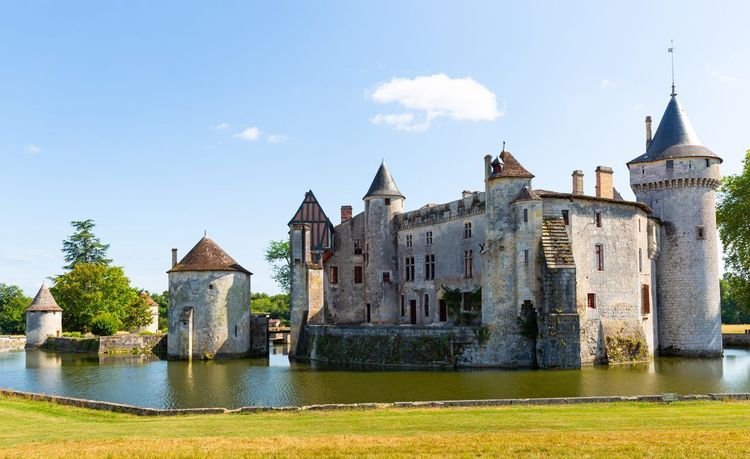
On the other side of the river, La Brède owes its fame to the Château de La Brède (33650 La Brède, rated 4.5/5 on Google with 1,312 reviews), a Gothic fortress surrounded by wide water-filled moats and a park that the philosopher himself remodelled in the English style. It was here, on 18 January 1689, that Charles-Louis de Secondat, Baron de La Brède et de Montesquieu, future author of The Spirit of the Laws, was born. Now the property of the Jacqueline de Chabannes Foundation since 2004, the château is open to visitors for part of the year and preserves the thinker's library and bedroom. Allow a good hour for the visit, then extend your stay with a walk through the park.
Créon and Sauveterre-de-Guyenne, Arcaded Bastides in the Heart of the Entre-deux-Mers
The Entre-deux-Mers, that triangle of vines and woodland between the Garonne and the Dordogne, is home to several bastides founded between the 13th and 14th centuries on an almost identical plan: a central arcaded square, perpendicular streets and regular blocks. Créon offers one of the most vibrant examples, with its Place de la Prévôté (33670 Créon) lined with stone arcades where one of the most popular markets in the area still takes place every Wednesday morning. Founded in 1315 by seneschal Amaury de Craon, the bastide has retained its original layout. If you are travelling by bike, note that Créon is also a stop on the Roger-Lapébie trail, a former railway line converted into a cycle path linking the bastide to Bordeaux.
About twenty minutes' drive away, Sauveterre-de-Guyenne follows a similar plan but has a more turbulent history: founded in 1281 by Edward I of England, it changed hands several times during the Hundred Years' War. Its great distinction is rare: it is the only bastide in Gironde to have kept all four of its original gateways — Saubotte, la Font, Saint-Romain and Saint-Léger — all listed as historic monuments since 1892. The Porte Saubotte, standing 17 metres tall, is open to visitors. Come on Tuesday morning, when the market brings the arcaded square to life.
Monségur and Sainte-Foy-la-Grande, Bastides along the Dordogne
Further east in the department, two more bastides extend this route of medieval new towns. Monségur, founded in 1265 by Eleanor of Provence, Queen of England, is organised around a square that is surprisingly large for the size of the village. It is dominated by an elegant cast-iron and glass market hall, built in two stages between 1866 and 1897 and listed as a historic monument in 2011. The surrounding arcades shelter a few shops and cafés where you can watch local life go by at a leisurely pace. In early July, however, the village takes on a completely different character during the 24 Heures du Swing, a jazz festival that takes over the market hall and the streets of the bastide for an entire weekend.
Sainte-Foy-la-Grande stretches along the banks of the Dordogne. Founded in 1255 by Alphonse de Poitiers, brother of Saint Louis, the bastide retains its grid of streets, its arcaded square and several half-timbered houses. A former Protestant stronghold, the town was the birthplace of geographer Élisée Reclus and physician Paul Broca. The bank of the Dordogne, down below, lends itself to a peaceful late-afternoon stroll with views across to the slopes of the Périgord bank.
Saint-Macaire and Castelmoron d'Albret, Hidden Heritage Gems of South Gironde
Saint-Macaire looks out over the Garonne from a rocky promontory, directly opposite Langon. The remarkably well-preserved medieval city is organised around the Place du Mercadiou, lined with arcaded houses from the 13th to the 16th centuries that once sheltered merchants. The church of Saint-Sauveur, Romanesque in origin, preserves medieval wall paintings, and the ramparts that still encircle part of the village offer an open view over the valley. You will do well to enter through the Porte de Benauge to discover the city in the right order.
About half an hour's drive to the north-east, very close to Sauveterre-de-Guyenne, Castelmoron d'Albret (33540 Castelmoron d'Albret, rated 4.6/5 on Google with 290 reviews) holds a national record that alone justifies the detour: at 3.54 hectares, it is the smallest municipality in France by area. Perched on a rocky spur, the village can be walked in under ten minutes, passing the church and the few golden-stone houses still inhabited. Combine it with Sauveterre in the same morning: you move from the bastide with four gateways to the tiniest village in the country — a contrast that neatly sums up the diversity of Gironde's heritage.
Pauillac and Saint-Estèphe, a Stop among the Vines and Carrelets of the Médoc
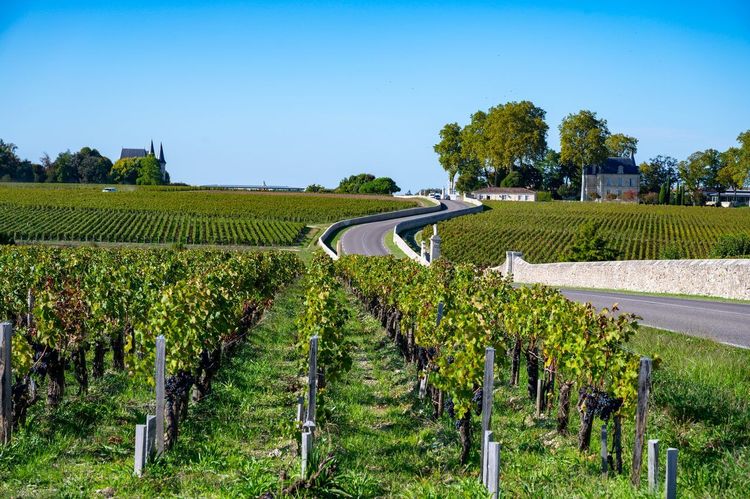
Along the Médoc wine route, two villages are home to some of the greatest names in the Bordeaux wine world. Pauillac, a small port on the estuary, is home to three of the five premiers grands crus classés: Château Lafite Rothschild and Château Latour, distinguished since the 1855 classification, and Château Mouton Rothschild, promoted in 1973. The Maison du Vin et du Tourisme (Quai Léon Perrier, 33250 Pauillac, rated 4.3/5 on Google with 736 reviews), located on the quayside, can help you book a cellar visit — often several weeks in advance for the most sought-after estates.
A few kilometres further north, Saint-Estèphe maintains a more understated profile, set among rows of vines and carrelets — the stilted fishing huts typical of the estuary, mounted on long wooden jetties from which a large square net is lowered. The Church of Saint-Étienne, listed as a historic monument in 1995, surprises visitors with the richness of its baroque interior, unexpected in a village of this size. Combine a visit to one or two estates with a stop at the Port de la Maréchale to photograph the carrelets at sunset.
Audenge and Lormont, Two Overlooked Stops between the Basin and the Metropolis
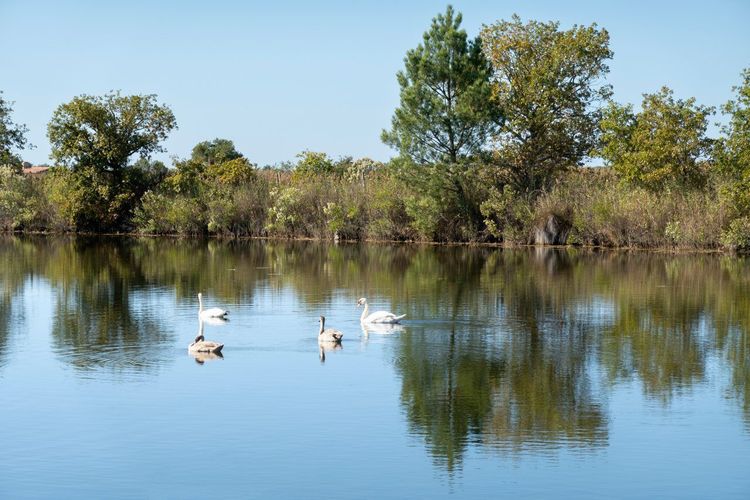
Two very different villages usefully round out this tour by venturing off the most well-trodden paths. Audenge, on the eastern shore of the Bassin d'Arcachon, is home to the Domaine de Certes, a former network of fish ponds and salt marshes now converted into a protected natural area. Laid-out footpaths allow you to observe herons, egrets and spoonbills, with the waters of the basin as a backdrop. It is an ideal stop for finding calm away from the crowds of Arcachon or Cap Ferret on the opposite shore. And if you continue to Arcachon, the Ryo audio-guided tour of the city of four seasons unfolds the history of the Ville d'Hiver and its villas across 19 audio stops in 1 hour 30 minutes.
Lormont, on the right bank of the Garonne, lies less than ten minutes from the centre of Bordeaux yet remains largely unknown to visitors. The old village nevertheless preserves former quarries carved into the limestone hillside, as well as a hilltop park, the Parc de l'Ermitage (33310 Lormont, rated 4.3/5 on Google with 2,450 reviews), offering one of the finest overall views of the Bordeaux waterfront and the Pont d'Aquitaine. It can easily be paired with a day in the city: the 2-hour 30-minute Ryo audio guide to Bordeaux leaves enough time to cross the river in the late afternoon to admire the quayside façades from above.
How Much Time to Allow and When to Go to Visit These Villages
Covering all of Gironde's most beautiful villages in a single trip requires some planning, as the department — the largest in metropolitan France — stretches more than 150 kilometres from north to south. Allow a full day for the trio of Blaye, Bourg and Cussac-Fort-Médoc around the estuary, another for Saint-Émilion and its wine-producing surroundings, and a third to string together the bastides of the Entre-deux-Mers and South Gironde. If your time is limited, prioritise Saint-Émilion, Bourg-sur-Gironde, Sainte-Croix-du-Mont and Cadillac, which already give a good sense of the diversity of Gironde's heritage.
The best period runs from April to October, with a peak in visitor numbers in July and August at Saint-Émilion that is best avoided if you are looking for tranquillity. September and October add the spectacle of the harvest, but the most prestigious châteaux sometimes close their doors to visitors during these weeks of picking. In winter, several monuments reduce their opening hours or even close on weekdays: check before you go.
For a coherent itinerary, group villages by geographic area rather than zigzagging: estuary and Médoc to the north, Saint-Émilion wine country to the east, the Garonne valley and Entre-deux-Mers to the south-east, and the Bassin d'Arcachon to the west. A car is virtually essential, as public transport links between these villages remain limited, except for regional train services to Saint-Émilion, Sainte-Foy-la-Grande or Langon (opposite Saint-Macaire).
Where to Stay and Where to Eat near the Most Beautiful Villages in Gironde
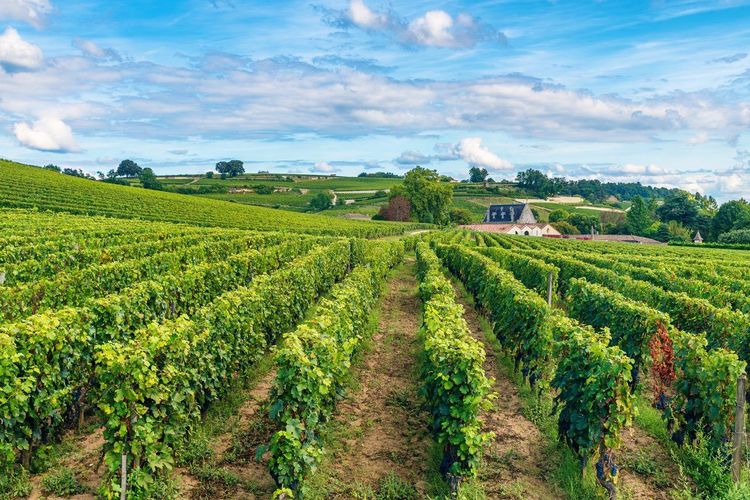
Saint-Émilion and its surroundings concentrate most of the upmarket accommodation, with several bed and breakfasts set in former wine estates in the middle of the vines. Book several weeks ahead in high season, as the capacity of the historic village is limited.
On the estuary side, Blaye and Bourg-sur-Gironde offer more affordable options, often run by owners who know the ferry timetables inside out. In the Entre-deux-Mers, bastides such as Créon or Sauveterre-de-Guyenne are less busy and offer rural gîtes at reasonable rates — a good option for families. Bordeaux remains a practical base if you prefer to make day trips from the city.
On the food side, local gastronomy revolves around wine and its pairings: entrecôte à la bordelaise, lamprey à la bordelaise in spring, oysters from the Bassin d'Arcachon, canelés and Saint-Émilion macarons. The markets at Créon, Sauveterre-de-Guyenne or Sainte-Foy-la-Grande remain the best way to sample local farm produce, and the oyster shacks around the basin serve a dozen oysters with a glass of Entre-deux-Mers white wine.
FAQ
Which is the most beautiful village in Gironde?
The answer depends on your criteria, but Saint-Émilion almost always comes out on top thanks to its UNESCO listing and the density of its medieval heritage. For a more low-key charm, Sainte-Croix-du-Mont or Rions often appeal more to visitors seeking peace and quiet.
What is the smallest village in France, and is it in Gironde?
Yes: Castelmoron d'Albret, in the Entre-deux-Mers near Sauveterre-de-Guyenne, is the smallest municipality in France by area, covering just 3.54 hectares.
How much time should you plan to visit the most beautiful villages in Gironde?
Allow three to four days to cover the main areas (estuary, Bordeaux wine region, Entre-deux-Mers, South Gironde) at a relaxed pace, or a long weekend if you focus on the most iconic villages.
What is the best time of year to visit the villages of Gironde?
Spring and early autumn offer the best balance between pleasant weather and moderate crowds, particularly in Saint-Émilion, where July and August draw large numbers of visitors.
Can you visit several villages in Gironde in a single day?
Yes, as long as you group them by area: the trio of Blaye, Cussac-Fort-Médoc and Bourg-sur-Gironde can comfortably be visited in one day, thanks to the ferry and their proximity around the estuary.
How do you get between the villages of Gironde without a car?
Connections remain limited: Saint-Émilion, Sainte-Foy-la-Grande and Langon are served by regional trains, and the Roger-Lapébie cycle path links Créon to Bordeaux, but a car is still essential for visiting several bastides in the same day.
Our Take on the Villages of Gironde
At the end of this tour, one thing stands out: the department has no need to borrow villages from the Charente-Maritime side of the estuary to impress. From the Vauban citadel at Blaye to the lanes of Saint-Émilion, by way of the little-known bastides of the Entre-deux-Mers and the tiny Castelmoron d'Albret, Gironde lines up a surprisingly varied heritage, all within less than two hours' drive of Bordeaux.
To prepare these excursions, nothing beats spending a first day in the Gironde capital with the Ryo audio guide to Bordeaux, which gives you the keys to the wine trade and the estuary before setting out to discover the villages. And to compare with other regions, our Ryo guide to the most beautiful villages in France helps you understand what makes Gironde truly special.
À lire également