© Shutterstock
 Votre guide Ryo
Visiting Arcachon in 3 Days: Complete Itinerary to Explore the Basin in 2026
From the Eyrac pier, one glance is enough to understand why so many visitors choose to visit Arcachon in 3 days rather than a simple afternoon trip: on one side the ocean roars behind the Dune du Pilat, and on the other the Basin stretches out, flat and silver, all the way to the tchanquées cabins of the Île aux Oiseaux. This territory can be explored at your own pace with the Ryo audio-guided tour of Arcachon, which traces the history of the resort's four seasons: the winter town, the summer town, the spring town, and the autumn town, each with its own distinct architecture.
In three days, there is time to climb the steps of Europe's tallest sand dune at sunset, to cross by boat to Cap Ferret for a dozen oysters at 11 in the morning, and to paddle between the oyster beds at daybreak. One figure captures the scale of the territory: the Bassin d'Arcachon covers around 15,500 hectares at high tide, roughly 155 km², and loses the greater part of its water at low tide, which is why tidal schedules dictate much of the programme. This guide sets out a day-by-day itinerary, the oyster villages not to be missed, the best beaches, water activities, and practical information for organising a 3-day stay, or even 4 if you want to push on to the Domaine de Certes.
Day 1: Arcachon, the Ville d'Hiver, and the Dune du Pilat
The first day focuses on Arcachon itself, a town that is in reality made up of four distinct neighbourhoods, each evoking a different season: the seafront (summer town), the Victorian villas on the hill (winter town), the garden district (spring town), and the casino area (autumn town). Many day-trippers come for the beach and miss the best of it: it is the wooded hillside behind the town centre that gives Arcachon its unique character along the entire Atlantic coast.
The Ville d'Hiver and Arcachon's Seafront
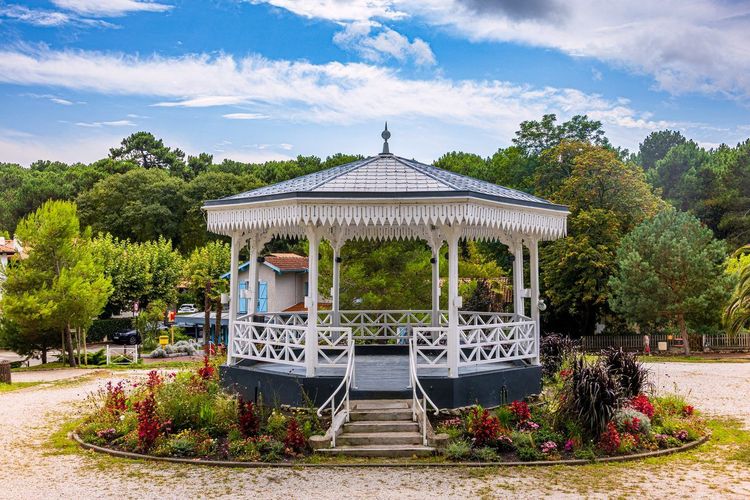
The Ville d'Hiver sits on a pine-covered hill, sheltered from ocean winds by the forest. Built from the 1860s onwards to welcome convalescents who came to treat their lungs in a climate considered exceptional, it now brings together several hundred villas, each in its own style: neo-Gothic, Moorish, Swiss, or Basque. Wandering through the winding lanes takes about 1 hour 30 minutes at a leisurely pace, a little longer if you make the climb up to the Observatoire Sainte-Cécile, a metal footbridge attributed to the circle of Gustave Eiffel, which offers one of the only elevated views over the Basin from Arcachon.
You can reach the top of the hill via the free public lift in the Parc Mauresque, from the boulevard de la Plage, or by one of the staircases that wind between the villas. Take time to stop in front of the Villa Trocadéro and the Villa Alexandre Dumas, two of the most photographed in the neighbourhood. The Parc Mauresque itself is worth a pause: it occupies the site of the former Moorish casino destroyed by fire in 1977, of which only the terraces and viewpoint remain. Heading back down towards the seafront, the town's piers naturally take their place in the route.
The Eyrac and Thiers piers mark the entrance to the marina and serve as the departure point for most shuttles to Cap Ferret and the Île aux Oiseaux. This is also where the summer town comes into its own: colourful beach cabins, a pedestrianised boulevard, and terraces facing the open sea. The contrast with the Ville d'Hiver, barely ten minutes' walk uphill, neatly captures Arcachon's identity as a resort that has always cultivated several faces depending on the season. The two other neighbourhoods, the spring town on the garden side and the autumn town around the port, can be cycled in about an hour and complete a full circuit of the resort.
If you want to explore the history of these neighbourhoods without relying on a paper map, Ryo's Arcachon audio-guided tour comments on each notable villa as you walk, with stories of the families who had these homes built in the 19th century.
The Dune du Pilat at Sunset
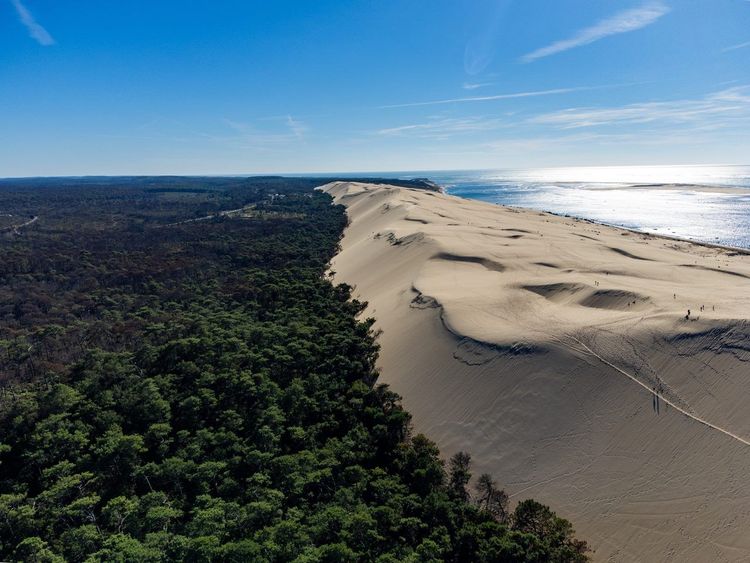
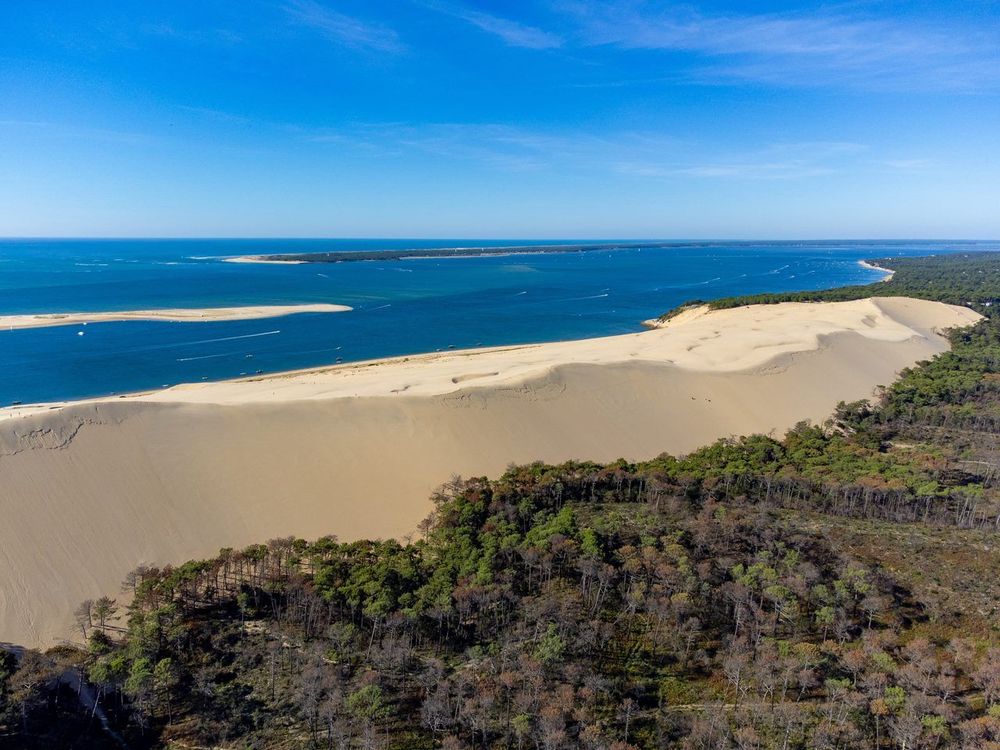
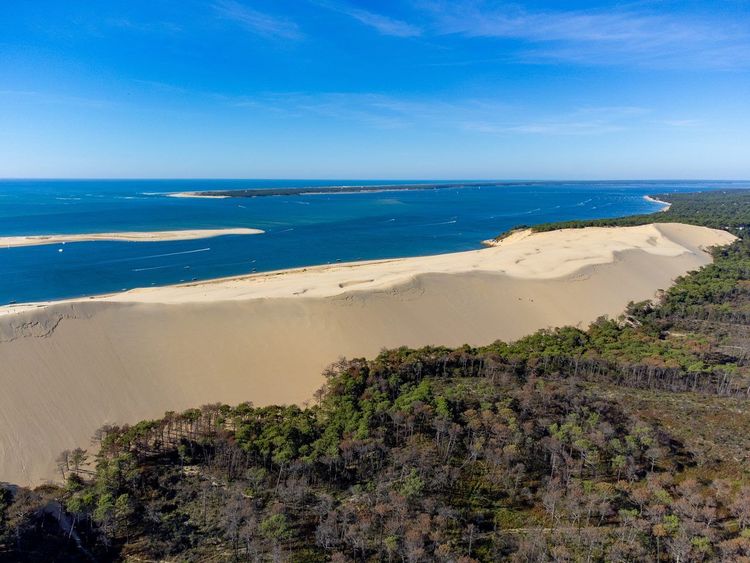
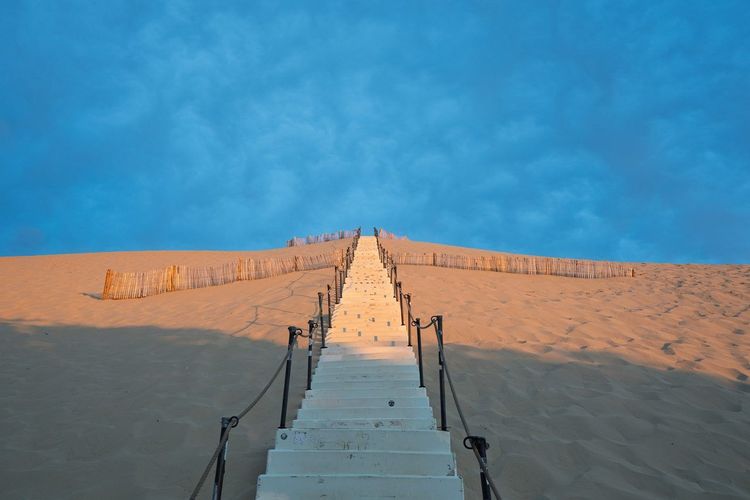
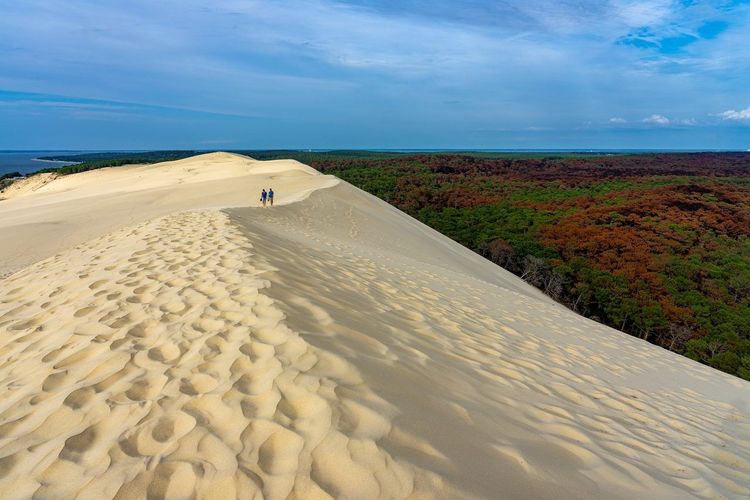
About twenty minutes by car from Arcachon, the Dune du Pilat rises to over 100 metres and stretches for nearly 3 kilometres along the coast, making it the tallest dune in Europe. Its height is measured regularly and varies by a few metres from one year to the next depending on the winds, a fact that often surprises visitors accustomed to thinking of dunes as fixed landforms. It also advances inland by 1 to 5 metres each year, slowly encroaching on the pine forest that borders it to the east.
Climbing to the top takes between 20 and 40 minutes depending on fitness and the time of year, since the constructed staircase only covers the lower section in high season. Allow a good hour on site if you want to reach the summit, catch your breath while taking in the panorama over the Banc d'Arguin and the Landes forest, and then make a leisurely descent. Many visitors underestimate the time required and arrive too late to enjoy the light: aiming to arrive 1 hour 30 minutes before sunset leaves a comfortable margin for the climb and settling in on the sand.
Access to the site is free, but parking in the main car park is paid for much of the year: budget a few euros depending on how long you stay, and note that in July and August the car park fills up by mid-afternoon. Parking further down, on the Pyla-sur-Mer side, and cycling or walking up via the cycle path often saves twenty minutes of queuing.
Watching the sunset from the summit remains the most sought-after experience, as the dune gradually empties of families and is left to photographers and couples enjoying the quiet. Bring water: there are no vendors at the top, and the climb through loose sand dehydrates you faster than an ordinary walk. A Ryo article covers the Dune du Pilat climb in detail, hour by hour, with the best access routes depending on the tide and crowd levels.
Day 2: Cap Ferret, Lège, and the Oyster Villages
The second day crosses the Basin towards the Cap Ferret peninsula, that long tongue of sand closing off the Basin opposite Arcachon, belonging to the commune of Lège-Cap-Ferret. The boat crossing from Arcachon's Thiers pier takes about 30 minutes and already offers a first glimpse of life on the Basin, with oyster beds and cabins on stilts. Many visitors wonder whether Cap Ferret is worth the trip from Arcachon: the answer comes down to one word, atmosphere, radically different from the seaside resort, more discreet, more wooded, more village-like.
The Lighthouse and the Tip of Cap Ferret
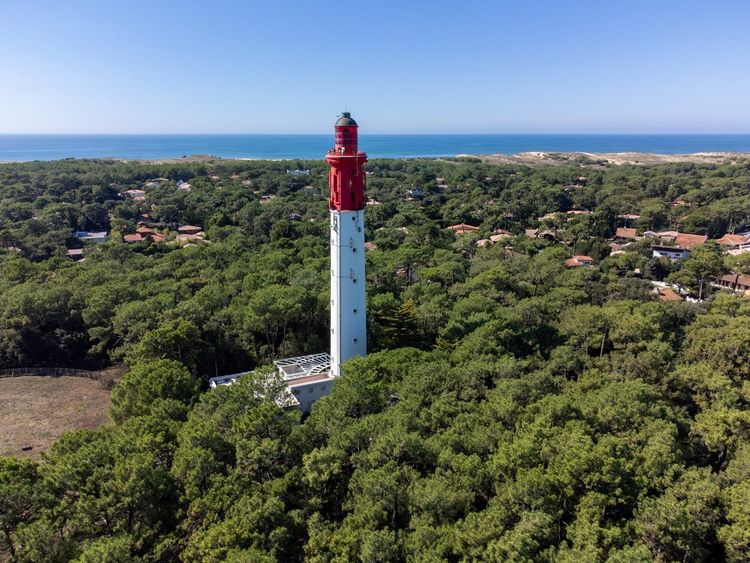
The Cap Ferret lighthouse, painted red and white, stands over 50 metres tall and can be climbed via 258 steps for a 360-degree view over the Basin, the ocean, and on a clear day, all the way to the Dune du Pilat opposite. A first lighthouse was lit here in 1840; destroyed during the Second World War, it was rebuilt in the late 1940s in the silhouette we know today.
The tip itself, on foot from the lighthouse, is well worth the detour: this is where the ocean and the Basin almost meet, separated by a simple strip of sand that shifts with each winter storm. You will often find surfers on the ocean side and families on the Basin side, just a few hundred metres apart. From the Bélisaire pier, a small tourist train links the Basin side to the ocean beach in a few minutes, a fun way to cross the peninsula without getting back in the car, and the best way to combine a calm morning swim with afternoon waves.
L'Herbe and the Chapel of the Villa Algérienne
Heading back up the peninsula towards Lège-Cap-Ferret, the village of L'Herbe stands out for its multicoloured oyster cabins packed tightly together, a preserved heritage that gives the impression of stepping into a postcard scene frozen for a century. The narrow lanes, known locally as "escapes", can only be explored on foot. The neighbouring villages of Canon, Piquey, and Piraillan extend the walk in the same spirit, each with its own jetty and a handful of cabins converted into workshops or oyster sales points.
At the heart of the village hides the chapel of the Villa Algérienne (Allée Rebsomen, L'Herbe, 33950 Lège-Cap-Ferret, rated 4.6/5 on Google based on 2,211 reviews), built in the 19th century in a Moorish style that is striking for the region, with its arcades and Orientalist decor. It was part of the Villa Algérienne built by Léon Lesca, the entrepreneur who had worked on the port of Algiers, and remains today the only surviving element of that ensemble: the villa itself was demolished in the 1960s. The interior, adorned with restored frescoes, can be visited free of charge during limited time slots, especially in season.
Oyster Tasting in the Oyster Cabins
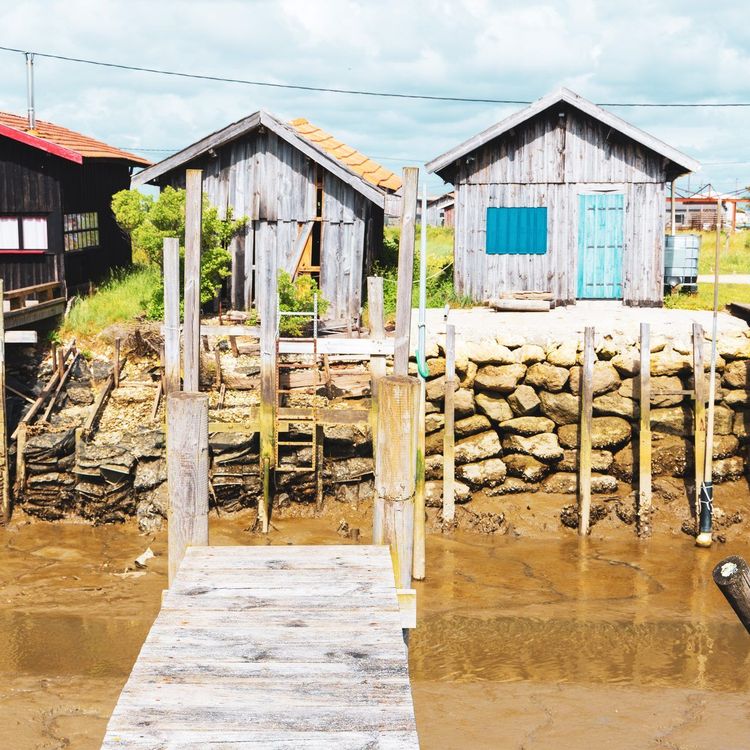
No day at Cap Ferret is complete without stopping at an oyster cabin. The peninsula is home to several dozen producers who sell directly from their pontoon, with a dozen oysters served with rye bread and white wine for just a few euros. The cabins at the port de l'Herbe and those at Canon, a little further south, are among the most popular.
Sit down at the wooden tables set out facing the water: this is a local ritual, not a tourist set-up. Bring cash, as most cabins do not accept cards, and plan to arrive early at weekends, since the best spots fill up from 11:30 am. One detail the regulars know: most cabins serve oysters, pâté, and white wine, but no hot food, and many close their service by 2:30 pm. Our Ryo article dedicated to Cap Ferret lists the best-rated cabins by village.
Day 3: Île aux Oiseaux, Banc d'Arguin, and the Teich Reserve
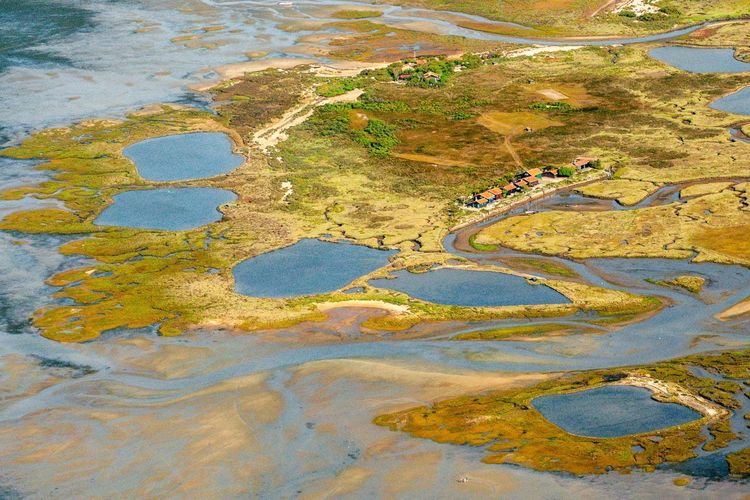
The final day is devoted to the natural side of the Basin, a world apart made up of mudflats, migratory birds, and cabins planted in open water. It is also the day most dependent on the tides: it is worth checking the times the evening before to plan the programme between morning and afternoon.
Grand Tour of the Île aux Oiseaux and the Tchanquées Cabins
The Île aux Oiseaux occupies the geographical centre of the Basin, largely submerged at high tide and far more extensive at low tide, when the mudflats emerge all around it. Most visitors opt for the grand boat tour, which circles the entire island and is often accompanied by commentary on the oyster beds and channels.
Its two tchanquées cabins, perched on stilts several metres above the water, form the most reproduced image of the Bassin d'Arcachon. The word "tchanqué" comes from Gascon and literally means perched on stilts. Originally built to keep watch over the oyster beds, the two current cabins date from the 20th century, the older one having replaced an earlier structure carried away by the elements. They are now protected and cannot be visited, but can be photographed from the boat or, for the more adventurous, by kayak at dawn when the raking light skims the water.
The Teich Ornithological Reserve and the Eyre Delta
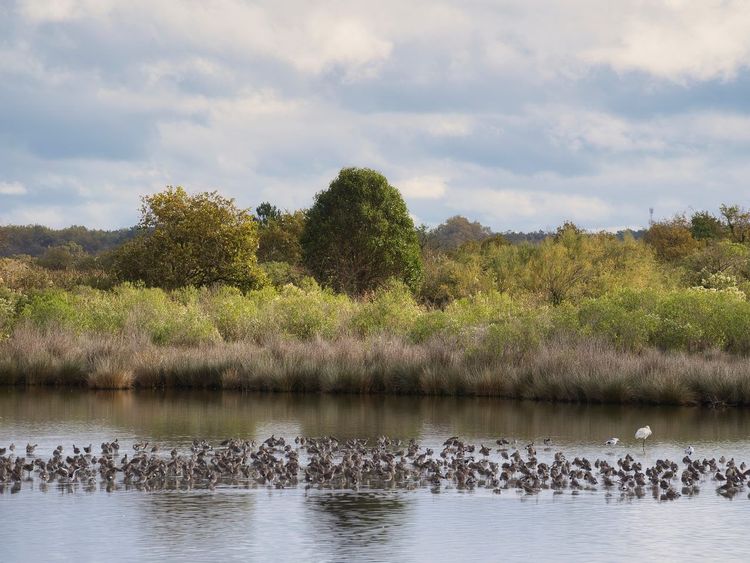
At the opposite end of the Basin, the Teich ornithological reserve (122 Rue du Port, 33470 Le Teich, rated 4.5/5 on Google based on 3,316 reviews) protects around 120 hectares of mudflats, reedbeds, and salt meadows at the mouth of the Eyre, one of the few rivers in France that remains almost entirely wild along its entire course. Several hundred bird species have been recorded here since the reserve was established in 1972, including nesting white storks, spoonbills, and in winter thousands of barnacle geese arriving from Northern Europe.
Marked trails allow visitors to explore the reserve, the shortest taking around 1 hour 30 minutes and the full circuit approaching three hours for dedicated birdwatchers. Wooden hides positioned along the paths let you get close to the birds without disturbing them: bring binoculars if you have them, as the reserve also lends them out at the entrance. Entry is paid, with an adult ticket of around ten euros and reductions for children and families; the visit is far more rewarding early in the morning, when bird activity is at its peak and the paths are still quiet.
The Eyre delta, right next door, forms the natural extension of the reserve: its freshwater channels can be explored by canoe departing from Le Teich or Biganos, a two-to-three-hour trip drifting with the current between alders and wet meadows that makes a complete change from the marine scenery of the rest of the stay.
The Banc d'Arguin Boat Excursion
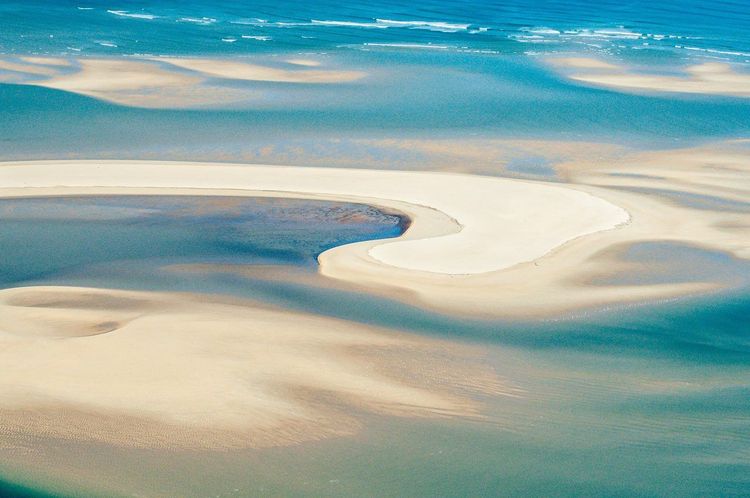
The Banc d'Arguin, a shifting sandbank classified as a national nature reserve off the Dune du Pilat, can only be reached by boat from Arcachon or Cap Ferret. Its shape changes every year under the influence of currents and storms, making it a landscape that is literally different from one season to the next.
It is also one of the main nesting sites for the sandwich tern in France, which means access to certain areas is restricted during the breeding season in spring and early summer. Landing is done with feet in the water, with no facilities whatsoever: no shade, no water point, no shops, so a packed lunch, a hat, and sunscreen are essential. A combined Banc d'Arguin and Dune du Pilat excursion, seen from the water this time, offers a different way to round off the day compared to the climb on the first day.
Oyster Villages and Ports Worth Exploring
If you are extending your stay beyond three days, or if you prefer varying the pace rather than following a strict itinerary, the oyster villages around the Basin deserve a full day of their own. Each has kept its port, its cabins, and its own character.
La Teste-de-Buch, Gujan-Mestras, and Biganos
La Teste-de-Buch, one of the oldest and largest communes on the Basin, still has an active oyster port right next to the historic centre, with its market halls and daily market in season. Its territory also encompasses the Dune du Pilat and the usagère forest, a woodland with a unique legal status in France inherited from medieval agreements between residents and landowners. Gujan-Mestras, its immediate neighbour, claims the title of oyster capital of the Basin with seven distinct ports within its boundaries, including the port de Larros (33470 Gujan-Mestras, rated 4.5/5 on Google based on 2,253 reviews), the best preserved and most photogenic, with its oyster house.
Biganos, at the entrance to the Eyre delta, presents a more low-key face, with its small port accessible via a reed-lined path and direct access to the cycle routes heading into the Landes forest. It is a good base if you are looking for more affordable accommodation than Arcachon while remaining close to nature activities, and the most practical starting point for canoeing down the Eyre.
Andernos-les-Bains, Arès, and the Salt Meadows of Arès-Lège
Andernos-les-Bains, on the northern shore of the Basin, has a 232-metre jetty, the longest in France, the remains of a 4th-century Gallo-Roman villa right next to the church of Saint-Éloi, and a covered market well known for its local produce. The town is well suited to a cycling tour along the seafront, quieter than Arcachon's in peak season, and its gently sloping beaches are particularly suitable for families with young children.
Arès continues along this northern shore, with an active oyster port, a sheltered beach, and access to the salt meadows of Arès and Lège-Cap-Ferret, a national nature reserve covering several hundred hectares where the channels fill and empty with each tide. A discovery trail loops around the reserve and takes one to two hours to complete, ideally at rising tide when waders come closer to the banks. A Ryo article presents Andernos-les-Bains in detail, with the beaches and local addresses worth visiting.
Boat Trips and Pinasse Excursions
The Basin is best discovered from the water, and several options coexist depending on budget and time available. The regular shuttles run by the Union des Bateliers Arcachonnais connect Arcachon, Cap Ferret, the Île aux Oiseaux, and Andernos depending on the season, with affordable fares and frequent departures in summer. This is the simplest option for fitting a crossing into a three-day itinerary without having to book weeks in advance.
For a more authentic experience, excursions in a traditional pinasse, the flat-bottomed boat historically used by Basin oyster farmers, allow you to reach coves inaccessible to regular shuttles and to stop directly on sandbars at low tide. A full day aboard a privately hired pinasse typically combines the Île aux Oiseaux, the Banc d'Arguin, and a picnic lunch on a secluded beach, well away from the crowds of the seafront.
Between the two, the guided grand tour of the Basin, offered from both Arcachon and Cap Ferret, lasts around two hours and remains the best discovery-to-price ratio for a first visit: it passes in front of the tchanquées cabins, skirts the Île aux Oiseaux, and heads towards the Banc d'Arguin depending on the tide. Finally, private tours in small motorboats, with or without a skipper, offer the greatest freedom in terms of timing but remain the most expensive option. Book several days in advance in July and August, as late-afternoon slots go quickly.
Water Activities: Canoeing, Paddleboarding, and Sailing on the Basin
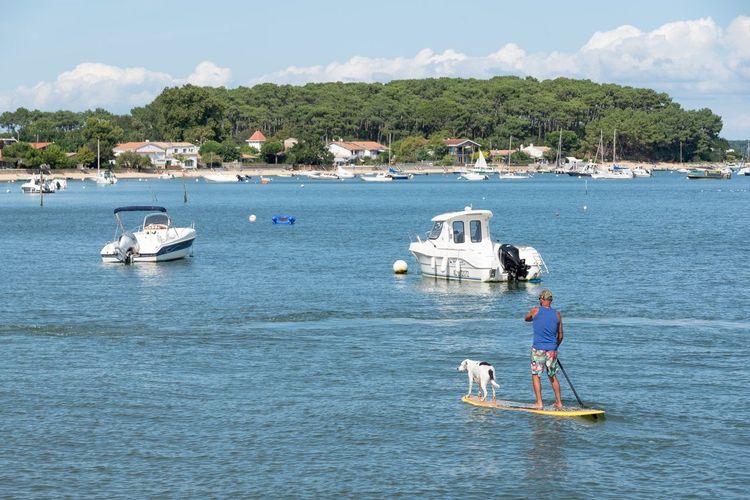
The Basin, largely sheltered from ocean swell, is particularly well suited to water activities accessible to beginners. Paddleboarding at dawn among the tchanquées cabins, when the water is flat and the light low and raking, remains the experience most recommended by local rental operators.
Several watersports centres hire out canoes and paddleboards by the hour or half-day along Arcachon's seafront and from Andernos; expect to pay roughly 15 to 25 euros per hour depending on the season. Check the tide before setting out: at low tide, large sandbanks make certain routes impassable and force you to carry your craft for several metres. Another local rule worth knowing: currents in the main channels can be strong at ebb tide, so it is better to set off against the current and return with it, never the other way round.
For sailing, several schools offer supervised outings by catamaran or dinghy from the sailing clubs of Arcachon and Cap Ferret, a good option for discovering the Basin from a different perspective than simply being a passenger. Thrill-seekers will also find plenty to do with kitesurfing and wingfoiling, practised on the wide open stretches of water on the northern shore, where the thermal wind often picks up in the early afternoon. Complete beginners are better off with a paddleboard, which is more stable and quicker to get to grips with than a windsurfer.
The Best Beaches of the Bassin d'Arcachon
The Basin's beaches fall into two distinct categories. On the inner side, the beaches of Arcachon and Pyla-sur-Mer offer calm, shallow water for a long stretch, and summer lifeguard supervision that reassures families. The Plage du Moulleau (33120 Arcachon, rated 4.5/5 on Google based on 269 reviews), at the foot of the Basilique Notre-Dame des Passes, remains the liveliest in the area with its beach cabins and terraces just steps from the sand.
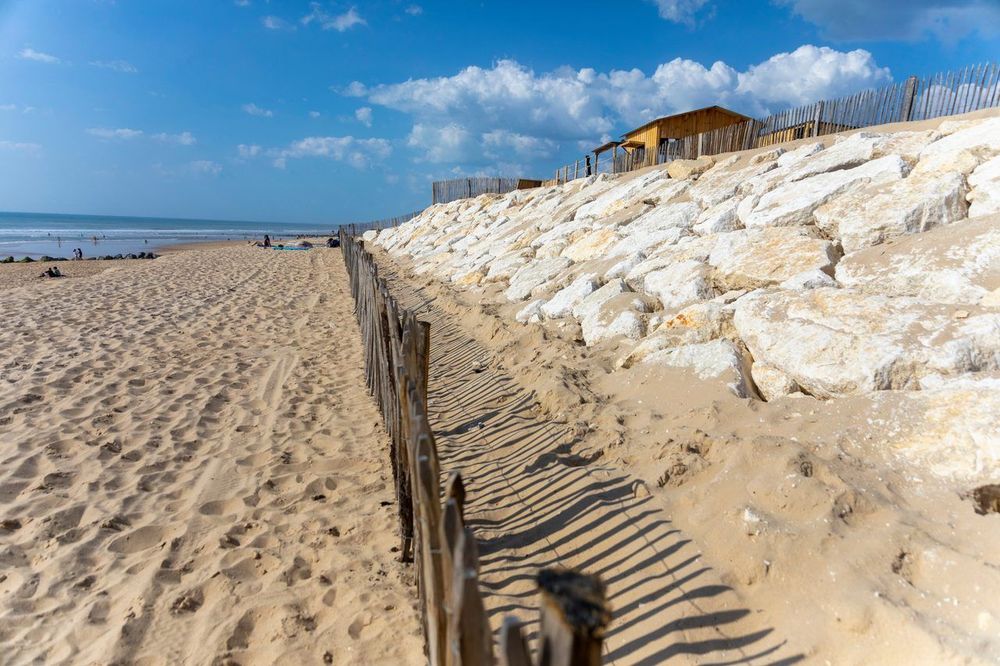
On the ocean side, the beaches of the Côte d'Argent, accessible from Pyla or further north towards Lacanau, offer proper waves appreciated by surfers, but with currents that must be respected, especially near the baïnes, those sandy hollows that drain violently seaward on a falling tide. The rule is simple: swim in supervised zones, between the flags, and never in water that is strangely calm in the middle of breaking waves. A Ryo article covers Lacanau beach in detail for those wanting to extend their stay towards the northern stretch of the coast.
At Cap Ferret, the beaches on the Basin side, more sheltered, contrast with those on the ocean side, wilder and often deserted outside July and August. The northern shore, around Andernos, Arès, and Lanton, rounds out the picture with very shallow beaches that turn into a vast tidal flat at low tide, perfect for shellfish gathering but less so for swimming. Choosing your beach comes down above all to choosing your atmosphere: flat calm and family-friendly, or waves and open sea. The Arcachon audio-guided tour offers a good introduction to the town itself before setting off to explore these beaches.
Markets and Oyster Tastings: the Essential Foodie Stops
The Arcachon municipal market (Cours Lamarque de Plaisance, 33120 Arcachon, rated 4.3/5 on Google based on 3,483 reviews), covered and open every morning in season, brings together fishmongers, greengrocers, and a few oyster stalls straight from the nearby cabins. It is the best place to put together a picnic before heading out on an excursion, and a chance to try local specialities: the dune blanche, the Bordeaux canelé, and the grey shrimps of the Basin caught at high tide.
If time allows, a meeting with an oyster farmer on their beds, often organised by the cabins themselves or through visits offered by the tourist office, reveals a demanding craft governed by tides and the seasons of spat collection. The spat, those young oysters that fix themselves onto collectors laid in open water, is harvested after the summer breeding season, before a three-to-four-year growing period in the beds. The Bassin d'Arcachon remains one of the main spat-producing basins in Europe: a large proportion of oysters grown elsewhere in France began life here.
The markets of Andernos, Gujan-Mestras, and La Teste-de-Buch round out the offer on the northern and southern shores, each with its own hours, generally in the morning. Bring a cool bag if you are buying oysters for the evening: the cold chain cannot wait, and an oyster stored flat, hollow side down, keeps far longer than one rattling around loose in a bag.
The Domaine de Certes and Graveyron: a Nature Retreat
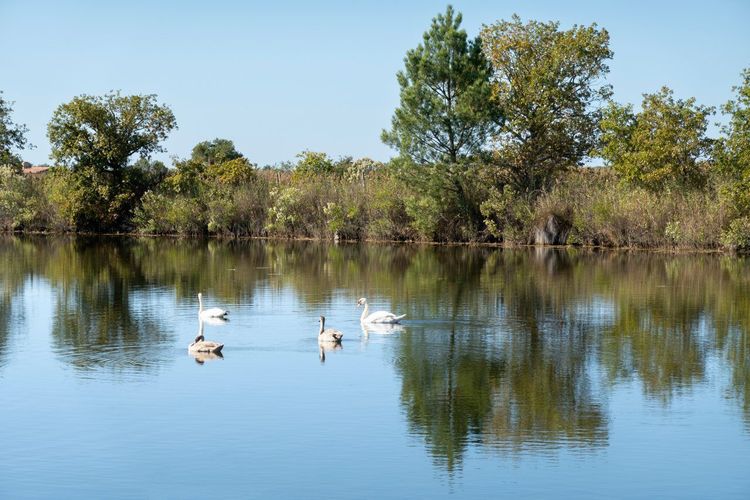
In Audenge, on the northern shore of the Basin, the Domaine de Certes et de Graveyron (Route de Certes, 33980 Audenge, rated 4.6/5 on Google based on 1,350 reviews) occupies former fish ponds and salt marshes now managed as a protected natural area by the Conservatoire du littoral and the Département. Its hundreds of hectares of pools, dykes, and reedbeds attract birdlife just as rich as that of the Teich, but with far fewer visitors.
The dykes can be walked or cycled freely, free of charge, making it a perfect alternative for a quieter fourth day after three busy ones. Allow around two hours for the main loop, which is almost entirely flat but entirely without shade: a cap and water are essential in summer. The best time to visit is early morning or late in the day, when the low-angled light and the calm of the site allow you to observe herons, egrets, and sometimes storks without disturbing them.
Where to Stay to Visit Arcachon and the Basin in 3 Days
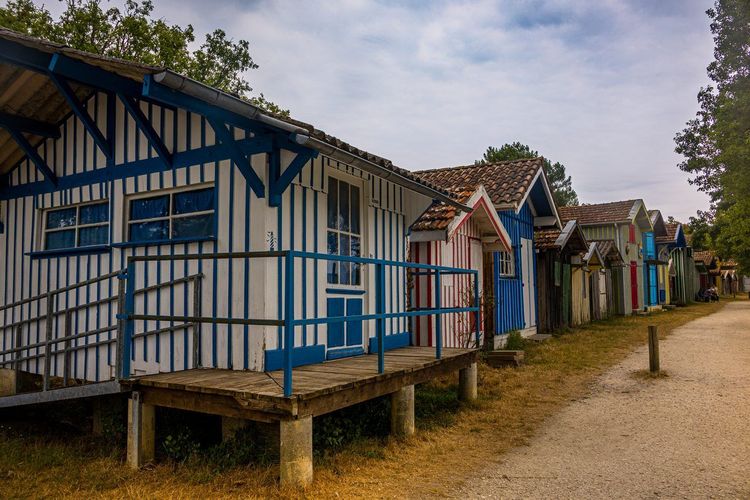
The choice of area for your accommodation makes a significant difference to the experience of the stay, depending on whether you prioritise proximity to shops or the quiet of an oyster village.
Staying in Arcachon and the Ville d'Hiver
Staying in Arcachon, and ideally in or close to the Ville d'Hiver, puts the entire first-day itinerary within walking distance and makes it easy to catch the boat to Cap Ferret. This is the area with the densest concentration of accommodation, from campsites to charming small hotels in renovated villas, but also the most expensive in peak season. Booking several months ahead for July and August is essential. One often overlooked advantage: Arcachon station is right in the town centre, making it possible to arrive by train from Bordeaux in under an hour and to manage the first two days entirely without a car. To plan the visit on the ground, the Arcachon audio-guided tour lets you pinpoint points of interest in the neighbourhood from the moment you arrive, without relying on a mobile signal.
Staying at Cap Ferret or on the Lanton-Andernos Side
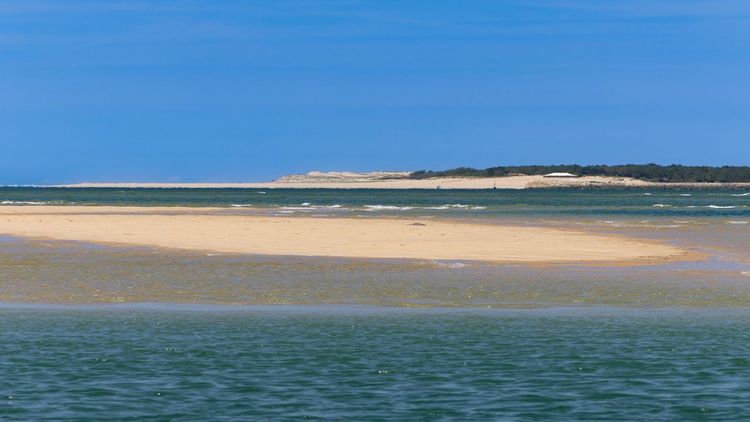
Cap Ferret appeals to those looking for a more nature-oriented stay, among pines and oyster cabins, at the cost of access to Arcachon that depends on boat shuttles or a longer drive around the Basin. Villages such as Lège, Claouey, and Piraillan offer more affordable rentals than the Cap Ferret tip itself, while retaining direct access to the cycle path that runs the full length of the peninsula.
On the northern shore, the areas of Lanton, Andernos, and Arès attract visitors for their value for money and their central position on the Basin, midway between Arcachon and the oyster villages of the north. Staying in Lanton makes it easy to explore Andernos, Arès, and the Domaine de Certes without doubling back through Arcachon, a real advantage if your stay extends beyond the classic three days. For a tight budget, campsites on the northern shore and around Biganos remain the most economical options, with a 20-to-30-minute drive to the main sites.
Getting Around: Car, Bike, and Boat on the Basin
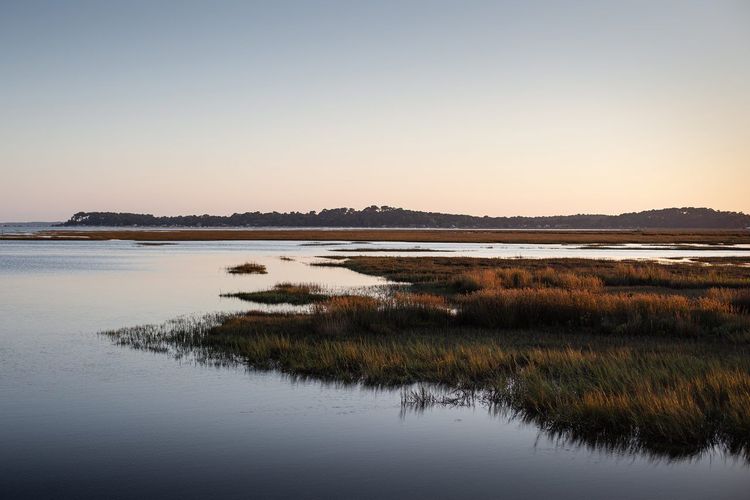
The Basin stretches along nearly 80 kilometres of coastline, a territory too large to be covered by a single mode of transport over three days.
By Bike on the Basin Cycle Path
The Bassin d'Arcachon cycle path almost entirely circumnavigates the shoreline, with particularly enjoyable sections between Arcachon and Andernos via La Teste-de-Buch, Gujan-Mestras, and Biganos. A full day is needed to ride from Arcachon to Arès with stops at each oyster port, a route of around 70 kilometres that combines nature, heritage, and tasting breaks without ever straying from the water. The route is almost entirely flat and separated from the road, making it manageable with children over short stages, for example Arcachon to Gujan-Mestras along the ports. Bike hire, including electric bikes, is readily available in every town on the Basin, with day rates that are often better value than hourly hire.
By Boat or Maritime Shuttle
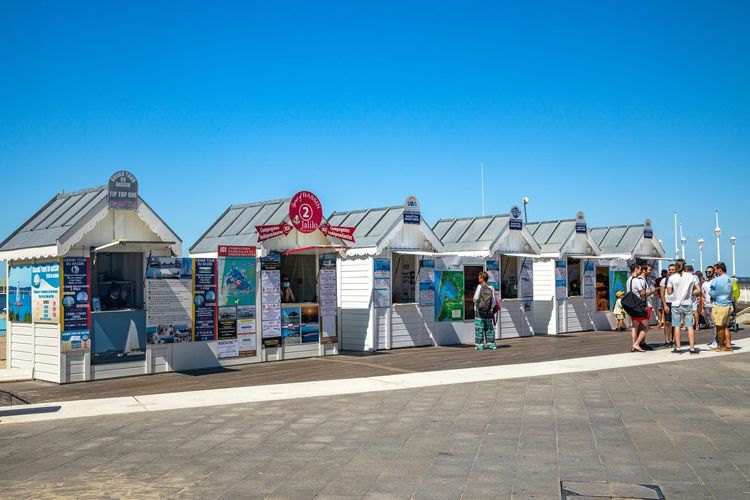
The maritime shuttles remain the most direct way to get from Arcachon to Cap Ferret without taking the road, which goes all the way around the Basin and can easily take an hour by car. In high season, departures multiply throughout the day, with single tickets or return options that are more economical if you are planning several crossings. Outside the season, sailings are greatly reduced: check the day's timetable before building your programme around a boat crossing.
By Car and Where to Park
A car is still useful for reaching the Dune du Pilat, the Teich reserve, or the Domaine de Certes, which are poorly served by public transport outside the season. Parking in Arcachon becomes difficult in July and August near the centre and the piers: aim for peripheral car parks early in the morning, or leave the car at your accommodation and get around by bike. The Basin bus network does serve the main communes, and in summer a seasonal line connects Arcachon to the Dune du Pilat, a practical alternative to the traffic jams on the Biscarrosse road.
On the accessibility front, several major Basin sites, including part of the Teich reserve trail and some seafront access points in Arcachon equipped with beach wheelchairs in summer, have routes adapted for people with reduced mobility; it is worth checking in advance for the Dune du Pilat, where the loose sand significantly limits access to the summit.
When to Go, How Many Days, and What Budget to Plan
The high season, from July to the end of August, guarantees warm weather and all shuttles in operation, at the cost of maximum crowds on the Dune du Pilat and the beaches. Spring and early autumn offer a compromise that many consider ideal: still pleasant temperatures, lower prices, and the Teich reserve particularly lively during bird migration, in April-May and in September. Winter has its devotees too, with oyster cabins open around the holidays and accommodation rates halved, provided you accept that most boat excursions operate at reduced frequency.
Three days are enough to cover the essentials: Arcachon and the Dune on day one, Cap Ferret on day two, and the Basin's natural side on day three. A two-day stay is still possible if you focus on Arcachon and Cap Ferret, even if it means forgoing the Île aux Oiseaux or the Teich reserve. Conversely, a fourth day allows you to add the Domaine de Certes, the northern shore villages, or a full pinasse excursion, in the slow-travel spirit favoured by Basin regulars.
On the budget side, allow roughly 80 to 150 euros per night for decent accommodation in high season depending on the area, 15 to 30 euros per boat excursion, around ten euros for entry to the Teich reserve, and a variable food budget depending on whether you favour the oyster cabins, more affordable, or the seafront restaurants, more expensive. A privately hired pinasse excursion quickly climbs beyond 200 euros for a small group, but the cost can be shared. Two spending areas where you can reduce the bill without sacrificing anything: staying on the northern shore rather than in Arcachon, and replacing a car hire with a bike plus the train from Bordeaux.

FAQ
How Many Days Do You Need to Visit the Bassin d'Arcachon?
Three days allow you to cover Arcachon, the Dune du Pilat, Cap Ferret, and a nature day between the Île aux Oiseaux and the Teich reserve. Two days are still possible if you focus on Arcachon and Cap Ferret, and a fourth day opens the door to the Domaine de Certes and the villages on the northern shore.
How Much Time Should You Allow for the Dune du Pilat?
Allow around one hour on site, including the 20-to-40-minute climb depending on your fitness level, time spent at the top enjoying the panorama, and the descent. Add extra time if you are aiming for sunset, as the dune fills up in the late afternoon.
Is Cap Ferret Worth the Trip from Arcachon?
Yes, the boat crossing takes only about thirty minutes and offers a completely different atmosphere: oyster villages, a lighthouse, multicolored cabins, and oyster tasting on the pontoons, far from the bustle of Arcachon's seafront.
Where Should You Stay to Visit Arcachon and the Basin?
Arcachon and its Ville d'Hiver are ideal for staying close to shops and boat departures. Cap Ferret appeals for its nature atmosphere, while Lanton, Andernos, and Arès offer a good price-to-location compromise on the northern shore.
Can You Visit Arcachon and Cap Ferret in 2 Days?
Yes, that is the realistic minimum to enjoy both without rushing: one day in Arcachon and at the Dune du Pilat, one day at Cap Ferret. The nature day around the Île aux Oiseaux and the Teich reserve requires a third day.
What Budget Should You Plan for 3 Days in Arcachon?
Including accommodation, two or three boat excursions, oyster tastings, and a restaurant meal, budget broadly between 350 and 600 euros per person for three days in high season, excluding transport to the Basin.
Arcachon and its Basin lend themselves to a pace you set yourself, whether strolling through the lanes of the Ville d'Hiver, making the breathless climb up the Dune du Pilat, or enjoying the silence of the tchanquées cabins at dawn. Three days are enough to take in the essence of this four-faced territory, but few visitors leave without already planning to return, if only to explore the northern shore or the Eyre delta at greater length.
To prepare each stage without relying on a paper map or a patchy mobile signal among the pine trees, Ryo's Arcachon audio-guided tour remains the most complete resource: it follows the first day's itinerary exactly, neighbourhood by neighbourhood, and can be downloaded before departure to work offline.
À lire également