





Walk
The City of Four Seasons
Arcachon, France
Walk
The City of Four Seasons
Arcachon, France
3.2 km
Distance
1h30
Durée
20
Audios
Loop
Parcours
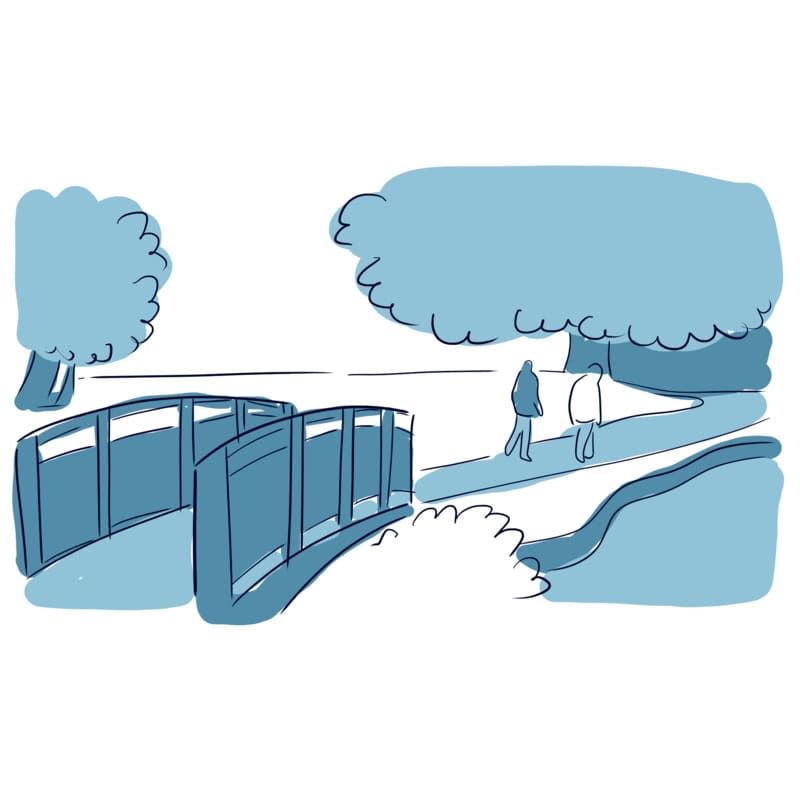
The Moorish Park is one of the most emblematic places of Arcachon, heir to the sumptuous Moorish Casino that stood there. The Arcachon audio-guided tour stops here to evoke this green park of the Ville d'Hiver, offering fine views and the memory of a vanished architectural jewel.
Welcome to the Moorish Park, one of the most emblematic places of Arcachon. This park takes its name from the sumptuous Moorish Casino that rose here from 1863 to 1977. This architectural jewel, built by the Pereire brothers in the orientalist style then in fashion, with its domes, its arches and its decors of Moorish inspiration, was a spectacular building that dominated the Ville d'Hiver and made the pride of the resort. A place of games, shows and society life, it symbolised the pomp and the refinement of the golden age of Arcachon. Alas, this monument was ravaged by a fire in 1977 and entirely destroyed, leaving only a great void and many regrets. At its location extends today a pleasant landscaped park, planted with trees and lawns, which occupies the heights of the Ville d'Hiver and offers fine views over the town and the Bassin. The park remains a prized place of promenade, laden with the memory of this legendary casino. A green park and a place of memory, the Moorish Park is a fine stop of the discovery of Arcachon.
Here you stroll in the pleasant landscaped park of the heights of the Ville d'Hiver, which occupies the location of the sumptuous Moorish Casino built by the Pereire brothers in 1863 in the orientalist style and destroyed by a fire in 1977, planted with trees and lawns and offering fine views over the town and the Bassin, laden with the memory of this vanished jewel. The Moorish Park is an emblematic place of Arcachon. It is a fine stop, to be explored on foot.
The Moorish Park lies on the heights of the Ville d'Hiver of Arcachon, reachable on foot, or by the lift linking the lower town. It is an open-air public park, generally freely accessible. The walk there is pleasant and offers fine views over the town and the Bassin.
From the sumptuous Moorish Casino that rose here from 1863 to 1977, built by the Pereire brothers in the orientalist style with domes and arches, jewel and pride of the resort; ravaged by a fire in 1977, it gave way to a pleasant landscaped park offering fine views over the town and the Bassin.
On the heights of the Ville d'Hiver of Arcachon, in France.
Aucun avis pour le moment
