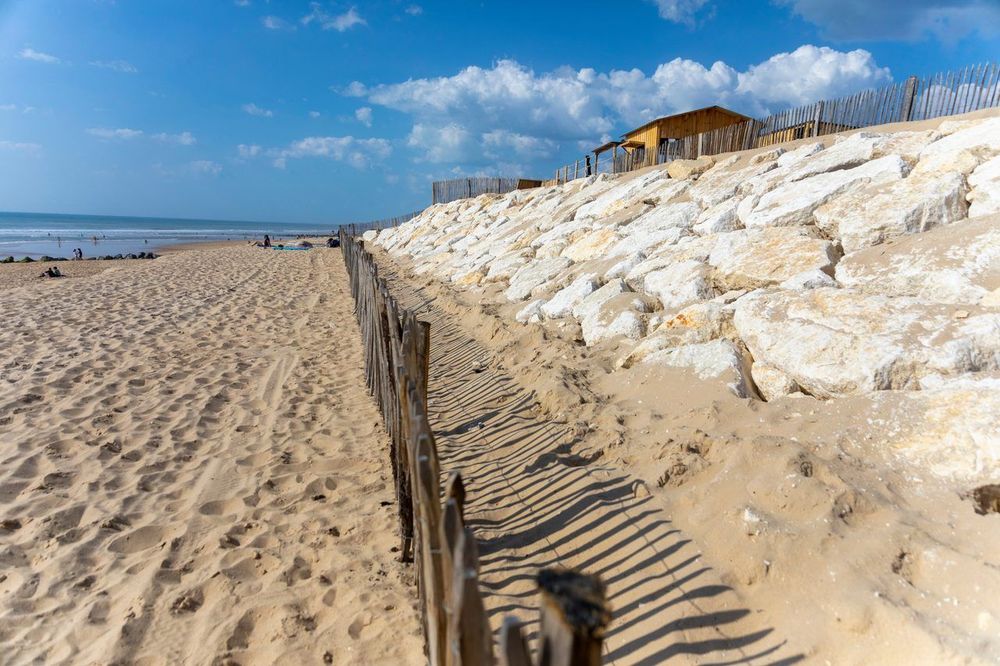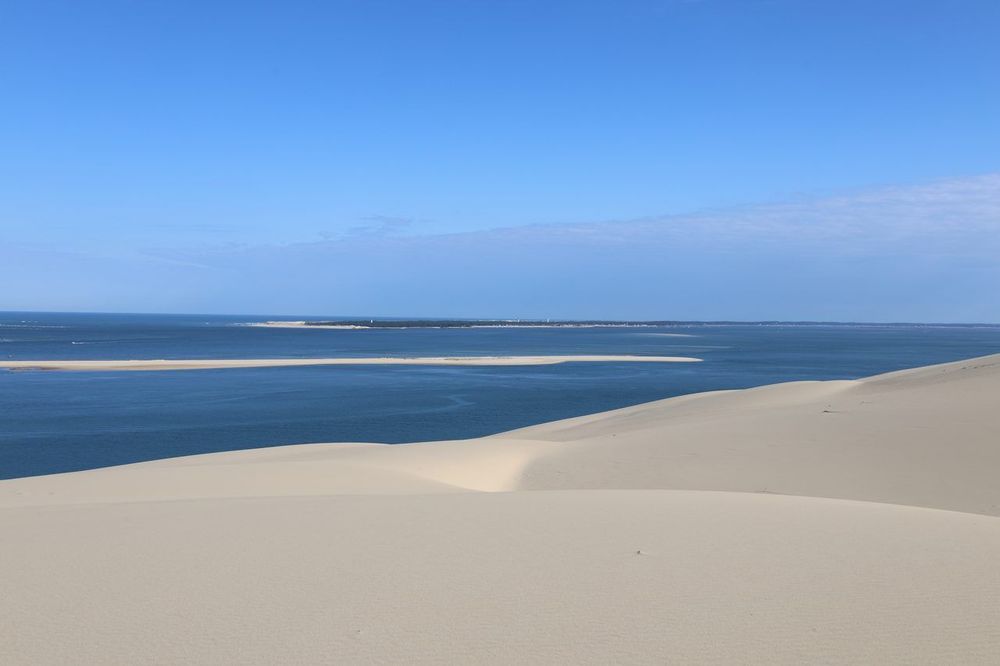
© Shutterstock
 Votre guide Ryo
Visiting Arcachon for the First Time: the Complete Guide 2026
At low tide, the Arcachon Basin can lose nearly two-thirds of its water: boats run aground on the mud, the tchanquées huts of the Île aux Oiseaux rise like giant herons, and clam diggers pull on their boots again. It is this tidal rhythm, more than any monument, that shapes a first discovery of the town. Here is how to visit Arcachon for the first time without wasting time or missing the essentials: to get your bearings from the moment you arrive, the Ryo audio-guided tour of Arcachon unfolds 19 audio stops over 3.2 km, roughly 1h30 of walking, from the seafront to the villas of the Ville d'Hiver.
Between the dune du Pilat, the tallest in Europe with just over 100 metres of shifting sand and a 19th-century metal observation tower perched above the pines, Arcachon is far more than a beach destination. This guide covers the town-centre neighbourhoods, the Ville d'Hiver and its eclectic villas, boat excursions to the Île aux Oiseaux and the banc d'Arguin, Cap Ferret and the oyster villages, along with all the practical information (getting there, budget, season, accommodation) to plan a stay with no nasty surprises.
The Seafront and Town-Centre Neighbourhoods of Arcachon
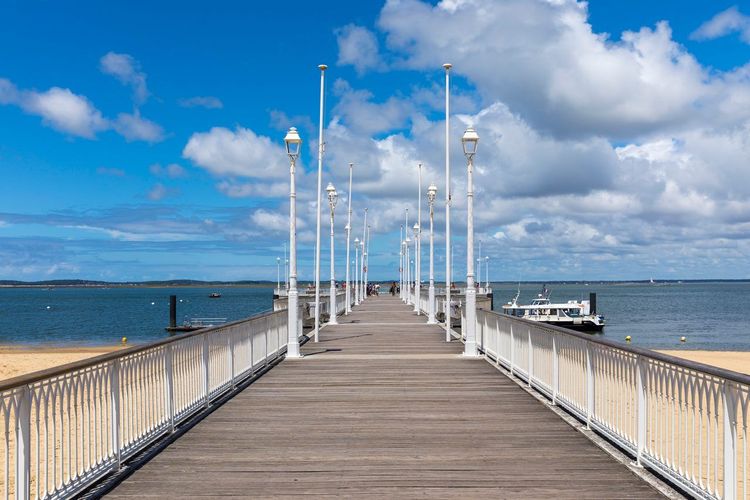
The Jetée Thiers and the Aiguillon Quarter, the Fishermen's Village
The jetée Thiers is the first landmark for anyone arriving in Arcachon: it stretches out into the basin at the heart of the Ville d'Été, steps from the tourist office, and serves as the starting point for seafront walks as well as many boat departures. From the tip, the view reaches the Île aux Oiseaux and, on a clear day, the Cap Ferret headland.
Walking along the seafront heading east, past the marina and the jetée d'Eyrac, you enter the Aiguillon quarter, the neighbourhood of fishermen and oyster farmers. The wooden sheds, moored pinasses and drying nets give this corner of Arcachon a different tempo from the rest of the town. The best time to discover it is early in the morning, when the boats come back in and the regulars take their coffee on the terrace without paying any attention to tourists.
Pereire and Moulleau Beaches for a Relaxing Day in the Sun
To the west of the town centre, on the Abatilles side, Pereire beach (Boulevard de la Plage, 33120 Arcachon, rated 4.7/5 on Google with 1,331 reviews) stretches for several kilometres of fine sand just beneath the pines. This is the main family beach of Arcachon: a lifeguard post in season, calm water facing the basin, and swimming that is far more pleasant at high tide, when the water covers the mudflats.
Further south still, the Moulleau beach has a completely different feel: a small village neighbourhood with its shops, its jetty and its Notre-Dame-des-Passes church, which has served as a landmark from the open water for generations. Allow about twenty minutes by bike from the town centre (around 5 km), or take the bus if you are travelling with children. It is also the best spot in town to watch the sun set over the Cap Ferret headland.
The Ryo audio-guided tour of Arcachon follows exactly this seafront thread, from the jetée Thiers to l'Aiguillon, with a dedicated audio stop on the history of the basin's fishermen.
The Ville d'Hiver, the Historic Quarter of Belle Époque Villas
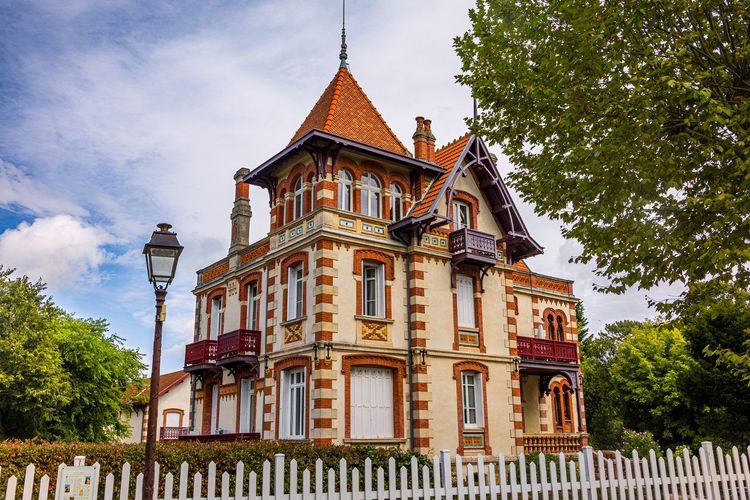
A few minutes' walk uphill from the centre is all it takes to change the atmosphere completely: the shopping streets give way to curved, shaded lanes where every villa bears its own name. This is the Ville d'Hiver, laid out between 1862 and 1865 by the Pereire brothers to welcome tuberculosis patients who came to breathe the resinous pine air. The winding layout of the lanes was no whim: it was designed to shield the patients from the wind. The neighbourhood is now listed as a remarkable heritage site.
The Arcachon Villas and Their Eclectic Architecture
Nearly 300 villas make up this neighbourhood, each in a different style: neo-Gothic, Moorish, Swiss chalet or Anglo-Norman cottage. The villa Teresa, with its polychrome brickwork and ceramic decorations, remains one of the most photographed.
Nearby, the villa Toledo sports a Hispano-Moorish inspired décor, while other mansions pile up half-timbering, bow windows and carved wooden balconies without any inhibition. You can follow the signposted trail along the lanes (most villas are private residences, to be admired from the street) or simply wander at random, which remains the best way to discover the neighbourhood for the first time. The tourist office also organises guided walking tours in season.
Wear comfortable shoes: the Ville d'Hiver is built on ancient dunes, and the lanes go up and down constantly.
The Sainte-Cécile Observatory and the Wooded Parks
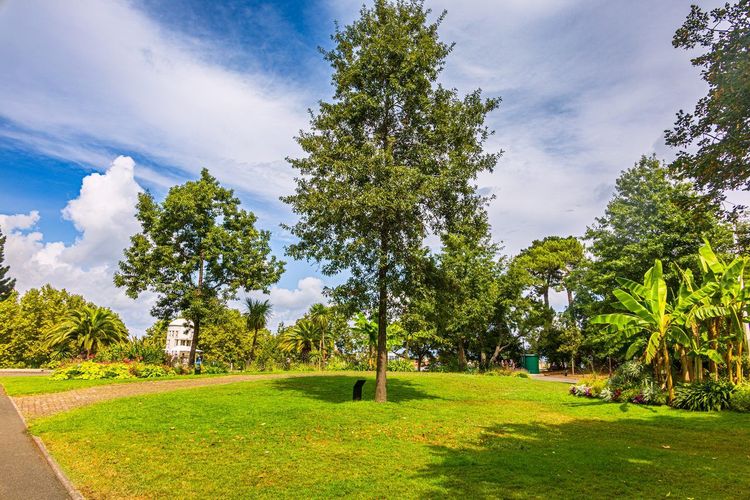
The parc Mauresque (Ville d'Hiver, 33120 Arcachon, rated 4.5/5 on Google with 5,745 reviews) forms the green heart of the neighbourhood. It owes its name to the Moorish casino inspired by the Alhambra that once stood here, abandoned and then destroyed by fire in 1977. From the town centre, a public lift takes you up there effortlessly, sparing you the climb in the height of summer.
Right next to it stands the Sainte-Cécile observatory, a metal tower from the 1860s connected to the park by a suspension footbridge. From the top, the view plunges over the rooftops of the Ville d'Été and the basin. Its opening has been irregular in recent years for safety reasons: check with the tourist office before visiting.
Further west, the parc des Abatilles and the forest extend the walk towards quieter trails, far from the hustle of the seafront. This is where the Abatilles spring rises, discovered in 1923 and whose mineral water is still bottled today.
Across its 19 audio stops, the Ryo audio-guided tour of Arcachon devotes several stops to the Ville d'Hiver, recounting along the way the story of the patients and the ambition of the Pereire brothers, who transformed a pine heath into a fashionable resort.
The Dune du Pilat, the Essential Excursion from Arcachon
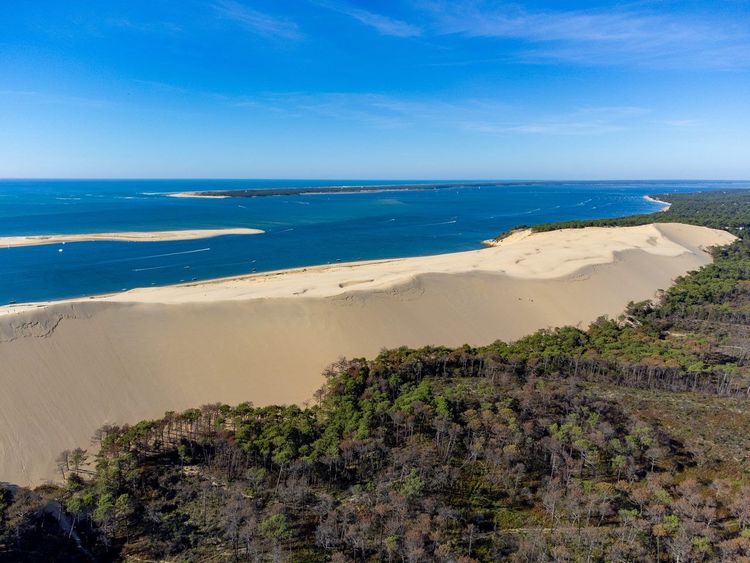
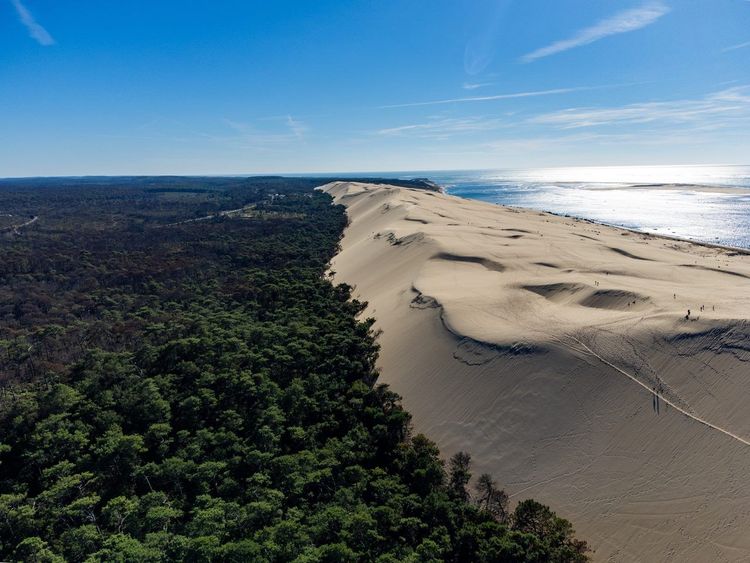
No first visit to Arcachon is complete without devoting half a day to the dune du Pilat (33115 La Teste-de-Buch, rated 4.8/5 on Google with 12,450 reviews), about twenty minutes by car from the town centre, in the commune of La Teste-de-Buch. It is the tallest dune in Europe: 103.6 metres measured in 2023, nearly 3 kilometres from north to south, and a mass of sand that advances several metres each year towards the forest it is slowly engulfing.
Climbing the Dune and Taking in the Panorama over the Basin and the Forest
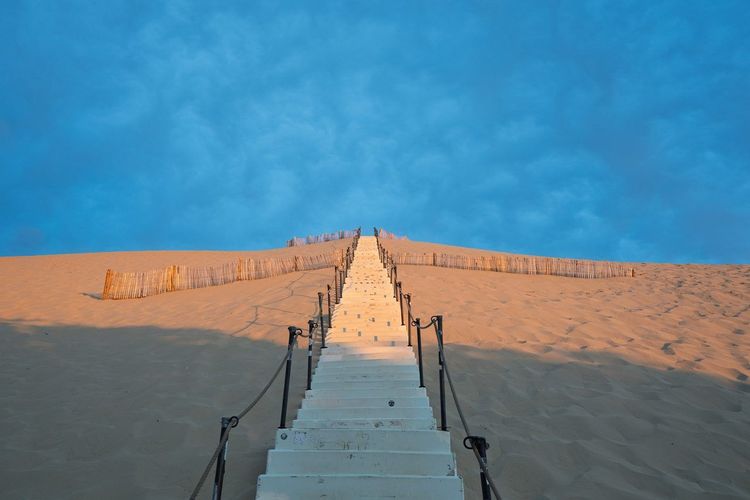
The ascent is made via a staircase of around 170 steps, installed in season and one-way upward since 2020 to manage visitor flow, or directly through the sand for the more adventurous. Via the steps, allow a good quarter of an hour; via the sand, considerably more effort.
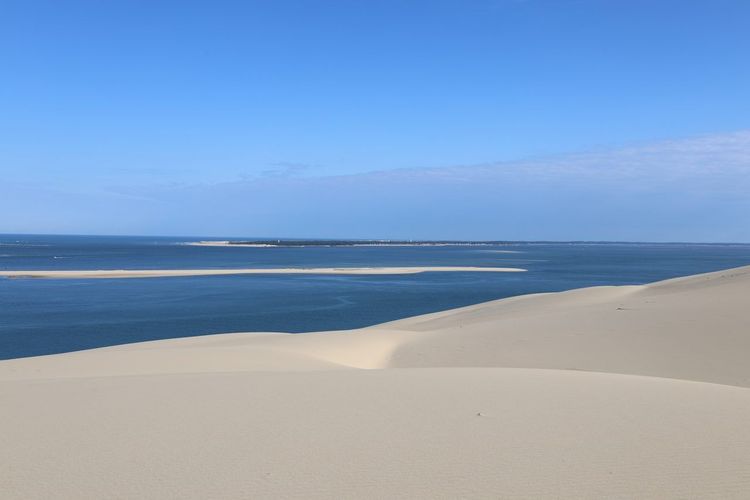
Once at the top, the panorama sweeps on one side towards the Atlantic Ocean and the banc d'Arguin, and on the other towards a pine forest stretching as far as the eye can see. On a clear day, you can make out the Cap Ferret headland and the entrance to the basin, where the tidal channels create clearly visible swirls from the summit.
The car park, located on the forest side, is paid; access on foot, by bike or by bus remains free. Bring water and a hat: there are no refreshment points at the top, and the sand heats up very quickly in the height of summer.
Watching the Sunset from the Summit, a Local Ritual
Climbing the dune at the end of the day has become a ritual, for locals and visitors alike: you settle into the still-warm sand, watch the sun plunge into the ocean while the basin turns orange, and nobody speaks very loudly.
Arrive at least 45 minutes before sunset to allow time to climb and find a spot to sit: in July and August, the summit can be packed on fine evenings. For the descent, keep a torch within reach.
To prepare your ascent, the Ryo guide dedicated to the dune du Pilat details access routes and the best times depending on the season. And if you save the Ryo audio-guided walk of Arcachon for the next morning, you will recognise the silhouette of the dune from the seafront, as it is mentioned in several of the tour's stops.
Exploring the Arcachon Basin by Boat
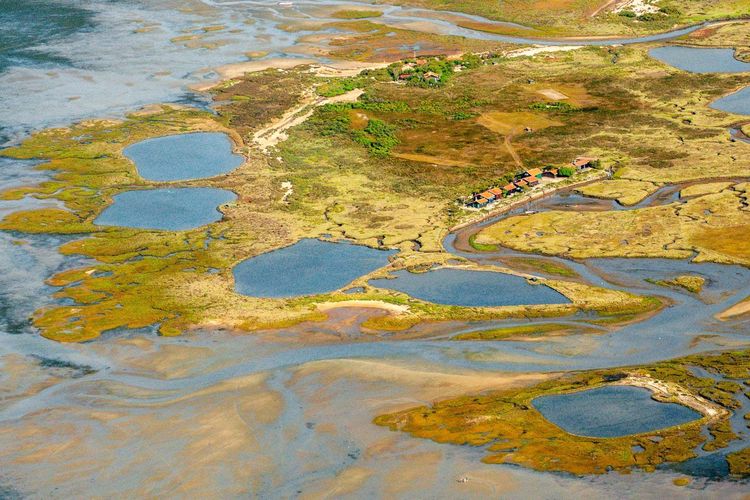
A large part of what makes the basin unique cannot be seen from land. You need to head out on the water, even for just two hours, to appreciate the full extent of the oyster beds and the very distinctive silhouette of the Île aux Oiseaux (Bassin d'Arcachon, 33120 Arcachon, rated 4.7/5 on Google with 129 reviews).
The Île aux Oiseaux and the Famous Tchanquées Huts
The Île aux Oiseaux sits at the centre of the basin: uninhabited, covered in salt meadows and mudflats, it serves as a refuge for thousands of migratory birds. It is visited from a boat, respecting the tranquillity of the site.
Its two tchanquées huts, perched on stilts above the water, have become the most reproduced image of the basin. The word comes from the Gascon "tchanca", meaning stilt: these huts once served as lookout posts for the keepers of the oyster beds.
Crossings and Boat Excursions from Arcachon Harbour
The Union des Bateliers Arcachonnais operates most trips departing from the jetées Thiers and d'Eyrac: the commented tour of the Île aux Oiseaux lasts about 2 hours (from €23.40), and a longer 2h30 option makes a full circuit of the basin. Shuttles also connect Arcachon to Cap Ferret, Moulleau, Andernos and the foot of the dune.
In summer, some shuttles drop visitors on the banc d'Arguin, a vast sandbank classified as a nature reserve at the entrance to the basin, facing the dune. The turquoise waters there are more reminiscent of the tropics than the Gironde, but part of the sandbank is off-limits to protect the terns that nest there.
Book the day before in July and August: the first morning departures often sell out quickly, and timetables depend on the tide.
Cap Ferret, the Peninsula Across from Arcachon
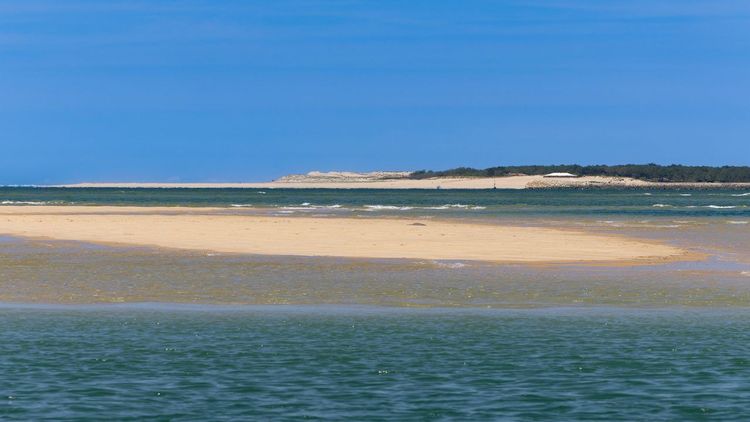
Across from Arcachon, on the other side of the basin, the Cap Ferret peninsula cultivates a deliberately understated atmosphere: no apartment blocks, wooden cabins, and a pine forest that comes almost down to the water's edge.
The Cap Ferret Lighthouse and Its Views over the Ocean
The Cap Ferret lighthouse (32 Rue du Phare, 33970 Lège-Cap-Ferret, rated 4.4/5 on Google with 9,920 reviews), with its red top, is visible from Arcachon on a clear day. Rebuilt in 1947 after the original lighthouse was destroyed by the German army in 1944, it has more than 250 steps leading to a 360-degree view: the ocean on one side, the basin and the dune du Pilat on the other.
Entry is paid (around €7) and a small museum at the base of the tower traces the history of maritime signalling along the coast. Around it, the Cap Ferret village clusters the bulk of the peninsula's shops and restaurants.
Exploring the Peninsula by Bike, Between Pine Forest and Oyster Villages
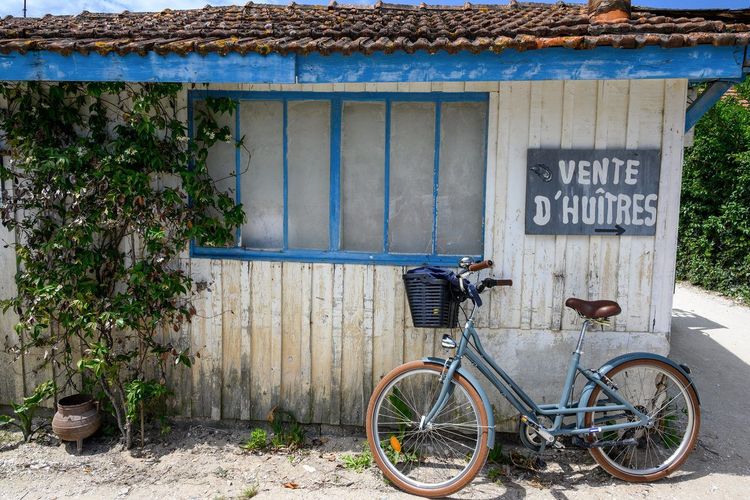
Cap Ferret is best explored by bike: continuous cycle paths, little elevation change, and oyster villages such as L'Herbe, Le Canon and Piraillan, where sandy lanes lead straight to the huts. Allow a full day to explore it at a leisurely pace.
The maritime shuttle remains the easiest way to reach the peninsula without a car: about thirty minutes' crossing from the jetée Thiers, with bikes on board if needed. Do the Ryo audio-guided tour of Arcachon before you board: its stories about the tchanquées huts and the oyster harbours will give full meaning to the landscapes you will see drifting past from the deck.
Our Ryo article on Cap Ferret details a cycling itinerary from the lighthouse to the oyster villages.
The Oyster Villages and Harbours Around the Basin
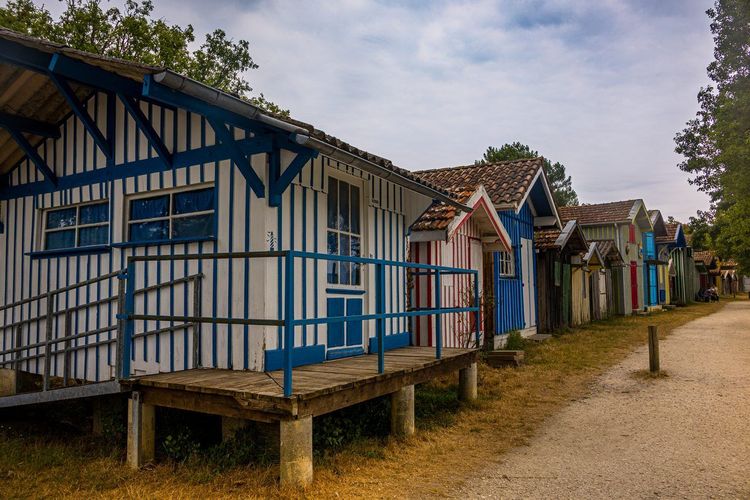
The Arcachon Basin produces several thousand tonnes of oysters every year, and this activity still shapes the villages that surround it. Three of them deserve a stop on a first visit.
Gujan-Mestras and Its Seven Oyster Harbours
Gujan-Mestras claims the title of oyster capital of the basin, with seven harbours spread along the coast: Larros, Gujan, Meyran, le Canal, la Mole, la Barbotière and La Hume. The port de Larros, the most visited, retains its oyster huts and is home to the Maison de l'huître, which traces the history of oyster farming on the basin.
You will also find huts offering direct tastings — oysters and white wine — with your feet almost in the water.
Oyster Tasting in Andernos-les-Bains
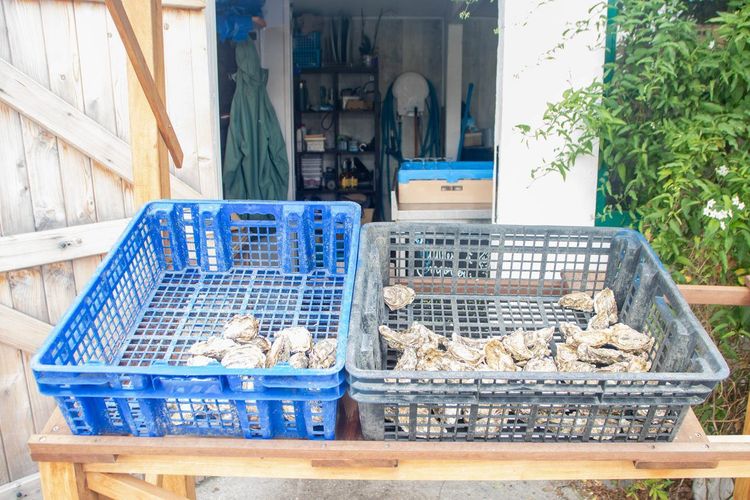
Andernos-les-Bains, in the north-east of the basin, has the longest jetty on the basin (232 metres) and a more family-friendly seafront. It is also one of the best places to taste oysters directly from the producer, at wooden tables set up facing the water.
Expect to pay around fifteen euros for a dozen accompanied by a glass of white wine. Our Ryo article on Andernos-les-Bains lists the best huts in the area.
The Colourful Harbour of Biganos
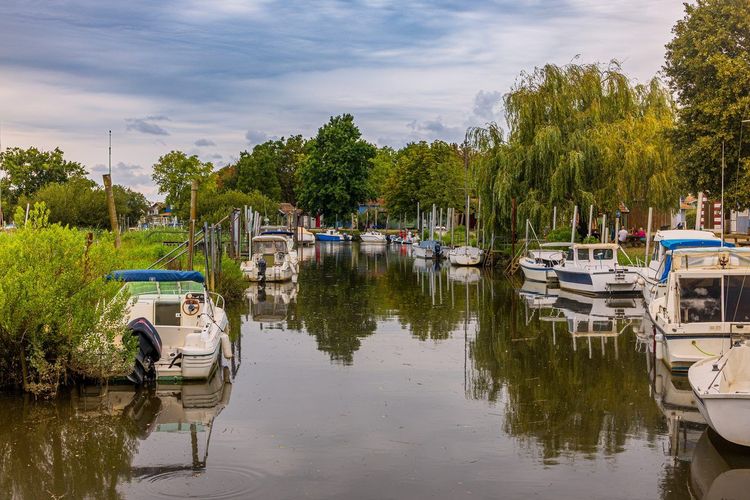
Less well known, the port de Biganos (33380 Biganos, rated 4.5/5 on Google with 2,555 reviews) is worth a detour for its brightly painted huts lined up along the banks of the Eyre, just before it flows into the basin. It makes a good complement if you are looking for somewhere less crowded than Gujan-Mestras or Andernos, with a particularly photogenic light at the end of the day.
The Teich Bird Reserve, a Nature Interlude
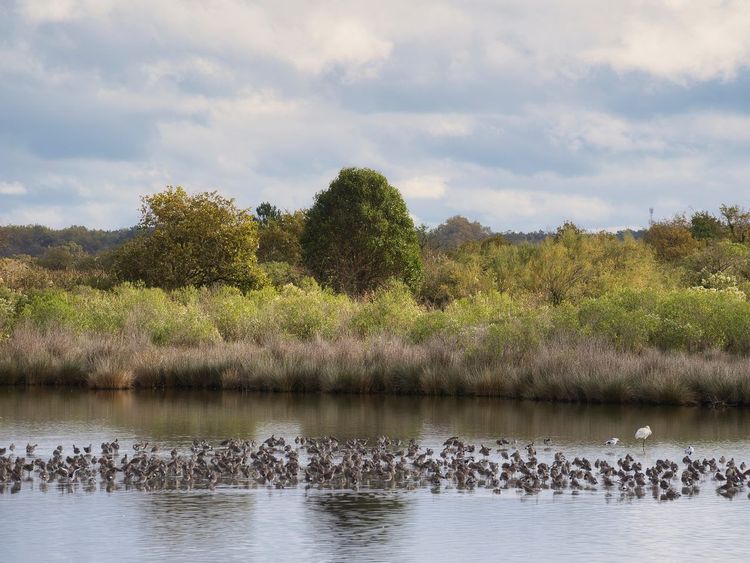
About twenty minutes from Arcachon, the Réserve Ornithologique du Teich (122 Rue du Port, 33470 Le Teich, rated 4.5/5 on Google with 3,350 reviews) protects 120 hectares of lagoons and salt meadows at the head of the basin, where the Eyre forms its delta. Open to the public since 1972, it sees more than 260 species of birds pass through over the course of a year: white storks, spoonbills, avocets, grey herons.
Six kilometres of marked trails wind between the ponds, punctuated by around twenty wooden hides where you can rest your binoculars without disturbing the birds. Allow 2 to 3 hours for a complete visit. Spring, with stork nesting, and autumn, during full migration, are the most spectacular seasons.
Come early in the morning or in the late afternoon, when the birds are active and the light is softer for photography. If you don't have binoculars, the welcome desk offers them for hire.
Where to Eat and Where to Stay in Arcachon
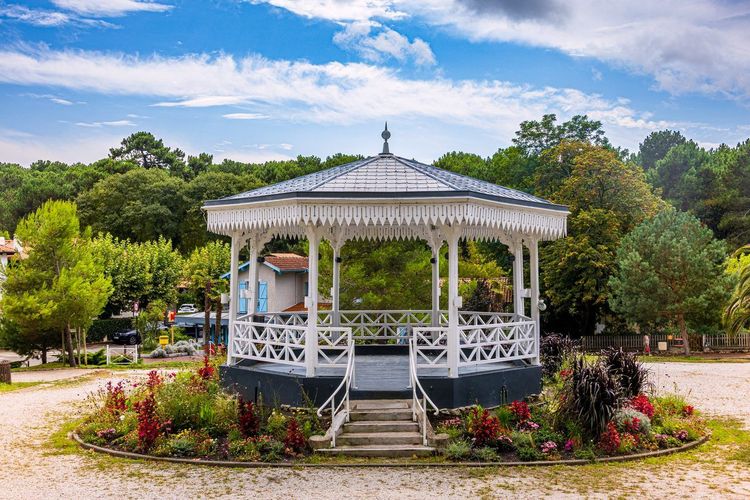
Between the oyster huts, the central market hall and the seafront terraces, Arcachon covers a wide range of options for both dining and accommodation.
Our Picks for Dining, from Oyster Bars to Gastronomic Restaurants
For a simple tasting, head to the oyster huts of the Aiguillon: a dozen oysters, bread, salted butter and a glass of white wine, for around fifteen euros. It is the most authentic way to taste the basin.
In the morning, pay a visit to the halles d'Arcachon, right in the town centre: fishmongers, oyster farmers and greengrocers set up their stalls there, and a few counters serve oysters or seafood tapas on the go.
For a sit-down lunch with a view, the seafront and Moulleau restaurants offer grilled fish and seafood, with an average bill of around €25 to €35. Those looking for more elaborate cuisine will find a handful of gastronomic tables, with menus starting at around €45. In July and August, book ahead for the evening: the most popular terraces fill up very early.
Where to Stay According to Your Budget and Favourite Neighbourhood
The town centre, around the jetée Thiers, is ideal for a first stay: everything is walkable, though prices climb in summer. The Ville d'Hiver offers a quieter, greener setting, ten minutes from the seafront, with bed-and-breakfasts and hotels housed in former villas.
On a tighter budget, look towards La Teste-de-Buch or Gujan-Mestras, slightly out of the way but significantly cheaper and served by the train. Campsites, plentiful in the pine forest around the dune du Pilat, remain the most economical option for families.
Practical Information for Planning Your Stay
A few key facts before you leave, to avoid the most common pitfalls on a first stay.
How to Get to the Arcachon Basin
By train, Arcachon station is connected to Bordeaux Saint-Jean by TER regional service in under an hour, with frequent departures throughout the day; some direct TGV trains from Paris also serve the town in summer. By car, allow around 1 hour from Bordeaux via the A63 then the A660, longer on Saturdays at the height of summer. The nearest airport is Bordeaux-Mérignac, about one hour's drive away.
Getting Around: Car, Bike, Boat
Arcachon is very well suited to exploring on foot or by bike: the town centre is compact, and cycle paths connect the beaches, the Ville d'Hiver, Moulleau and even the dune du Pilat. Several bike hire shops are located near the station and the seafront. The Baïa bus network serves the town and neighbouring communes. To reach Cap Ferret, the maritime shuttle is far more practical than the car, which requires a detour of nearly 70 km by road.
How Much Time to Allow for a First Visit
Two full days are enough to cover the essentials: the town centre and the Ville d'Hiver on the first day, the dune du Pilat and a boat excursion on the second. Our itinerary for visiting Arcachon in 2 days details this sequence. With three days, you can add Cap Ferret and the Teich reserve at a relaxed pace, as outlined in our itinerary for visiting Arcachon in 3 days.
What Souvenirs to Bring Back from the Basin
A basket of oysters bought that same morning from the oyster farmer, if the journey home is short, remains the most faithful souvenir of the basin. For travelling lighter, think about tinned seafood, salt and products from the pine forest (Landes honey, pine confectionery), or a bottle of Abatilles water, the local spring.
Making the Most of Arcachon Evenings and Atmosphere
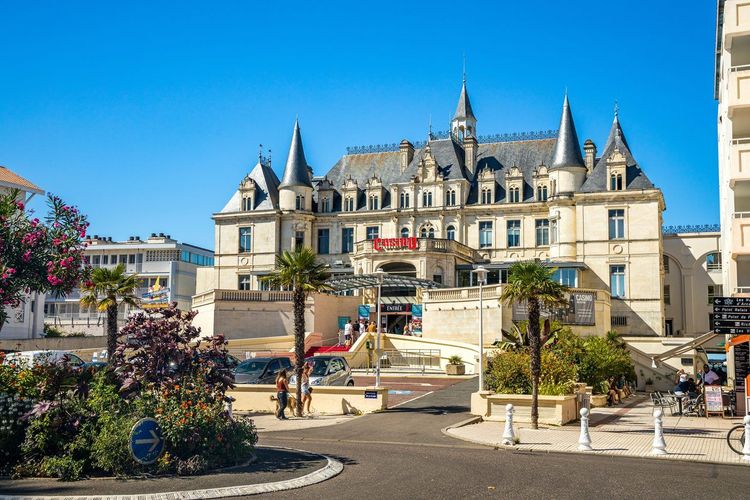
Once night falls, the seafront shifts pace: terraces fill up, a few wine bars stay open late in summer, and the casino, housed in the château Deganne on the boulevard de la Plage, draws gaming enthusiasts into a setting dating from 1853.
In July and August, free concerts and events animate the evenings around the place Thiers and the seafront, and the town sets off fireworks over the basin for 14 July and 15 August. For a quieter evening, a simple stroll along the jetée Thiers at dusk, when the lights of Cap Ferret start to glow on the other side of the basin, is more than enough. At Moulleau, the atmosphere remains more village-like, with a few beach bars facing the sunset.
FAQ
How many days do you need to visit Arcachon for the first time?
Two full days are enough to cover the town centre, the Ville d'Hiver and the dune du Pilat. With three days, you can add Cap Ferret and a boat trip to the Île aux Oiseaux without having to choose between the two.
What budget should you plan for a stay in Arcachon?
Budget around €80 to €120 per day per person for a comfortable stay including accommodation, outside of July and August when prices rise sharply. Boat excursions (around €20 to €30) and entry to the Cap Ferret lighthouse (around €7) are the most common expenses besides meals.
What is the best time to visit Arcachon?
June and September offer the best compromise: the weather is already good, prices remain reasonable and the basin is not overcrowded. July and August guarantee warmth but also maximum crowds on the dune du Pilat and the town-centre beaches.
How do you get to Arcachon from Bordeaux?
The TER regional train connects Bordeaux Saint-Jean to Arcachon in under an hour, with frequent departures throughout the day. By car, allow about 1 hour via the A63 then the A660, with heavier traffic at weekends during the summer season.
Should you visit the dune du Pilat or Cap Ferret first?
If you only have half a day, prioritise the dune du Pilat for its unique panorama and its direct access from Arcachon. Cap Ferret requires a boat crossing or a long road detour, and is best saved if you are staying at least two days.
Where can you park easily in Arcachon?
Car parks in the town centre, near the station and the jetée Thiers, fill up quickly in summer: arrive early in the morning or leave your car at your accommodation and get around by bike. For the dune du Pilat, the large paid car park on the forest side remains the simplest option.
Arcachon is difficult to sum up as a list of things to see: it is as much a question of rhythm — the rhythm of the tides, mornings at l'Aiguillon and summer evenings on the jetée Thiers — as a collection of remarkable sites. Between the dune du Pilat, the villas of the Ville d'Hiver and the tchanquées huts of the Île aux Oiseaux, a first visit inevitably leaves things out, and that is perfectly fine: the basin always gives you a good reason to come back.
To make sure you don't miss the essentials from the moment you arrive, the Ryo audio-guided tour of Arcachon is the simplest way to connect the seafront, l'Aiguillon and the Ville d'Hiver in 1h30, headphones on and eyes wide open.
À lire également