© Shutterstock
 Votre guide Ryo
Weekend in Arcachon 2026: Complete Itinerary Between Dune du Pilat, Ville d'Hiver and Cap Ferret
In Arcachon, Friday evening often begins with the smell of oysters on the quays and the cry of gulls above the fishing port. A weekend in Arcachon is enough to understand why people from Bordeaux head here as early as Friday afternoon: within a few kilometers, the Bassin brings together the highest dune in Europe, Belle Époque villas, stilt huts and oyster farms where you can taste oysters straight from the producer. To get your bearings as soon as you arrive, the Ryo audio-guided tour of Arcachon accompanies your walk with 19 audio stops over 3.2 km, from the port to the Ville d'Hiver.
In two days, you can climb a dune of about 102 meters that retreats several meters a year toward the forest, see the stilted cabanes tchanquées planted in the water, cross the Bassin by boat for an oyster tasting facing the ocean, and wander past 1900s villas with improbable names in the Ville d'Hiver. This guide details each step, from Friday evening to Sunday afternoon, with nature spots few visitors know around Le Teich and Arès, ideas for a stay as a couple or with the family, and practical information for getting here without a car.
Friday Evening: Arrival and First Immersion on the Bassin
If you arrive in the late afternoon, head to the port of Arcachon before the light fades: the fishing boats come in, the stalls close one by one, and the terraces slowly fill up. Allow a good hour to wander without any particular aim, between the pier and the first pedestrian streets.
The Ryo audio-guided tour of Arcachon starts at the port: its 19 audio stops give you the keys to the history of the Bassin from the very first evening, at your own pace, without waiting for the next day.
Saturday Morning: Sunrise on the Dune du Pilat
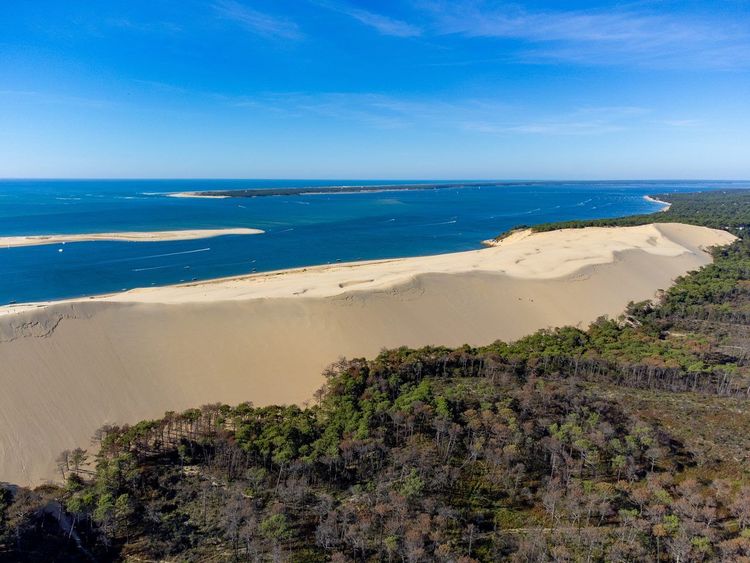
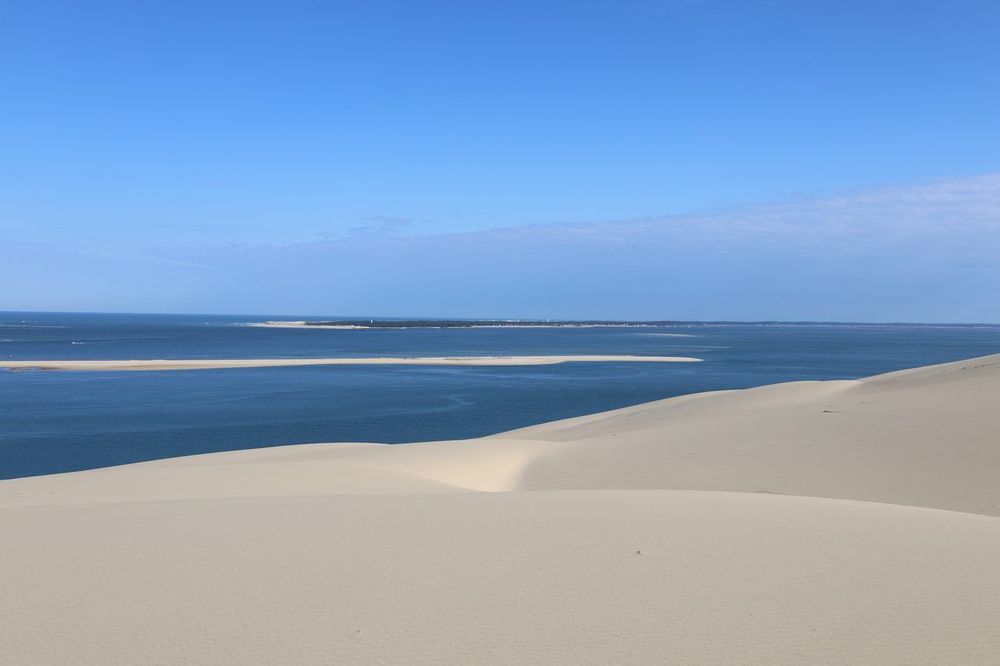
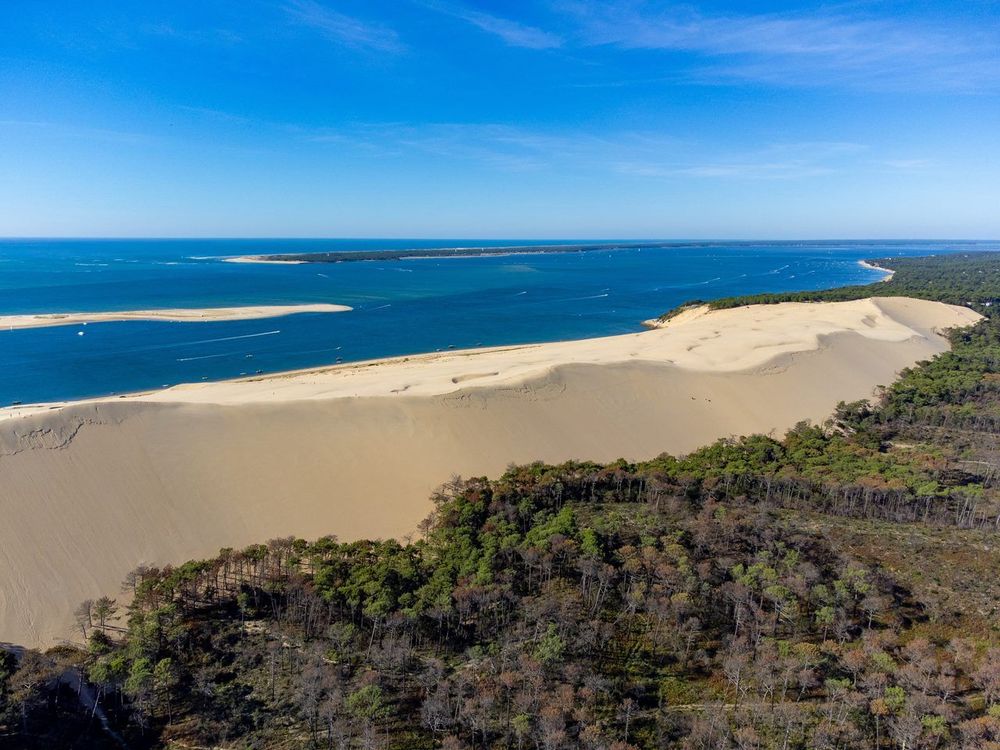
The Dune du Pilat (Dune du Pilat, 33115 Pyla-sur-Mer, rated 4.8/5 on Google from 39,111 reviews) peaks at 101.7 meters according to the 2025 survey by the Nouvelle-Aquitaine Coastal Observatory, making it the tallest sand dune in Europe. Its height varies from year to year, and it advances toward the forest by a few meters each year, pushed by westerly winds, to the point of having swallowed up a road and blockhouses in the past.
Climbing before 9 a.m. changes everything. The light still skims the sand, the staircase has not yet been stormed, and from the top you can easily make out the Banc d'Arguin, that tongue of white sand lying at the entrance to the Bassin, as well as the pine forest stretching on the inland side. You will probably hear the Atlantic waves more than other visitors' conversations, a rare luxury at the height of the season.
Access is from the Dune du Pilat car park (paid, rate varying by duration and season), about 10 km south of Arcachon on the road to Biscarrosse. Allow 20 to 30 minutes to climb depending on your pace: the staircase installed in season helps on the slope, but out of season everything is done in loose sand. Bring water, even for a morning outing. To go further, our article on how to visit the Dune du Pilat details access and opening hours.
On the other side, the ocean stretches out of sight, often rougher than you imagine from the photos. Swimming there is dangerous outside supervised areas: keep it for the beaches of the Bassin.
Saturday Afternoon: Heading to the Cap Ferret Peninsula
After lunch, head to the Cap Ferret peninsula: the shuttle boat leaves from the Jetée Thiers and reaches the Jetée de Bélisaire in about thirty minutes, all year round (roughly 10 to 12 euros one way for an adult in 2026). The peninsula forms a narrow strip of land between the Bassin and the ocean, with a distinctly more village-like atmosphere than Arcachon.
The Cap Ferret Lighthouse, white with a red top, watches over the tip of the peninsula. Its 258 steps lead to a platform overlooking the entrance to the Bassin, the ocean and, on a clear day, the Dune du Pilat opposite. In summer, aim for opening time or late afternoon to avoid the queue.
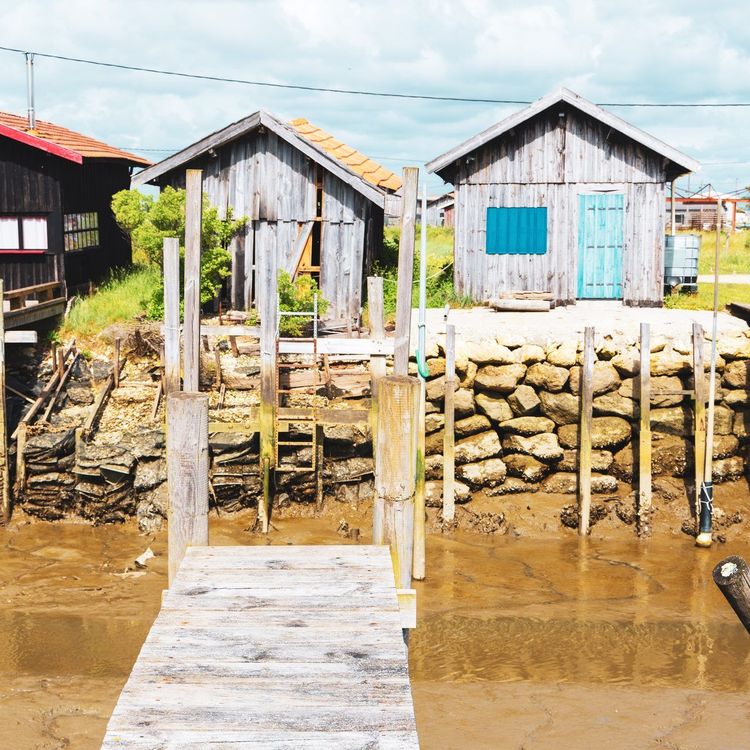
Heading back up along the Bassin side, the oyster-farming villages follow one after another: L'Herbe (L'Herbe, 33950 Lège-Cap-Ferret), with its colorful fishermen's huts and its Moorish-style chapel, then Le Canon and Piraillan. These are working ports, not reconstructed sets, which explains the lingering salty smell and the purification tanks visible from the jetties.
This is the logical moment to stop at an oyster hut and taste a dozen Bassin oysters, served with a glass of dry white wine and a slice of bread. Prices run around 10 to 15 euros a dozen depending on size, to be enjoyed at wooden tables facing the water. Our selection of things to do in Cap Ferret completes this half-day.
If you prefer to stay on the water, several companies offer boat tours of the Bassin from Arcachon or Cap Ferret, passing the Île aux Oiseaux and the Banc d'Arguin. Allow 1.5 to 2 hours for a full tour, a good compromise for families with young children who struggle in the dune sand.
Saturday Evening: Harbor Atmosphere and Dinner Facing the Bassin
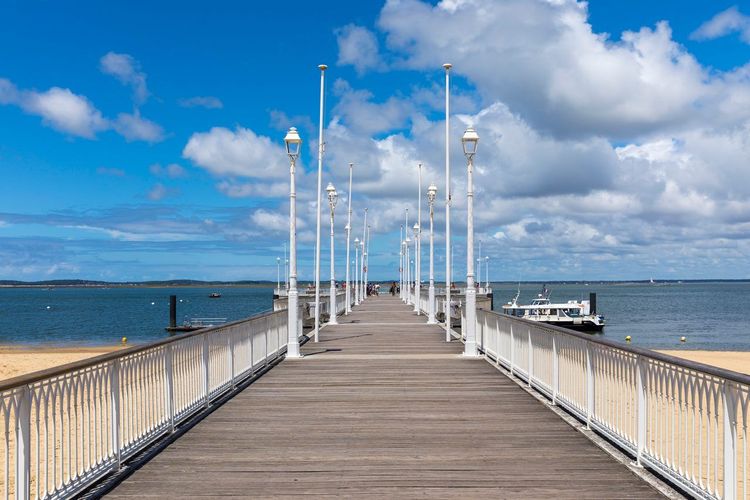
Back on the Arcachon shore, the piers are the best vantage point for sunset. The Jetée Thiers (Jetée Thiers, 33120 Arcachon), right on the seafront, and the Jetée d'Eyrac a little further along offer an unobstructed view of the Bassin turning orange and then pink within about twenty minutes.
For dinner, the best tables on the Bassin d'Arcachon almost all play the fish and oyster card: sole, line-caught sea bass, cuttlefish à la plancha. Book if you are more than two, especially on Saturday evenings in July-August, when the waterfront terraces fill up from 7:30 p.m.
While walking along the fish auction hall after the meal, let the Ryo audio guide tell you about local fishing and oyster farming: a way to extend the evening without rushing.
Sunday Morning: The Ville d'Hiver and Its Belle Époque Villas
The Ville d'Hiver (Ville d'Hiver, 33120 Arcachon, rated 4.6/5 on Google from 913 reviews) was born in the early 1860s, when the Pereire brothers bet on the resinous air of the pines to attract patients suffering from tuberculosis. The result: some 300 villas clinging to the wooded dunes, in styles ranging from neo-Gothic to Moorish by way of the Swiss chalet.
The walk follows no strict itinerary: you climb and descend winding streets, designed to break the wind, and pass villas with evocative names, Trocadéro, Toledo or Alexandre Dumas, each with its own owner's story. From the place du 8-Mai-1945, a free public elevator goes up to the Parc Mauresque, from where you reach the Sainte-Cécile Observatory, a metal belvedere from 1863 (free access) that offers the widest view of the district and the Bassin below.
Allow 1.5 to 2 hours for a leisurely visit, preferably in the morning: the light filters nicely through the foliage and the streets are still quiet before the groups arrive. The Parc Mauresque, with its shaded benches, makes a good rest stop.
This is where the Ryo audio-guided tour of Arcachon comes into its own: over 1.5 hours of listening, it details the architecture villa by villa and the history of the first patients who came to heal their lungs facing the Bassin.
Sunday Afternoon: The Île aux Oiseaux and the Cabanes Tchanquées
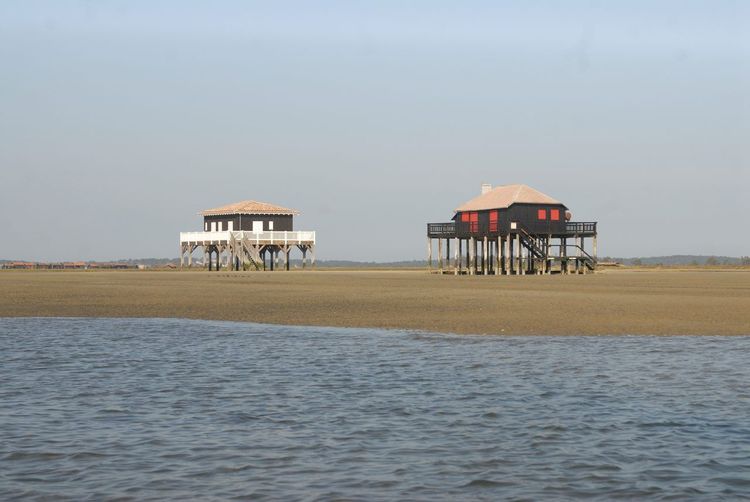
The cabanes tchanquées are two wooden houses perched on stilts at the edge of the Île aux Oiseaux, in the heart of the Bassin. Their name comes from the Gascon "tchanque", meaning stilts. The first was built in 1883 by a park warden to watch over the oysters, even at high tide; the two current huts date from 1945 and 1948.
You don't visit the Île aux Oiseaux like a typical site: it is only accessible by boat and the huts cannot be visited. Most visitors see them on a boat tour of the Bassin, or from afar from the Arcachon seafront with binoculars, which is more than enough to enjoy the scenery.
At the entrance to the Bassin, the Banc d'Arguin (Banc d'Arguin, 33115 Pyla-sur-Mer, rated 4.7/5 on Google from 14 reviews) changes shape with the tides and storms: this national nature reserve hosts, among others, a large colony of Sandwich terns, and part of the bank remains off-limits to protect nesting. Some boatmen offer to let you set foot there for an hour or two on the authorized areas.
On the piers, the Ryo audio guide devotes a stop to this panorama and to the origin of the cabanes tchanquées, an anecdote that changes how you see the Bassin's most famous postcard.
Bassin Beaches and Water Activities
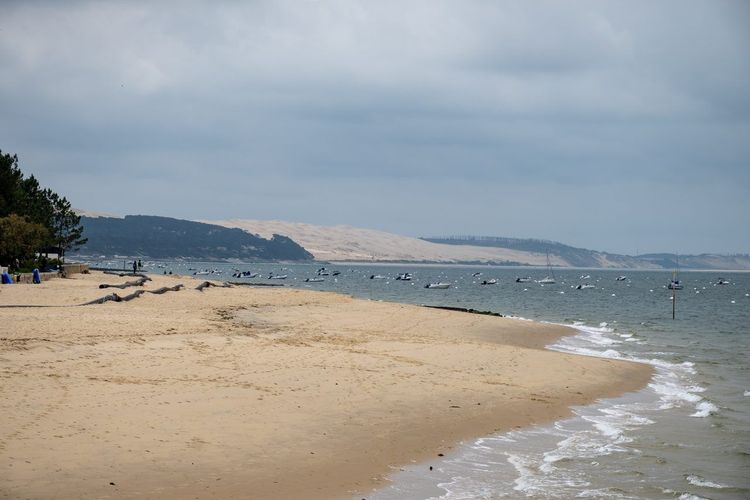
You will find about ten beaches easily accessible from Arcachon, with quite different atmospheres depending on the side. The Plage Pereire (Boulevard de la Plage, 33120 Arcachon, rated 4.7/5 on Google from 1,338 reviews), west of the center at the foot of the Ville d'Hiver, is the longest in town and the most popular at sunset.
A little further south, the Plage du Moulleau attracts mostly families thanks to its calm waters, sheltered by the configuration of the Bassin, ideal for children who don't yet like fighting the ocean waves.
For variety, several clubs rent canoes and paddleboards directly on the beaches, often without a reservation in low season. Allow 15 to 20 euros an hour, and favor the morning: the water is flatter before the afternoon thermal wind picks up.
Nature and Wildlife Around the Bassin: Teich Reserve and Salt Meadows
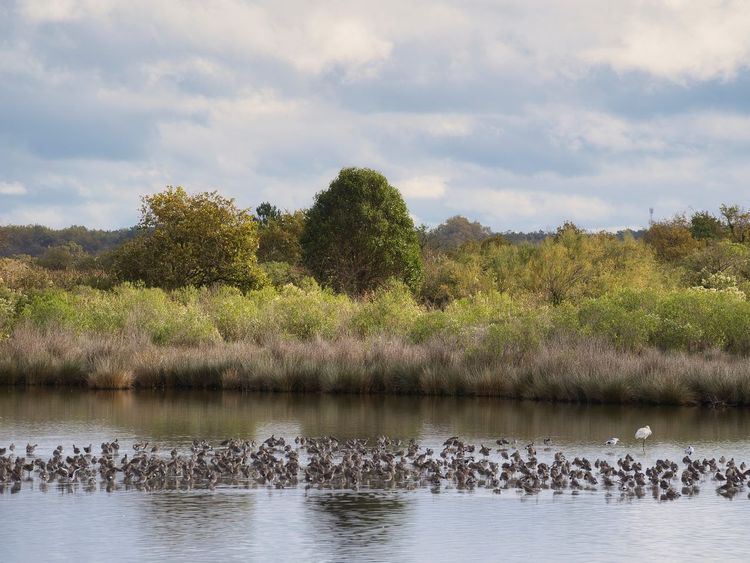
The Teich Ornithological Reserve, about twenty minutes by road from Arcachon, protects 110 hectares of marshland where more than 320 bird species have been recorded: storks, egrets, and sometimes spoonbills on migration.
A 6 km loop, dotted with about twenty observation huts, lets you walk the reserve in 3 to 4 hours (admission around 10 euros for an adult). Bring binoculars if you have them: most birds stay at a good distance.
Lesser known, the Domaine de Certes et de Graveyron, in Audenge, blends former fish reservoirs and salt meadows over more than 500 hectares, owned by the Conservatoire du littoral. Access is free and open, a way to spice up an offbeat weekend far from the Bassin's busiest sites.
Further north, the Arès-Lège salt meadows form a mosaic of low vegetation submerged at spring tides, an almost lunar landscape at golden hour. In the morning, make a detour to the Arcachon market (Place des Marquises, 33120 Arcachon, rated 4.3/5 on Google from 3,528 reviews), at the Halles on place des Marquises (Tuesday to Sunday, 7:30 a.m.-1 p.m., every day during school holidays): local producers, fish from the auction hall and takeaway oyster stalls for a picnic facing the water.
Where to Stay and Eat Around Arcachon
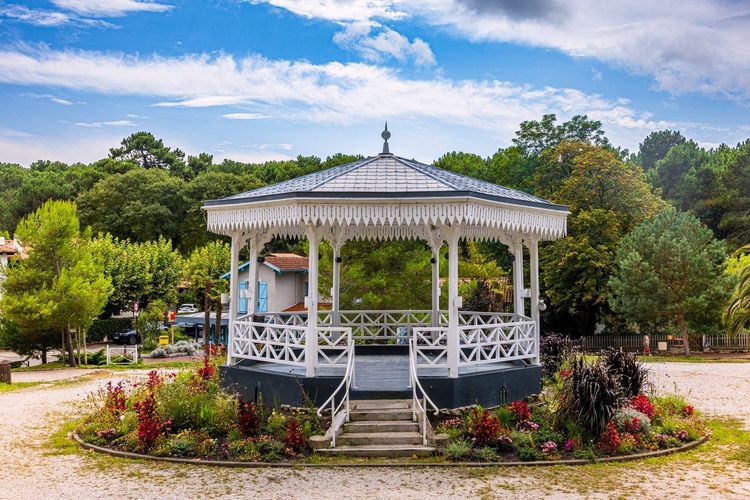
For accommodation, prices vary greatly by season and neighborhood. Allow about 90 to 130 euros a night for a decent room in the town center outside summer, and often double in July-August. Residences and villas for rent around the Ville d'Hiver or Le Moulleau offer more space for a budget close to a hotel: a good option if you are traveling with family or a group.
On the budget side, the campsites in Pyla-sur-Mer, at the foot of the dune, slash prices considerably out of season, even if it means losing walking access to the center.
To eat in Arcachon without breaking the bank, the oyster huts remain the safest bet: a dozen oysters and a glass of white wine rarely exceed 20 euros. Seafront restaurants quickly climb beyond 35-40 euros per person in the evening, especially on weekends.
How to Get There and Practical Tips for a Successful Weekend
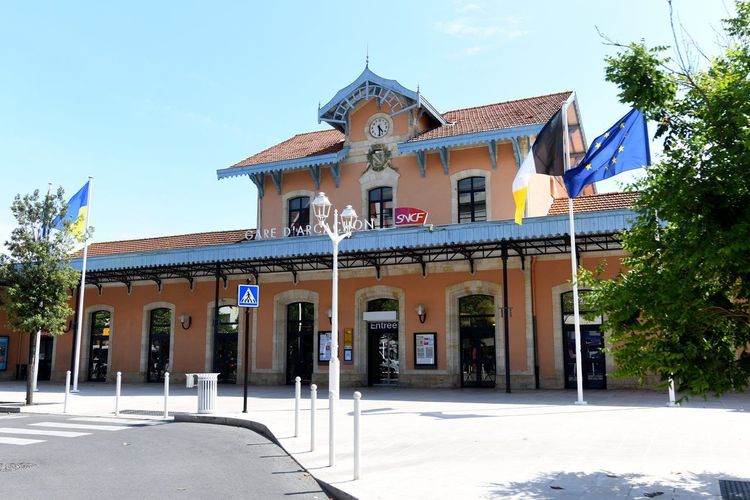
By train, Arcachon station (Place Jean Hameau, 33120 Arcachon, rated 4.1/5 on Google from 324 reviews) is linked to Bordeaux-Saint-Jean by TER regional train, with a journey of about 50 minutes and regular departures. By car, allow a little under an hour from Bordeaux via the A63 then the A660, with more traffic on Friday evenings and Sunday late afternoons.
If you arrive by plane, Bordeaux-Mérignac airport is the most convenient entry point: take the shuttle to Saint-Jean station and then the TER, or rent a car on site to move around the Bassin more freely.
The best season for a weekend in Arcachon is May-June and September: pleasant temperatures, fewer crowds on the dune and beaches, more affordable accommodation. Before leaving, download the Ryo audio guide of Arcachon: its 19 stops work offline, handy on the Bassin where the network isn't always reliable.



FAQ
How many days do you need for a weekend in Arcachon?
Two full days cover the essentials: the Dune du Pilat on Saturday morning, Cap Ferret in the afternoon, then the Ville d'Hiver and the Île aux Oiseaux on Sunday. With three days, you can add the Teich reserve and the Arès salt meadows without rushing.
What is there to do in Arcachon as a couple?
Sunset from the piers, a dinner facing the Bassin on Saturday evening and a stroll through the quiet lanes of the Ville d'Hiver make a simple and effective trio for a romantic weekend, with no organized activity or fixed schedule.
What is there to do in Arcachon with the family?
The Plage du Moulleau for its calm waters, a boat trip on the Bassin rather than climbing the dune with young children, and the Teich reserve for birdwatching cover the needs of a family weekend well.
Where can you eat in Arcachon without breaking the bank?
The oyster huts of the Bassin and Cap Ferret remain the most affordable option, with dozens of oysters for around 10 to 15 euros. The Halles d'Arcachon market also lets you put together an inexpensive picnic.
What is the best season for a weekend in Arcachon?
May-June and September offer the best compromise between pleasant weather, moderate crowds and reasonable accommodation prices. July-August is lively but more expensive and busier, especially on the Dune du Pilat and the Moulleau beaches.
How do you get to Arcachon from Bordeaux?
By train, allow about 50 minutes from Bordeaux-Saint-Jean. By car, it takes a little under an hour via the A63 and A660, with heavier traffic on Friday evenings and Sunday late afternoons.
The Bassin in Two Days: What to Remember
A weekend in Arcachon is lived quickly but planned well: the Dune du Pilat at sunrise, the Cap Ferret peninsula in the afternoon, the Ville d'Hiver on Sunday morning, and two days are enough to understand why so many people from Bordeaux consider the Bassin their backyard.
Whether you come as a couple for a dinner facing the water, with the family for the calm beaches of Le Moulleau, or alone with the Ryo audio-guided tour in your pocket so you miss nothing as you walk, the program adapts to the weather and the energy you have. Just keep one free slot for a last dozen oysters before hitting the road.
À lire également