© Shutterstock
 Votre guide Ryo
Visiting Basel in 3 Days: 2026 Itinerary Through the Old Town, the Rhine and Three Countries
In Basel, you can have a coffee on the Swiss side, walk across the Rhine to have lunch in Germany, then head back to sleep in France without ever pulling out your ID. The city was built exactly where the three borders meet, on both banks of a river that everyone swims across in summer. If you're planning a trip to visit Basel in 3 days, it's an ideal base: three days are enough to cover the medieval old town, Switzerland's densest concentration of art museums and a handful of excursions that change country before lunch. The Ryo audio-guided tour of Basel follows this historic center step by step, in your ear, while your legs do the rest.
On the program for these three days: a red sandstone cathedral whose terrace overlooks the river, a zoo more than a century old where baby gorillas are regularly born, wooden ferries pulled by hand since the 19th century, and an art museum founded in 1661, older than most national collections in Europe. We also add a full day devoted to the surroundings, because in Basel, Germany and France literally begin at the end of the tram line. Here is how to spread these three days without missing anything, from the Spalentor to the gates of the two neighboring countries.
Why Visit Basel in 3 Days?
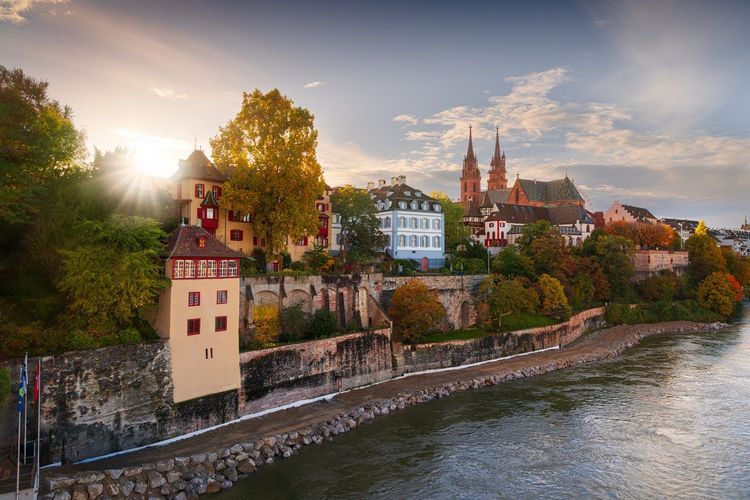
Basel is neither Zurich nor Geneva, and that is precisely what makes it a destination in its own right. Nestled at the exact point where Switzerland, Germany and France meet on the banks of the Rhine, the city combines a perfectly preserved historic center, a record density of art museums for its size and immediate access to two neighboring countries. Few European cities of barely 175,000 inhabitants can boast such a concentration, and you'll feel it from the very first morning.
Local history explains this position. Founded in Roman times under the name Basilia, the city became a free imperial city in the Middle Ages, a status that gave it rare commercial autonomy and financed its ramparts very early on, of which three gates remain today. In 1460, the University of Basel opened its doors: it is the oldest in Switzerland, and over the centuries it attracted humanists such as Erasmus and the painter Hans Holbein the Younger, whose works can now be found at the Kunstmuseum. The Protestant Reformation was adopted there as early as 1529, a turning point that also shaped the austere look of some church interiors.
In terms of geography, Basel is read as two banks. Grossbasel, Greater Basel, on the left bank, concentrates the old town, the cathedral and the Marktplatz. Kleinbasel, Lesser Basel, on the right bank, has a completely different character: more working-class, younger, more alternative. The historic center can be crossed entirely on foot in a little over an hour: you'll save time on every trip, and your three days will be all the more packed. If you want an annotated map of Basel rather than a simple one, the Ryo audio-guided tour links the main sites of the center in a single continuous walk, ideal for framing the first day.
The highlights of the stay are all here, packed into a tiny area: the old town and cathedral on the first day, art museums and the Rhine on the second, then the cross-border surroundings on the third. This is the order this guide follows, with the addresses and travel times at each stage that save the hours lost elsewhere.
How to Get to Basel and Get Around
By Train, Car or Plane
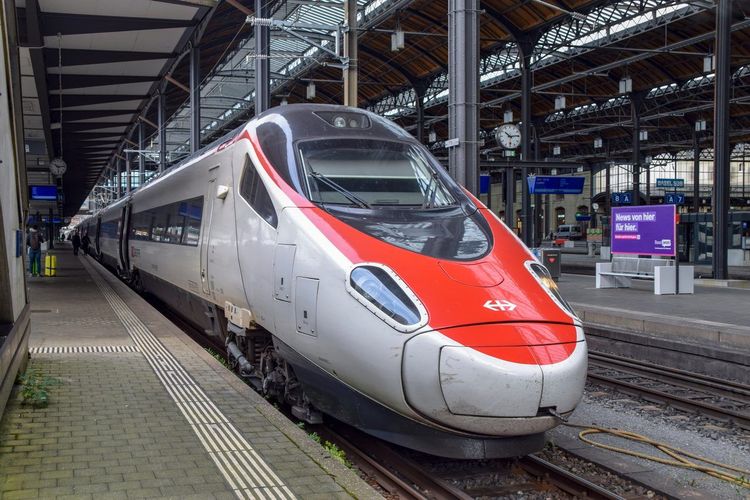
The Basel SBB (Basel SBB) station is one of the most convenient rail hubs in Europe: TGV Lyria trains from Paris reach the city in just under 3 hours, German ICE trains arrive directly along the Rhine from Frankfurt, and internal Swiss connections serve Zurich in a little over an hour. It is by far the most comfortable way to arrive for a three-day stay, since the station is a ten-minute walk from the historic center.
By car, Basel is reached via the A2 and A3 motorways, which converge from Germany, France and the rest of Switzerland. Traffic in the city center is nevertheless restricted: the streets of the old town are mostly pedestrian or limited-access, and street parking is expensive. It's better to head straight for a covered car park near the center, such as the Parkhaus City near the station, and leave the car there for the three days. To know where to park in Basel without breaking the bank, the park-and-ride lots at the outlying stations and those in Saint-Louis, on the French side, remain significantly cheaper than the central car parks.
By plane, EuroAirport Basel-Mulhouse-Freiburg has the particularity of being located in France while serving all three countries: a Swiss counter and a French counter literally coexist in the same hall. From the airport, a regular bus reaches the center of Basel in about twenty minutes, at a fare far lower than a taxi.
Getting Around Town: Tram, Bike and Ferry
Once there, the transport question is quickly settled: the old town can be covered entirely on foot, and the rest of the city is served by the dense and punctual BVB tram network. Many hotels provide a free mobility card valid across the whole network during your stay, which is worth checking on arrival to get around the city easily.
For longer trips or simply for pleasure, bikes are easy to rent at the self-service stations spread throughout the city: Basel is flat and well equipped for two wheels. It is also the most direct way to reach the parks on the outskirts, such as the Tierpark Lange Erlen mentioned further on.
But the most charming means of transport remains the ferry, or Fähri: four wooden boats have crossed the Rhine since the 19th century, attached to a cable stretched above the river and pushed solely by the force of the current, with no engine or oars. The crossing costs a symbolic sum and takes barely two minutes, but it is a unique way to go from Grossbasel to Kleinbasel, used as much by tourists as by locals coming home from work.
Day 1: Basel's Old Town, Between the Spalentor and the Cathedral
Spalentor and Spalenberg
The first day logically starts at the edge of the former fortified city, at the Spalentor. Built in the late 14th century, this gate with two towers topped with glazed tiles is the most impressive of the three surviving medieval gates of Basel's walls, alongside the St. Johanns-Tor and the St. Alban-Tor. Its archway once housed a heavy wooden door and a chain meant to block access in the event of a siege; today, it simply frames the flow of trams heading toward the center.
Heading down from the gate, the Spalenberg street unrolls its cobblestones to the heart of the old town. It is one of the oldest streets in Basel, lined with guild houses with painted facades, antique workshops and small independent shops that have resisted the commercial uniformity of the center. Take the time to walk slowly: the facades change century almost at every door, from late Gothic to bourgeois Baroque.
You will also come across several Renaissance fountains on this stretch, remnants of the water supply system that fed the city before modern pipes arrived. Many still work, and the water is drinkable, a detail locals use without thinking in summer.
Marktplatz, the Town Hall and the Mittlere Brücke
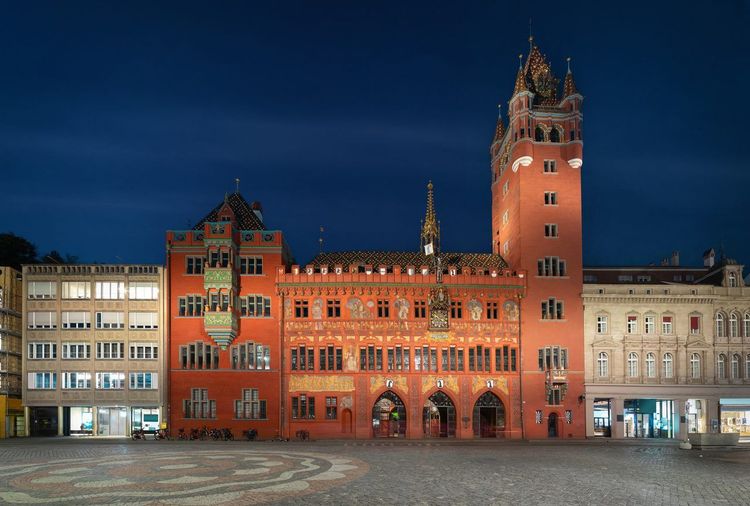
The Spalenberg naturally leads to the Marktplatz, Basel's central square since the Middle Ages and still bustling with a daily market of fruit, vegetables and flowers. This is where the city's commercial pulse beats, and the square is worth a pause even without buying anything, simply to watch local life go by in front of a facade with no equivalent in Switzerland.
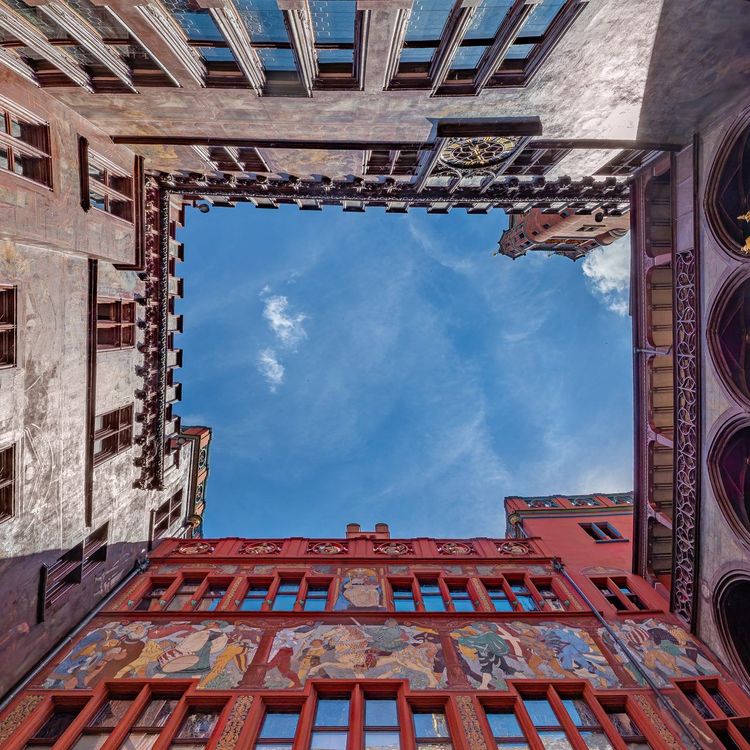
That facade belongs to the Basel Town Hall (Rathaus), a red sandstone building covered in 19th-century frescoes that tell the political history of the city. Its clock tower and its inner courtyard, freely accessible during the day, deserve a five-minute detour: the courtyard's murals are often overlooked by visitors who stop at the facade.
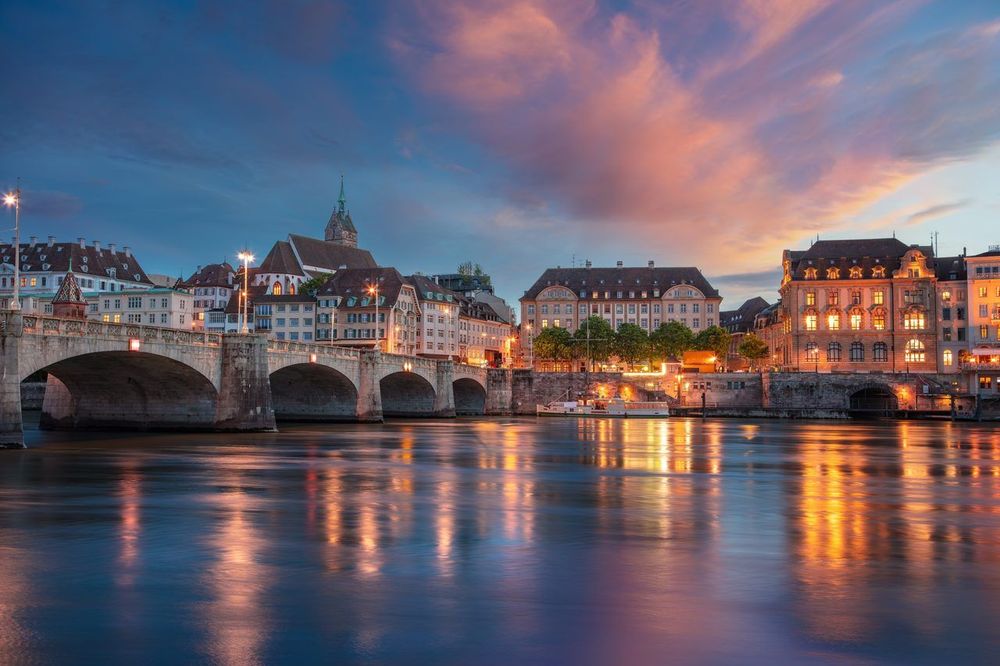
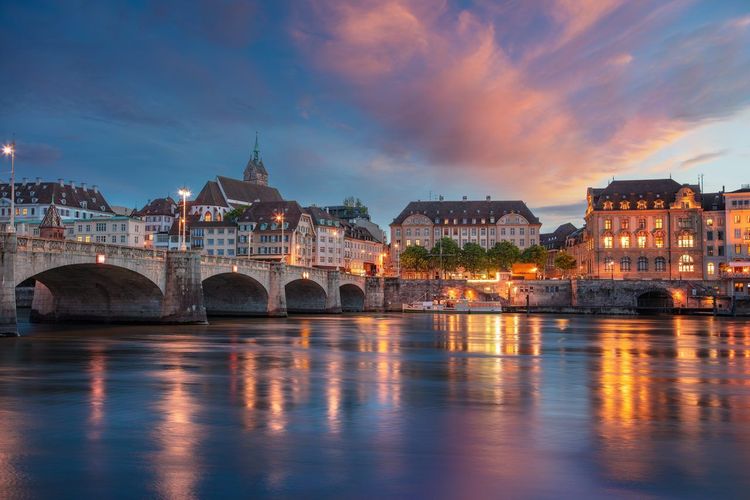
From the Marktplatz, a short walk leads down to the Mittlere Brücke (Mittlere Brücke, 4051 Basel, rated 4.6/5 on Google from 1.8K reviews), the oldest bridge over the Rhine between Lake Constance and the North Sea. A first version already existed around 1225, partly made of wood; the current stone structure was inaugurated in 1905. Crossing this bridge on foot offers the first real overview of both banks, with the cathedral already appearing on the left.
Basel Cathedral, Münsterplatz and the Münster Terrace
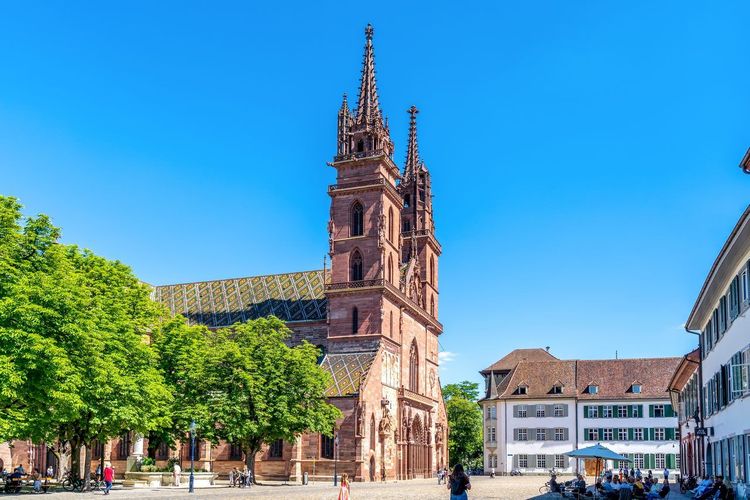
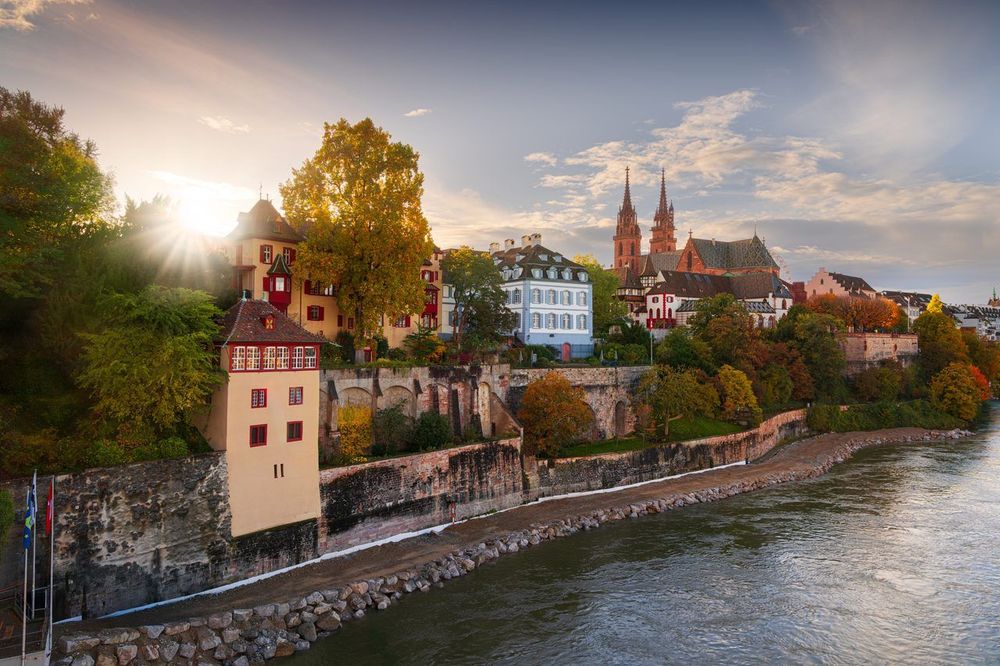
The rest of the morning climbs toward the Basler Münster, the red sandstone cathedral whose twin towers dominate the city's skyline from any viewpoint. Built from the 11th to the 15th century and largely rebuilt after the earthquake of 1356, in a style that slides from Romanesque to Gothic, it houses the tomb of Erasmus, the humanist who spent his last years in Basel, as well as a carved pulpit that few visitors take the time to examine in detail.
Around it, the Münsterplatz forms one of the most harmonious squares in the city, lined with former canons' palaces now turned into academic institutions. Below, the Wettsteinbrücke extends the view of the river downstream, a bridge more recent than the Mittlere Brücke but offering a complementary perspective on the quays of Kleinbasel. It's a good place to sit for five minutes before resuming the visit, especially in late morning when the light grazes the sandstone facades.
Don't miss climbing up to the Münster terrace, the Pfalz, a free terrace set just behind the cathedral, suspended above the Rhine. The view takes in all of Kleinbasel, its rooftops and, on a clear day, the first foothills of the German Black Forest. It is probably the most spectacular free viewpoint in the historic center, in Basel's Altstadt.
On the way back down toward the river, one last stop is a must at the Tinguely Fountain, set on the Theaterplatz. This kinetic fountain by Jean Tinguely mixes mechanical sculptures and water jets in a deliberately chaotic choreography, very different from the classical aesthetic of the rest of the old town, and already hinting at Basel's other face: that of contemporary art, on the program for the second day.
The Ryo audio-guided tour of the historic center links these points in order, with commentary on each facade as you walk. It's a way to keep your hands free and your eyes on the buildings rather than on a map: follow the Ryo audio guide to Basel for this first day.
Day 2: Art Museums, the Rhine and Kleinbasel
The Major Art Museums: Kunstmuseum, Fondation Beyeler and Museum Tinguely
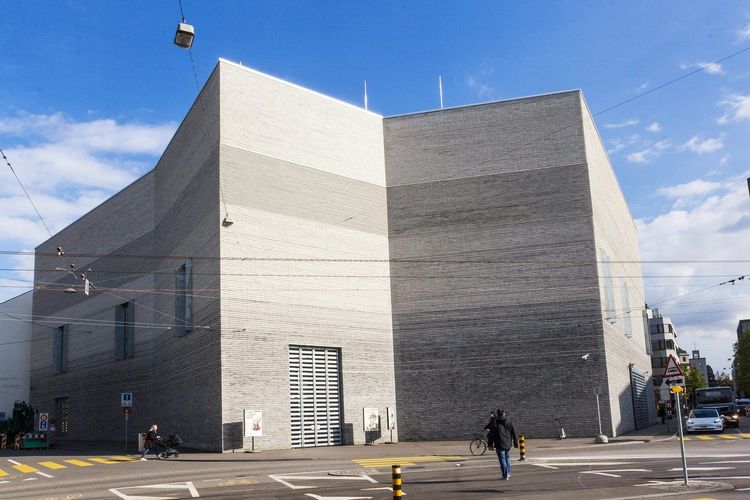
The second day opens with what makes Basel's artistic reputation: a density of museums rarely matched for a city of this size. This artistic Basel, as rich as it is discreet, justifies a full day on its own. The Kunstmuseum Basel is its heart. Founded in 1661 from a collection bequeathed by the Amerbach family, its collection is considered one of the oldest public art collections in the world still open to the public. It holds one of the largest gatherings of works by Hans Holbein the Younger, but also a particularly dense Picasso collection, born of a singular story: in 1967, the people of Basel voted by referendum to buy two of the painter's canvases, and Picasso, moved, donated four other works to the museum.
A short tram ride away in Riehen, on the northern edge of the city, the Fondation Beyeler changes register completely. The building designed by Renzo Piano, all glass and natural light, houses a private collection of modern and contemporary art (Picasso again, but also Rothko, Giacometti, Monet) in a setting designed to dialogue with the surrounding garden. Allow half a day if you also want to enjoy the park.
Back in town for the Museum Tinguely, set on the banks of the Rhine in a building entirely dedicated to Jean Tinguely's mechanical sculptures, already encountered the day before at the Theaterplatz fountain. Most of the machines are activated at set times, which turns the visit into a small show rather than a simple static exhibition.
To visit these three museums without blowing the trip budget, consider the Swiss Museums Pass, detailed later in the practical section of this guide.
The Rhine: Ferry and Swimming
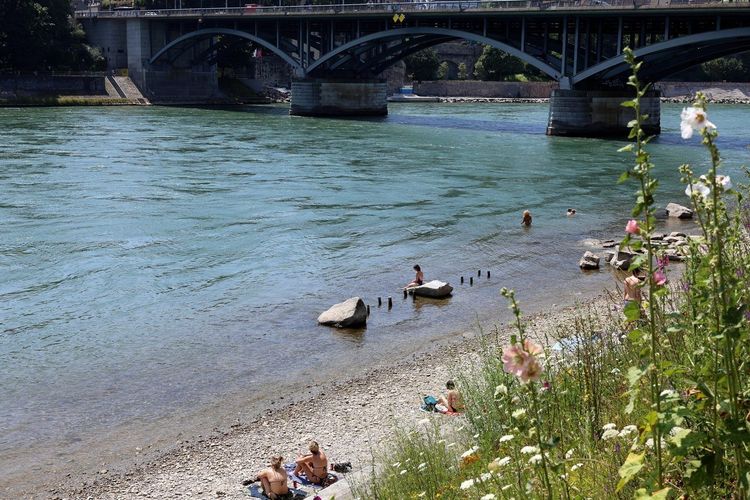
The afternoon shifts toward the river. From the first warm days of May, when the water reaches about 18 to 20 degrees, the Rhine becomes Basel's real public swimming pool: locals swim in it or simply let the current carry them, a waterproof bag called a Wickelfisch held tightly against them to keep clothes and phone dry during the drift. The current is stronger than it looks, and it's best to find out about the marked swimming areas between the Mittlere Brücke and the Schifflände before diving in, especially during flood periods.
To cross without getting wet, head back to one of the four ferries (Fähri) already mentioned at the start of the guide. Each bears a different name depending on the crossing point, and some locals use them daily to get to work on the other bank, making them a means of transport in their own right rather than a mere tourist attraction.
The riverbanks themselves are worth a stroll: in summer, temporary bars and deck chairs set up along the Rhine, and it's one of the best places to watch the sunset over the cathedral from the opposite bank, drink in hand.
Kleinbasel and the St. Alban District
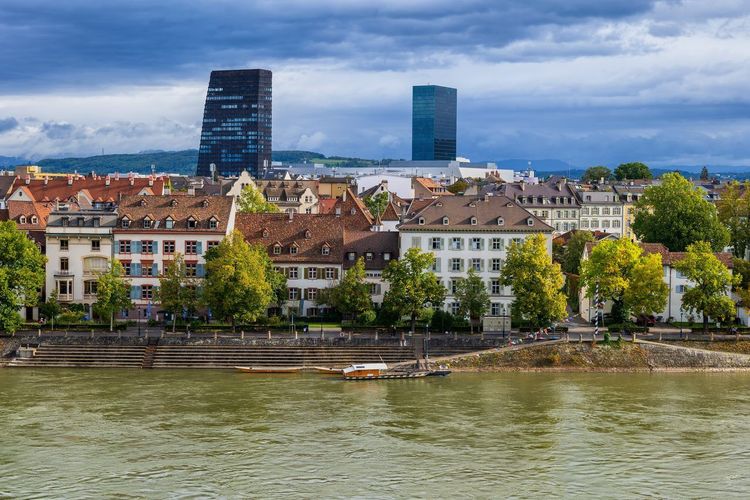
The end of the day crosses the river to Kleinbasel, Lesser Basel. The atmosphere changes completely: the district, long considered the poor relation of the city, has become one of the most creative, with a large immigrant population and a denser street scene than across the water. If you come in February or March, you'll also come across the Fasnacht cliques, the Basel Carnival, inscribed on UNESCO's Intangible Cultural Heritage list in 2017.
To end the day gently, head to the St. Alban district (St. Alban-Tal, 4052 Basel, rated 4.7/5 on Google from 27 reviews), back on the left bank. This cobbled, leafy corner, organized around the St. Alban-Teich stream that once powered paper mills, has remained surprisingly preserved from mass tourism despite its immediate proximity to the center. You walk between former workshops, now converted into residences and small museums, in a silence that contrasts with the bustle of the Marktplatz.
On the audio side, a Ryo sub-route runs along this stretch of the river and tells the story of the Fähri ferry as well as Kleinbasel's working-class past, two stories that are better understood on site than by reading them in advance.
Day 3: Excursions to the Three-Country Border
Dreiländereck and Weil am Rhein (Vitra Design Museum)
To find out what to do around Basel, the third day heads in the opposite direction from the historic center, toward the precise point where Switzerland, Germany and France meet: the Dreiländereck. A silver pylon-shaped monument marks the spot, at the end of the Kleinhüningen Rhine harbor, and from the tip of the quay you can see all three countries at a glance, a useful landmark for understanding Basel's very particular geography.
From there, it takes only about twenty minutes by tram and a short walk to cross the German border and reach Weil am Rhein, home to the Vitra Design Museum campus. Dedicated to design and furniture, the site has evolved over the decades into a true open-air architecture museum: a fire station by Zaha Hadid, a pavilion by Tadao Ando, and above all the VitraHaus, a spectacular stack of miniature houses designed by the Swiss architects Herzog & de Meuron.
Allow a good half-day for the site if architecture interests you as much as interior design, a little less if you only visit the VitraHaus and its café.
Arlesheim, Liestal and the Swiss Surroundings
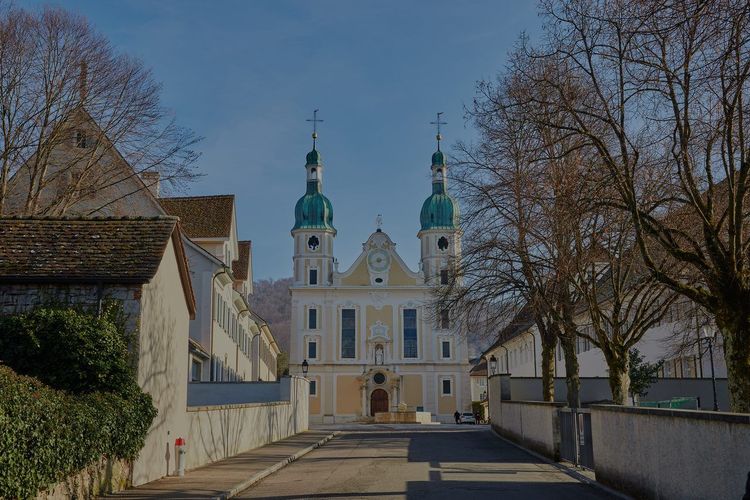
Back on the Swiss side for the second part of the day, with two short excursions that remain largely overlooked by hurried visitors. Arlesheim, about twenty minutes by train, is home to a Baroque cathedral, the Dom Arlesheim (Domplatz 1, 4144 Arlesheim, rated 4.7/5 on Google from 376 reviews), renowned for its acoustics and organ concerts, as well as an 18th-century romantic garden, the Ermitage, laid out around ruins and artificial waterfalls in the middle of the forest.
Liestal, capital of the canton of Basel-Landschaft, can be visited in a little over an hour, just a quarter of an hour away by train: a compact old town, colorful bourgeois houses, and above all a local reputation for its Chienbäse, a parade of flaming carts held every year on the Sunday evening preceding the Basel Morgestraich. The two towns are easily reached by train from the central station, which allows you to combine them in the same half-day without logistical complications.
Other Cross-Border Getaways (Mulhouse, Rheinfelden, Freiburg)
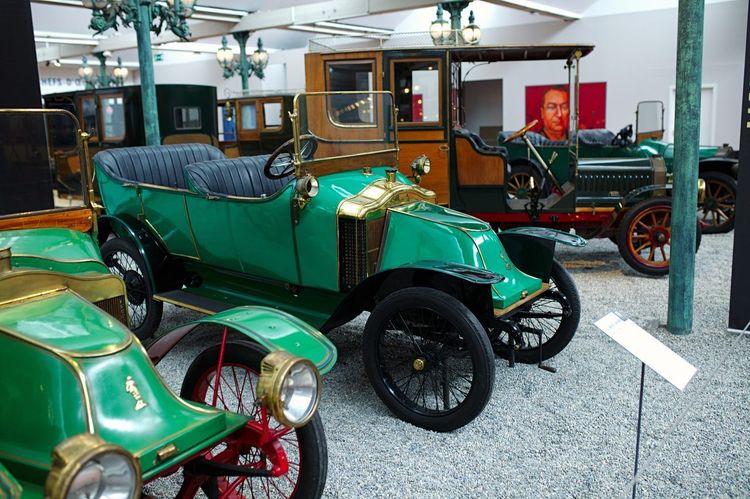
For those with a bit more time or who prefer to extend the third day, several other excursions are possible in under an hour by train from Basel. On the French side, Mulhouse (about 30 minutes by train) is home to the Cité de l'Automobile, one of the largest car collections in the world, built around the former private collection of the Schlumpf family.
On the Swiss side, Rheinfelden (about 20 minutes by train) is a small spa town on the banks of the Rhine, with a peaceful old town and baths renowned since the 19th century. On the German side, Bad Säckingen stands out for its covered wooden bridge, the longest in Europe, which crosses the river between Germany and Switzerland; a little further on, Waldshut marks the entrance to the Black Forest, and Freiburg im Breisgau (about 45 minutes to 1 hour by train), a university town crossed by small canals called Bächle, completes the excursion for those who want to push on into the heart of Germany.
All these destinations are hard to combine in a single day: it's better to choose one or two according to your preferences rather than chase all seven at once. If you kept the Ryo app active during your first two days in Basel, remember to relaunch it when you return to town: it picks up exactly where you left off, useful after a day spent off the beaten path of the historic center.
Basel's Other Museums and Cultural Curiosities
Historical Museum and Museum der Kulturen
Beyond the three major art museums already covered on the second day, Basel concentrates a museum offering rich enough to keep a visitor busy for several more days. The Historical Museum of Basel (Historisches Museum Basel) occupies the former Franciscan church, the Barfüsserkirche, an austere Gothic setting that contrasts with the collections of goldsmithing, tapestries and medieval armor displayed inside.
Right next to the cathedral, the Museum der Kulturen (Museum of Cultures) (Münsterplatz 20, 4051 Basel, rated 4.5/5 on Google from 650 reviews) presents one of the most important ethnographic collections in Europe, drawn from Swiss explorations in Africa, Oceania and Asia since the 19th century. The building itself is worth the detour: its undulating roof, added by Herzog & de Meuron in 2011, deliberately contrasts with the historic facade it surmounts.
Toy Museum and Museums Pass
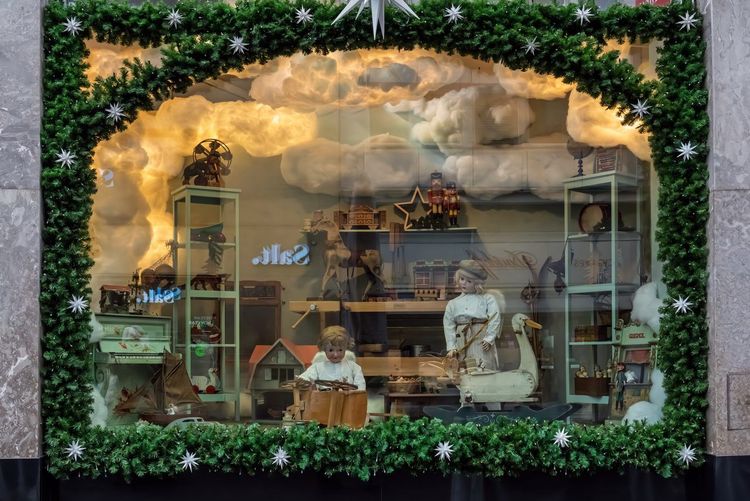
More unexpected, the Basel Toy Museum (Spielzeug Welten Museum) gathers several thousand dolls, miniature trains and teddy bears from around the world, spread over several floors of a town house. It's a popular stop for families on rainy days; just check the opening hours before going.
To visit several of these institutions without buying multiple tickets, the Museums-PASS gives access to more than 350 museums, castles and gardens in Switzerland, France and Germany, including the Fondation Beyeler and the Kunstmuseum. If you plan to see more than two or three museums over your three days, it quickly becomes more cost-effective than single tickets. Contemporary architecture fans will gladly add a trip to the Novartis campus, whose buildings designed by a list of renowned architects (Frank Gehry, Tadao Ando, SANAA) can be visited by reservation, extending the theme begun in Weil am Rhein.
Free Activities and Insider Tips in Basel
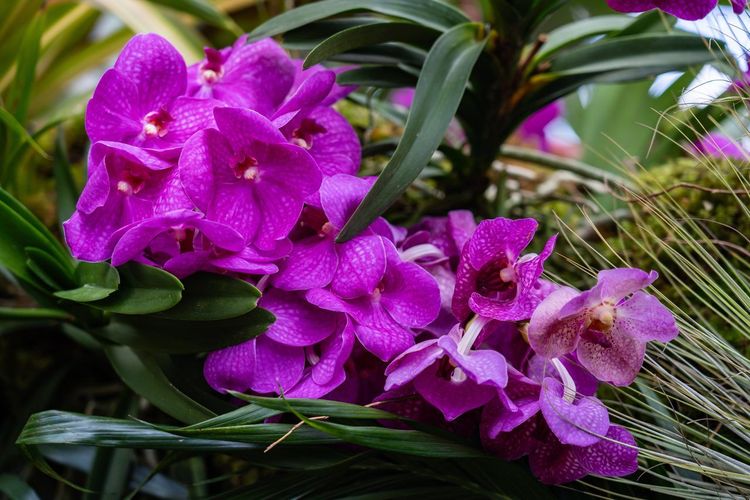
Parks, Gardens and Zoo (Botanical Garden, Tierpark Lange Erlen, Basel Zoo)
Basel is not just a city of paid museums: much of its charm can be discovered for free, starting with its green spaces. For outdoor sports enthusiasts, cycling and walking remain the best ways to reach these parks without spending a cent more. The Botanical Garden of the University of Basel, right in the center, can be visited freely and brings together collections of rare plants over a surprisingly modest area, a good way to catch your breath between two visits.
A little further on, the Tierpark Lange Erlen, laid out along the Wiese river, is home to deer, otters and other semi-wild animals in a forest setting, with free access. It's one of Basel families' favorite weekend outings, and it combines easily with a bike ride from the center.
For a more complete experience, the Basel Zoo (Zoo Basel, or Zolli to locals) charges admission but remains affordable: founded in 1874, it is the oldest zoo in Switzerland, renowned for its breeding programs, notably for gorillas and flamingos. Families easily spend half a day there.
Free Walks and Viewpoints (Fountains, Alleys, Architecture)
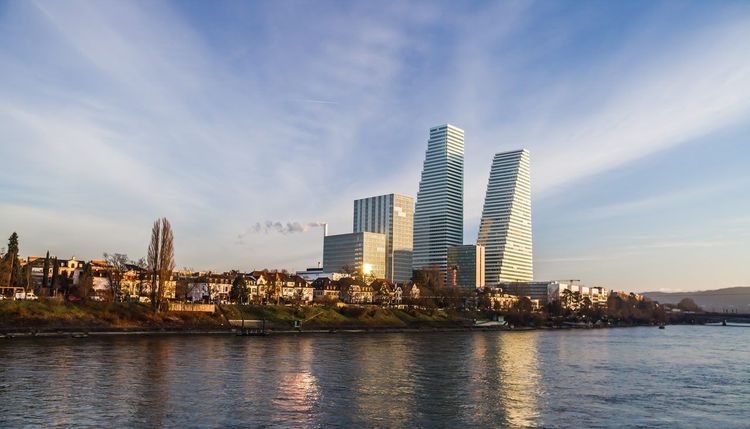
In terms of architecture, Basel cultivates an unabashed taste for contemporary buildings designed by well-known names. The two Roche Towers, which now dominate the city's skyline from the bank of the Rhine, are visible from afar and symbolize the weight of the local pharmaceutical industry. The Messe Basel building (Messeplatz 21, 4058 Basel, rated 4.4/5 on Google from 3,703 reviews), designed by Herzog & de Meuron, with its immense suspended ring, is also worth a detour when passing by, even without attending a trade fair.
More low-key, the Werkraum Warteck, set in a former brewery in Kleinbasel, now hosts artists' studios and occasional cultural events, to be checked before going.
Finally, the alleys of the old town are full of small Renaissance fountains open to all, ideal for a cooling break in summer, and the café terraces that line them offer free observation of local life as instructive as any museum. Good news: the Ryo audio guide passes several of these fountains, for those who want to learn their history without stopping to look for an explanatory plaque.
Where to Eat in Basel: Restaurants and Tips
The Marktplatz Market and Local Street Food
For a quick bite between visits, the Schlemmermarkt, set up daily on the Marktplatz, offers street food stalls that change with the seasons: Swiss specialties, international cuisines and a few regional classics such as Mehlsuppe, a toasted flour soup typical of Basel. It's also the place to try Basler Läckerli, small gingerbread biscuits found afterwards in every bakery in the city, to take home as a tasty souvenir.
The restaurants and bars around the square and in the adjacent alleys cover all price ranges, from traditional brasseries to more gastronomic addresses, but keep in mind that Swiss prices remain generally high: expect to pay between 20 and 35 CHF for a main course in a mid-range establishment. The wine bars along the Rhine, particularly on the Kleinbasel side, remain a safe bet for a last drink at the end of the day, with a view of the water and the illuminated cathedral.
Eating Cheaply: Anti-Food-Waste Tips
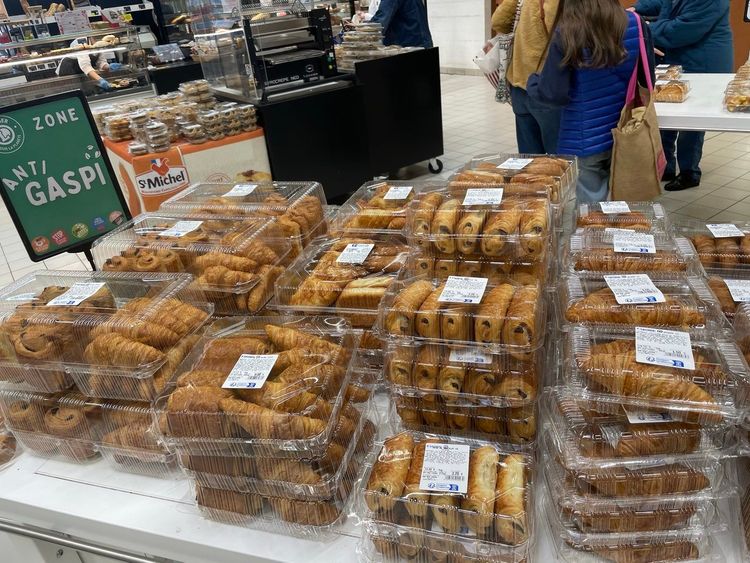
To lower the bill without sacrificing quality, Frisch von Gestern is worth a detour: this chain resells the previous day's unsold bread and pastries at a steep discount, an anti-waste concept that has become a habit for many locals rather than a mere curiosity. Several food-waste-fighting apps also list Basel restaurants that sell off their surplus at the end of service.
The other, more radical option is to cross the border to eat in Saint-Louis, in France, a few minutes by tram from the center of Basel. Prices there are naturally lower than in Switzerland, for cuisine that is often just as good, making it a firmly established habit among many cross-border Basel residents rather than a mere traveler's tip.
Where to Stay in Basel
City Center and Kleinbasel
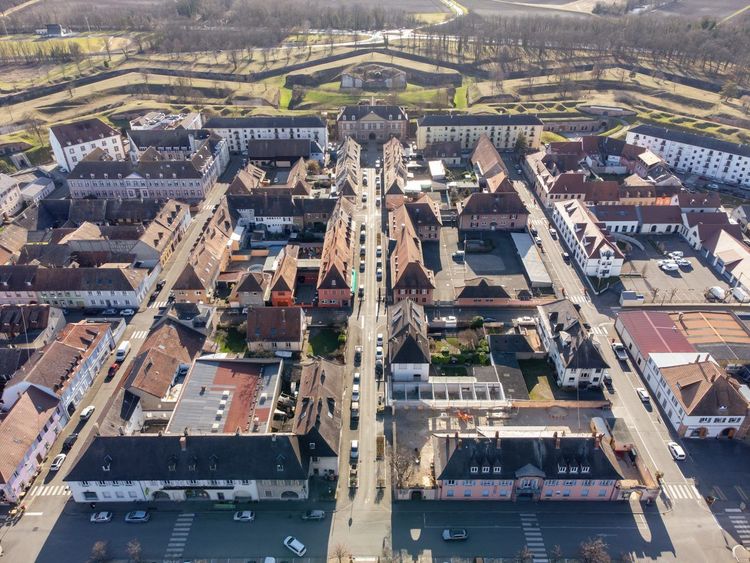
Staying in Basel, on the Swiss side, comes at a cost you'll quickly feel: hotel rates here are among the highest in Switzerland, driven by a business clientele tied to trade fairs, Art Basel foremost among them, which push prices up for part of the year. The historic center, around the Marktplatz and the cathedral, concentrates the most convenient addresses for exploring on foot, but also the most expensive.
Kleinbasel, on the other bank, offers a slightly more affordable alternative and a younger atmosphere, with a growing offering of small independent hotels and well-rated hostels. Expect on average 150 to 220 CHF per night for a mid-range hotel in high season, and noticeably less on weekdays outside trade fair periods. The downside: you have to cross a bridge or take the Fähri to reach the old town, which is still a detour of barely a few minutes.
Saint-Louis, France: The Budget Alternative
For a much tighter budget, staying in Saint-Louis, in France, remains the most cost-effective option. The border town is a few tram stops from the center of Basel, on line 3, and hotels there charge rates in euros that are significantly lower than their Swiss equivalents, for a distance that changes almost nothing in your day-to-day stay.
It's a common strategy among travelers who string together several cities in the region: sleep in France or in border-area Germany, and keep Swiss francs only for expenses actually made in Basel. For a three-day stay focused on the historic center and the museums, the financial gain more than justifies the extra ten minutes of tram each evening.
Practical Information: Budget, Weather and Best Times to Visit
When to Go and Christmas Markets
Basel's climate follows the classic Central European rhythm: the months from May to September are the most pleasant for exploring the old town on foot and enjoying the Rhine, since swimming in the river only really makes sense once the water temperature is high enough, generally reached in June. Summer can also bring heat spikes, as the Rhine valley acts as a thermal corridor.
At the end of the year, Basel changes atmosphere completely with its Christmas markets, among the most renowned in Switzerland, set up on the Barfüsserplatz and the Münsterplatz from late November to December 23. The lighting, wooden chalets and scent of mulled wine turn the old town into a postcard setting, a season very different from, but just as recommended as, that of summer swimming.
Budget, Language and Museums Pass
For your budget, keep in mind that Switzerland remains one of the most expensive countries in Western Europe, and Basel is no exception: expect prices noticeably higher than those in neighboring France or Germany, for both accommodation and dining. The local currency is the Swiss franc (CHF), rarely interchangeable with the euro at the same rate as displayed prices suggest. Service is almost always included in the bill, with tipping remaining an optional and modest habit.
As for language, Basel locals speak a dialect among themselves, Baseldytsch, a variant of Alemannic sometimes difficult to follow even for German speakers from Germany. In writing and in tourist exchanges, standard German remains the norm, but French is widely understood thanks to the immediate proximity of the French border, and English works without any issue in tourist areas.
To offset the cost of visits, the Museums Pass already mentioned remains the best reflex as soon as the program goes beyond two museums over three days: the Kunstmuseum, Fondation Beyeler and Museum Tinguely are often enough to make it pay off. Also remember the BaselCard provided by your hotel, which offers discounts at many museums.



FAQ
How long does it take to visit Basel?
Three full days cover the essentials described in this guide: the old town, the major museums, the Rhine and a cross-border excursion. With one extra day, you can add Freiburg im Breisgau or Mulhouse without rushing, and enjoy an additional half-day at the Fondation Beyeler or in the parks on the outskirts.
What language is spoken in Basel?
Locals speak Baseldytsch, an Alemannic dialect, among themselves. In writing, standard German dominates, but French is widely understood because the French border is so close, and English works without any problem in tourist areas and museums.
When is the best time to visit Basel?
May to September to enjoy the Rhine and the old town on foot in good conditions. Late November to late December for the Christmas markets on the Barfüsserplatz and the Münsterplatz, a completely different atmosphere but just as enjoyable.
What to do in Basel when it rains?
The museums easily take over: the Kunstmuseum, Fondation Beyeler, Museum Tinguely, the Historical Museum or the Toy Museum are more than enough to fill an entire day indoors, not to mention the covered areas of Basel Zoo for families.
What to do in Basel with family or as a couple?
For families, Basel Zoo and the Tierpark Lange Erlen are safe bets, complemented by the Toy Museum when little legs get tired. For couples, the Münster terrace at sunset followed by a swim in the Rhine in the late afternoon make a duo that is hard to beat.
What are the must-see museums in Basel?
The Kunstmuseum Basel for old master paintings and Picasso, the Fondation Beyeler for modern art, the Museum Tinguely for mechanical sculptures, and the Historical Museum of Basel to understand the city before walking its streets. The Museums Pass lets you combine them without buying multiple tickets.
Three days are ultimately enough to understand why Basel holds a special place in the Swiss landscape: an intact old town on one bank, a working-class and creative district on the other, art museums that can hold their own against cities three times larger, and a border at every street corner for anyone wanting to go a little further. The day-by-day itinerary presented here lets you see everything without rushing, from the Spalentor to the Dreiländereck.
Once there, download the Ryo audio guide to Basel: it remains the simplest complement to this guide: it follows exactly the same thread, from the old town to the banks of the Rhine, with commentary at every stop for those who prefer to look up at the sights rather than keep their nose in a map.