© Shutterstock
 Votre guide Ryo
What to Do in Basel in 2026: 15 Must-Do Experiences Between the Rhine and Museums
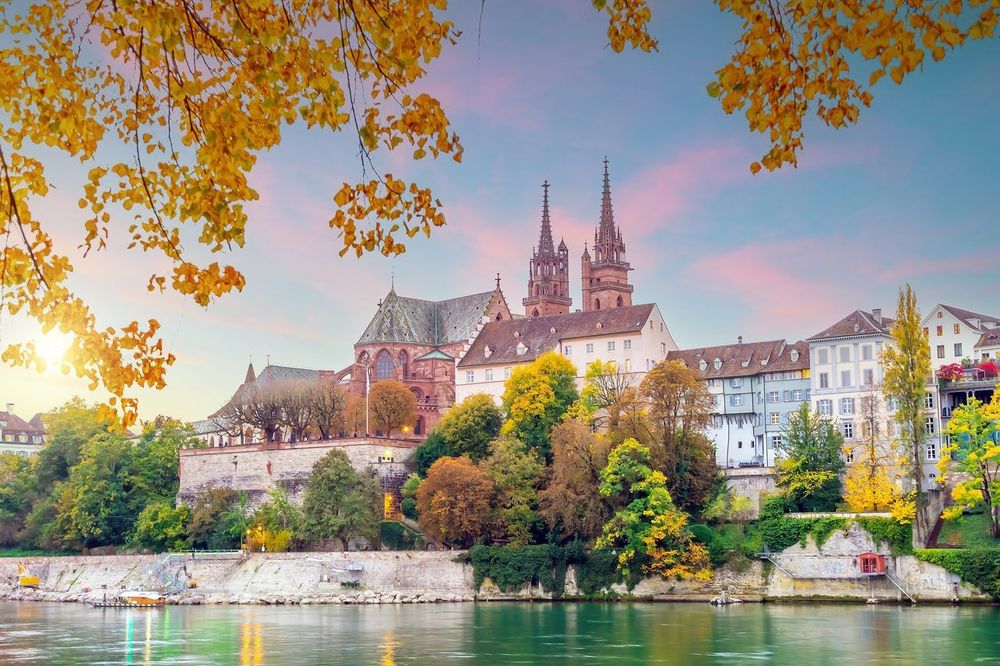
What to do in Basel when the city itself never seems to rush? In the evening, locals jump into the Rhine in swimsuits, their clothes rolled up in a waterproof bag inflated with air, and swim through the city center the way others would take the tram. This scene, repeated every summer evening from June to September, sums up the spirit of a Swiss city that never takes itself too seriously despite its exceptional museums and architecture designed by the biggest names. For a first approach to the historic center, our Ryo audio guide to Basel offers a guided thread in 25 audio stops between the cathedral, squares and lanes, to follow at your own pace.
It is hard to keep it short when it comes to what there is to do in Basel: a Gothic cathedral with glazed tiles perched above the river, a zoo more than a century old famous for its Indian rhinoceros births, an art museum founded in 1661 (one of the oldest public collections in the world) and buildings designed by Renzo Piano, co-designer of the Centre Pompidou, or Herzog & de Meuron, who gave us the Beijing Olympic stadium. Between two museums, you cross the Rhine on a ferry propelled solely by the current, nibble on a spiced Läckerli bought at the market, and end the day on a terrace overlooking Germany and France, both visible from the same viewpoint.
1. Admire Basel Cathedral and Stroll Through the Old Town
The Basler Münster and Its Panoramic Platform Over the Rhine
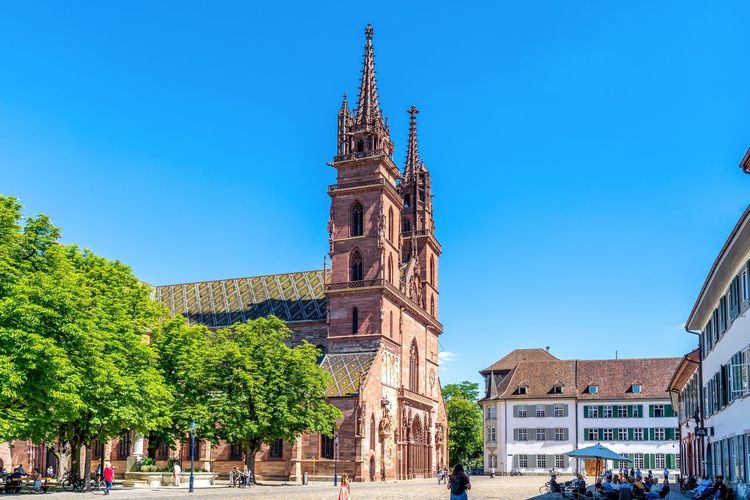
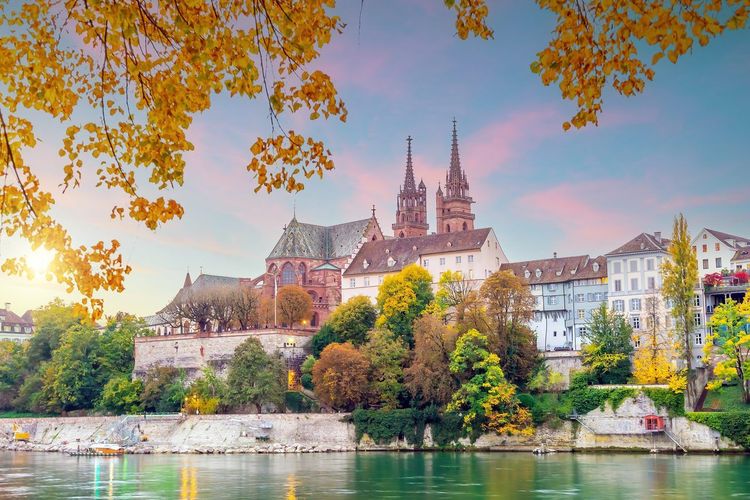
The silhouette of Basel Cathedral) has dominated the river since the 12th century, and it is the one that appears on almost every postcard of the city. Built of red Vosges sandstone, it has two towers, the Georgsturm and the Martinsturm, about 67 and 65 meters high respectively. The roof, covered with glazed tiles arranged in green, yellow and red diamonds, changes color with the daylight: it is one of the details local photographers wait for in the late afternoon.
Inside, the building preserves its Gothic choir and the tomb of Erasmus of Rotterdam, who spent his last years in the city. But most of the tourist interest lies up high: for a few francs, a narrow spiral staircase of nearly 250 steps climbs to a panoramic platform wedged between the two bell towers. From there you can see the red roofs of the historic center, the curve of the Rhine and, on a clear day, the Jura hills all the way to the German Black Forest. Allow about twenty minutes round trip, and avoid bulky backpacks: the passage is really tight.
The building you visit today is not the first one built on this rocky promontory overlooking the Rhine. A major earthquake devastated Basel in 1356, destroying a large part of the original Romanesque cathedral; the Gothic reconstruction that followed gave the building its current proportions and its characteristic choir. The nave can be visited free of charge all year round, while access to the platform and the towers requires a fee, with a reduced rate for Basel Card holders.
A tip few guides mention: go up late in the morning on a weekday. School groups and Rhine cruise passengers flood the platform between 2 pm and 5 pm, especially from June to September. When you come back down from the tower, just a few steps lead to the much livelier square alongside the building.
Münsterplatz, the Rathaus and the Lanes of the Pfalz
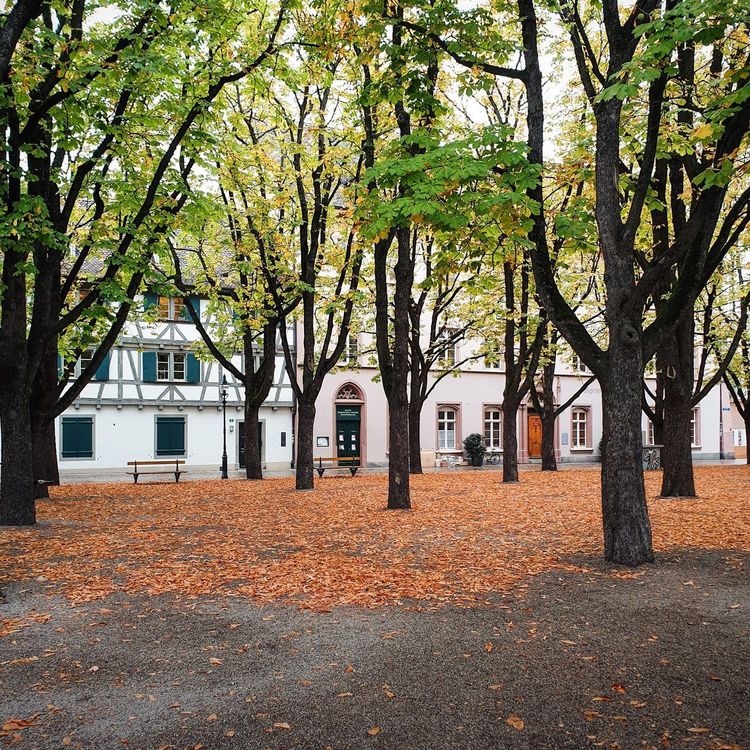
The Münsterplatz (Münsterplatz, 4051 Basel), the square that stretches in front of the cathedral, hosts café terraces and, in December, one of the most popular Christmas markets in the city. The facades around it, many of them 18th-century canons' houses, tell the story of a bourgeois and religious Basel very different from the industrial Rhine flowing just behind.
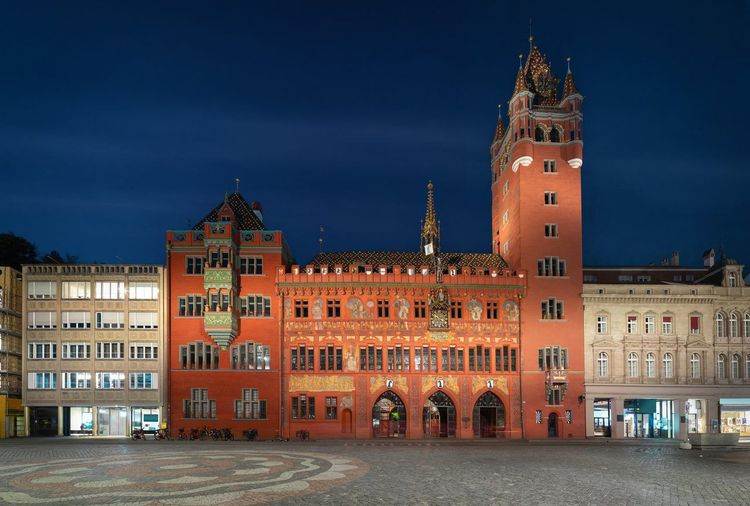
Five minutes' walk downhill, on the Marktplatz, the Basel City Hall (Rathaus) catches the eye with its bright red, fully painted facade and its large golden clock. Built in the early 16th century, just after Basel joined the Confederation in 1501, it has been enlarged several times since. The building still houses the cantonal parliament and part of the administration, but its inner courtyard, decorated with murals depicting biblical and historical scenes, remains freely accessible during the day.
Between these two points, the real pleasure is getting lost in the old town without a set itinerary. The cobbled lanes that climb and descend between half-timbered houses and painted facades often converge on the Pfalz, a free terrace just behind the Münster, raised above the Rhine. Unlike the paid platform of the towers, access here is free at any hour, and the view of the river and the rooftops of Kleinbasel, the opposite bank, is almost as wide. In clear weather, you can even make out in the distance the area where the French, German and Swiss borders meet, a few kilometers downstream.
This is precisely the route, cathedral, Münsterplatz, Rathaus and old town lanes, followed by the Ryo audio-guided tour of Basel: 25 audio stops on a 3.2 km loop, about 1.5 hours of walking, each commented on at the exact spot where it is located, with the history of the Rathaus and the lanes of the Pfalz told directly in your earbuds, at your own pace and with no group constraints.
2. Stroll Around the Marktplatz and Admire Basel's Public Art
The Marktplatz Market and the Schlemmermarkt
The Marktplatz is not just a tourist crossroads: it is a living market, active since the Middle Ages, where market gardeners from the Basel region set up their stalls of fruit, vegetables and flowers every morning, Monday to Saturday. The pace slows in the afternoon, but early in the morning the atmosphere feels more like a neighborhood market than an attraction for visitors.
On one corner of the square, the Schlemmermarkt brings together a handful of small street food stands offering quick versions of local and regional specialties, bratwurst, rösti, or sandwiches with alpine cheese. It is a good stop for a quick lunch before resuming your visit, without the bill of a sit-down restaurant.
You will also notice that the square serves as a landmark for getting your bearings in the center: most of the shopping streets of the historic heart, Freie Strasse first among them, converge directly on it. The busiest market days are Wednesday and Saturday morning, when producers from the Alsatian countryside and the neighboring Sundgau also come to sell their produce. If you are staying in the city center, it is a chance to put together a picnic without going to a supermarket.
The Fountains and Sculptures of Jean Tinguely in the City
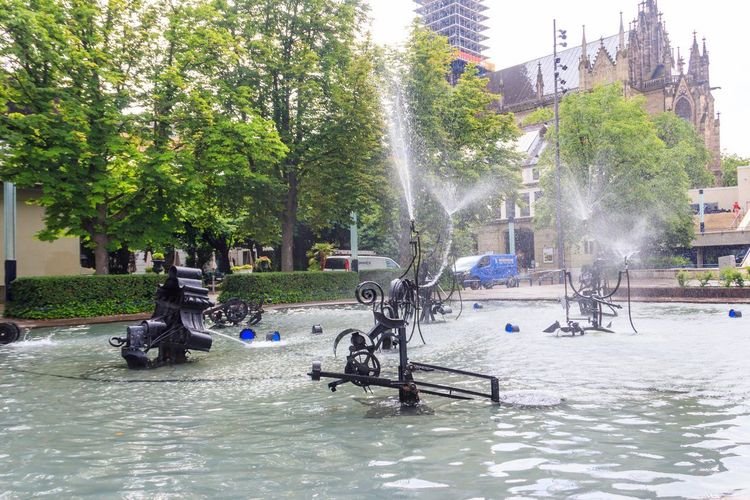
Basel has a special relationship with public art. The big banks and insurance companies headquartered in the city have for decades funded sculpture commissions that can be seen for free on the street, with no museum ticket to pay for. The Basel artist Jean Tinguely, a sculptor of mechanical machines cobbled together from scrap metal, is its most visible figure.
The Tinguely Fountain, officially called the Fasnachtsbrunnen (Theaterplatz, 4051 Basel, rated 4.6/5 on Google from 5,520 reviews), stands in front of the Theater Basel, on the Theaterplatz. Installed in 1977 on the site of the former municipal theater stage, it brings together ten black scrap-iron machines that turn, spit and spray in constant motion, like a carnival parade that never stops. Children invariably stop in front of it, fascinated by the parts that spin and spray water unpredictably.
Other pieces of public art dot the center, often without tourist signage: a single work is sometimes enough to turn an ordinary crosswalk into a detour worth five minutes. The Ryo audio-guided tour of Basel actually starts on the Theaterplatz, facing this fountain, before heading to the Marktplatz: a good way not to walk past it without noticing. Also keep an eye out for older fountains, such as the Holbein Fountain or the Augustinians' fountain, and for the small green fountains decorated with a basilisk, the emblematic animal of the city.
3. Enjoy the Rhine Banks: Swimming, Walking and the Ferry
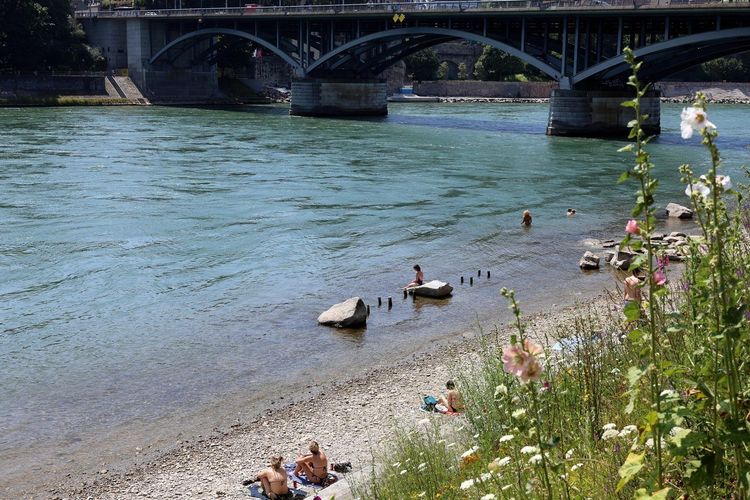
Swimming, Walking and Picnicking Along the Rhine
Few European cities let you swim in the city center in a navigable river. In Basel, it is an ordinary summer habit: as soon as the temperature exceeds 20°C, the banks of the Rhine are covered with towels and the current carries swimmers equipped with a waterproof bag inflated with air, the Wickelfisch, which keeps clothes and phone dry while floating behind them. The water, regularly monitored, has been considered clean enough for swimming for decades.
The current remains strong, sometimes over 4 km/h: you let yourself be carried downstream, never swimming back against the current. The official swimming areas, such as the Rheinbad Breite on the left bank, offer changing cabins and lifeguards in season.
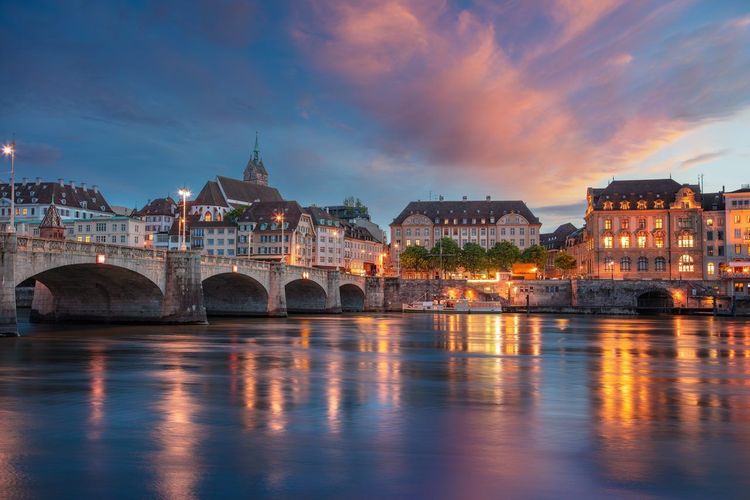
For a more relaxed approach, walking along the Rhine is more than enough: the embankments developed on both banks, Unterer Rheinweg on the Kleinbasel side (right bank), St. Alban-Rheinweg on the Grossbasel side (left bank), stretch for several kilometers without interruption, in the shade of century-old plane trees. Public benches and lawns sloping gently toward the water invite you to slow down, especially at the end of the day when the neighboring offices empty out.
You can also picnic by the Rhine or in one of the adjacent parks: the embankment in front of the Kaserne Basel, a former barracks turned cultural venue, is one of the locals' favorite spots for an improvised aperitif facing the water. Just bring something to sit on; the grocery stores in the center sell everything you need a few minutes' walk from the embankments.
Crossing the River by Ferry (Fähri)
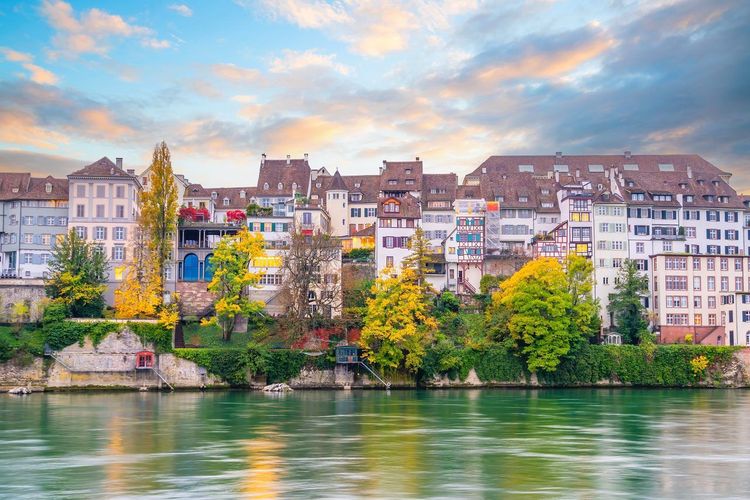
Four small ferries, called Fähri in the Basel dialect, have connected the two banks of the Rhine for more than a century. Their particularity lies in their mode of propulsion: no engine, only a cable fixed between the two banks and a rudder angled diagonally, which uses the force of the current to move the boat forward. The crossing takes less than two minutes and costs a few coins, to be dropped in a wooden box on board.
The most photogenic of the four is the Münsterfähre (St. Alban-Rheinweg 2, 4052 Basel, rated 4.7/5 on Google from 750 reviews), nicknamed "Leu", moored just below the cathedral, right in line with the Pfalz. The ferrymen, often river enthusiasts who have held this job for years, readily answer questions about how the system works when traffic is quiet. The other three, the "Wilde Maa" at St. Johann, the "Vogel Gryff" at Klingental and the "Ueli" at St. Alban, serve more out-of-the-way points, handy if you are staying in Kleinbasel, the right bank, or if you prefer to avoid the busiest stretches during the day.
Good to know if you try swimming: you enter and leave the water by the stairs and ramps built along the embankments, and you keep your distance from bridge piers and barges, which have priority on the river.
4. Discover the Port of Basel and a Rhine Cruise
Basel is a strategic point in European river traffic: the city is home to the largest river port in Switzerland, the furthest upstream point where the Rhine remains navigable for sizeable cargo ships. The Kleinhüningen port, at the northern tip of the city, handles several million tons of goods every year, from coal to containers, then carried by rail or road to the rest of the country, landlocked and with no direct access to the sea.
The current port dates from the early 20th century, when Basel undertook major canalization works on the Rhine to make it navigable from the North Sea. Before that, goods had to be transshipped overland for several kilometers, a bottleneck that held back Swiss trade. Even today, a good part of the country's oil imports passes through these quays.
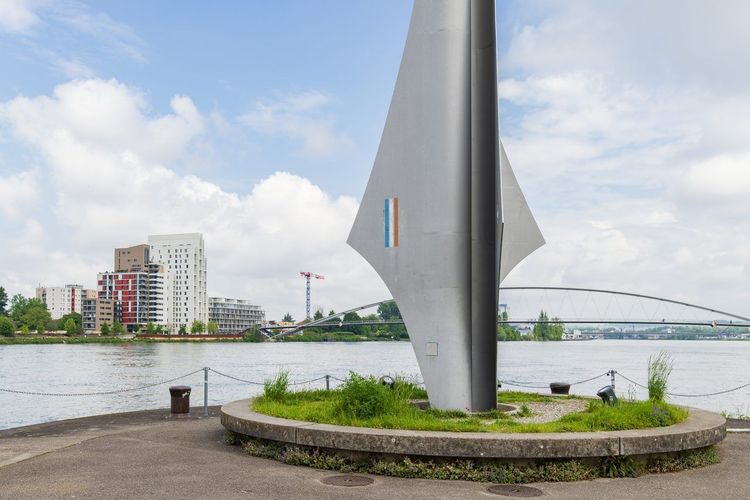
Just downstream from the port, the Dreiländereck, a small monument planted at the northern tip of the city, marks the place where the Swiss, French and German borders roughly meet. It is a spot prized by locals at sunset, more for the atmosphere than for the rather modest monument itself.
For you, the point is not so much to visit the port facilities themselves, which have restricted access for security reasons, as to watch the ballet of barges from the embankments. Several companies, including Rhine cruise operators, call at Basel at the start or end of an itinerary linking Switzerland to the Netherlands via Alsace and Germany. Local companies also offer river trips of one or two hours from the city center, a relaxing way to see the cathedral, the embankments and the bridges from the water rather than from the bank. Allow around twenty francs for a short trip on a local sightseeing boat; international cruises, for their part, need to be booked several months in advance in high season.
5. Visit Basel's Must-See Museums
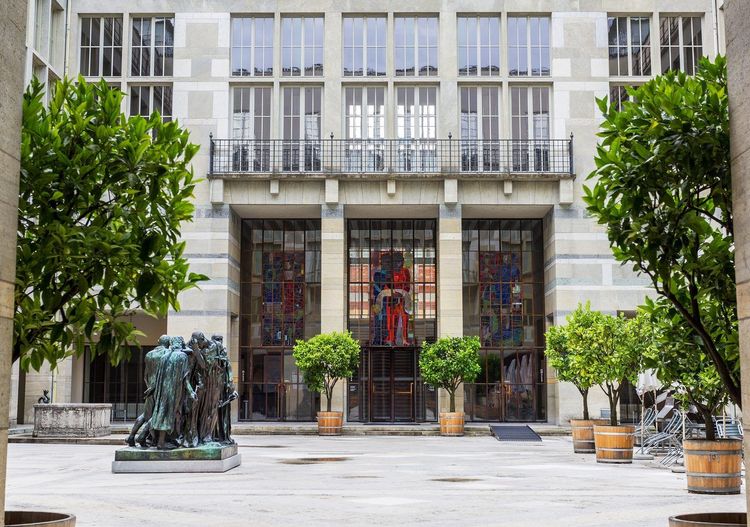
Modern and Contemporary Art: Kunstmuseum, Fondation Beyeler and Kunsthalle
Basel claims the title of the city with the highest density of museums in Switzerland for its size. It all begins with the Kunstmuseum Basel, founded in 1661 from a collection purchased by the city, making it one of the oldest art collections open to the public in the world. Its galleries bring together paintings from Holbein the Younger, who built his career in Basel, to Picasso, Monet and the German Expressionists, in a main building enlarged by an extension designed by Christ & Gantenbein, inaugurated in 2016.
About twenty minutes by tram away, in the neighboring municipality of Riehen, the Fondation Beyeler occupies a building designed by Renzo Piano, opened in 1997 in a park crossed by water-lily ponds. The collection, assembled by the art dealers Ernst and Hildy Beyeler, lines up major works by Picasso, Rothko, Giacometti and Monet in natural light carefully calculated by the architect. It is often the museum that international visitors name first when asked what not to miss in Basel.
More modest but just as respected in the contemporary art world, the Kunsthalle Basel, founded in 1839, operates as an exhibition space with no permanent collection: the program changes several times a year and often serves as a springboard for emerging artists before they are shown in the major capitals.
If you have to choose among the three in a single day, go to the Kunstmuseum in the morning, when the galleries are still quiet, then the Fondation Beyeler in the late afternoon: the park around it can be visited for free even after the exhibition halls close, at sunset.
Tinguely Museum, Schaulager and the Museums Pass to See It All
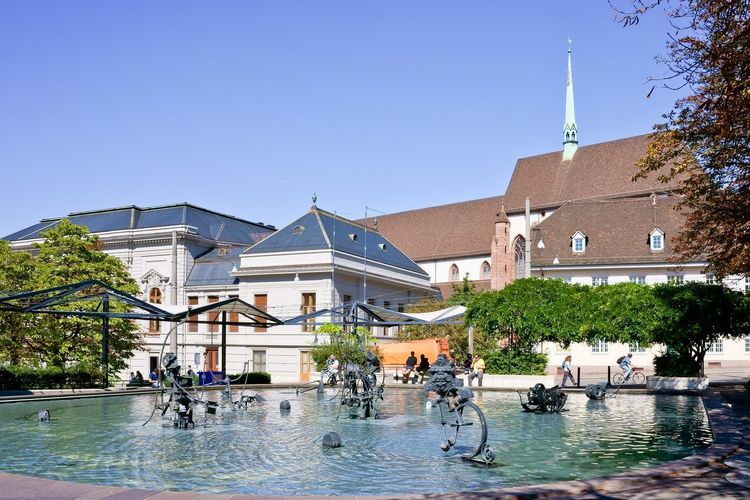
The Tinguely Museum, dedicated to the work of the sculptor already encountered on the Theaterplatz, occupies a building designed by the Ticino architect Mario Botta, set on the right bank of the Rhine, in the Solitude park.
The kinetic machines, activated at set times, always surprise visitors with their mechanical noise and erratic movement, the opposite of the well-behaved image people often have of a museum.
For architecture lovers, the Schaulager (Ruchfeldstrasse 19, 4142 Münchenstein, rated 4.6/5 on Google from 261 reviews), designed by Herzog & de Meuron on the outskirts of the city in Münchenstein, is worth the detour: this hybrid building between museum and artwork storage was designed to preserve and show the collection of the Emanuel Hoffmann Foundation, with major temporary exhibitions held only a few months a year.
With so many institutions in such a compact area, it is best to look at the Museums Pass: valid for a year in more than 350 museums, castles and gardens of the Upper Rhine region, across Switzerland, Alsace and Baden-Württemberg, it quickly pays off if you stay several days or come back within the year. The cantonal museums, including the Kunstmuseum, are also free on the first Sunday of the month, a fact many visitors are unaware of, just as they are unaware that the local Kulturstiftung regularly funds the purchase of new works for these same public collections.
If you prefer a warm-up before the major collections, the Ryo audio guide to Basel passes the Museum of Cultures and the Natural History Museum, on the cathedral hill, ten minutes' walk from the Kunstmuseum.
6. Discover Basel's Local Cuisine
Läckerli and Swiss Chocolate: Sweet Treats to Taste
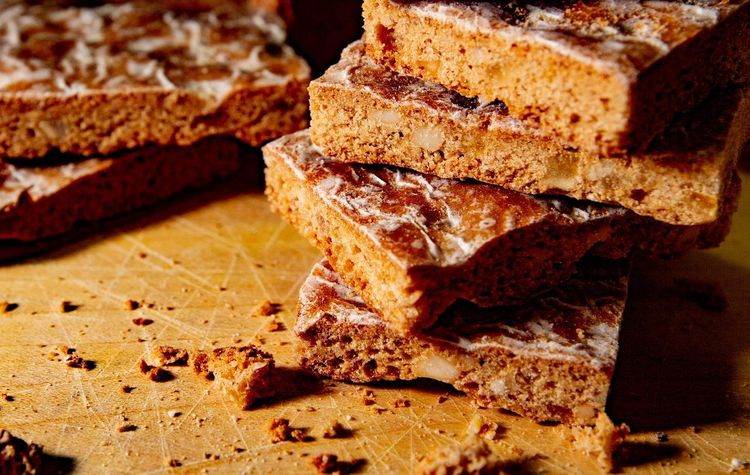
It is impossible to leave Basel without coming across the Läckerli, small spiced cookies made with honey, almonds and candied citrus peel, flavored with kirsch and coated in a thin sugar glaze, whose local recipe is said to date back to the 13th century. Once reserved for special occasions, they are now sold all year round in metal tins, in bakeries in the center as well as in supermarkets, an edible souvenir that travels well.
All of Switzerland claims the title of homeland of chocolate, and Basel is no exception: several artisanal chocolatiers, alongside the big industrial brands, offer tastings and workshops in the city center. You will find classic bars as well as more local creations, sometimes flavored with alpine herbs or the canton's white wine.
If you only taste one sweet treat during your stay, go for a fresh Läckerli bought in a shop, at the Läckerli Huus (Gerbergasse 57, 4001 Basel, rated 4.6/5 on Google from 274 reviews) on Gerbergasse for example, rather than a prepackaged supermarket version: the softer texture completely changes the experience.
Metal tins decorated with views of the city also make a popular souvenir, easy to slip into a suitcase.
Swiss Fondue and Tips for Eating Cheaply
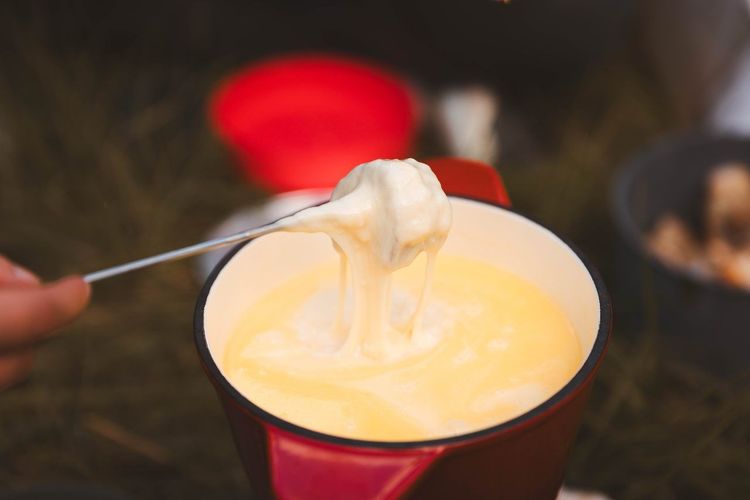
While Basel is not the historic capital of fondue, it is hard to escape in winter: most traditional restaurants offer a version made with local white wine, served with country bread and sometimes a dash of kirsch. Outside the cold season, some establishments keep serving it all year round for visitors looking for the classic Swiss experience. As for beer, Basel's craft breweries, less well known than their German neighbors, are also worth a detour for those who want a change from the traditional local white wines.
Eating in Basel has a bad reputation when it comes to budget, with Swiss prices consistently impressing European visitors. A few habits limit the bill: the dishes of the day (Tagesmenü) served at lunch in cafés and brasseries cost significantly less than the evening menu, often half as much.
Another, lesser-known option: the motto "Frisch von gestern" (fresh from yesterday) of the Äss-Bar, a small Swiss chain that resells at reduced prices the breads, sandwiches and pastries left unsold the day before by artisanal bakeries. For breakfast or a snack, the trick noticeably lowers the meal budget of a stay of several days, as does the anti-food-waste app Too Good To Go, well established in Switzerland. The covered markets and the Schlemmermarkt stands, mentioned above, also remain a reliable alternative for a quick meal under 15 francs.
7. Walk Along Basel's City Wall
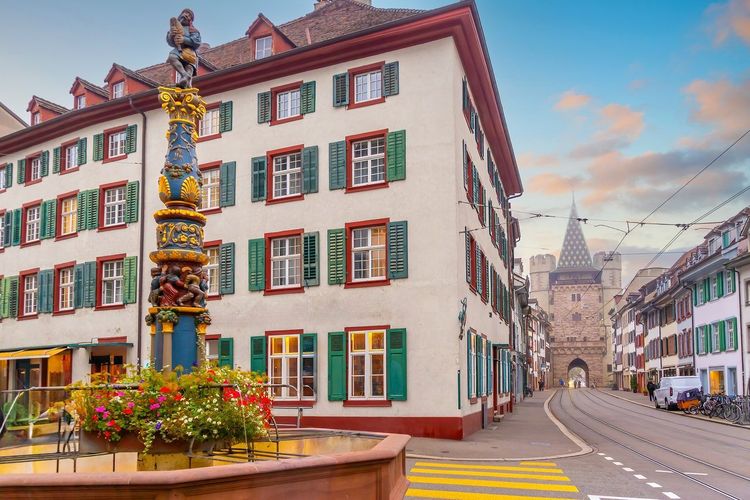
Basel was long protected by two successive rings of fortifications, today largely vanished under 19th-century urbanization. Yet clearly visible fragments of this medieval wall remain, notably around the Spalentor gate (Spalenvorstadt, 4051 Basel, rated 4.6/5 on Google from 3,389 reviews), the most photographed of the city's old gates, with its two pointed turrets framing a vaulted passage.
Built after the destruction caused by the 1356 earthquake, this second ring of walls, of which the Spalentor (around 1400) remains the jewel, protected a city that only joined the Confederation in 1501. Two other gates have survived, the St. Alban-Tor and the St. Johanns-Tor, as well as a fine stretch of rampart in the St. Alban district, beside the old canals. Other remains, less spectacular but just as authentic, appear here and there along what was once the line of the fortifications: a piece of wall here, a tower built into a residential building there, visible if you know where to look. The full route can be walked in a little over an hour, as a complement to a stroll through the old town.
If you spot a cluster of tourists photographing a simple stone wall, chances are it is a protected remnant rather than an ordinary facade. This kind of trace, scattered and poorly signposted, requires a little attention: without a guide, most visitors walk past without even noticing that it is a piece of medieval history.
8. Visit Basel Zoo
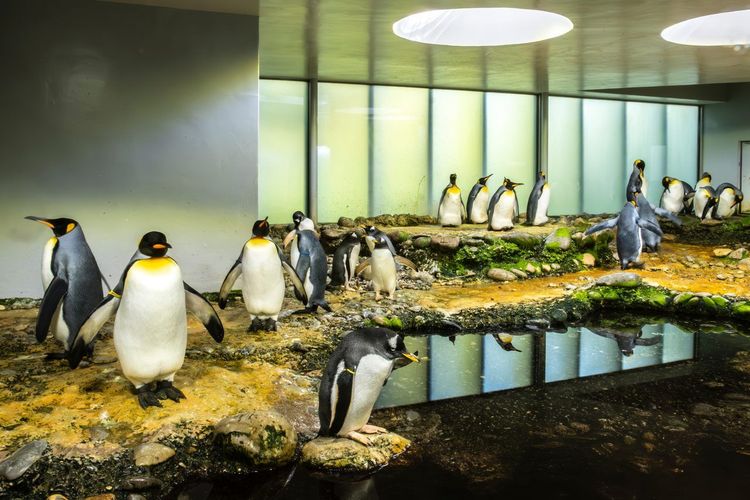
Opened in 1874, Basel Zoo (the Zolli, to locals) claims the title of oldest zoo in Switzerland, and one of the most renowned in Europe for its captive breeding programs. Indian rhinoceroses have been born there regularly for decades, a success rare enough for the park to be cited as a reference in international zoological circles.
The park extends right in the city center, a few minutes' walk from the station, a fairly rare urban location for a zoo of this size. You will see elephants, gorillas, flamingos and a vivarium house particularly popular with families on rainy days, since it is entirely covered.
If you are traveling with children, it is one of the easiest outings to organize in Basel: open 365 days a year, accessible by tram from the center, with picnic areas and playgrounds spread throughout the site. Still, allow a good half-day to enjoy it without rushing from one enclosure to the next.
The zoo also plays a less visible conservation role: several endangered species, from the western lowland gorilla to the okapi and the Indian rhinoceros, benefit here from breeding programs coordinated with other European parks, with the aim of maintaining a genetically viable population in captivity. The educational panels detail these programs without excessive alarmism, making it a visit that is both fun and informative for the most curious.
9. Explore Modern Architecture by Big Names
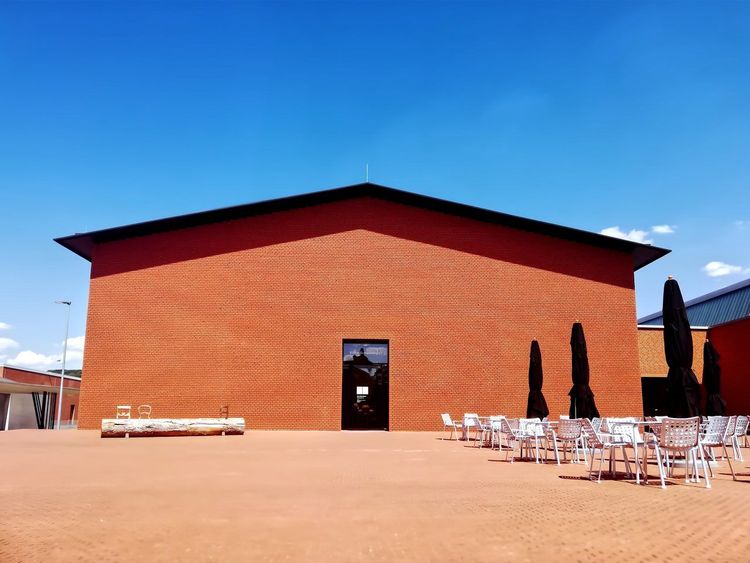
The Vitra Campus and the Vitrahaus, an Open-Air Architecture Museum
A few minutes' drive from Basel, just past the German border, the Vitra Campus (Charles-Eames-Strasse 2, 79576 Weil am Rhein, rated 4.7/5 on Google from 136 reviews) brings together one of the densest concentrations of contemporary architecture in Europe on a single industrial site. The furniture maker Vitra has, over the decades, commissioned buildings from international names: Frank Gehry's Vitra Design Museum with its disjointed volumes, a fire station designed by Zaha Hadid, a conference pavilion by Tadao Ando entirely in raw concrete.
The building most accessible to the public is the Vitrahaus, designed by the Swiss duo Herzog & de Meuron (already encountered at the Schaulager) as a stack of twelve miniature houses piled on top of one another. Inside, a showroom traces the history of 20th-century furniture design, with iconic pieces by Charles and Ray Eames, Verner Panton or Jean Prouvé displayed in situ, as in a lived-in interior rather than behind glass.
Allow a good half-day to visit the entire campus, design museum included: some buildings by the big names can only be viewed from the outside, but a guided architecture tour, held several times a day, gives access to buildings normally closed to the public, including Zaha Hadid's fire station. The border crossing is made by bus (line 55 from Claraplatz) or by bike from the center of Basel, in about twenty minutes: still, keep your identity papers with you.
The Roche Towers and the Novartis Campus, Showcases of Contemporary Architecture
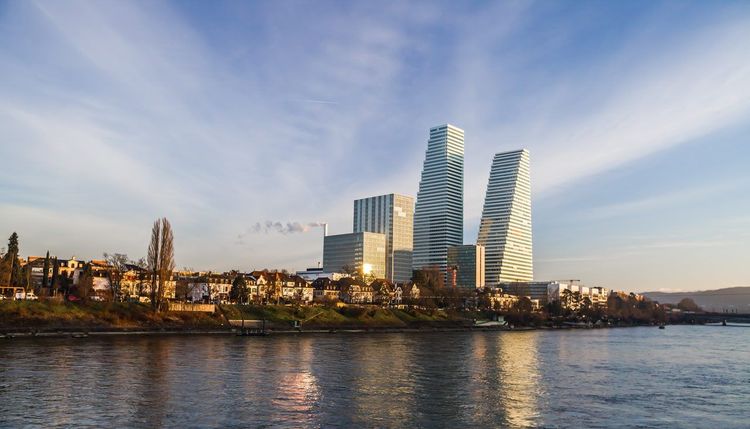
On the Swiss side, Basel's pharmaceutical district rivals it in architectural display. The Roche Towers, designed by the Basel architects Herzog & de Meuron, rise to 178 meters for the first (2015) and 205 meters for the second, now the tallest building in Switzerland, visible from much of the city and even from the cathedral platform in clear weather.
A few hundred meters away, the Novartis campus, another Basel pharmaceutical giant, has transformed a former industrial site into an urban-planning showcase: each building on the campus bears the signature of a different architect, from Frank Gehry to SANAA to Diener & Diener, in a deliberate dialogue between styles and generations. The site, planted with trees and equipped with green roofs on several buildings, is also meant as a demonstration of sustainable architecture as much as a collection of signatures.
These private campuses remain partly closed to the public, but certain areas and temporary exhibitions open during annual open-house days, worth watching for if you are particularly interested in contemporary architecture. For the rest of the year, a simple walk along the outer perimeter is enough to appreciate the contrast between the glass towers and the converted former industrial halls, another architectural landmark nearby: the Werkraum Warteck, a converted cultural wasteland, and the Messe Basel exhibition center, whose covered hall designed by Herzog & de Meuron completes the tour of Basel's contemporary architecture.
The Ryo audio-guided tour of Basel focuses on the old town: save it for the morning, when the lanes are quiet, and reserve the afternoon for these architecture campuses.
10. Admire Street Art in Kleinbasel and the Dreispitz District
On the right bank of the Rhine, the Kleinbasel district cultivates a more working-class and younger identity than the historic center. The building facades, electrical transformers and some blank walls of the area host street art murals, sometimes commissioned by the city, sometimes spontaneous, which change regularly with the seasons.
Further south, the industrial district of Dreispitz, long a storage and warehouse zone, has become a creative hub in recent years: art schools, galleries and artists' studios have moved into the former logistics buildings, and several facades now display monumental works visible from the street, with no ticket and no opening hours to respect.
This double urban scene remains largely overlooked by classic tourist guides, focused on the old town and the museums. Yet a one- or two-hour walk through these two districts is enough to show a very different face of Basel from the polished image of a banking and pharmaceutical city.
The best murals change from one year to the next: some walls are repainted during locally organized urban festivals, others gradually fade under rain and pollution. If street art interests you, plan a bike ride at the end of the day, when the low light brings out the murals, rather than a fixed plan that will quickly be outdated. Urban photography enthusiasts will find plenty to fill an late afternoon, far from the crowds of the Münster.
11. Stroll Through the University Botanical Garden
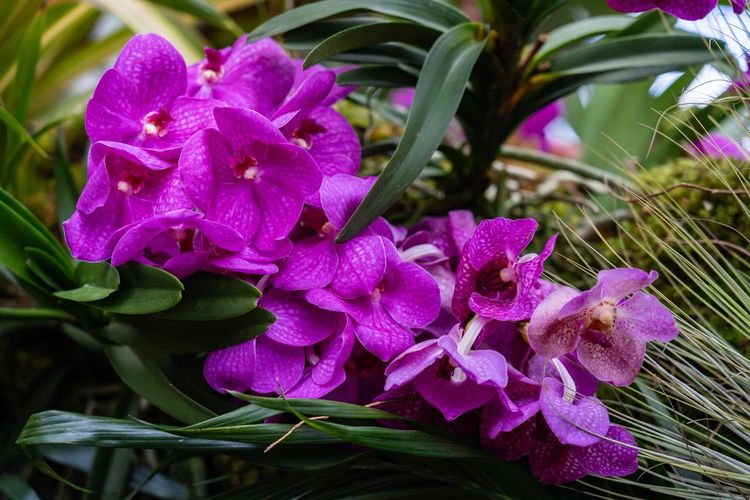
Founded in 1589, the University of Basel Botanical Garden claims the title of oldest university botanical garden in Switzerland still in operation. Located right in the city center, a stone's throw from the Spalentor, it brings together several thousand plant species spread across open-air plots, tropical greenhouses and themed collections devoted to medicinal plants.
Admission is free, a detail that always surprises visitors used to the paid botanical gardens of other major European cities. The heated, humid greenhouses offer a pleasant refuge on rainy or very cold days, with collections of carnivorous plants and orchids that are particularly dense for the size of the site.
The garden also serves as a teaching ground for biology students at the neighboring university, which explains the richness of the collections and their careful scientific labeling. Allow a little under an hour for a full visit, greenhouses included. You can easily combine this green break with the Spalentor and the Spalenvorstadt, a few minutes' walk away, for a welcome pause between two more intensive visits.
12. Take Advantage of Free Activities and the Basel Card
Contrary to its reputation as an expensive city, you can fill several days in Basel without spending much. The municipal museums, including the Kunstmuseum, open their permanent collections free of charge on the first Sunday of the month, as mentioned above. The Rhine embankments, the old town, the Pfalz, the medieval lanes or the line of the city wall can all be walked in full without paying a cent in admission.
The Basel Card, given free of charge by most hotels and hostels in the city to visitors staying overnight, gives access to unlimited public transport for the duration of the stay, as well as discounts on several museums, river cruises and attractions. Many visitors do not even know it exists and pay full price for their tram tickets, when all it takes is asking for it at the reception desk on the day of arrival.
For nature and the outdoors, the university botanical garden, already mentioned, and swimming in the Rhine in season complete a list of activities with no entrance ticket. Even the contemporary architecture of the Vitra Campus or the Roche Towers can be admired for free from public space, without needing to enter the buildings themselves.
Several free festivals also punctuate the Basel calendar: from open-air concerts to neighborhood parties held in summer on the embankments, the local cultural agenda regularly features events with no ticket, announced on municipal notice boards and the tourist office's social networks rather than on the major tourism news sites.
To build a budget stay without sacrificing the essentials, a good approach is to alternate: a museum morning (aiming for the free Sunday if the calendar allows), an afternoon in the old town and along the Rhine embankments at no cost, and a street food evening at the Schlemmermarkt for a few francs. Over three days, this rhythm lets you cover the essentials of the historic center, several museums and the river banks without ever exceeding a modest daily budget, accommodation aside.
Families also benefit from the free offerings: the playgrounds scattered through the parks in the center, the public fountains where children can cool off in summer, and walks along the Rhine cost nothing and easily fill part of an afternoon. Only the zoo, which charges admission, breaks this all-free logic, but its ticket remains reasonable by Swiss standards for a full-day family outing.
13. Experience Basel's Events and Festivals
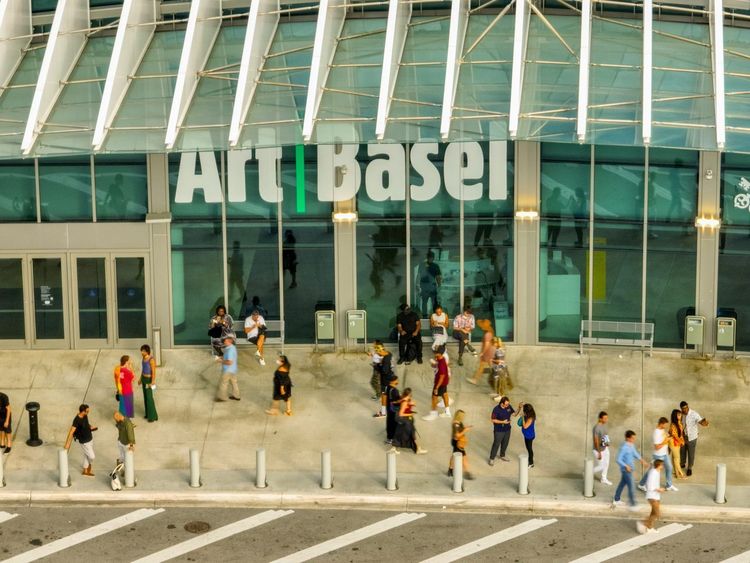
Basel's calendar is lively all year round, with a few events that go far beyond the local scene. Art Basel, in June, remains the best-known event internationally: the contemporary art fair attracts collectors, gallery owners and curious visitors from around the world, and for a few days turns the whole city into a parallel artistic showcase, with satellite exhibitions throughout the center.
In July (from July 17 to 25 in 2026), the Basel Tattoo, billed as the second-largest open-air tattoo in the world, brings together military music formations from several continents in the courtyard of the Kaserne. The Christmas market on the Münsterplatz and the Barfüsserplatz, among the most renowned in Switzerland, then sets up from late November, with its wooden chalets and the lingering smell of mulled wine and roasted chestnuts.
The highlight of the local calendar remains the Fasnacht, the Basel carnival, celebrated at the start of Lent in a version very different from Latin carnivals: hand-painted masks, giant lanterns, parades of drums and piccolos starting at the Morgestraich, at four in the morning on the Monday after Ash Wednesday. It is an event experienced above all by the locals, less touristy than the big European carnivals, but all the more authentic for those who stumble on the dates by chance. The Ryo audio-guided tour of Basel devotes a stop to it, useful for understanding its codes if you visit the city off-season.
Apart from these major events, the city offers many small neighborhood events throughout the year: occasional producers' markets, free concerts on the embankments in summer, open-air screenings. The local tourist office keeps an up-to-date calendar, generally more reliable than general cultural agendas, for anyone wanting to time their stay to a specific date. If you want to know what is happening in Basel on a given weekend, it is better to check this official agenda a few weeks before departure than to rely solely on social networks, where announcements quickly get lost in the feed.
14. Take a Day Trip Around Basel
Basel's position, at the crossroads of three borders, makes it an ideal base camp for day trips, without even changing hotels. In under an hour by train, several very different destinations can be discovered.
Colmar, in Alsace, about 45 minutes by regional train, charms with its colorful half-timbered houses and the canals of the Petite Venise district, a total contrast with Basel's pharmaceutical architecture. Freiburg im Breisgau, on the German side, about an hour away, offers a different atmosphere: a lively university city, gateway to the Black Forest for an afternoon hike or a stop in the surrounding vineyards.
Further away, the Rhine Falls at Schaffhausen, nearly an hour and a half away, are among the largest waterfalls in Europe by flow rate, an impressive sight reachable by boat to the foot of the falls. Finally, Lucerne, about an hour away, combines a lake, mountains visible from the embankments and a typical Swiss old town with its famous covered wooden bridge.
All these destinations can be reached without a car, by direct train or with a single connection from the main station (Basel SBB), which greatly simplifies organizing a day trip. It is better to buy tickets the day before or early in the morning to get the best fares, as Swiss and German regional trains apply pricing that rises as departure approaches.
To choose among these options, go by what you feel like at the moment rather than a schedule that is too tight: Colmar and Freiburg suit a short outing, until late afternoon, while the Rhine Falls or Lucerne require an early start to make the most of the day on site before the last evening train. Zurich, about an hour by train, completes the list for those who want to compare the country's two biggest cities in a single stay.
In any case, keep in mind that crossing the border does not always mean a simple change of scenery: prices, language and even shop opening hours differ noticeably from one country to another, a complete change of scene less than an hour away.
15. Practical Info: Getting There, Where to Stay and Ideal Length of Stay in Basel
How to Get to Basel and Where to Stay
Getting to Basel from France is particularly simple: the direct TGV from Paris takes about three hours to Basel SBB station, right in the city center, with no need to go through an airport. For visitors from further away, EuroAirport, an airport shared between Switzerland, France and Germany, serves the city in about twenty minutes by bus (line 50).
A Basel particularity to know before booking accommodation: the city has two main stations: Basel SBB, on the left bank, which also includes the SNCF platforms for trains coming from France, and the Badischer Bahnhof, operated by the German railways on the right bank. If you are arriving from Germany, check carefully which one applies to your journey so you can choose accommodation on the right side of the Rhine.
Where to stay in Basel depends mostly on the type of stay. The historic center, around the old town and the Münster, concentrates the best-located hotels for visiting on foot, but also the highest rates. Kleinbasel, on the right bank, offers generally cheaper options, ten or fifteen minutes' walk from the center via one of the bridges or one of the ferries already mentioned. Budget travelers also look to the outskirts, well connected by an efficient tram network that runs until late in the evening: staying ten minutes by tram from the center often significantly reduces the accommodation bill without sacrificing sightseeing comfort.
How Much Time to Plan for Visiting Basel
How long to visit Basel depends on the pace you want. Visiting Basel in 1 day lets you cover the essentials of the historic center: cathedral, Marktplatz, Rathaus and a museum of your choice, ideally the Kunstmuseum or the Tinguely Museum. It is a realistic format for a stopover between two destinations, for example when changing trains.
Visiting Basel in 2 days leaves more leeway: one day for the historic center and the major museums, a second for the Rhine, the contemporary architecture of the Vitra Campus or the Roche Towers, and why not a short trip to Colmar. This is the length most locals recommend for a first stay, without feeling rushed.
Visiting Basel on foot is entirely realistic for most of the historic center, which is compact and largely pedestrianized, but count on public transport or a bike to reach outlying museums like the Fondation Beyeler or the Vitra Campus, located several kilometers away.
For a longer stay, three or four days let you add one or two day trips, the seasonal events and festivals, and take the time to explore Kleinbasel and the street art of Dreispitz without rushing. Beyond that, the city itself quickly runs out of activities, and it is better to widen the radius toward the neighboring destinations already mentioned.



FAQ
How long does it take to visit Basel?
Allow one day for the essentials of the historic center, the cathedral, Marktplatz and Rathaus, and two to three days to add the major museums, the Rhine and the contemporary architecture. Beyond three or four days, it is better to combine your stay with a trip to Colmar, Freiburg or Lucerne for a change of atmosphere.
How do I get to Basel from France?
The direct TGV from Paris reaches Basel SBB station in about three hours, right in the city center. EuroAirport, shared between Switzerland, France and Germany, is an alternative for longer journeys, with a shuttle of about twenty minutes to the center.
Where should I stay in Basel to visit the city on foot?
The historic center, around the Münster and the old town, offers the best walking access to the main attractions. Kleinbasel, on the right bank of the Rhine, offers more affordable rates a few minutes' walk or ferry ride from the historic center.
What can I do in Basel for free or on a small budget?
The Rhine embankments, the old town, the Pfalz and the line of the city wall can all be visited at no cost. The municipal museums open free of charge one Sunday a month, and the Basel Card, given by hotels to guests staying overnight, includes unlimited public transport.
What can I do in Basel with the family?
Basel Zoo, open all year round right in the city center, is the easiest family outing to organize. The Rhine banks, the parks in the center and the ferry ride are also very popular with children, for an outing without complicated planning.
What can I do in Basel as a couple for a weekend?
A stroll through the old town at sunset, followed by a fondue dinner and an evening on the Rhine embankments, makes for a simple, romantic weekend. The Fondation Beyeler, with its park and ponds, adds a soothing cultural interlude for two.
When should I go to Basel to enjoy the events and festivals?
June is the time for Art Basel, July for the Basel Tattoo, and the period before Lent, which varies according to the liturgical calendar, for the Fasnacht. December is ideal for the Christmas market on Münsterplatz, one of the most renowned in Switzerland.
Basel is not just a stopover between two European trains. With its Gothic cathedral, museums founded in the 17th century, architecture designed by the biggest contemporary names and a tradition of urban swimming that always surprises first-time visitors, the city more than holds its own against better-known neighbors like Zurich or Geneva.
For a first immersion in the historic center without having to juggle a paper map and phone searches, our Ryo audio-guided tour is the simplest starting point: just start it on Theaterplatz or at any stop on this 3.2 km loop and let yourself be guided, lane after lane, at your own pace and with no group schedule to follow. A weekend is then enough to leave with much more than a box ticked on a list of cities to visit.