© Shutterstock
 Votre guide Ryo
Weekend in Basel 2026: Old Town, Rhine and Museums in 3 Days
In Basel, a short stroll along the Rhine is enough to reach the point where Switzerland meets France and Germany. It is one of the lesser-known charms of a weekend in Basel: the city fits within an area you can cover on foot in half a day, yet it packs in an almost intact medieval heritage, a proud Rhine-side way of life and one of the highest densities of art museums in Europe. The Ryo audio-guided tour of Basel follows this thread, from the old town to the riverbanks, with an audio stop almost at every street corner of the historic center.
In two or three days, you will see a town hall with a blood-red facade covered in frescoes, ride a ferry pushed only by the river's current, hear about a carnival that starts at four in the morning in complete darkness, and be able to venture out to an architecture campus designed by the biggest names in the field, just across the German border. This guide details, day by day and then by practical theme, everything a stay in Basel lets you cover without rushing, from the budget in Swiss francs to the best season to see the city.
Day 1: Basel's Old Town, Between the Rathaus and the Cathedral
Grossbasel, on the left bank of the Rhine, holds most of the city's medieval heritage. It is naturally visited as a loop, from the central square to the cathedral hill, then toward the western gate. Allow half a day to explore it properly, stopping regularly: this is a district to be savored slowly rather than walked through quickly, and most of the interesting details are above the shop windows, not at street level.
The Rathaus and Marktplatz, Heart of Grossbasel
The Marktplatz is where everything begins. On weekdays, it hosts a fruit, vegetable and flower market that fills the cobblestones from early morning, a good time to observe local life before the groups of visitors arrive. The producers often come from surrounding villages, and some stalls still sell forgotten vegetable varieties you won't find in supermarkets.
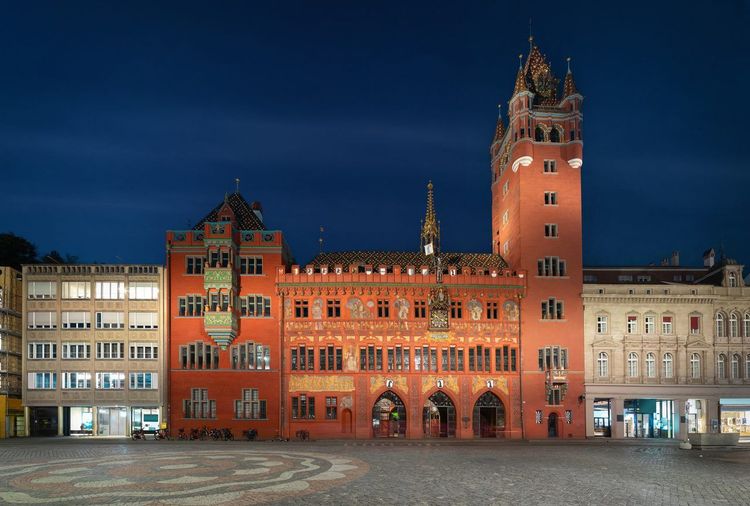
Facing the market stands the Rathaus, the town hall, whose red sandstone facade and polychrome frescoes catch the eye from afar. Built from 1504 and enlarged in the 19th century, it remains the seat of the canton's government. The inner courtyard, freely accessible during the day, is worth a visit: early 17th-century murals depict biblical scenes and civic allegories, a decor most hurried visitors don't even notice as they walk past the facade. An interior staircase, also decorated, leads up to the Grand Council chambers.
Around the square, cobbled lanes climb gently toward the cathedral hill. You can stop at a confectioner's to taste a Läckerli, the city's emblematic spiced biscuit, before continuing. Keep an eye on the facades: several houses in the center still bear wrought-iron signs that once indicated the trade of the craftsman working below.
Basel Cathedral (Münster) and the Pfalz Terrace
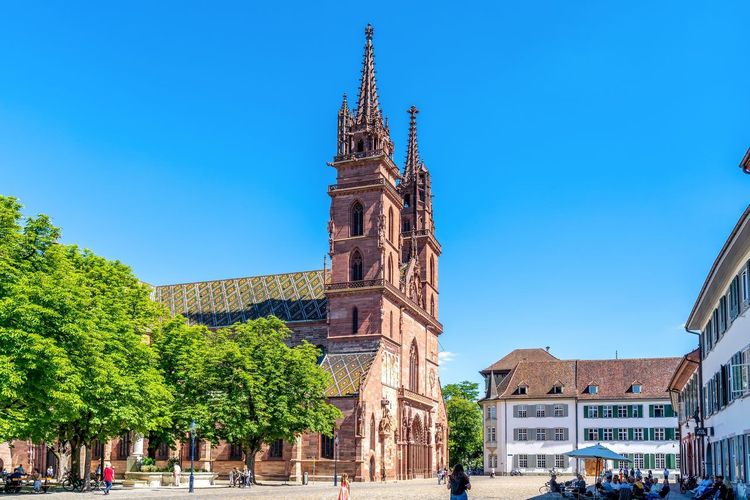
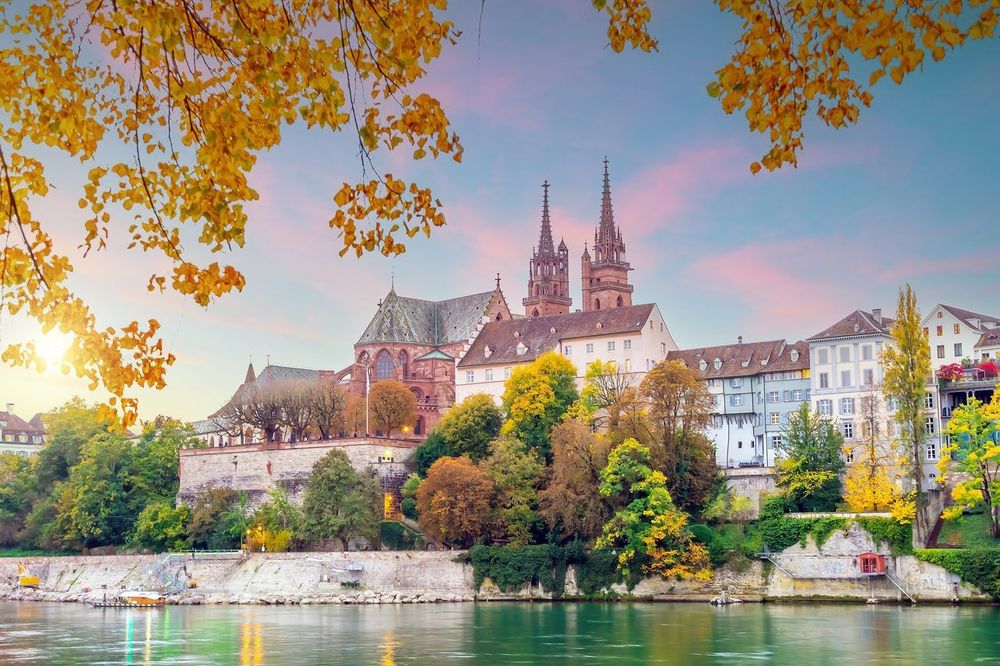
A few minutes' walk takes you to Basel Cathedral, also called the Münster, on the Münsterplatz. The Romanesque and Gothic building, made of red sandstone like the Rathaus, has dominated the city since the 11th century despite an earthquake that largely destroyed it in 1356, an episode few visitors associate with Switzerland. Its two towers, which you can climb for a few francs and nearly 250 spiral steps, offer a view stretching from the Rhine to the first foothills of the Black Forest.
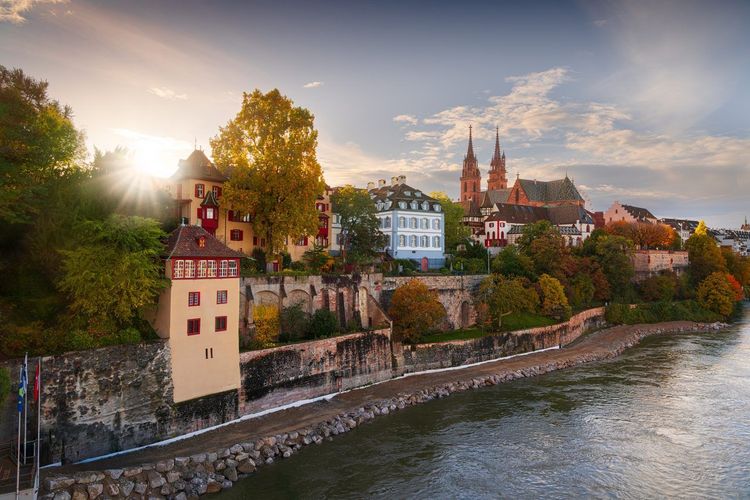
The roof deserves a separate look: its glazed tiles form a pattern of colorful diamonds, clearly visible from the Pfalz terrace just behind. It is probably the most photographed free viewpoint in Basel: you can see Kleinbasel across the water, the barges heading up the Rhine and, on clear days, the silhouettes of the Vosges in the distance. Settle on a bench in late afternoon, when the light skims the terracotta rooftops of the district.
Erasmus of Rotterdam is buried in the cathedral, a detail many overlook as they push open the heavy door. Before going in, walk around the north side: the St. Gall portal (Galluspforte), adorned with 12th-century Romanesque sculptures, is among the best-preserved sculpted ensembles of that period in the Germanic world.
Spalentor and the Spalenberg District
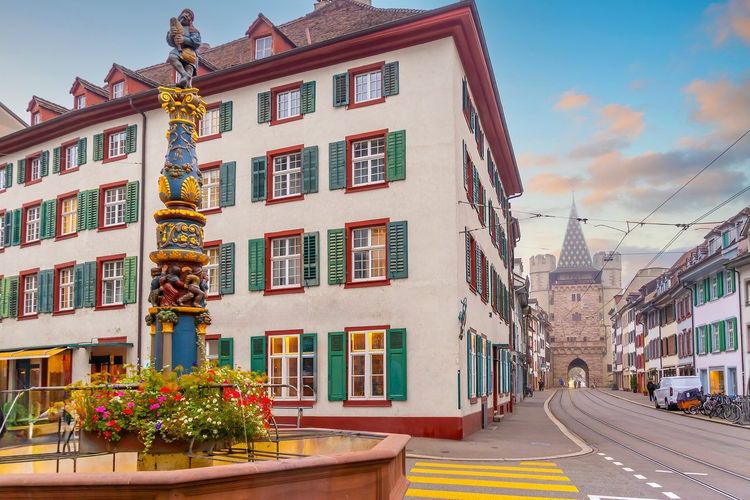
Heading back down toward the west, the cobbled street of Spalenberg (Spalenberg, 4051 Basel) winds between old houses, artisan workshops and small galleries. It is one of the most picturesque streets in Grossbasel, and one of the least frequented by groups. Shop windows alternate between ceramics boutiques, bookbinders' workshops and pocket-sized cafés where two tables are enough to fill the room.
It leads to the Spalentor (Spalenvorstadt, 4051 Basel, rated 4.6/5 on Google from 3,391 reviews), one of the three surviving gates of the city's former ramparts, built around 1400. With its two crenellated turrets flanking a tall square tower topped with a glazed tile roof, it is one of the most spectacular medieval gates in Switzerland. Walk under the arch rather than skirting around it, and look up at the portcullis and the statues on the outer facade.
The other two gates, St. Johanns-Tor and St. Alban-Tor, are reminders that the city was entirely ringed by walls until their gradual demolition in the 19th century. To miss nothing of this first loop, the Ryo audio guide accompanies you from the Rathaus to the cathedral, telling what the facades don't, from the history of red sandstone to the backstage of Basel's power.
Day 2: The Rhine, Its Bridges and the Crossing to Kleinbasel
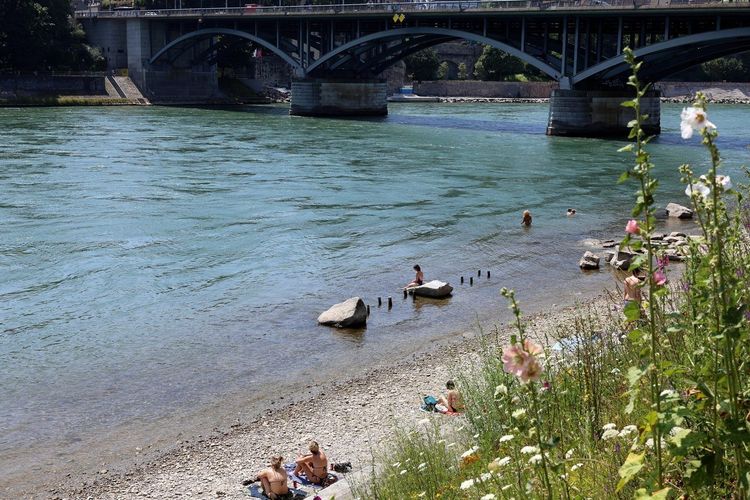
The Rhine is more than a backdrop in Basel: it is an axis of life that residents cross, walk along and use for swimming as soon as the first sunny days arrive. The second day naturally builds around the river, from Grossbasel to Kleinbasel, slowly working your way eastward along the waterway.
The Historic Bridges: Mittlere Brücke and Wettsteinbrücke
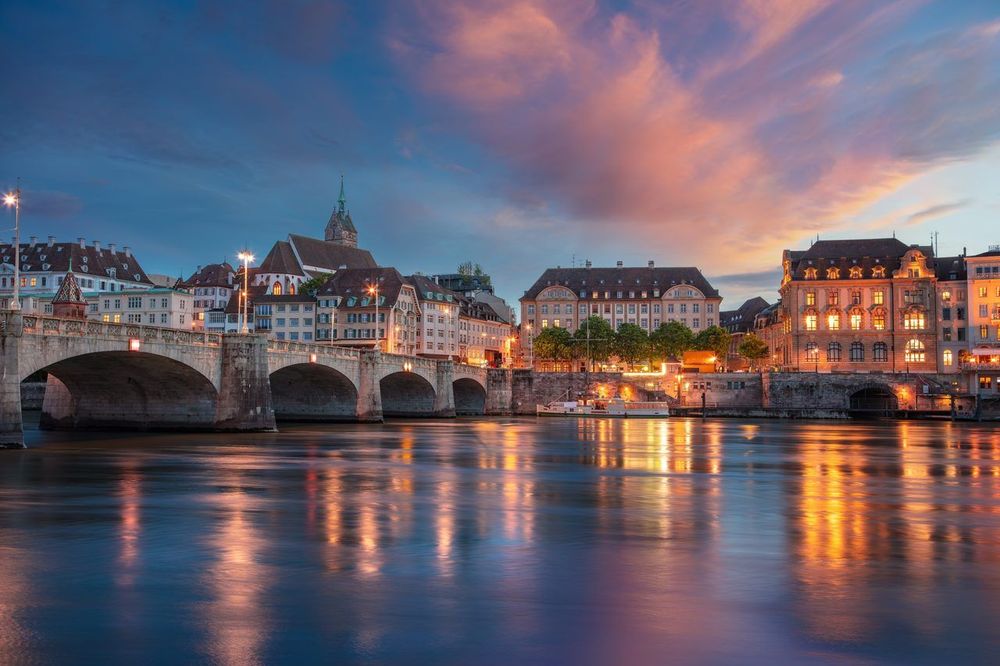
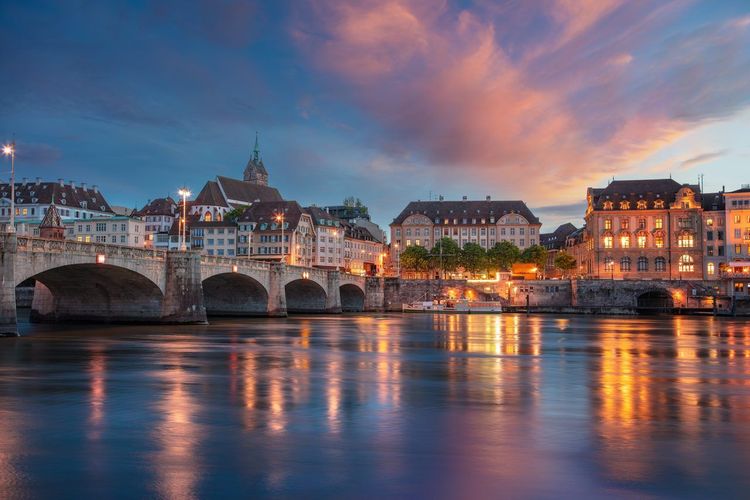
The Mittlere Brücke is one of the oldest fixed crossings over the Rhine, built as early as 1225 and rebuilt in stone in the early 20th century. For centuries, it was the city's only bridge, a monopoly that partly explains the commercial prosperity of Grossbasel compared with Kleinbasel, long considered the modest district. In the middle of the deck, the small Käppelijoch chapel is a reminder that convicts were once executed there by being thrown into the river. Today, lovers hang padlocks on it.
A few hundred meters upstream, the Wettsteinbrücke offers a more open perspective on the cathedral perched above the quays, where Basel residents picnic as soon as the thermometer passes twenty degrees. Its wide deck also makes it an important route for the trams linking the two banks.
Crossing the Rhine by Fähri to Kleinbasel
Four small traditional ferries called Fähri cross the river without an engine, each on its own line: a cable stretched from one bank to the other and the Rhine's current alone are enough to make them glide diagonally, thanks to an angled rudder that turns the force of the water into lateral thrust. Each bears a name inherited from Kleinbasel folklore figures (Ueli at St. Johann, Vogel Gryff at Klingental, Leu below the cathedral, Wilde Maa at St. Alban), a tradition dating back to the 19th century that ferrymen carefully maintain.
The crossing costs about two Swiss francs and lasts barely a few minutes, but it is probably the most memorable experience of the weekend: you go from one bank to the other as Basel residents have for generations, with no engine noise, just the lapping of water against the wooden hull. The Leu, which departs just below the Pfalz terrace, follows on ideally from the end of the first day.
Once on the other bank, Kleinbasel reveals a completely different face. The Oberer and Unterer Rheinweg promenade runs along the river for nearly a kilometer, lined with seasonal beach bars, benches and stairs that go down to the water. It is from here, on the right bank, that you get the best view of the cathedral and the Grossbasel facades, especially at sunset when they turn orange. In the side streets around Rheingasse and Utengasse, neighborhood bars and small restaurants give Kleinbasel its younger, more multicultural atmosphere.
In summer, the same stretch fills with swimmers equipped with a Wickelfisch, this fish-shaped waterproof bag that serves both as a float and as a bag to keep your belongings dry while swimming in the Rhine. Tradition has it that you enter the water upstream, on the Kleinbasel side, and let the current carry you to an exit further down, a summer ritual that often surprises visitors the first time they see it from the bank. If you try the experience, stay close to the bank and avoid bridge piers and shipping.
The St. Alban District and Its Former Paper Mills
Returning to the left bank toward the east, the St. Alban district forms an almost rural parenthesis in the middle of the city. A canal diverted from the Birs runs along a cobbled lane lined with low houses and former mills. This canal once powered numerous water wheels, used for paper, grain or weaving, before industrialization moved production elsewhere.
The paper museum (Basler Papiermühle (St. Alban-Tal 37, 4052 Basel, rated 4.7/5 on Google from 1,828 reviews)), housed in one of these medieval mills, traces the craft of papermaking, writing and printing: you can scoop a sheet from the vat yourself, as in the Middle Ages. The district is ten minutes on foot from the cathedral, and its few terraces offer one of the quietest corners of the city center.
If you prefer to be guided along the river, the Ryo audio-guided tour in Basel has you follow the banks between Grossbasel and Kleinbasel, with stories about the ferrymen and Rhine-side life to listen to while walking.
Must-See Museums: Fondation Beyeler, Tinguely and Kunstmuseum
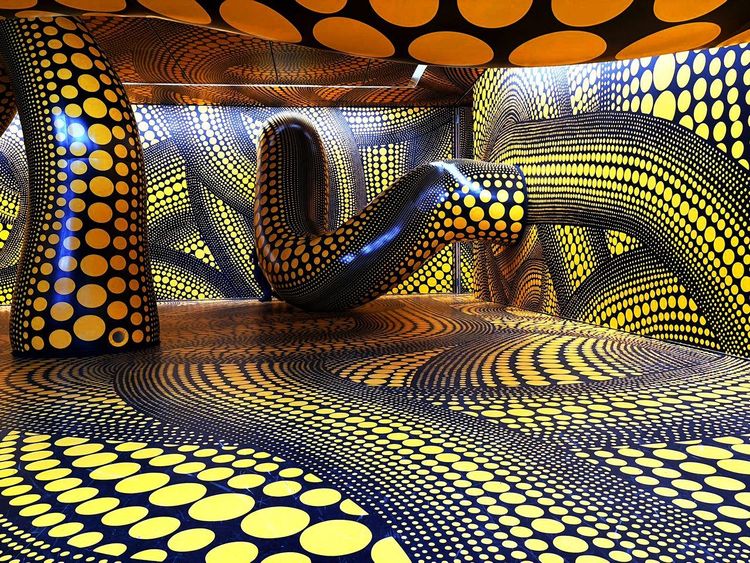
Basel claims, per capita, one of the highest concentrations of museums in Europe: nearly forty institutions for fewer than 200,000 inhabitants. Three of them stand out clearly for a weekend, each with a very different personality.
The Fondation Beyeler in Riehen
About twenty minutes by tram from the center, in the municipality of Riehen, the Fondation Beyeler occupies a long glass and porphyry building designed by Renzo Piano, set in a park bordered by a water-lily pond, an intentional nod to Monet. The collection features Monet, of course, but also Picasso, Cézanne, Rothko and Giacometti, while the temporary exhibitions attract visitors from around the world every year.
Mind the 2026 opening hours: the museum is closed on Monday and Tuesday, open Thursday to Sunday from 10 a.m. to 6 p.m. and until 8 p.m. on Wednesday. Tickets are timed and booked online, in half-hour slots. Trams 2 and 6 stop directly at the "Fondation Beyeler" stop, about 18 minutes after Badischer Bahnhof station. Allow half a day if you also want to enjoy the park.
The Tinguely Museum and Its Machines in Motion
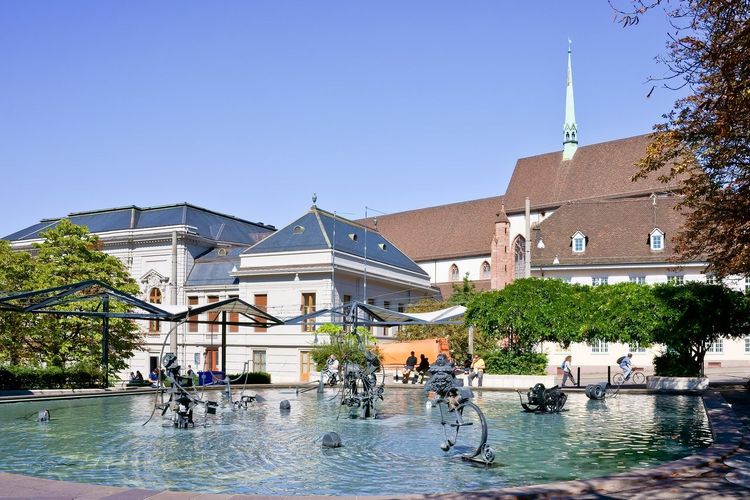
On the right bank of the Rhine, in a building designed by architect Mario Botta, the Tinguely Museum brings together the noisy mechanical sculptures of Swiss artist Jean Tinguely. The works move, creak and clatter: some rooms look more like a giant workshop than an art gallery, and children often have more fun there than in front of a painting.
The museum can be visited in about an hour and a half, and its glass walkway, the "Barca", offers a direct view of the river. The adjoining park, Solitude Park, is perfect for a break by the water. In town, don't miss the Tinguely fountain on Theaterplatz, whose machines spray passersby for free.
The Kunstmuseum Basel, the World's Oldest Public Collection
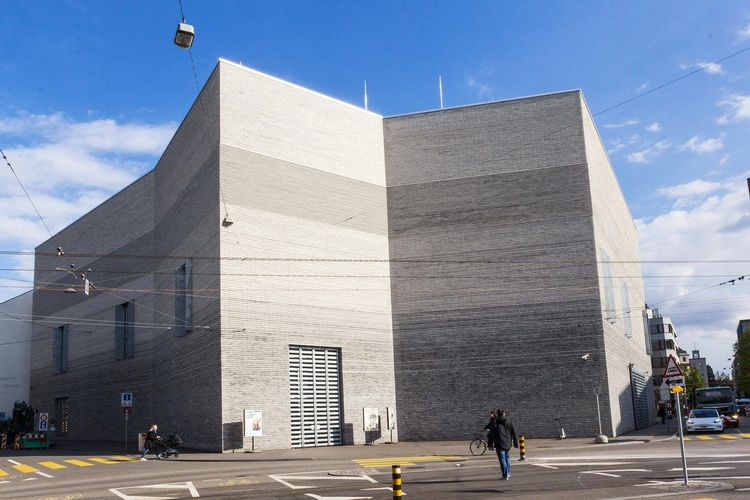
The Kunstmuseum Basel (St. Alban-Graben 16, 4051 Basel, rated 4.6/5 on Google from 5,769 reviews) claims a rare title: it is the oldest publicly accessible art collection in the world, born in 1661 when the city purchased the Amerbach family's cabinet. It holds Holbein, Witz, Cranach, but also a vast contemporary building, the Neubau, opened in 2016, and the Kunstmuseum Gegenwart devoted to the art of recent decades.
The main building and the Neubau are linked by an underground passage, which lets you move from medieval art to contemporary installations in a few minutes without going back out onto the street. On leaving, you are a stone's throw from St. Alban and the cathedral: a good chance to follow up with a Ryo audio guide stop in the old town.
The Basel Carnival (Basler Fasnacht) and the Year's Highlights
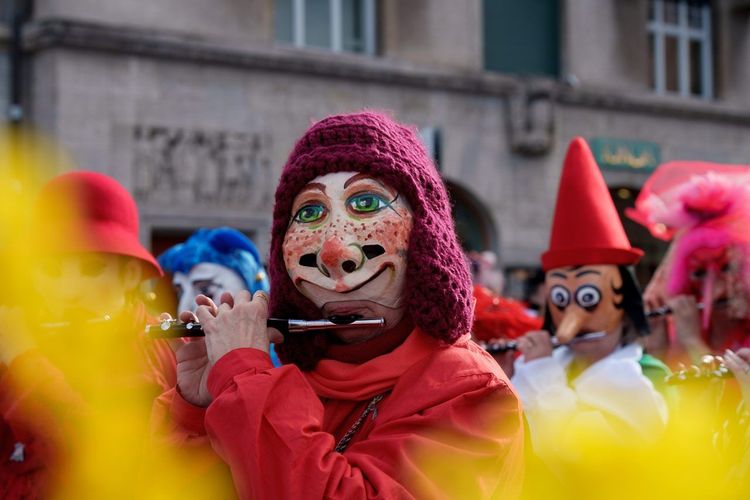
Basel's calendar changes the experience considerably depending on the season you choose. Three events largely dominate the local agenda.
The Basel Carnival, or Basler Fasnacht, is probably the most unique event: it starts on the Monday after Ash Wednesday at exactly four in the morning, in total darkness, with street lighting switched off. Only hand-painted lanterns and the masks of the cliques, those costumed groups that parade with drums and piccolos, light up the procession known as the Morgestraich. Inscribed on UNESCO's Intangible Cultural Heritage of Humanity list in 2017, this carnival lasts exactly 72 hours and ends as abruptly as it began. If you come at this time, book your hotel very early and bring earplugs.
After the Morgestraich, the program follows an unchanging rhythm. On Monday and Wednesday afternoons, the grand parade winds through Grossbasel and Kleinbasel, and floats throw oranges, mimosas and confetti (the Räppli) onto the crowd. Tuesday is for children during the day, then Guggenmusik concerts in the evening on the Marktplatz, Barfüsserplatz and Claraplatz, where deliberately dissonant brass bands compete in volume. To blend in with the crowd, buy the small official badge, the Blaggedde: Basel residents appreciate it when you support the cliques this way, and you'll avoid a few handfuls of confetti slipped down your collar.
Art Basel, in June, turns the city into a global contemporary art gathering: hotels are fully booked months in advance, and galleries hold their own openings alongside the fair. In late November, the Christmas market on Barfüsserplatz and Münsterplatz is among the most beautiful in Switzerland, with its wooden chalets and the smell of mulled wine drifting up to the old town, until the last days of December.
Out of season, you will still come across the Fasnacht: one stop on the Ryo audio-guided tour tells the story of the world of the cliques and their lanterns, whose nods can be spotted all year round in the lanes of Grossbasel.
Where to Eat in Basel: Specialties and Good Addresses
Basel's cuisine falls into three fairly distinct zones, depending on what you are looking for and how much time you have between visits.
The Markthalle Basel (Viaduktstrasse 10, 4051 Basel, rated 4.4/5 on Google from 9,518 reviews), housed in the former 1929 market hall near SBB station and topped with an immense dome, brings together Swiss, Thai, Lebanese and Italian food stalls. It is the easiest place to try several specialties without booking, at long shared tables.
Along the Rhine, several beach bars set up on the Kleinbasel quays serve simple dishes, ideal for a lunch with your feet almost in the water, between two Fähri crossings. Grossbasel and the St. Alban district, for their part, hide bistros serving Mehlsuppe, a browned flour soup traditionally eaten after the Morgestraich night, and Zwiebelwähe, an onion tart that accompanies the same festivities.
On the sweet side, the Läckerli remains the local madeleine: this dense little biscuit made with honey, spices, almonds and candied zest is found in all the confectioners in the center, packed to travel without crumbling. You will inevitably bring back a box.
To save money without giving up pleasure, think about lunch menus: many restaurants offer a dish of the day that is much cheaper than the evening menu. Supermarkets in the center also sell sandwiches, salads and Swiss cheeses, perfect for a picnic on the Rheinweg steps facing the cathedral. In the evening, Kleinbasel remains the liveliest bank, with terraces open late whenever the weather allows.
Where to Stay in Basel: Neighborhoods and Accommodation Tips
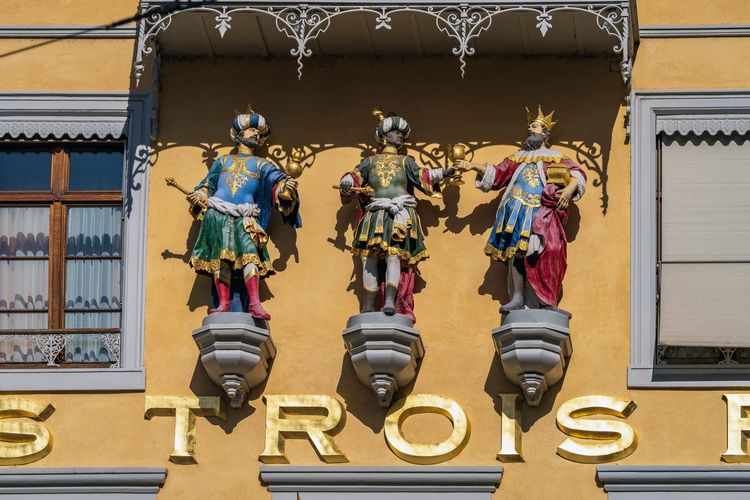
Three zones stand out when choosing where to stay during a weekend in Basel, each matching a different type of traveler.
The center of Grossbasel, around the Marktplatz and the old town, concentrates the most charming addresses but also the highest rates: you sleep among historic facades, within walking distance of all the first day's heritage. Kleinbasel, on the other bank, offers better value for money, a younger atmosphere driven by its bars and restaurants, and remains five minutes from the old town via the Fähri or the bridges. Finally, the SBB station area suits travelers arriving by train: practical hotels, often chains, ten minutes on foot from the historic center.
Whichever neighborhood you choose, ask for your BaselCard on arrival: this pass, provided by the city's accommodations, gives free access to trams and buses throughout your stay, along with discounts at several museums, a detail that noticeably changes the transport budget for an entire weekend.
As for booking, plan further ahead than in a French city of the same size: Basel hosts many trade fairs and congresses, and prices jump during Art Basel in June, the Fasnacht or the big autumn fairs. For a typical weekend, booking three to four weeks ahead is generally enough. If the budget is really tight, hotels on the French side in Saint-Louis or on the German side in Weil am Rhein remain connected to the center by tram or bus in under half an hour.
A Trip to the Three-Country Border: Dreiländereck and Vitra Design Museum
Few guides cover this angle, yet at the end of the Kleinhüningen Rhine port, the Dreiländereck marks the point where Switzerland, France and Germany meet. A slender metal pylon marks the spot, on a pier tip from which you take in all three countries at a glance. A few hundred meters downstream, the Dreiländerbrücke, a long pedestrian and cycle footbridge, links Huningue on the French side to Weil am Rhein on the German side: you can thus change countries twice in under an hour. Tram 8 to Kleinhüningen brings you close to the site from the center.
On the German side, the Vitra Design Museum (Charles-Eames-Strasse 2, 79576 Weil am Rhein, rated 4.6/5 on Google from 5,244 reviews) in Weil am Rhein completes this border escapade, reachable by tram then bus from Basel. The campus of furniture maker Vitra brings together buildings by Frank Gehry, Zaha Hadid, Tadao Ando, SANAA or Herzog & de Meuron, a rare concentration of contemporary architecture on a single site, visitable partly freely and partly via guided tours. The museum itself, a white sculpture opened in 1989 that was Gehry's first building in Europe, presents exhibitions around one of the most important furniture design collections in the world.
Bring your ID card for this cross-border round trip, even without systematic checks, and allow half a day to enjoy both sites, planning a meal on the German side where prices are much gentler than in Switzerland.
How to Get to and Around Basel
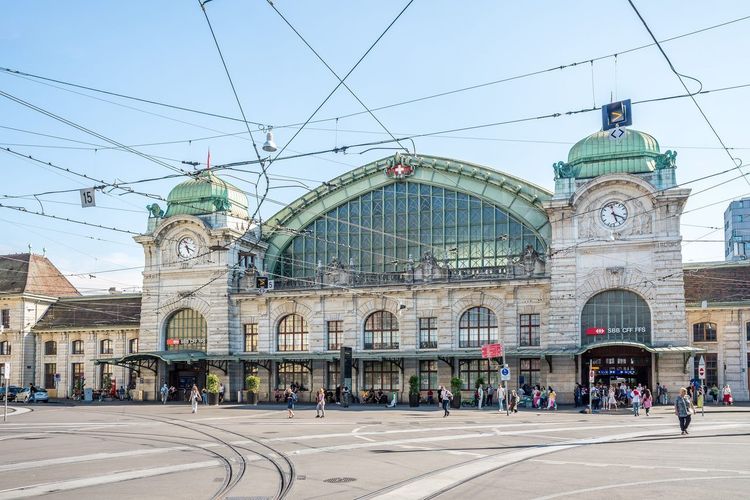
Basel stands out for particularly convenient connections from France, an asset that many travelers discover rather late when organizing their stay.
By Air: EuroAirport Basel-Mulhouse-Freiburg
The EuroAirport Basel-Mulhouse-Freiburg is a curiosity in itself: located on French territory, it has a Swiss customs sector and a French sector, separated inside the terminal itself. Depending on the exit you take, you head directly onto the road to Switzerland or to France, an arrangement that often surprises travelers. Direct flights operate from several French cities, with low-cost airlines, and bus 50 links the terminal to Basel SBB station in about twenty minutes.
By Train from France and Switzerland
The TGV Lyria connects Paris directly to Basel in a little over three hours, a comfortable alternative to flying that brings you to the heart of the city. TER trains from Strasbourg or Mulhouse also arrive at Basel SBB station, one of the busiest in Switzerland and a rail hub to Zurich, Bern or Lucerne, while Badischer Bahnhof station, on the right bank, receives German trains.
Getting Around Town: Tram and Walking
Once there, the BVB's green tram network efficiently covers the urban area, from the old town to Riehen for the Fondation Beyeler, with frequent trams during the day. But Grossbasel can be covered almost entirely on foot: the distances between the Rathaus, the cathedral and the Spalentor are measured in minutes, not stops, and keeping your sneakers on is often faster than waiting for a tram for two stops.
Express Itinerary: Organizing 48 or 72 Hours in Basel
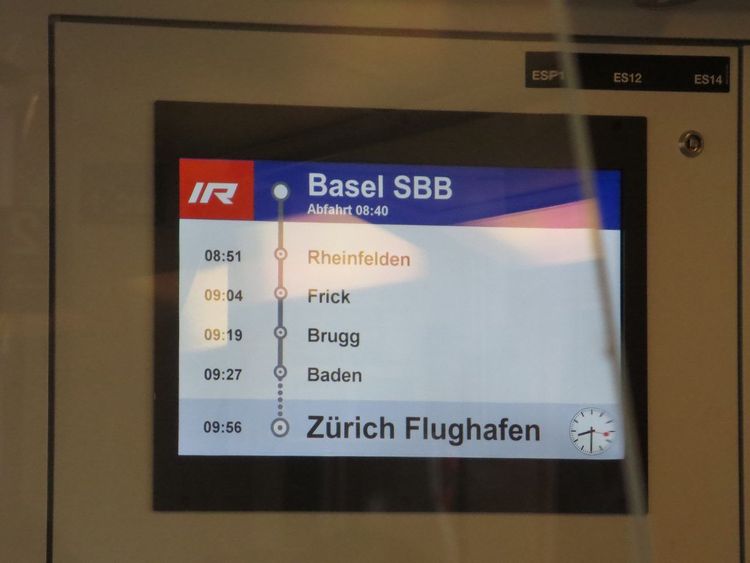
Unsure about the order of visits? Here are two tried-and-tested plans that take distances and opening hours into account.
In 48 hours, devote Saturday morning to the Marktplatz, the Rathaus and the cathedral, climb the towers before noon to avoid the wait, then have lunch at the Markthalle. In the afternoon, go down via Spalenberg to the Spalentor, return toward the Pfalz and take the Leu to cross to Kleinbasel at aperitif time. On Sunday, keep the morning for the Kunstmuseum or the Tinguely Museum, then stroll around St. Alban before catching your train.
In 72 hours, add half a day at the Fondation Beyeler (avoiding Monday and Tuesday) and a half-day border trip between the Dreiländereck and the Vitra campus. If you arrive on a Friday evening, book a table by the Rhine: it is the best way to feel the city's rhythm from the very first night.
A few habits to save time: group the museums on a single day, keep swimming or a stroll along the quays for late afternoon when the light is at its best, and download your audio tour before leaving so you don't depend on the mobile network, especially if your plan charges for Swiss roaming.
Budget, Length of Stay and Best Time to Go
The Swiss franc weighs more than the euro, and Basel is no exception to the country's reputation for high prices: a simple meal runs around 25 to 30 Swiss francs, a museum ticket between 20 and 35 francs depending on the institution, and a mid-range hotel night easily exceeds 150 francs on weekends. Anticipate this difference before leaving, as it often surprises French visitors at the bill, even for a simple coffee on a terrace. The BaselCard and a few meals taken on the German or French side noticeably lighten the bill.
For a stay in Basel, two days are enough for the old town and the Rhine, but three days let you add the museums and the border excursion without rushing. As for the season, late spring and summer make the most of swimming in the Rhine and terraces, while February or March suit carnival lovers, and Advent suits Christmas market fans. June is best avoided on tight budgets: Art Basel pushes up accommodation prices across the city.



FAQ
How many days should you plan for a weekend in Basel?
Two days cover the old town and the Rhine, but three days allow you to add the museums and the excursion to the Vitra Design Museum without rushing. During the carnival or Art Basel, plan an extra day, as these events take over the entire city.
What is the best time to go for a weekend in Basel?
Late spring and summer are ideal for swimming in the Rhine and enjoying open-air terraces. February or March suit carnival lovers, and Advent suits Christmas market fans. June sends prices up because of Art Basel.
Is Basel worth the detour compared with Zurich or Geneva?
Basel stands out for its concentration of top-tier art museums and its border location between three countries, two assets that neither Zurich nor Geneva offers within such a compact area that is so easy to explore on foot.
How do you get to Basel from France?
The TGV Lyria connects Paris to Basel in a little over three hours, and regional TER trains arrive from Strasbourg and Mulhouse. EuroAirport Basel-Mulhouse-Freiburg, served from several French cities, is linked to Basel SBB station by bus 50.
What budget should you plan for a weekend in Basel (in Swiss francs)?
Expect around 25 to 30 Swiss francs for a simple meal, 20 to 35 francs for a museum ticket and more than 150 francs for a night in a mid-range hotel. The BaselCard, provided by your accommodation, makes public transport free.
Can you swim in the Rhine in Basel?
Yes, it is a summer tradition: locals use a Wickelfisch, a floating waterproof bag, to drift with the current along Kleinbasel. Stay close to the bank, avoid bridge piers and only swim in good weather and moderate current.
A weekend in Basel is easily built around three axes: the old town and its medieval heritage, the Rhine and its daily life, the museums and their international standing, without forgetting the cross-border detour to Germany and France. To connect all these places at your own pace and hear the stories hidden behind the facades, launch the Ryo Basel audio guide as soon as you arrive at Marktplatz.