





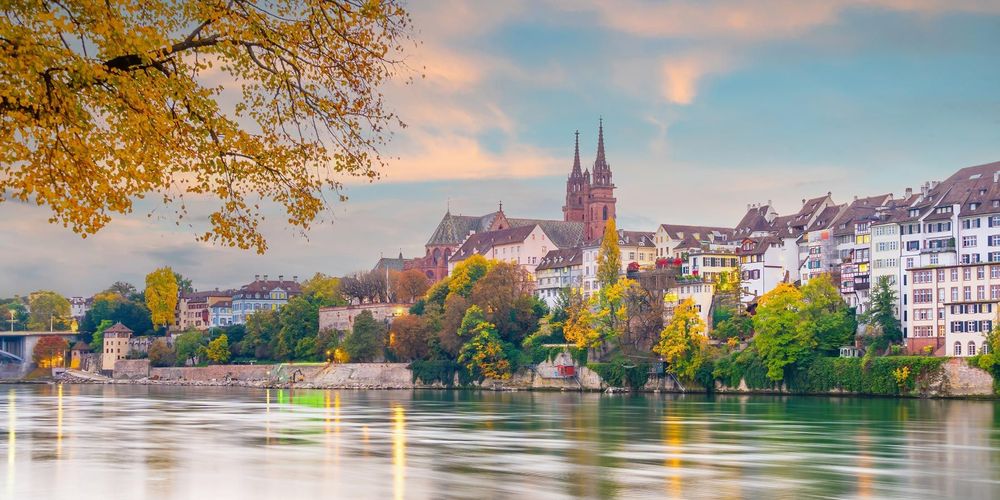
Walk
The cultural soul of Switzerland
Basel, Switzerland
Walk
The cultural soul of Switzerland
Basel, Switzerland
3.2 km
Distance
1h30
Durée
25
Audios
Loop
Parcours
Shutterstock
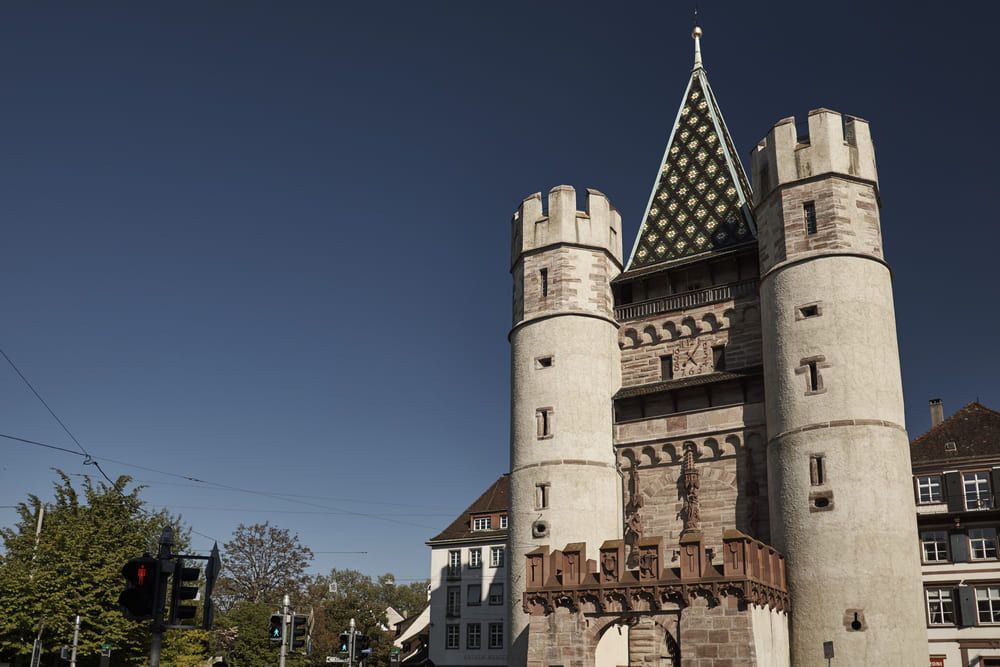
The Basel audio-guided tour takes you before the imposing Spalentor, one of the most impressive medieval gates of the city and one of the rare vestiges still visible of the old fortifications.
The Spalentor was built after the great earthquake of 1356, which destroyed a large part of the walls. The inhabitants decided to reinforce the urban defences, and this gate was completed around 1398 to protect the western access of the city. It formed part of a vast system of ramparts, ditches and towers. All those who arrived from the west, notably from neighbouring Alsace, had to pass here, where goods and travellers were controlled and taxed. Its high central tower exceeds forty metres, framed by two lower round towers.
The gate displays a typically Gothic architecture, its battlements added in the nineteenth century reinforcing its medieval appearance. On the city side, one observes decorative elements and coats of arms recalling that Basel was once governed by a bishop. Of the three gates preserved after the demolition of the ramparts, the Spalentor is the largest and the best preserved. To pass under its arch is to follow the steps of travellers of more than six centuries ago.
The Spalentor is to the west of the old town of Basel. It can be contemplated and crossed freely on foot, at all hours and on the level, along the walk.
After the earthquake of 1356, it was completed around 1398 to protect the western access of the city.
Three gates were preserved after the demolition of the ramparts; the Spalentor is the largest and the best preserved.
Aucun avis pour le moment
