





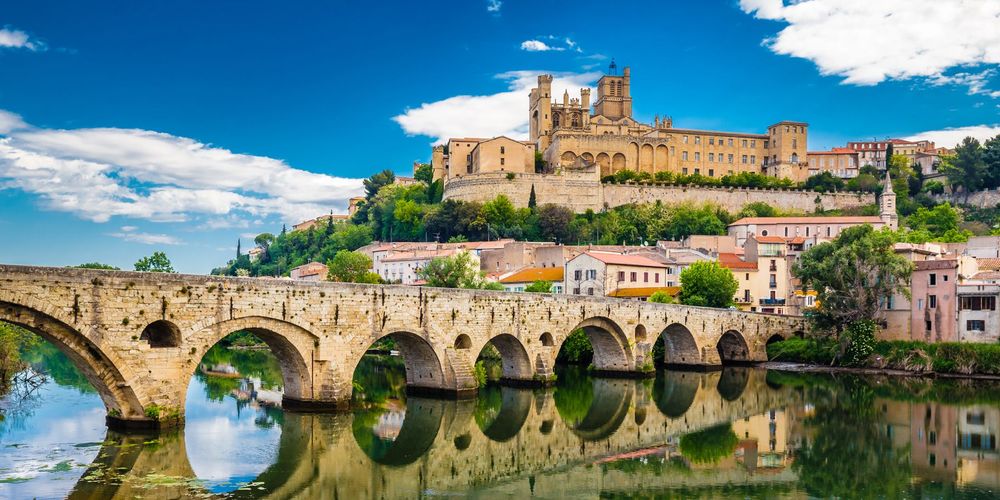
Walk
On the heights of the French South
Béziers, France
Walk
On the heights of the French South
Béziers, France
3.3 km
Distance
1h30
Durée
25
Audios
Loop
Parcours
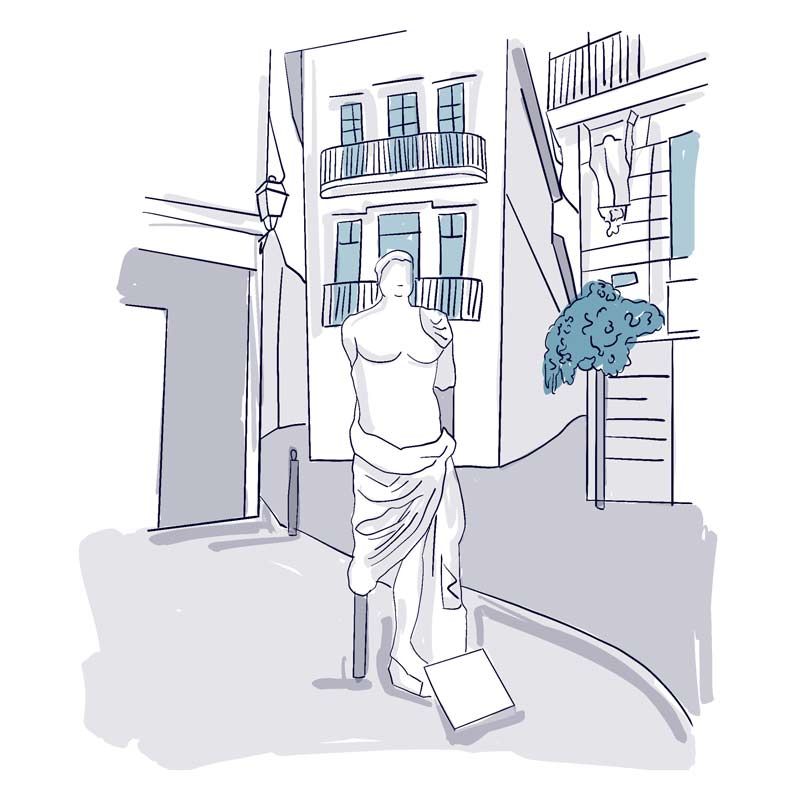
The statue of Pépézuc is one of the oldest and most endearing figures of Béziers, an ancient statue become a popular figure. The Béziers audio-guided tour stops here to evoke this unusual and beloved monument, laden with local legends.
The Place Pépézuc is a small space of the historic centre of Béziers that bears one of the most endearing and oldest figures of the town. There you discover the statue of Pépézuc, an open-air copy of a statue of ancient origin, inherited from the Roman era. Over the centuries, this statue, of which the original meaning had been lost, became a familiar and beloved figure of the people of Béziers, who made it a legendary and facetious character, protector of the town. Pépézuc is part of the local folklore and appears in the traditions, the festivities and the imagination of Béziers, where it enjoys a particular affection. Unusual and full of charm, this ancient vestige reinvented by popular culture is one of the most original and likeable symbols of the town. The statue of Pépézuc is a must-see curiosity of old Béziers.
You admire the statue of Pépézuc, a copy of a statue of ancient origin inherited from the Roman era, become over the centuries a legendary, facetious and beloved figure of the people of Béziers, protector of the town and present in the local folklore and festivities, on the small square of the same name. The statue of Pépézuc is a curiosity of old Béziers. It is a must-see stop, to be explored on foot.
The statue of Pépézuc lies on the square of the same name, in the heart of the historic centre of Béziers, reachable on foot. It is an open-air statue, freely visible from the public space. You discover it during a walk in the alleys of the old centre.
A copy of a statue of ancient origin, inherited from the Roman era, become over the centuries a legendary, facetious and beloved figure of the people of Béziers, protector of the town and present in the local folklore, on the Place Pépézuc.
On the Place Pépézuc, in the heart of the historic centre of Béziers, in France.
Aucun avis pour le moment
