© Shutterstock
 Votre guide Ryo
Visiting Béziers in 3 Days: Cathedral, Canal du Midi and Day Trips 2026
To visit Béziers in 3 days at a relaxed pace, you have to accept one fact: this Hérault sub-prefecture hides more heritage than its size would suggest. A hilltop cathedral that has overlooked the Orb valley since the Middle Ages, a 17th-century water staircase listed by UNESCO, arenas among the largest in France, and vineyards that begin literally at the city gates. To get a sense of the historic center without going in circles in the narrow streets, the Ryo audio-guided tour of Béziers already covers the first day, cathedral, Halles and arenas included.
In three days, you will have time to climb up to the Bishops' Garden for a panorama that stretches to the sea on a clear day, watch a barge pass through the Fonseranes lock staircase, walk in the footsteps of the Gauls at the Ensérune oppidum, and hesitate between a wine estate in Faugères or an afternoon with your feet in the sand at Valras-Plage. This guide details, day by day, how to fill a long weekend in Béziers without missing anything essential: old town, Canal du Midi, vineyards, museums, seaside and the big events of the year.
Day 1: The Historic Heart of Béziers
Everything is done on foot today, within a perimeter tight enough to wander without a precise plan. It is also the day when the Ryo audio-guided tour of Béziers is most useful: it links the cathedral, Halles and arenas in an order that avoids pointless backtracking, with the anecdotes you don't have time to look up yourself between visits.
Saint-Nazaire Cathedral and the Bishops' Garden
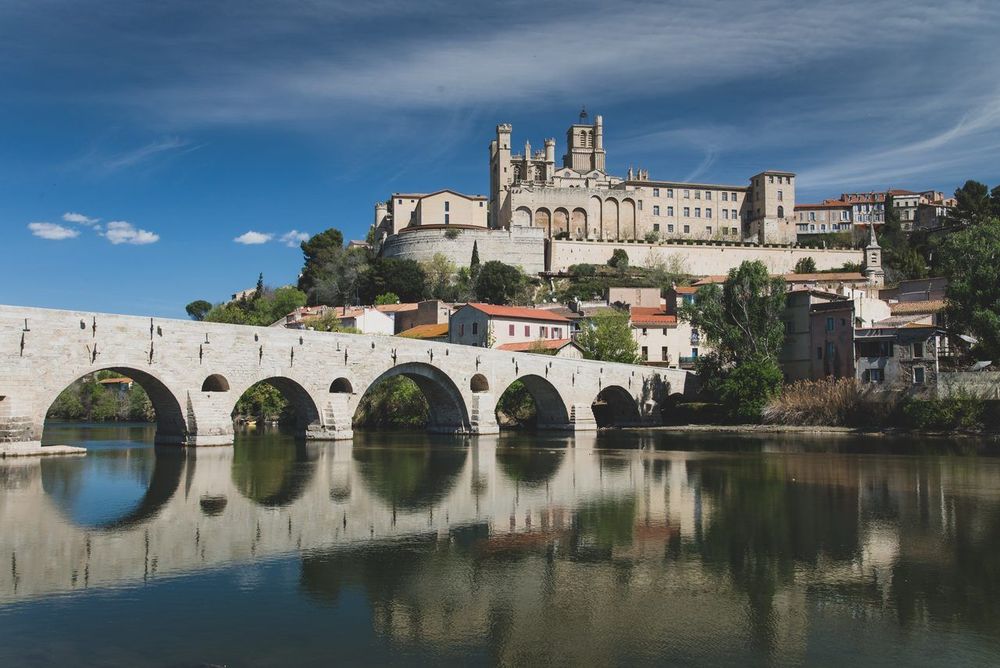
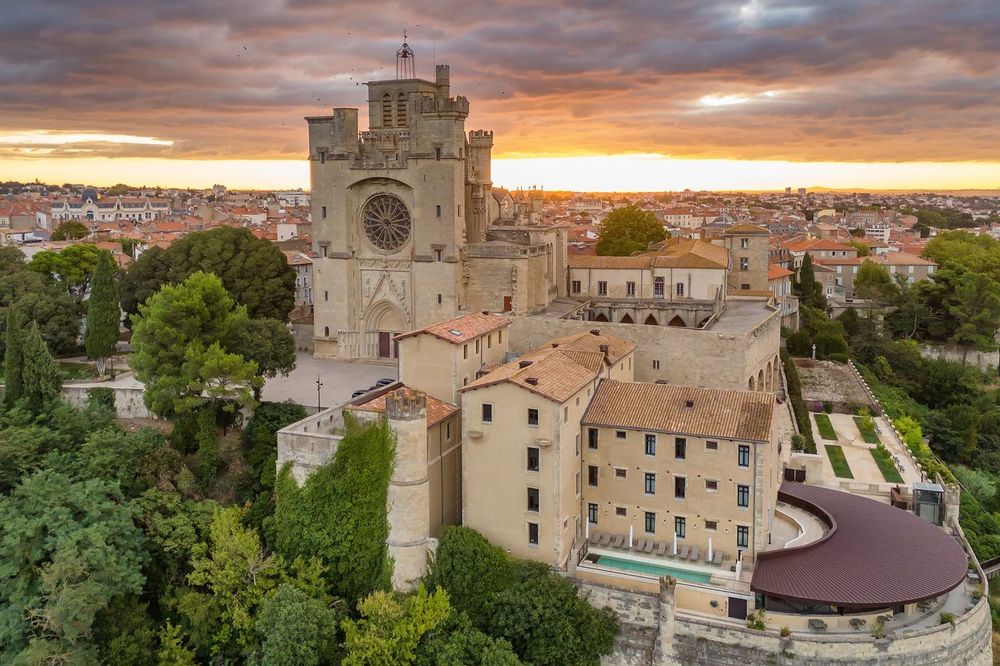
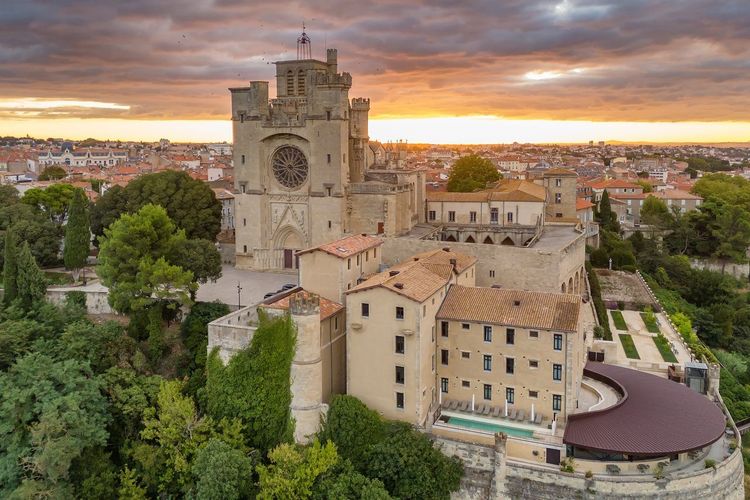
The Saint-Nazaire Cathedral dominates Béziers from its rocky spur, visible from afar when you arrive by motorway or by train. Rebuilt after the sack of 1209 during the Albigensian Crusade (the entire city had been burned), it combines a 14th-century Gothic choir with a massive, almost fortified façade, flanked by two towers that recall its original defensive role.
Climb up to the terrace that runs along the building: it is from there, and not from the square in front, that the view over the Orb and the Pont-Vieux makes the most sense. The bell tower can be visited on certain days in season, for a modest entrance fee, and offers an additional viewpoint over the tiled roofs of the old town.
Right next door, the Bishops' Garden occupies the former garden of the episcopal palace, open to the public. People come mainly for the view: a terraced balcony suspended above the valley, with the vineyards of the plain in the background. It is where the people of Béziers themselves come to sit at the end of the day, far more than passing tourists.
Halles de Béziers, Allées Paul Riquet and the Old Town
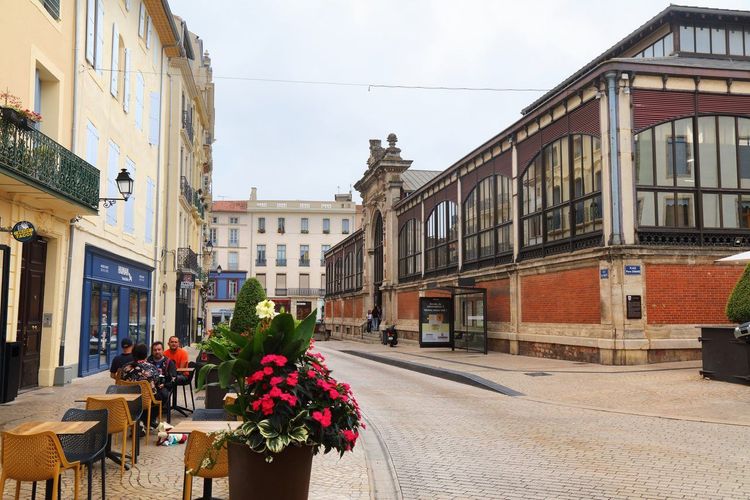
Then head down to the Halles de Béziers, a Baltard-style covered market inaugurated in 1891. You will find most of the local produce there: Bouzigues oysters, regional charcuterie, Hérault cheeses, and a few stalls that serve food directly at the counter for a quick lunch. The market opens every morning except Monday, with maximum crowds on Sunday.
On leaving, walk to the Allées Paul Riquet, a long promenade lined with plane trees that crosses the city center. It is the liveliest artery in Béziers, lined with cafés, with a flower market on Fridays. The municipal theater closes the perspective on one side, and the statue of Pierre-Paul Riquet, the engineer of the Canal du Midi and a native of the city, stands in the middle: you will come across him throughout your stay. Nearby, Place Jean-Jaurès serves as a meeting point and regularly hosts markets and events.
At the other end of the allées, the Plateau des Poètes is the great English-style garden of Béziers, laid out in the 19th century between the center and the train station. Winding paths, ponds, exotic trees and busts of Languedoc poets make it a welcome shady stop in summer. Look for the Titan fountain, the work of Béziers sculptor Jean-Antoine Injalbert, whose name you will come across again in the city's museums.
The old town spreading above deserves to be explored a little aimlessly: steep lanes, shaded squares, façades some of which date back to the Middle Ages. You will pass several murals along the way, so keep your eyes open.
Modern Arenas, Roman Amphitheater and Trompe-l'Œil Murals
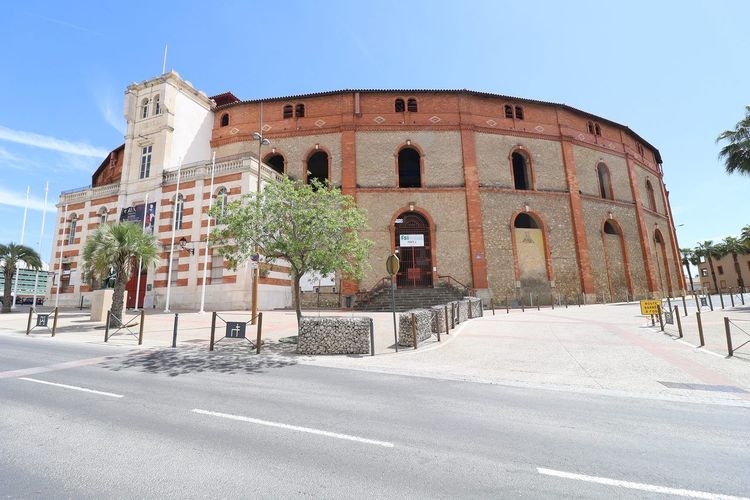
Béziers has two arenas, and confusion between the two is common. The Béziers arenas, in the city nicknamed "the French Seville", date from 1897 and still host bullfights and major shows today. With 13,096 seats, they are the largest arenas of their kind in France, listed as historic monuments in 2015. A small historical surprise: Camille Saint-Saëns premiered his opera Déjanire there in 1898, at a time when wine prosperity funded open-air opera performances.
The Saint-Jacques Roman amphitheater (Impasse de l'Amphithéâtre, 34500 Béziers, rated 4.4/5 on Google from 85 reviews) is something else entirely: an ancient 1st-century relic, largely covered by medieval urban development and rediscovered in fragments through excavations. Only part of its structure is visible today, nestled between houses, but the curved shape of the neighborhood's streets still betrays its original layout. Take the time to study the floor plan before going: most visitors walk past without recognizing it.
To end the day on a lighter note, go in search of the trompe-l'œil murals scattered around the center. These large wall compositions, painted in perspective to give the illusion of depth, depict characters and episodes from local history. Several can be discovered without looking for them on the way down from the cathedral to the Halles; ask the tourist office for the mural map so you don't miss any.
Day 2: The Canal du Midi and the Fonseranes Locks
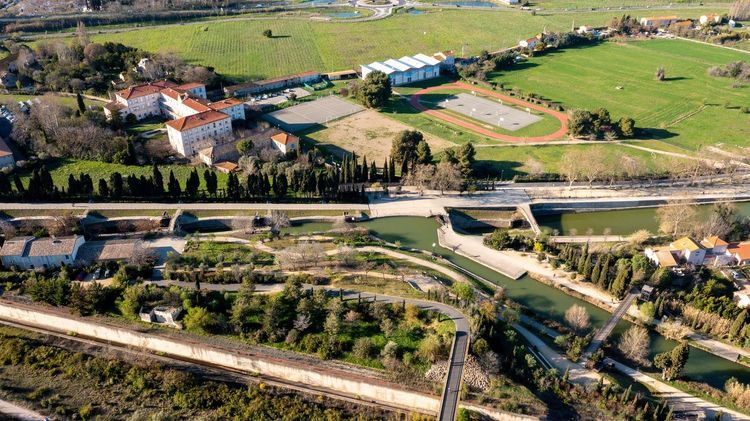
Head west of the center to follow the water, that of the Orb and that of the Canal du Midi. Allow a good half-day for the locks and the banks, then devote the afternoon to a water activity of your choice. One section of the Ryo audio-guided tour of Béziers runs right along the canal to the locks, with an anecdote about their construction and their UNESCO listing, handy for walking without your nose buried in a map.
The 9 Fonseranes Locks, a UNESCO-Listed Water Staircase
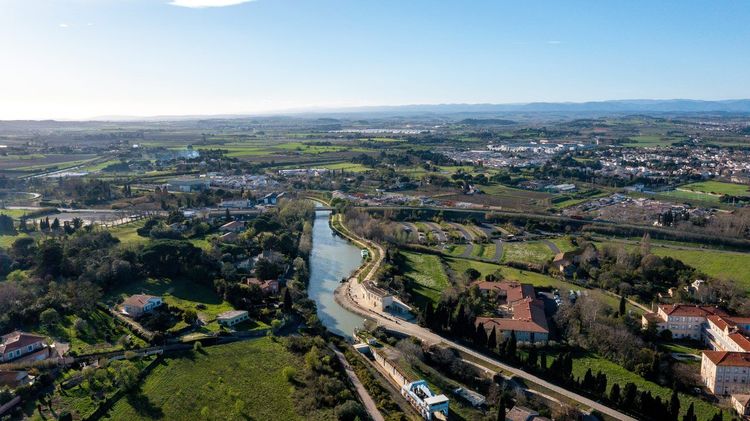
The Fonseranes locks form the most photographed image of Béziers after the cathedral: eight basins and nine gates in a row that lift the Canal du Midi over a drop of 21.50 meters across 312 meters in length. Designed by Pierre-Paul Riquet and opened to navigation in 1697, this water staircase has been on the UNESCO World Heritage list since 1996, along with the entire canal. With some 320,000 visitors a year, it is one of the most visited sites in the region.
To grasp the boldness of the project, remember that the aim was to link the Atlantic to the Mediterranean without going around Spain via Gibraltar. Riquet, a salt-tax collector with no engineering training, committed a large part of his personal fortune to the project and never saw the canal completed: he died in 1680, a few months before it was filled with water. The Fonseranes locks were later modified several times, notably during the construction of the Pont-Canal, which made the last two basins unnecessary. The site was completely redeveloped in 2016-2017, with a visitor center and panels explaining how the gates work. Come preferably early in the morning or late in the afternoon: the low-angle light on the basins is more flattering, and the groups are smaller.
A boat's passage takes a good half-hour depending on traffic, and it is a spectacle in itself: each basin empties into the next, creating eddies along the structure. Stand at the top of the staircase to follow the mechanism without getting in the lock keepers' way. Right next door, a water slope put into service in the late 1980s was meant to carry boats over the drop in a few minutes; too costly to operate, it is now out of service.
Pont-Vieux, Pont-Canal and a Walk Along the Orb
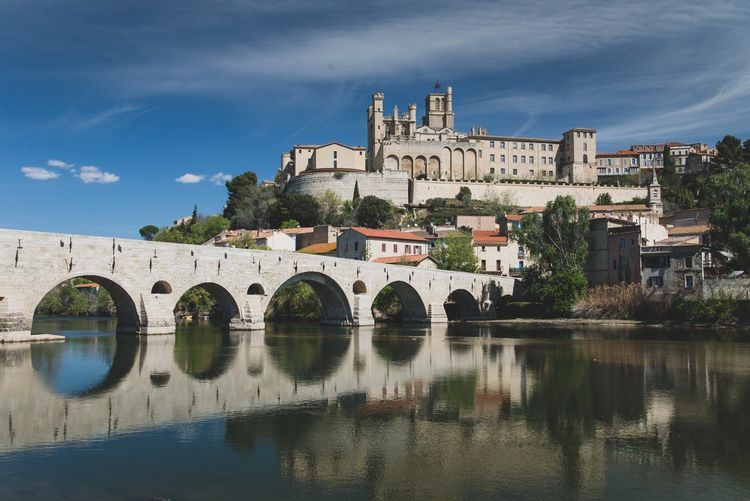
Then head down to the Pont-Vieux (Pont Vieux, 34500 Béziers, rated 4.7/5 on Google from 930 reviews), whose first arches date back to the 12th century and which was for a long time the only crossing over the Orb between Provence and Toulouse. It is the best viewpoint for Saint-Nazaire Cathedral, whose silhouette is reflected in the river on windless days. The quays on either side have been redeveloped for strolling, with benches in the shade of the plane trees.
Below the locks, the Pont-Canal lets the Canal du Midi cross the Orb at height. Put into service in 1858 and 240 meters long, it spared boats the level crossing of the river, which was unpredictable and dangerous during floods. The perspective is amusing: barges that seem to float above the water. The greenway that runs along the canal for several kilometers, ideal by bike, passes directly over the structure.
Water Activities: Electric Boat, Paddleboarding, Kayaking and Barge Cruise
The afternoon lends itself to an activity on the water, and there is no shortage of choice. The electric boat with no license required remains the simplest option: hourly rental from a base near the locks, intuitive steering, and the possibility of picnicking on board. Allow a short briefing before departure.
Prefer some exercise? Paddleboarding and kayaking are practiced on the Orb, with calm sections suited to beginners. The rental companies set up along the river provide life jackets and route advice.
For a more contemplative approach, a barge cruise lets you experience the passage through the locks from the boat's deck rather than from the bank, with commentary on the canal's history included. Check departure times the day before, as they vary by season. Another option is cycling: the canal greenway leads to the village of Villeneuve-lès-Béziers in a leisurely half-hour of pedaling.
Day 3: Excursions Around Béziers
This last day leaves the city, but never goes far: all the sites below are within forty minutes by road. It is a chance to discover what most day visitors don't have time to see, from Gaulish oppidum to vineyards and Art Nouveau heritage. If you return early, the Ryo audio guide to Béziers lets you revisit the historic center from a different angle, in the golden light of the end of the day.
The Ensérune Oppidum and the Mrac in Sérignan
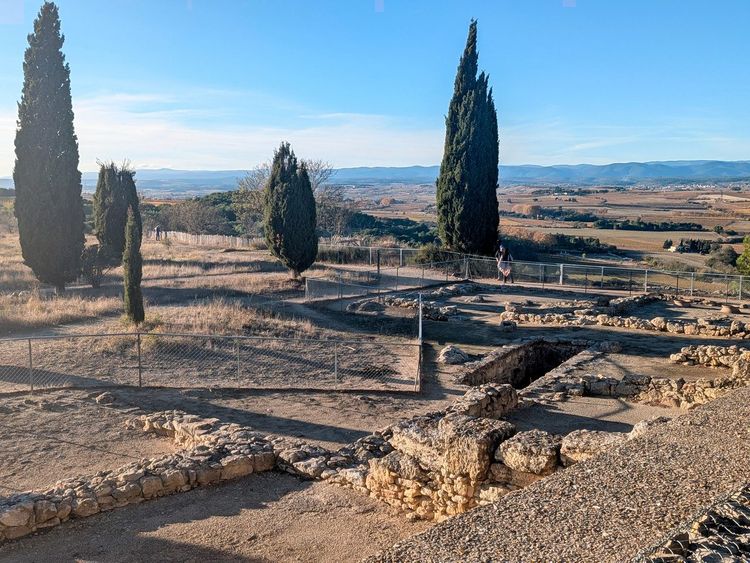
About fifteen minutes from Béziers, the Ensérune oppidum occupies a hill overlooking the Biterrois plain and the astonishing drained Montady lake bed, recognizable by its plots laid out like wheel spokes. This hilltop town, one of the main oppida of Mediterranean Gaul, was occupied from the 6th century BC until the 1st century AD. The museum run by the Centre des monuments nationaux displays objects unearthed during excavations, with a very fine collection of ceramics. The panorama from the summit alone justifies the trip.
On the way back down toward the coast, the Mrac Occitanie in Sérignan displays contemporary art in a converted former wine cellar, expanded in 2006. The permanent collection, some 450 works, alternates with temporary exhibitions across more than 3,000 m². It is an unexpected interlude after the morning's ancient remains; check the opening hours before leaving, as the museum closes on certain days.
Faugères and Saint-Chinian Vineyards, Fontcaude Abbey
Wine lovers are spoiled for choice, as appellations follow one another as soon as you leave the city. The vineyards of Faugères and Saint-Chinian, 30 to 40 minutes to the north, produce powerful reds on the foothills of the Massif Central: schist in Faugères, schist and limestone in Saint-Chinian. Most estates offer cellar visits followed by a tasting, by reservation in high season.
On the road, stop at Fontcaude Abbey, in Cazedarnes, founded in 1154 by Premonstratensian canons. Nestled in a quiet valley among the vines, it features stripped-down Romanesque architecture and preserves remarkable carved capitals, attributed to the "Master of Fontcaude".
On the coast, the Domaine de Preignes le Vieux, in Vias, grows vines on land with an ancient past: the estate highlights the Gallo-Roman remains discovered on the property. Its guided tours blend history and oenology, an option that makes a change from classic wine routes.
Treasures Around Agde: Château Laurens and the Noilly Prat House
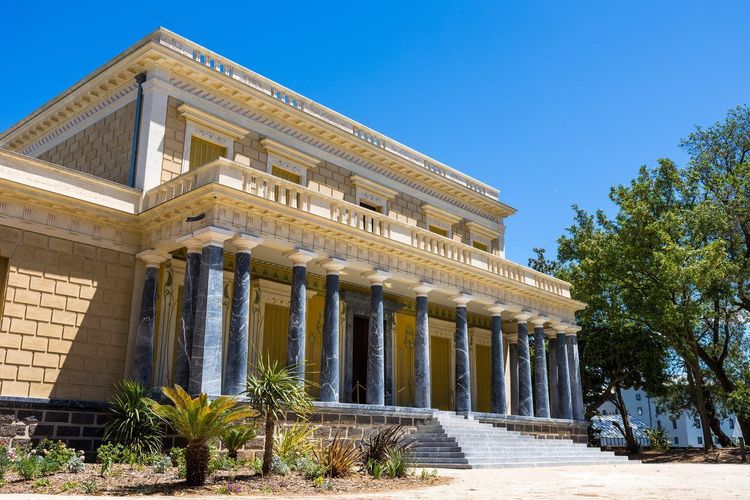
Head to Agde, twenty-five minutes to the southeast, for two curiosities that few visitors associate with the region. The Château Laurens surprises with its Art Nouveau style tinged with orientalism, built between 1898 and 1900 for Emmanuel Laurens, a collector fascinated by Egypt and the Orient. After sixteen years of restoration, the villa reopened to the public in June 2023: painted decorations, furniture and a period bathroom make it a singular stop.
Finish with the Noilly Prat house (1 Rue Noilly, 34340 Marseillan, rated 4.7/5 on Google from 1,104 reviews) in Marseillan, on the edge of the Étang de Thau. The vermouth created in Lyon in 1813 has been produced there since 1859. The guided tour reveals a unique process: hundreds of oak barrels left for twelve months in the open air in the Enclos, exposed to the sun and sea spray, followed by a final tasting. The site remains open all year, with reduced hours off-season.
Seaside Escape: Valras-Plage and Cap d'Agde
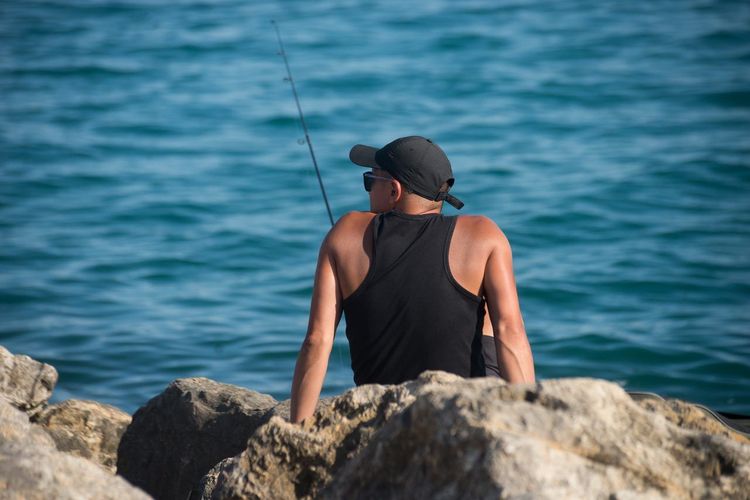
If your stay lasts more than three days or you simply want a beach break, the coast is only about twenty minutes from Béziers. The Ryo audio guide fits in your pocket for this escape too, to be listened to on the bike ride or drive.
Valras-Plage and the Mouth of the Orb
Valras-Plage is the seaside resort closest to Béziers, with a developed seafront and a fine-sand beach stretching over several kilometers. A former fishing village, the resort has kept a small harbor where you can buy fish when the boats return. Continue to the mouth of the Orb, to the west: the river you followed at the Pont-Vieux flows into the Mediterranean there, a lovely final point for a stay built around water. Families will find supervised beaches, playgrounds and a pedestrian promenade along the seafront. For more ideas with children, see our guide to visiting Béziers with family.
Cap d'Agde: Beaches and Seaside Atmosphere
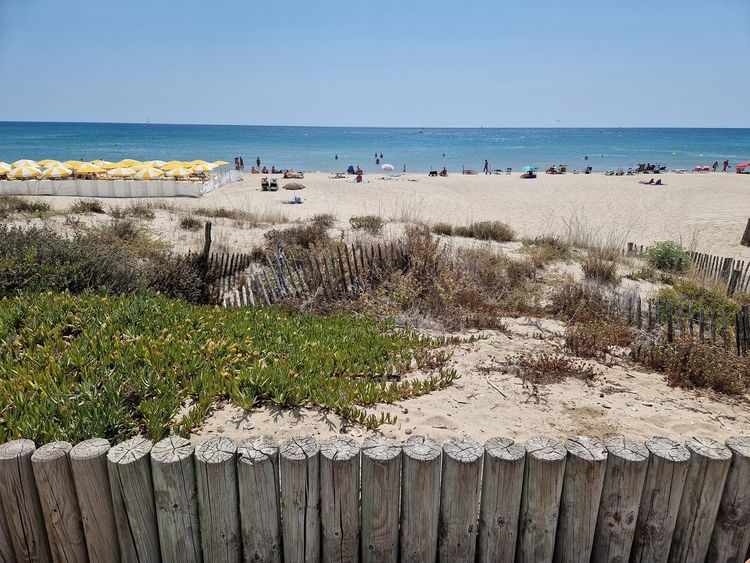
A little further east, Cap d'Agde (Boulevard du Front de Mer, 34300 Agde, rated 4.4/5 on Google from 908 reviews) combines several kilometers of beaches, one of the largest marinas in the Mediterranean and a much livelier evening atmosphere. The beach offering is more varied than at Valras, ranging from volcanic rock coves at the foot of Mont Saint-Loup, such as the black-sand beach of La Grande Conque, to long sandy beaches on the Richelieu side. To explore this part of your stay further, our top 10 things to do in Cap d'Agde details the area's activities, and our article on Cap d'Agde beaches compares the different spots depending on whether you want calm or activity.
Béziers Museums for a Rainy Day
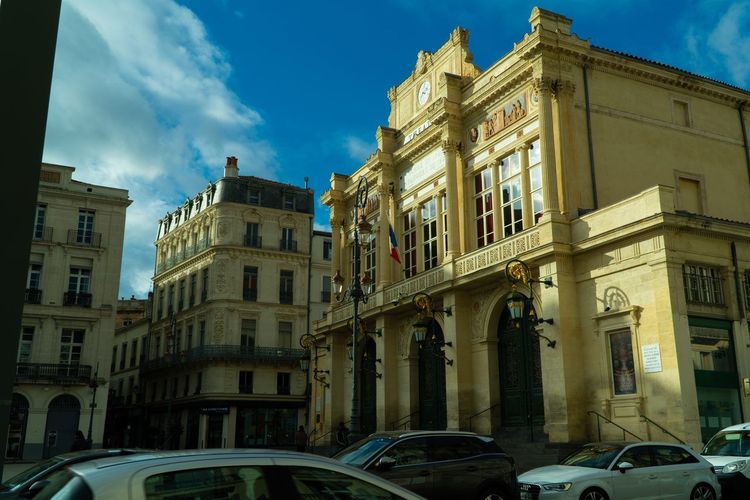
A gray sky doesn't necessarily spoil the trip: Béziers has a network of museums that complements the first day's walk well, and that can easily be visited in a morning.
Musée du Biterrois: The History of the City
Housed in the former Saint-Jacques barracks, a stone's throw from the Roman amphitheater, the Musée du Biterrois traces the history of Béziers from Prehistory to the modern era. The archaeological collections recall that the city was an important Roman colony, before dwelling on two pillars of local identity: wine growing, which made the fortune of the Biterrois in the 19th century, and the Canal du Midi. If you only glimpsed the amphitheater the day before, this is where the puzzle comes together.
Fine Arts and Injalbert's Sculptures
On the cathedral square, the Hôtel Fabrégat houses the Musée des Beaux-Arts, with a painting collection spanning several centuries. Not far away, the Hôtel Fayet is largely devoted to the sculptor Jean-Antoine Injalbert, born in Béziers in 1845, the very man who created the Titan fountain at the Plateau des Poètes. These two town mansions are also worth visiting for their setting, period staircases and salons included. Check opening hours with the tourist office, as they vary by season and exhibitions.
The Feria and the Big Events in Béziers
Depending on the date of your stay, Béziers can take on a different face. It is better to know what awaits you, whether to enjoy it or to avoid it.
The August Feria
The biggest highlight of the year remains the Feria de Béziers, held around August 15 for five days. Bullfights in the arenas, bodegas set up in the streets, bandas and concerts turn the center into a non-stop party that attracts hundreds of thousands of visitors. The atmosphere is unique, but accommodations are fully booked months in advance and prices climb: if you are aiming for this period, book very early, or choose another week if you want a calm visit.
Rugby and Traditional Festivals
Béziers is also a rugby city: ASBH, eleven-time French champion, left its mark on the history of the sport in the 1970s and 1980s. Attending a match at the Raoul-Barrière stadium lets you gauge the local fervor. In spring, the festivals of Saint-Aphrodise, the city's patron saint, parade the totem camel through the streets, a tradition as astonishing as it is joyful. July and August also bring more concerts and night markets on the Allées Paul Riquet.
How to Get to and Around Béziers
Béziers has a well-served SNCF train station, on the line linking Montpellier to Perpignan and Barcelona, with direct trips from Paris in a little over four hours by TGV. By car, the city is a few minutes from the A9 motorway, making it an easy stop on the route between Montpellier and Spain. The Béziers Cap d'Agde airport, about twenty minutes away, handles a few seasonal routes, notably from Paris and several European cities.
Once there, the historic center can be explored entirely on foot: distances between the cathedral, Halles and arenas are measured in minutes. For the third day's excursions, a car remains necessary, as most sites (Ensérune, Fontcaude, the vineyards) are not conveniently served by public transport.
Cycling enthusiasts will enjoy the greenway that runs along the Canal du Midi between Béziers and Villeneuve-lès-Béziers, easy to ride without any particular difficulty. Several rental shops in the city center offer bikes by the day, electric or classic, a handy option for combining day 2 and part of the surroundings. For more walking itinerary ideas, see our selection of walks in Béziers.
Where to Stay in Béziers
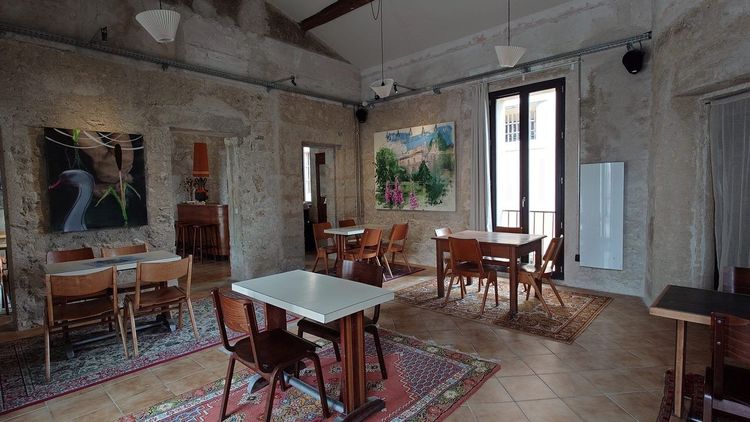
Accommodation is divided fairly clearly between the historic center, convenient for doing everything on foot, and the outskirts near the canal or the sea, quieter and often cheaper.
Charming Hotels and Unusual Places in the City Center
The heart of Béziers has several hotels set in former town mansions, with original high ceilings and stone staircases preserved. This type of place generally costs between 90 and 140 euros a night for a double room. The guesthouses in the old town offer good value for money, sometimes with a private terrace or a view over the rooftops.
Looking for something more original? A few guesthouses occupy characterful residences with views of the cathedral or the Orb. Book early in summer, especially during the Feria.
If you simply want a practical, no-frills base, several chain hotels are located near the train station, less than fifteen minutes' walk from the historic center.
Camping and Unusual Accommodations by the Canal or the Sea
On the canal side, a few accommodations play the water card: barges converted into guesthouses or gîtes along the greenway, with views of passing boats. A formula that appeals to families wanting to combine water activities and sightseeing.
By the sea, around Valras-Plage or Sérignan, the camping offering is much broader, with family-friendly sites offering pools, entertainment and weekly mobile-home rentals. Allow about twenty minutes by road to reach Béziers, a good compromise for alternating between beach and cultural visits without changing base.
Where to Eat and Have a Drink in Béziers
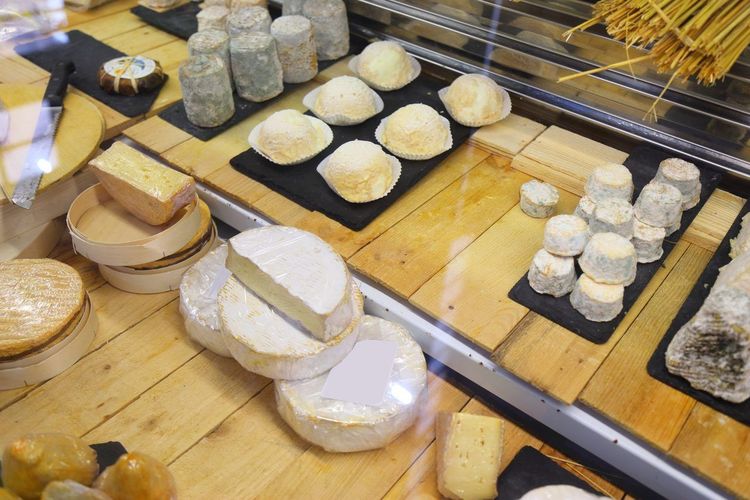
Béziers cuisine blends Languedoc influences and seafood, driven by a covered market that supplies a good part of the city's tables.
Our Favorite Places to Eat in Béziers
For a quick, no-fuss lunch, the stalls at the Halles offer plates made from market produce, oysters, charcuterie, local cheeses, to be eaten on the spot. It is also where some of the most popular lunchtime tables are found.
In the evening, several restaurants in the historic center focus on seasonal cuisine, often served in vaulted rooms or on shaded terraces. The average price of a menu is around 25 to 35 euros, and it is advisable to book on weekends, especially in summer.
Try the petit pâté de Béziers at least once, a sweet-and-savory mutton pastry, a local specialty reportedly inherited from an Indian cook passing through in the 18th century. Cassoulet, bourride and shellfish from the Étang de Thau round out an offering that is already rich for a city of this size.
Aperitif and Drinks by the Orb or at the Halles
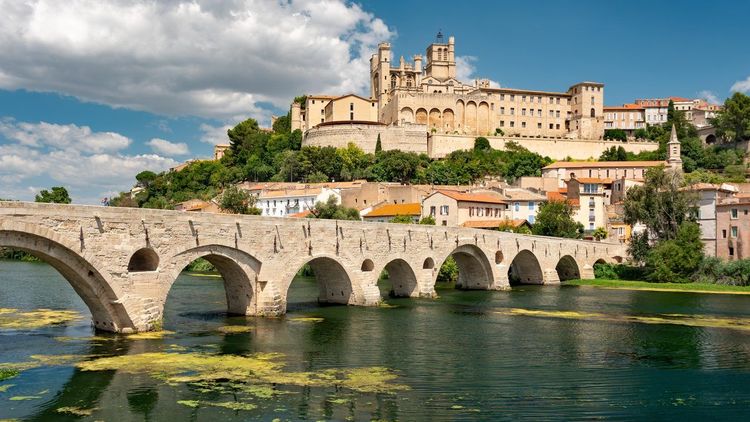
In the late afternoon, the terraces by the Orb, near the Pont-Vieux, offer a pleasant setting for an aperitif facing the water, with the cathedral as a backdrop. The atmosphere there remains calmer than on the Allées Paul Riquet, where the bars fill up more in the evening.
At the Halles, some stalls turn into wine bars in late morning, a chance to taste local appellations, Faugères, Saint-Chinian or Picpoul de Pinet, with a board of charcuterie and cheese.
When to Go, Budget and Visitor Pass
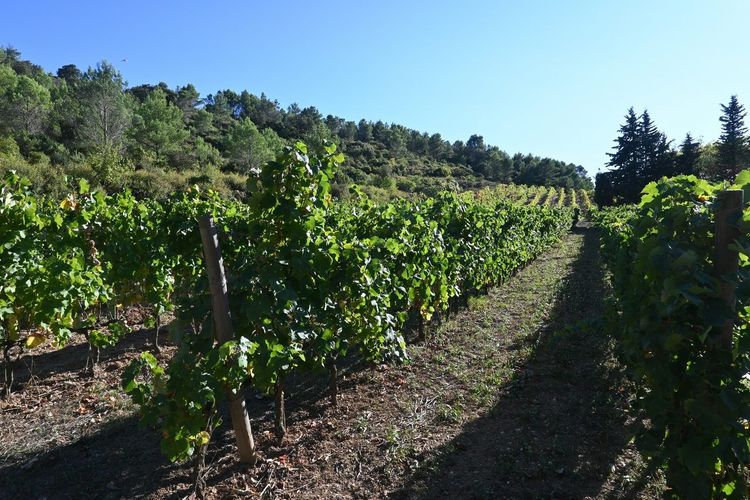
Spring and early autumn remain the best times to visit Béziers: mild temperatures, moderate crowds, and especially photogenic vineyards during the September grape harvest. Summer is more appealing for combining city and beach, but the heat can make visits to the historic center less comfortable in the middle of the day.
The Smart Visitor Pass to Save Money
Several sites in Béziers and the surrounding area offer combined tickets or reduced rates on presentation of a ticket from another site, useful if you are visiting several paid monuments over the three days (cathedral bell tower, museums, Ensérune oppidum, wine estates). Ask the tourist office as soon as you arrive: these deals change regularly.
For an overall budget, allow between 300 and 500 euros for two people over three days, including mid-range hotel accommodation, two meals a day and the main paid activities. Free visits (cathedral, Bishops' Garden, Halles, a walk along the canal and the locks) make it easy to reduce this amount.
Three days is a comfortable length of time to cover the historic center, the Canal du Midi and part of the surroundings without going home exhausted. If you are unsure about the order of the days, keep the excursion day for the hottest or most uncertain day: the car offers flexibility, whereas the old town and the canal are best enjoyed in dry, mild weather. And if a market or the Feria falls during your stay, schedule your visit to the center accordingly. With one more day, the escape to Valras-Plage or Cap d'Agde naturally rounds out the program.

FAQ
How many days should I plan to visit Béziers?
Three days are enough to cover the essentials: the historic center and cathedral on the first day, the Canal du Midi and the Fonseranes locks on the second, and excursions to the surrounding area on the third. Two days let you see the heart of the city and the canal, but you would have to sacrifice the excursions.
What is the best time to visit Béziers?
Spring (April to June) and early autumn (September, October) offer the best compromise between pleasant weather and manageable crowds. July and August suit those who want to combine the city and the beach, with the Feria around August 15 as the festive highlight.
How do I get to Béziers without a car?
Béziers train station is served by direct TGV from Paris and by regional trains from Montpellier, Narbonne or Perpignan. The historic center can then be explored entirely on foot, but a rental car remains useful for the third day's excursions.
What should I see first in Béziers if I only have one day?
Prioritize Saint-Nazaire Cathedral and the Bishops' Garden in the morning, then the Halles and the Allées Paul Riquet around midday, before finishing with the Fonseranes locks late in the afternoon, a half-hour walk from the center.
Do I need a pass to visit the sites around Béziers?
It is not compulsory, especially since the cathedral, the Halles and the locks are free. The combined tickets or reduced rates mentioned by the tourist office become worthwhile if you plan to visit several paid sites, such as the bell tower, the museums or the Ensérune oppidum.
Where should I stay in Béziers to enjoy the Canal du Midi?
Accommodations near the Fonseranes locks or along the greenway offer direct access to the canal. Some barges converted into guesthouses even let you sleep on the water, an option appreciated for extending the day 2 stroll.
What excursions can I do from Béziers in under 30 minutes?
The Ensérune oppidum, the Mrac in Sérignan, Fontcaude Abbey, Valras-Plage and Agde with its Château Laurens are all within a half-hour drive. Allow a little longer for Marseillan and the Faugères and Saint-Chinian vineyards.
After these three days, Béziers leaves the impression of a city denser than it looks on a map: cathedral and arenas for heritage, locks and canal for scenery, oppidum and vineyards for the hinterland. To plan your visit or simply find your bearings once you are there, check out the Ryo audio-guided tour of Béziers, which covers the essentials of the first day by following your steps through the historic center.
À lire également