



Walk
On the heights of the French South
Béziers, France
Walk
On the heights of the French South
Béziers, France
3.3 km
Distance
1h30
Durée
25
Audios
Loop
Parcours
Shutterstock
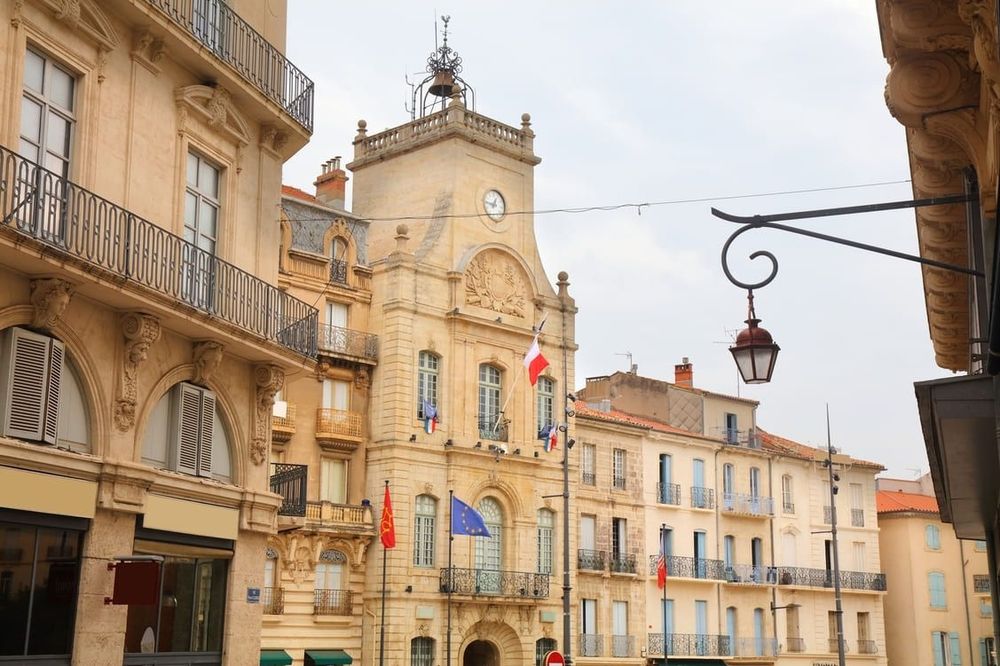
The town hall of Béziers is the seat of the municipality, a fine building in the heart of the town. The Béziers audio-guided tour stops here to evoke this official building, a witness of the civic life and the history of the town.
The town hall of Béziers is the seat of the municipal administration and one of the major official buildings of the town. Installed in the heart of the town, it occupies a building whose architecture testifies to the history and the prestige of the communal institution. Its façade and its halls reflect the different eras and the care brought to the embellishment of this place of power. It is here that the decisions concerning the life of the town are taken, that the municipal councils, the official ceremonies and the weddings are held. Over the course of history, the town hall has accompanied the development of Béziers, from ancient times to today, and has seen the succession of the figures who marked the town. A witness of the civic and democratic life of Béziers, the town hall is an important element of the heritage and the urban landscape of the town.
You admire the fine official building in the heart of Béziers, the seat of the municipality, whose façade and halls testify to the history and the prestige of the communal institution, a place where the councils, ceremonies and weddings are held. The town hall testifies to the civic life of Béziers. It is a stop for those curious about architecture, to be explored on foot.
The town hall lies in the heart of Béziers, reachable on foot. You admire its façade from outside; it is an official building whose access follows its own conditions and hours. You discover it during a walk in the centre.
The seat of the municipal administration, a fine official building in the heart of the town, where the municipal councils, the official ceremonies and the weddings are held, a witness of the civic life and the history of Béziers.
In the heart of Béziers, in France.
Aucun avis pour le moment