
Créé par Romane, le 17 nov. 2026
Votre guide Ryo
Perpignan, France
A Taste of French Catalonia
Parcours audioguidé pour visiter Perpignan en 1 jour
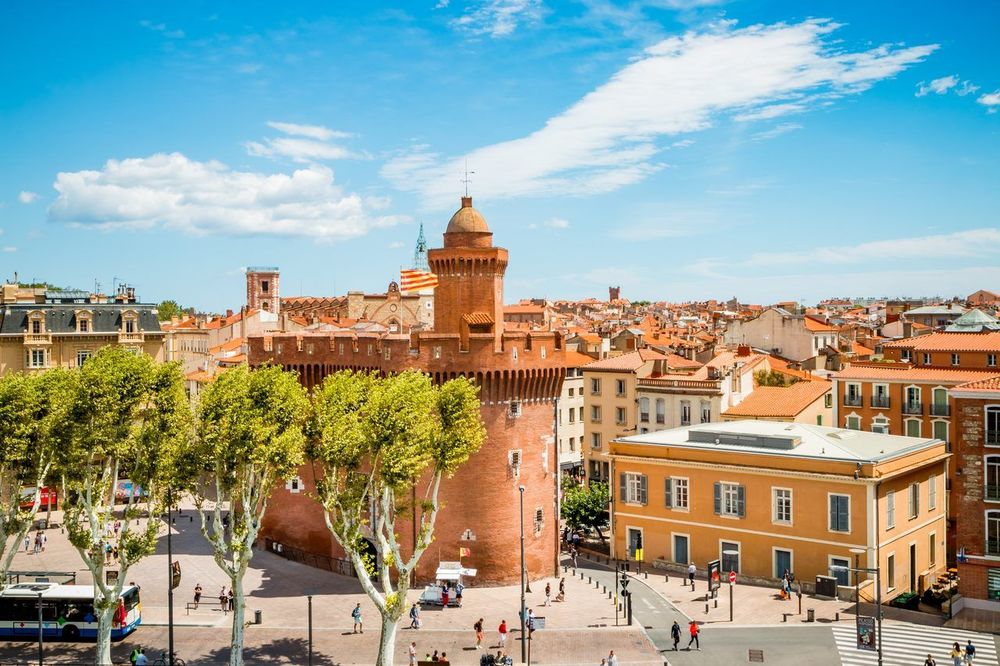
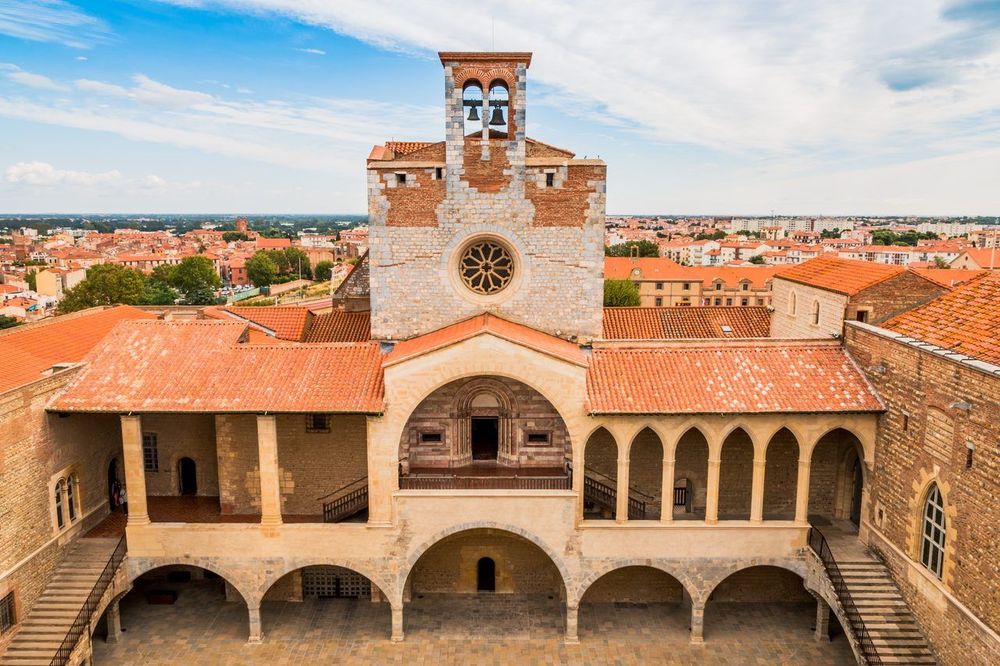
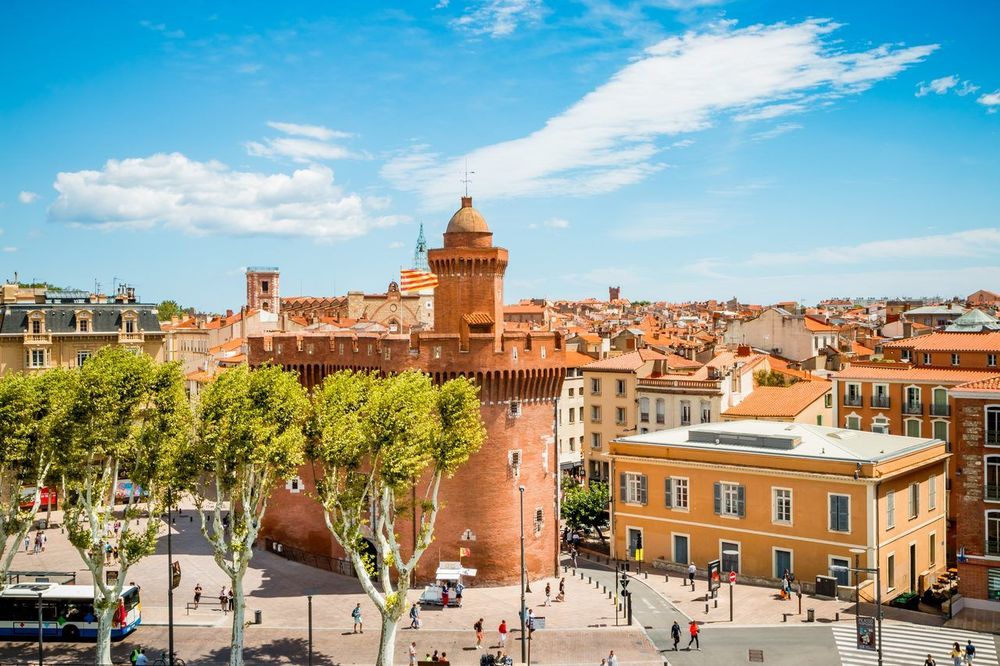
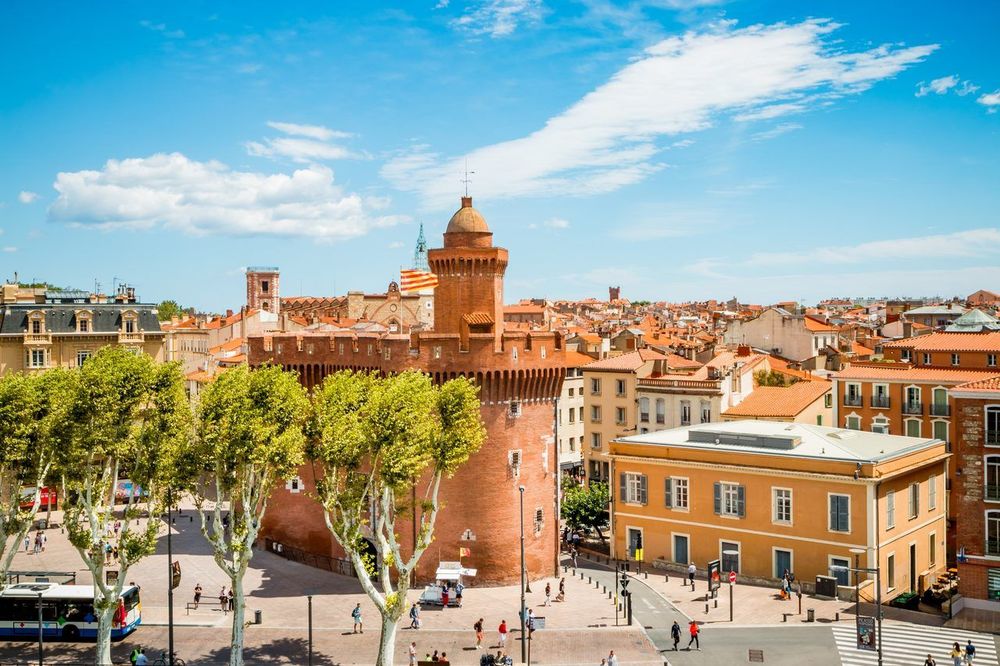
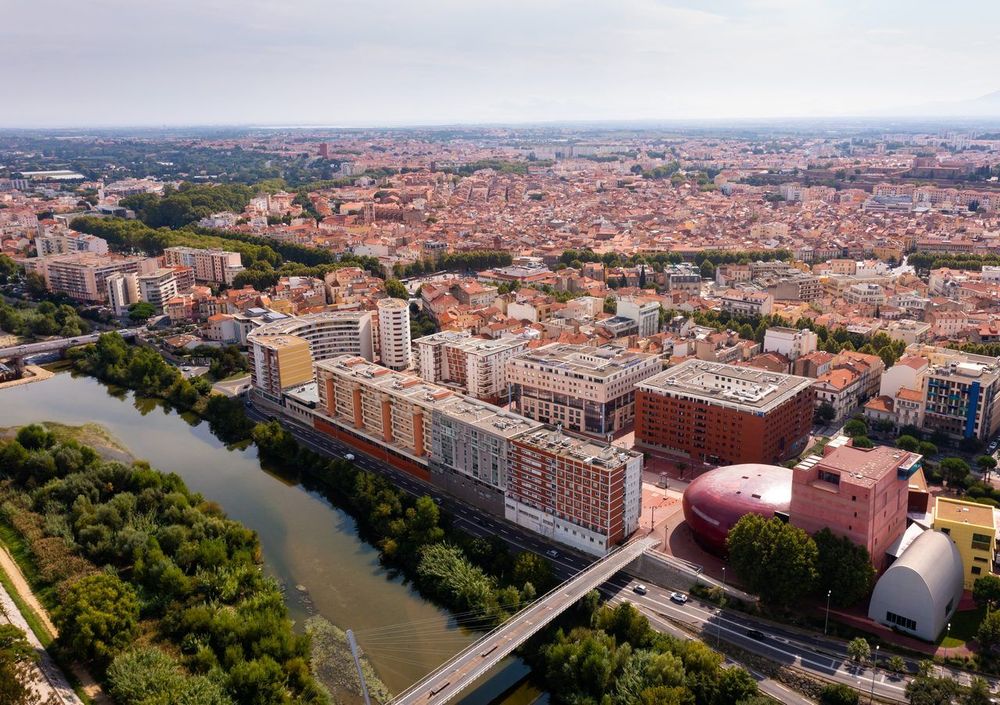
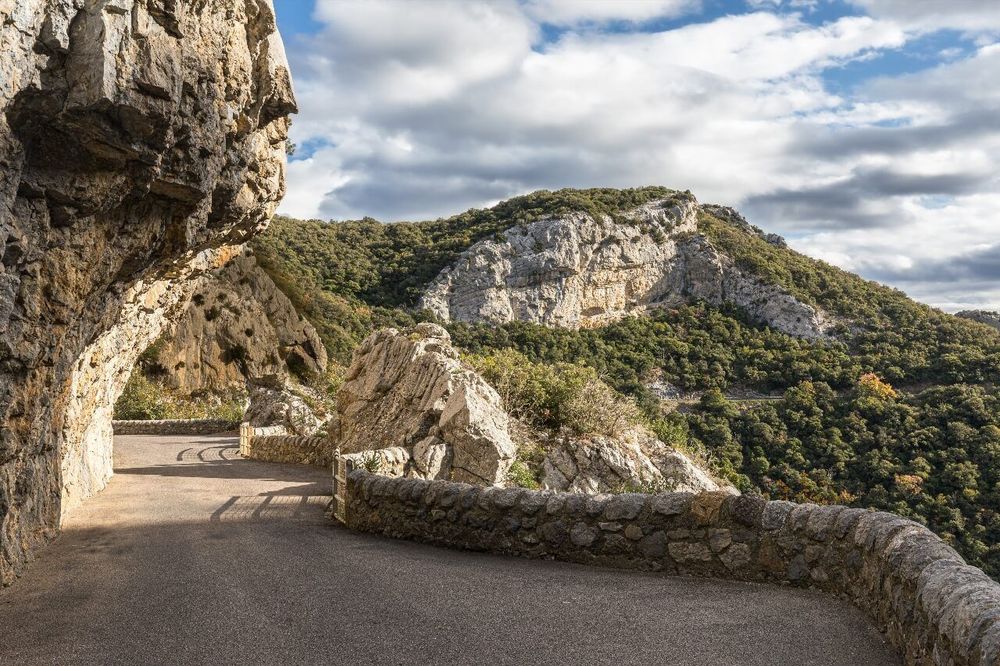
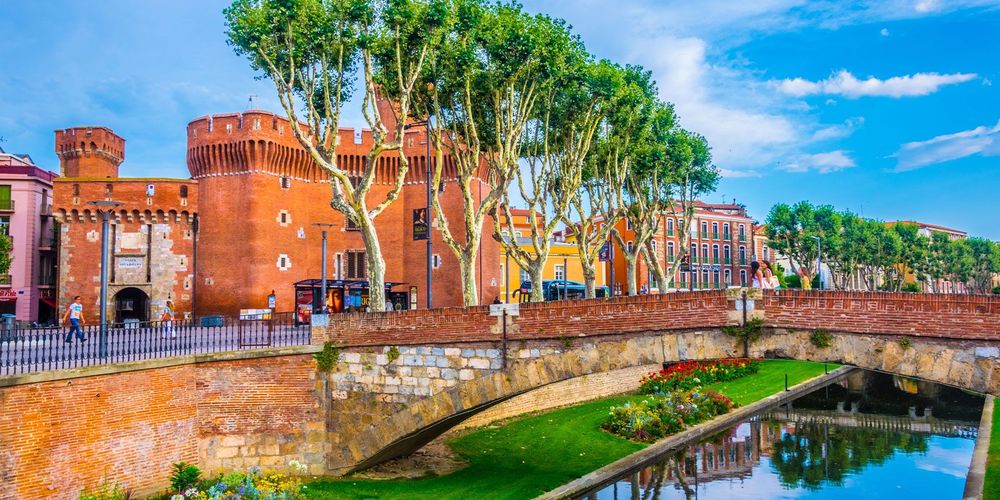
This visit to Perpignan offers an immersion under the Roussillon sun, where France meets the Catalan soul. Let yourself be charmed by the crenelated silhouette of the Castillet and the majesty of the Palace of the Kings of Majorca, before enjoying a stopover in the shaded squares of the historic center. Between the vibrant red of its brick walls and the coolness of its secret patios, the "blood and gold" city reveals a proud and generous character. A vibrant and fragrant stroll on foot to capture the full art de vivre of a city that looks proudly toward the Pyrenees.
Quand partir à Perpignan ?
Jan.
9°
5
Feb.
10°
4
March
12°
5
April
14°
7
May
18°
7
June
22°
5
July
25°
3
Aug.
25°
4
Sept.
21°
5
Oct.
17°
7
Nov.
12°
7
Dec.
10°
5
Perpignan enjoys a Mediterranean climate marked by record-breaking sunshine, with hot, dry summers where temperatures frequently reach 30°C and very mild winters with daytime highs around 13°C. To discover this Catalan city and the Palace of the Kings of Majorca without the intense summer heat, the ideal periods are spring (April to June) and early autumn (September and October), offering sublime Mediterranean light and more breathable air. The month of September is particularly recommended for culture enthusiasts, as it hosts the international photojournalism festival "Visa pour l'Image," while the Holy Week period in spring allows visitors to experience the unique tradition of the Procession de la Sanch in already summer-like mildness.
Départ conseillé
No need to worry about where to begin! Our tours are designed as a loop, so you can jump in wherever you are. The navigation system and audio-guide will automatically adjust to your location. However, if you happen to be nearby, we do have a preferred starting point: the Castillet cinema
Parking à proximité
Parking Wilson : 16 Bd Wilson
Découvrez 20 lieux d'intérêt pour visiter Perpignan






What to see in Perpignan on your 1h tour?
This 2.4 km loop takes about 1 hour and links 19 sights in Perpignan's historic centre. From the Castillet, by the Basse river, it heads to Place de la Loge and its trio of Catalan monuments, climbs towards the cathedral and the Campo Santo, then winds between mansions, lively squares and food-scented lanes to Halles Vauban, running back along the river. With the Ryo app in your ears, every brick-and-pebble façade tells eight centuries of Catalan history, at your own pace.
Information checked in November 2026 and subject to change.
1 - The Castillet Cinema
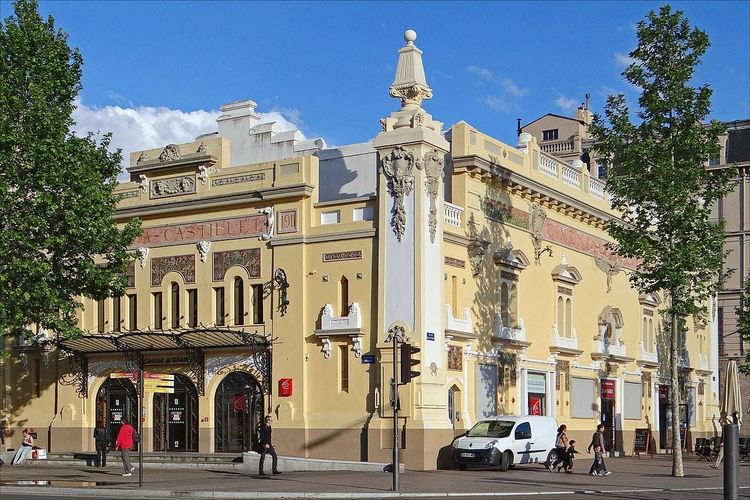
Perpignan's first-ever movie theatre opened right here on 7 November 1911, the brainchild of a cinema operator from Barcelona. The chosen architect blended 19th-century and Art Nouveau influences, with ceramic floral friezes and carved masks on the façade. Critics loathed it at first, yet the building weathered the decades: a wartime closure, a 1970s rush of Spanish moviegoers, listed status in 1997. Descendants of the founder still run screenings here today.
Free to see from outside
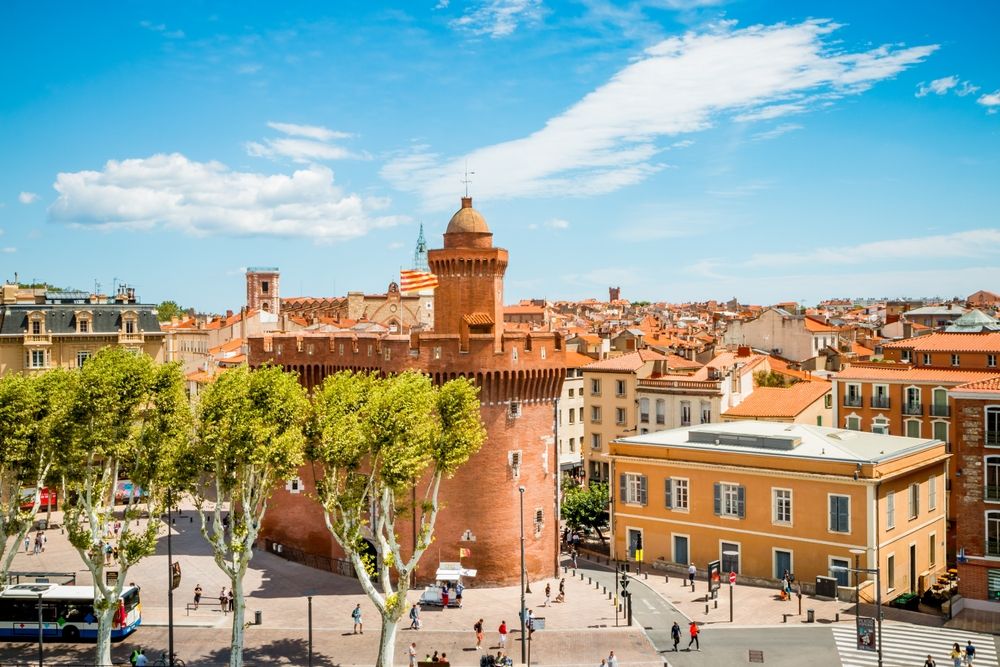
2 - The Castillet
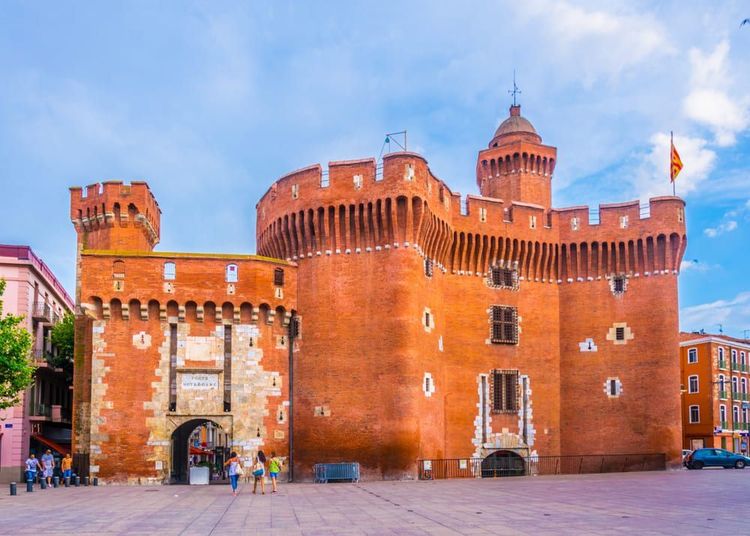
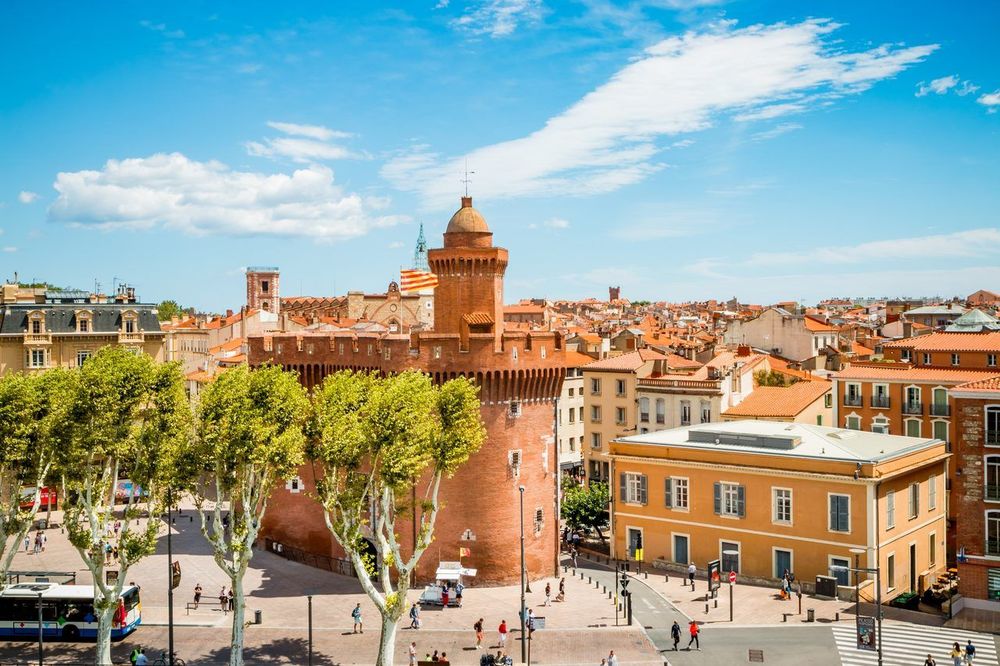
Raised around 1368 on the orders of an Aragonese infante, this relic of the northern ramparts once guarded the city gate before becoming a state prison after the Treaty of the Pyrenees. Charles V and later Vauban reinforced its fortified silhouette over the centuries. Left standing alone once the walls came down in 1904, the lonely tower now houses a museum of Catalan traditions; its rooftop, reached via 142 paid steps, rewards with a view over the city, also free from a department store terrace nearby.
Free to see from outside
3 - The Palace of the Deputation
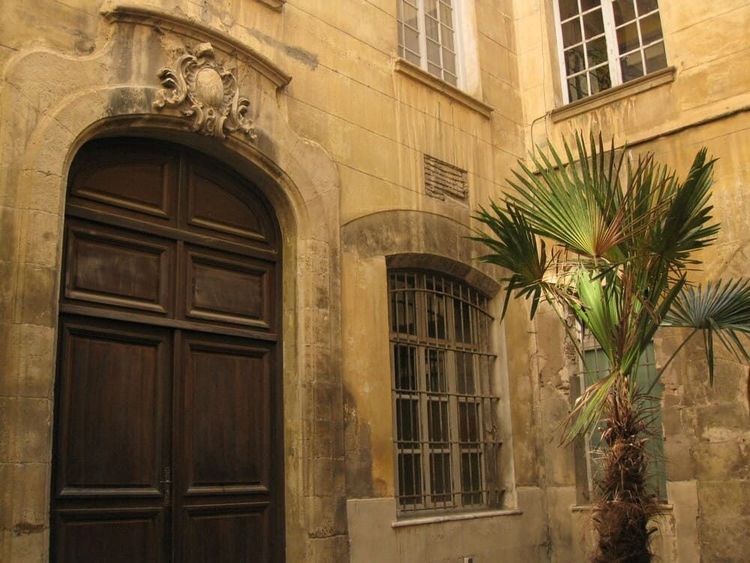
Seat of Roussillon's political power in the Middle Ages, this Gothic palace once hosted the representative assemblies of the Crown of Aragon. Marc Safont, a leading Catalan architect who also worked on a palace in Barcelona, designed most of the building: a plain façade and foliage-capped windows. Only the arcades of the inner loggia, the work of a master close to the cathedral's own architect, have survived untouched. Attached to the town hall from 1866, it lost all political role after the French annexation.
Free to see from outside
4 - Perpignan’s Town Hall
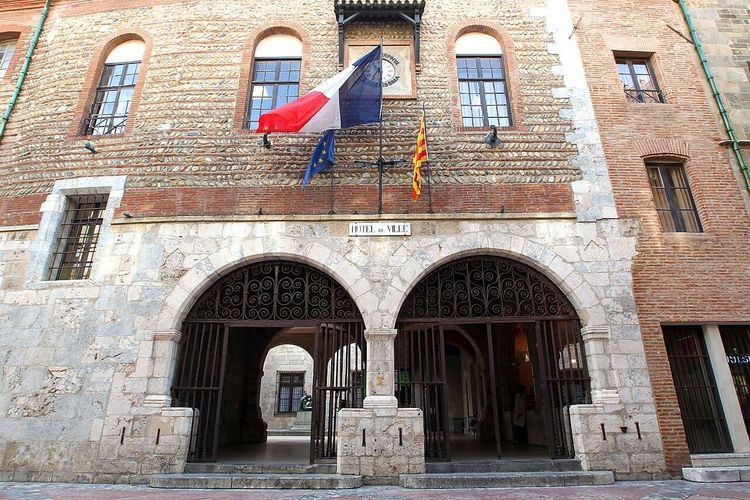
Three bronze arms decorate the pebble-and-brick façade, symbolising the voter categories that once elected the consuls running the city, a privilege granted at the close of the 12th century. Inside, the former consuls' hall, now used for weddings, hides a 16th-century Hispano-Moorish ceiling beneath 19th-century décor prepared for an imperial visit that never actually happened. In the neighbouring patio, a sculpture by Catalan artist Aristide Maillol watches over the courtyard.
Free entry
5 - The Loge de Mer
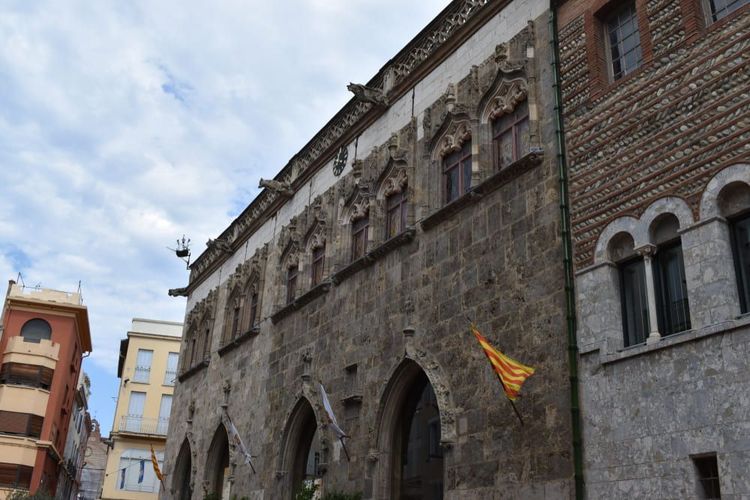
Launched in 1388 by King John I to regulate maritime trade, this Gothic building grew in stages: four arches first, then two more around 1540, after Charles V's visit. A wrought-iron caravel, a copy of the original kept at the town hall, still perches on the roof's corner. A theatre, a mail depot, a café and even a fast-food outlet have all occupied these walls before it became, in 2017, the city's tourist office. A nearby statue by Maillol rounds off the visit.
Free to see from outside
6 - Saint-Jean-Baptiste Cathedral
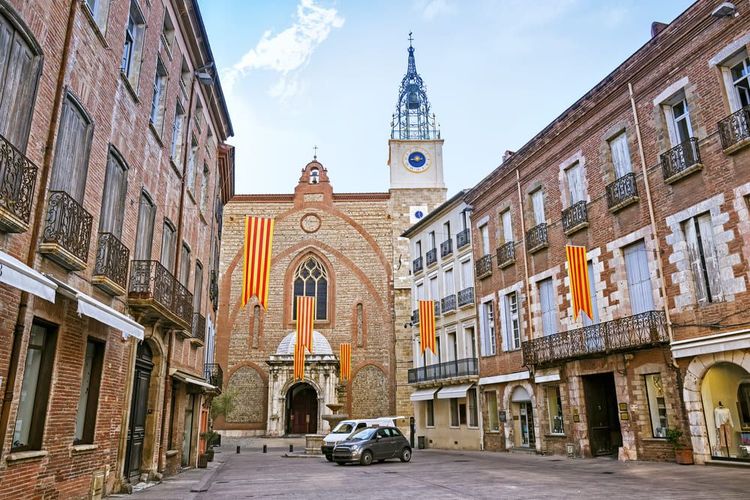
Begun in 1324 by the king of Majorca, construction stalled twenty years later amid crisis — plague, the king's death, political turmoil — before resuming in 1433 under the architect who also built Palma's cathedral. The plan then changed: a single vast nave replaced the three originally envisioned. Completed in 1509, it houses a flamboyant Gothic organ case, a royal recumbent effigy, and the haunting Dévot Christ, a medieval wooden crucifix whose stark realism moves every visitor. The wrought-iron bell tower carries three stacked clock faces.
Free entry
7 - Campo Santo
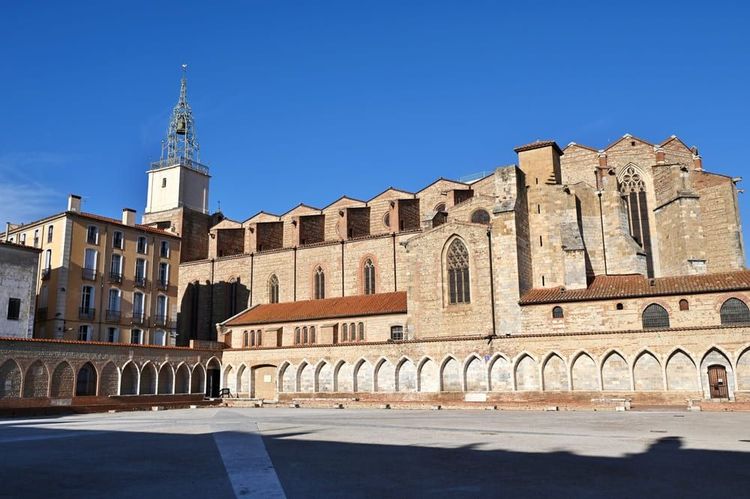
Along with one in Orléans, this cloister is one of only two cemeteries of its kind left in France. It was created at the turn of the 14th century to match Perpignan's explosive growth as the mainland capital of the kingdom of Majorca. Marble galleries, crowned with the coats of arms of leading families, sheltered the tombs; the courtyard's centre, meanwhile, received the burials of the poorest. Used until the French Revolution, the site now hosts cultural events, including a major international photojournalism gathering.
8 - Tiers Ordre Chapel
Attached to a Dominican convent founded in 1245 on the site of a former leper hospital, this chapel replaced a vanished cloister-cemetery in 1774. Its façade stays plain, save for a carved stone frieze, but the interior reveals a rare example of Louis XVI style in Roussillon: a single nave, wrought-iron balconies with military motifs, and a painted choir depicting Christ, God the Father and the goddess Minerva. Turned into an army food store in the 19th century, it now hosts sacred music concerts and exhibitions.
9 - Pedra Gravada
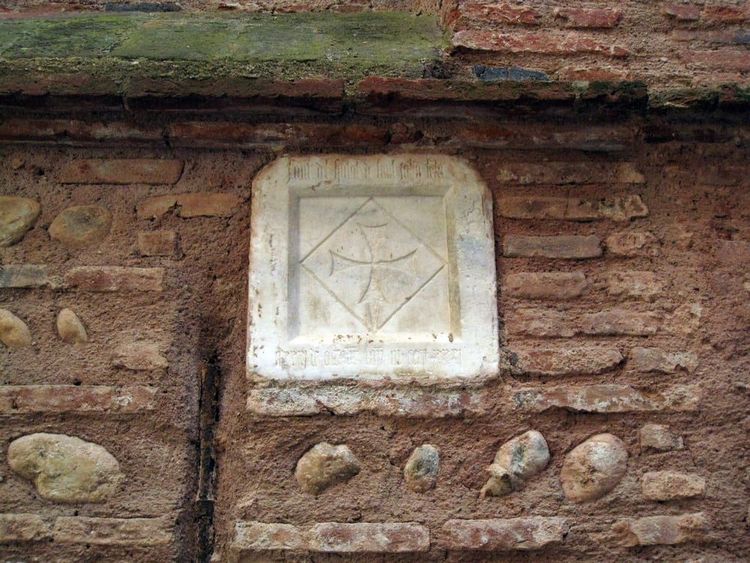
Easy to miss, this modest stone plaque set above a fountain carries three clues: an inscription naming an old inn, the date 1431, and an eight-pointed cross. Together they reveal the presence, as early as the 12th century, of a foundation run by the Hospitaller knights of Saint John, a crusader-era order that cared for pilgrims heading to the Holy Land. Listed as a historic monument since 1965, this unassuming stone tells an overlooked chapter of the city's past.
Free entry
10 - Old University of Perpignan
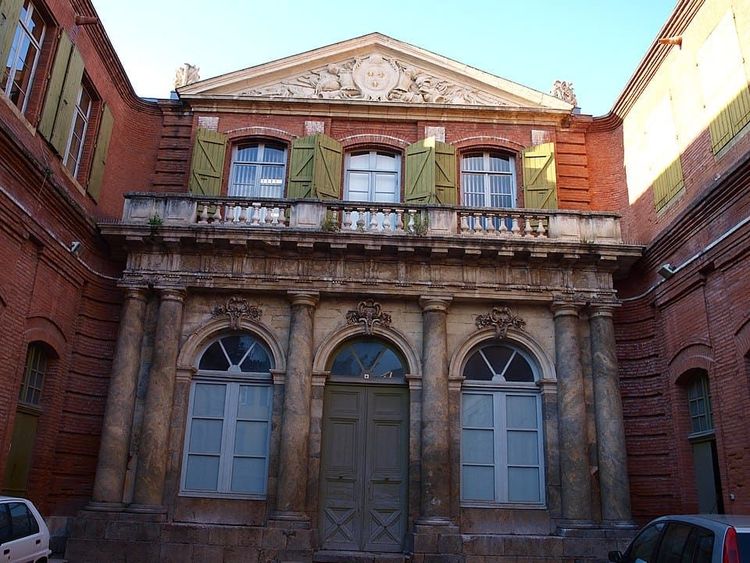
The university founded here in the mid-14th century by a king of Aragon ranks among Europe's oldest, open at the time only to doctors, masters and students. After falling into decline, it was revived in the 18th century thanks to a local count's patronage: a dissection rotunda for future doctors, a brick building teaching arts, theology, law and medicine. Closed in 1794, the site later served in turn as a library, a fine arts museum and an archive depot, now hosting exhibitions.
Free to see from outside
11 - Hôtel Pams
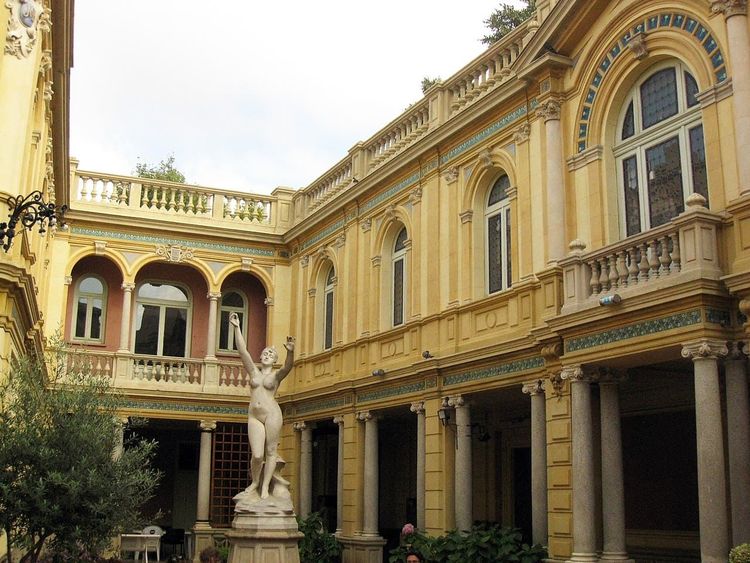
Nothing about this understated façade hints at the splendour waiting inside. The heir to a cigarette-paper fortune bought the building in 1852; his daughter and her husband turned it into a lavish mansion at the turn of the 20th century. An onyx staircase with a gilded iron rail, ceilings painted by a casino decorator, woodwork brought back from the 1889 World's Fair: every room competes in refinement. Sold to the city in 1946, the building now serves as an event venue.
12 - Notre-Dame de la Réal Church
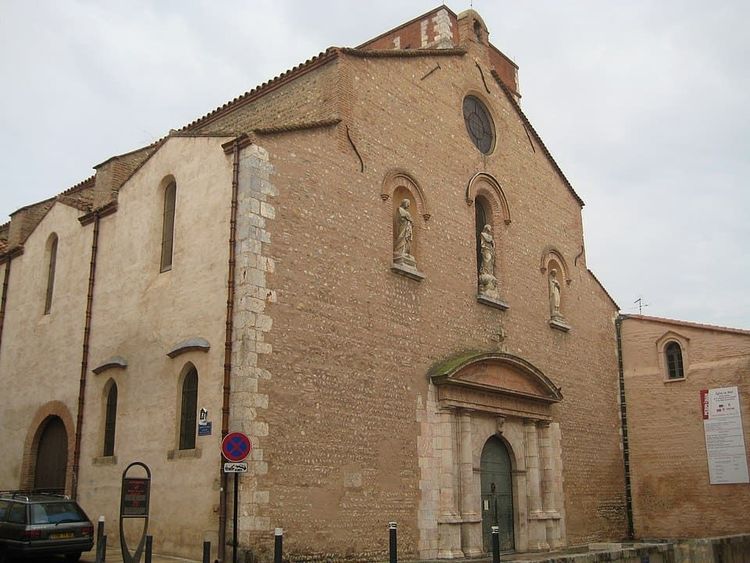
Founded around 1321 as a royal chapel by a king of Majorca, this Gothic church witnessed one of the wildest episodes of the Western Schism: in the early 15th century, an Avignon pope convened a council here, vainly trying to end Christendom's great divide — the affair briefly spiralled into three rival popes. The council chamber, with its ornate vault keys, can still be visited, alongside an original white marble baptistery and a moving carved entombment scene from the same era.
Free entry
13 - Statue of Hyacinthe Rigaud
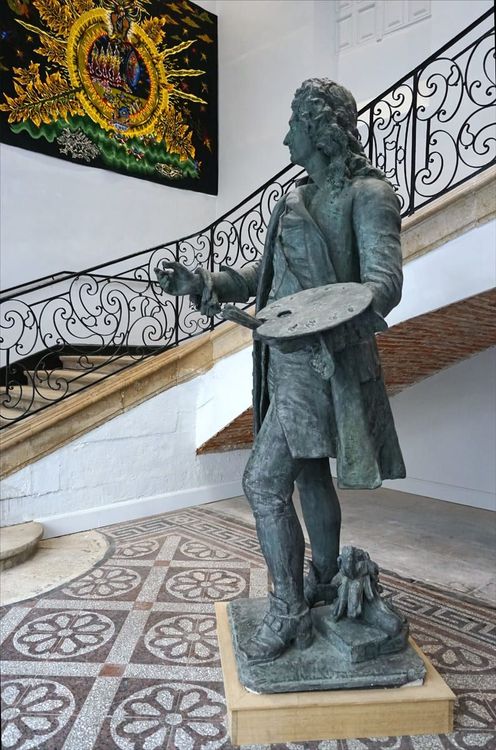
Born to artisan parents in Perpignan in 1659, the young man made his name in Paris by turning down the prestigious path of history painting for portraiture, on the advice of the Académie's founder. His unflinching realism — he refused to flatter his sitters — made him the most sought-after portraitist at the court of Louis XIV, whose official coronation image he painted. The statue honouring him here replaced an earlier one, melted down in 1942 for the war effort.
Free entry
14 - Casa Xanxo
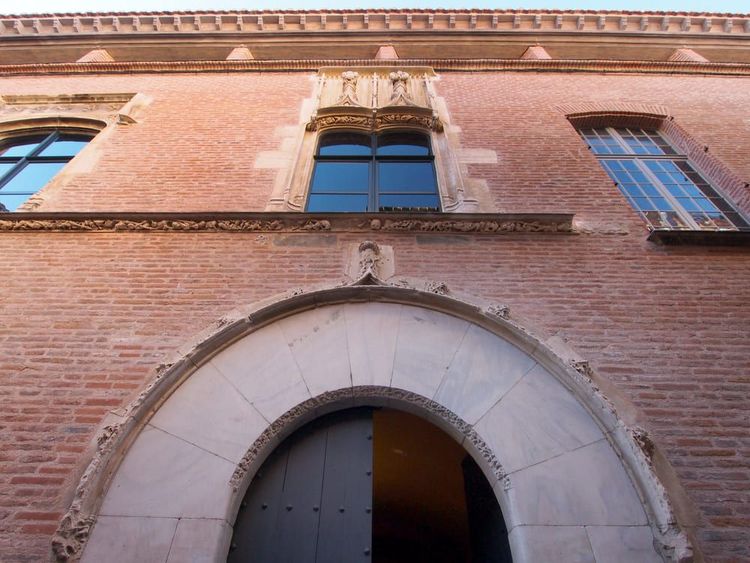
Raised in 1507 for a well-off cloth merchant whose name it still carries, this house ranks among the few Gothic dwellings left standing in Perpignan. Its façade carries a long carved frieze depicting the seven deadly sins roped together to hell, once nicknamed the cavalcade of vices. Threatened with demolition more than once, it welcomed illustrious guests, including the daughter of a Habsburg emperor. Reopened after eighteen months of restoration, it now houses a centre devoted to the city's architecture and heritage.
Free entry
15 - Place de la République
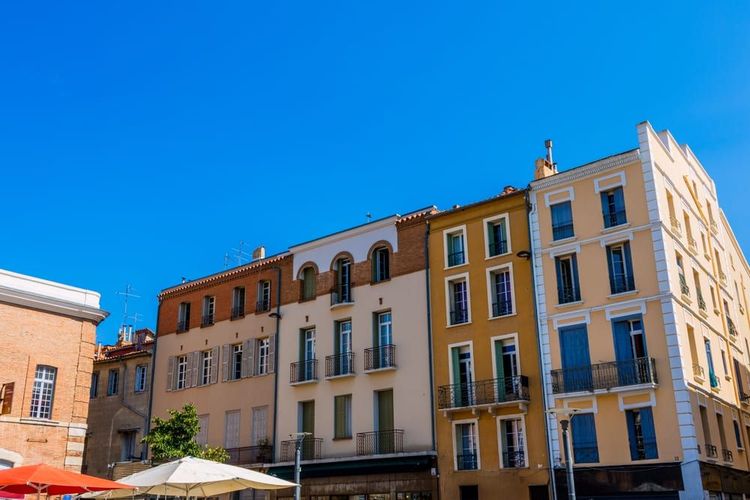
From a medieval market held since the city's earliest days to its current name, this square has changed identity several times with each shifting regime, successively named for Liberty, Napoleon and then Royalty. It even held, for a while, the tombs of two generals killed fighting Spain, before their remains were moved to the cemetery. Its Baltard-style covered market gave way to a car park, now underground, which gave the square back its openness. The municipal theatre and the Maison Fontano façade still line the square.
Free entry
16 - Paratilla Street
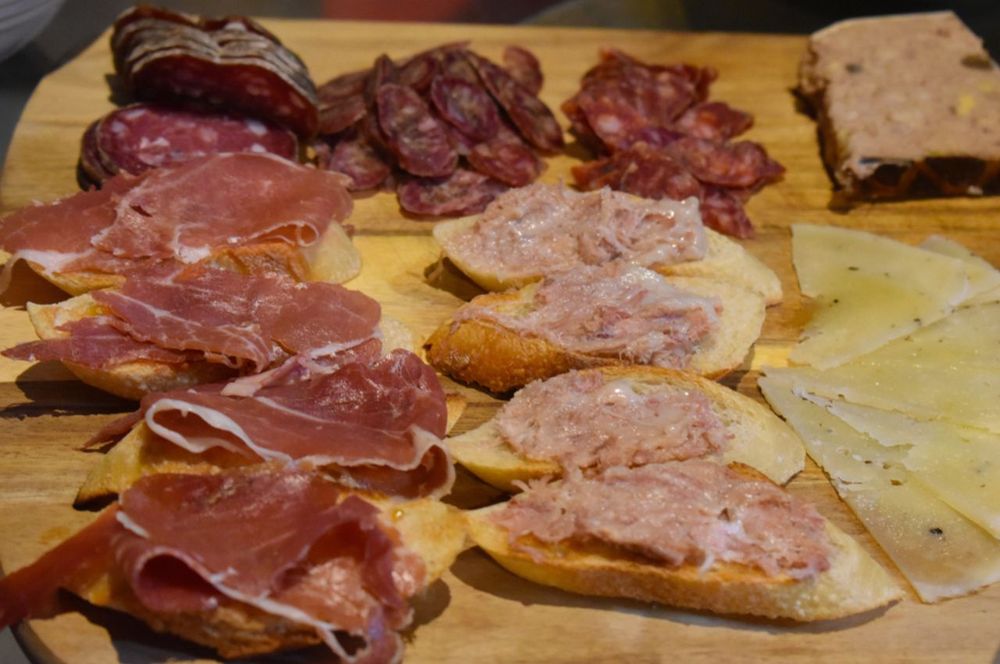
Barely a hundred metres long, this lane nicknamed the spice street packs in a handful of well-loved shops from the old town. Olives, dried fruit, charcuterie and little scented sachets compete for attention and appetite alike. Small in size, big in effect: hard to resist the pull of well-stocked stalls promoting quality Mediterranean produce, cherished by regulars and passing visitors alike.
Free entry
17 - Hyacinthe Rigaud Art Museum
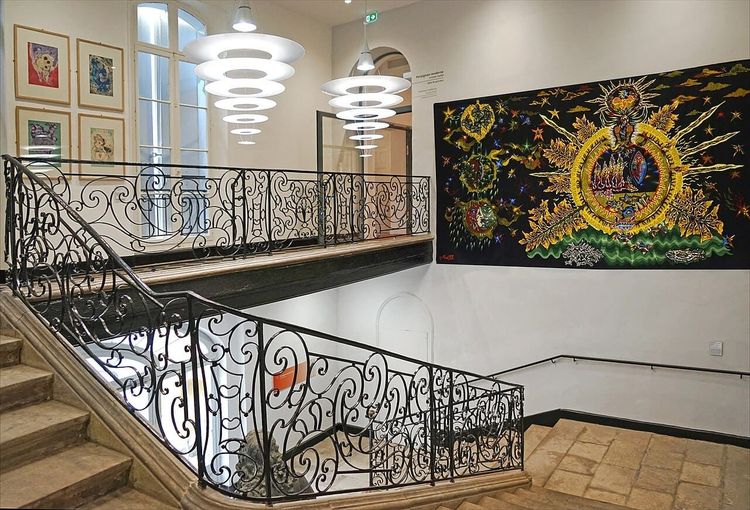
Born in 1820 from a prefect's private collection, this museum has moved house several times before settling into its current form, expanded in 2017 by annexing a neighbouring mansion. Across 4,300 square metres, the galleries trace the city's art history in three chapters, from Gothic Majorca to modern Perpignan, with works by Maillol, Ingres, Dufy and Picasso, who once stayed nearby. The collection also holds several canvases by the city's great portraitist, whose name the museum bears.
Paid entry (about €11)
18 - Jardins de la rivière Basse
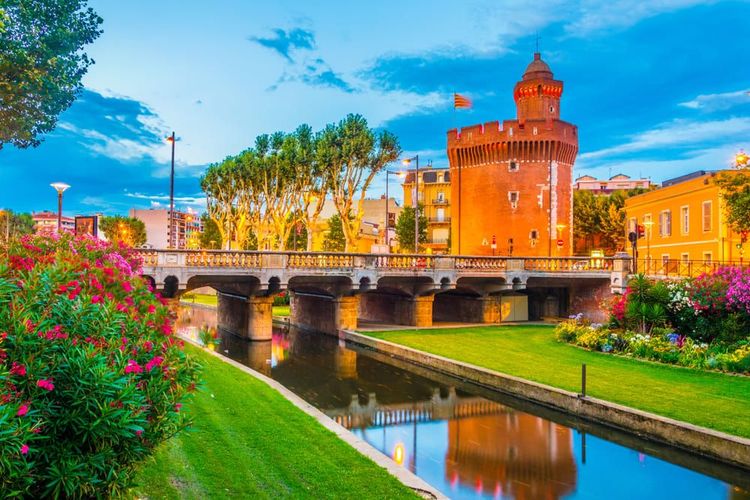
Far more modest than the Têt, the Basse owes its name to its shallow flow. Former market gardens covering three hectares, long left fallow along its course, have been transformed into a shaded walkway: trees planted, footpaths and cycle lanes laid out, without driving away the wildlife already settled there. The result strikes a balance between preserved nature and city life, right in the heart of town.
Free entry
19 - Halles Vauban
Opened in 2017 to take over from the old covered market that once stood on Place de la République, Halles Vauban brings together some twenty artisans across nearly 2,000 square metres. Here you can nibble on escalivade, Roussillon's classic grilled vegetables, or a tomato bread topped with charcuterie and sardines, before heading off with local honey, coffee or anchovies. The hardest part, once inside, is leaving.
Free entry
What to do in Perpignan in 2 or 3 days?
The audio-guided walk loops in 1 hour, over 2.4 km and 19 stops between the Castillet and Halles Vauban. With 2 or 3 days in town, Perpignan reveals itself more fully, between royal heritage and day trips.
The next day, head up the hill of the Palace of the Kings of Majorca, a Gothic fortress begun around 1276 for James II, first sovereign of Majorca, then walk round the Citadel, the circuit of ramparts and bastions that Vauban strengthened around the hill; our complete 3-day itinerary for visiting Perpignan sets out the programme day by day.
On the third day, make for the working-class Saint-Jacques quarter, clinging to the hill south-east of the cathedral; its Cassanyes square market lines up to 140 stalls from Tuesday to Sunday morning, and its lanes still recall the Call, the city's former Jewish quarter, as told in our guide to Perpignan's neighbourhoods.
Which neighbourhoods does the tour cross?
In about an hour on foot, the walk links the main stops of Perpignan's Catalan old town, from the Castillet to the food hall by the Basse river.
It starts at the Castillet, the fortified gate that marks the entrance to the old town, then reaches Place de la Loge, the commercial and political heart of the historic centre since the Middle Ages, lined with the Palace of the Deputation, the Town Hall and the Loge de Mer (stops 2 to 5).
It then climbs towards Saint-Jean-Baptiste Cathedral and its funerary cloister, the Campo Santo (stops 6 and 7), before winding past mansions and religious buildings: the Tiers Ordre Chapel, the Old University, Hôtel Pams, Notre-Dame de la Réal church, the statue of Hyacinthe Rigaud and Casa Xanxo (stops 8 to 14).
The last stretch returns to the bustle of Place de la République, follows Paratilla Street and its spice stalls, passes the Hyacinthe Rigaud Art Museum, then reaches the Basse river gardens and Halles Vauban, closing the loop (stops 15 to 19).
How much does it cost to visit Perpignan?
Of the walk's 19 stops, 10 are free to visit and 5 are seen from the street. Among the others, the Hyacinthe Rigaud Art Museum requires a ticket: €11 full price during a temporary exhibition, €8 otherwise. The climb to the top of the Castillet goes through the paid entrance of the Casa Pairal museum.
To enjoy the city without spending more, our guide to free activities in Perpignan lists other good options.
Information checked in November 2026 and subject to change.
Where to stop for a bite along the tour?
The food break happens right on the walk itself, between the spice street and the covered market that closes the loop.
Nicknamed the spice street, Paratilla Street packs about a hundred metres with grocers, greengrocers and stalls of olives, dried fruit and charcuterie, all scented with spices (stop 16). For something sweet, two Catalan classics are worth tasting: the rousquille, a small lemon treat coated in icing sugar, and Catalan cream, a cousin of crème brûlée lifted with lemon zest and cinnamon.
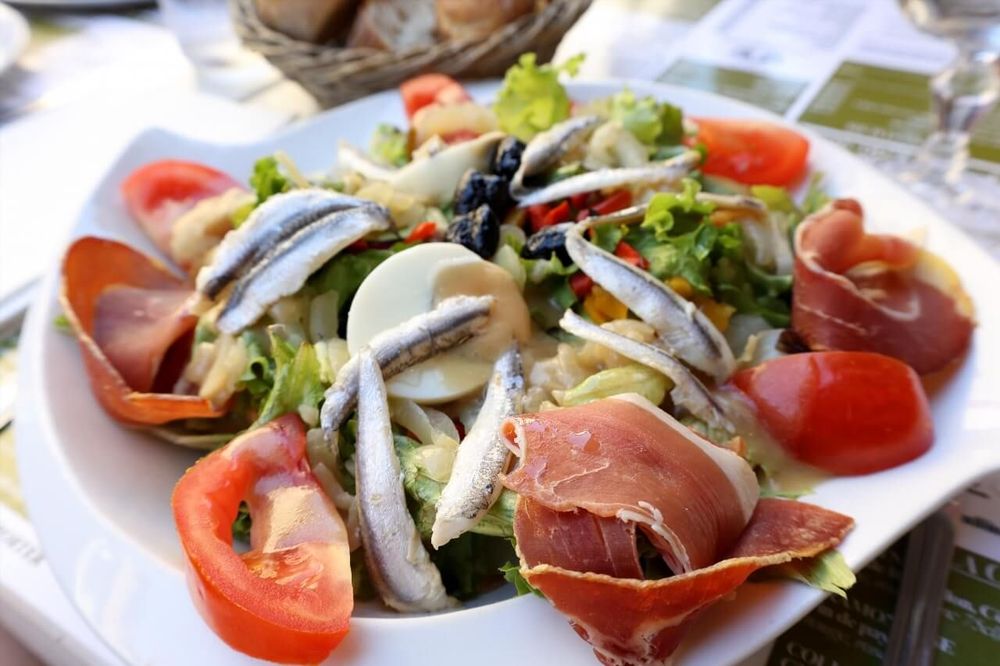
At the end of the walk, Halles Vauban brings together more than 20 traders around Catalan flavours (stop 19): grilled-vegetable escalivade, tomato bread topped with charcuterie or sardine, Tautavel honey, Toulouges coffee and Collioure anchovies, to taste there or take home. Our selection of Perpignan's culinary specialities also covers boles de Picolat and Catalan coques, worth trying beyond the walk.
What to do in Perpignan with children?
Children mostly enjoy two stops on the walk, before heading on, if the mood strikes, to the castle overlooking the city.
The climb to the top of the Castillet, up a 142-step spiral staircase included in the Casa Pairal museum ticket, delights children as much as the view over the rooftops and, on a clear day, the Canigou (stop 2). A little further on, the silence of the Campo Santo's white marble arcades intrigues young fans of old stones (stop 7).
A few minutes' walk away, the Palace of the Kings of Majorca feels like a real castle, with its main courtyard and ramparts where children can run, under supervision. Our guide to Perpignan with kids also suggests outings beyond the city, as far as the Canet lagoon, where pink flamingos wade.
What should you know before visiting Perpignan?
Three stops on the walk depend on opening hours, worth checking before you time your visit.
Casa Xanxo, the heritage interpretation centre, only opens for a free guided tour, held on Wednesdays from 3 pm to 4:30 pm until 30 December 2026 (stop 14). At this time of year, the Casa Pairal museum inside the Castillet (stop 2) and the Hyacinthe Rigaud Art Museum (stop 17) open Tuesday to Sunday, 11 am to 5:30 pm; both close on 25 December, and Casa Pairal on 1 January too.
What to see around Perpignan?
Perpignan makes a good base for venturing further, between Catalan villages and other audio-guided walks in the region.
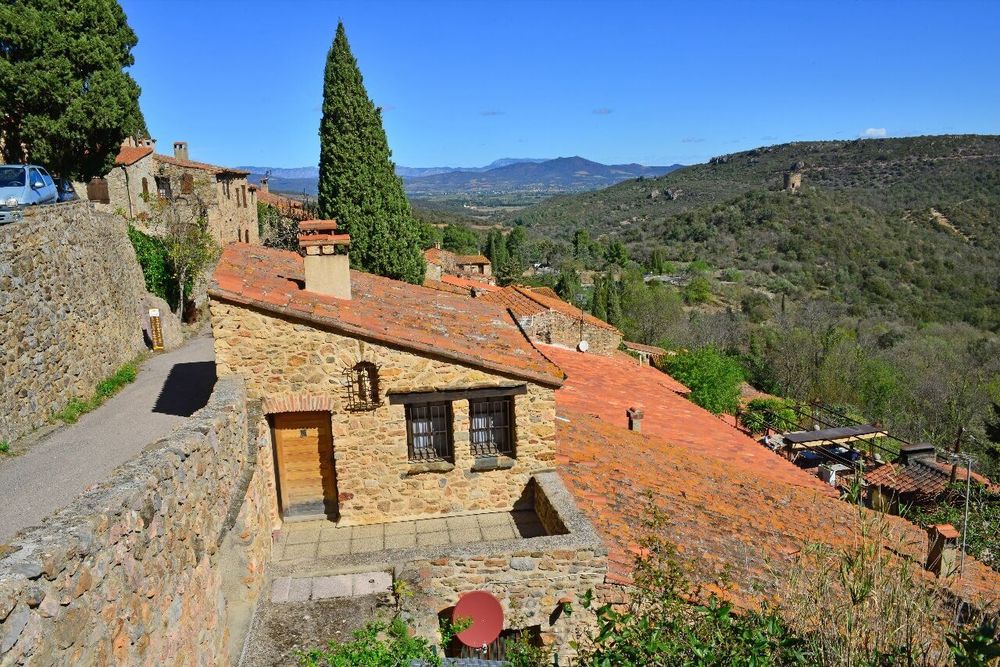
Some 20 km to the south-west, the village of Castelnou curls around its castle, built around 990 and listed among the Most Beautiful Villages of France; its cobbled lanes, lined with russet-stone houses, take about 1 hour to explore on foot. Our selection of the most beautiful villages around Perpignan lists 9 more, from the vineyards of the Roussillon to the foothills of the Pyrenees.
Several nearby towns also have their own audio-guided walk. Collioure, the city of painters that inspired Matisse and Derain, lies 25 km away; Narbonne, a two-thousand-year-old city whose Gothic cathedral choir seems to defy gravity, 55 km away. A little further, Carcassonne and its medieval citadel, 72 km away, or Béziers, perched above the Orb, 76 km away, round out the trip.
What's on in Perpignan right now?
At this time of year, Perpignan's calendar mixes an autumn fair, a vintage vehicle show, free guided tours of the old town and Christmas outings for children.
- The Foire Saint-Martin opens every day at 2 pm in the Palais des Expositions car park, until 22 November.
- The Animation du patrimoine runs free guided walks: windows and balconies on 21 November, marble in the city's buildings on 5 December, urban bronze on 12 December, old carved stonework on 19 December.
- The Retro Mecanic show brings together vintage two-wheelers and cars at the Parc des Expositions on 5 and 6 December.
- The family show Luti et le calendrier de Noël, with puppets and shadow theatre, plays every day at 3:30 pm at La Boîte à Rire, from 21 December to 2 January.
- The free Caga Tió Christmas workshops, a Catalan tradition, welcome children on 22 and 29 December at 3 pm.
Information checked in November 2026 and subject to change.
Le plein d'inspirations
Explorez le monde en totale liberté, à pied au cœur des villes ou au fil des routes. Nos guides audios transforment chaque destination en une découverte culturelle immersive et unique.










FAQ for visiting Perpignan
When is the best time to visit Perpignan?
The ideal time to discover Perpignan runs from April to June and from September to October, when the Mediterranean climate offers pleasant temperatures without the crushing heat of summer. The sunny days of spring will let you make the most of the terraces and strolls through the historic centre. September is particularly appealing, with the famous Visa pour l'Image festival that brings the city to life. If you're looking for a unique cultural experience, Holy Week in spring will let you witness the traditional Procession de la Sanch in an already summery atmosphere. Winter stays mild with temperatures around 13°C, perfect for visitors who prefer to avoid the tourist crowds.
How many days do you need to visit Perpignan?
Two full days are generally enough to discover the essentials of Perpignan and soak up its Catalan atmosphere. The first day can be devoted to the historic centre with its medieval lanes, the Castillet and the Saint-Jean-Baptiste cathedral, while the second day will let you explore the majestic Palace of the Kings of Majorca and wander through the colourful markets. If you wish to delve deeper into your visit and fully enjoy the Perpignan way of life, three days will give you the time needed to savour the sun-drenched terraces, discover the museums and perhaps even venture into the surroundings. Lovers of culture and gastronomy will appreciate this more leisurely pace that leaves room for improvisation.
What are the must-see monuments to visit?
The Castillet, the city's emblem with its red-brick façade, makes the ideal starting point for your exploration of Perpignan. The Palace of the Kings of Majorca, perched on its hill, offers a stunning view over the city and the Pyrenees while bearing witness to the town's royal past. The Saint-Jean-Baptiste cathedral impresses with its southern Gothic architecture and its peaceful cloister. Don't miss the Casa Xanxo, a superb Gothic residence, or the Loge de Mer, which recalls Perpignan's maritime past. The Ryo audioguide accompanies you on this discovery with a narrated route that reveals the secrets of these emblematic monuments and guides you through the historic lanes where every stone tells a Catalan story.
How do you get around Perpignan's city centre?
Perpignan's historic centre is best explored on foot, its modest size and pedestrian streets naturally inviting you to stroll. Most of the major sites lie within a small area, making walking not only practical but also pleasant for soaking up the Catalan atmosphere. Free shuttles run regularly through the very centre, particularly useful on very hot days. To reach the Palace of the Kings of Majorca from the centre, you can take the little tourist train or simply climb the hill on foot, the ascent offering fine viewpoints. Bike-sharing is a practical alternative for exploring the outlying neighbourhoods, while the bus network efficiently serves the entire urban area.
What is there to see around Perpignan?
The surroundings of Perpignan are full of treasures well worth the detour. Collioure, a jewel of the Côte Vermeille, will charm you with its royal castle at the water's edge and its colourful lanes that inspired the Fauvists. The fortified village of Villefranche-de-Conflent, a UNESCO World Heritage Site, offers a plunge into Vauban's military architecture. Nature lovers will appreciate the Orgues d'Ille-sur-Têt, spectacular rock formations sculpted by erosion. Inland, the Tech valley reveals authentic Catalan villages such as Céret and its museum of modern art. Further south, the seaside resorts of Canet-en-Roussillon and Saint-Cyprien offer vast beaches of fine sand, perfect for combining culture and relaxation during your stay in the Roussillon.
Where are the finest beaches near Perpignan?
The beaches closest to Perpignan are found at Canet-en-Roussillon, just fifteen minutes by car from the city centre. This seaside resort offers nine kilometres of fine sand ideal for families. Further south, Saint-Cyprien appeals with its spacious beaches lined with maritime pines and its lively marina. For a wilder, more unspoilt setting, head to Le Barcarès and its immense stretches of sand where the wind draws water-sports enthusiasts. The rocky coves of the Côte Vermeille, notably around Collioure and Port-Vendres, offer a more intimate setting with their crystal-clear waters, perfect for diving. Each beach has its own character, from the most family-friendly and well-equipped to the most natural and peaceful.
What typical dishes should you try in Perpignan?
Perpignan's cuisine perfectly reflects its Catalan identity with generous Mediterranean flavours. The cargolade, snails grilled over embers and drizzled with aioli, is the quintessential convivial dish of the Catalans. The anchovies of Collioure, prepared according to age-old methods, are enjoyed as tapas or in the traditional escalivade with grilled vegetables. Don't miss the bullinada, a Catalan bouillabaisse served with aioli, or the boles de picolat, meatballs simmered in a spicy tomato sauce. For those with a sweet tooth, the rousquilles, ring-shaped biscuits coated in icing sugar, and the crème catalane flavoured with cinnamon and lemon are must-try desserts. The local markets will let you discover these specialities in an authentic setting.
Is Perpignan suitable for families with children?
Perpignan warmly welcomes families with plenty of activities suited to younger visitors. The pedestrian historic centre lets children move around safely while discovering history through the Castillet and its ramparts. The Palace of the Kings of Majorca usually fascinates little adventurers with its towers and gardens where they can run freely. The nearby beaches of Canet-en-Roussillon offer supervised swimming areas and play areas. The Ryo audioguide even offers a route specially designed to hold children's attention with fun anecdotes and observation challenges. The many shady parks in the city centre make welcome havens of coolness, while the Catalan restaurants gladly welcome families with suitable menus and spacious terraces.
Is Perpignan worth a visit?
Yes, provided you come looking for what makes Perpignan singular: a Catalan city first and foremost, where street signs are bilingual, where the sardana is still danced in the squares and where the way of life owes as much to Catalonia as to southern France. The old centre is walkable, from the red-brick Castillet to the Palace of the Kings of Majorca, by way of Saint-Jean-Baptiste cathedral, the Campo Santo cloister-cemetery and the flower-lined banks of the Basse.
This is no museum-city: the central squares come alive mainly in the evening, the covered market and the terraces set the tone, and the change of scene is real as soon as you step off the main avenues. Add the immediate closeness of both sea and mountains and the stop makes full sense. The Ryo audio guide offers a dedicated Perpignan route linking these places and explaining what is left of its past as a royal capital.
Which festivals and traditions punctuate the year in Perpignan?
Perpignan remains deeply attached to its Catalan traditions. The most striking is the Sanch procession on Good Friday, when penitents in red or black hoods cross the old centre in a gripping silence, to the beat of a single drum. In spring, Sant Jordi covers the streets with books and roses, a custom shared with Catalonia south of the border.
Summer opens with the Canigó flame, carried down from the summit to light the Saint John's Eve bonfires, then carries on to the sound of the cobla bands that set the sardana dancing in the squares, often late in the day. At the end of summer, the Visa pour l'Image photojournalism festival turns the monuments of the centre into exhibition halls open to all and draws visitors from around the world. These gatherings are the best moment to grasp the city's identity.
Which are the most beautiful villages to discover around Perpignan?
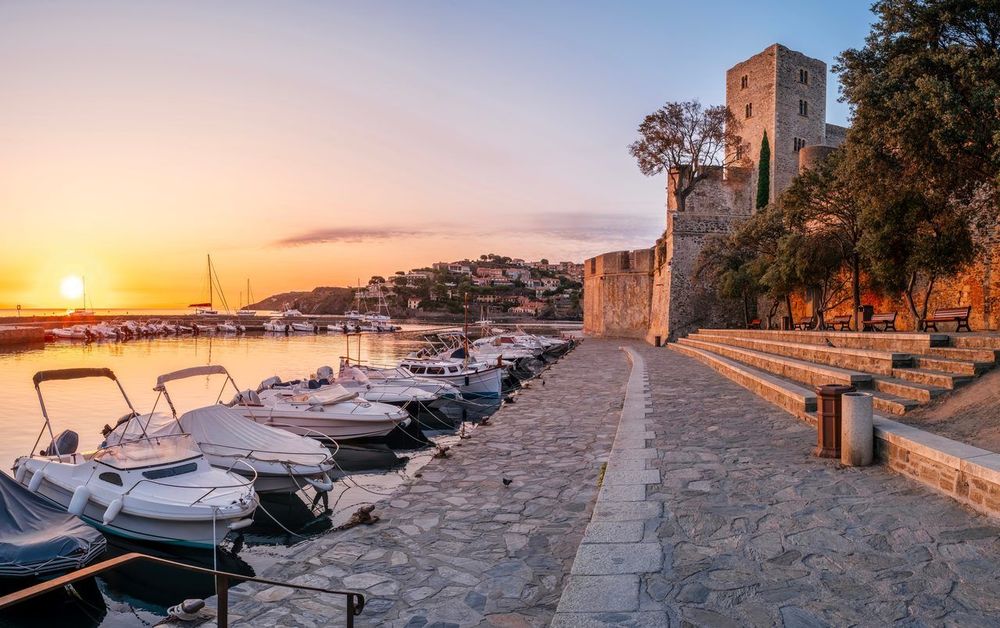
Less than an hour's drive away, Castelnou, listed among the Most Beautiful Villages of France, curls around its medieval castle, open from April to November. Collioure, which inspired Matisse and Derain in 1905, boasts its Royal Castle and three small beaches.
Further west, Villefranche-de-Conflent, reshaped by Vauban and UNESCO-listed in 2008, can be explored along its ramparts walk before boarding the Yellow Train. Eus, perched at 600 metres facing the Canigou, claims 325 days of sunshine a year.
Discover all ten villages in our selection of the most beautiful villages around Perpignan.
Where can you have lunch with your feet in the sand near Perpignan?
The Catalan coast is lined with beach restaurants worth discovering. In Canet-en-Roussillon, Ô Pieds Nus serves grilled fish and tapas on Marenda beach, Côté Plage lets you grill your own food on a plancha, and the Naudo Beach Club, an institution for 35 years, combines dining and parties.
In Le Barcarès, L'Effet Mer focuses on seafood from 9am to midnight. In Saint-Cyprien, Temple Beach brings a festive vibe from May to September, while La Paillote on quai Arthur Rimbaud serves homely Catalan cooking at reasonable prices.
Find all eight addresses in our selection of the best beach restaurants around Perpignan.
Which outings can you enjoy between sea and mountains from Perpignan?
By the sea, the Catalan coast is about twenty minutes away, with resorts such as Argelès-sur-Mer, Saint-Cyprien and Canet-en-Roussillon, charming villages like Collioure, Banyuls-sur-Mer and Port-Vendres, and an underwater snorkelling trail in the Cerbère-Banyuls Marine Park.
About an hour inland, the Little Yellow Train climbs to Latour-de-Carol, near the Spanish border; Saint-Thomas-les-Bains offers hot springs, and the Canalettes caves, canyoning and rafting add a few thrills. Seasoned hikers can tackle the Canigou, and the Catalan hinterland reveals Céret, Castelnou and Eus.
Plan your trips with our guide on what to do in and around Perpignan.
Which Catalan specialities and Roussillon wines should you taste in Perpignan?
Boles de picolat, beef and pork meatballs simmered in a red wine, tomato and olive sauce, lead the way, followed by ollada, a stew of meats, cabbage and white beans. In summer, cargolade grills snails over vine shoots and serves them with aioli, while Catalan-style anchovies go with the tapas.
For dessert, try lemon and cinnamon crème catalane, anise-flavoured rousquilles and Catalan cocas. Pair it all with a Côtes du Roussillon or a Muscat de Rivesaltes.
Discover all ten must-tries in our top culinary specialities of Perpignan.
Which visits and outings should you plan with children in Perpignan?
The old town can be explored on foot in half a day: climb the Castillet, explore the Palace of the Kings of Majorca like a fortress, then see the cathedral and the Campo Santo cloister. When legs get tired, the forty-minute tourist train leaves from the Castillet from April to October, for 5 to 9 euros.
With under-10s, choose the Natural History Museum, and taste a rousquille at the Halles Vauban. Nearby, an African safari park, an aquarium, lifeguarded beaches and flamingos on the Canet lagoon extend the stay.
All the tips are in our guides Perpignan with children and visiting Perpignan as a family.
What can you do for free in Perpignan?
The Castillet, the only fortified gate still standing from the city walls, can be admired freely from the Esplanade Arago; only the museum inside charges admission. The Palace of the Kings of Majorca opens free of charge on the first Sunday of the month outside the summer season, and Saint-Jean-Baptiste Cathedral can be visited without a ticket all year round.
Wander the lanes of the Saint-Jacques quarter, the local markets and the open-air exhibitions of the photojournalism festival at the end of summer. Nearby, the Villeneuve-de-la-Raho lake reserve and the fishermen's huts cost nothing.
Find all fifteen ideas in our guide to free things to do in Perpignan.
Which Perpignan neighbourhood should you stay in or stroll around?
Two landmarks shape the city: the Têt, which separates Le Vernet and Nouveau Logis to the north, and the Basse, which borders the historic centre. Around Saint-Jean Cathedral, cobbled lanes concentrate the heritage and the evening life, on Place de la Loge, Place Arago and Rue de la Fusterie; parking, however, is tricky.
To the south and west lie post-war residential districts such as Moulin à Vent, Porte d'Espagne and Saint-Assiscle, while the east stretches towards Cabestany and Sant Vicens park. In the centre, expect around 1,600 euros per square metre.
Compare each area with our guide to Perpignan's neighbourhoods.
What can you do in Perpignan when it rains?
The vaulted rooms of the Palace of the Kings of Majorca offer shelter from the showers; admission costs 9 euros, free for under-25s and on the first Sunday of the month outside the summer season, but arrive before 3.30pm in winter. The Castillet and its Casa Pairal Catalan museum take 45 minutes and cost 2 euros.
In the free Saint-Jean-Baptiste Cathedral, admire the Devout Christ from 1307, then walk the covered galleries of the Campo Santo. The Hyacinthe Rigaud museum, an aquarium a quarter of an hour away and a 3,600 m² indoor play park round off the day.
Find all fourteen ideas in our guide to Perpignan on a rainy day.
What should I see and do in Perpignan in 3 days?
Three days is enough to take in the essentials of Perpignan without rushing. The first day is devoted to the historic centre: the Castillet and its Casa Pairal museum, the Loge de Mer and the market squares.
The second day takes you to the Palace of the Kings of Majorca, the Citadel, Saint-Jean-Baptiste Cathedral and the Campo Santo, then to the Hôtel Pams and the Hyacinthe Rigaud museum. The third is devoted to the working-class neighbourhoods, such as Saint-Matthieu, La Real and Saint-Jacques, where the city's Catalan and Gitano identity comes through.
Discover the day-by-day itinerary, with excursions and good addresses, in our guide to visiting Perpignan in 3 days.
Can you visit Perpignan and its surroundings without a car?
Yes, absolutely. The TER train station is less than twenty minutes' walk from the Castillet, and the city centre can be explored on foot in half a day. The Sankéo network runs more than thirty bus lines, with summer shuttles to the beaches of Canet-en-Roussillon and Saint-Cyprien.
To reach the hinterland, the TER takes you to Villefranche-de-Conflent in a little under an hour, and the Yellow Train departs from there. By bike, cycle paths lead towards the Canet lagoon and Rivesaltes, and electric-assist bikes can be rented in the city centre.
To plan your stay, read our guide to visiting Perpignan without a car, on foot, by train and by bike.
Vos commentaires, idées et suggestions
Aucun avis pour le moment