© Shutterstock
 Votre guide Ryo
Perpignan with Kids in 2026: Monuments, Fun Activities, and Family Day Trips
Perpignan has one particular quality: its old town is almost entirely walkable in half a day, never more than ten minutes from a snack break. That changes everything when planning a family trip to Perpignan with kids — no need to keep jumping in the car to fill a day. The Castillet has watched over the city since the 14th century, the Palais des Rois de Majorque feels like a real castle to explore, and just a few kilometres away, flamingos wade in the Canet lagoon while an aquarium plunges younger visitors into a world of seahorses. Between the Catalan historic centre with its shaded squares and human-scale monuments, and day trips to Sigean, Tautavel or Banyuls, French Catalonia packs a rare variety of playgrounds into a very small territory. This guide covers the must-sees of the city centre, indoor activities for rainy days, nature excursions within an hour's drive, and practical information on seasons, transport and accommodation. To start planning your visit, the Ryo audio guide for Perpignan lets you get to know the historic centre monuments before you leave home.
The Must-See Monuments of the Historic Centre
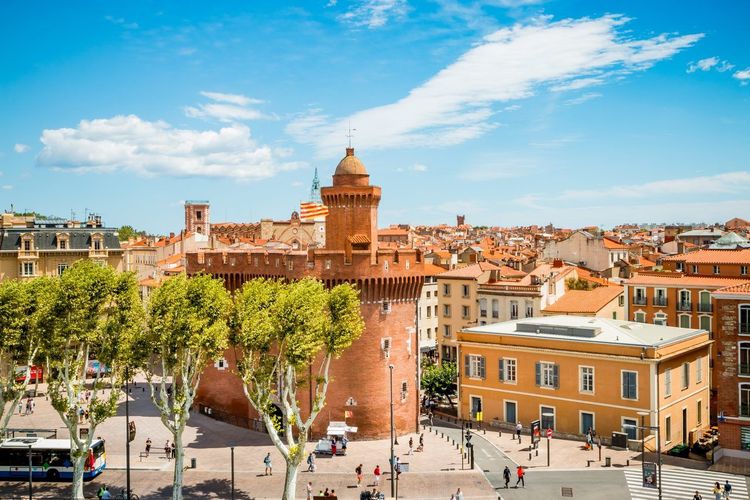
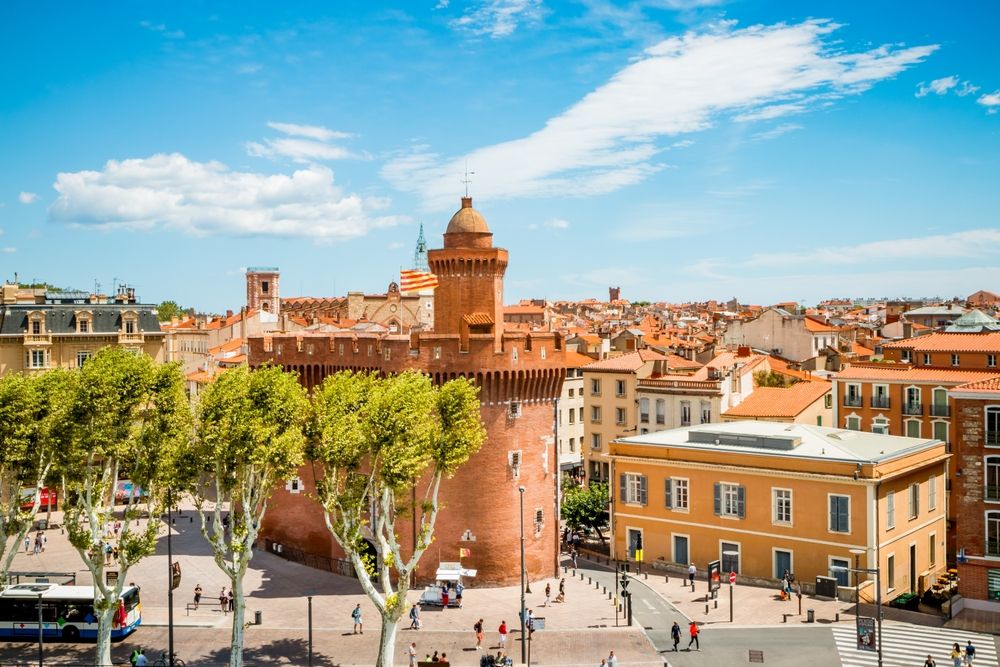
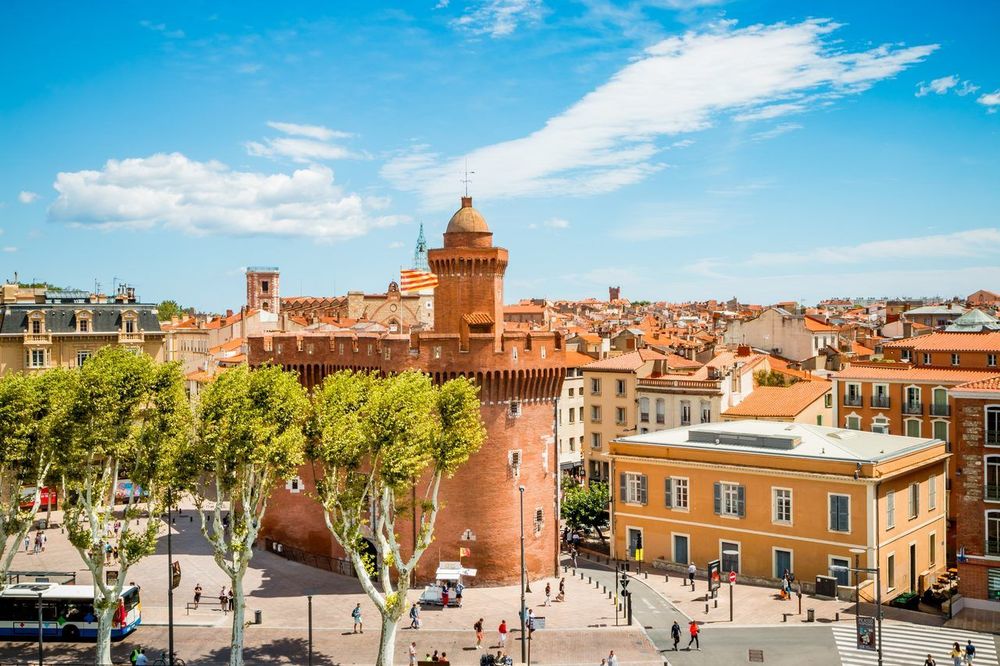
The Castillet, a red-brick gateway built in 1368 to guard the city's entrance, is the best starting point. Its spiral staircases lead up to a rampart walk with views over the orange rooftops and, on clear days, the ridge of the Canigou. The monument houses the Casa Pairal, a museum of Catalan folk arts and traditions, but the real pleasure is up on the terrace. Allow 20 to 30 minutes for the climb and a quick look through the rooms.
Ten minutes' walk away, the Palais des Rois de Majorque turns the visit into a full-scale treasure hunt: a grand courtyard, a double-level chapel, corner towers and ramparts that invite running rather than politely peering at display cases. Built in the late 13th century for the short-lived Kingdom of Majorca, it remains one of the few Gothic palace-fortresses in southern France where younger visitors can climb the curtain walls — with supervision, of course. The vaulted great halls lend themselves to a two-minute explanation of the Majorcan dynasty, before letting the group loose in the gardens below.
Heading back towards the centre, the Cathédrale Saint-Jean Baptiste impresses above all with its single Gothic nave, one of the widest in the south of France, which makes even the smallest visitors immediately look up. Right next door, the Campo Santo cloister (Rue de l'Académie, 66000 Perpignan, rated 4.5/5 on Google from 616 reviews), an open-air Catalan cemetery surrounded by white marble arcades, offers an unexpectedly quiet pause that catches the attention of anyone curious about old carved stonework. It is the only cloister-cemetery of its kind preserved in France, and serves as a stage for several festivals in summer.
On the neighbouring square, the Loge de Mer, former seat of the sea consulate built in the 14th century, lines up Gothic windows and gargoyles above café terraces — an easy landmark to remember when the group splits up. A little further on, the citadel of Perpignan, the vast bastioned enclosure surrounding the Palais des Rois de Majorque, lends itself to an elevated walk with views over the Pyrenees — a nice bonus to round off the tour of the historic centre.
Allow half a day to take in these six monuments at a relaxed pace, with a break in the shade on Place Arago in between. If you'd prefer a guided tour to a self-guided walk, the Ryo Perpignan audio tour follows roughly the same route across 20 audio tracks, taking in the Castillet and the Loge de Mer along the way, with short anecdotes that hold a young walker's attention far better than a conventional guided tour.
The Tourist Train: the Visit Everyone Agrees On
When legs start to drag, the Perpignan tourist train is the best fallback option. Its roughly forty-minute route winds between the Castillet, the cathedral, the Palais des Rois de Majorque and the main squares of the centre, with an on-board commentary that keeps passengers engaged without requiring a single step.
Departures are from the Castillet, with several runs a day from April to October, and tickets cost between 5 and 9 euros depending on age. It's also a good way to scout the monuments before visiting them on foot the next day, or to give toddlers in pushchairs a rest while one parent slips into a museum.
Kid-Friendly Museums: the Natural History Museum and the Hyacinthe Rigaud Museum
The Muséum d'Histoire naturelle in Perpignan, opened in 1840 and one of the oldest in France still housed in its original building, favours human-scale rooms over technological spectacle. Visitors aged 4 to 10 tend to linger in front of the taxidermied bird displays, the cetacean skeleton and the mineral collection — a circuit that wraps up in an hour without ever becoming tedious.
The Musée d'Art Hyacinthe Rigaud (21 Rue Mailly, 66000 Perpignan, rated 4.5/5 on Google from 1,462 reviews), dedicated to the official portrait painter of Louis XIV who was born in the city in 1659, occupies two restored private mansions and regularly runs weekend workshops on drawing and portraiture. The standard visit appeals less to young children than the Natural History Museum, but remains brief: 45 minutes to an hour for the main galleries, including works by Picasso and Dufy, two artists who passed through Roussillon.
Perpignan's municipal museums offer free entry for under-12s, and the first Sunday of the month often opens free slots for everyone — worth timing your cultural visit to that weekend if your trip happens to fall at the right moment. Check opening days the evening before your visit: they vary by season and by renovation schedules, particularly at the Natural History Museum. Another short, covered stop close to the Castillet, the Casa Xanxo, a Gothic merchant's house turned heritage interpretation centre, can be walked through in twenty minutes. Ryo's audio-guided tour of Perpignan links the Castillet and Casa Xanxo on the same easy loop.
Cool Breaks: Square Bir-Hakeim, Parks and the Banks of the Basse
The square Bir-Hakeim (Boulevard Wilson, 66000 Perpignan, rated 4.3/5 on Google from 729 reviews), with its palm trees and bandstand, is the natural meeting point between monuments: shaded benches, basins and enough space to let the group run around without needing constant supervision.
Perpignan has several other green breathing spaces, starting with the Jardin de la Miranda, a small Mediterranean garden clinging to the old ramparts behind the cathedral, and the squares in the Saint-Jacques district, fitted with play areas. The principle is the same throughout: short distances between each green space, which limits fatigue for the youngest and allows the day to be broken into two-hour segments.
The walk along the Basse, the waterway that runs through the city centre and joins the Têt, offers a different rhythm: a flat route, shaded in places, lined with benches, perfect for a cycling or scooter outing at the end of the day. A little further out, the landscaped paths at Bompas, the neighbouring commune to the north, extend this green corridor along the canals — a good option if you're staying on the outskirts rather than in the city centre.
Catalan Snacks at the Halles Vauban
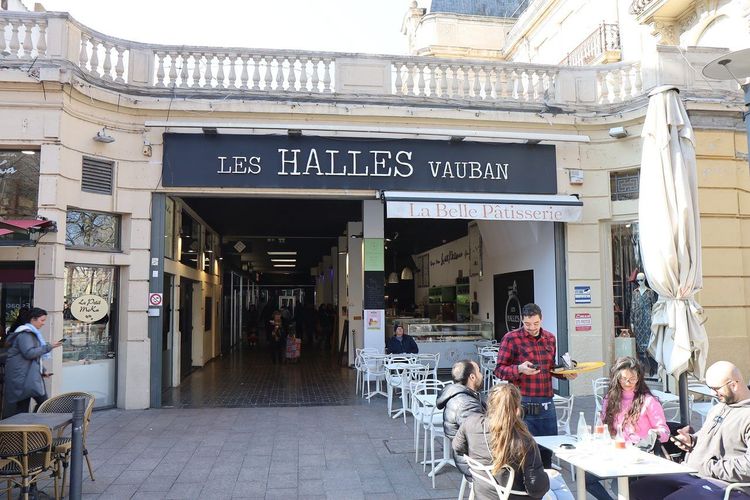
Between visits, the Halles Vauban make for an efficient food break: a covered market where crêpes, artisan ice creams and Catalan pastries can be enjoyed on the go, without having to sit down for long. Everyone finds something to their taste, from freshly fried chichis to the bunyeta — a Catalan doughnut dusted with sugar traditionally made at Easter — and the rousquille, a lemon-glazed biscuit typical of the Vallespir.
To explore local specialities further, our top 10 culinary specialities of Perpignan lists other addresses worth trying during your stay.
Guaranteed Laughs: La Boîte à Rire, Jokibar and Jump Story
On rainy days or in fierce heat, head indoors. La Boîte à Rire offers escape games and puzzle activities accessible from age 6 or 7, with shorter scenarios designed for beginners and a host on hand to drop hints before attention starts to wane.
Jokibar, an indoor leisure complex combining bowling and pool tables, can easily fill an entire afternoon and works just as well for a birthday party as for a rainy end-of-day.
Finally, Jump Story (Route de Canet, 66000 Perpignan, rated 4.3/5 on Google from 734 reviews), a covered trampoline park on the outskirts of town, typically wears younger kids out far faster than their parents: free jumping, foam pits, dodgeball courts and ninja courses depending on the session. Book your slot online at weekends — sessions fill up quickly. If the rain sets in for the whole day, you can chain all three venues without ever stepping outside.
The Beaches of Canet-en-Roussillon, the Flamingo Lagoon and the Oniria Aquarium
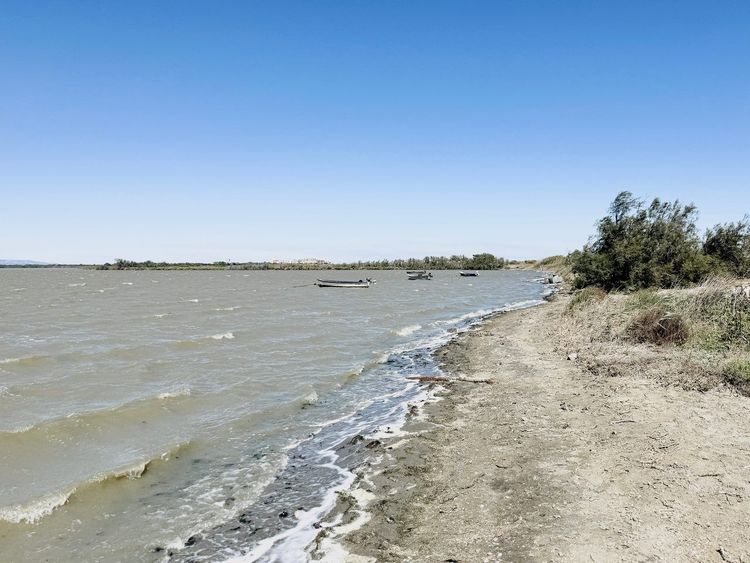
Just 13 kilometres from Perpignan — about twenty minutes by car or 40 minutes on the regular bus line — the beaches of Canet-en-Roussillon provide the natural seaside complement to a city break. Fine sand, shallow water along much of the shoreline and lifeguard posts in season make them a genuinely accessible option even with very young children.
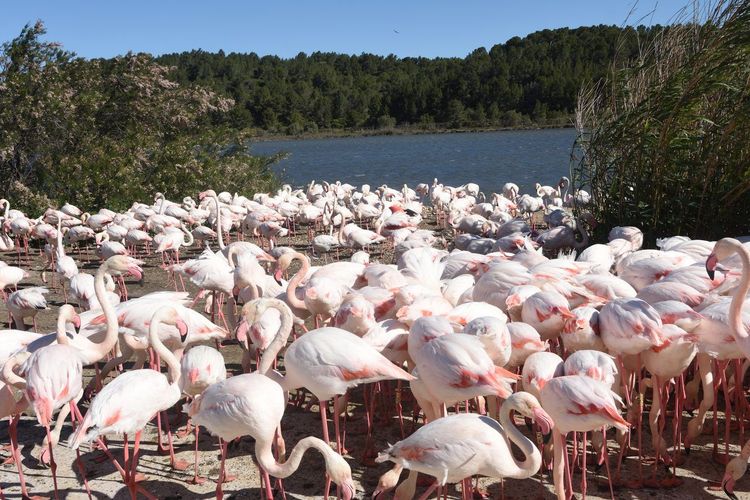
Right behind the dune belt, the Étang de Canet-Saint-Nazaire, a nature reserve of over 1,000 hectares, is home to a colony of flamingos visible for much of the year from the purpose-built observation paths. It is often the most photographed moment of the whole trip: you see them just a few dozen metres from the boardwalks, much closer than you'd expect. The restored reed fishermen's huts at the water's edge round off the visit.
The Oniria aquarium (Boulevard de la Méditerranée, 66140 Canet-en-Roussillon, rated 4.5/5 on Google from 8,578 reviews), on the Canet seafront, completes the outing with an immersive circuit dedicated to the Mediterranean and tropical seas: sharks, seahorses, jellyfish and touch tanks structure a visit of around an hour, fully air-conditioned — making it an excellent fallback in tramontane winds or intense heat.
You can combine all three sites in a single day: morning on the beach, lunch on the seafront, flamingo watching in the late afternoon when the light skims the lagoon, then the aquarium if the heat drives you to seek shade. For other swimming spots, our article on natural swimming in the Pyrénées-Orientales covers quieter river and gorge alternatives.
Day Trip to the Réserve Africaine de Sigean
About fifty kilometres north of Perpignan — allow 45 minutes via the A9 — the Réserve Africaine de Sigean (RD6009, 11130 Sigean, rated 4.3/5 on Google from 24,589 reviews) deserves a full day rather than a rushed half-day. The visit unfolds in two stages: a drive-through safari across several large enclosures where lions, white rhinoceroses, zebras and antelopes roam in semi-freedom, followed by a long walking section dedicated to primates, big cats and birds, including an impressive hippopotamus pool.
Driving through the lion enclosure often becomes the defining memory of the entire trip, well ahead of the historic centre monuments. Plan to arrive early: the morning opening coincides with the hours when the animals are most active, before the afternoon lull sets in. A practical tip: keep a water bottle and sunglasses within reach inside the car — you drive with the windows closed.
Allow a good half-day for the drive-through circuit and the walking section, a full day if you include lunch on site. To fit this excursion into a broader stay around the city, our article on what to do in Perpignan and the surrounding area sets out further ideas for the following days.
The Biodiversarium in Banyuls-sur-Mer: an Underwater Immersion
35 kilometres from Perpignan, along the winding road of the Côte Vermeille, the Biodiversarium in Banyuls-sur-Mer (Avenue Pierre Fabre, 66650 Banyuls-sur-Mer, rated 4/5 on Google from 2,291 reviews) combines a marine aquarium and a Mediterranean garden attached to the Arago laboratory, a research station affiliated with Sorbonne Université. It showcases Mediterranean marine life in tanks designed for close-up observation: octopuses, moray eels, scorpionfish and seahorses among the highlights.
The site's scientific angle translates into occasional activities for younger visitors, often centred on the biodiversity of the Cerbère-Banyuls marine reserve, the first marine reserve established in France in 1974. Allow one to one and a half hours — a format that holds up well for under-eights.
The road to Banyuls hugs the Côte Vermeille and its coves, making it easy to pair the aquarium with a swimming stop at Collioure or Port-Vendres. Our guide on the Côte Vermeille cruise and the sites to discover suggests further stops along the way.
A Journey Back in Time at the Tautavel Prehistory Museum
About thirty kilometres northwest of Perpignan, the Musée de la Préhistoire de Tautavel (Avenue Léon-Jean Grégory, 66720 Tautavel, rated 3.9/5 on Google from 2,787 reviews) tells 450,000 years of history through the story of Tautavel Man, whose skull was unearthed at the Caune de l'Arago in 1971 — one of the oldest human remains ever found in Europe.
The museum layout favours reconstruction over static display cases: flint tools to handle, fire-making and knapping demonstration workshops, life-size hunting scene reconstructions and immersive projections. A format that captures attention from age 7 or 8 far more effectively than a conventional museum. The ticket also gives access to the second site in the village, dedicated to the latest discoveries from the cave, and the Caune de l'Arago itself can be reached on foot from the village — a 20-minute climb.
Allow one and a half to two hours on site, optionally combined with a picnic on the heights of the village, overlooking the Tautavel vineyards that produce one of the most renowned muscats in the département.
Grottes des Canalettes, Vallée des Tortues and the Forteresse de Salses: More Nature Escapes
About fifty kilometres west of Perpignan, the Grottes des Canalettes, above Villefranche-de-Conflent, are visited on a guided tour through impressively tall stalactite chambers: clear-water pools, drapery formations and stalactites lit for effect hold the attention from age 4 or 5, and the temperature stays around 14 degrees — a genuine relief in the height of summer. The fortified village below, remodelled by Vauban and listed as a UNESCO World Heritage Site, makes a perfect complement to the outing.
Heading south this time, about twenty kilometres away, the Vallée des Tortues at Sorède brings together hundreds of land and aquatic tortoises from around the world in a wooded park at the foot of the Albères range. The circuit takes around an hour and a half, with open enclosures where you can observe the residents at very close range — a shorter and lesser-known outing than Sigean, but frequently cited as the favourite for 3 to 6-year-olds.
On the road heading north, just fifteen kilometres away, the forteresse de Salses surprises with its hybrid architecture, halfway between a medieval castle and a modern fortification: built by the Spanish at the very end of the 15th century to seal the border, it is half buried in the ground to absorb artillery fire. Its vaulted underground passages, stables and narrow corridors make it an ideal space to explore for anyone who enjoys playing at knights, and the guided tour lasts around an hour.
Finally, the Tropique du Papillon (Route d'Argelès-sur-Mer, 66200 Elne, rated 4.4/5 on Google from 2,139 reviews), at Elne, about fifteen kilometres southeast on the road to Argelès-sur-Mer, lets hundreds of butterflies from Asia and Latin America fly freely in a warm greenhouse where they land on visitors' arms. Around it, a tropical garden and a Mediterranean garden covering more than a hectare (bamboo maze, lavender path) extend the walk, and a small butterfly booklet is handed out at the entrance to turn the visit into a spotting game. Expect around 10 euros for adults and 8 euros for ages 3 to 12, with about an hour on site — easy to combine with the Romanesque cloister at Elne just next door. Note that the site is seasonal: it reopens in mid-April.
To discover more stops in the surrounding villages, our selection of the most beautiful villages to visit around Perpignan usefully complements these excursions.
Where to Stay as a Family in Perpignan and the Surrounding Area
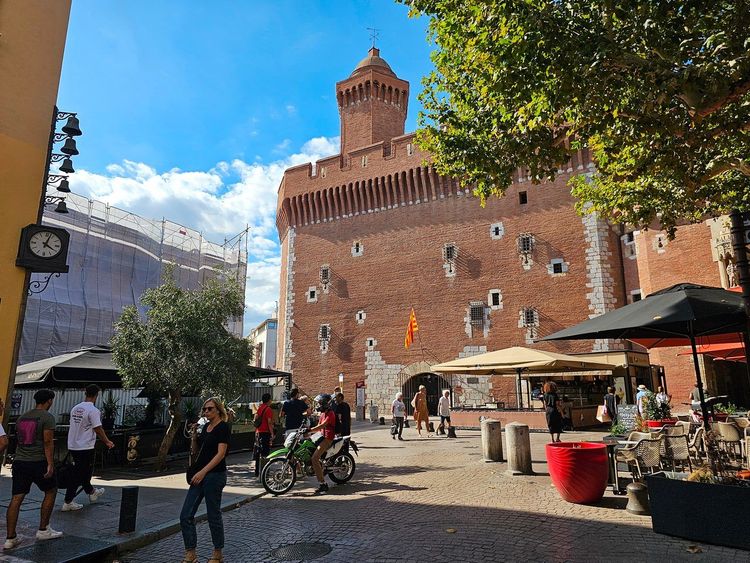
For a stay focused on the historic centre monuments, the streets around the Castillet and Place Arago put everything within walking distance, with no need for the car during morning visits. Apartments with kitchenettes and apart-hotels are easier to find here than in the very heart of the pedestrian zone, where older buildings often rise three storeys without a lift — a detail that matters with a pushchair.
If your stay combines city and sea, it's worth targeting Canet-en-Roussillon or a campsite on the coast, about twenty minutes' drive away, with direct beach access for afternoons and the monuments kept for cooler mornings. A third option is the mas and gîtes of the Aspres, 15 to 20 kilometres to the west: more space, a pool, and often a lower price in peak season. To plan the routes worth doing once you've settled in, the Ryo Perpignan audio tour is a good preparation tool, whatever district you choose.
Practical Information: When to Go, How to Get There and Getting Around with Kids
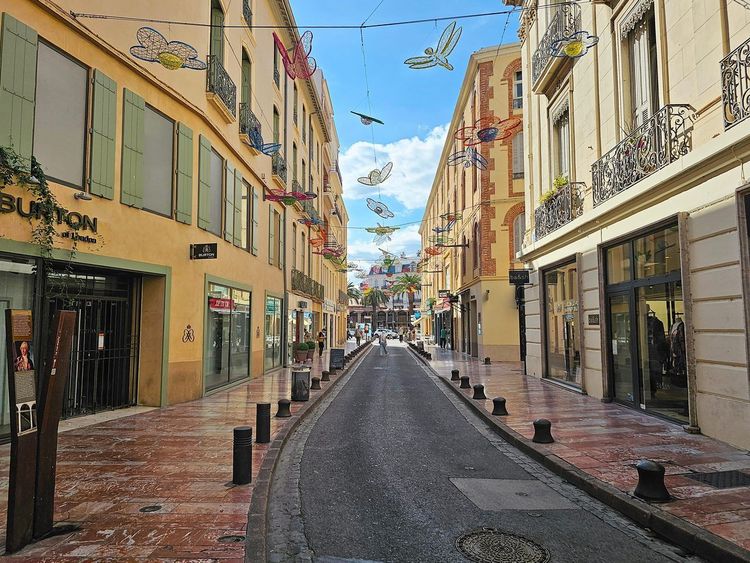
Spring (April–June) and early autumn (September–October) are the best windows: mild temperatures for walking around the historic centre, a sea still warm enough for swimming in September, and none of the sometimes overwhelming July–August heat that makes daytime visits difficult. If you come in midsummer, schedule monument visits before 11 a.m. and save air-conditioned museums for the afternoon. The tramontane, the northwesterly wind that blows for much of the year, provides a welcome cooling effect but can ruin a beach day.
Perpignan has a well-connected railway station with services to Paris, Montpellier, Toulouse and Barcelone, and an airport less than 10 minutes from the centre serving flights from several French and British cities. By car, the A9 motorway connects the city directly from Montpellier and from the Spanish border.
On the ground, the historic centre is entirely walkable and the Sankéo urban bus network covers outlying districts and Canet-en-Roussillon in season. For longer excursions such as Sigean, Tautavel or the Canalettes caves, a car is essential — no regular service connects these sites efficiently from Perpignan.
On the accessibility front, the old cobblestones in the city centre are manageable with a pushchair on most main streets, with a few rougher stretches around the cathedral and in the Saint-Jacques district. The Castillet, with its spiral staircase, and the citadel's rampart walks are difficult to access for pushchairs and people with reduced mobility; the Palais des Rois de Majorque, the Natural History Museum, the Rigaud Museum and the Oniria aquarium are largely step-free.

FAQ
What are the best family activities in Perpignan?
The historic centre (Castillet, Palais des Rois de Majorque, cathedral and Campo Santo cloister) forms the basis of a first day, complemented by the Natural History Museum and the tourist train. On a longer stay, most families add a trip to the Réserve Africaine de Sigean, the beaches of Canet-en-Roussillon, or the Tautavel museum.
When is the best time to visit Perpignan with kids?
Spring and early autumn offer the best balance between manageable heat for walking around town and access to nearby beaches, with the sea still pleasant until late September. Summer is possible but means scheduling historic centre visits early in the morning and saving air-conditioned interiors for the afternoon.
How do you get to Perpignan with a family?
The train from Paris, Montpellier, Toulouse or Barcelone and the Perpignan-Rivesaltes airport, less than 10 minutes from the centre, are the most practical options. By car, the A9 motorway connects the city easily from Montpellier and from Spain, with car parks on the immediate edge of the pedestrian zone.
How do you get around Perpignan with kids?
The historic centre is entirely walkable, largely along pedestrian streets, and the Sankéo bus network covers routes to outer districts and the coast. For day trips to Sigean, Tautavel or Banyuls-sur-Mer, a car is necessary as there are no regular services suited to these destinations.
What can you do in Perpignan with kids on a rainy day?
La Boîte à Rire, Jokibar and Jump Story offer three indoor options for a rainy day, alongside the Natural History Museum and the Hyacinthe Rigaud Museum. Twenty minutes away by car, the Oniria aquarium in Canet-en-Roussillon is the best half-day backup plan.
Are Perpignan's family attractions accessible for pushchairs and people with reduced mobility?
The city centre is generally pushchair-friendly, despite some uneven cobbled streets. The Castillet, with its narrow spiral staircase, and the citadel's rampart walks remain difficult to access; the Palais des Rois de Majorque, both municipal museums and the Oniria aquarium are largely step-free.
Perpignan packs enough variety into a small area to fill several days without needing a car for the city-centre day, then opens up a wide range of possible escapes once you're willing to travel half an hour. Between human-scale monuments, aquariums, a wildlife reserve, caves and a fortress to explore, there is more than enough to build a tailor-made itinerary suited to the age of your travellers and the length of your stay. To plan your visit in detail, the Ryo audio guide for Perpignan is the simplest starting point: it walks you step by step through the historic centre monuments described here, from the Castillet to Campo Santo, with short explanations easy to listen to as a group.
À lire également