© Shutterstock
 Votre guide Ryo
Visiting Perpignan Without a Car in 2026: On Foot, by Train and by Bike to the Sea
In Perpignan, the TER station is never more than a twenty-minute walk from the Castillet, which is the paradox for visitors convinced they need a car to explore the Pyrénées-Orientales. Yet visiting Perpignan without a car is no compromise: the city can be explored on foot in half a day, and its entire hinterland, from Collioure to Villefranche-de-Conflent, can be reached by train or Sankéo bus. As soon as you leave the platform, the Ryo audio-guided tour of Perpignan takes you to the Castillet in about fifteen minutes of walking, headphones on, with no waiting for a bus or hunting for a parking space.
In the pages that follow, you will find a 13th-century royal palace reachable on foot from the station, a Salses fortress just a few minutes' walk from the station, a century-old train that climbs to over 1,200 meters of altitude without you ever touching a steering wheel, and ten hikes listed as accessible by public transport. You will also come across contemporary mosaics set in the middle of the garrigue, a protected lagoon linked to the city by a greenway, and stone villages where a few buses a day are the only connection. Enough to build an entire stay in the Pyrénées-Orientales without ever looking for your car keys.
Perpignan on Foot: The Castillet, the Palace of the Kings of Majorca and the Historic Heart
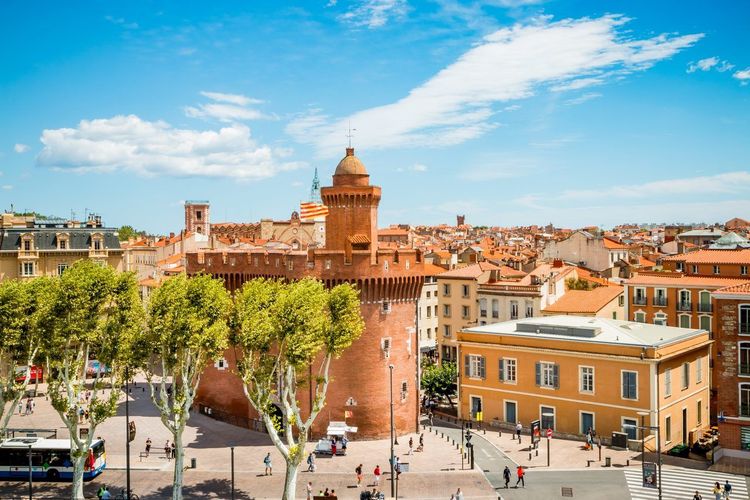
Perpignan is best discovered on the flat, within a rectangle barely 1.5 km wide that concentrates most of the Catalan heritage. From the station, allow a little under an hour's walk to link the two monuments that sum up the city: the Castillet and the Palace of the Kings of Majorca.
The Castillet and Place de la Victoire
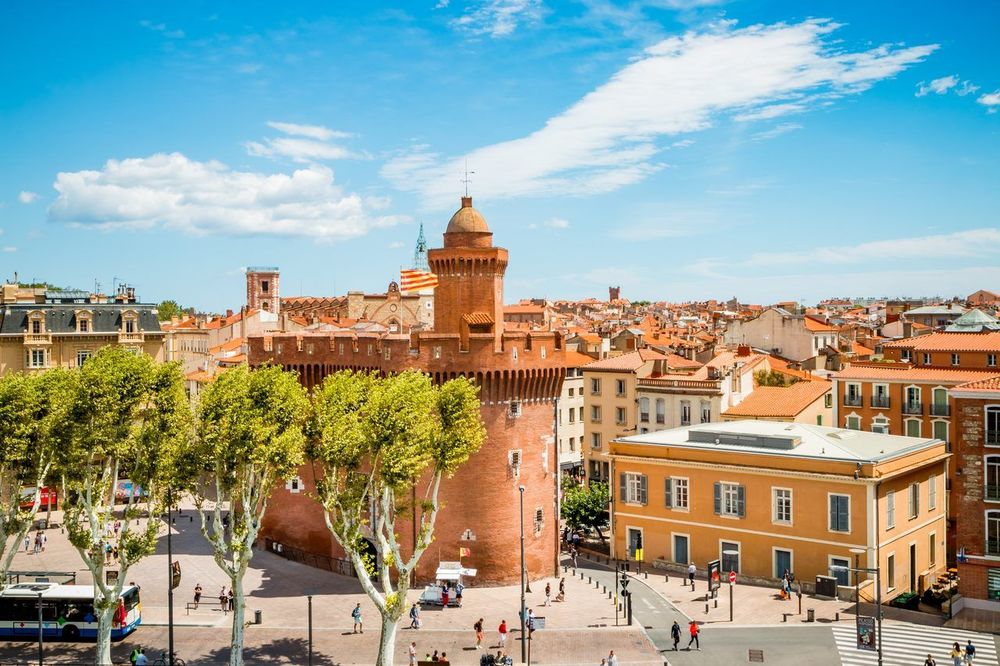
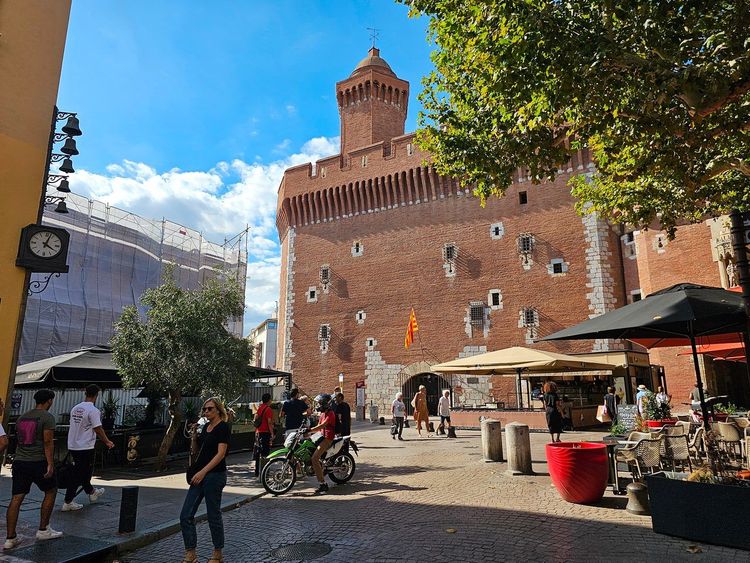
The Castillet marks the entrance to the old town, a ten-minute walk from the station along the cours Arago and then boulevard Wilson. This pink-brick gate from the 14th century, the only remnant still standing of the old ramparts, now houses the Casa Pairal, the museum of Catalan arts and folk traditions. You can climb up to the wall walk for a first panorama over the pink rooftops of the city and, on a clear day, the silhouette of the Canigou.
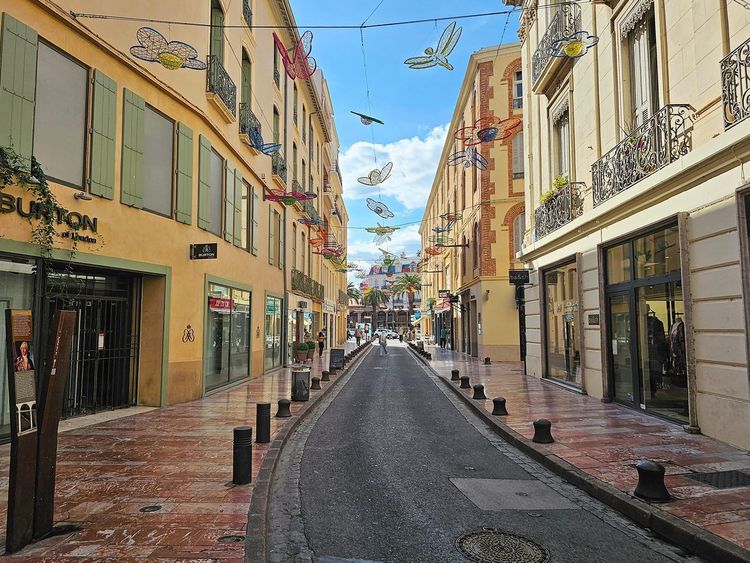
At the foot of the monument stretches the place de la Victoire, lined with terraces where you can sit down at the end of the day. It is the real starting point of Perpignan's old town: narrow lanes, Catalan facades with blue and green shutters, the smell of coffee drifting from the terraces. The shops along cours Arago & Wilson invite you to stroll without a set route, headphones on or map in your pocket.
It is precisely on this square that the Ryo audio-guided tour of the city begins: 19 audio clips for about one hour and 2.4 km, stopping in front of the Castillet, the Palace of the Kings of Majorca and the cathedral, with a different anecdote at each stop.
The Palace of the Kings of Majorca, the Cathedral and the Ramparts
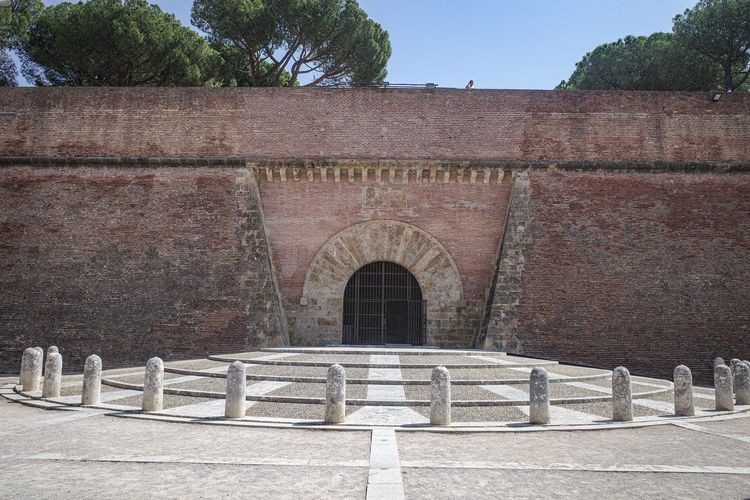
The Palace of the Kings of Majorca overlooks the city from the top of the Puig del Rey, about a twenty-minute walk from the Castillet via rue de l'Académie. Built from 1276 by James II of Majorca, this Catalan Gothic citadel long served as a royal residence before becoming a military fortress under Vauban. The courtyard of honor, the superimposed double chapel (Sainte-Croix below, Sainte-Marie-Madeleine above) and the terraced gardens alone are worth the climb.
Halfway there, the Saint-Jean-Baptiste Cathedral of Perpignan deserves a twenty-minute stop. Begun in 1324 and completed nearly two centuries later, it preserves in a side chapel the Devout Christ, a strikingly realistic 14th-century wooden sculpture. Entry is free, making it an easy stop to slip in between two paid monuments.
To link the two monuments without getting lost, take the Molière staircase, which climbs along the old ramparts of Perpignan to the foot of the citadel. The climb is steep but short, five minutes at most, and offers a clear view of the cathedral's bell tower.
On the way back to the station, two stops are worth a detour. The hôtel Pams, a Belle Époque mansion on rue Émile-Zola, hides behind its discreet facade a monumental staircase and painted salons, now attached to the town hall; check opening days with the tourist office. A little further on, the square Bir Hakeim (66000 Perpignan, rated 4.3/5 on Google from 735 reviews) offers a real break for families: a large shaded playground, benches and a bandstand, a stone's throw from the center without feeling like you've left it.
The Petit Train de Perpignan, a Fun Alternative for Discovering the City
For families or tired legs, the Petit Train de Perpignan (Place de la Loge, 66000 Perpignan, rated 4.6/5 on Google from 3,824 reviews) offers a fun and effortless way to explore the city: a thirty-five-minute guided ride from the historic center, with a circuit that passes back by the Castillet and the cathedral. The ticket costs a few euros (around 7 to 8 euros) and departures run every hour in season, less often in winter. Children especially enjoy passing the colorful facades of rue des Fabriques, where the commentary lingers on local anecdotes.
The formula appeals mostly to children, but it imposes fixed schedules and a set loop. Unlike this paid circuit, the Ryo audio-guided tour is done freely on foot, with no booking or time slot to respect, leaving you free to linger in front of a monument you particularly like.
Getting Around Town Without a Car: Sankéo Buses and Bikes
The Sankéo network covers the Perpignan urban area with more than thirty bus lines, including four high-frequency Pulséo lines (A, B, C and D) serving the station, the historic center and the main shopping areas. A single ticket costs about one euro (check the fare in the app) and a day pass gives unlimited transfers, worthwhile from three trips a day.
In summer, the network adds seasonal lines to the coastal beaches, useful for reaching Canet-en-Roussillon or Saint-Cyprien without a car for an afternoon. These shuttles generally leave from the city center and the bus station, every thirty minutes in high season.
Download the Sankéo app before you go: it shows real-time schedules and spares you waiting at a poorly served stop on Sundays, when frequencies drop sharply.
On a regional scale, liO buses and TER Occitanie offers let you travel smart in Occitanie: very low fares on bus lines, youth and senior discounts, low weekend prices, and connections designed to visit several villages in the same day without buying multiple single tickets.
To explore the surroundings by bike, Perpignan has a network of cycle paths extending toward the Canet lagoon and north toward Rivesaltes. Several rental shops in the city center offer electric-assist bikes by the day, an option that changes everything for reaching the villages of the Ribéral without tiring yourself on the stretches exposed to the sea wind, the famous tramontane that blows much of the year. The Sankéo sales office also rents bikes through its AlterEco service, by the day or longer, and the TGV station has a secure bike shelter if you arrive with your own bike.
For walking trips in the city center, the Ryo audio guide remains the simplest solution: it can be downloaded before you board the bus and keeps working offline once you reach the lanes of the historic heart.
Museums and Catalan Cultural Heritage
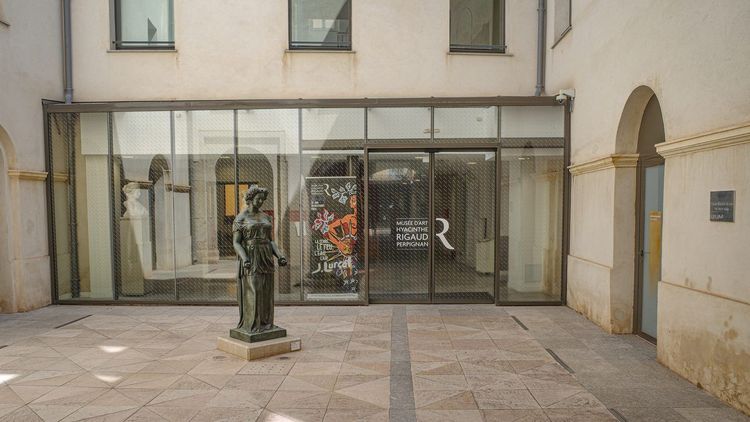
Perpignan has half a dozen human-scale museums, all accessible on foot from the center. The Hyacinthe Rigaud Art Museum, renovated in 2017, devotes several rooms to the Catalan painter born in the city and also displays canvases by Maillol and Dufy. Allow around 8 to 10 euros for admission depending on current exhibitions.
The Perpignan Natural History Museum (Rue Fontaine Neuve, 66000 Perpignan, rated 4.4/5 on Google from 635 reviews), housed on rue Fontaine-Neuve in a private mansion, will interest families in particular: an Egyptian mummy, minerals, and stuffed birds and mammals can be seen in about an hour, with a moderate entry fee.
Perpignan's cultural side also means 17th-century private mansions turned into temporary exhibition spaces, and a concert schedule that enlivens the cathedral in summer. To spot the neighborhoods where these addresses are concentrated, head to our article on the neighborhoods of Perpignan, which details historic Perpignan beyond the two main monuments.
Discovering Catalan heritage through its markets remains the most lively way to understand the city. The Cassanyes market, one of the liveliest in town, sets up its stalls of fruit, spices and Catalan charcuterie every morning except Monday, a ten-minute walk from the station. The République market, smaller and covered, rounds out the offer with its local producers and its stalls of Pyrenean sheep's cheese.
Between two museum rooms, the audio-guided tour tells the story of the Palace of the Kings of Majorca and the Catalan private mansions you pass along the way, a way to link the visit points without walking down the same street twice.
Villefranche-de-Conflent, the Yellow Train and the Red Train: The Escape to the Mountains
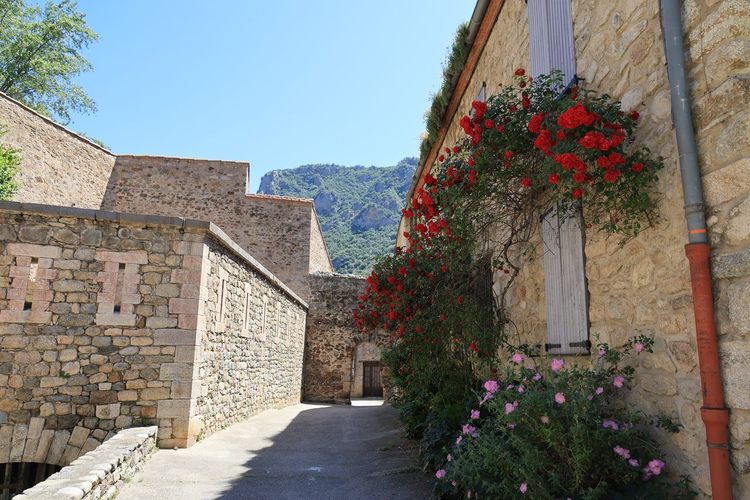
The fortified town of Villefranche-de-Conflent can be reached by direct TER from Perpignan station, in just under an hour and without changing. Listed as a UNESCO World Heritage site for the Vauban fortifications, the town fits entirely within its 17th-century ramparts, a perimeter you can walk in an hour. These ramparts, designed after the cession of Roussillon to France in 1659, make it one of the best-preserved examples of mountain fortification, alongside Mont-Dauphin and Mont-Louis.
The fortified town of Villefranche-de-Conflent also hides an underground passage carved into the rock, the Thousand Steps, which climbs up to Fort Libéria (66500 Villefranche-de-Conflent, rated 4.6/5 on Google from 2,613 reviews) perched on the hill opposite. Allow a good hour round trip on foot, or opt for the 4x4 shuttle that serves the fort from the church square in high season.
The Yellow Train departs from Villefranche-Vernet-les-Bains station, a narrow-gauge little train in the blood and gold colors of Catalonia, climbing toward the Cerdagne. The full trip to Latour-de-Carol takes about three hours and crosses the Gisclard bridge, a suspension viaduct listed as a historic monument, as well as the Séjourné bridge, 65 meters high.
There is no need to go to the end of the line: getting off at Mont-Louis or Font-Romeu is enough to enjoy the mountain scenery and catch a train back in the afternoon. Book your ticket in advance in July-August, as the open-air cars are full from the morning.
In winter, the same train serves the ski resorts of the Cerdagne, allowing a day trip to the snow without ever carrying chains or winter tires in a trunk. Connections with resort shuttles are announced at each stop.
Do not confuse the latter with the Red Train, the department's other tourist train. This one departs from Rivesaltes, a station served by TER from Perpignan, and goes up the Agly valley toward the Fenouillèdes, the vineyards of Maury and Saint-Paul-de-Fenouillet, as far as Axat in the Aude. It runs mainly in the good season on a schedule that varies from year to year: check the running dates before building your day around it.
Villefranche-de-Conflent is also a chance to give tired legs a break on the return trip: the terraces set against the ramparts look directly onto the railway, a good excuse to wait for the TER while sipping a Catalan coffee.
Collioure and the Côte Vermeille Villages by Train
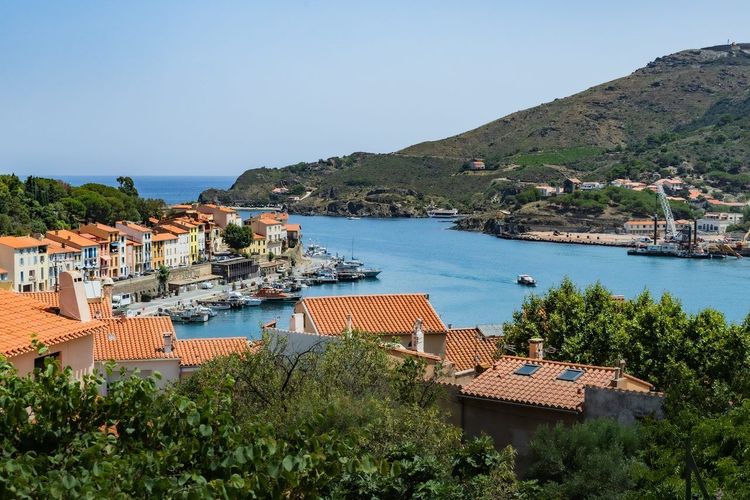
The TER line running along the Côte Vermeille serves, in order, Collioure, Port-Vendres, Banyuls-sur-Mer and then Cerbère, with some trains going on to Portbou (17497 Portbou, Spain, rated 4.3/5 on Google from 600 reviews), across the Spanish border, in a little over an hour from Perpignan.
Collioure, the Catalan Pearl
Collioure made a whole generation of Fauvist painters fall in love: Matisse and Derain set up their easels here in 1905, dazzled by the light bouncing between the rocky bell tower and the Catalan boats pulled up on the sand. The village is reached in 25 minutes by TER from Perpignan, with the station a five-minute walk from the harbor. A one-way Perpignan-Collioure ticket costs only a few euros by TER, a fare that makes the excursion accessible even for a simple afternoon at the beach.
The Royal Castle of Collioure, a fortress reworked by Vauban, overlooks the harbor cove and can be visited in a little under an hour. Right next to it, the bell tower of the Notre-Dame-des-Anges Church, a former lighthouse converted into a campanile, remains the village's most photographed image.
Avoid the midday slot in July-August: the lanes around the harbor turn into a dense pedestrian corridor. Prefer arriving in late morning or late afternoon, when the light skims the ocher facades.
For walkers, the coastal path from Collioure to Port-Vendres follows the Côte Vermeille for nearly 5 km of coves and terraced vineyards, a route with no technical difficulty that ideally complements the village visit. Our article on the Côte Vermeille cruise details the viewpoints not to miss along this stretch.
The anchovy-salting workshops, a local specialty since the 17th century, can be visited by appointment in low season and offer a tasting at the end of the tour, a good complement to the castle visit.
Port-Vendres, Banyuls-sur-Mer and Portbou
One stop further on the same line, Port-Vendres retains the look of an active fishing port, with its obelisk dedicated to Louis XVI and its quays where trawlers and pleasure boats still dock. Banyuls-sur-Mer, ten minutes further, is known for its natural sweet wine and its Arago laboratory, one of the oldest marine biology centers in Europe.
Between Port-Vendres and Banyuls, the terraced vineyard supported by dry-stone walls comes down in places to the sea, a protected landscape you can already glimpse from the train window.
Continuing to the terminus, Portbou is already in Spain: the international station recalls the era when you changed trains here because of the different track gauge, and the "Passages" memorial, dedicated to the philosopher Walter Benjamin who died here in 1940, overlooks the bay near the cemetery. The beach below, framed by cliffs, changes the mood radically compared with the Catalan villages passed earlier.
A Perpignan-Portbou round trip in one day is feasible, but it is better to choose a single village to linger in rather than trying to tick off all four: TER connections to the Côte Vermeille become less frequent in mid-day out of season.
The Salses Fortress, an Express Stop by Train
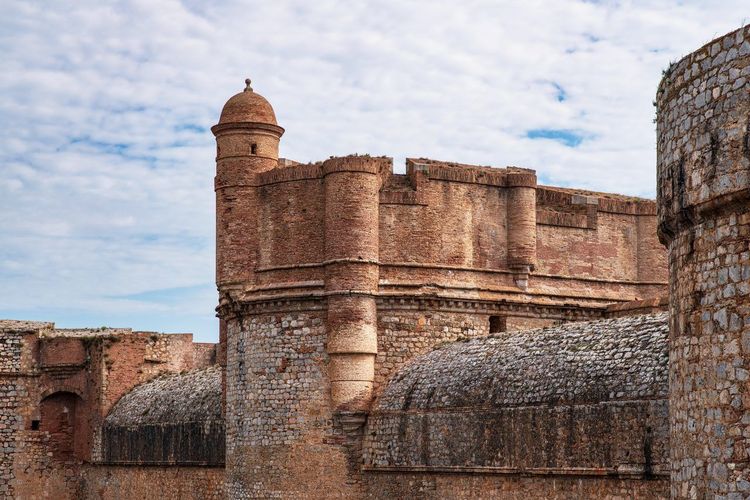
The Salses fortress (Avenue Pierre Cardinal, 66600 Salses-le-Château, rated 4.6/5 on Google from 9,090 reviews) can be visited straight from Salses-le-Château station, about ten minutes' walk away, making it one of the simplest excursions in the whole region without a car. Built between 1497 and 1503 for Ferdinand of Aragon and Isabella of Castile to defend the border with France, it blends medieval military architecture with the innovations of early artillery, walls several meters thick and rounded towers to deflect cannonballs. With walls six to ten meters thick, it remains one of the best-preserved fortresses of its kind in Europe.
The interior, left austere and sparsely furnished, leaves pride of place to the architecture: central courtyard, vaulted underground passages, wall walk with a view over the Leucate lagoon. Allow about 1h15 on site, with a free or guided visit depending on the season.
Salses-le-Château, the village that gave the fortress its name, can be explored in fifteen minutes and rounds off the visit with lunch on the main square before taking the TER back to Perpignan, barely twenty minutes away.
TERs toward Narbonne serve Salses-le-Château at a steady pace during the day, often every hour, which lets you improvise the visit without booking in advance. A one-way ticket from Perpignan costs only a few euros.
Hikes Accessible Without a Car Around Perpignan
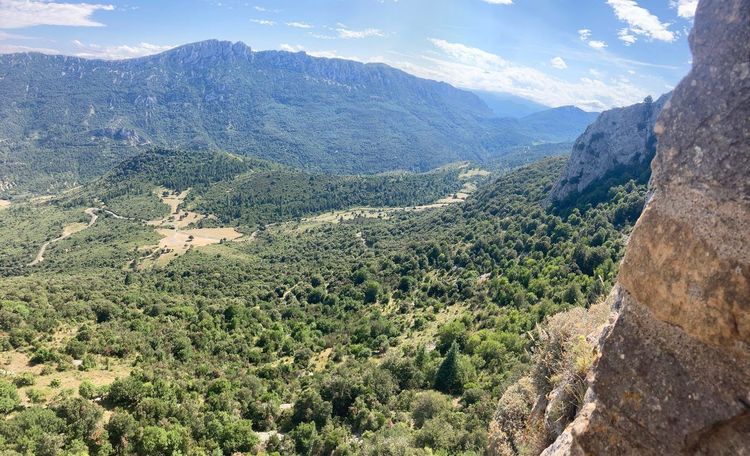
Ten routes come up regularly in local recommendations, all accessible by train or bus from Perpignan. Rather than detailing them all one by one, here they are grouped by geographic area. Local tourist offices selected these ten hikes precisely because they require no personal vehicle, a criterion still rare in conventional hiking guides.
Hikes in the Aspres and the Fenouillèdes
The Pic Aubeil balcony, in the Aspres, can be reached by liO bus to Llauro followed by a 2h30 round-trip climb through the garrigue, with a view over the Roussillon plain and the Canigou as a backdrop. The Saint-Vincent loop, starting from the village of Eus, combines a 1h30 trail and a visit to the listed village, accessible by TER to Prades station followed by a bus connection or an hour's walk.
Further north, in the Fenouillèdes, the path from Calce to Les Founts crosses a landscape of vines and garrigue over about 8 km, accessible by liO bus from Perpignan to Calce. The Notre-Dame-de-Pène hermitage, perched on a rocky outcrop above Cases-de-Pène, completes the route with an isolated chapel reached after a 45-minute climb.
Among these four trails, the Aspres and the Fenouillèdes complement each other well: the first area looks toward the plain, the second toward the mountains, best combined over two different days rather than in a single outing.
These Fenouillèdes trails are exposed to full sun in summer: set out early in the morning and bring at least 1.5 liters of water per person, as refreshment points are rare once you leave the villages.
Hikes Along the Agly and Through the Vineyards
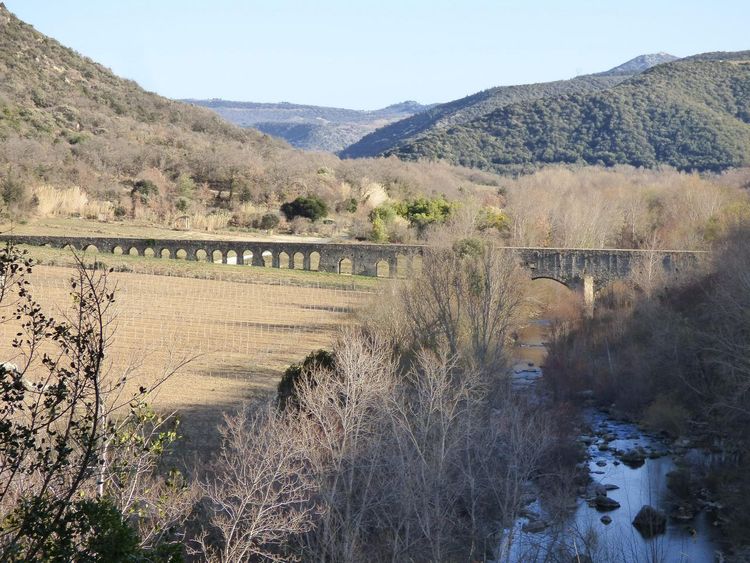
In the Agly valley, the banks of the Agly offer a flat, shaded walk along the river, accessible directly on foot from Rivesaltes station. Allow about 6 km round trip, manageable even with a stroller on the first half. The chemin des bacs, a little more demanding, follows old crossings used to cross the river before the construction of modern bridges.
The terroir trail, starting from Baixas, crosses plots of muscat and grenache planted on black schist soil, with information panels on Roussillon grape varieties. The Montner - Força Real loop, more athletic, climbs to the Força Real hermitage, a viewpoint at 507 meters of altitude overlooking the whole plain down to the sea.
The route that comes up most often in recommendations remains the tour del Far, reached by the trail starting from Cases-de-Pène: a medieval watchtower isolated among the vines, about 2 hours' round-trip walk, probably the most photogenic viewpoint of the whole area. On a clear day, the view reaches the Canigou on one side and the Mediterranean Sea on the other, a 360-degree panorama quite rare at this modest altitude. The moulin aux Gouleyrous, nearby, adds a shorter variant for families, 5 km without significant elevation gain.
All these starting points can be reached by TER to Rivesaltes or Espira-de-l'Agly, then on foot for the last kilometers to the trail: check return times before leaving, as services become less frequent after 6 pm.
The Canet-Saint-Nazaire Lagoon and the Coast by Bike
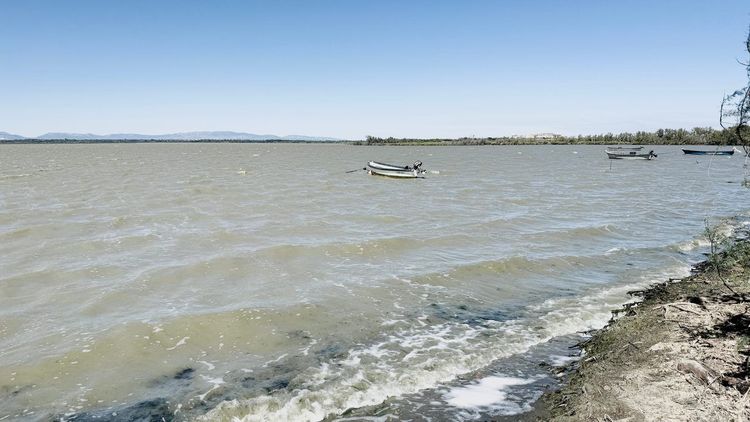
The Canet-Saint-Nazaire lagoon (66140 Canet-en-Roussillon, rated 4.5/5 on Google from 58 reviews), a Natura 2000 site, extends over nearly 800 hectares between Perpignan and the sea. You can reach it by bike from the city center in about 40 minutes, via a dedicated cycle path that partly follows the Têt. The full tour of the lagoon, doable by bike or on foot, is about 12 km on flat terrain, accessible to families with children as long as you bring water and a hat.
Bird watchers spot flamingos, little egrets and marsh harriers depending on the season, from the developed trails and the observatories set up along the water's edge. Morning remains the best time slot, before the sea breeze picks up and strollers arrive in numbers. On the shore, the small hamlet of Saint-Nazaire still has a few traditional fishermen's huts, relics of an eel-fishing activity that continues in an artisanal way.
It is to this lagoon that EuroVelo 8, the Mediterranean by bike, connects, a European cycle route that follows the entire Roussillon coastline to the Spanish border. Taking it northward, you also reach the Agly greenway, which runs along the river between Rivesaltes and the sea at Le Barcarès, away from all car traffic.
These two routes naturally extend the network of cycle paths in central Perpignan mentioned earlier: a bike rented in town is enough to link the lagoon, Saint-Cyprien beach and, for the most motivated, part of the greenway in a single day. Allow a day rental of around 15-20 euros for a standard bike, more for an electric-assist model, useful on the stretches exposed to the wind between the lagoon and the coast.
For family water activities around the lagoon, canoeing, paddleboarding or simple supervised swimming, our guide to natural swimming spots in the Pyrénées-Orientales lists the spots accessible without a car.
Villages of Character to Visit by Train or Bus
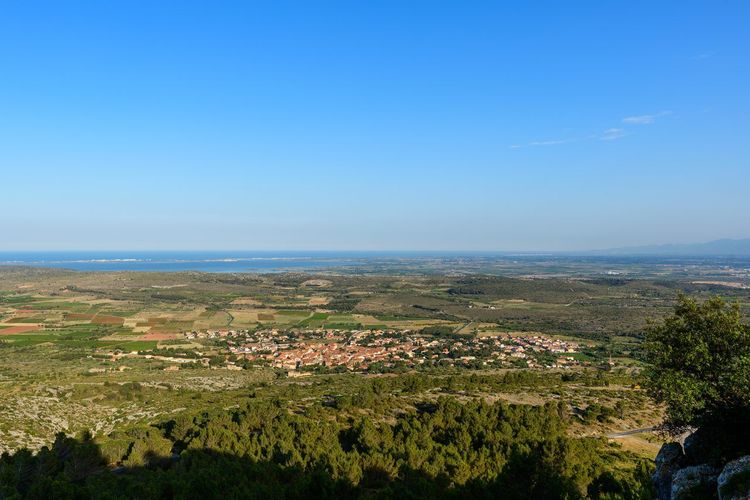
Beyond the coast and the mountains, several villages ranked among the most beautiful villages of France can be reached by liO or TER, with frequencies that vary greatly between weekdays and weekends.
Castelnou, Eus and the Listed Villages
Castelnou, a medieval village built in an arc around its viscounts' castle, remains one of the trickiest villages to reach without a car: the liO bus drops you at Thuir, about 6 km away, from where you finish on foot or by taxi. The cobbled lanes, the craftsmen's workshops and the trails that run into the garrigue of the Aspres make it one of the most photographed excursions in the department.
Eus (66500 Eus, rated 4.6/5 on Google from 900 reviews), perched on its rocky outcrop facing the Canigou, can be reached from Prades TER station, about 4 km away, an hour's walk, or by liO bus depending on the day. The Saint-Vincent Church, at the very top of the village, overlooks a tangle of dry-stone houses ranked among the Most Beautiful Villages of France.
These two villages are hard to visit on the same day without a car: it is better to choose Castelnou for a day trip from Perpignan, and reserve Eus for a combined trip with Villefranche-de-Conflent or Prades, served by the same TER line.
Ille-sur-Têt and the Mosaics of Tautavel
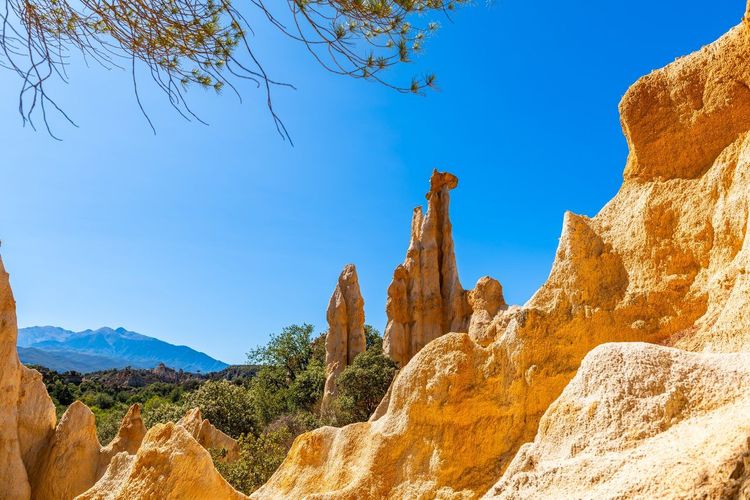
Ille-sur-Têt can be reached directly by TER, with the station a five-minute walk from the center. The site became known for its geological organ pipes, fairy chimneys sculpted in the clay by erosion, which you discover on a developed trail of about 45 minutes, half an hour's walk from the village. The tallest formations exceed 10 meters, an almost lunar landscape in the heart of an agricultural plain.
A little further north, in the same area accessible by liO, the Mosaics of Tautavel invite you on a route of art and memory through the village, to be complemented by the Prehistory Museum attached to the European center for prehistoric research, which tells the story of Tautavel Man, about 450,000 years old.
Our article on the most beautiful villages of the Pyrénées-Orientales details the precise liO/TER connections for each of these villages, a point few guides bother to check even though it determines the entire feasibility of a car-free excursion.
Further south, the abbey of Arles-sur-Tech can only be reached by liO, and only on weekdays: a detail to check before planning the visit, as the rural lines of the Vallespir sharply reduce their frequency on weekends.
Castles, Abbeys and Vineyards of Roussillon
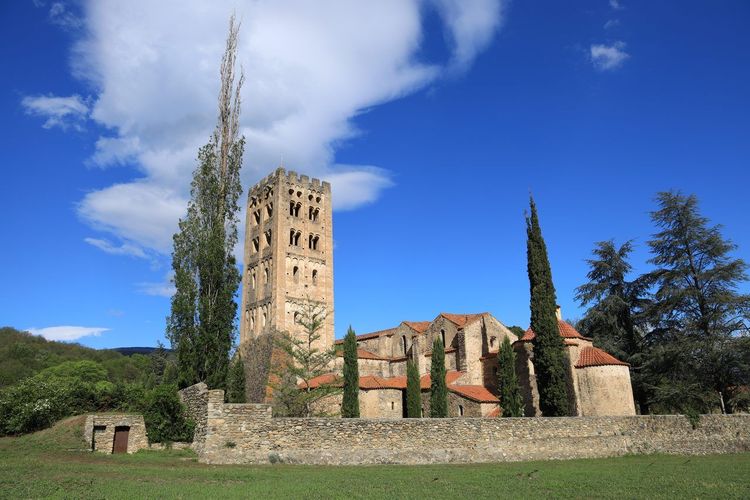
The castles and abbeys of Roussillon can be explored without a car as long as you choose your days well: Saint-Michel-de-Cuxa abbey, about 3 km from Prades TER station, or Serrabone priory, harder to reach and reserved for motorized visitors or those very motivated on foot from Boule-d'Amont. The latter honestly remains the most complicated on the list without a car: only a several-hour hike from Boule-d'Amont allows access by public transport, reserved for seasoned walkers.
The Roussillon vineyards await car-free visitors mainly around Baixas, Rivesaltes and Maury, villages linked to Perpignan by TER or liO. Several estates organize tastings a few minutes' walk from the station, a point rarely highlighted even though it changes everything for a weekend without a rental vehicle. For a simple option, several cellars in Rivesaltes, accessible on foot from the TER station, offer cellar tours followed by a tasting of three to five wines, a format doable in an hour on the way back to Perpignan.
Vineyard walks combine easily with the Baixas terroir trail mentioned earlier, or with a simple stroll among the plots of Maury, renowned for their natural sweet wines and served in season by the Red Train. Allow half a day for a cellar visit followed by lunch at a producer's. Book your tasting slot in advance during the harvest period, in late September, when estates concentrate their guided visits over a few days.
Catalan Traditions: Markets, Gastronomy and Festivals

The boles de picolat recipe, pork and beef meatballs simmered in a tomato sauce with olives and porcini mushrooms, remains the dish that appears most often on Catalan tables in Roussillon. It is on the menu of several restaurants in Perpignan's historic center, often served with white beans.
As for traditions, the Sanch procession has enlivened the streets of Perpignan every Good Friday since the 15th century: hooded penitents in black and red robes, funeral drums, a silent route through the old town that attracts several thousand spectators each year.
For a lighter interlude, Perpignan Méditerranée offers ideas each year for a romantic Valentine's Day: a candlelit dinner in a cloister, a night stroll through the illuminated center, or a simple drink on a terrace on place de la Loge when fine weather returns as early as February in some years.
Wildlife discoveries and nature activities complete this Catalan identity: the museum mentioned earlier, birdwatching outings around the Canet lagoon, or simply a seasonal flower market on place Arago, each of these experiences can be enjoyed without a car, within a morning.
Our top 10 culinary specialties of Perpignan details the places to taste these Catalan dishes, from bites of sweet rousquilles to the Collioure anchovies mentioned earlier.
Where to Sleep and Eat in Perpignan Without a Car
To choose where to sleep without a car, favor accommodation within a ten-minute walk of the station or the Castillet: city-center hotels, guesthouses in renovated Catalan houses, or furnished apartments near place Arago. Hotels set in former Catalan private mansions, around rue de l'Argenterie, often offer extra charm for a budget comparable to standard chains. Families will find several places with a kitchenette, useful for limiting restaurant outings every evening.
Allow between 70 and 130 euros a night for a double room in the city center outside July-August, more during the summer festivals that enliven place de la Loge. Booking three to four weeks in advance remains wise in this period. Budget travelers will also find a few economy hotels around the station, a practical option for catching an early-morning train to the coast or mountains without dragging luggage around town all day.
As for where to eat, the historic center concentrates most of the good places accessible on foot: Catalan restaurants around place de la Révolution Française, tapas bars on rue de la Fusterie, and the Cassanyes market fish hall for a quick lunch on the go.
In summer, the most popular option remains heading out to the coast: our selection of the best beach restaurants in Perpignan lists the beach spots accessible by Sankéo bus from the city center, with no need to drive for a lunch with your feet in the sand.
With children, book a table early, around noon: restaurants in the center are full by 1 pm on market days.
Planning Your Visit: Tickets, Duration and Practical Tips
For a first visit, allow two full days: one for Perpignan's historic heart on foot, a second for an excursion of your choice, Collioure, Villefranche-de-Conflent or the Salses fortress. With four to five days, it becomes possible to chain several excursions without rushing, alternating city walking and train trips.
TER tickets can be bought at the station, on the SNCF Connect app or on the liO app. As for buses, liO lines charge very low fares, around one to two euros per trip, and the Region offers TER discounts to under-26s: enough to completely change the budget calculation if you multiply your excursions.
High season, from July to early September, multiplies frequencies toward the Côte Vermeille but complicates connections to the hinterland villages, less in demand by tourists. Conversely, spring and autumn offer less crowded trains and more comfortable temperatures for the hikes mentioned earlier.
To organize a group visit, school or association, the Perpignan tourist office organizes guided tours on reservation, to be combined with TER group tickets, a formula that simplifies logistics when traveling with more than six people.
To come to the Pyrénées-Orientales without a car from outside the region, Perpignan station is linked by direct TGV to Paris in just over 5 hours, and by TER to Montpellier, Narbonne and Toulouse. Long-distance bus lines complete the offer for tight budgets, with trips from Barcelona in about three hours, while the high-speed train links the two cities in just over an hour.
One last recommendation before you go: the Tramontane, the wind that blows hard over the Roussillon plain, can disrupt some bus shuttles in winter. A glance at the local weather the day before avoids unpleasant surprises on planned outdoor excursions.



FAQ
How do you get to Perpignan without a car?
Perpignan is served by a direct TGV from Paris in just over 5 hours, and by TER from Montpellier, Narbonne or Toulouse. From Barcelona, allow about three hours by long-distance bus, or just over an hour by high-speed train. Perpignan-Rivesaltes airport, served by a few seasonal flights, is then connected by line 6 of the Sankéo network (Monday to Saturday) to the city center in about twenty minutes.
How do you get around Perpignan without a car?
The historic center can be explored entirely on foot in half a day. For longer trips within the urban area, the Sankéo bus network serves most neighborhoods and, in summer, the beaches. A bike rented for the day usefully complements this setup to reach the Canet lagoon or the cycle paths north of the city.
Can you visit Collioure by train from Perpignan?
Yes, and it is even one of the simplest excursions in the region: a direct TER connects Perpignan to Collioure in about 25 minutes, with frequent departures throughout the day in season. The station is a five-minute walk from the harbor and the royal castle.
What hikes can you do around Perpignan without a car?
About ten trails remain accessible by train or liO bus, spread across the Aspres, the Fenouillèdes and the Agly valley. The Pic Aubeil balcony, the Saint-Vincent loop at Eus and the tour del Far near Cases-de-Pène are among the most popular routes, all described earlier in this article.
How long does it take to visit Perpignan on foot?
The historic heart, from the Castillet to the Palace of the Kings of Majorca, can be covered in three to four hours, including a break at the cathedral. For a more in-depth visit with a museum and a market, allow a full day.
How do you visit the villages around Perpignan without a car?
Most of the listed villages, Castelnou, Eus or Ille-sur-Têt, can be reached by TER or liO, sometimes with a change. Frequencies drop sharply on weekends on the rural lines of the Vallespir and the Fenouillèdes: it is best to check return times before setting off, especially in low season.
Are Sankéo buses enough to visit Perpignan and its surroundings?
For the city and its immediate urban area, yes: the Sankéo network largely covers your needs, including the summer shuttles to the beaches. For longer excursions to Collioure, Villefranche-de-Conflent or the Salses fortress, the TER remains the fastest and most reliable solution.
Visiting Perpignan without a car therefore requires no sacrifice: the city can be explored on foot in a day, its Catalan hinterland unfolds by train all the way to the mountains or the sea, and the bike covers the last kilometers to the lagoon or the vineyards. Between the Castillet, the Salses fortress set a stone's throw from the tracks and the hilltop villages of the Conflent, a whole region reveals itself at the pace of the TER rather than that of the ring road.
For a first approach without wasting time finding your way, the Ryo audio-guided tour of Perpignan remains the simplest starting point: 19 stops, a little over an hour, and a city that tells its story directly in your ears as you walk. To extend your stay beyond the historic center, our article on things to do around Perpignan picks up where this guide leaves off.
À lire également