© Shutterstock
 Votre guide Ryo
The Most Beautiful Villages of the Pyrénées-Orientales: 12 Hidden Gems to Discover in 2026
Choosing the most beautiful villages of the Pyrénées-Orientales means picking between sea and mountains, as this Catalan département overflows with heritage. Here, a hilltop village facing the Canigou stands alongside a city fortified by Vauban, a fishing port where Fauvism was born, and a hamlet perched a thousand metres up where fewer than fifty people live.
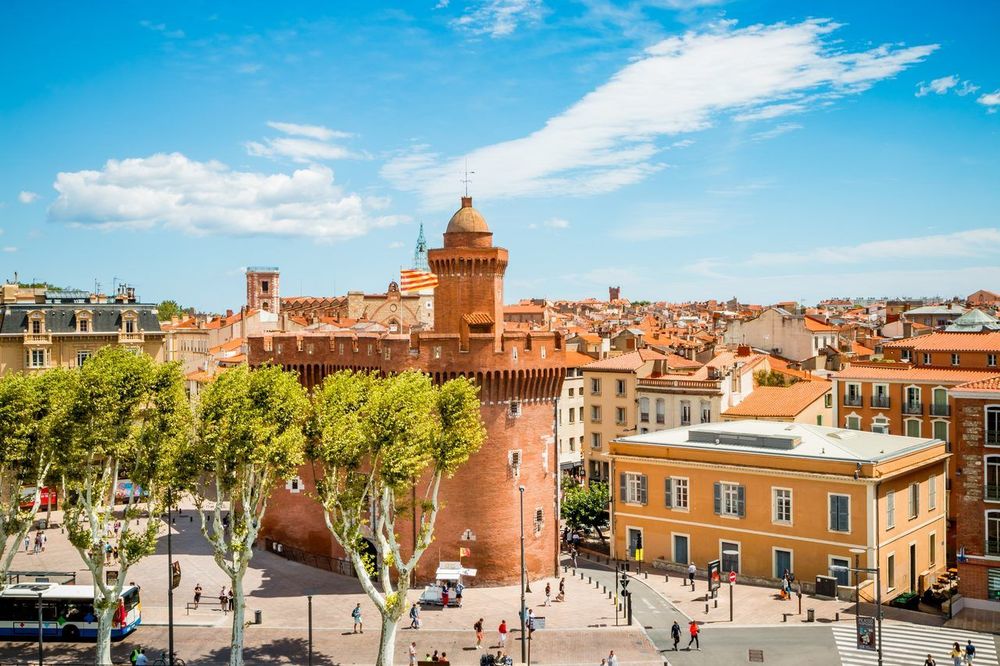
Twelve villages stand out for 2026: Castelnou with its viscounts' castle and artisans' lanes, Collioure with its bell tower rising straight from the Mediterranean, Eus with its roughly 2,600 hours of sunshine a year, Villefranche-de-Conflent with its UNESCO-listed ramparts, Prats-de-Mollo-la-Preste with its fort perched above the town, and Jujols, clinging to the mountainside above the Têt. Between hiking in the Conflent, tasting Muscat in Baixas and exploring modern art in Céret, this guide covers the Aspres, the Conflent, the Vallespir and the Côte Vermeille. If you are basing yourself in Perpignan, the Ryo audio guide tour of Perpignan (19 audios, 1 hour, 2.4 km) offers a great introduction to Catalan culture before you head out to the villages.
Castelnou, the Medieval Pearl of the Catalan Country
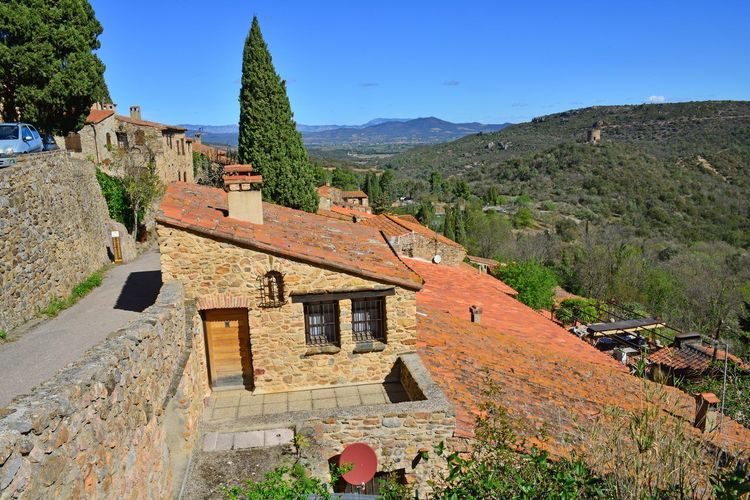
Castelnou almost always tops rankings of the most beautiful villages in the département, and it deserves every word written about it. Perched on a rocky outcrop in the Aspres, facing Mont Canigou, the village lines its brown stone houses around the fortress from which it grew. Around 280 residents live here year-round, yet this member of Les Plus Beaux Villages de France draws a stream of visitors every season that is out of all proportion to its size. In 2015, it even ranked seventh in the 'France's Favourite Village' competition.
The Château de Castelnou dominates the village from its promontory. First mentioned in 990, it became the seat of the Viscounts of Castelnou in 1018, who ruled from here for three centuries. In 1286, the forces of James II of Majorca stormed it, before it was returned to Viscount Jaspert V in 1299. Restored at the end of the 19th century and damaged by fire in 1981, the castle was bought in 2018 by the Département des Pyrénées-Orientales for a symbolic one euro. Its pentagonal walls, up to three metres thick in places, remain the village's most striking feature. Before heading up, check the visiting conditions for the interior, which depend on the progress of ongoing safety works.
Below the castle, the Église Santa Maria del Mercadal (Église Santa Maria del Mercadal, 66300 Castelnou, rated 4.7/5 on Google from 22 reviews) replaced the old castle chapel around the 12th century. Its Catalan name recalls the market that was held nearby. Listed as a historic monument since 1972, it can be visited in just a few minutes, but the cool shade of the nave is worth a pause after the climb.
The real pleasure of Castelnou lies in its steep lanes, where potters, painters and craftspeople have set up their workshops. The street running along the ramparts offers the finest view of the Canigou, especially late in the day when the stone takes on an ochre hue. Castelnou does not yet have its own dedicated audio tour: to place the village in its Catalan context, it is worth making a detour to the centre of Perpignan, about twenty kilometres away, where the Ryo tour devotes its 19 audio stops to the Catalan way of life.
Allow a good half-day to enjoy the village without being jostled by groups, which are more numerous at midday in summer. Parking is available below the village, and the heart of the village is explored entirely on foot.
Collioure, the Catalan Pearl Between Sea and Vineyard
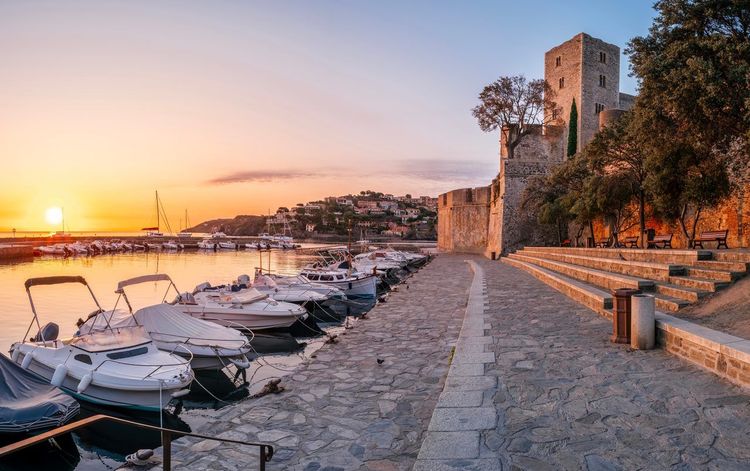
Collioure is nothing like a mountain village, and that is precisely what sets it apart from the rest of this selection. A former anchovy fishing port turned popular seaside resort, Collioure retains its narrow lanes, colourful facades and the light that drew Matisse and Derain in the summer of 1905. It was here, looking out over the bay, that Fauvism took shape over a few weeks of intense painting.
The Château Royal de Collioure has occupied the tip of the harbour since the 13th century. A summer residence of the Kings of Majorca and later a stronghold remodelled by Vauban, it now hosts temporary exhibitions and offers, from its ramparts, one of the finest views over the bay and the village rooftops.
The bell tower of Notre-Dame-des-Anges (Église Notre-Dame-des-Anges, 66190 Collioure, rated 4.5/5 on Google from 707 reviews) is arguably the most photographed image in the département. Built on the foundations of an old lighthouse, it juts directly into the water, its round silhouette topped by a pink dome that has served as a model for generations of painters following in the Fauvist tradition.
Around the village, the terraced vines of the Collioure and Banyuls vineyard climb steep schist slopes that plunge towards the sea. Tastings of Banyuls, a naturally sweet wine, are available at many local winegrowers, often by appointment. To put faces to those famous paintings, the Ryo audio guide tour La cité des peintres unfolds 21 audios over 3 km, taking roughly 1h30, from the seafront to the royal castle: you will learn exactly where Matisse and Derain set up their easels.
Eus and Villefranche-de-Conflent, Two Jewels of the Conflent
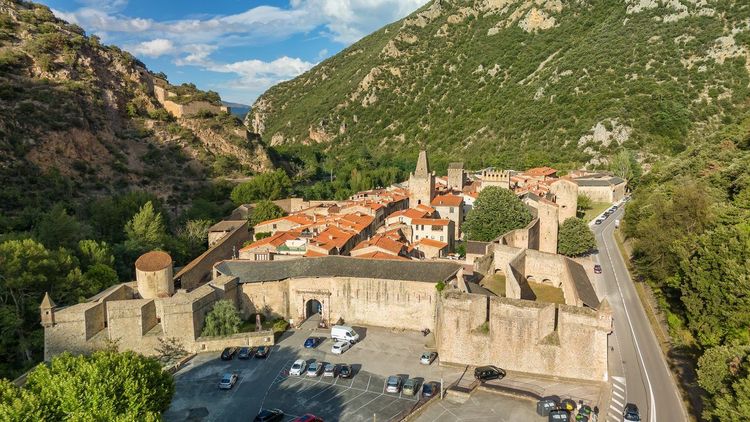
About forty kilometres inland, the Conflent valley concentrates two villages that appear to be total opposites: one perched and sun-facing, the other enclosed behind its walls. Both can be visited in a day, just twenty minutes apart by car.
Eus, the Sunniest Village in France
Eus climbs in tiers up its granite plateau, stone houses stacking one above the other up to the Église Saint-Vincent-d'En-Haut that crowns the summit. The village readily bills itself as the sunniest in France, with around 2,600 hours of sunshine a year — a dry climate that explains the Mediterranean vegetation clinging to its terraces in the heart of the Conflent.
The climb to the church, entirely pedestrianised, winds through a maze of steep cobbled lanes. At the top, the view opens over the Têt valley and, on a clear day, over the still snow-capped Canigou in spring. With fewer than 400 inhabitants, Eus remains far quieter than Castelnou in high season. A member of Les Plus Beaux Villages de France since 1984, it also has a Chapelle Saint-Vincent listed as a historic monument.
Villefranche-de-Conflent, the City Fortified by Vauban
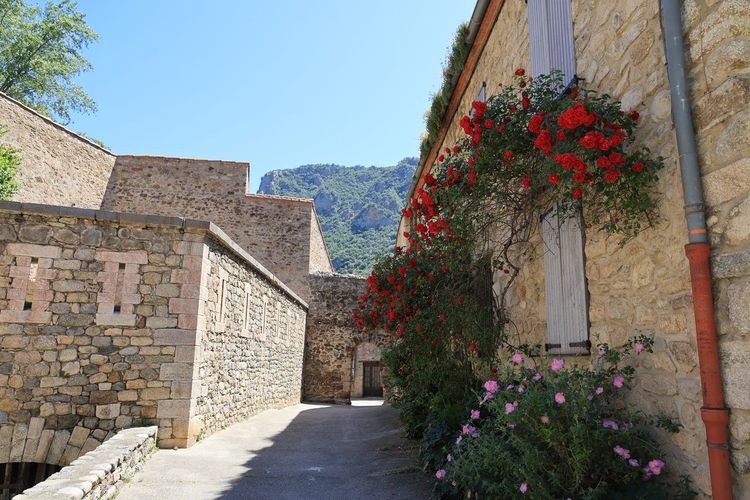
Coming back down towards the valley floor, Villefranche-de-Conflent appears like a solid block of stone set between two mountains. Founded in 1091 by Guillem Ramon, Count of Cerdagne, who made it his new capital, the city was fortified by Vauban at the end of the 17th century. Its ramparts and the Fort Libéria are among the Vauban sites inscribed on the UNESCO World Heritage List since 2008. Around 215 people live within the walls today.
The Vauban fortifications can be walked along a sentry path, with a bird's-eye view over the rooftops and Fort Libéria clinging to the neighbouring cliff. An underground staircase links the fort to the town: it is nicknamed 'the thousand steps', though in reality it has considerably fewer. Wear good shoes and bring water if you take it in summer.
Villefranche-de-Conflent is also the starting point of the yellow train, the narrow-gauge line that climbs towards the Cerdagne all the way to Bolquère-Eyne station, at 1,593 metres the highest station in France. Departures are from Villefranche-Vernet-les-Bains station, just below the walled city. Many visitors combine a morning on the ramparts with an afternoon ride on the yellow train, before heading up to Eus at the end of the day.
Evol and Nyer, Authentic Villages of the Conflent Valley
Away from the main tourist routes, two villages perched above the Têt are worth the detour for those seeking a more off-the-beaten-track visit than Castelnou or Villefranche-de-Conflent.
Evol, a Listed Hamlet in the Heart of the Valley
Evol is a simple hamlet belonging to the commune of Olette, to which it has been attached since 1827, and yet it features among Les Plus Beaux Villages de France. Its schist houses cling to the hillside above the Evol torrent, connected by alleyways so narrow that two people can barely pass each other.
The village's Romanesque heritage is expressed in its Église Saint-André, built in the 11th century, remodelled in the 18th and listed as a historic monument in 1943. Above the rooftops stands the tower of the castle built in 1260 by Guillem de So, surrounded by the remains of its enclosure. Evol is also literary territory: the novelist Ludovic Massé (1900–1982) was born here, and his house now houses a literary cabinet bearing his name. You can extend the visit with a valley walk along the trails that set off from the hamlet.
Nyer, One of the Most Discreet Villages in the Pyrénées-Orientales
Further into the Conflent, Nyer has to be earned: the winding road leads to a village of around 150 inhabitants, nestled in a commune that ranges from 656 to 2,645 metres in altitude. Few tourist circuits stop here, making it one of the most authentic villages in this selection. Its history, however, once resonated across Europe: the 'Nyerros', armed bands linked to the barons of Nyer, are said to have inspired certain episodes of Cervantes' Don Quixote.
The Nyer Regional Nature Reserve, created in 2007, protects more than 2,300 hectares of forests and high-altitude grasslands, home notably to golden eagles. Several marked trails set off from the village for half-day hikes. Wear sturdy footwear: the ascent begins almost as soon as you leave the last houses.
Prats-de-Mollo-la-Preste and Céret, Gateways to the Vallespir
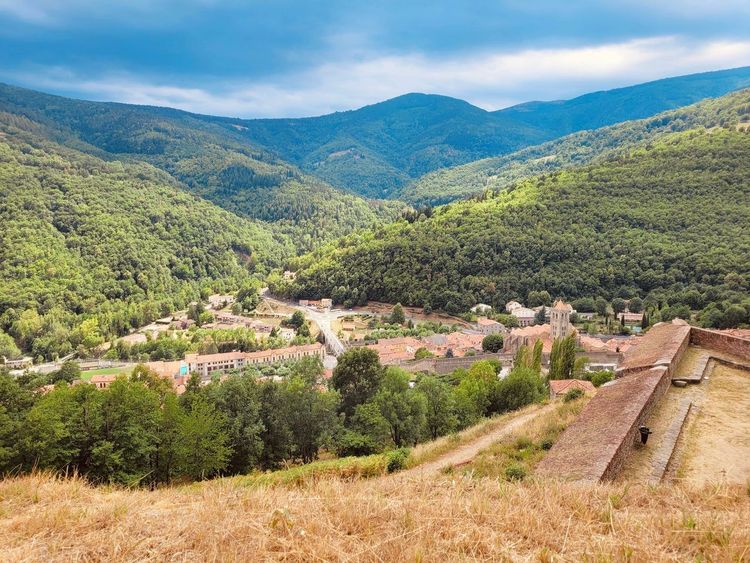
The Vallespir, the Tech valley bordering Spain, has a more mountainous character than the Roussillon plain. Two towns mark its course and each deserves a dedicated stop.
Prats-de-Mollo-la-Preste, the Fortified City of the Haut Vallespir
Prats-de-Mollo-la-Preste, which joined the Les Plus Beaux Villages de France network in 2023, boasts ramparts raised in the mid-14th century and Fort Lagarde. Demolished during the Angelets revolt, the walls were rebuilt in 1683. The fort, constructed between 1677 and 1682 on the orders of Louis XIV with Vauban's involvement, watches over the town to secure the new border established by the Treaty of the Pyrenees. The ramparts and Fort Lagarde can be visited together, linked by a covered walkway.
About 8 kilometres upstream, the La Preste thermal baths draw on waters recognised for their benefits in rheumatology and urology. The spa resort flourished in the 19th century, to the point that Napoleon III had the access road built. Even without taking a cure, the drive up to la Preste is worth it for the high-valley scenery, refreshingly cool in the height of summer.
Céret, Cherry Capital and Home of the Cubist Painters
Céret has earned a double reputation: that of the capital of France's first cherries, harvested at the end of spring and celebrated each year at a hugely popular festival, and that of a major centre of modern art. Picasso, Braque and Juan Gris stayed here in the early 20th century, drawn by the light of the Vallespir and the friendship of Catalan sculptor Manolo.
The Musée d'art moderne de Céret (Musée d'art moderne de Céret, 8 Boulevard Maréchal Joffre, 66400 Céret, rated 4.5/5 on Google from 2,455 reviews) holds one of the finest Cubist collections in France, enriched by donations from artists with ties to the town. The streets are best explored in the shade of century-old plane trees, and the Pont du Diable, thrown across the Tech in the 14th century, is worth a photo stop. If the link between painting and the Catalan landscape resonates with you, save the Collioure audio tour for the end of your trip: the Fauvists and the Cubists speak to each other across just a few dozen kilometres.
Mosset, the Discreet Treasure of the Castellane Valley
Mosset rarely appears in mainstream travel guides, yet its streets are well worth the detour. Perched in the Castellane valley, 8 kilometres from Prades and not far from the Col de Jau leading towards the Aude, this village — long a member of Les Plus Beaux Villages de France — has preserved a cohesive medieval layout.
The remains of the Château de Mosset (Ruines du château de Mosset, 66500 Mosset, rated 4.5/5 on Google from 8 reviews), whose origins date back to the 11th century, still loom over the village. Nearby, the Tour de la Mascarda, a square watchtower dated 1242, recalls the defensive role of the site, while the Tour des Parfums offers an original sensory approach to local heritage. The cobbled lanes and alleyways wind between stone houses: outside weekends, you will rarely encounter more than a handful of visitors, even at the height of summer.
Baixas and Palau-del-Vidre, Villages of Winemakers and Craftspeople
Leaving the massif behind for the Roussillon plain, two villages illustrate another side of the département: its wine-growing terroirs and Catalan craftsmanship.
Baixas, Between Vineyard and Gilded Altarpiece
Baixas, 9 kilometres from Perpignan, is surrounded by vines that produce Muscat de Rivesaltes and Côtes du Roussillon wines, among others. The village made its mark on wine history: in 1907, it was the first to rise up during the great Midi winegrowers' revolt. Its church, Notre-Dame-de-la-Nativité, houses a Baroque altarpiece 17 metres high, entirely gilded in fine gold in 1698, one of the most spectacular in the Roussillon.
A tasting at a local winemaker is easy to arrange, often directly at the estate, and gives a clear sense of why this corner of the Catalan plain has built a reputation for naturally sweet wines.
Palau-del-Vidre, the Former Village of the Glassmakers
Palau-del-Vidre means 'the glass palace' in Catalan, a reference to the glassworks established here by the Templars in the 13th century. The glassmaking activity continued until the 18th century, and local craftspeople are now trying to revive it. The Église Saint-Sébastien, from the 12th century, preserves several 15th-century altarpieces and a rare Opening Virgin statue.
Less well known than its neighbours, this village bursts into bloom in spring and lends itself to a short stroll, ideal as a complement to a day spent in Collioure or on the Côte Vermeille.
Jujols, the Village Perched Above the Têt
Jujols often appears on lists as 'the highest village in the Pyrénées-Orientales', but the claim does not hold up: the village sits at around 1,000 metres, while several communes in the Cerdagne and the Capcir exceed 1,500 metres. Its real appeal lies elsewhere. Jujols clings to the slope, 400 metres above the Têt valley, at the foot of Mont Coronat. The commune had just 47 inhabitants in 2023, compared with 242 at the beginning of the 19th century.
People come here for peace and nature rather than for any specific monument. The Jujols National Nature Reserve, created in 1986, protects 467 hectares of dry hillsides, and the village is part of the Parc naturel régional des Pyrénées catalanes. The nights here are profoundly dark, perfect for stargazing. If you are looking for the ultimate contrast with the summer bustle of Collioure, this is the place to find it.
How to Plan Your Road Trip Through the Villages of the Pyrénées-Orientales
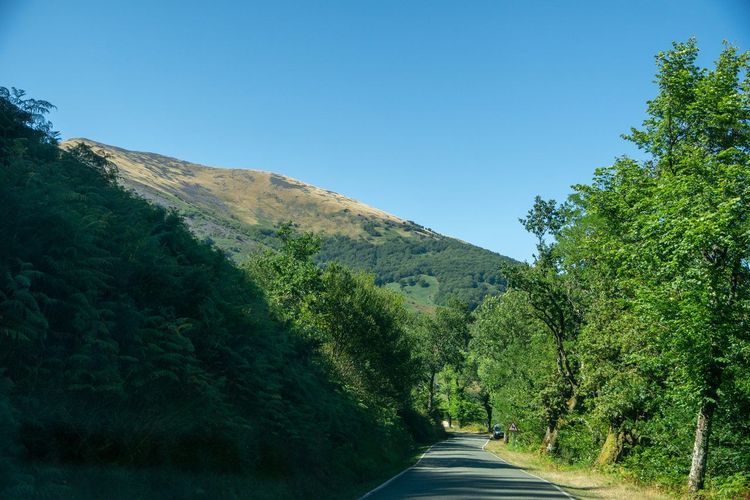
Organising a tour of these twelve villages requires a minimum of planning, as the distances between the coast and the Haut Vallespir can catch you off guard.
To get here, Perpignan-Rivesaltes airport remains the most convenient entry point, about thirty minutes from Castelnou and even closer to Baixas. By train, Perpignan station serves Collioure via the Côte Vermeille line and Villefranche-de-Conflent via the Têt valley line, where you can then join the yellow train. The accessibility of mountain villages such as Evol, Mosset or Jujols, however, depends on a car, as public transport there is rare or non-existent.
The best time to visit these villages falls between April and June, or in September–October: temperatures remain pleasant in the mountains, the light on the Côte Vermeille is superb, and you avoid the July–August crowds that can make Castelnou and Collioure difficult to enjoy in peace.
A suggested itinerary over four to five days could follow this order: Collioure and its vineyard arriving via the coast, then Castelnou and Baixas on the plain, before heading up to Eus and Villefranche-de-Conflent in the Conflent, and finishing with Prats-de-Mollo-la-Preste and Céret in the Vallespir, with Mosset, Evol, Nyer and Jujols as alternatives depending on the time available. Allow a minimum stay of three days for the must-sees, and a full week to miss nothing.
For getting between villages, a car is essential: journey times range from about twenty minutes between Castelnou and Baixas to over an hour between Collioure and Prats-de-Mollo-la-Preste. For sightseeing, the two Ryo audio guide tours in the département — in Perpignan and in Collioure — launch from your smartphone the moment you arrive: no need to book a guide or fix a time, leaving you free to be flexible with the mountain stops.
Where to Stay and Where to Eat Near These Villages
Accommodation around these villages leans heavily towards camping, which is highly developed across the Roussillon plain and along the Côte Vermeille. Many 4-star campsites and 5-star campsites can be found on the coast, less than half an hour from Baixas or Palau-del-Vidre, with pools and activities that suit families combining beach time with village visits.
For a stay more focused on the Conflent and the Vallespir, bed-and-breakfasts and small hotels housed in old village buildings offer a different pace, just minutes from the ramparts of Villefranche-de-Conflent or the centre of Céret. Prades, at the foot of the Canigou, also makes a practical base for Eus, Mosset and Evol.
At the table, Catalan cuisine is everywhere: boles de picolat, escalivada, crema catalana and, in season, the cherries of Céret. The markets in Céret, Prats-de-Mollo-la-Preste and Collioure are great places to pick up local produce, from mountain honey and Muscat de Rivesaltes to the anchovies of Collioure, prepared using skills passed down through generations.



FAQ
What is the most beautiful place in the Pyrénées-Orientales?
There is no single consensus, but Castelnou comes out on top most often, thanks to its viscounts' castle and its Les Plus Beaux Villages de France label. Collioure and its Fauvist colours generally come in just behind.
Which villages in the Pyrénées-Orientales are listed as Plus Beaux Villages de France?
The département has five labelled villages: Castelnou in the Aspres, Eus, Evol and Villefranche-de-Conflent in the Conflent, and Prats-de-Mollo-la-Preste in the Vallespir, which joined the network in 2023. Mosset was a member for many years before losing the label.
How much time should I allow to visit the most beautiful villages of the Pyrénées-Orientales?
Allow three days for the must-sees (Castelnou, Collioure, Villefranche-de-Conflent, Eus) and up to a week if you want to add the Vallespir and the more off-the-beaten-track villages such as Nyer or Jujols.
What is the best time of year to visit these villages?
Spring (April to June) and the shoulder season (September–October) offer the best balance between mild weather and manageable crowds, avoiding the July–August rush on the Côte Vermeille.
Which village should I choose if I only have one day?
Castelnou remains the straightforward choice: artisans' lanes, a Romanesque church and views over the Canigou can all be covered in half a day, leaving the afternoon free for Baixas or Villefranche-de-Conflent.
Are these villages accessible by public transport?
Collioure and Villefranche-de-Conflent can be reached by train from Perpignan, and the yellow train then serves a stop at Nyer. Villages such as Evol, Mosset or Jujols, however, require a private vehicle, as regular public transport is lacking.
Where should I stay to visit several villages in the Pyrénées-Orientales?
Perpignan makes a practical central base from which to explore Castelnou, Collioure and Baixas. To discover more of the Conflent and the Vallespir, it is better to stay closer to Prades or Céret, even if that means changing accommodation mid-stay.
At the end of this tour of the most beautiful villages of the Pyrénées-Orientales, one thing becomes clear: this Catalan département rewards those who take the time to venture off the beaten track, between Vauban ramparts, Romanesque hamlets and terraced vineyards. To broaden your travel wishlist to a national scale, our selection of the most beautiful villages in France offers more ideas for stops along the way.
Whether you are heading off for a weekend or a full week, these villages are best discovered on foot, lane by lane. To start or end your stay, the Ryo audio guide tour of Perpignan tells the story of the Catalan way of life — the thread connecting Castelnou, Céret and Collioure — in just one hour.
À lire également