© Shutterstock
 Votre guide Ryo
15 Free Activities to Do in Perpignan in 2026
Finding free activities in Perpignan is no challenge: the city's light shifts in hue depending on whether it strikes the pink bricks of le Castillet, the green water of the Têt, or the golden sand of the nearby lagoons, and none of these variations come at a cost. This guide to free activities in Perpignan and the surrounding area brings together fifteen experiences open to all, from the Castillet that opens the Ryo audio-guided tour of Perpignan to the nature reserve of the lake of Villeneuve-de-la-Raho, fifteen minutes by car from the center. The Catalan city has a reputation for being expensive in summer, saturated with terraces and beach bars priced at a premium along the coast, but its historic center, parks, and immediate surroundings tell a very different story.
Between these two extremes, you'll find a royal palace whose doors open to everyone on certain Sunday mornings, a Catalan Gothic cathedral you can wander through without buying a ticket all year round, a natural history museum founded in 1833, and a photojournalism festival that sets up open-air exhibitions each late summer in the streets of the center. Add to that traditional fishermen's huts less than twenty minutes from the center, two popular markets where you can stroll without spending a euro, and Catalan villages listed among the most beautiful in France: Perpignan is very well suited to exploring on foot, without the budget becoming an obstacle.
1. Admire Le Castillet and the Esplanade Arago
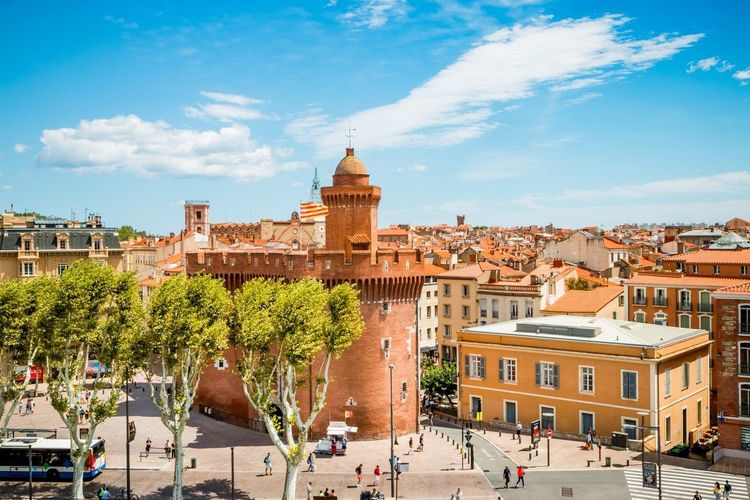
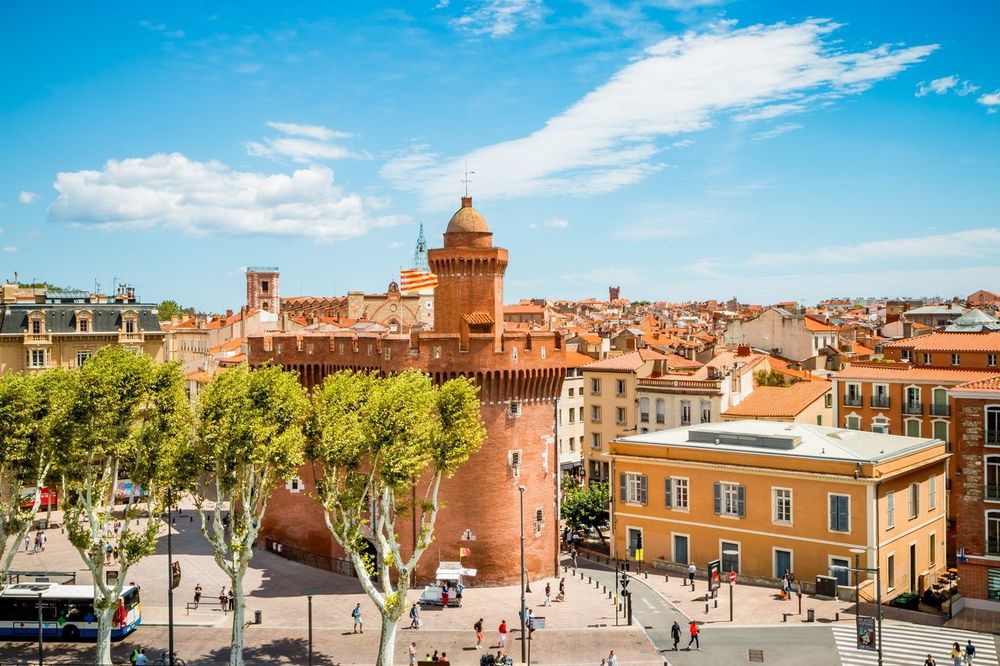
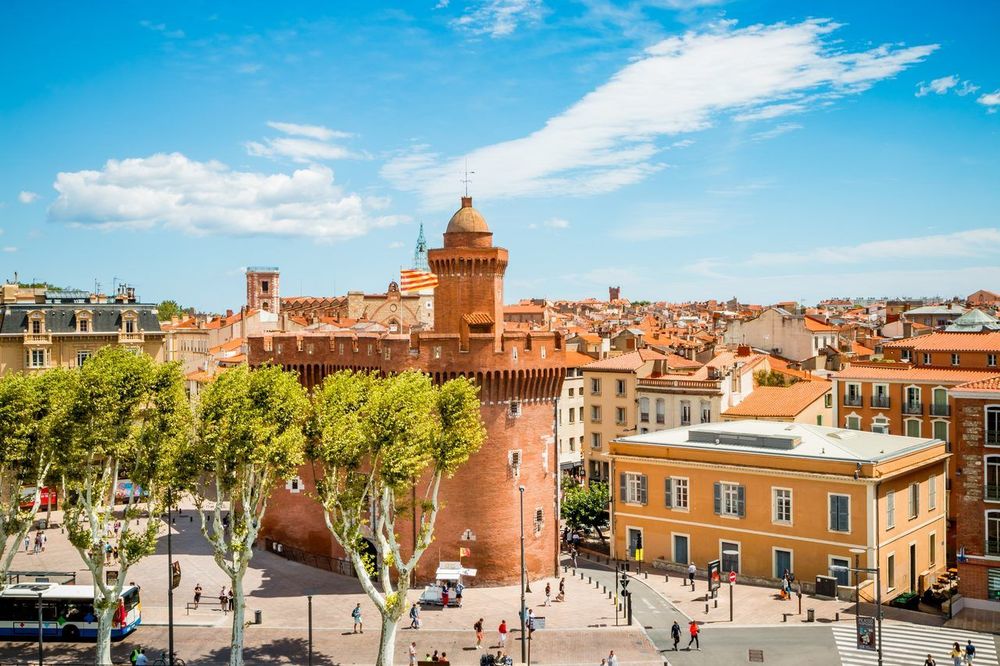
Le Castillet is the only fortified gate still standing from Perpignan's medieval ramparts. Built in 1368 under the reign of Peter IV of Aragon, this pink brick tower stands out in a region where fortifications are typically built from river pebbles and stone. It served as a prison for a long time before becoming, in the 20th century, the city's visual symbol: this silhouette appears on most postcards and tourist posters of the Roussillon.
Access to the Esplanade Arago, the square stretching in front of the tower, is free at all hours. You can approach the ramparts, photograph the façade from several angles, and watch the comings and goings of the city center from the benches lining the square. Only the Casa Pairal museum, housed inside le Castillet and dedicated to Catalan folk arts and traditions, requires an entry ticket: the exterior can be explored without spending a euro.
Look up toward the battlements in the late afternoon: the view sweeps across the pink-tiled rooftops of the historic center all the way to the first foothills of the Canigou on a clear day. This climb is included in the museum ticket; without it, the panorama from the forecourt is more than enough to grasp the scale of the former stronghold.
Le Castillet (Place de Verdun, 66000 Perpignan, rated 4.4/5 on Google from 4,429 reviews) marks the starting point of the Ryo audio-guided tour of Perpignan, which uses this pink-brick landmark to orient the following stops in the historic center. Handy if you prefer to follow a thread rather than improvise your stroll through the Catalan alleyways. Arrive before 10 a.m. in summer: the esplanade fills up quickly with organized tour groups.
2. Visit the Palais des Rois de Majorque on Sunday Morning
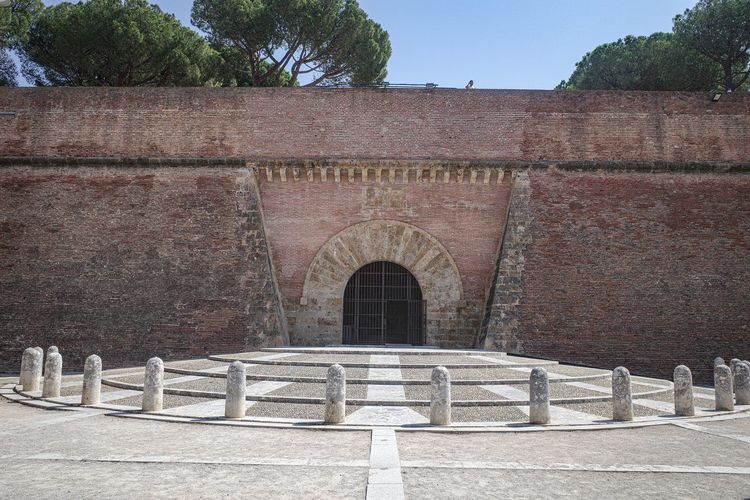
Perched on the Puig del Rey, the Palais des Rois de Majorque (2 Rue des Archers, 66000 Perpignan, rated 4.2/5 on Google from 8,602 reviews) has dominated the city since the 13th century. The residence of the sovereigns of the Kingdom of Majorca between 1276 and 1344, then a French military fortress from the 17th century under Vauban, the building combines an arcaded courtyard of honor, a two-level royal chapel, and terraced gardens planted with orange and pomegranate trees.
Entry is normally paid, but the city of Perpignan opens the palace to everyone, without a ticket, on the first Sunday of each month from October to May, excluding July and August. This slot attracts mainly local residents rather than passing tourists, which noticeably changes the atmosphere of the visit: fewer queues, more silence in the Chapelle Sainte-Croix.
Check the exact date with the tourist office before making the trip, as opening hours can vary from season to season. If your visit to Perpignan falls on another day, the outer ramparts and the gardens below, on the avenue de Grande-Bretagne side, remain visible and photographable without passing through the ticket office.
The palace can also be visited during the European Heritage Days in mid-September, with guided tours included. Two annual opportunities are generally enough to combine this monument with the rest of the historic center itinerary, without blowing the budget for a stay in Perpignan.
The Chapelle Sainte-Croix inside the palace illustrates the typical Roussillon style: alternating rows of river pebbles and flat bricks, a construction technique found in several religious buildings in the region. Its two-level layout — a lower chapel for the palace guard and an upper chapel reserved for the royal family — is a rare feature in France. From the upper terrace, the view extends over the rooftops of the historic center, the Roussillon plain, and, on a clear day, the silhouette of the Canigou.
3. Step Inside the Cathédrale Saint-Jean-Baptiste and the Campo Santo
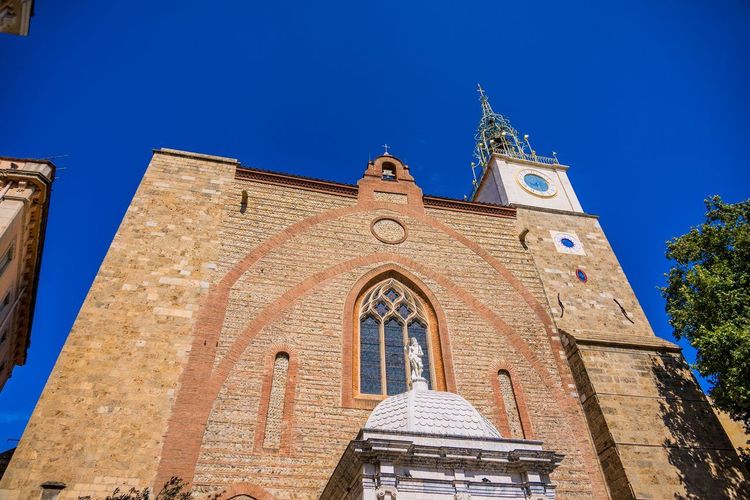
The cathédrale Saint-Jean-Baptiste (Place Gambetta, 66000 Perpignan, rated 4.5/5 on Google from 3,256 reviews) took nearly two centuries to complete: the construction, launched in 1324, was only finished in the early 16th century. The result is a accomplished example of Catalan southern Gothic, with a single nave sixteen meters wide, without the side aisles typical of cathedrals in northern France.
Entry into the nave is free all year round, outside religious services. You can linger before the Baroque altarpiece of the high altar or the side chapels without any ticket booth stopping you at the entrance: only appropriate attire is required, as in most Catalan religious buildings.
Adjoining the cathedral, the Campo Santo is one of the few medieval cloister-cemeteries still preserved in France, built in the 14th century to house the burial plots of Perpignan families. It now hosts concerts and festivals, and access depends on the programming: simply admire its arcade gallery from the street if an event has taken over the space, or take advantage of Heritage Days open houses to walk around it.
Visit at the end of the day: the stone of the façade and the bell tower take on a particularly photogenic golden hue in the raking light, and the Place Gambetta empties of tour groups after 6 p.m.
4. Get Lost in the Quartier Saint-Jacques and Its Catalan Alleyways
The quartier Saint-Jacques, on the hill overlooking la Basse, is Perpignan's oldest working-class district. Its narrow alleyways, its façades painted in ochre, pink, or lavender blue, and its 13th-century fortified church make it a condensed slice of Catalan history, long associated with the Romani community that has been settled there for generations.
The visit is done entirely on foot, with no set route: let yourself drift from the shaded little squares toward the lanes that wind back down toward la Basse. The Place du Puig with its monumental staircase is a good starting point, offering an open view over the neighborhood's rooftops.
The neighborhood remains a living place, not a stage set: keep in mind that these are private residences and avoid photographing residents without their consent. Passing through is pleasant during the day; in the evening, it is better to stick to the busiest streets around the église Saint-Jacques, especially if you are visiting Perpignan on foot alone.
5. Discover the Courtyard of the Hôtel Pams
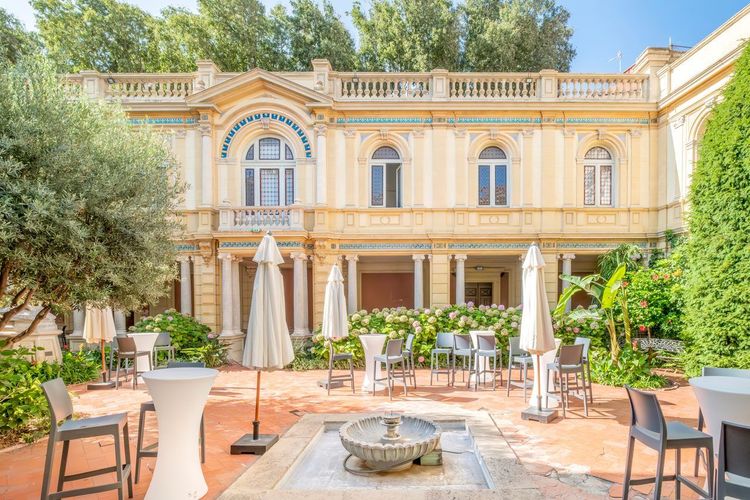
The Hôtel Pams (18 Rue Émile Zola, 66000 Perpignan, rated 4.7/5 on Google from 2,192 reviews) is a Belle Époque mansion remodeled in the late 19th century for Jules Pams, heir to a fortune built on cigarette paper and later a political figure in the Roussillon. Its understated façade conceals a patio covered by a glass roof, mosaics, ironwork, and a monumental grand staircase inspired by the great Renaissance models.
The courtyard and patio can be visited freely during opening hours, without a reservation or ticket. Only the guided tour of the interior reception rooms, with their wood paneling and painted ceilings, remains paid and subject to time slots set by the tourist office.
Push open the main door on a weekday during office hours: the building houses municipal services and temporary exhibitions, which explains why the ground floor remains open to the public for much of the year. Allow ten minutes' detour from le Castillet, heading up Rue Émile Zola toward the Place de la Loge. It is the kind of stop that most visitors miss for lack of any visible sign from the street.
6. Explore the Archaeological Site of Ruscino
In Château-Roussillon, on the eastern edge of Perpignan, the archaeological site of Ruscino (Château-Roussillon, 66000 Perpignan, rated 4.1/5 on Google from 37 reviews) preserves the remains of a settlement occupied from the Iron Age through the early Middle Ages. The capital of the Iberian people known as the Sordons before becoming a Roman city and then a Visigothic site, Ruscino has yielded a forum, baths, and several dwellings whose foundations are still legible on the ground.
The interpretation center presenting objects uncovered during excavations charges an entry fee, but the outdoor archaeological park, with its wall remains and explanatory panels, opens to all at certain times of year, notably during the European Archaeology Days in June and the Heritage Days in September. Check with the site before making the trip, as opening hours vary by season.
Allow half an hour to walk around the site. The place remains little visited compared to the monuments in the city center, making it a peaceful stop if you want to venture off the usual tourist trail without leaving the Perpignan area. The urban bus serves Château-Roussillon from the center, so there is no need to drive.
7. Discover the Natural History Museum
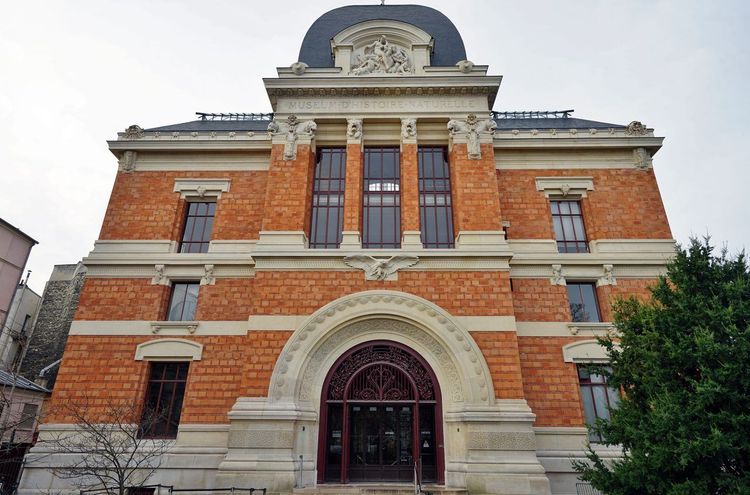
Founded in 1833, the Natural History Museum (12 Rue Fontaine Neuve, 66000 Perpignan, rated 4.4/5 on Google from 622 reviews) of Perpignan is one of the oldest in France. Its collections include taxidermied specimens of birds and mammals, a mineralogy room, an Egyptology section inherited from the 19th century, and display cases dedicated to the fauna of the Roussillon, between the Mediterranean and the Pyrenees.
The entry fee remains modest, and admission becomes free for visitors under 18 all year round, as well as for all visitors during Heritage Days and the European Museum Night in spring. Check the municipal calendar before your visit if you plan to avoid the ticket desk.
The 19th-century listed interior, with its wooden display cases and original parquet floors, is worth the visit in itself: the museum has retained an old-fashioned presentation, far from the interactive museography found elsewhere. Children can easily spend an hour here, between suspended skeletons and drawers full of insects.
8. Picnic at Parc Saint-Vicens
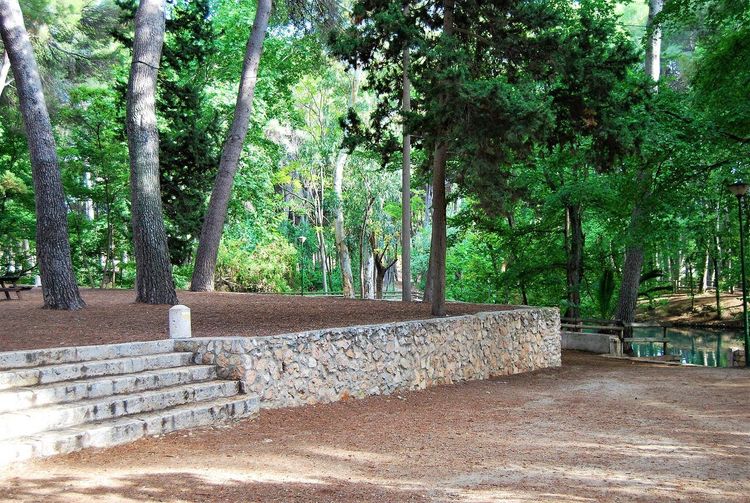
The Parc Saint-Vicens (Avenue Guynemer, 66000 Perpignan, rated 4.4/5 on Google from 2,135 reviews) is one of Perpignan's large green spaces, with its shaded lawns, play areas, and tree-lined paths. Access is free all year round, from sunrise to sunset.
It is the spot that comes up most often when looking for a free family activity in Perpignan: shaded benches for parents, play equipment for children, and enough space to spread out a picnic blanket without treading on anyone's toes, even on a Sunday afternoon.
The park also hosts several open events throughout the year, including fairs dedicated to Catalan wines in spring and various municipal events in summer. These gatherings complement the park's everyday uses: morning jogging, games of pétanque in the late afternoon, reading in the shade on the hottest days.
9. Stroll through the Jardin de la Pépinière
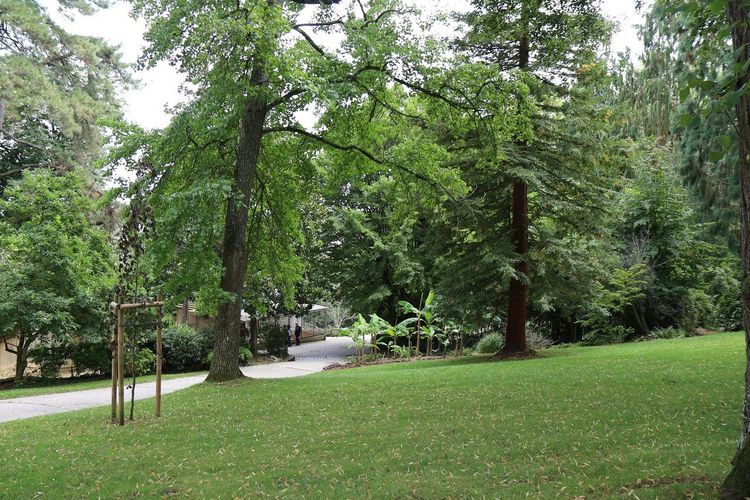
Smaller and quieter than Parc Saint-Vicens, the jardin de la Pépinière (Boulevard Wilson, 66000 Perpignan, rated 4.3/5 on Google from 254 reviews) offers a peaceful alternative right in the city center, a short walk from the convention center and the bus station. Its paths lined with Mediterranean species, its palm trees, and its bandstand make it a pleasant stop between visits in the historic center.
Access is permanently free, with no gate or strict closing time. Ideal for a shaded break in the middle of the day, when the Catalan sun bears down on the cobbled streets of the center. It is also one of the meeting points for the city's summer events, including open-air concerts. Perpignan's audio-guided tour makes a good lead-in before or after this stop, without pulling you far from the centre.
10. Walk along the Banks of the Têt and la Basse
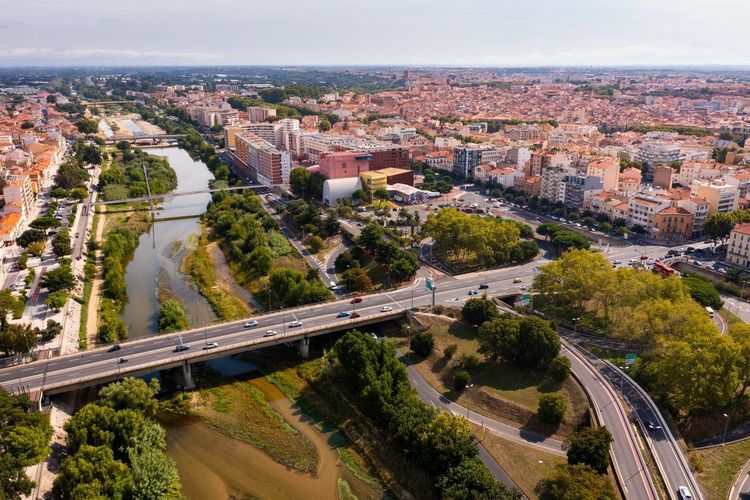
Two waterways run through Perpignan: the Têt, the main river descending from the Canigou toward the Mediterranean, and the Basse, its more modest tributary that winds at the foot of the quartier Saint-Jacques. Both riverbanks have been developed as pedestrian and cycling promenades, open at all times.
Along the Têt, the promenade stretches for several kilometers from the Pont Arago (Pont Arago, 66000 Perpignan) eastward, with cycle lanes separated from traffic and benches placed at regular intervals. Sunset, when the raking light catches the poplars lining the bank, remains one of the most pleasant moments of the day for a leisurely walk.
Along la Basse, the walk is shorter but passes through a more intimate setting, between the backyards of the quartier Saint-Jacques and the first buildings of the center. It is a practical route for walking from the cathedral to Parc Saint-Vicens without returning via the main commercial streets.
This stretch is in fact one of the stops documented by the Ryo audio guide of Perpignan, which details the history of both rivers and their role in the development of the Catalan city across the nineteen stops of the route, covering approximately 2.4 kilometers.
11. Circle the Lake of Villeneuve-de-la-Raho
A fifteen-minute drive south of Perpignan, the lake of Villeneuve-de-la-Raho (Réserve naturelle régionale, 66180 Villeneuve-de-la-Raho, rated 4.4/5 on Google from 228 reviews) occupies a natural site of several hundred hectares, between garrigue and reedbeds. This artificial lake, created in the 1970s–1980s for agricultural irrigation, now shelters protected wildlife: grey herons, common coots, and occasionally passing flamingos.
A marked trail circles the lake over about ten kilometers, with no significant elevation gain: allow two hours of relaxed walking, more if you stop at the birdwatching observation posts installed along the route. The trail and picnic areas are accessible at all times, on foot or by bike.
In summer, a supervised swimming area opens on the north side of the lake, with a developed beach and large free parking lots nearby. It is a popular alternative for Perpignan families who want to avoid the road and the crowds of the coast on busy days, while enjoying water that is noticeably calmer than the Mediterranean.
Local anglers know the spot well for its carp and bass, but fishing requires a permit, unlike the walk itself. Arrive early in the morning if you want peace and quiet: on summer weekends, the area around the beach fills up quickly after 11 a.m.
12. Enjoy the Beaches and the Fishermen's Huts
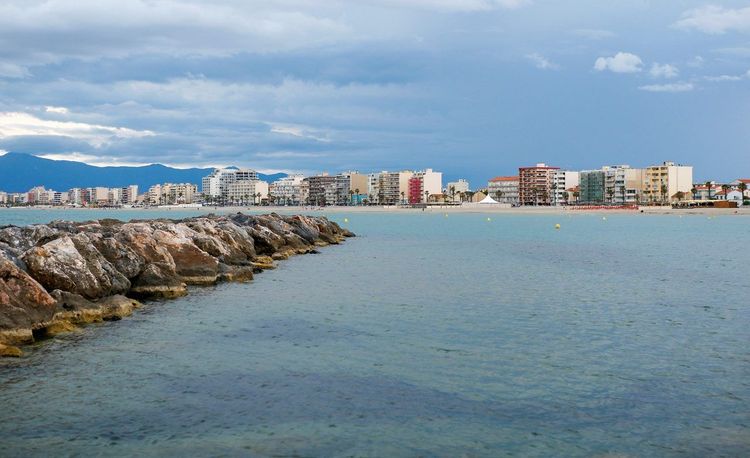
Perpignan is less than twenty minutes by car from the coast, and access to the beaches of the Roussillon is public along the entire shoreline, as everywhere in France. Canet-en-Roussillon, the closest resort, stretches for several kilometers of fine supervised sand in season, with public showers and toilets available.
Further south, Saint-Cyprien and Argelès-sur-Mer extend the same coastline with equally accessible beaches, less crowded out of season. Parking, however, is often paid in summer near the most popular seafronts: opt for car parks a little further away, a ten-minute walk, to avoid the expense. By bus, the regional lines connecting Perpignan to the coast offer some of the lowest fares in France, around one euro per journey.
Between Canet and Saint-Nazaire, the coastal lagoon is home to one of the last colonies of traditional fishermen's huts on the French Mediterranean coast: several dozen wooden structures that fishing families have passed down through generations. The interiors of these private huts are not open to visitors, but the path running alongside the lagoon lets you observe them up close and understand a way of life still very much alive on this stretch of the Catalan coast.
To go further on the coastline and the most affordable spots in the area, the Ryo guide to the best beach bars in Perpignan lists the most popular addresses, while the Ryo guide to natural swimming in Pyrénées-Orientales details other freely accessible spots, in the sea and in rivers, within an hour of Perpignan.
13. Browse the Markets of Perpignan
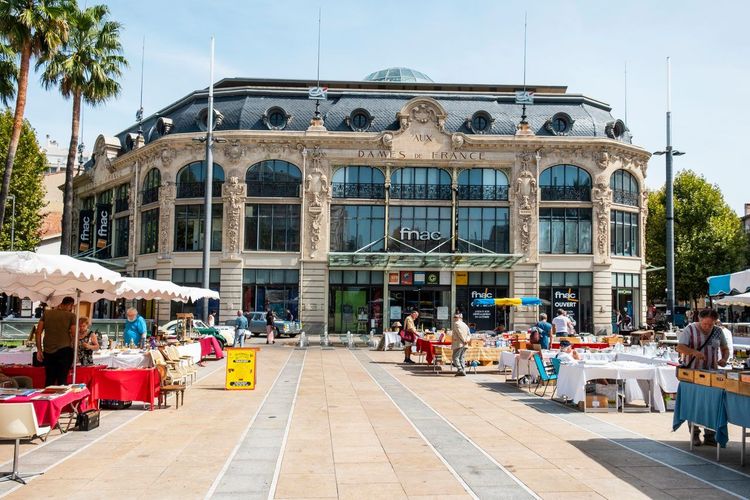
The Cassanyes market (Place Cassanyes, 66000 Perpignan, rated 3.8/5 on Google from 22 reviews) is the most popular and colorful in the city: cut-price fruit and vegetables, spices, olives, and produce from North Africa mingle with traditional Catalan stalls. Entry and wandering are free, even without any intention to buy.
The Halles Vauban, the covered market in the historic center, offers a more relaxed atmosphere: local producers, Catalan charcuterie, sheep's cheese from the Pyrenees. Here too, browsing the stalls costs nothing, and it is often the best opportunity to observe everyday life in Perpignan better than in any monument. If the aromas give you ideas, the Ryo guide to the culinary specialties of Perpignan explains what to look for on the stalls, from bougnette to rousquilles.
Plan your visit in the morning, before noon: that is when the atmosphere and colors are at their most vibrant, before traders start packing up.
14. Attend the Visa pour l'Image Festival
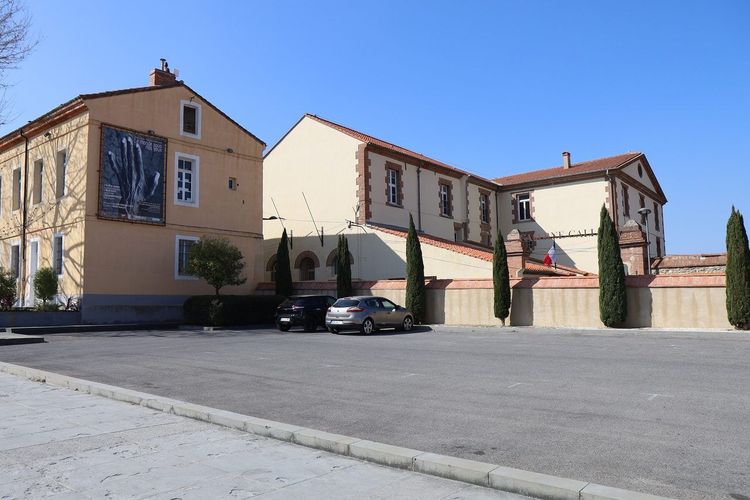
Each year from late August to mid-September, Perpignan becomes the world capital of photojournalism during the Visa pour l'Image festival. Founded in 1989, the event sets up dozens of exhibitions in iconic venues across the city, including the couvent des Minimes (Rue Rabelais, 66000 Perpignan, rated 4.4/5 on Google from 918 reviews), a 17th-century former convent converted into an exhibition space.
The public exhibitions, installed in around ten venues in the historic center, remain open to all throughout the duration of the festival, without reservation. Only the professional week at the beginning of September, reserved for accredited photographers and media, operates on a credentialing basis.
It is a rare opportunity to encounter, simply by walking through the streets of the historic center, award-winning images from the world's most prestigious photojournalism prizes displayed in large format in the very monuments you visited earlier in the day.
Outside the festival, the rest of the year follows the same rhythm: the weekend events calendar published by the city and the department lists concerts, night markets, flea markets, and exhibitions open to all in the 66. A useful reflex on a Friday evening, when you're looking for what to do in Perpignan today without booking anything: the municipal program changes every week, and a good share of events takes place on the squares of the center.
15. Extend Your Trip to the Villages around Perpignan
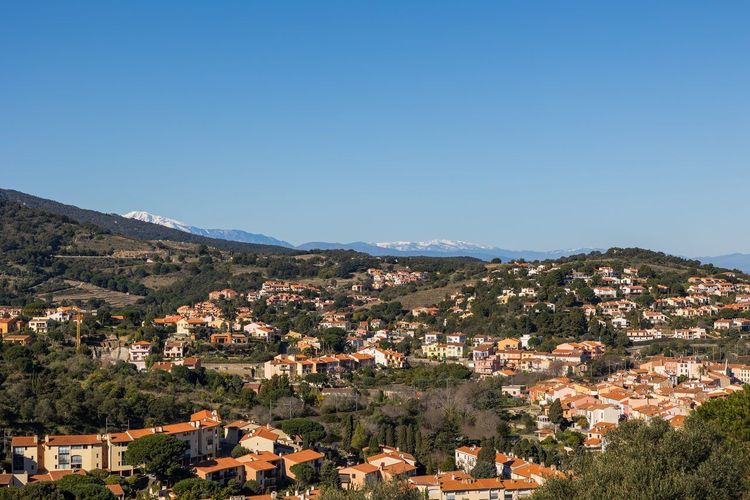
The list of free activities in Perpignan and the surrounding area does not stop at the city limits: the surroundings offer more than enough to fill several days without spending more than the cost of fuel. To the west, the Canigou massif, the sacred mountain of the Catalans, can be explored via numerous freely accessible trails, several of which offer views over the Roussillon plain without requiring the full ascent to the summit at 2,784 meters.
About thirty kilometers away lies Castelnou, a medieval village listed among the most beautiful in France, with its feudal castle and cobbled alleyways. Wandering through the streets is free; only the interior of the castle requires a ticket. The village of Eus, clinging to a hillside in the Têt valley, offers the same kind of free stroll between stone houses and vaulted passageways.
This option is worthwhile year-round, including in winter: the lower winter light brings out the stone façades of the Catalan villages, and the absence of tourist crowds completely changes the experience compared to a summer visit. Just make sure you wear appropriate footwear, as some alleyways remain cobbled and slippery after rain.
To plan this extension, the Ryo guide to the most beautiful villages around Perpignan and the Ryo guide to visiting the Canigou detail precise itineraries, stop by stop, while the Ryo guide on what to do in Perpignan and the surrounding area broadens the program to paid visits if you want to mix things up.

FAQ
Which museums are free in Perpignan?
No museum in Perpignan offers free admission permanently, but several do so occasionally: the Palais des Rois de Majorque on the first Sunday of the month outside the summer season, the Natural History Museum for visitors under 18 all year round, and all municipal collections during Heritage Days in mid-September and the European Museum Night in spring.
Can you visit Perpignan in a day without spending anything?
Yes. Le Castillet, the cathédrale Saint-Jean-Baptiste, the quartier Saint-Jacques, the courtyard of the Hôtel Pams, and the gardens of la Pépinière and Saint-Vicens can all be visited on foot, without a ticket, in a single day. Allow five to six hours of relaxed walking to complete these stops in the historic center.
Are there free beaches near Perpignan?
All beaches along the Roussillon coastline are open to everyone, as access to sand and sea is public in France. Canet-en-Roussillon, fifteen minutes from Perpignan, is the closest option; only seafront parking is sometimes paid during peak season, and regional bus lines run there for around one euro.
What free events take place in Perpignan in summer?
The Visa pour l'Image festival, from late August to mid-September, offers exhibitions open to all in around ten venues in the city center. Parc Saint-Vicens and the jardin de la Pépinière also host summer municipal events, and the Cassanyes market brings the center to life every morning, summer and winter alike.
Is Perpignan a good city for families on a tight budget?
Yes: Parc Saint-Vicens and the lake of Villeneuve-de-la-Raho offer play areas and picnic spaces open to all, the nearby beaches require no entry fee, and the historic center can be explored on foot without any major stop requiring a paid ticket. The Natural History Museum rounds out the program on rainy days, with free entry for visitors under 18.
What can you do for free in Perpignan in winter?
Outdoor monuments (Castillet, cathedral, quartier Saint-Jacques) can be visited year-round, with winter light being particularly flattering on Catalan façades. Villages such as Castelnou or Eus can also be explored without crowds or entry fees, and the off-season is the best time to walk along the banks of the Têt or circle the lake of Villeneuve-de-la-Raho without meeting many people.
Conclusion
All together, these fifteen stops are enough to fill two to three full days in Perpignan without ever reaching for a bank card for a monument entry, a park, or a beach. The historic center concentrates the essentials on foot, between le Castillet, the cathedral, and the quartier Saint-Jacques, while the immediate surroundings — from the lake of Villeneuve-de-la-Raho to the Catalan villages — extend the experience without significantly increasing the transport budget.
To structure this discovery step by step, the Perpignan audio-guided tour remains the simplest starting point: twenty audio tracks guide the visit of the Catalan historic center over 2.4 kilometers and approximately one hour, downloadable before you set off and followed at your own pace. The perfect way to chain together free activities in Perpignan and the surrounding area without depending on a guided tour schedule or any additional budget.
À lire également