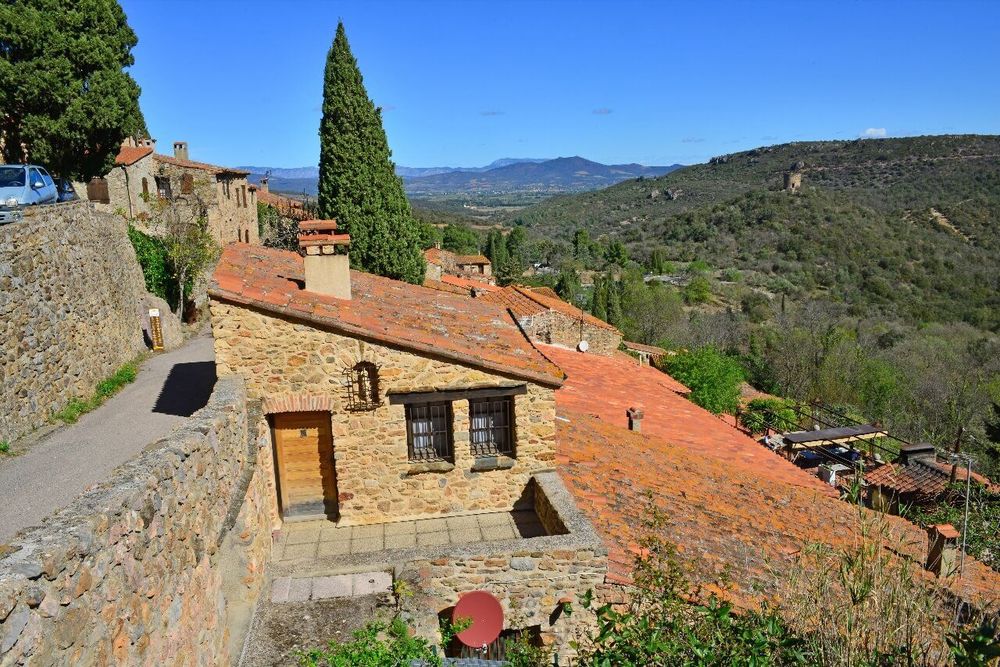
© Shutterstock
 Votre guide Ryo
Visiting Perpignan with Family: 14 Experiences for Kids and Adults in 2026
In Perpignan, the youngest visitors rarely ask for a break before noon: between the ramparts of the Castillet and the shaded gardens of the historic center, this Catalan city is made to be discovered at knee height. To visit Perpignan with family without spending your whole trip negotiating snack breaks, the Ryo audio guide tour of Perpignan traces a guiding thread of about one hour through the main monuments of the center, ideal for structuring a first day when everyone has their own pace.
Here, a 13th-century royal palace can be explored like a role-playing game set, a tourist train replaces miles of tiring walking, and less than three-quarters of an hour's drive away, an African park lets giraffes graze at car-window height. Add supervised beaches just fifteen kilometers away, a cave where the temperature stays locked at 14°C even in the height of August, and hilltop villages whose lanes are too narrow for strollers but perfect for baby carriers. Everything you need to build a Catalan stay that spans several days without ever repeating the same day twice.
The Castillet and the Loge de Mer, the Gateway to the Historic Center
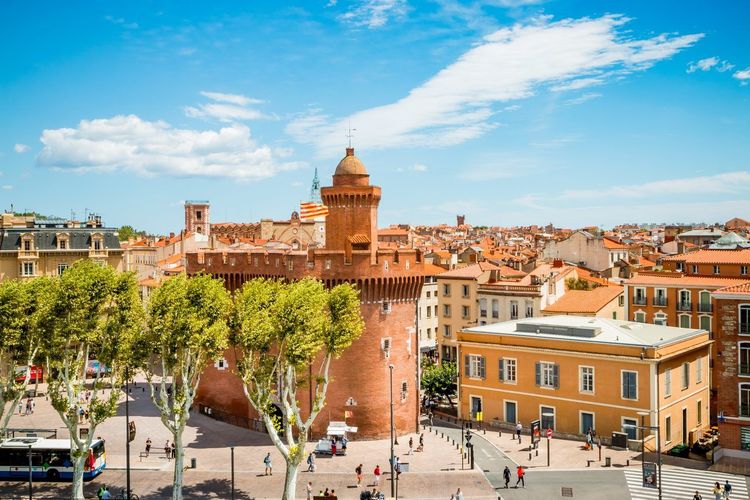
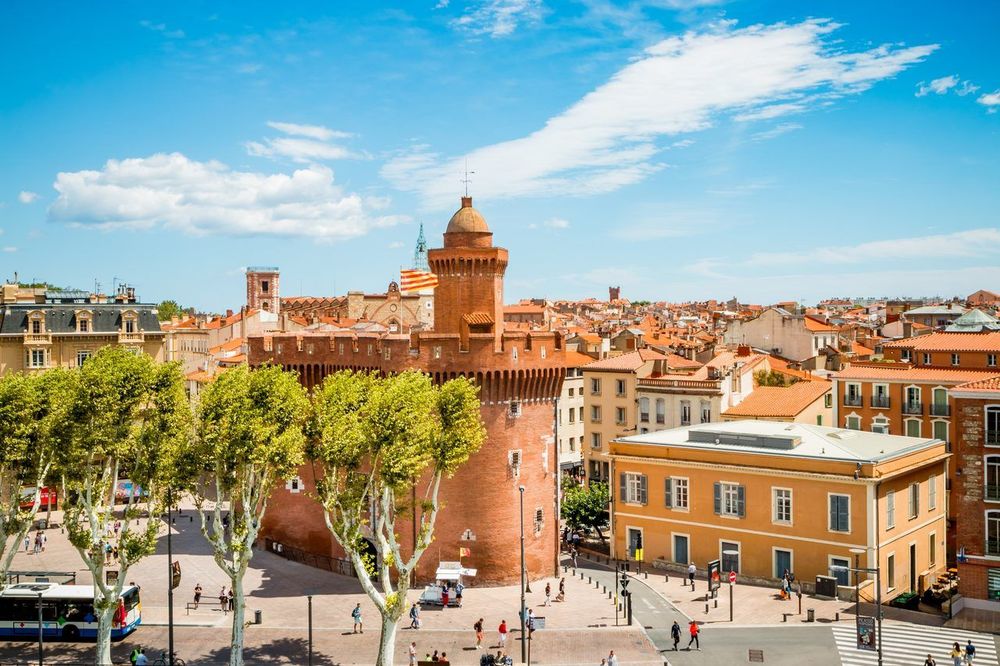
There's no better place to start your visit: the Castillet marks the entrance to the historic center and serves as a landmark for everyone finding their way around. This pink-brick fortified gate, built in the 14th century, now houses the Casa Pairal museum, dedicated to Catalan arts and traditions. Allow half an hour to climb to the top.
Go up early in the morning: the view over the tiled rooftops and, on a clear day, over the Canigou massif, is best enjoyed before the tour groups arrive. Inside, the Casa Pairal displays traditional costumes and Catalan farming tools in a space compact enough not to bore the little ones.
Just steps away, the Loge de Mer (Place de la Loge, 66000 Perpignan, rated 4.6/5 on Google from 37 reviews) occupies the former seat of the sea consulate, the maritime commercial tribunal, recognizable by its Gothic arcades. The Ryo audio guide of Perpignan starts right in front of the Castillet and loops through the historic center in about an hour, with 19 commented stops: perfect for turning this first exploration into a guided walk without having to read a single sign.
The Palace of the Kings of Majorca, a Citadel to Explore
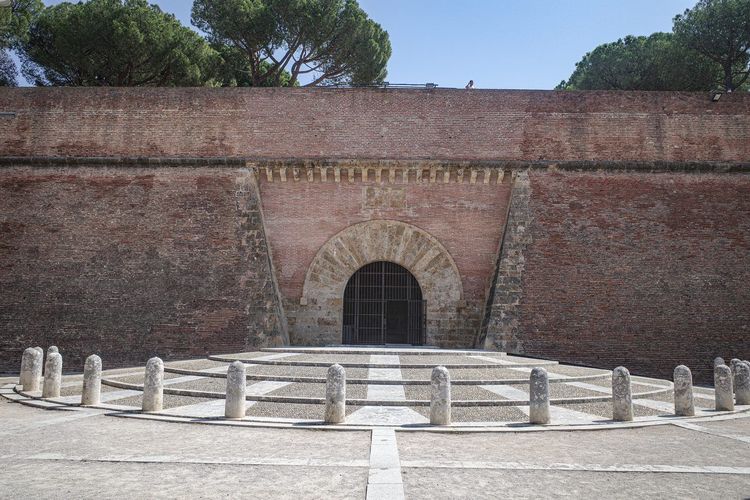
Perched on the Puig hill, the Palace of the Kings of Majorca (Rue des Archers, 66000 Perpignan, rated 4.2/5 on Google from 8,725 reviews) is without doubt the monument that leaves the greatest impression on young visitors. Begun at the end of the 13th century for James II of Majorca, it looks like a real fortress with its successive enclosures, corner towers, and main courtyard.
Your children won't see a simple palace: they'll see a life-size playground. The ramparts can be walked along a good portion of their circuit, the inner courtyard invites a run from one end to the other, and the royal chapel stacked across two levels amuses with its unusual layout. Suggest they play knights on a mission: it works every time for children between 5 and 10.
From the battlements, the view stretches across the entire Roussillon plain to the Pyrenees — a good moment to catch your breath and try to guess the snow-capped peaks in winter. One audio stop on the tour tells the eventful history of the kings of Majorca and a few anecdotes about the citadel, far easier to remember than an information board.
Allow 1 to 1.5 hours on site. The ticket price is modest, with reduced rates and free entry for the youngest visitors: check the Département's pricing before you go. Wear closed-toe shoes — the cobblestones in the courtyard and on the ramparts are unforgiving in sandals.
The Saint-Jean-Baptiste Cathedral and the Campo Santo Cloister

The Saint-Jean-Baptiste Cathedral, begun in 1324 and consecrated nearly two centuries later, is a fine example of what is known as Southern Gothic: a single, very wide nave, without the flying buttresses typical of northern France.
Right next door, the cloister Campo Santo (Rue de l'Horloge, 66000 Perpignan, rated 4.5/5 on Google from 627 reviews) is a greater surprise for curious visitors: this 14th-century cemetery cloister, one of the rare surviving examples of its kind in France, lines up white stone galleries around a vast space where the people of Perpignan were once laid to rest. A dedicated stop on the Ryo audio guide details the site's architecture and history, sparking questions about what life was like 700 years ago.
Free entry to the cathedral. Allow 30 to 40 minutes for both, a short format that works well at the end of the morning before a lunch break.
Human-Scale Museums: Hyacinthe Rigaud, Casa Xanxo, and the Natural History Museum
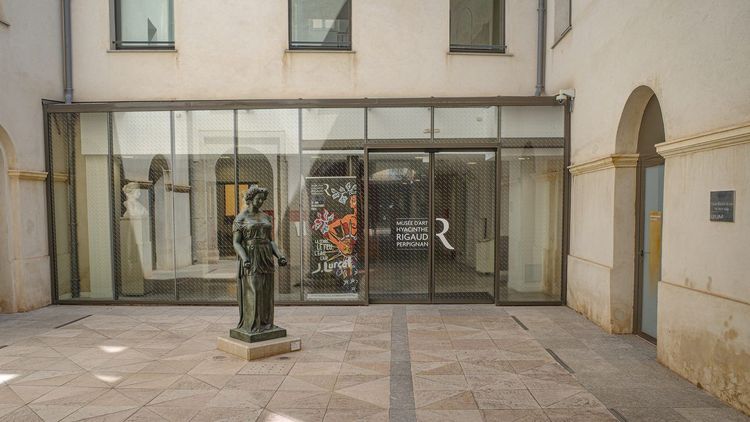
Perpignan has several compact museums, manageable without risking sensory overload. The Hyacinthe Rigaud Art Museum brings together Catalan and French painting across two renovated townhouses: perfect for teenagers with an interest in fine arts, harder to stretch beyond 45 minutes with preschoolers.
The Casa Xanxo (8 Rue de la Main de Fer, 66000 Perpignan, rated 4.1/5 on Google from 397 reviews), a Gothic merchant's house built in 1507, houses the architecture and heritage interpretation center: models and panels tell the urban history of Perpignan. It's free, brief, and serves as a useful introduction before going to see the monuments in person.
If you have to choose just one museum with children under 10, go for the Natural History Museum: skeletons, taxidermied animals, and minerals almost always hold attention better than a painting gallery. Allow an hour, and ask at the front desk whether there's an activity booklet available that day.
The Hôtel Pams, Perpignan's Art Nouveau Gem
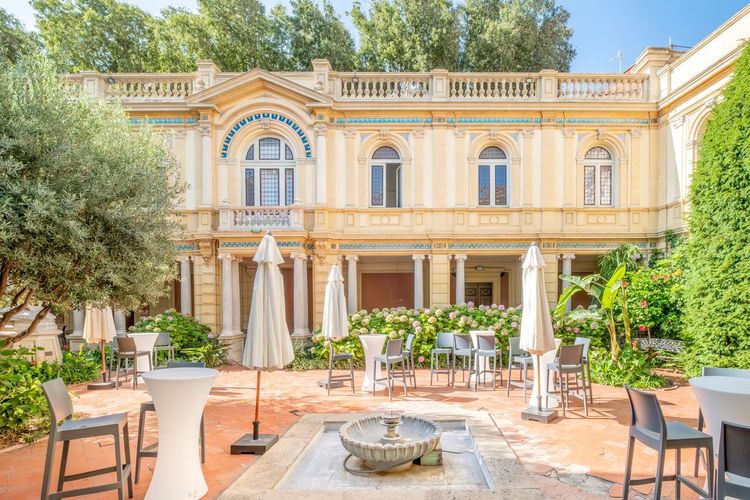
Less well known than the Castillet, the Hôtel Pams (18 Rue Émile Zola, 66000 Perpignan, rated 4.7/5 on Google from 2,258 reviews) is well worth a detour. This residence was transformed between 1896 and 1902 for Jules Pams and his wife Jeanne Bardou, heiress to the JOB cigarette paper fortune. A monumental staircase, a glass roof, and salons covered in paintings: the Belle Époque décor makes an impression even on the least patient visitors.
City property since 1946, the building now houses municipal and cultural services, with salons open to visitors during hours that vary: check with the tourist office. Half an hour is enough, ideal to slip in between the cathedral and the Halles.
Strolling the City Center: Square Bir-Hakeim, Halles Vauban, and the Banks of the Basse
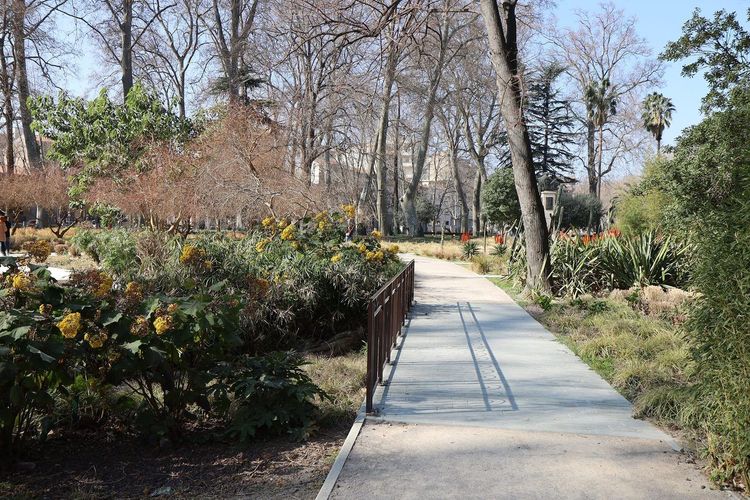
Between two monuments, nothing beats a break in the open air. Square Bir-Hakeim, with its large plane trees, offers shade and a little space to run around, right next to the pedestrian center.
Next, head to the Halles Vauban (Rue Vauban, 66000 Perpignan, rated 4.3/5 on Google from 4,961 reviews), a covered market where you can snack on a rousquille or a slice of sweet coca among stalls of local produce. Listen carefully: the exchanges in Catalan between the vendors are a free language lesson.
Walking along the landscaped banks of la Basse, the river that runs through the city, you'll come across flowering beds and shaded benches. Our Ryo audio tour of Perpignan, with its 19 stops over 2.4 km, passes right by Square Bir-Hakeim and the Halles Vauban: handy for anchoring this walk to a guiding thread rather than zigzagging without a plan.
The Tourist Train, the Visit That Pleases Everyone
When the youngest pair of legs gives out, Perpignan's tourist train is the most effective solution. The circuit, lasting about 40 minutes, runs past the main monuments of the historic center while providing commentary on the key points of their history.
Aim for early afternoon in summer, when the heat discourages walking. Departures are from near the Castillet, several times a day in high season and less frequently off-season: check the timetable the evening before.
Perpignan's Parks for a Breather Between Visits
Perpignan has several parks where you can let your children burn off energy freely. The Parc de la Pépinière, with its large lawns and playground, often serves as a picnic spot after a morning in the historic center.
More intimate, the Jardin de la Miranda, tucked behind the église Saint-Jacques in the neighborhood of the same name, offers shade and a lovely view over the city. The Parc Sant Vicens (Rue Alsace Lorraine, 66000 Perpignan, rated 4.4/5 on Google from 2,146 reviews), a little further out, adds a green space to the east side, useful if you're staying in that part of town.
Beaches Near Perpignan and the Oniria Aquarium in Canet-en-Roussillon
A quarter of an hour's drive away, the beaches of Canet-en-Roussillon offer fine sand and a supervised stretch of coastline in season spanning several kilometers. It's the simplest option for rounding off a heritage morning with an afternoon in the water.
Stick to supervised areas and avoid swimming between 1 pm and 4 pm in midsummer if your little ones are prone to heat-related issues. The northern sections, less crowded than the main seafront, are better suited to toddlers.
Near the harbor, the Oniria aquarium (Boulevard de la Jetée, 66140 Canet-en-Roussillon, rated 4.5/5 on Google from 8,908 reviews) presents Mediterranean and other marine life along an air-conditioned route that also doubles as a cool refuge in summer. Allow around 1.5 hours.
To find other freshwater spots, our article on natural swimming spots in the Pyrénées-Orientales details riverside locations that are often much quieter than the coastal beaches.
Nature and Wildlife Outings Around Perpignan
Three-quarters of an hour's drive away, the Sigean African Reserve remains the most popular wildlife outing in the region. Across nearly 300 hectares, the drive-through safari section lets you get within meters of lions, giraffes, and white rhinos, before a walking section devoted to penguins and primates among others. Allow a full half-day; an air-conditioned car is recommended in summer.
For a complete change of temperature, head to the Grandes Canalettes caves in Villefranche-de-Conflent, about an hour's drive inland. The self-guided visit, along a developed and lit route of roughly one kilometer round trip, lasts about an hour inside a cavity that stays at 14°C year-round: remember to bring a sweater.
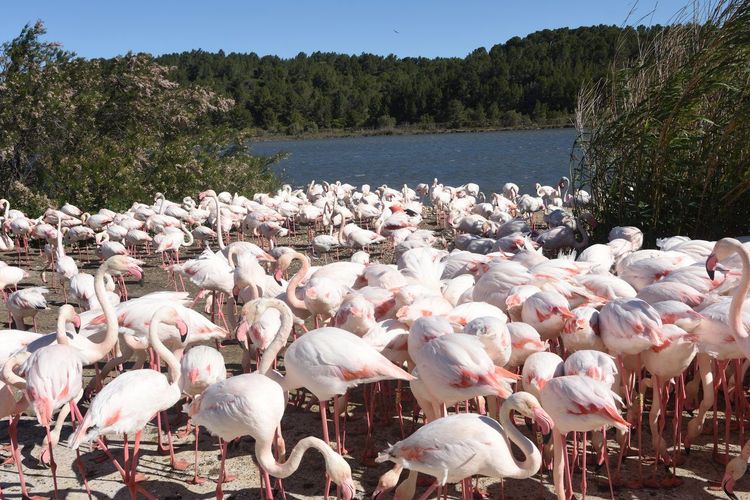
On the coast, the Biodiversarium in Banyuls-sur-Mer (Avenue du Fontaulé, 66650 Banyuls-sur-Mer, rated 4/5 on Google from 2,333 reviews), an aquarium attached to the oceanological observatory, presents Mediterranean marine life in a compact format. The Canet-en-Roussillon lagoon attracts real wild flamingos, observable from free, well-maintained footpaths. In Elne, the Tropique du Papillon lets hundreds of exotic butterflies fly freely in a greenhouse, from April to early October only, and the Vallée des Tortues, near Sorède, allows you to observe dozens of turtle species in a shaded park.
With so many options within less than an hour's drive, choose two or three rather than trying to fit everything in: allow half a day per site. Our article on things to do in and around Perpignan details distances and the most logical combinations.
Charming Villages and Historic Sites in the Surrounding Area
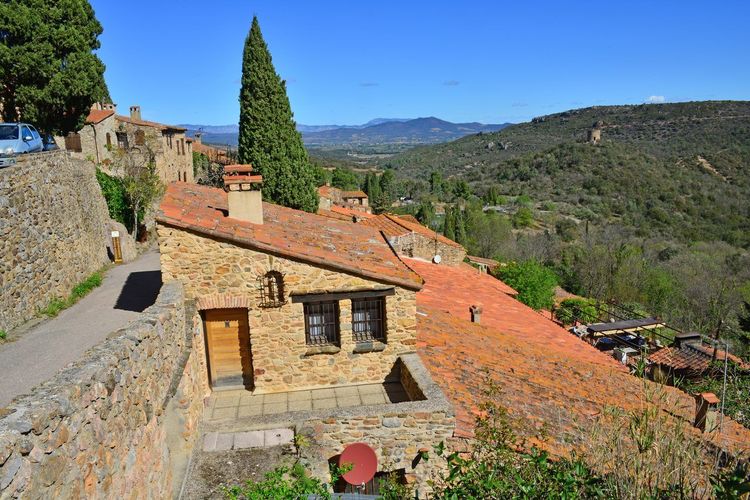
Few guides mention the hilltop villages of the Pyrénées-Orientales, yet they are reachable in under an hour and are often far more relaxing than a museum queue. Castelnou, listed among the most beautiful villages in France, lines its stone houses around a medieval castle mentioned as far back as the end of the 10th century: the paved lanes, too narrow for strollers, are well suited to baby carriers.
Eus, clinging to its rocky spur facing the Canigou, and Collioure, with its royal castle set right on the sea, round out a list of villages where children come away having learned that houses can be built almost vertically. Banyuls-sur-Mer, already mentioned for its biodiversarium, adds a quieter seaside feel than Canet.
For ancient history, the Prehistory Museum of Tautavel takes you back a literal 450,000 years: this is where the skull of Tautavel Man was found, one of the oldest human fossils in Europe. The scenography, with life-size reconstructions, speaks to curious minds from the age of 6 or 7.
On the road to Narbonne, the Fortress of Salses (D6009, 66600 Salses-le-Château, rated 4.6/5 on Google from 9,074 reviews) surprises with its squat, semi-buried architecture, designed at the end of the 15th century to withstand artillery. Its corridors, ramps, and casemates never fail to impress budding young explorers.
To plan these excursions without losing time on the road, our selection of the most beautiful villages to visit around Perpignan lists distances and journey times, and the dedicated article on visiting the Canigou completes the exploration on the mountain side for hiking enthusiasts.
The Roussillon Vineyards, an Outing for the Young Ones Too
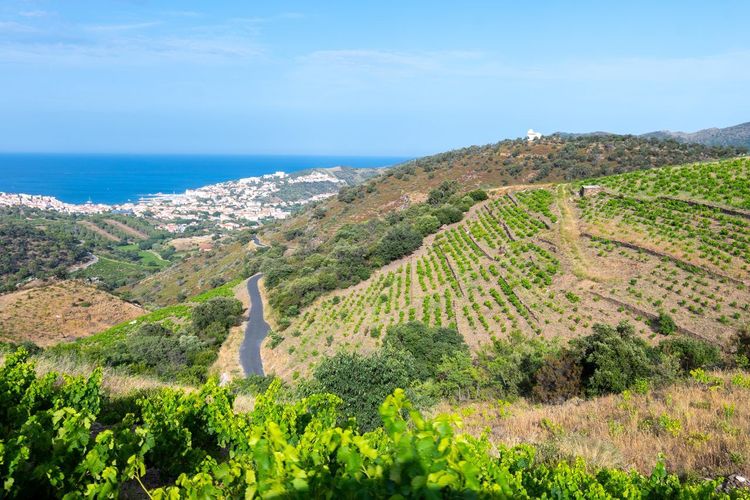
The Roussillon vineyard starts almost on Perpignan's doorstep, and several estates offer visits that go beyond just tasting: walks through the vine rows, workshops about grape varieties, or grape juice for children during the harvest, from late August to early October.
Check before booking: not all estates are equally welcoming of strollers and families — some clearly target an adult wine-tourism clientele. A shaded picnic area in the middle of the vines is often the best option for a lunch break between two villages.
Where to Stay with Family in Perpignan
It's best to aim for accommodation close to the pedestrian historic center, to minimize car journeys with tired children at the end of the day. Several apart-hotels in the center offer kitchenette options, practical for preparing breakfasts and snacks without relying on restaurants.
If you plan to alternate between the city and the beach, residences with pools — more common around Canet-en-Roussillon or on the outskirts — offer a good compromise: fifteen to twenty minutes' drive is enough to reach the historic center in the morning and return for a swim in the afternoon.
Book early for July and August: the best-located accommodation fills up several weeks in advance.
Practical Info: Getting Here, Getting Around, and When to Visit Perpignan with Children
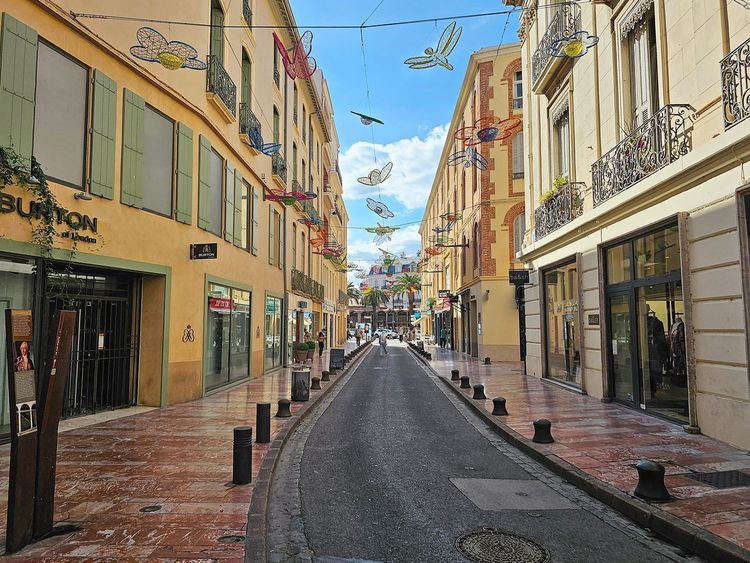
Perpignan is accessible by direct TGV from Paris (about 5 hours) or via the A9 motorway. On the ground, the historic center is entirely walkable: allow 20 minutes to cross it, which makes a car unnecessary for the heritage portion of your stay.
Opt for spring (April–June) or early autumn (September–October): temperatures are comfortable for walking, far from the July–August heat when the thermometer regularly exceeds 35°C in the city.
If it rains, the city-center museums (Casa Pairal, Hyacinthe Rigaud Museum, Natural History Museum) and the Oniria aquarium provide covered alternatives. Our article on what to do in Perpignan when it rains details a complete backup plan.
On the accessibility front, the center is manageable with a stroller along the main pedestrian routes, but some cobbled lanes and villages like Castelnou are more comfortable with a baby carrier. The Palace of the Kings of Majorca and the Fortress of Salses have steps and uneven ramps that are poorly suited to wheelchairs without assistance. To choose your base, our guide to the neighborhoods of Perpignan provides a useful overview.



FAQ
How many days should you plan to visit Perpignan with family?
Two days are enough to cover the essentials of the historic center (Castillet, Palace of the Kings of Majorca, cathedral, museums) at a relaxed pace. Allow three to four days to add Sigean, an afternoon at the beach in Canet-en-Roussillon, and a village excursion (Castelnou, Collioure, or Tautavel).
What are the best activities in Perpignan with young children?
The Palace of the Kings of Majorca and its citadel atmosphere, the tourist train for the youngest visitors, the Halles Vauban for sampling Catalan specialties, and a trip to the African reserve at Sigean are the top picks.
What can you do in Perpignan when it rains?
Head to the covered museums in the center (Casa Pairal at the Castillet, Hyacinthe Rigaud Museum, Natural History Museum) or the Oniria aquarium in Canet-en-Roussillon, about fifteen minutes away by car. The Grandes Canalettes caves are also a great option: rain makes no difference underground.
Are the attractions accessible for strollers or people with reduced mobility?
The historic center and its main pedestrian areas are easy to navigate with a stroller. The Palace of the Kings of Majorca, the Fortress of Salses, and villages like Castelnou or Eus, however, have steps, uneven cobblestones, and slopes that make access difficult for wheelchairs or standard strollers.
When is the best time to visit Perpignan with young travelers?
Spring and early autumn offer the best conditions: moderate temperatures, fewer crowds at the monuments, and the sea still warm in September. Summer is still possible for the beach but requires scheduling visits early in the morning.
How do you get around Perpignan without a car?
On foot for the historic center, which is compact and largely pedestrian-friendly. For excursions (Sigean, Tautavel, villages), a car remains the most flexible option: regional buses serve these sites poorly. Only the Grandes Canalettes can be reached easily by train to Villefranche-de-Conflent.
Perpignan lends itself well to a two-phase stay: one or two days exploring Catalan heritage on foot, then easy excursions combining beach, mountain, and charming villages. To structure your first day without getting lost, the Ryo audio guide tour connects the Castillet, the cathedral, and the central squares in about an hour, at your own pace and with no guide to book. Leaving the rest of your stay free for the beaches, caves, and villages that make the Pyrénées-Orientales so rich.
À lire également