





RyoCity
The Museum City
Trogir, Croatia
RyoCity
The Museum City
Trogir, Croatia
1.4 km
Distance
1h00
Durée
19
Audios
Boucle
Parcours
Shutterstock
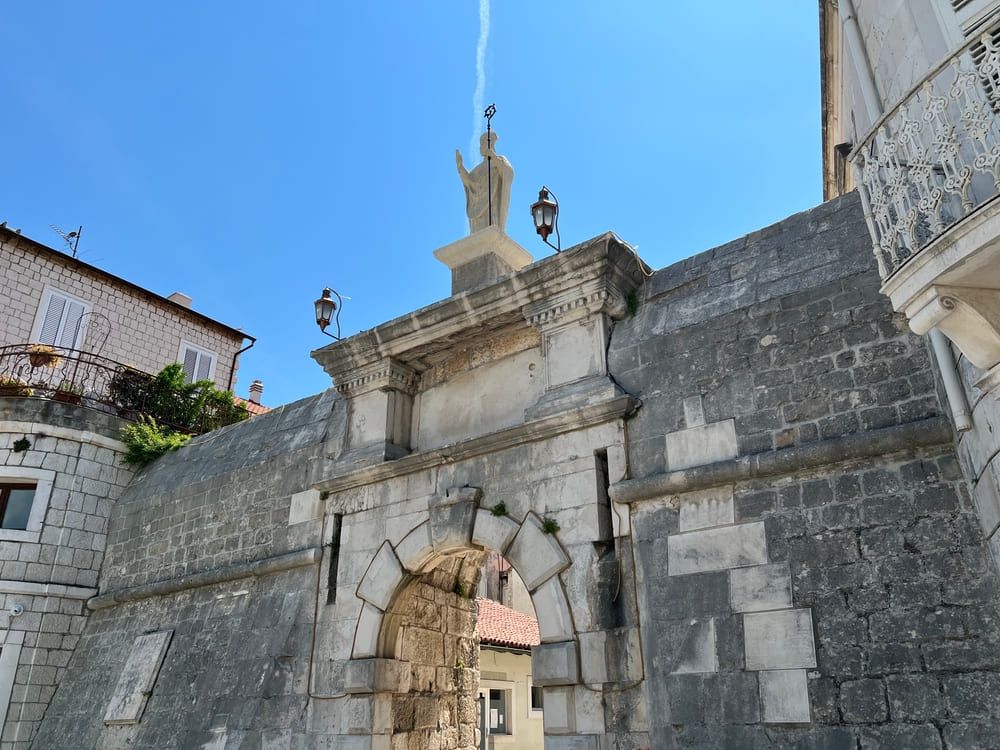
Rising ahead of you is the Sjeverna Vrata, the North Gate, built in 1656 when Trogir was under Venetian rule. This was once the main entrance to the fortified town, the compulsory passage for anyone coming from the mainland. Goods were checked here, taxes collected, and every night the gate was locked—latecomers had to wait until morning or convince the guards to let them through. Look up and you’ll see the statue of Saint John of Trogir, the city’s patron bishop, holding a model of the town in his hands. Next to him stands the winged lion of Saint Mark, a clear reminder of Venice’s authority, which lasted for more than three centuries. The coats of arms and Renaissance carvings on the stone arch were never just decoration—they signaled both power and faith. Today the North Gate no longer serves as a defense, but it remains one of Trogir’s strongest symbols. As you walk through it, you’re following in the footsteps of merchants, nobles, and travelers who for centuries passed beneath this arch to enter the old town. And if you glance back, across the bridge to the mainland, you’ll see modern Trogir, with its hotels, shops, cafés, and the lively daily market bursting with fresh fruit, fish, and seafood, just as it was centuries ago. A vivid contrast between everyday life today and the medieval city waiting for you beyond this gate. Now, let’s step inside!
