Walk
Lost in the Andes
Quito, Ecuador
Walk
Lost in the Andes
Quito, Ecuador
5.2 km
Distance
2h05
Durée
20
Audios
Loop
Parcours
At the crossroads of the Andes, the Amazon, the Pacific, and the Galápagos Islands, Ecuador packs breathtaking diversity into a human-sized territory. Here, time is measured by the rhythm of volcanoes, Andean markets, and tropical forests awakening in the morning mist. Traveling in Ecuador means accepting to be surprised at every bend in the road, in every colonial square where history still whispers. For those who wish to go beyond the surface, Ryo audio-guided tours available in this country offer a singular way to connect with the soul of each place, at your own pace.
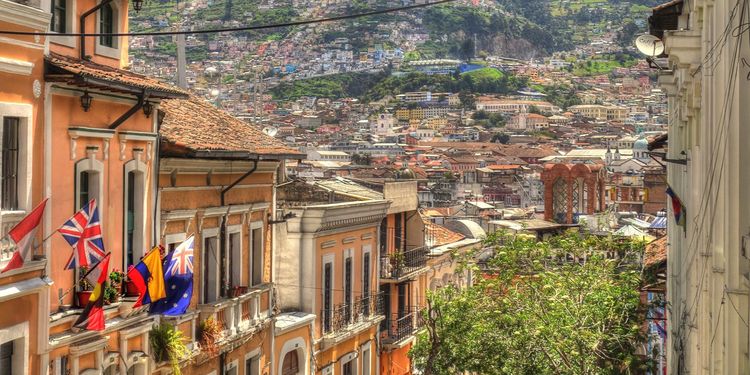
Nestled at over two thousand meters above sea level, Quito boasts one of the best-preserved historic centers in Latin America, listed as a UNESCO World Heritage Site. Along cobblestone streets, between Baroque façades and shaded patios, the Ecuadorian capital reveals a deep identity, blending colonial heritage with contemporary Andean life. The RyoCity tour "Lost in the Andes" guides you to the heart of this extraordinary city, where every church, every viewpoint, and every market tells a page of history. The perfect audio companion for exploring Quito independently, without ever feeling truly lost.
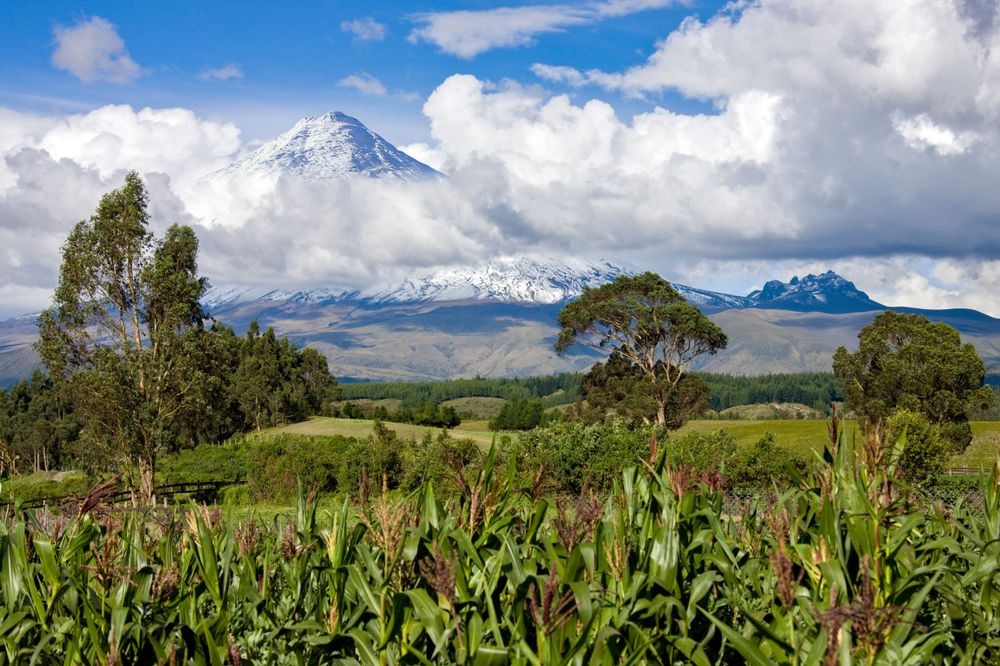
Beyond Quito, Ecuador unfolds a range of landscapes that defies the imagination. The Avenue of the Volcanoes, winding through the Andean highlands, offers stunning panoramas of snow-capped peaks and crater lakes, including the famous turquoise waters of Quilotoa. Further south, the ruins of Ingapirca bear witness to the power of the Inca Empire, while Cuenca captivates with its elegant colonial architecture and living artisanal traditions.
To the east, Ecuador's Amazon rainforest stretches out as a vast green canopy, sheltering exceptional biodiversity and indigenous communities whose ancestral knowledge spans centuries. To the west, the Pacific coast invites contemplation, between mangroves and fishing villages. And offshore, the Galápagos Islands offer one of the most striking naturalist experiences on the planet, with endemic wildlife of rare closeness to human beings. Each of these regions deserves to be savored at length, far from rushed itineraries.
Ecuador does not have seasons in the traditional sense: its position on the equator means that the climate varies more according to altitude and region than to the month. In the Andes, the dry season generally runs from June to September, a favorable period for hiking and city walks. On the coast, the months of December through April bring warmer, sunnier weather. In the Amazon, rain is present year-round but tends to be more moderate between June and November. The best time to visit therefore depends above all on the regions you wish to explore.
Ecuador is one of the most accessible countries in South America for independent travelers. The intercity bus network is extensive and covers the vast majority of destinations, from large cities to small Andean towns. To reach more distant regions quickly, particularly the Galápagos or certain areas of the Amazon, flying remains the most practical option. In cities, taxis and ride-hailing apps make daily travel easy. Renting a vehicle offers valuable freedom for following the Avenue of the Volcanoes or exploring valleys at your own pace.
There is no bad season to visit Ecuador, as the country offers different experiences depending on the time of year and the region. For the Andes and Quito, the dry season, generally between June and September, is often recommended for clear skies. For the Pacific coast, the months of December through April are the sunniest. Be sure to research the specific climate of each region before finalizing your itinerary.
Two weeks is a good starting point for discovering the country's highlights: Quito, the Avenue of the Volcanoes, perhaps Cuenca, and a foray toward the coast or the Amazon. To add the Galápagos or truly immerse yourself in the rainforest, a longer stay will allow you to travel without rushing and let each place leave its mark.
Long-distance buses are the most common and most affordable mode of transport between major cities. They are generally comfortable and frequent on main routes. For longer distances or regions less accessible by road, flying is an efficient alternative. Outside of cities, renting a vehicle offers great flexibility, especially for exploring Andean valleys and off-the-beaten-path villages.
The historic center of Quito, a UNESCO World Heritage Site, tops the list. The Quilotoa lagoon, the Andean volcanoes, the Inca ruins of Ingapirca, the colonial city of Cuenca, the Amazon rainforest, and the Galápagos Islands all make up a complete Ecuadorian journey. The country lives up to its nickname of the "land of four worlds": each region reveals its own identity, well worth exploring.
Ecuadorian cuisine is deeply rooted in its terroirs and traditions. In the Andes, locro de papa, a creamy potato and cheese soup, warms the cool mornings of the high plateaus. Ceviche reigns on the Pacific coast, prepared with seafood marinated in citrus juice. Local markets, such as those in Quito, are the best places to sample authentic specialties and chat with locals among the colorful stalls.
Yes, Ecuador lends itself particularly well to independent travel. Its modest size, well-developed transport network, and concentration of remarkable sites within a compact territory make it an accessible destination, even for a first trip to South America. Tools such as the Ryo audio-guided tours available in Quito allow you to explore the city in depth, without a human guide, following an audio narrative at whatever pace suits you.






