





RyoCity
The Gifted City
Montpellier, France
RyoCity
The Gifted City
Montpellier, France
3.5 km
Distance
1h30
Durée
21
Audios
Boucle
Parcours
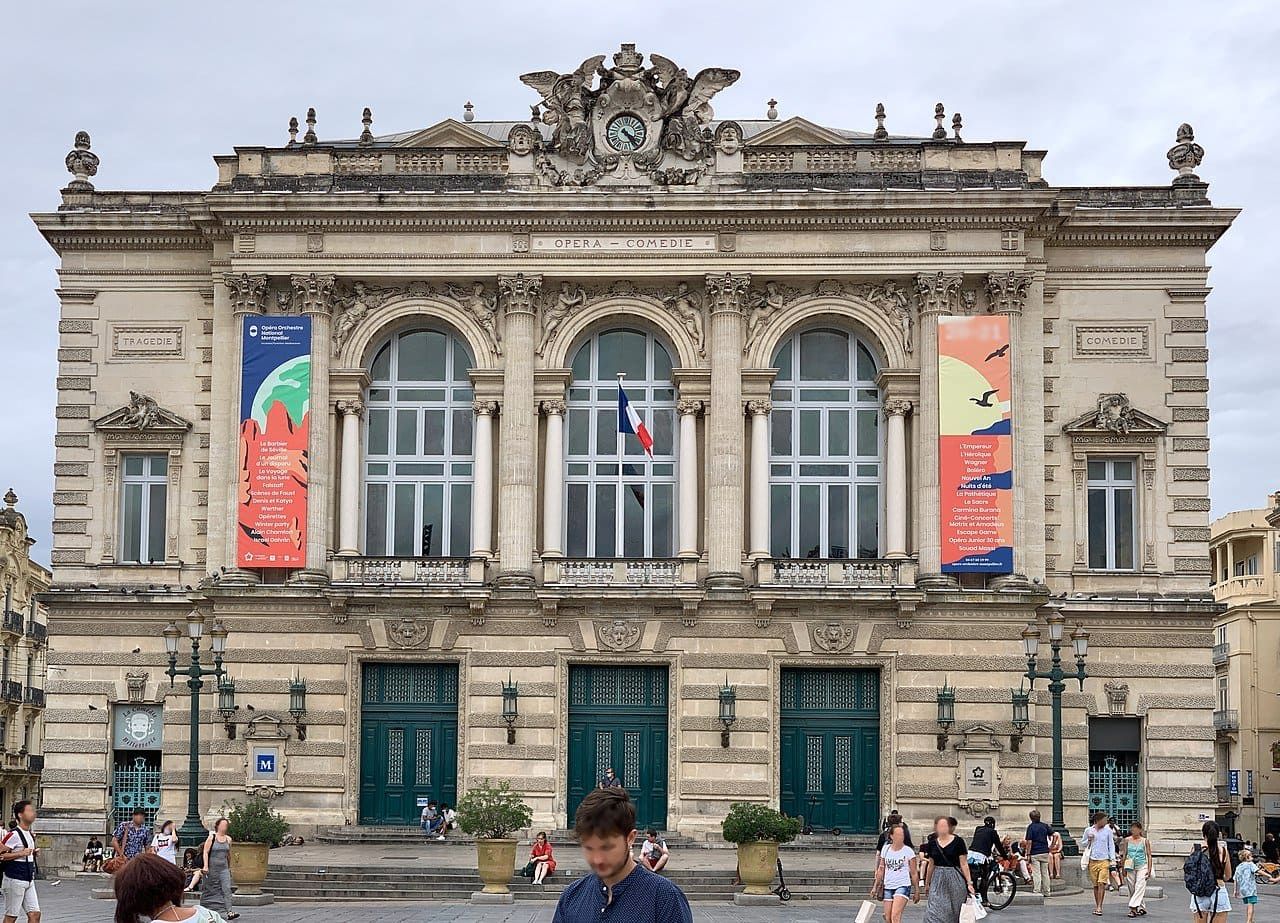
©Chabe01 - CC BY-SA 4.0. https://creativecommons.org/licenses/by-sa/4.0/deed.fr
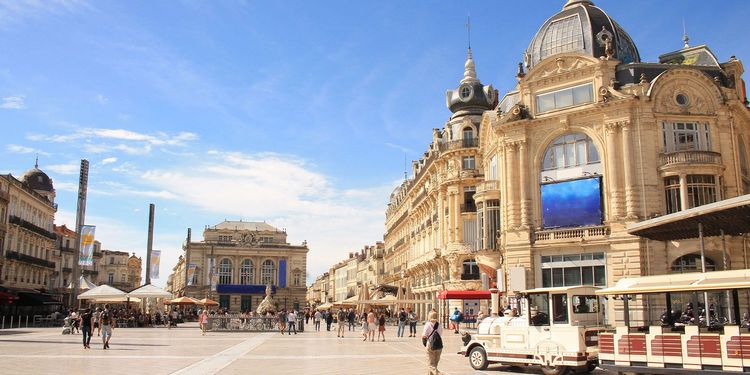
Opéra Comédie — the theatre that gave Montpellier’s central square its name — has certainly lived through a dramatic history of its own. Built beside Place de la Comédie in 1755 by royal engineer Jacques Philippe Mareschal, the original theatre was badly damaged by fire in 1785. It was quickly rebuilt, larger and more elegant, and reopened in 1788 — only to burn down again in 1881 in a fire so intense that one witness described the glow as “a spectacle both grandiose and frightening.” Once again, the city acted fast. A design competition was launched, and the winning plan came from Joseph-Marie Cassien-Bernard, a student of Charles Garnier, architect of the Paris Opera. The third version of the Opéra Comédie opened in 1888 and still stands today. Its grand façade, reminiscent of the Monte Carlo Opera, and its opulent interior — featuring a marble staircase, frescoes, sculptures, and a two-ton Baccarat crystal chandelier — make it one of France’s finest Italian-style theatres. Inside, there are two performance halls: one with 1,200 seats, and a smaller one with 350. You’ll also find some unique details, like the original statue of the Three Graces in the lobby, a manually wound clock on the exterior, and an acoustic curiosity: two vaults 18 metres apart allow whispers to be heard from one side to the other. Renovated just before its 130th anniversary, the Opéra Comédie was officially listed as a historical monument in 2020 — a well-deserved recognition for one of Montpellier’s cultural gems.
