





RyoCity
The Gifted City
Montpellier, France
RyoCity
The Gifted City
Montpellier, France
3.5 km
Distance
1h30
Durée
21
Audios
Boucle
Parcours
Shutterstock
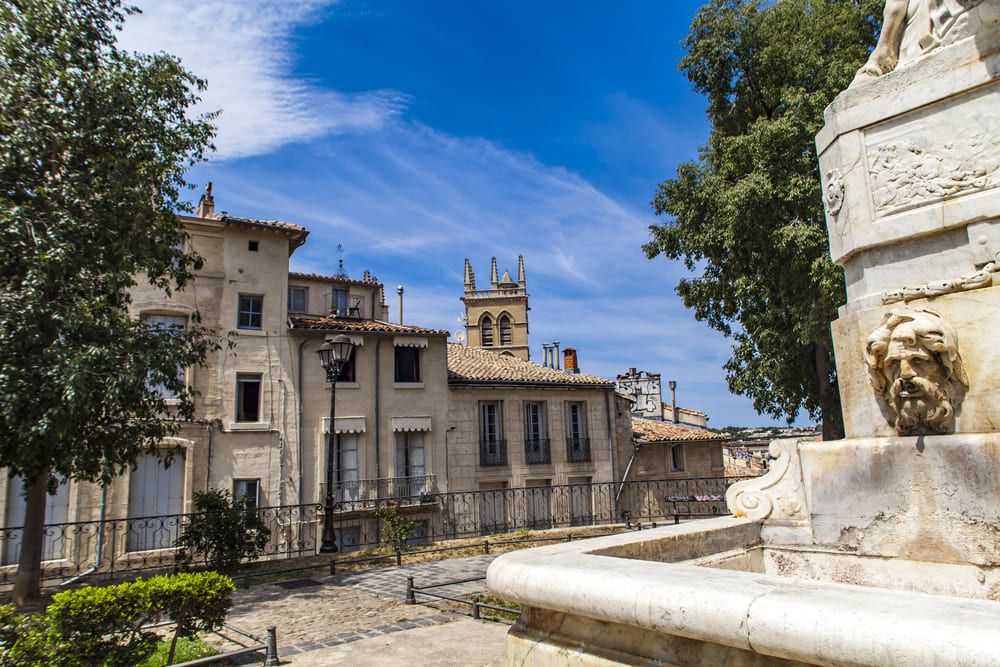
If locals had to describe Place de la Canourgue, the words discreet, beautiful, and romantic would come up again and again — and once you see it for yourself, you’ll understand why. Tucked away on a gentle hill, this peaceful square has a long and layered history. In 1129, Guilhem VI, lord of Montpellier, chose this very spot to build his residence, adding a small oratory to house relics brought back from the Holy Land. That chapel was destroyed during the Wars of Religion in 1562, and in 1604, the Catholic White Penitents built a new sanctuary in its place — only for it to be demolished in a single night in 1621. With the space once again empty, Bishop Pierre de Fenouillet dreamed of building a grand cathedral here, and construction began in 1623. But just six years later, Cardinal Richelieu ordered all efforts to focus on restoring Saint Peter’s Cathedral instead. What remains today are simply the foundations of what might have been. Over the centuries, the square slowly transformed into one of Montpellier’s most charming spots. Elegant mansions were built around it, including the Hôtel de Belleval, once home to City Hall. A stone basin and the Unicorns Fountain were added later, in honor of Charles Eugène Gabriel de La Croix, Marquis of Castries. Today, Place de la Canourgue is considered the city’s oldest square. Its name, from the Occitan word “Canorgua,” recalls the canons of Maguelone who once lived here — a quiet nod to a long-forgotten chapter of the city’s past.
