





RyoCity
The Gifted City
Montpellier, France
RyoCity
The Gifted City
Montpellier, France
3.5 km
Distance
1h30
Durée
21
Audios
Boucle
Parcours
Shutterstock
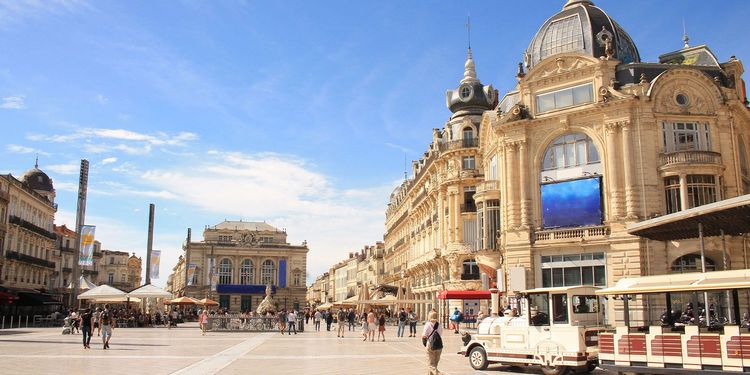
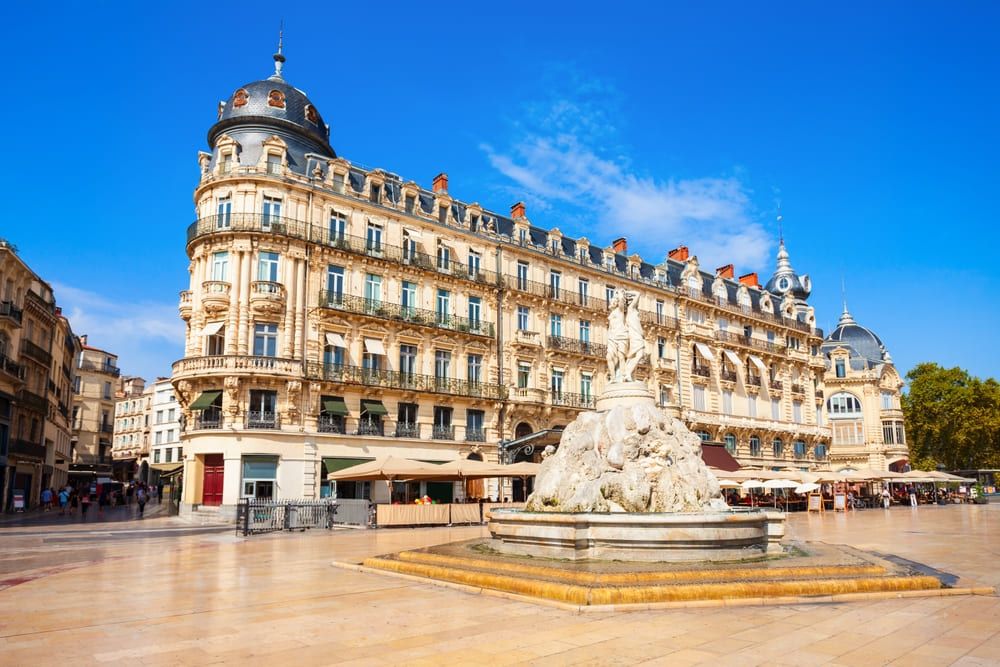
Having a coffee, shopping, or catching an opera — that’s just a glimpse of why Place de la Comédie is Montpellier’s favourite place to relax. For over 250 years, it’s been the city’s beating heart, shaped by history, anecdotes, and a lively atmosphere. Created in 1755 on former fortification grounds at the request of Cardinal Richelieu, the square takes its name from the municipal theatre built on its edge. That theatre burned down several times between 1785 and 1881, but the square’s layout remained unchanged. In the 1790s, the city installed its most iconic feature: the Fountain of the Three Graces, representing Aglaea, Euphrosyne, and Thalia — Greek goddesses symbolising beauty, nature, and creativity. Originally placed in Place de la Canourgue, the statue now resides inside the Opéra Comédie, with a replica standing on the square today. In the 19th century, the opening of Rue Foch, Rue de la Loge, and the nearby railway station turned Place de la Comédie into a major hub. Businesses moved in, cafés sprang up, and the local bourgeoisie began to gather in the elegant Haussmann-style buildings with their sweeping balconies. At 230 metres long and 50 metres wide, it forms, along with the Esplanade Charles de Gaulle, one of the largest pedestrian areas in France — and even Europe. In the 18th century, the space around the fountain was shaped like an egg, giving rise to its former nickname, “Place de l’Oeuf.” Soon to be greener and more photogenic than ever, with its 19th-century charm and the famous domed top of the Gaumont cinema watching over it, Place de la Comédie truly is the place to be in Montpellier.
