





RyoCity
Journey Through the Champagne Cork
Troyes, France
RyoCity
Journey Through the Champagne Cork
Troyes, France
4.1 km
Distance
1h40
Durée
27
Audios
Boucle
Parcours
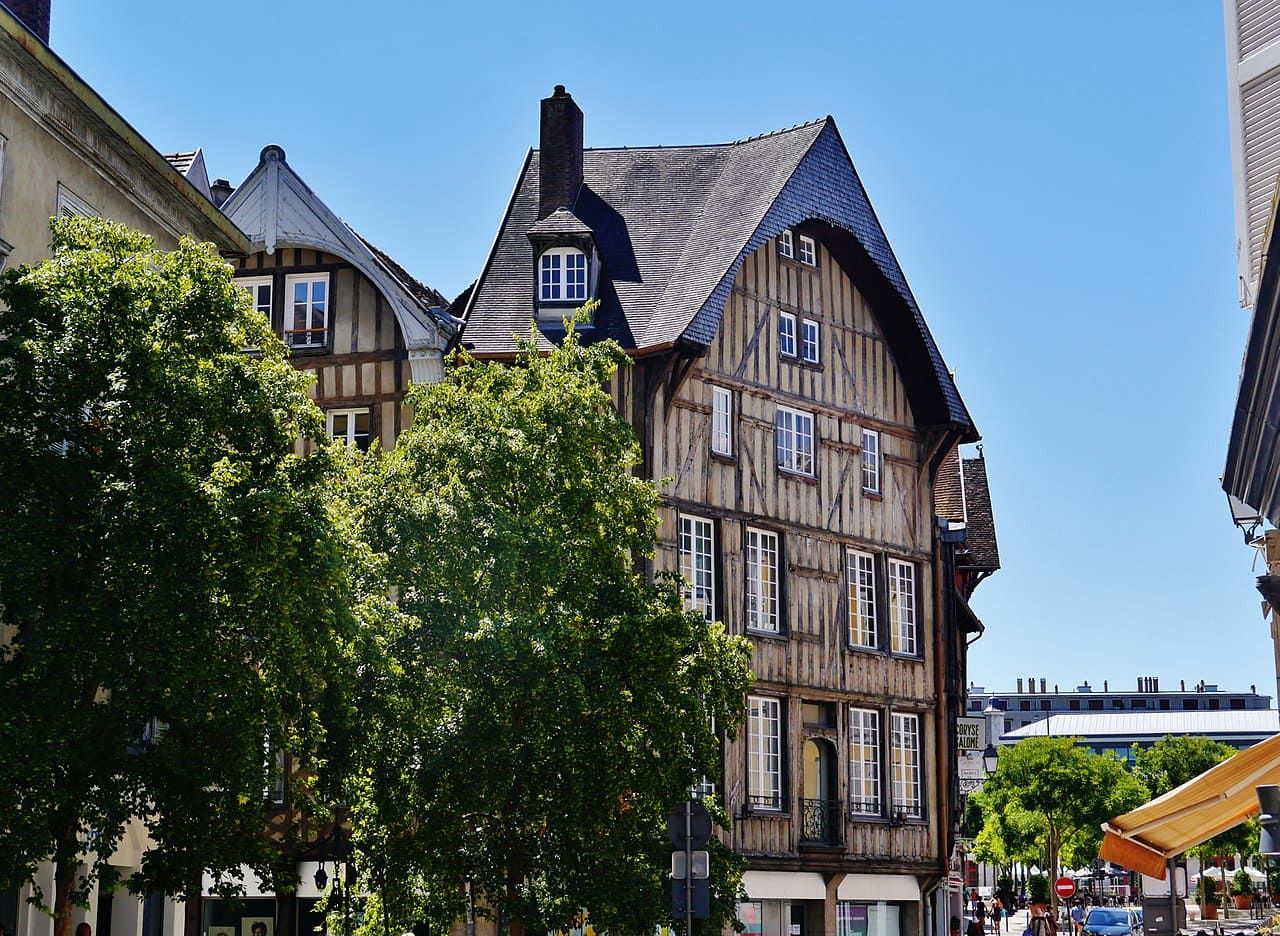
©Zairon CC BY-SA 4.0. https://creativecommons.org/licenses/by-sa/4.0/
Place Jean Jaurès is a lovely square, surrounded by beautifully restored half-timbered houses and lively café terraces. In the past, it was known as the Wheat Market Square—an important hub for the grain trade. That explains the presence of several old inns nearby, dating back to the Middle Ages. But not all of the square’s past is so charming. This was once the site of the pillory, where convicts were tied up for public humiliation, and the gallows, where criminals were hanged. During the Revolution, the gallows were replaced by the guillotine—seen at the time as a quicker and more humane way to die. One of its most famous victims inspired Victor Hugo’s short novel Claude Gueux, in which he denounced the death penalty and urged society to cultivate minds instead of cutting off heads. But let’s come back to the present. The large building in front of you was built in 1837 to serve as the Hosiery Hall, where weavers from across the region came to sell their goods. It later became home to trade unions, and eventually, the city’s Labor Exchange—an institution found throughout France that supported workers and helped them find jobs. Today, it’s being transformed once again, this time into a shopping center. Another notable spot on the square is number 28, the birthplace of Édouard Herriot, a major political figure of the French Third Republic. He was mayor of Lyon for 45 years, served multiple times as a minister, and even as president of the National Assembly. He championed secularism, the separation of Church and State, and dedicated himself to promoting peace. The square itself has carried the name Jean Jaurès since 1919, in honor of another iconic figure in French politics. A brilliant speaker and a passionate advocate for social justice and pacifism, Jaurès was assassinated for trying to prevent the outbreak of World War I. His death came as a devastating blow to all who hoped for peace. Today, he’s remembered all over France—most towns have a street or avenue named after him. With that, I’ll leave you to explore Cour Doué, one of Troyes’ charming little hidden passages. They say it used to be a real cutthroat alley, but don’t worry—it’s much calmer now. As you walk through, take a moment to look up and spot the tiny carved details in the beams: lizards, bunches of grapes, and other surprises tucked away above your head.
