





Walk
The historic capital of Savoy
Chambéry, France
Walk
The historic capital of Savoy
Chambéry, France
3.4 km
Distance
1h30
Durée
24
Audios
Loop
Parcours
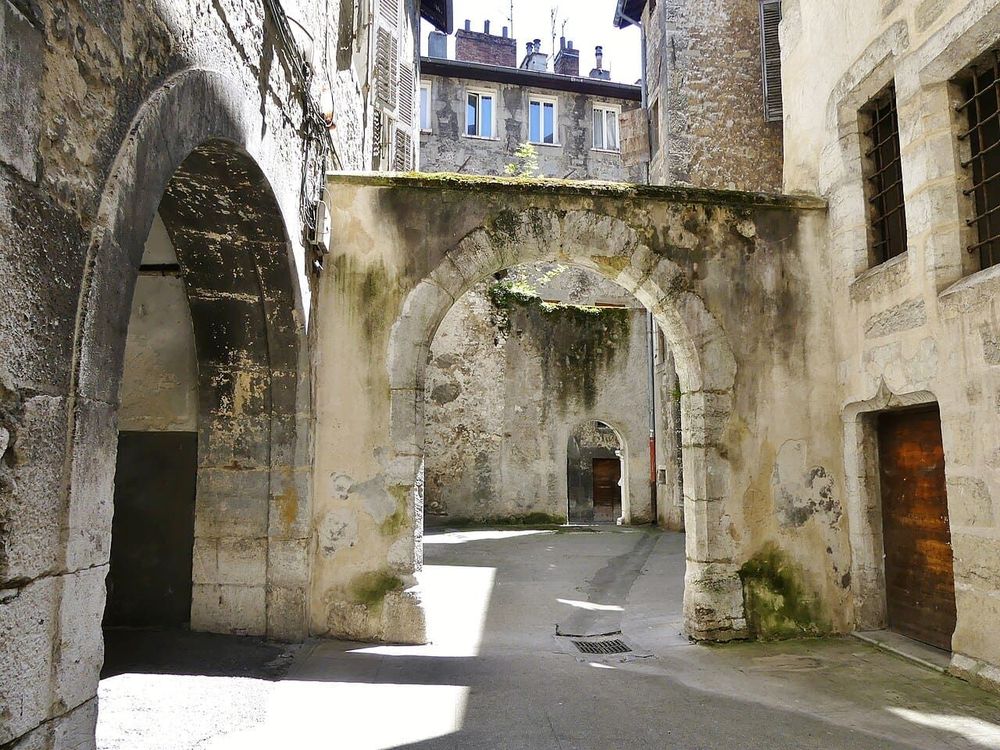
©Florian Pépellin CC BY-SA 4.0. <https://creativecommons.org/licenses/by-sa/4.0/deed.fr>via Wikipedia Commons
The Chambéry audio-guided tour has you discover its secret alleys, these passages that cross the courtyards of buildings to link two parallel streets. Cousins of the Lyon traboules, they bear here the name of alleys, and the city has nearly a hundred of them.
The word traboule being reserved for Lyon, here one speaks of alleys. These passages came into being in the fourteenth century, with the appearance of the toisé, a tax that merchants and craftsmen had to pay and which was indexed on the width of their shop on the street. To reduce this tax, narrow façades were built giving onto deeper buildings, linked by these alleys that wind through the courtyards.
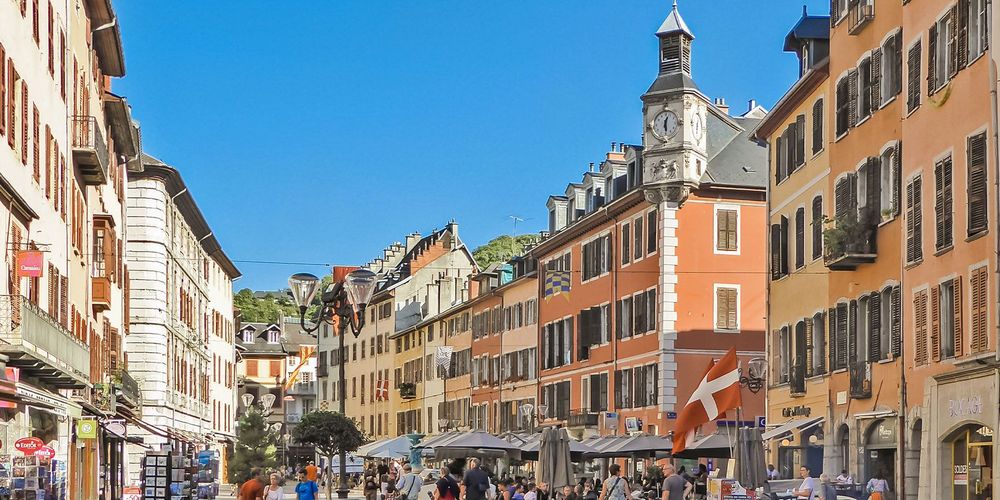
About fifteen of these alleys start from Place Saint-Léger alone. By taking them, you discover hidden courtyards, staircases, galleries and sometimes trompe-l'œil, as in the Clock courtyard. Exploring this network of secret passages is one of the finest ways to feel the soul of old Chambéry, far from the main thoroughfares.
The alleys of Chambéry can be discovered in the old centre, notably starting from Place Saint-Léger. Many can be walked freely on foot during access hours; some, giving onto private courtyards, require respecting the peace and quiet of the inhabitants.
They are called alleys, the word traboule being reserved for Lyon; Chambéry has nearly a hundred of them.
In the fourteenth century, because of the toisé, a tax indexed on the width of shops, which encouraged the building of narrow façades linked by passages.
Aucun avis pour le moment
