
Créé par Emilie, le 17 nov. 2026
Votre guide Ryo
Chambery, France
The historic capital of Savoy
Parcours audioguidé pour visiter Chambéry en 1 jour
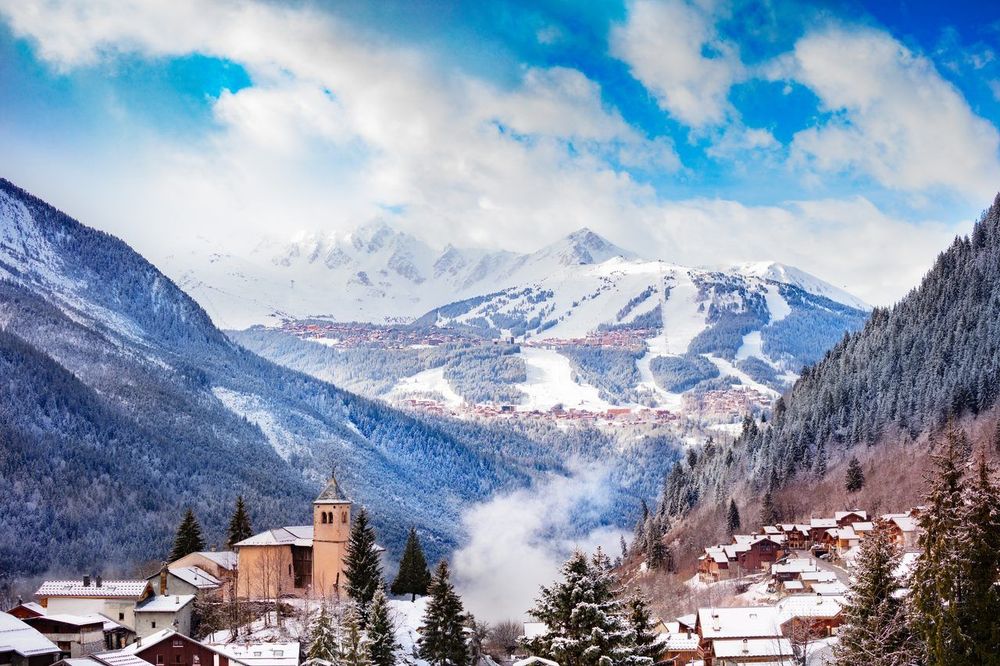
In the heart of the Alps, Chambéry bears the imprint of its past as the capital of Savoy. With its historic heritage, old streets, and Italian-influenced atmosphere, the town reveals an identity that is both understated and distinctive.
Quand partir à Chambéry ?
Jan.
3°
9
Feb.
5°
8
March
9°
9
April
12°
11
May
16°
13
June
20°
12
July
23°
10
Aug.
23°
10
Sept.
19°
10
Oct.
14°
11
Nov.
8°
10
Dec.
4°
9
The climate in Chambéry is semi-continental with a mountain influence, featuring cool to cold winters, generally between -1 and 7°C, sometimes accompanied by frost and fog, and hot summers, most often ranging from 25 to 32°C, with possible peaks during heatwaves; the best times to visit are typically from April to June and then from September to October, when temperatures are pleasant, the landscapes between lake and mountains are particularly beautiful, and conditions are ideal for enjoying the historic center and surrounding areas without the crowds of the peak summer season.
Départ conseillé
We design our tours as loops so you can easily start the visit from the closest point to you, with guidance that automatically adapts. If you are nearby, we recommend an ideal starting point: Espace Malraux
Parking à proximité
Q-Park Curial : 1 place Monge
In Chambéry a Parking fee is charged from 9am to 12pm and from 2pm to 6pm every day except Sundays and public holidays.
The city is divided into three zones. Red in the hyper-center, where the maximum parking time is 3 hours. Orange in the city center, where you can park for up to 4 hours, and a green zone on the outskirts of town, where you can park for up to 6 hours. Payment is made at the pay and display machines or via the Paybyphone mobile application.
À savoir
Please note that our itinerary takes you through the grounds of Chambéry Castle. Access is free, but subject to opening hours. If the castle is closed, simply continue along rue de la Trésorerie and return to your route at rue basse du Château.
Découvrez 24 lieux d'intérêt pour visiter Chambéry





What to see in Chambéry on your 1h30 tour?
This 3.4 km loop takes about 1 hour 30 minutes and links 23 sights. From the Carré Curial, it crosses the old town via Rue Croix-d'Or and the secret alleys off Place Saint-Léger, climbs to the Château of the Dukes of Savoy, then comes back down through the Boigne arcades and the town hall square to the Halles market, the Elephant fountain and Rue d'Italie. With the Ryo app in your ears, every façade reveals its story.
Information checked in November 2026 and subject to change.
1 - Carré Curial
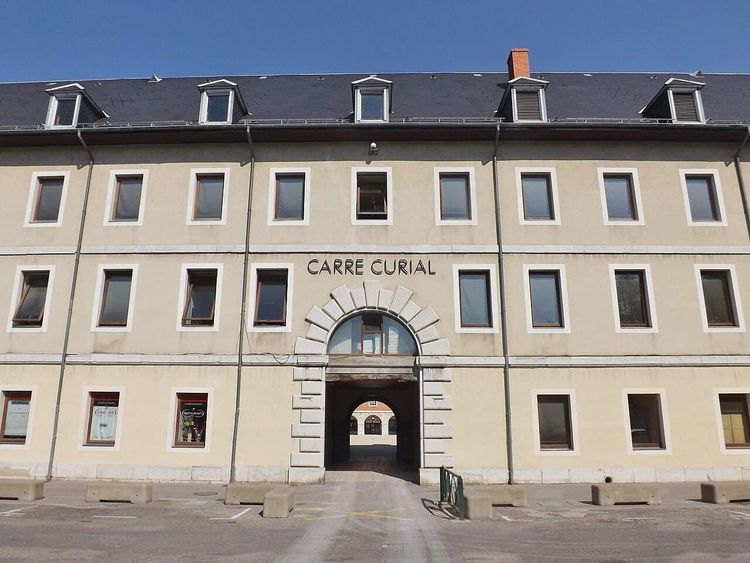
The walk begins in the courtyard of this former army barracks, built in 1805 to house seven hundred soldiers in austere dormitories and closed off behind a single gated entrance. Bought back by the city in the 1970s, it now houses a media library and a national stage. Its name honours a Savoyard general of the revolutionary army, quite apart from the Geneva-born philosopher remembered by the neighbouring building.
Free entry
2 - Hôtel des Marches
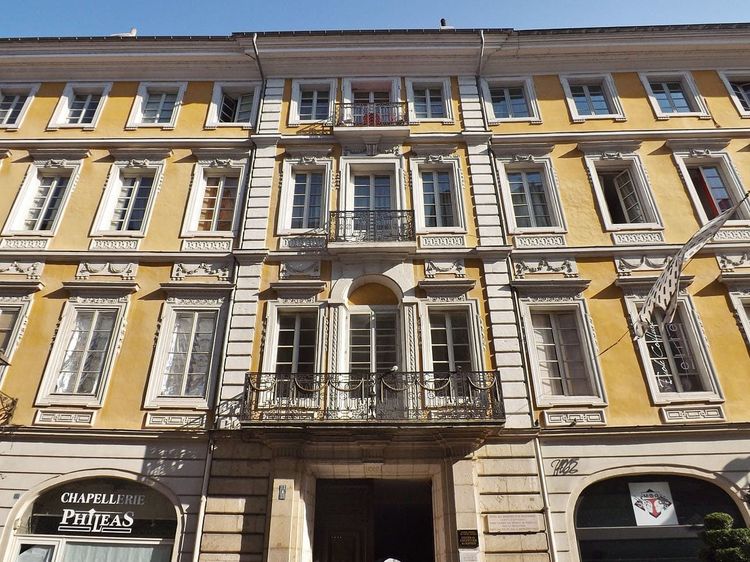
This street once welcomed travellers arriving from Italy, in what was the poshest district of the ducal town. Behind its yellow Louis XVI façade stands one of the few surviving mansions built by the nobility back in the 15th and 16th centuries. A plaque recalls the stay of Pope Pius VII and Napoleon I, proof that the house once hosted rather more than curious neighbours.
Free to see from outside
3 - Hôtel de Cordon
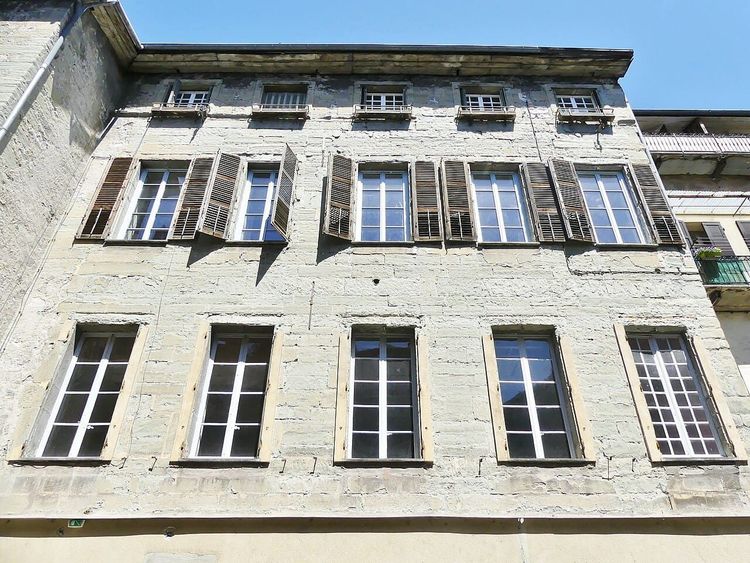
Among all the private mansions the city counts, only one opens its doors to visitors free of charge: this one. Inside, a permanent exhibition traces how the city changed shape over the centuries, alongside temporary shows built around heritage and local collections. Quiet and rarely crowded, it makes for a calm break away from the bustle of the nearby streets.
Free entry
4 - Chambéry cathedral
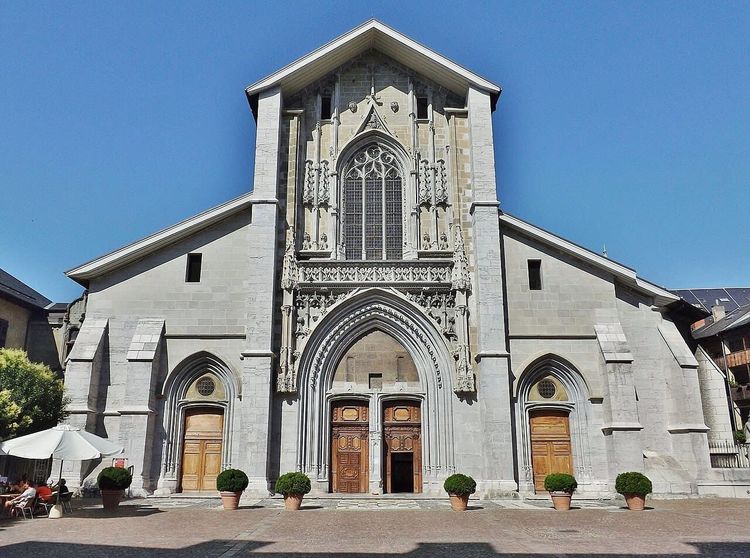
The outside of this religious building stays remarkably plain, a legacy of its Franciscan origins and of marshy ground unsuited to anything grandiose. The interior, though, is a surprise: 19th-century painted decors mimic carved stone so well that the eye is fooled. It keeps a copy of the shroud long venerated at the nearby Holy Chapel, and an adjoining cloister offers a quiet break, reached through the museum beside it.
Free entry
5 - The Horloge square
About fifteen discreet passages lead off the nearby square without the eye ever noticing them. This one opens onto a hidden courtyard, where local artists painted a two-part scene back in 1993: on one side figures in period costume beneath a clock tower, on the other a thoroughly modern façade. The illusion works so well that many walk through without guessing it is flat paint on a wall.
Free entry
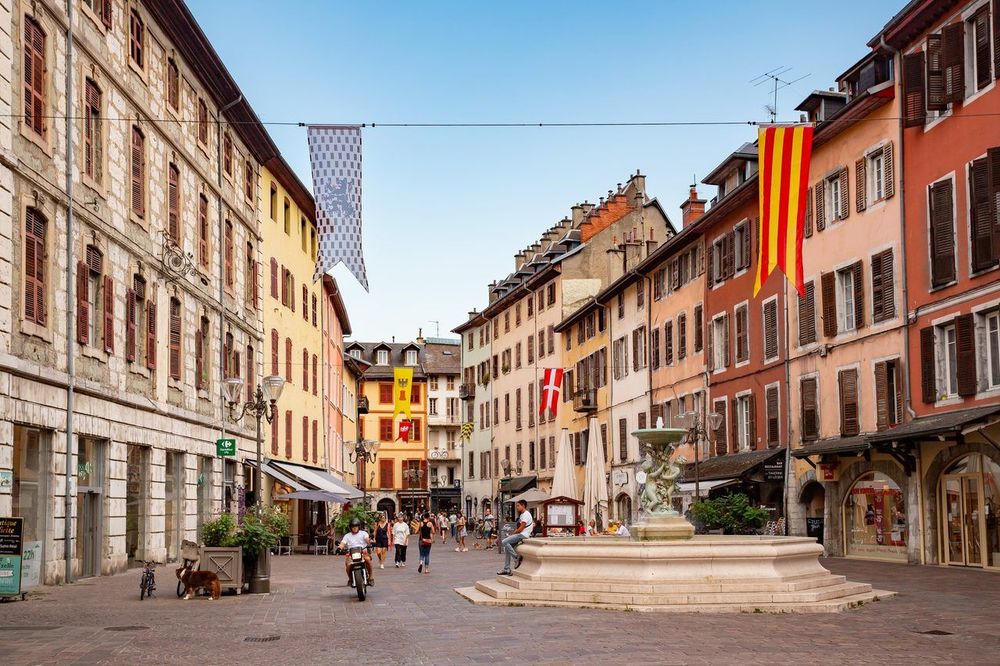
6 - Saint-Léger Square
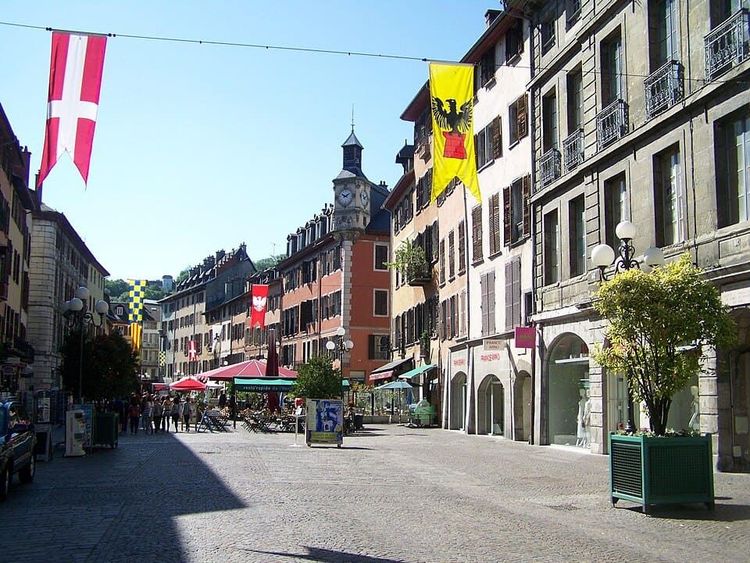
So elongated it could pass for a street, this esplanade sits where a branch of the river once flowed, splitting the space in two and lapping against a church that has since vanished. Wooden stalls, then a covered street, stood here one after another before a great fire, late in the 19th century, redrew the district and left only the belfry clock as a visible trace of that buried past.
Free entry
7 - Secret alleys of Chambéry
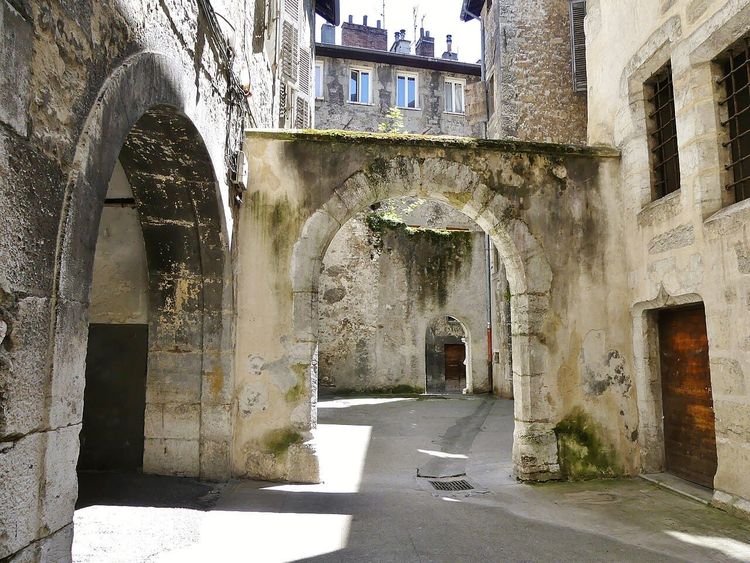
Unlike their Lyon cousins, the traboules, these passages cutting through building courtyards carry their own local name here, and there are nearly a hundred of them. Their existence comes down to an old medieval tax calculated on the width of a shopfront: the narrower the front, the less you paid, hence these buildings running deep and linked by walkways. A door carved with alchemical motifs, rebuilt stone by stone after the war, keeps an intact mystery about it.
Free entry
8 - View above Boigne street and the Elephants fountain
With a single glance from this vantage point, the street stretches out beneath its covered galleries toward the emblematic fountain that closes the view. Two brothers born here in the 18th century watch over the scene from their pedestal: one built a career in politics and philosophy, the other owes his fame to a tale written during several weeks of detention in Turin, where his imagination travelled further than his feet ever could.
Free entry
9 - Chambéry Castle
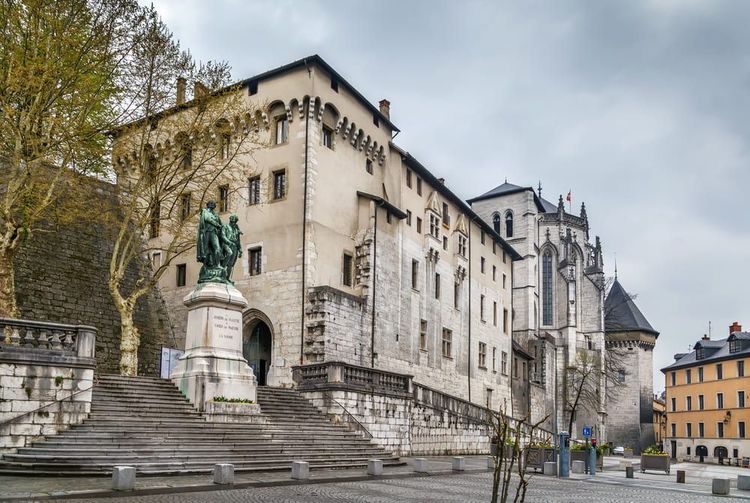
This crossroads controlled the routes toward Italy since antiquity, making it a military lock impossible to bypass. A first fortress was raised here in the 11th century by local lords, who became counts and then dukes in 1416, turning a simple fief into a duchy stretching as far as Switzerland. When the capital moved to Turin, the fortress stayed an administrative power centre, and today houses the Savoy prefecture, still open for guided visits.
Free to see from outside
10 - The Holy Chapel
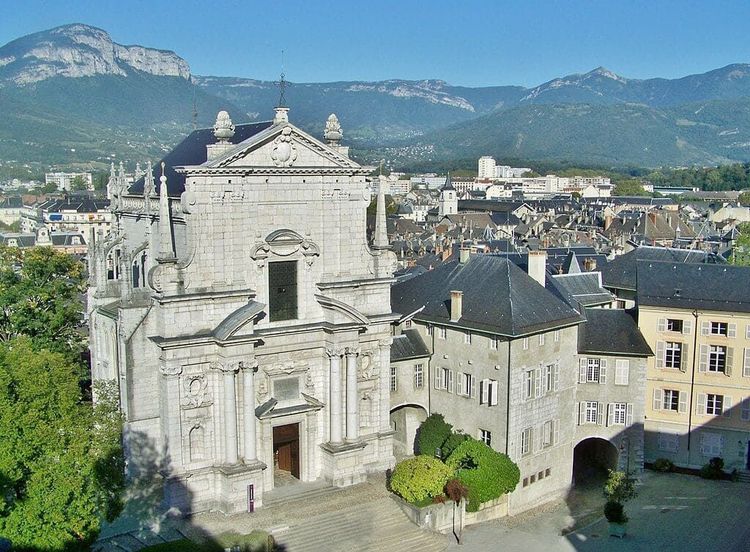
From this angle, only the apse and the great carillon tower of this religious building come into view, raised by the first duke to replace a chapel that had grown too small. Between 1502 and 1578, a relic ranked among the most precious in Christendom was kept here before leaving for Turin with its owners. The carillon's seventy bells, among the largest in Europe, still ring on certain Saturdays at set hours.
Paid entry (about €8) · Allow 1 h
11 - Rue basse du Château (Lower Castle Street)
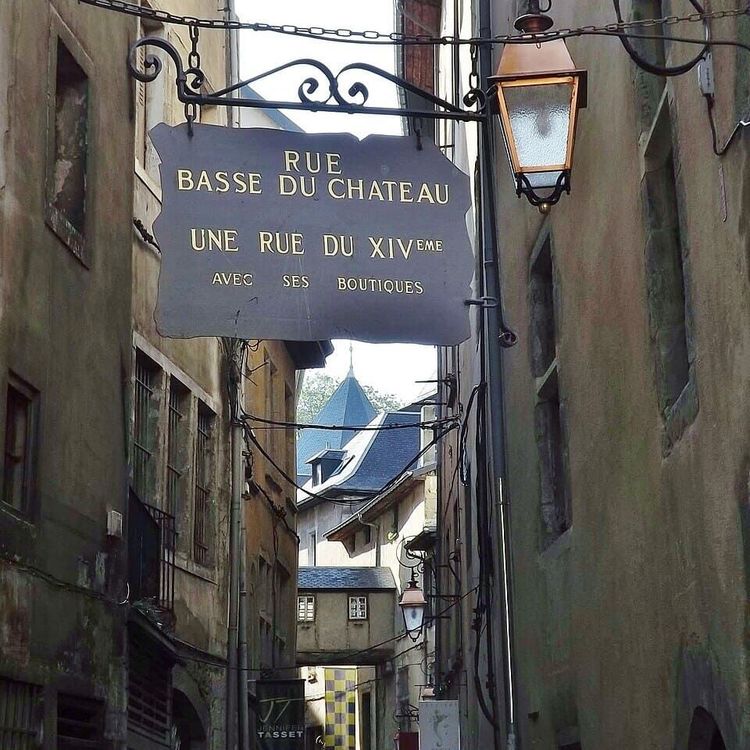
In the 14th century, a single route led up to the fortress perched above the city: the one you are walking now. A covered passage still spans the roadway between two façades, the last trace of a once-common practice of extending a house by buying a room in the building opposite, even if it meant spreading fires from one side to the other. Today's design shops have inherited this unchanged setting.
Free entry
12 - Statue of Lorelai
Leaning against the rim of a fountain on the boulevard, this pensive figure has only lived here for a handful of years. The work of an Italian sculptor who died in 2013, it was shown outdoors across the city until the pairing of statue and water setting won over residents so thoroughly that the municipality bought it to keep it there for good. A touch of contemporary art slipped between two old buildings.
Free entry
13 - Boigne’s street
Cut through at the start of the 19th century to modernise a town still too medieval, this avenue owes its elegance to a local benefactor who made his fortune far from his home region. Its covered galleries, inspired by Turin models, shelter shops and strollers alike from rain or sun, and have made the street the city's social parlour ever since it was built. It holds the oldest shop in town, a pastry house since 1832.
Free entry
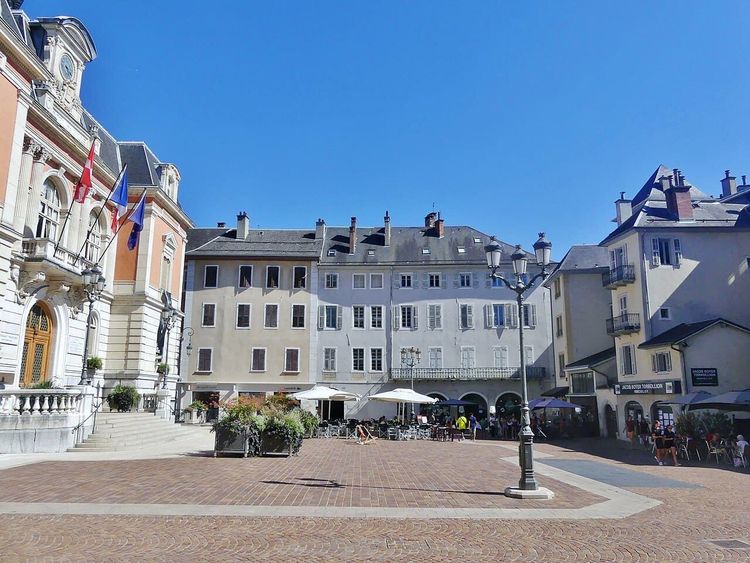
14 - Place de l'hôtel de ville (Townhall square)
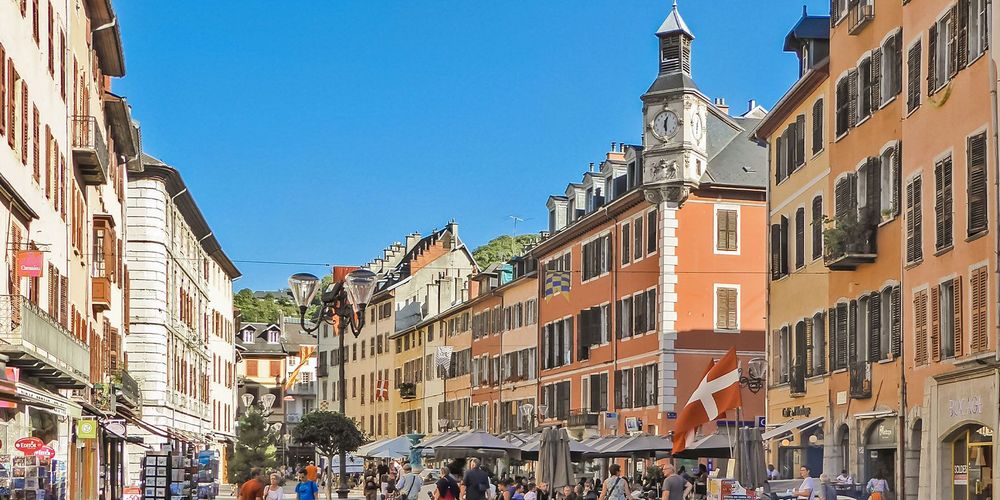
Built in the 1860s, this building marks the very start of the region's time within France, just three years after it was attached. The first building in the city to display a French eclectic style, it is the work of an architect who went on to become the official reference for two Savoyard towns. The wide square stretching in front, lined with old façades, has since become a natural stop for a coffee on a terrace.
Free entry
15 - Les Halles (Covered market)
A convent, then a grimly famous place of execution, once stood on this spot before a market took root here after the Revolution. The reinforced-concrete hall known today dates from 1937, the result of an architecture competition chaired by a Prix de Rome winner, later fully renovated around the turn of the 2000s. Under its vaults, shops, cinemas and terraces now mingle, far removed from the heavy memory still buried in its foundations.
Free entry · Best in the morning
16 - The Legend of the “Dent du Chat”
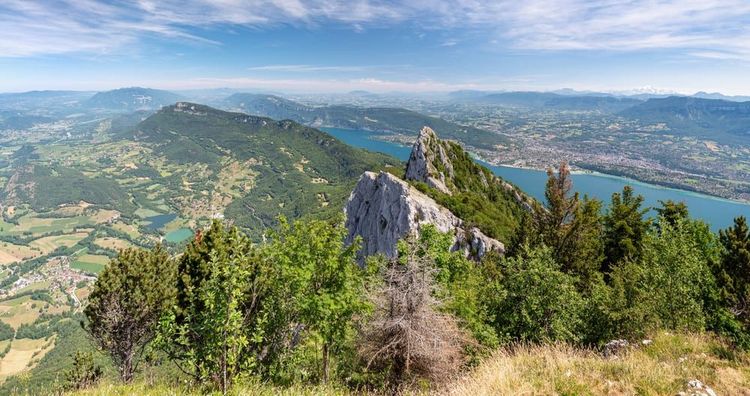
In the distance to the west rises a mountain whose jagged outline overlooks the Lac du Bourget and, according to oral tradition, explains the very name of the city. An unlucky fisherman, broken promises made to the heavens and a creature that turns monstrous make up this tale, passed down from generation to generation. Two knights eventually triumph over the beast, and their names are said to have slipped, altered, into those of two neighbouring towns.
Free entry
17 - Chapelle Vaugelas
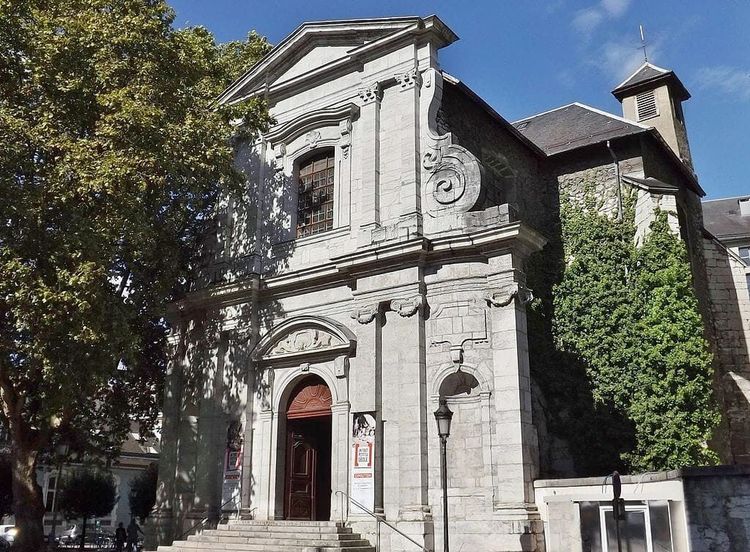
The only trace of a convent founded in the early 17th century by a canonised Savoyard bishop, this small religious building outlived the community that gave it life. Its façade, protected since the mid-20th century, stands right in front of a school named after an academician and grammarian, which trained, among others, a champion cyclist and a television host who became famous long after sitting at the nearby desks.
Free to see from outside
18 - The Courthouse
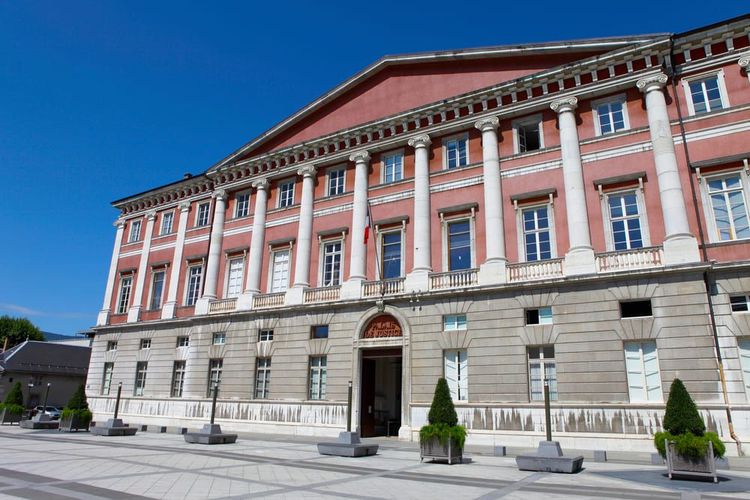
Commissioned by a kingdom that no longer existed by the time it was finished, this courthouse embodies all on its own a shift of sovereignty. In its solemn hall were announced the results of the vote on union with France, a score so overwhelming that it still fuels doubts today about how genuine it was. Its colonnaded façade, inspired by antiquity, faces that of the fine arts palace, in urban staging designed to impress.
Free to see from outside
19 - La Sasson
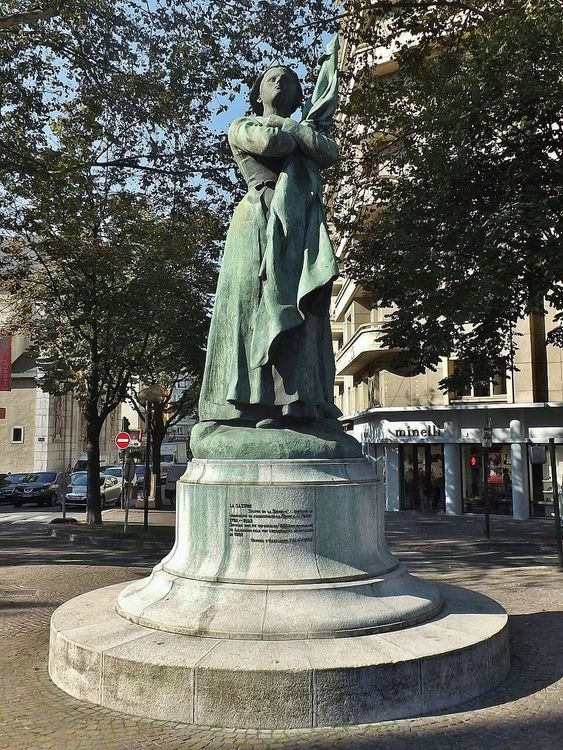
This tall bronze figure personifies the whole region, originally raised to mark a century of belonging to France. Its familiar nickname is said to come from a mocking dialect word aimed at the heaviness of its features, quite far from the solemn tribute given at its unveiling. Taken down and sent to be melted in Germany during the Occupation, it was found decapitated in a station after the war and restored before regaining its original spot, now linked to the Resistance.
Free entry
20 - Fountain of the Elephants
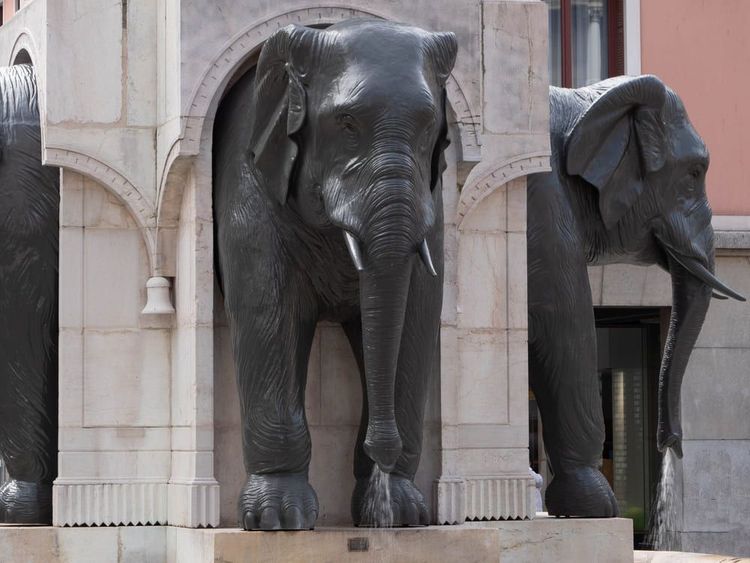
Given an affectionate but hardly flattering local nickname, the four stone pachyderms making up this monument actually pay tribute to a benefactor who made his fortune far from home, rather than to the ancient feat of a general crossing the Alps. Built from limestone and rising to almost eighteen metres, the work narrowly escaped being melted down twice during the Second World War, before being restored piece by piece around ten years ago.
Free entry
21 - Mont-Blanc Passage
Before the 19th century, this covered gallery did not yet exist in this form: a canal flowed through here, used to water the horses of travellers staying at the nearby inns. A congregation of nuns, settled in the district from 1816, opened a school there taking in more than a thousand girls from modest families, boarding included. The school still runs today, long after the sisters left in the mid-2000s.
Free entry
22 - Italie street and Faubourg Montmélian
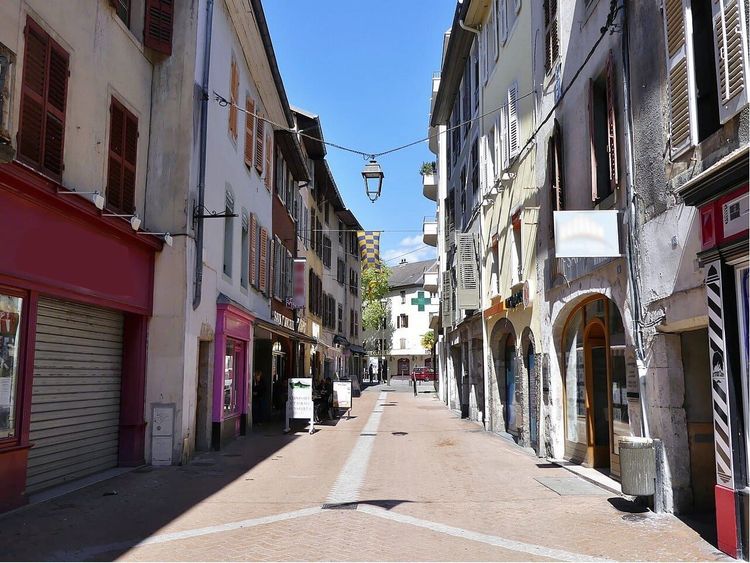
Travellers from Italy once followed a single thoroughfare to enter the city, lined with its cheapest inns since they stood outside the old walls. A cross street, cut through after the region joined France to serve a nearby barracks, eventually split this historic corridor into the two separate stretches known today. A small domed kiosk, remnant of a cinema project never finished, now shelters a former printworks whose name still decorates its mosaics.
Free entry
23 - Charles Dullin Theater
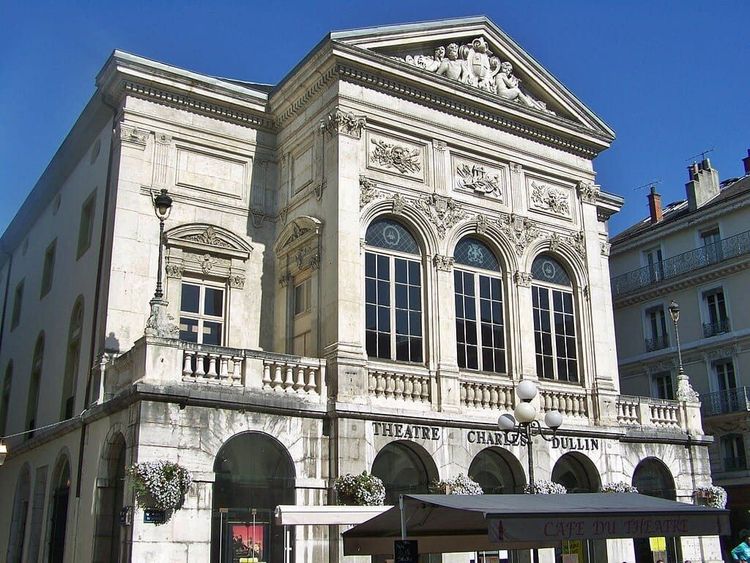
This Italian-style hall bears the name of a Savoyard actor, ranked among the leading names of 20th-century French drama. Funded by the very same local benefactor already met earlier on this walk, it could once seat nearly a tenth of the city's entire population. Destroyed by a night-time fire, it was rebuilt identically, saving along the way a painted stage curtain that ranks among the last of its century still kept intact.
Free to see from outside
What to do in Chambéry in 2 or 3 days?
An hour and a half is enough to cover the 23 stops of the historic centre, between the Carré Curial, the old town and Chambéry Castle. With 2 or 3 days on hand, Chambéry rounds out nicely with its museums, then with a trip to its big neighbouring lake.
The next day, climb up to Les Charmettes, in the hills, to visit the house where Jean-Jacques Rousseau lived with Madame de Warens what he called “the short-lived happiness of his life”. Come back down for the Savoisien Museum, housed in a former Franciscan convent, which unfolds Savoy's history from prehistory through the upheavals of the Revolution; allow at least an hour.
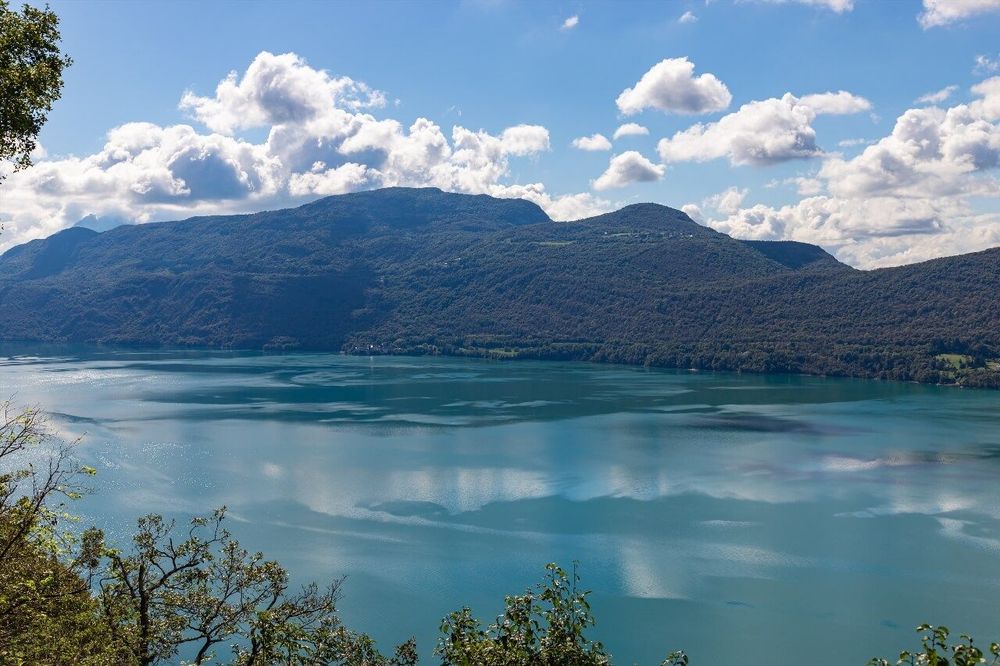
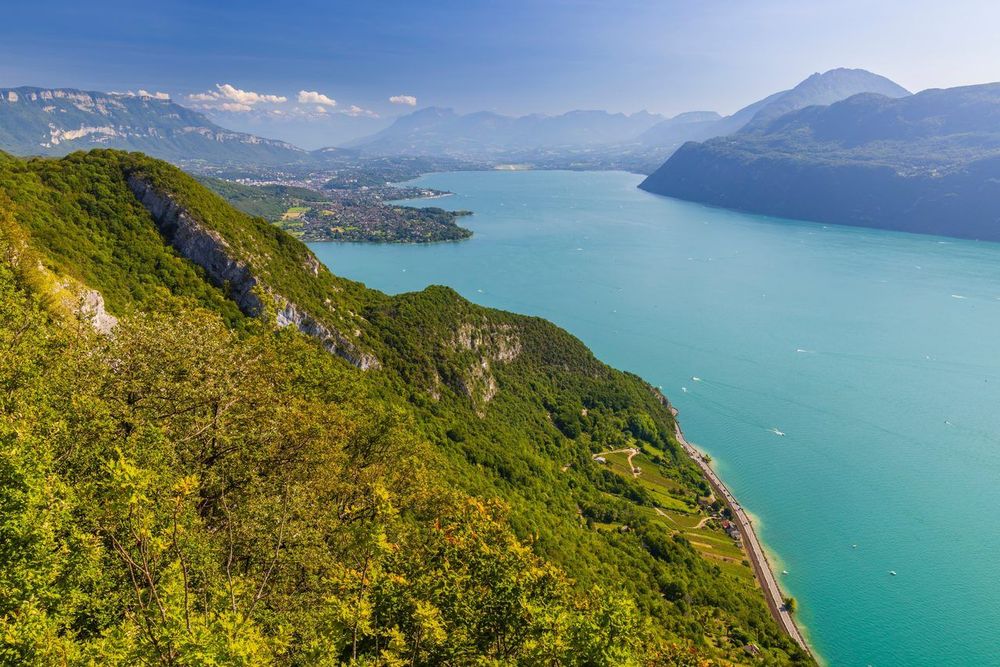
The third day lends itself to a getaway to Lake Bourget, the largest natural lake in France, about 15 minutes away by train from Chambéry. In summer, its free, supervised beaches invite a swim, and from May to September boats sail from Aix-les-Bains to Hautecombe Abbey, a former necropolis of the princes of Savoy clinging to its cliff. More car-free ideas await in our guide to activities in Chambéry and the surrounding area.
Which neighbourhoods does the tour cross?
On this compact loop, the route crosses several faces of Chambéry, from the old aristocratic quarter to the seat of ducal power.
It sets off from Carré Curial, a former barracks turned cultural centre, then follows Rue Croix-d'Or, once the way into town for travellers arriving from Italy and lined with private mansions, as far as Saint-Léger Square, the city's original heart, where the Albanne river once flowed (stops 1 to 7).
The climb leads to Chambéry Castle, a strategic crossroads since antiquity and the cradle of the duchy from 1416, before coming back down through the Boigne arcades (stops 8 to 13).
The last stretch reaches the town hall square, overlooked by the town hall built in 1863, then Les Halles covered market, raised on the site of a former convent, and the courthouse quarter, before returning past the Fountain of the Elephants to Italie street and the Faubourg Montmélian, once the inn district at the town's gate, and finally the Charles Dullin Theatre (stops 14 to 23).
How much does it cost to visit Chambéry?
Of the 23 stops on the route, 17 can be visited freely, from the private mansions to Les Halles. Five others, including Chambéry Castle, now home to the prefecture, or the Charles Dullin Theatre, can only be admired from the street or the courtyard.
Only the Holy Chapel, inside the castle, comes at a cost: it can only be seen on a one-hour guided tour, booking required, for €7.50 full price.
Information checked in November 2026 and subject to change.
Where to stop for a bite along the tour?
For a break on the route, head for the cafés and terraces of Saint-Léger Square (stop 6), the lively heart of the old town, or those of Italie street (stop 22), one of the busiest streets in Chambéry.
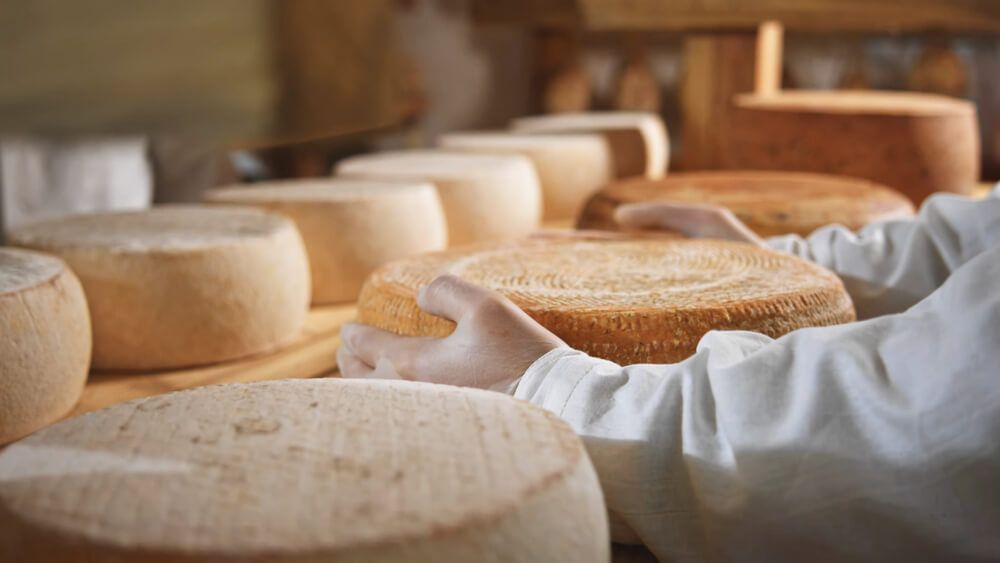
Order a Savoyard fondue, several cheeses melted with garlic and white wine, or a croziflette, Savoy pasta baked with reblochon, bacon and onions. Those with a sweet tooth should try the blueberry tart, filled with fruit picked in the nearby hills. Our selection of Chambéry's culinary specialities brings together the other local classics.
What should you know before visiting Chambéry?
The walk through Chambéry Castle depends on opening hours; the rest of the circuit can be followed without any constraint.
The route crosses the castle grounds (stops 9 and 10); access remains free but subject to opening hours. If the gates are closed, carry on along Rue de la Trésorerie to pick up the circuit again at Rue basse du Château (stop 11).
As for Les Halles (stop 15), the covered market only really comes alive on market mornings, twice a week.
What to see around Chambéry?
Chambéry is a good base to branch out from, between lakes, summits and neighbouring towns that also have their own audio-guided route.
25 km to the west, Lake Aiguebelette charms with its very clear water and its modest size, ideal for paddleboarding. The Nivolet Cross, which rises to 1,547 metres, is reached after a 2 to 2.5-hour climb from Jacob-Bellecombette for a sweeping panorama. Our selection of tourist gems around Chambéry lists several others, from the Saint-Christophe caves and their Sardinian Way, cut in the 17th century, to the Mollard Noir and its sunsets over Belledonne.
Several neighbouring towns also have their own audio-guided route: Aix-les-Bains, 14 km away, a former Belle Époque spa town; Annecy, 40 km away, with its canals and colourful lanes; Grenoble, 44 km away, where the “Bubbles” cable car soars over the Isère. Further on, Geneva, 73 km away, blends its old town with the quays of Lake Geneva, while Chamonix-Mont-Blanc, 84 km away, lies at the foot of Mont Blanc.
What's on in Chambéry right now?
As the year draws to a close, Chambéry keeps busy with several seasonal events.
From 27 November to 3 January, the Christmas market sets up 37 wooden chalets along Boulevard de la Colonne, with a second lively hub on Place du Palais de Justice and a big opening parade on 27 November at 5 pm. Our guide to visiting Chambéry at Christmas covers the full calendar and entertainment.
Two privilege tours, booking required, round off the programme: on 28 November, the backstage of the Charles Dullin Theatre, for €9.50 full price; on 12 December, rare access to the mechanism of the castle's great carillon, inside the Yolande tower, followed by the Holy Chapel, for €19 full price.
Information checked in November 2026 and subject to change.
Le plein d'inspirations
Explorez le monde en totale liberté, à pied au cœur des villes ou au fil des routes. Nos guides audios transforment chaque destination en une découverte culturelle immersive et unique.










FAQ for visiting Chambery
When is the best time to visit Chambery?
The best times to discover Chambery run from April to June and then from September to October. During these months, you will enjoy pleasant temperatures, ideal for exploring the city on foot without suffering the intense summer heat. The landscapes between lakes and mountains are particularly magnificent in these seasons, with a soft light that enhances the Savoyard architecture. Tourist numbers remain moderate, letting you visit the historic sites more serenely. Summer can be very hot, with temperatures sometimes exceeding 30°C, while winter, though charming with its Christmas markets, sees cool temperatures and frequent fog that can limit visibility of the surrounding mountains.
How many days do you need to visit Chambery?
A two-day weekend is an ideal length to discover the essentials of Chambery. On the first day, you can explore the historic centre with its medieval lanes, visit the Château des Ducs de Savoie and stroll through the covered passages characteristic of the city. The second day lets you deepen your discovery by visiting the museums, enjoying the local markets or venturing to the shores of the nearby Lac du Bourget. If you have three days, you can take more time and perhaps even make an excursion into the mountainous surroundings. One day is still enough to get an overview of the town centre, but you risk missing the special atmosphere that emanates from this former Savoyard capital.
How do you get to Chambery by public transport?
Chambery is easily accessible by train thanks to its well-connected station. Direct TGV trains link Paris to Chambery in about three hours, while Lyon is just an hour and a half away. From Geneva, allow generally an hour and a half of travel with a connection. The station is about a fifteen-minute walk from the historic centre, or you can take the urban buses. For those arriving by plane, the nearest airports are Lyon-Saint Exupéry and Geneva, both offering rail connections or shuttles to Chambery. In winter, special buses also serve the city from the surrounding ski resorts, making Chambery a convenient hub for exploring the Alpine region.
What are the must-see sights in Chambery?
The Château des Ducs de Savoie majestically dominates the city and is the ideal starting point for your visit. The medieval lanes of the historic centre will then lead you towards the Saint-François-de-Sales cathedral and its remarkable trompe-l'oeil. Do not miss the famous covered walkways, typical passages that give Chambery its very particular character, between Alpine and Italian influences. The Fountain of the Elephants, an emblematic monument of the city, deserves your attention, as does the Place Saint-Léger with its lively terraces. The Ryo audioguide accompanies you on this discovery with a commented route that reveals the secrets of these places steeped in history. The Renaissance private mansions and the Museum of Fine Arts perfectly complete this exploration of the Savoyard heritage.
Where should you stay in Chambery for a weekend?
The historic centre remains the most convenient district for staying in Chambery, letting you visit everything on foot. There you will find charming hotels set in former Savoyard residences, offering an authentic atmosphere. The station district is an interesting alternative, generally more affordable and well served, just a few minutes' walk from the historic heart. For a more contemporary experience, the surroundings of the Carré Curial offer modern accommodation in a cultural district undergoing full transformation. Lovers of peace and quiet will appreciate the guest rooms located on the heights of the city, often offering lovely views over the surrounding mountains. Remember to book in advance, particularly during the summer festivals or the ski season, periods when availability can fill up quickly.
What can you do in Chambery with family and children?
Chambery offers many activities suited to families. The playful trail in the historic centre lets children discover the city while having fun, with riddles to solve around the monuments. The Verney park, a vast green space on the edge of the city, has play areas and large lawns perfect for picnics. In fine weather, an excursion to the nearby Lac du Bourget will delight young and old with its landscaped beaches and the chance to go pedal-boating. The Ryo audioguide offers adapted commentary that captures the attention of the youngest by telling the story in a lively and accessible way. The natural history museum regularly organises educational workshops, while the Jean-Jacques Rousseau media library offers a welcoming youth area for a reading break.
Can you visit the Château des Ducs de Savoie freely?
The Château des Ducs de Savoie today houses the prefecture and the departmental council, which limits free access to certain parts. The inner courtyards are generally accessible free of charge and let you admire the medieval and Renaissance architecture of the monument. To discover the interior, notably the Sainte-Chapelle with its remarkable stained-glass windows and the Grand Carillon, guided tours are organised regularly, particularly in summer. It is recommended to enquire at the tourist office to find out the times and arrangements, which vary by season. The Trésorerie tower offers an exceptional panorama over the city and the mountains, but access is only by guided tour. Even without going inside, the exterior tour of the château is worth the detour to appreciate this imposing fortress that bears witness to the glorious past of Savoy.
Where can you park in Chambery to visit the town centre?
Several underground car parks make access to the historic centre of Chambery easy. The Château car park, ideally located at the foot of the ducal fortress, places you directly in the heart of the old town. The Curial car park, more recent and spacious, is near the cultural centre and remains very handy for reaching the shopping streets. For generally more advantageous rates, the station car park offers a good alternative, all the more so as it is only about ten minutes' walk from the centre. During the Saturday morning markets, favour the underground car parks, as surface parking becomes more complicated. Some car parks offer attractive day passes for an extended visit. Also consider the park-and-ride car parks on the outskirts, free and connected to the centre by public transport, an economical solution if you plan to spend the day in town.
Which Savoyard specialities should you try in Chambery?
Savoyard cooking is enjoyed here all year round, with a preference for winter when fondue, raclette and tartiflette come back on the menu. The rest of the time, look instead for diots, those sausages simmered in white wine, baked crozets pasta, farçon, or a simple plate of tomme, beaufort and reblochon bought at the covered market. The slopes surrounding the town produce lively white wines such as apremont, roussette or chignin, often served by the glass in the bistros of the old centre. Chambery is also the home of vermouth, made here since the nineteenth century, and neighbour to the massif where Chartreuse liqueur was born. Finish with a gâteau de Savoie, light and airy.
What is there to discover in the old town of Chambery and its covered lanes?
The old heart is explored on foot, between colourful façades and cobblestones. The long Place Saint-Léger acts as a guiding thread: on either side open the allées, covered passages that cut through the buildings and lead to inner courtyards, spiral staircases and forgotten wells. Look up at the painted trompe-l'œil that extend windows and balconies, a local tradition that has become a signature of the town. The mansions in the neighbouring streets recall the days when Chambery was the capital of the States of Savoy, and the trail dotted with elephant sculptures offers a playful way to link these stops. The Ryo audio guide offers a dedicated Chambery route so you miss none of these lanes.
How can you combine the old town and Lake Bourget on a trip to Chambéry?
Start with the medieval centre, best explored on foot: the 1838 Elephant Fountain, the Château des Ducs de Savoie and its Sainte-Chapelle built in 1408, the trompe-l'œil paintings of Saint-François-de-Sales Cathedral, the covered passages and the Musée Savoisien. Allow half a day, or a full day with the museums.
Just 15 km away, Lake Bourget, the largest natural lake in France, offers free beaches with summer lifeguards at Le Bourget-du-Lac, kayak hire and cruises from Aix-les-Bains to Hautecombe Abbey.
The full programme is in our guide to activities in and around Chambéry.
Which day trips can you take within 60 km of Chambéry?
For lakes, Lake Bourget, with its 60 km cycling loop and Hautecombe Abbey founded in 1135, contrasts with Lake Aiguebelette, closed to petrol-powered boats since 1992, where the water reaches 28 °C in late July and is ideal for paddleboarding.
For views, the Revard walkways overlook the lake from 1,537 metres, the Croix du Nivolet towers over the town at 1,547 metres and the Mollard Noir offers a sunset over the Belledonne range. Add the Saint-Christophe caves and their 17th-century Sardinian Road.
Discover all 14 spots in our guide to hidden gems around Chambéry.
Which mountain and lake dishes should you order in Chambéry's restaurants?
Sharing pots take centre stage: fondue with white wine and garlic, tartiflette and croziflette topped with reblochon, raclette scraped straight from the wheel, and Savoyard soup with bacon and onions. Crozets, tiny square pasta made from wheat, barley or buckwheat, and fried perch from the local lakes complete the menu.
For something sweet, try blueberry tart and, around Christmas, rissoles filled with jam or fruit compote. Génépi, a liqueur made from high-mountain herbs, traditionally ends the meal.
See the full list in our top 10 food specialities in Chambéry.
What can you do in Chambéry when travelling solo, and how should you plan your visit?
Chambéry is well suited to solo visitors: the historic centre can be crossed on foot in about twenty minutes, and the train station is a quarter of an hour from Place Saint-Léger. You can see the Castle of the Dukes of Savoy, the Elephants Fountain, the cathedral with its 6,000 m² of trompe-l'œil painting, then the covered alleyways, the Savoyard Museum and the covered market, held on Tuesday and Saturday mornings.
A 23-stop audio-guided route (1h30, 3.4 km) lets you go at your own pace, with no group and no booking.
To plan your route, read our complete guide to visiting Chambéry solo.
What is there to do in Chambéry at Christmas: market, lights and mountain getaways?
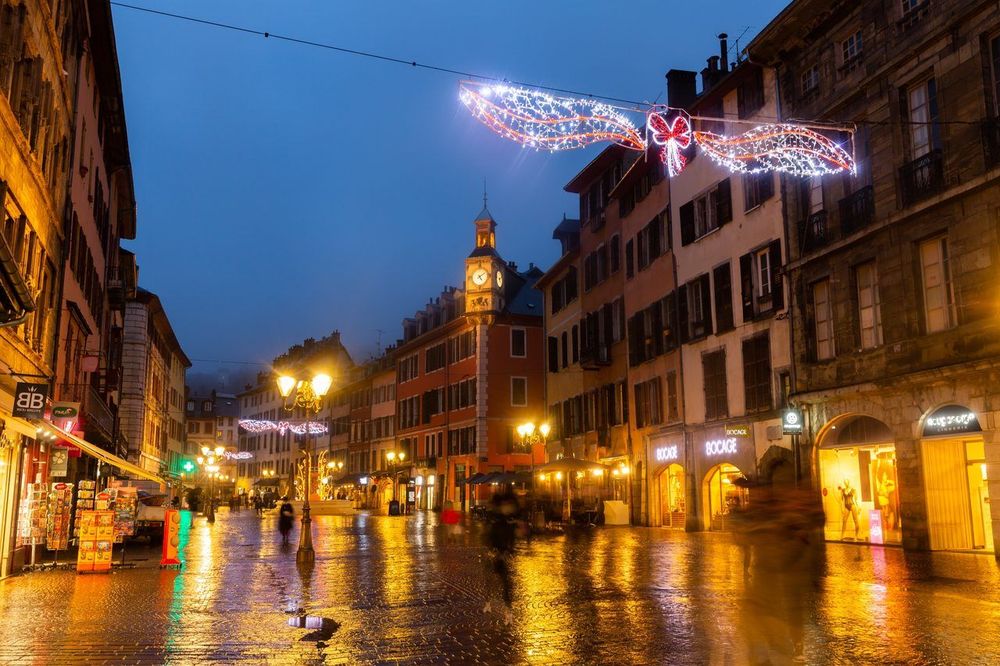
The Chambéry Christmas market runs from 27 November 2026 to 3 January 2027 in the heart of the historic centre, with thirty-seven chalets on boulevard de la Colonne and seven on place du Palais de Justice. Entry is free, from 11am to 9pm, with late openings on Fridays and Saturdays.
You can round it off with the illuminated old town, the castle of the Dukes of Savoy, Rousseau's house at Les Charmettes, the ice rink, then winter getaways to La Féclaz, Les Saisies or Lake Bourget.
To plan your trip, read our guide to visiting Chambéry at Christmas.
Vos commentaires, idées et suggestions
Aucun avis pour le moment