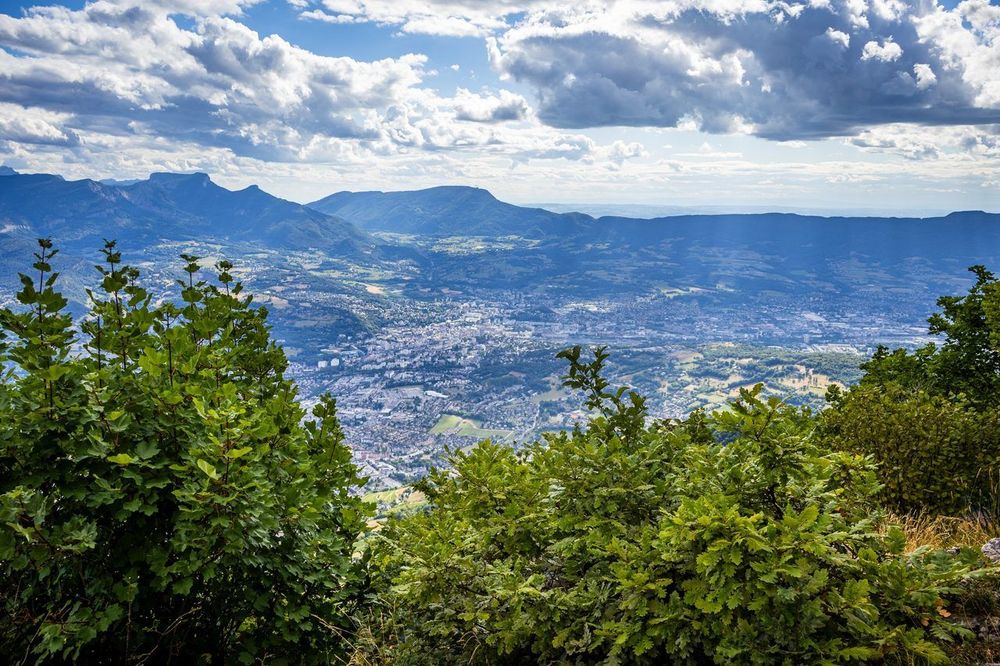
© Shutterstock
 Votre guide Ryo
Visiting Chambéry Solo: The Complete Guide to Exploring the City at Your Own Pace in 2026
It's eight in the morning on Place Saint-Léger, shopkeepers are raising their shutters and you stand alone before the trompe-l'œil façades, with no one to hurry you on to the next stop. Visiting Chambéry solo is precisely that: a human-scale city where the château, the cathedral and the lanes can be explored without booking a time slot or waiting for a group. The Ryo audio-guided tour of Chambéry goes hand in hand with this freedom, with a headset in your ears and the rest at the pace you choose.
Within a few hours of walking, you come across a fountain adorned with four elephants that locals nickname "the four without behinds", a Savoyard museum housed in a former Franciscan convent, and covered passageways that even some residents don't know about. Add a market that enlivens the covered hall two mornings a week, a house where Jean-Jacques Rousseau lived for six years with Madame de Warens, and a lake you can reach by bike before going for a swim, and you get a dense solo itinerary that is never tiring.
Why Chambéry Is an Ideal Destination to Visit Solo
Chambéry is wonderfully compact: the historic centre can be crossed on foot in twenty minutes, and the train station is a fifteen-minute walk from Place Saint-Léger. For solo visitors, this compactness changes everything. No minibus to wait for, no group to follow at an imposed pace: you decide whether to spend an hour in front of a façade or head straight to the market.
It's also a city best discovered by taking your time rather than ticking off a list. It is often presented as a mere stopover between Annecy and Grenoble, but it deserves to be visited in its own right. Why go to Chambéry in Savoie when travelling without a companion? Because it offers a rare balance between lively neighbourhood life, monuments accessible without reservation, and nature escapes less than half an hour away by road.
Add to that a student population that fills the terraces into the evening, and the city becomes a place to explore without the slightest social pressure.
Chambéry's Historic Centre: Must-See Châteaux, Fountain and Cathedral
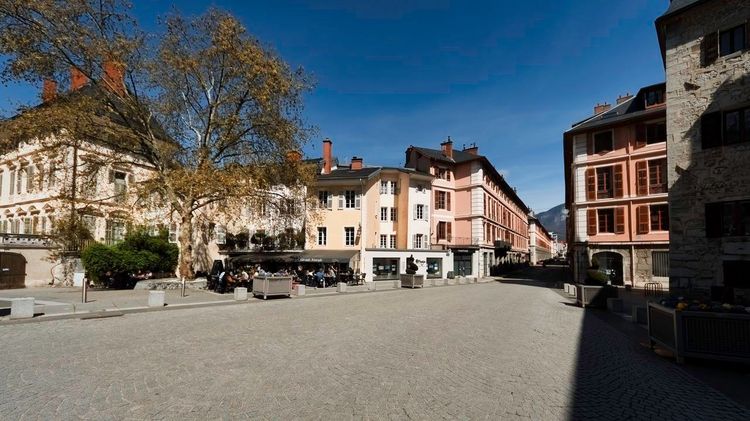
Sightseeing in Chambéry's historic centre comes down to a handful of cobbled streets linked by arcades and covered passageways. In short: a château, an extravagant fountain, a Gothic cathedral and a few squares that concentrate almost all of the city's heritage, including Place de l'Hôtel de Ville, where the town hall sits. You can wrap up this tour in two hours, or linger a whole day pushing open every inner courtyard door.
The Château des Ducs de Savoie and the Théâtre Charles Dullin
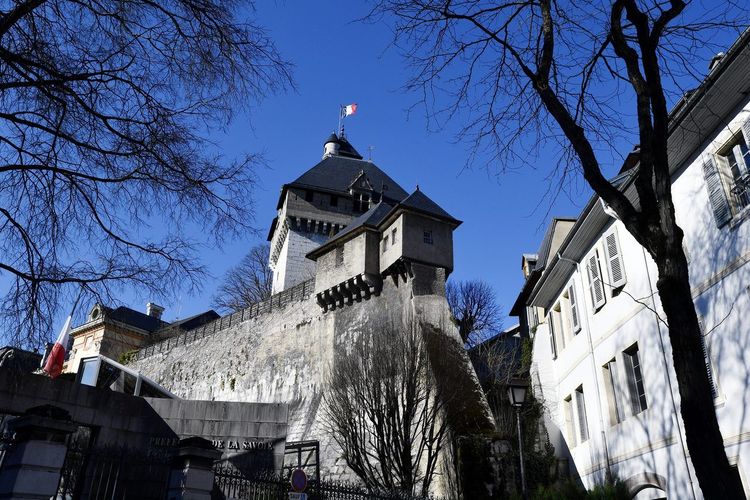
The Château des Ducs de Savoie has dominated the city since Count Amadeus V acquired it in 1295. The residence of the counts and then dukes of Savoy before the capital moved to Turin, it now houses the prefecture and the departmental council. The Sainte-Chapelle can be visited with guides from the Ville d'art et d'histoire service: this is where the Holy Shroud was kept from 1502 to 1578, and it still bears the marks of the 1532 fire that nearly destroyed it. Look up at the towers: the great 70-bell carillon rings out during regular concerts.
A few steps away, on Place du Théâtre, the Théâtre Charles Dullin stands on the site of the former Montmélian gate. Its 19th-century Italian-style auditorium hosts theatre, dance and concerts, a useful landmark if your stay includes a performance evening: a single seat is often easier to find than a pair of seats side by side.
The Fontaine des Éléphants and Rue de Boigne
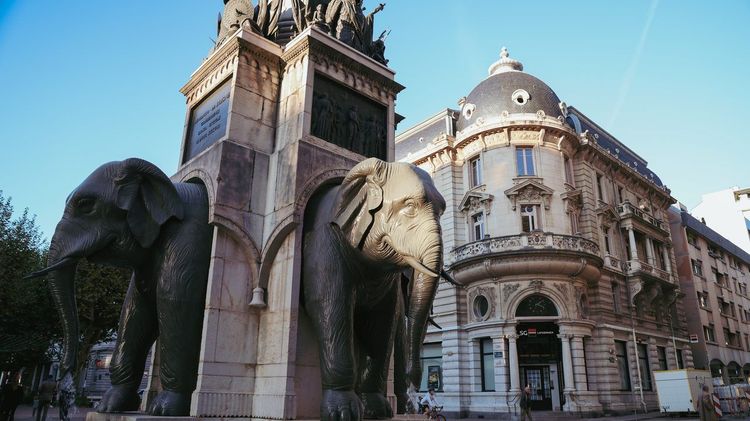
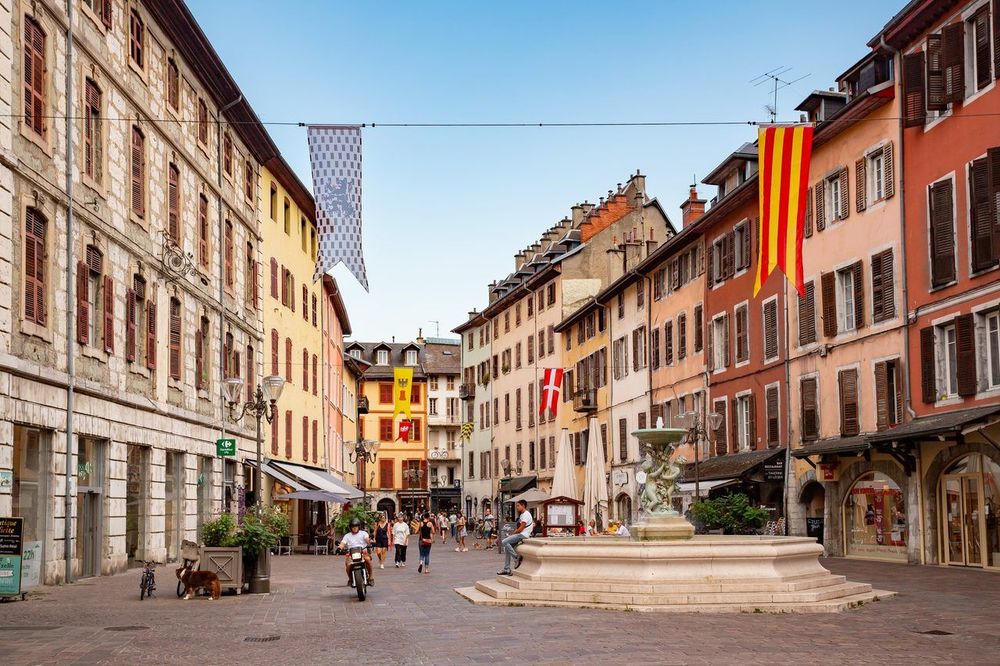
You can't miss the Fontaine des Éléphants, inaugurated in 1838 in honour of General de Boigne, who made his fortune in India before funding part of Chambéry's urban development. The four pachyderms holding up the column show only their forequarters, hence their mocking nickname "the four without behinds", which has become the unofficial symbol of the city.
From the fountain, Rue de Boigne runs beneath its arcades all the way to the château. Built thanks to the same general, it is home to independent shops and cafés, handy for a break between two visits. In the morning, before visitors arrive, the street belongs almost entirely to hurried locals.
The Cathédrale Saint-François-de-Sales and Place Saint-Léger
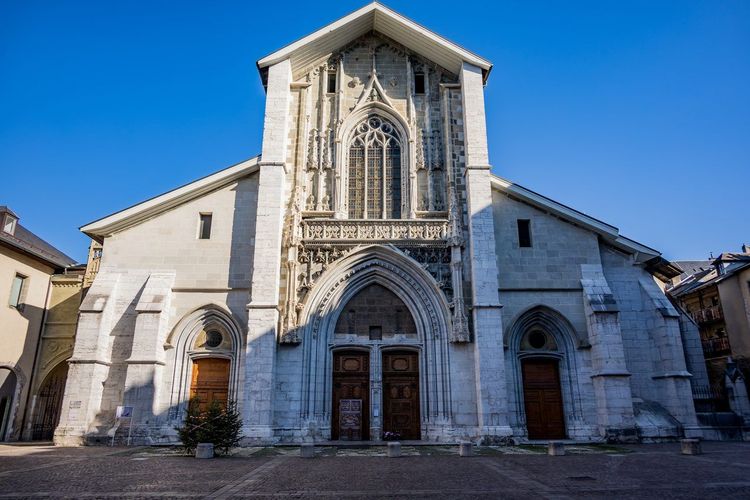
The Cathédrale Saint-François-de-Sales (Place Métropole, 73000 Chambéry, rated 4.5/5 on Google from 994 reviews), a former Franciscan church in Flamboyant Gothic style built in the 15th and 16th centuries, hides behind its sober façade the largest trompe-l'œil ensemble in Europe: about 6,000 m² of painted ribs, rose windows and statues, most of it the work of Casimir Vicario in 1834 and 1835. Sit in the middle of the nave and try to work out what is sculpted and what isn't: the game lasts a long time.
Two minutes' walk away, Place Saint-Léger forms the true centre of gravity of the city: a long pedestrian square with colourful façades and terraces that fill up at the first rays of sun. Many solo travellers settle in with a notebook or a book, taking time to observe local life without having to make conversation.
To link these three monuments without opening a map, the sub-tour "The Historic Capital of Savoie" strings them together in the logical order of the walk, with commentary at each stop: this Ryo audio guide (23 audios, 1h30, 3.4 km) starts when you decide, and pauses as soon as a terrace tempts you.
Museums and Carré Curial: A Cultural Break Between Walks
Between strolls through the lanes, Chambéry offers a dense range of museums for a city of its size, valuable on rainy days or simply for catching your breath without giving up on heritage.
The Musée Savoisien and the Musée des Beaux-Arts
The Musée Savoisien, housed in the former Franciscan convent turned archiepiscopal palace, traces the history of Savoie through archaeology, religious art and Alpine rural life. Reopened in 2023 after a long renovation, it can be visited at your own pace, with no imposed guided tour.
The Musée des Beaux-Arts holds one of the most important collections of Italian painting in France, a legacy of the historic ties between Savoie and Piedmont. Allow an hour to go round it without rushing.
More unusual, the natural history museum has settled on Avenue de Lyon in the château's former gardeners' house: a small detour at the foot of the castle hill, to combine with a visit to the Sainte-Chapelle.
The Carré Curial, the Espace Malraux and the Galerie Eurêka
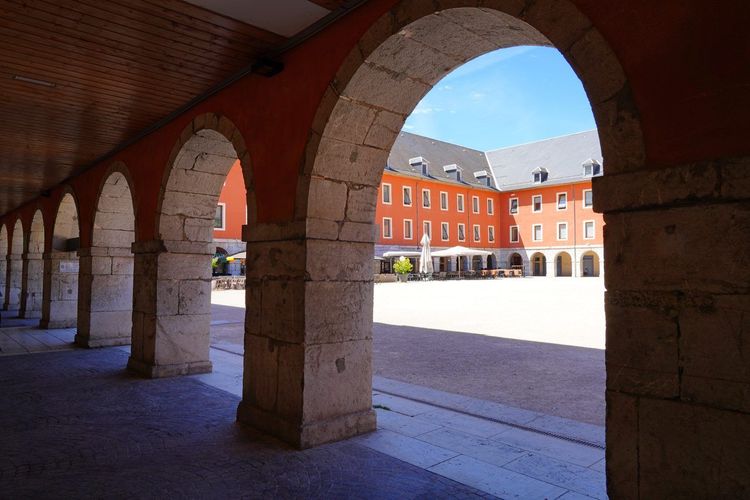
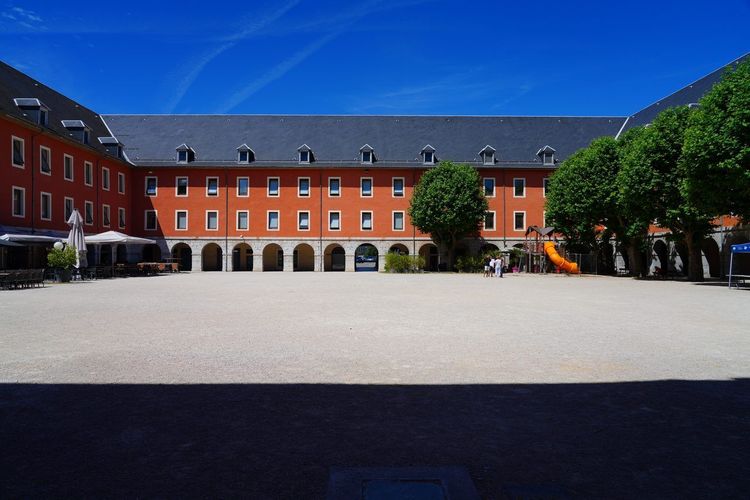
A former Napoleonic barracks turned into a living space, the Carré Curial (Place Monge, 73000 Chambéry, rated 4.3/5 on Google from 600 reviews) brings together around its square courtyard the Galerie Eurêka, devoted to science, as well as shops and offices, while the Espace Malraux, a national theatre, stands right next door. The inner courtyard, lined with arcades, invites you to sit down with a coffee without feeling out of place.
The Espace Malraux programme (theatre, dance, circus) is worth a look before you arrive: a show is one of the best ways to fill an evening alone without feeling like you're killing time.
Before going in, take ten minutes for the audio stop dedicated to the neighbourhood: the Ryo tour explains why Napoleon had a barracks built in the heart of the city, and how the Musée Savoisien inherited the Franciscans' walls.
Secret Passageways, Mansions and Other Discreet Treasures of Old Chambéry
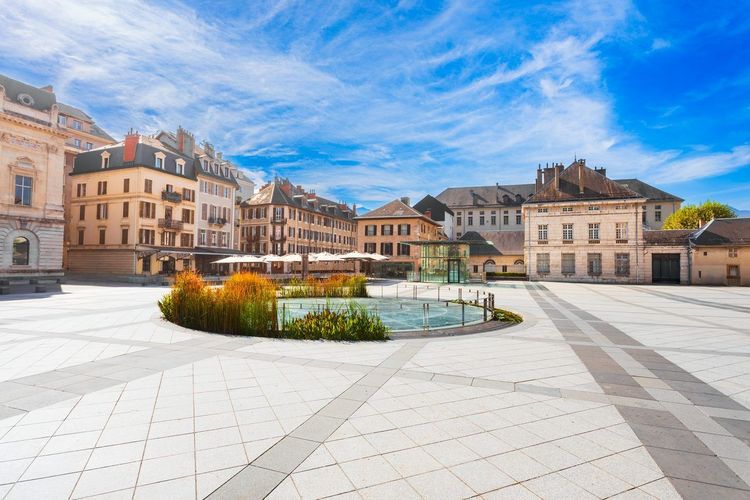
These curiosities are all within ten minutes' walk of one another, behind façades you pass without noticing. Few guides group them into a single walk, which is a shame.
Passageways, Hidden Courtyards and Mansions of the Historic Centre
In Chambéry, people don't talk about traboules but about allées: these covered passageways link a street to an inner courtyard without going through the main façade, and lead to flowery courtyards or spiral staircases. Those starting from Rue Croix-d'Or and Place Saint-Léger are the easiest to spot.
The city also preserves many mansions, residences of the nobility built when Chambéry was the capital of the States of Savoy. On Rue Croix-d'Or in particular, the stone porches and inner courtyards remain visible from the street for those who take the time to look up. Many belong to private owners: push open doors that are already open, never those that are closed.
Some of these courtyards appear on no tourist map, a reward reserved for those who explore on foot without a fixed itinerary.
Lesser-Known Curiosities: The Palais de Justice and the Railway Roundhouse
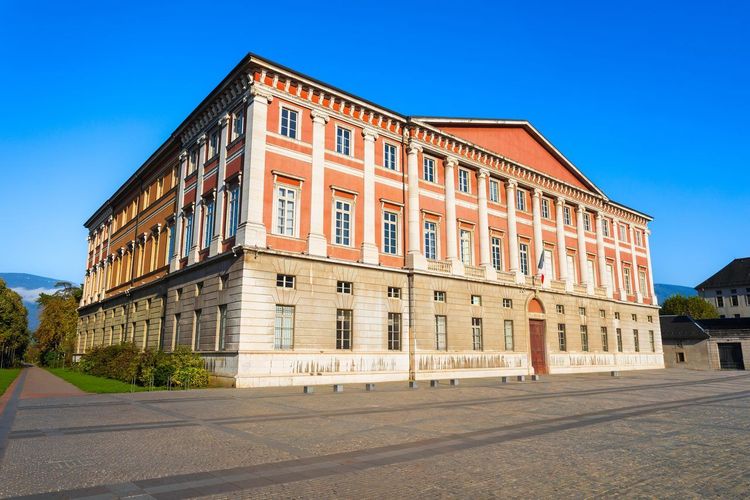
The Palais de Justice (Place du Palais de Justice, 73000 Chambéry), built in the 19th century during the Sardinian period, has a colonnaded façade that contrasts with the rest of the historic centre. Public hearings there are open to all, an unusual experience for seeing the city from a different angle.
500 metres from the train station, the railway roundhouse (Chemin de la Rotonde, 73000 Chambéry, rated 4.5/5 on Google from 67 reviews) is a rarity: built between 1906 and 1910, 108 metres in diameter, it is still used by the SNCF to house its locomotives. Listed as a historic monument in 1984, it was the first building of its kind to receive the "Patrimoine du XXe siècle" label. Ville d'art et d'histoire guides regularly organise visits, to be booked through the tourist office.
The passageways and mansions have their own stops in the Ryo audio tour of the historic capital, 23 stops in 1h30: an anecdote about Chambéry's nobility at every porch, listened to as you walk, with no human guide to follow.
The Chambéry Market and the Best Foodie Addresses in the Centre
What day is the market in Chambéry? The main market takes place on Tuesday and Saturday mornings around the covered market, Place de Genève. Saturday is the busiest, but Tuesday is more than enough to put together a picnic without waiting for the weekend.
You'll find Savoyard cheeses (Beaufort, tomme, Reblochon), fruit and vegetables from producers of the cluse and several mountain charcuterie stalls. Two streets away, at 15 Rue de Boigne, the Cédric Pernot pastry and chocolate shop has taken over Au Fidèle Berger, billed as the oldest shop in the city, with its period décor intact. A member of Relais Desserts, Cédric Pernot creates entremets, macarons and chocolates there: a sweet stop that can be enjoyed just as well standing at the counter as sitting on a bench.
For good bar and restaurant addresses around the market, it's best to arrive before noon: the best tables fill up quickly on market days, and eating alone at the counter is common practice there rather than an exception.
What souvenirs should you buy in Chambéry? The chocolate truffle, invented here in 1895 by the confectioner Louis Dufour, remains the most local souvenir. Add a bottle of Chambéry vermouth, an appellation recognised since 1932 and still produced by the Dolin house, or a farmhouse tomme vacuum-packed for the journey.
Shopkeepers are used to visitors travelling with just a backpack: don't hesitate to ask for a single portion of cheese or a slice of blueberry tart rather than a whole piece.
The 23-stop audio tour passes a few streets from the covered market, handy for combining the guided walk and gourmet shopping without retracing your steps. The streets around Place Saint-Léger also house delicatessens open on weekdays, useful if your visit doesn't fall on a market day.
Les Charmettes, in the Footsteps of Jean-Jacques Rousseau
Half an hour's walk from the centre, through a residential neighbourhood and then along a gently climbing path, stands the house of Les Charmettes. Jean-Jacques Rousseau stayed there with Madame de Warens between 1736 and 1742, a period he would describe in his Confessions as one of the happiest of his life.
A museum since 1812 and awarded the "Maisons des Illustres" label, the house preserves the atmosphere of an 18th-century country home, with its terraced garden planted with vines and orchards. The Jean-Jacques Rousseau memorabilia on display inside make for a visit of about an hour, ideal in the mid-afternoon as a calm activity between two urban walks.
Allow about 35 minutes' walk each way, on a gentle uphill, and make the most of the garden to catch your breath. Few hurried visitors make this detour, making it a surprisingly calm stop even in high season. Our Ryo article on a walk in Chambéry details other walking routes around the city.
Parks and Green Breaks in the Heart of the City
The most central is the Jardin du Verney, a stone's throw from the Fontaine des Éléphants: plane trees, benches and a bandstand, enough to read for an hour without leaving the centre.
Having a picnic in the Parc du Buisson Rond (Avenue du Comte Vert, 73000 Chambéry, rated 4.4/5 on Google from 720 reviews) is the most pleasant option if you want a longer rest: wide lawns, centuries-old trees and an open view of the surrounding mountain ranges.
For a stroll through the Parc de la Calamine, the Parc des Étincelles and the Buisson Rond, allow an hour: these green spaces on the immediate outskirts are linked by shaded paths rarely used by tourists.
Where can you go for a walk in Chambéry without really leaving the city? The answer lies in these green lungs, perfect for a nature break without organising an excursion. In the morning, they belong to joggers, a good opportunity to observe the local rhythm before the city comes alive.
Lakes and Swimming Around Chambéry
Two lakes share the locals' affection, less than thirty minutes from the city, and one of them can be reached directly by bike from the centre. Each suits a different profile: active for the first, contemplative for the second.
Lac du Bourget: The V63 by Bike and Swimming
Cycling along the V63 to Lac du Bourget (Boulevard du Lac, 73100 Aix-les-Bains, rated 4.6/5 on Google from 8K reviews), then going for a swim, remains the most popular excursion if you have a day and don't want to rent a car. The path follows the Leysse to Le Bourget-du-Lac, on an almost flat route, and leads to the largest natural lake of glacial origin in France.
Allow about an hour of easy cycling to reach the southern shore from the city centre, with developed beaches in summer. Bikes are easy to rent in town, and the path is signposted from end to end, with no risk of getting lost. If you prefer the train, the TER connects Chambéry to Aix-les-Bains, on the eastern shore of the lake, in about ten minutes.
Lac Saint-André: Swimming and Relaxation
The Lac Saint-André, in the commune of Les Marches, was born of a catastrophe: the collapse of part of Mont Granier on the night of 24 to 25 November 1248. What remains today is a small 7.6-hectare body of water surrounded by vines at the foot of the cliff, reached by car or carpool.
Here, there are no crowds as in Annecy or Aix-les-Bains: people come instead for a walk around the water, a book and a picnic. Check locally on swimming conditions, which vary by season and are not always supervised. For a real beach day, our Ryo article on Lac d'Aiguebelette details an alternative less than forty minutes from Chambéry, renowned for having some of the warmest waters of the Alpine lakes.
Hikes and Viewpoints in the Mountains Around Chambéry
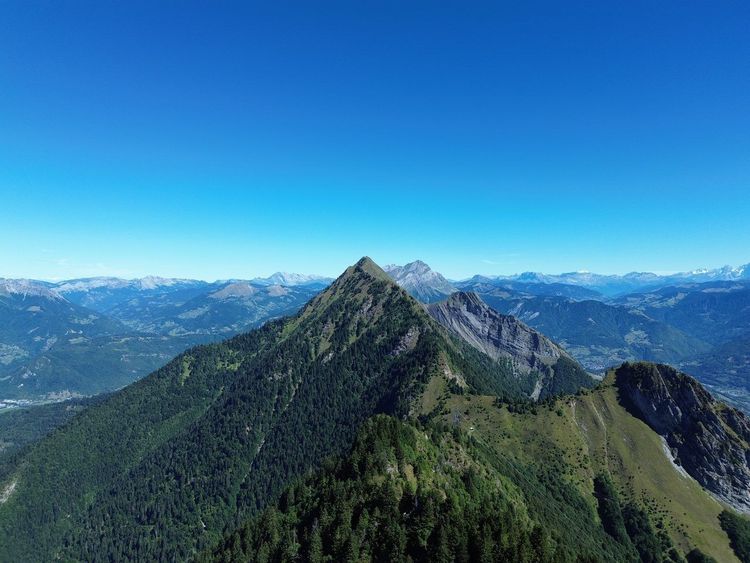
Chambéry is encircled by the Bauges and the Chartreuse, which offer viewpoints accessible in half a day, from the developed belvedere to the more demanding hike.
The Belvédère du Revard: Panoramic Views of the Alps
Admiring the view from the Belvédère du Revard takes less effort than its altitude suggests: a winding road leads up to the plateau, from where the panorama stretches over Lac du Bourget, Aix-les-Bains below and, on a clear day, Mont Blanc on the horizon.
A few short trails let you vary your viewpoints without straying far from the car park, handy for an end-of-day outing. Paragliders regularly take off from here, a free show during your picnic break. Allow about 45 minutes by road from Chambéry, or a full day by bike if you want to turn the climb into a sporting challenge.
The Croix du Nivolet and the Bauges Massif
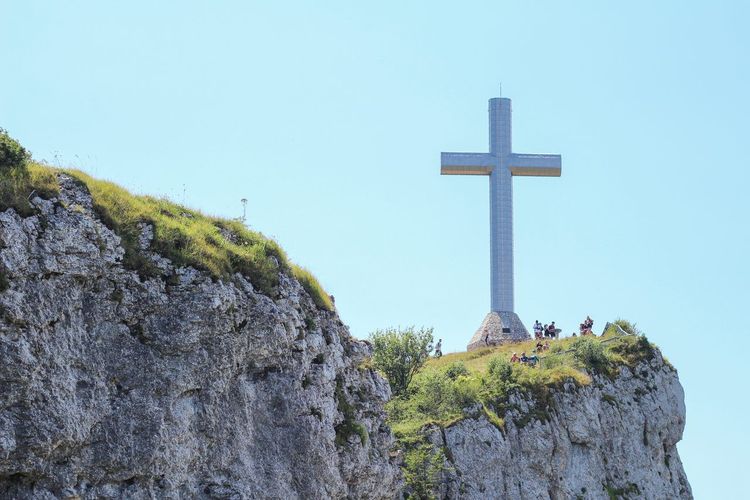
The hike to the Croix du Nivolet is one of Chambéry's classics: from the Féclaz plateau, allow about 2h30 round trip to reach this 21-metre metal cross, visible from the whole conurbation, and a complete panorama over the Chambéry cluse.
Hiking further into the Bauges massif or the Chartreuse suits more experienced hikers: sustained elevation gain, sometimes technical rocky sections, but guaranteed tranquillity on weekdays.
Tell someone your route and check the weather before setting off: it's the basic rule on these little-frequented trails when walking alone. Classified as a regional natural park, the Bauges massif also offers short loops if you're unsure about how you feel on the day, and its alpine farms often sell Bauges tome and charcuterie directly.
The Hauts de Chanaz and the Granges de Joigny
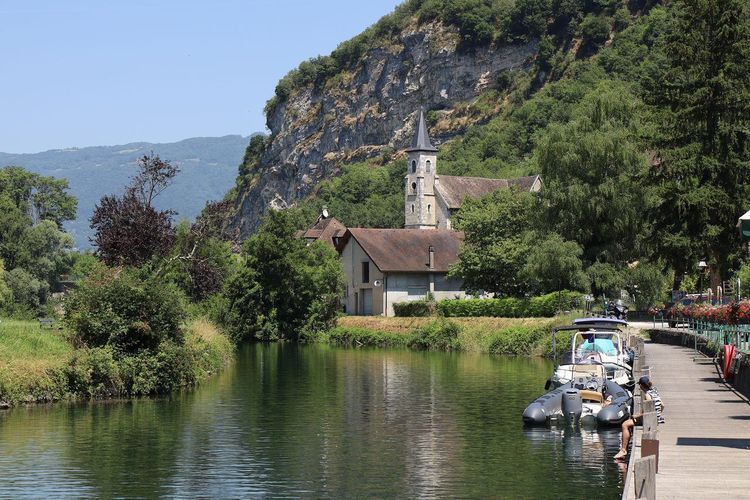
The walk along the Hauts de Chanaz overlooks the Savières canal and the village of Chanaz, nicknamed the Savoyard little Venice and awarded the Petite Cité de caractère label, about forty minutes by road from Chambéry.
On the Chartreuse side, the Granges de Joigny (73190 Apremont, rated 4.8/5 on Google from 16 reviews) (1,190 m) can be reached from the Col du Granier, at the foot of Mont Joigny, on the route of the GR Tour de Chartreuse: a short walk between alpine pastures and old barns, with the Chambéry cluse below.
Both outings remain accessible to a walker of average fitness, with no particular technical difficulty, and combine well with a picnic bought the day before at the covered market.
The Savoie Vineyards by Bike
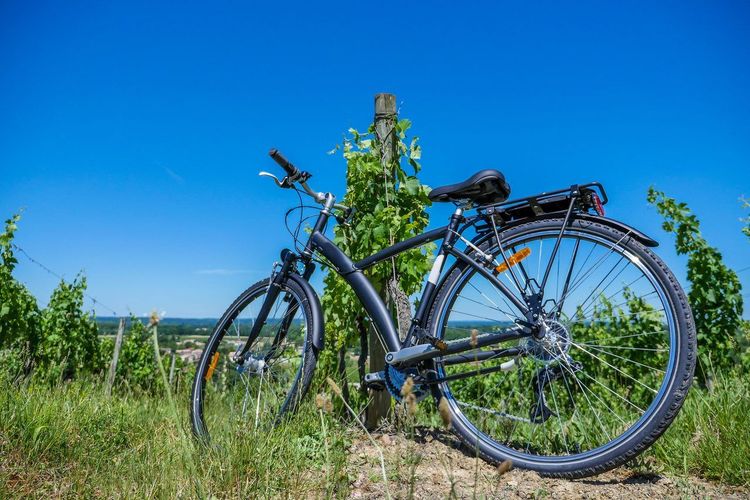
Cycling through the Savoie vineyards is a good complement to a lake outing without duplicating it. To the south-east of Chambéry, the hillsides of Chignin, Montmélian and Cruet follow one another along the Combe de Savoie on quiet little roads; to the north-west, Jongieux and its steep vines overlook the Rhône, closer to Lac du Bourget.
The local grape varieties (Jacquère, Altesse, Mondeuse, and Roussanne, called Bergeron in Chignin) can be tasted in the cellars that line the roads, often without an appointment in low season. By bike and solo, it's an opportunity for short tasting stops, without forcing yourself into a full meal at each one.
The Savoie cheese route crosses these itineraries and links several Beaufort and tomme producers who open their cheese dairies to visitors. Combining both in a single day demands good physical fitness, but nothing stops you from doing only half the route and returning by TER from Montmélian.
Electric-assist bikes can be rented in town, useful for the climbs around Chignin. On weekdays, winegrowers gladly welcome solo cyclists, an audience they often find more available to chat than groups.
Where to Eat and Have a Drink Alone in Chambéry
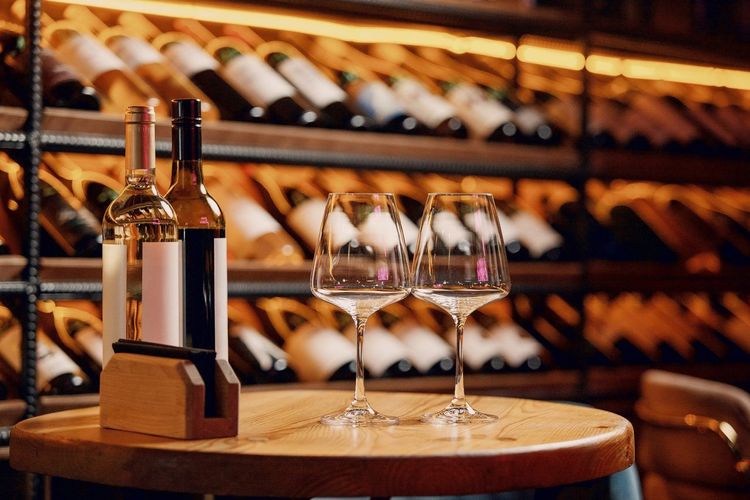
Eating alone without feeling uncomfortable in a room full of tables for two or four? In Chambéry, the counters, wine bars and set-menu tables of the historic centre solve the problem.
The neighbourhood around Place Saint-Léger, Rue Croix-d'Or and Rue de Boigne concentrates most of the offering: Savoyard bouchons for a fondue or a tartiflette (most accept a table for one without any problem, especially on weekdays), and cafés with terraces for a lighter meal. Note that fondue and raclette are often served for two minimum: ask before sitting down, or fall back on a croziflette, served on a plate.
For an end-of-day drink, the cocktail bars and wine cellars on the pedestrian streets provide a setting where sitting alone at the counter surprises no one. Staff readily strike up conversation, especially early in the evening when the room is still quiet.
A full meal in a Savoyard bouchon costs around 20 to 25 euros, drink included. In a city where students often eat alone between classes, no one is surprised to see a person alone at the counter rather than in the dining room. Booking is unnecessary on weekdays, except for the most popular tables on Friday evenings.
Our Ryo article on Chambéry's culinary specialities lists other dishes to try, useful for varying your meals over a stay of several days. The covered market also offers takeaway products, handy for an impromptu picnic on a bench in the Jardin du Verney.
Where to Stay in Chambéry When Travelling Solo
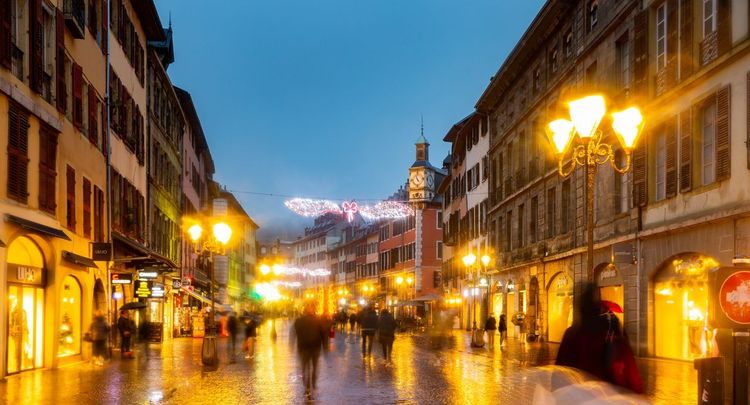
Where should you stay in Chambéry when travelling alone? It all comes down to the neighbourhood: the historic centre to walk everywhere without transport, or the area around the train station if you arrive late or leave early.
Hotels in the city centre, around Place Saint-Léger or Rue de Boigne, put all the main sites within walking distance, château included. Expect to pay between 70 and 110 euros a night for a decent single room in high season, a budget that drops noticeably outside summer.
For a tighter budget, budget hotels near the train station work well: the location remains convenient, a fifteen-minute walk from the château, and the clientele (students, travellers in transit) makes the atmosphere naturally welcoming for those arriving without a travel companion.
Short-term rental platforms also offer studios in the historic centre, interesting for a stay of several days where you want to cook for yourself after a day of walking.
Family-run 2- to 3-star hotels remain the safest choice for a first solo visit: staff available for route advice and reasonable rates compared to Annecy. Check for a car park if you arrive by car, as city-centre parking remains limited and paid during the day.
In high summer or during major cultural events, book at least three weeks in advance: rooms become scarce quickly in a city of this size.
Practical Information for Organising Your Solo Stay in Chambéry
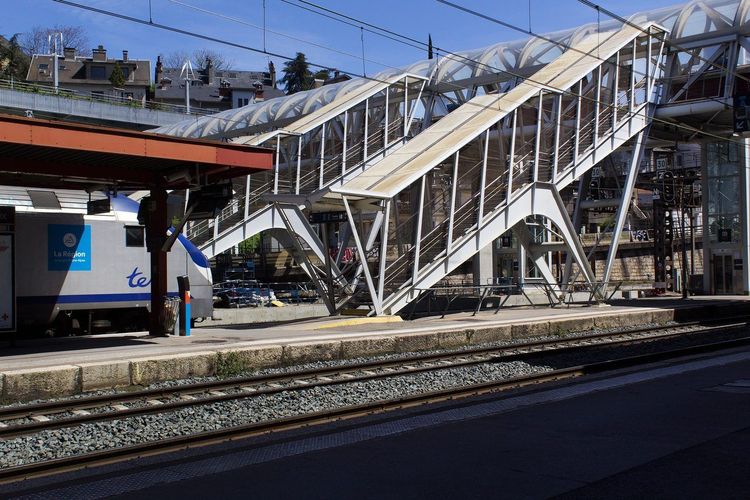
The city is about 1h15 by train from Lyon, 1h30 from Geneva and less than an hour from Annecy, making it an easy stop without a car on a wider Savoie circuit.
For access and getting around without a car, the train station is a fifteen-minute walk from the historic centre, and most of the visits (château, fountain, cathedral, museums) are then done on foot. For excursions to the lakes or mountains, the local bus network and the TER complete the offering, although frequency is more limited at weekends.
For a daily budget, expect about 60 to 90 euros per day including budget accommodation, two meals and local transport, an amount that rises to 100-130 euros with a more comfortable hotel and a restaurant in the evening. Museums charge modest fees, generally under 10 euros.
On safety, Chambéry has the profile of a quiet city, with no neighbourhood particularly inadvisable during the day. The historic centre remains lively into the evening thanks to the student population, which is reassuring if you walk home alone after dinner. Usual precautions still apply late in the evening on poorly lit streets on the outskirts.
As for the best time to go, spring and early autumn offer the best compromise between stable weather and moderate crowds. Summer remains pleasant for combining city and swimming, provided you accept busier crowds on Place Saint-Léger.
For length of stay, two full days let you cover the historic centre, the museums and an excursion of your choice, without haste. Three or four days leave room for a more relaxed pace, with half a day of rest between two visits, exactly the luxury that solo travel allows.
For connectivity, the city centre has good mobile coverage and cafés with wifi, handy for working remotely for a morning. The tourist office, Place du Palais de Justice, provides a detailed paper map and handles bookings for guided visits of the Sainte-Chapelle and the roundhouse.
To continue preparing your stay, our Ryo article on activities around Chambéry details other ideas for day trips depending on the season.



FAQ
How long should you plan for visiting Chambéry solo?
Two full days are enough to cover the historic centre, the main museums and an excursion to a lake or a viewpoint. Three to four days allow you to add Les Charmettes, the vineyards by bike and a more demanding hike, without rushing.
Is Chambéry a safe destination for solo travellers?
Yes, Chambéry is a quiet city, lively into the evening thanks to its student population. The historic centre has no area that is particularly inadvisable; usual precautions are enough on the outskirts after dark.
How do you get around Chambéry without a car?
The historic centre can be covered entirely on foot from the train station, about a fifteen-minute walk. For the lakes and mountain ranges, buses, the TER regional train and the V63 cycle path complete the offering.
What day is the market in Chambéry?
The main market takes place on Tuesday and Saturday mornings around the covered market, Place de Genève, with Saturday being the busiest.
Where should you stay in Chambéry when travelling solo?
The historic centre, around Place Saint-Léger or Rue de Boigne, offers the best walking accessibility. The area around the train station is better if you arrive late or leave early, with more budget-friendly options.
What budget should you plan for a solo stay in Chambéry?
Expect to spend between 60 and 90 euros per day with budget accommodation, two meals and local transport, and up to 130 euros with more comfort. Museum entry fees remain modest.
What souvenirs should you buy in Chambéry?
The chocolate truffle, invented in Chambéry in 1895, Chambéry vermouth and a vacuum-packed farmhouse tomme are the most typical purchases, far from the generic souvenirs sold near the château.
Visiting Chambéry solo means agreeing to slow down in a city that naturally lends itself to it: a compact historic centre, mountain ranges accessible without complex planning, and a population used to travellers arriving without a travel companion. Between the Château des Ducs de Savoie, the discreet passageways of old Chambéry and a swim in Lac du Bourget after a bike ride, the programme fits comfortably into two to four days without ever feeling like you're chasing the must-sees.
To enjoy this freedom without wasting time looking for your way, the Ryo audio-guided tour of Chambéry remains the simplest solution: a headset, a phone, and the story of the city unfolding as you walk, between two photo stops or a break on a bench on Place Saint-Léger. The Ryo app also works offline, a detail that matters when you explore solo and would rather save your battery for something other than a map.
À lire également