Créé par Emilie, le 17 nov. 2026
Votre guide Ryo
Aix-les-Bains, France
The Alpine Riviera
Parcours audioguidé pour visiter Aix-les-Bains en 1 jour
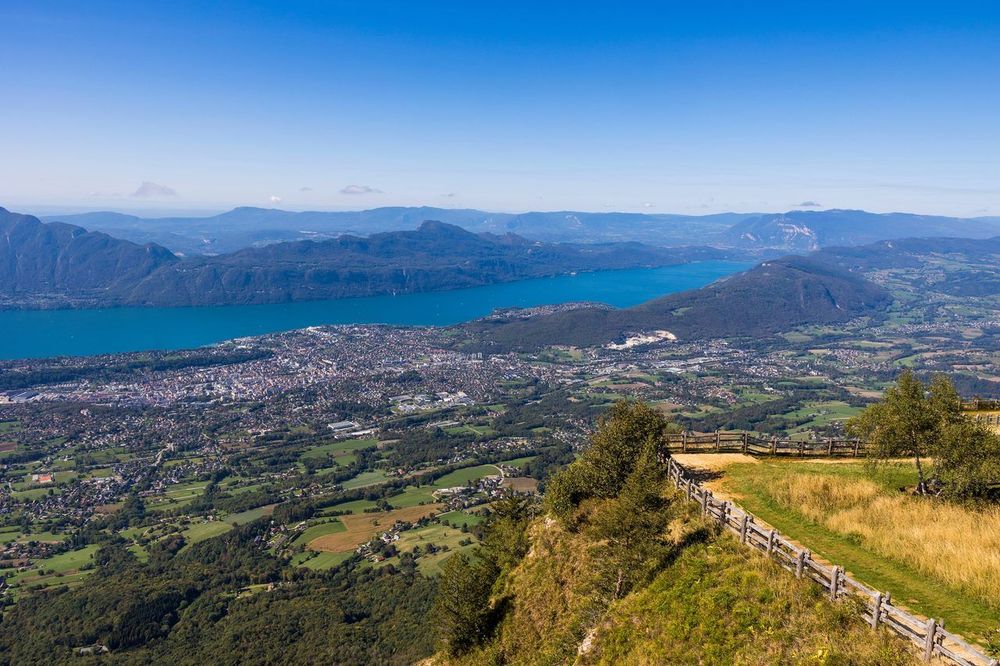
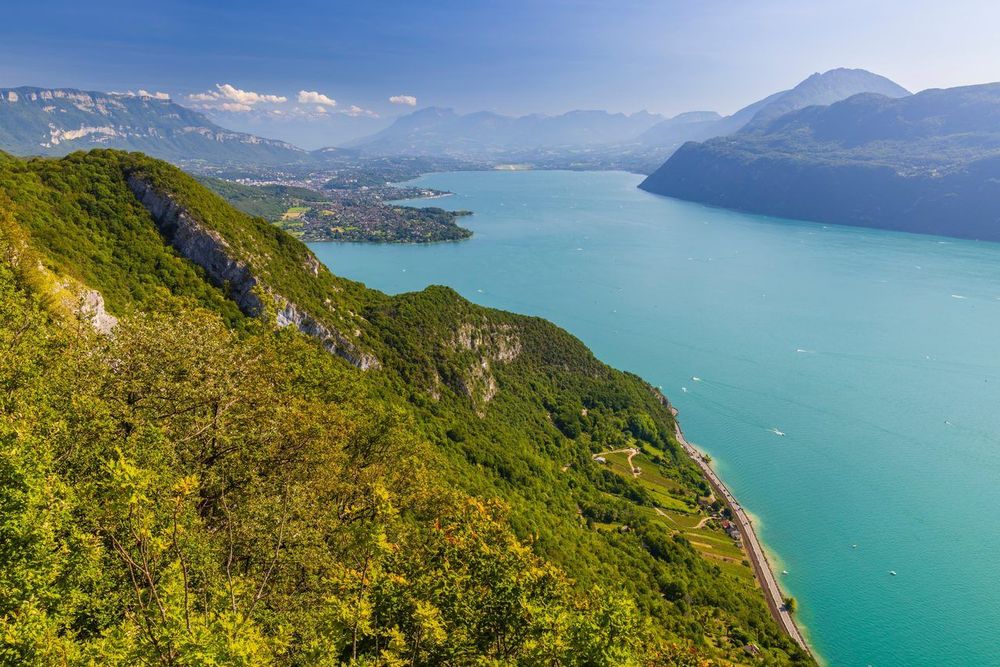
Between lake and mountains, Aix-les-Bains charms with its exceptional natural setting and its spa heritage. A former favorite destination of the Belle Époque, it blends elegance, wellness, and Alpine landscapes.
Quand partir à Aix-les-Bains ?
Jan.
3°
10
Feb.
5°
9
March
9°
10
April
12°
11
May
16°
13
June
20°
12
July
23°
10
Aug.
23°
10
Sept.
19°
10
Oct.
14°
11
Nov.
8°
11
Dec.
4°
10
The climate in Aix-les-Bains is temperate mountain with a lake influence, featuring cool winters, generally between 0 and 8°C, and pleasantly warm summers, most often ranging from 24 to 30°C, with variations linked to altitude and the proximity of Lake Bourget; the best times to visit are typically from April to June and then from September to October, when temperatures are mild, the landscapes are particularly enjoyable, and conditions are ideal for making the most of the lake, the surrounding mountains, and the town center without the summer crowds.
Départ conseillé
We design our routes as loops so you can easily start your visit from the point closest to you, with the guidance adapting automatically. If you are nearby, we recommend an ideal starting point: Maurice Mollard Square.
Parking à proximité
Chaudanne Parking, Impasse de la Chaudanne, 73100 Aix-les-Bains
Découvrez 15 lieux d'intérêt pour visiter Aix-les-Bains





What to see in Aix-les-Bains on your 1h tour?
This 2 km loop takes about an hour and links 14 sights. From the Town Hall and the Temple of Diana, it crosses Carnot Square and the Campanus Arch, climbs past the old mills, follows the churches of Notre-Dame-des-Eaux and Saint Swithun, then reaches the Belle Époque quarter of the Grand Cercle Casino, the Grand Hotel and the floral park, before ending at the National Baths. With the Ryo app in your ears, every facade tells two thousand years of thermal history, at your own pace.
Information checked in November 2026 and subject to change.
1 - Town Hall
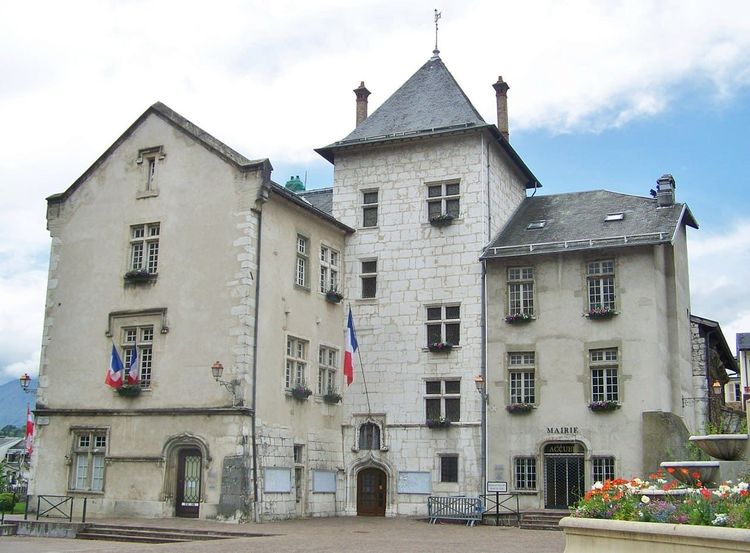
Behind this town hall facade hides a former seigneurial castle, home to the marquis of Aix from the 13th century onward. The main residential wing dates from 1400, and the Seyssel family embellished it in the 16th century with a Renaissance staircase of carved stone, the first element on the site to be listed as a historic monument, in 1890. The town bought the castle in 1866 to turn it into its town hall, where weddings and official receptions still take place.
Free to see from outside
2 - Archaeology Museum : Temple of Diana
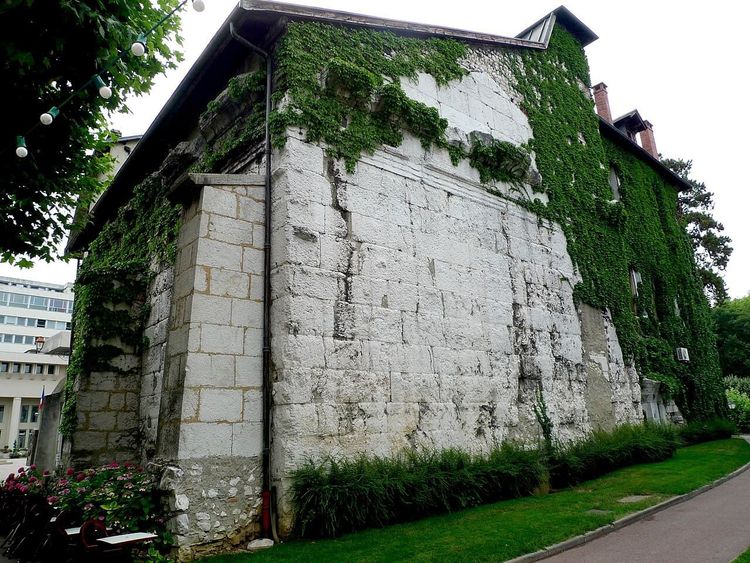
Almost invisible next to the Town Hall stands a Roman temple nearly 2,000 years old, one of only three fully preserved in France. Its name dates from the Middle Ages, since no one really knows which god it honoured; some archaeologists even think it may have been a monumental tomb. Its three walls of small Roman masonry have served many purposes over time: a church, a cellar for the castle, a casino theatre, and an archaeology museum since 1948, open on guided tours from the Tourist Office.
Paid entry
3 - Carnot Square
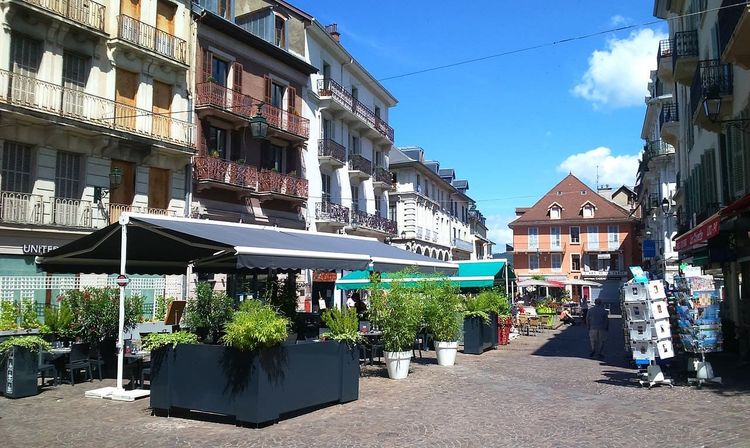
The oldest square in Aix-les-Bains was once called "Grande-Place," a strategic spot between two fortified gates on the road from Chambéry to Geneva, where merchants and pilgrims used to stop. Renamed "place de la Liberté" during the Revolution, it took its current name at the end of the 19th century in memory of Sadi Carnot. Its 1773 fountain, one of only three the town had at the time, and the first post office, opened here in 1816, recall its role as a hub of local life.
Free entry
4 - The Campanus Arch
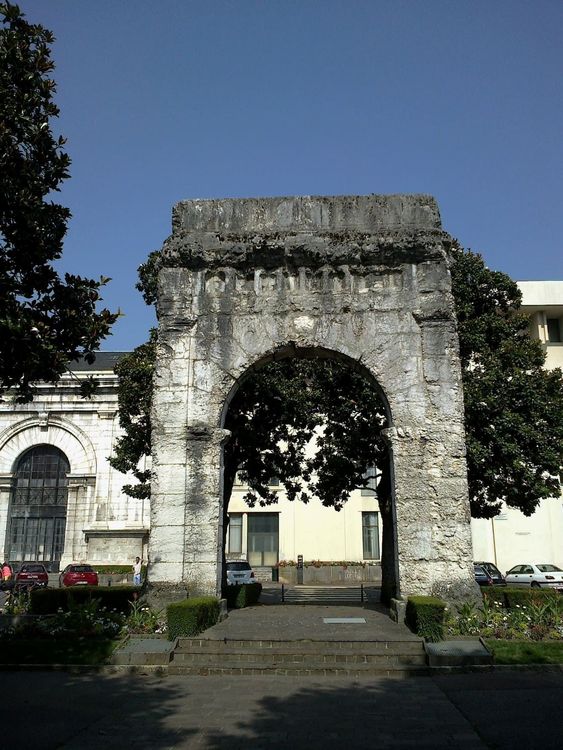
Standing for nearly two thousand years, this arch was raised at the end of the 1st century by local notable Lucius Pompeius Campanus, likely a monumental gateway to the old Roman baths rather than a triumphal arch. He had his family tree carved onto it, hard to read today but patiently deciphered by archaeologists. Over nine metres tall yet only 75 centimetres thick, built without mortar, it later served as a stable and a barn before being saved and listed as a historic monument in 1890.
Free entry
5 - The Old Mills of Aix-les-Bains
Beneath the montée des Moulins runs a hidden stream, diverted in 1739 after a fire to keep water away from the thermal springs. This new channel, known as the "moulins stream," drove a set of four mills raised on orders of the marquis of Aix: wheat mills and nut mills for oil, which only ran three to four months a year. Industrialisation, and then the town's transformation into a spa resort in 1894, led to their disappearance, with the stream itself later buried underground.
Free entry
6 - Church of Our Lady of the Waters
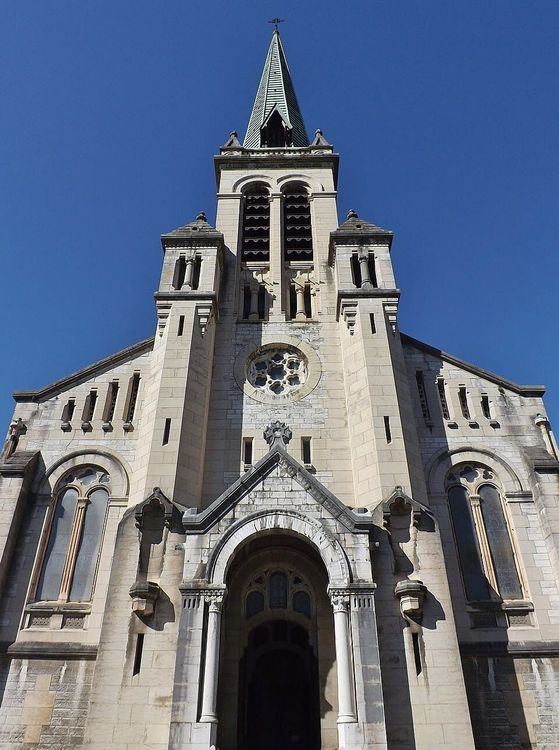
Recognisable by its green bell tower, tinted by metal oxidation, this Romano-Byzantine church was built between 1890 and 1899 by Arthur Bertin to replace an earlier building that had grown too small. It is named Notre-Dame des Eaux in memory of a brotherhood that, from 1856, helped visitors coming to take the waters. Facing north for town-planning reasons, it holds a five-bay nave and stained glass by Lyon master glassmaker Lucien Bégule, some based on designs by Eugène Grasset.
Free entry
7 - Saint Swithun’s Church
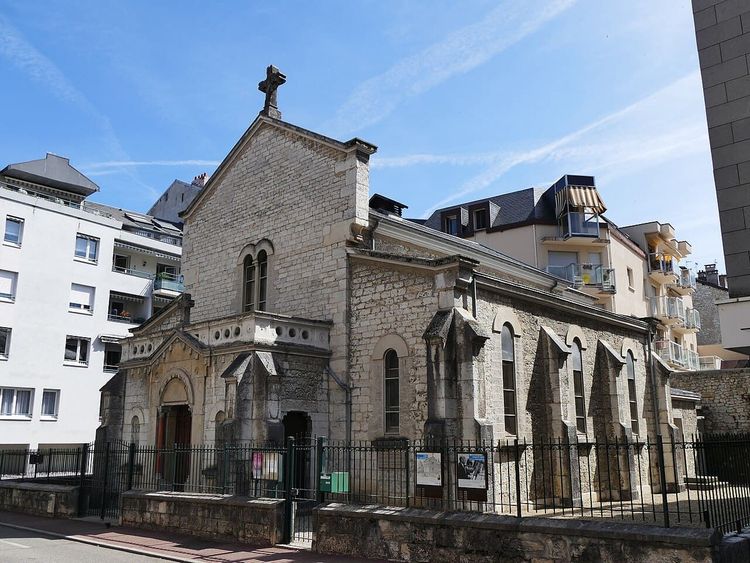
This small Anglican church, built in 1870, reflects the enthusiasm of British visitors who came to treat their aches in the thermal waters of Aix. Queen Victoria herself came here to pray three times, in 1885, 1888 and 1890, leaving behind the finely carved wooden altar still on display. Blending local stone and slate with a plain British style with no apse, it received an organ shipped from London in 1896, before becoming, in 1976, a cultural centre open to all faiths.
Free to see from outside
8 - Grand Cercle Casino
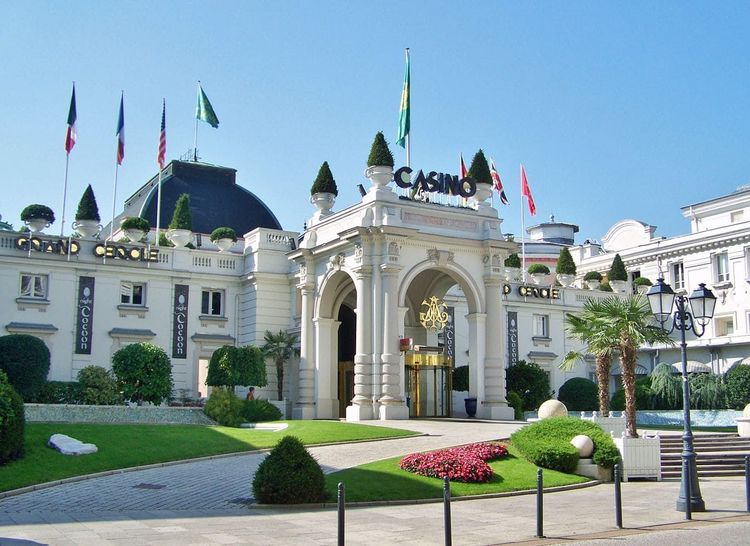
Opened in 1850 by King Victor-Emmanuel II of Savoy, this casino was already meant to turn Aix into a luxury destination for aristocrats seeking relief from their rheumatism. Its current monumental facade, facing the gardens, was designed by architect Abel Boudier between 1880 and 1882, with two wings added in the early 20th century. It conceals a lavish Italian-style theatre seating 830, opened in 1899 by Henri Eustache, whose original stage machinery is now listed as a historic monument.
Free to see from outside
9 - Juan Ripollés’ Sculptures
These colourful statues, which stand out against the casino's white facade, were commissioned in 2012 by the operator of the Grand Cercle to dress up its entrance, then restored in 2024. They are the work of Spanish artist Juan Ripollés, celebrated for his exaggerated shapes and vivid colours, displayed everywhere from Madrid to Tokyo. Each one has two faces, greeting passers-by whichever way they approach, and two of them hold a playing card or dice, an obvious nod to the world of gambling.
Free entry
10 - The Grand Hotel
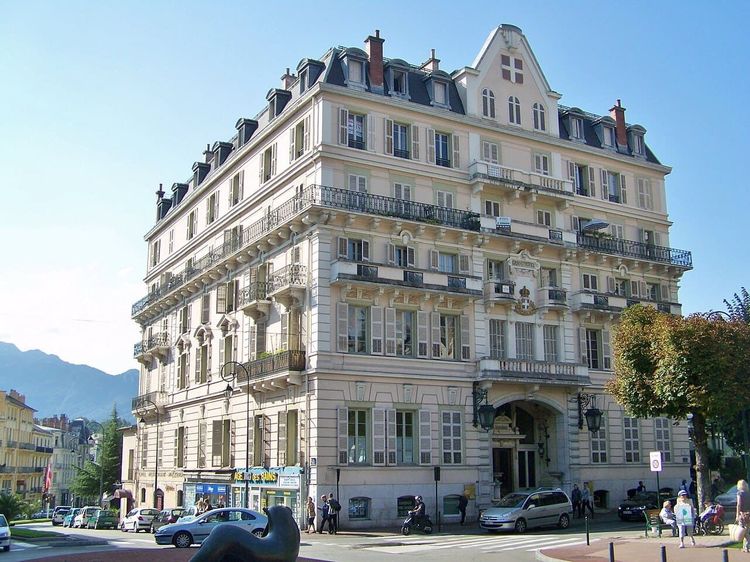
Built in 1858 by Charles-Bernard Pellegrini between the baths and the casino, in the future "golden triangle," the Grand Hotel was one of Aix's first buildings designed as a palace for wealthy European spa-goers. Its central atrium, a vast courtyard topped by a glass roof, floods the interior with light and turns every floor into a meeting place. First called Hôtel Royal de Savoie, then Hôtel Impérial under Napoleon III, it also became one of the town's first hotels fitted with a lift.
Free to see from outside
11 - Floral Park of the Thermes
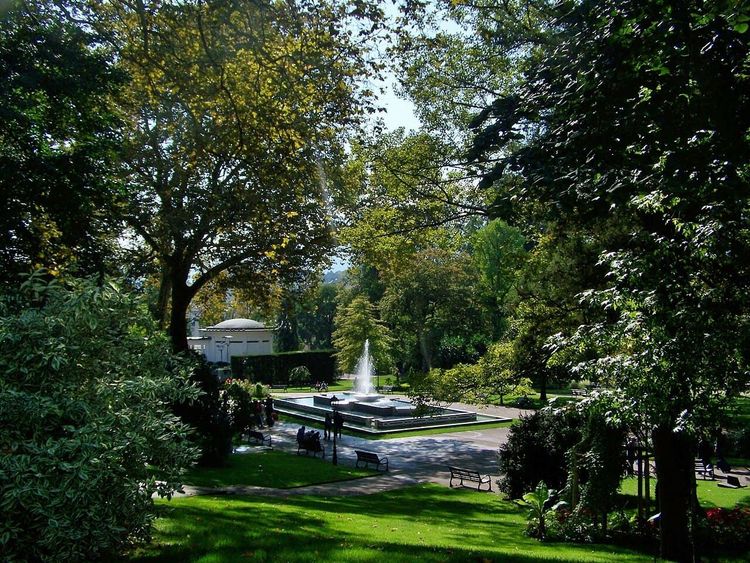
This former garden of the marquis of Aix, bought by the Baths authority and turned into an English-style park, opened to the public in 1869 and was then considered the finest promenade in town. Its Moroccan fountain, installed in 2005 by craftsmen who travelled specially from Morocco, commemorates the agreements on Moroccan independence negotiated in Aix in 1956. Flower beds, statues and an open-air theatre now make it a lively spot, still hosting concerts and summer shows.
Free entry
12 - Rossignoli Passage
This discreet staircase was built in the 1880s to link the town centre to the Splendide, Royal and Excelsior palaces, owned by Gaudens-Antoine Rossignoli, a former mountain guide turned grand builder of Aix's Belle Époque. The restored plaque seen at the top still bears the names of the three establishments and once marked the private entrance to the Splendide's garden. Climbing it past decorated low walls and railings reveals an unexpected view over the old palace facades, now turned into private residences.
Free entry
13 - The Legend of the Cat’s Tooth
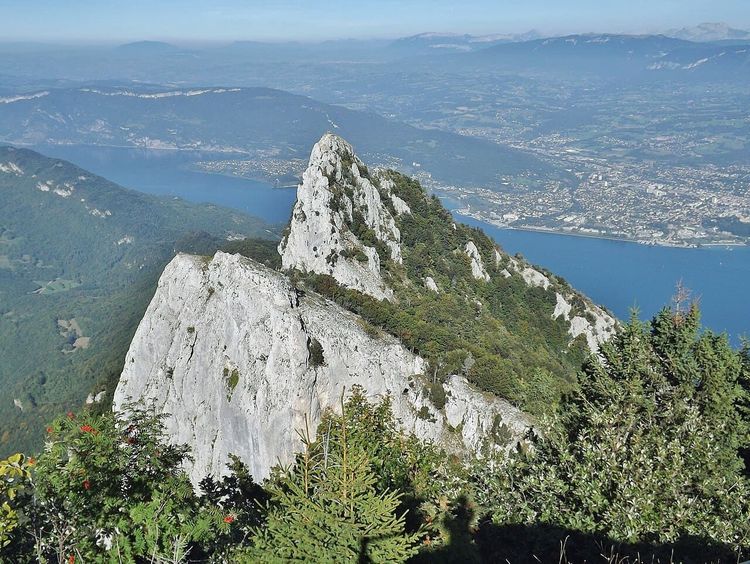
This monumental bronze sculpture, unveiled in 2020 and signed by sculptor Michel Bassompierre, evokes the mountain overlooking Lake Bourget, whose silhouette resembles a tooth. Legend has it that a poor fisherman, after promising to throw back any fish granted to him as divine help, pulled from the lake first a silver fish, then a golden one, and finally a cat struggling at the end of his line, giving the mountain its name.
Free entry
14 - National Baths of Aix-les-Bains
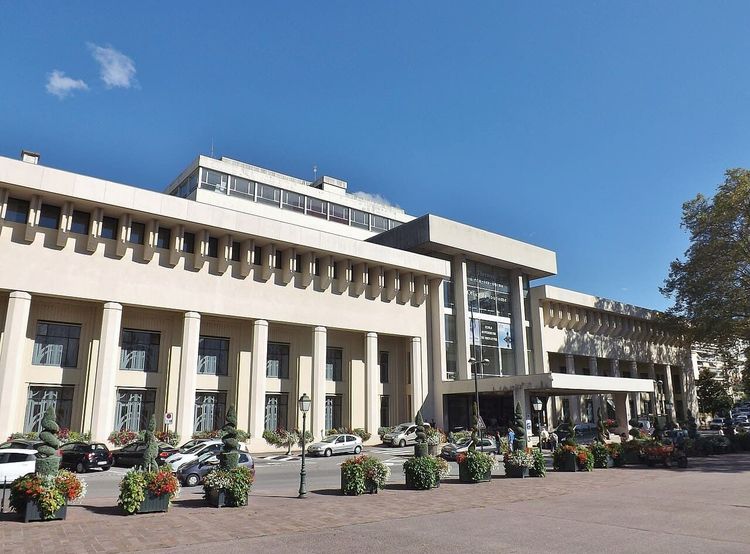
More than two thousand years of history can be read in this spa complex, born from hot springs tapped in the 1st century BC by the Romans, who built a vast facility here for the healing god Bormanus. Forgotten after the fall of the Empire, the site was revived in 1772 by a visit from the Duke of Chablais, before gaining its first royal building in 1782. The neoclassical Pellegrini baths, started in 1857 and completed with Napoleon III's backing in 1860, still shape today's establishment.
Free to see from outside
What to do in Aix-les-Bains in 2 or 3 days?
The loop through the centre takes about an hour and links 14 sights, between Roman remains and Belle Époque façades. With two or three days in town, the lake and the mountains take over.
The next day, a cruise crosses Lake Bourget to Hautecombe Abbey on the opposite shore; its timetable changes markedly between July-August and the rest of the year, so check it before you set off. The day can also include a stop at the foot of the Chevalley Baths. Our guide to visiting Aix-les-Bains for the first time sums up what is actually open this year.
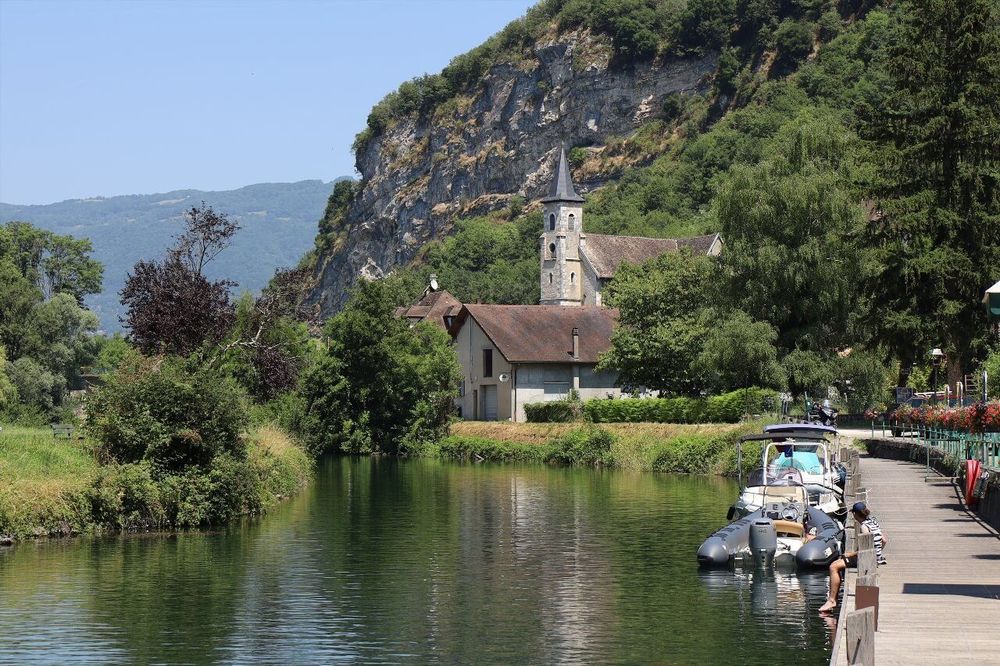
On the third day, head up Mont Revard, more than 1,500 metres above the lake, before finishing the afternoon in Chanaz, a village on the Savières canal, where a guided cruise passes through a lock.
Which neighbourhoods does the tour cross?
In one compact loop, the route connects the layers of Aix-les-Bains' history, from Roman antiquity to the Belle Époque spa era.
It starts at Maurice Mollard Square, where the Town Hall occupies a former castle of the marquis of Aix, right by the Temple of Diana, a Roman sanctuary nearly 2,000 years old that now houses the archaeology museum (stops 1 and 2).
Carnot Square, the oldest in town, and the Campanus Arch, Roman like the temple, come before the old mills, four water mills built by the marquis of Aix on the Moulins stream (stops 3 to 5).
The churches of Our Lady of the Waters and Saint Swithun announce the spa quarter (stops 6 and 7), followed by the Grand Cercle Casino, the Grand Hotel, the floral park and the Rossignoli passage (stops 8 to 12), up to the bronze Cat's Tooth sculpture and the National Baths (stops 13 and 14).
How much does it cost to visit Aix-les-Bains?
Of the 14 stops on the route, only one requires a ticket: the archaeology museum at the Temple of Diana can be seen only on guided tours run by the tourist office.
Everything else is free. Carnot Square, the Campanus Arch, the Church of Our Lady of the Waters and the floral park are open to wander; the Town Hall, the Grand Cercle Casino, the Grand Hotel and the National Baths, closed to the public since 2008, are admired from the street.
Information checked in November 2026 and subject to change.
What to do in Aix-les-Bains with children?
The ancient stretch of the route makes for a good game with children: at the Campanus Arch, have them spot the niches that once bore the names of the dead, then follow the green bell tower of the Church of Our Lady of the Waters, visible from almost anywhere in the centre, to find your way.
In front of the Grand Cercle Casino, Juan Ripollés's colourful statues contrast with the classical architecture and tend to delight younger children. To catch your breath, the floral park of the Thermes, free to enter, offers the shade of its lime trees, cedars and plane trees. Our guide to visiting Aix-les-Bains with children gathers more ideas, from the lake to via ferrata.
What should you know before visiting Aix-les-Bains?
Three stops on the route keep their own hours: two churches and the casino.
The churches of Our Lady of the Waters and Saint Swithun are open to visitors around services, with hours that vary by season and celebration: check them before you come, though Saint Swithun's façade can always be seen from the street. At the Grand Cercle Casino, the façade is free to admire, the theatre follows its own programme of shows and the gaming rooms are reserved for adults.
What to see around Aix-les-Bains?
Aix-les-Bains is also a good base for exploring other towns on foot, each with its own audio-guided route.
At 14 km, Chambéry carries the mark of its past as the capital of Savoy, between old streets and an Italian-tinged atmosphere. A little further, at 29 km, Annecy unfolds its canals and historic centre by its lake.
Grenoble, 57 km away, sits ringed by the Vercors, Chartreuse and Belledonne massifs, with a cable car gliding over the Isère and its Bastille watching over the city. Geneva, 60 km away, blends old-town lanes with the shores of Lake Geneva and the famous Jet d'Eau.
What's on in Aix-les-Bains right now?
As the year winds down, a festive gathering settles in at the heart of town.
Until 2 January, the Chalets du Casino set up a year-end village on the terraces of the Grand Cercle Casino: Savoyard specialities, oysters and crêpes, concerts and DJ evenings, plus craft markets from 11 to 13 and 18 to 20 December. The village closes on 24 and 25 December and on 1 January, and entry is free.
Information checked in November 2026 and subject to change.
Le plein d'inspirations
Explorez le monde en totale liberté, à pied au cœur des villes ou au fil des routes. Nos guides audios transforment chaque destination en une découverte culturelle immersive et unique.
FAQ for visiting Aix-les-Bains
When is the best time to visit Aix-les-Bains?
The ideal time to discover Aix-les-Bains runs from April to June, then from September to October. During these months, you will enjoy mild, pleasant temperatures, perfect for exploring the town and its surroundings. Spring reveals the Alpine landscapes in their finest light, while autumn offers magnificent colours. These periods will also allow you to avoid the summer crowds while benefiting from optimal conditions for outdoor activities. Summer remains attractive for fans of swimming and water activities on Lake Bourget, even if visitor numbers are higher. Winter, cooler, is more suited to visitors seeking the calm and intimate atmosphere of a spa town.
How many days do you need to visit Aix-les-Bains?
A stay of two to three days will let you get a good sense of Aix-les-Bains and its main attractions. Over a weekend, you can explore the historic centre, enjoy the thermal baths, stroll along Lake Bourget and discover the Belle Époque architecture. If you have three or four days, you will have time to delve deeper into your visit and explore the surroundings, notably by taking the Mont Revard cable car or visiting Hautecombe Abbey. Fans of hiking and water activities will appreciate a longer stay to make the most of the possibilities offered by the lake and the surrounding mountains. The Ryo audioguide will accompany you efficiently to optimise your time and miss none of the town's essentials.
How do you get to Aix-les-Bains?
Aix-les-Bains enjoys excellent accessibility. By train, the SNCF station is located in the town centre, with direct connections from Paris in about three hours, Lyon in an hour and a half, and Chambéry in fifteen minutes. By car, the A41 motorway provides quick access from Annecy, Geneva or Lyon. The nearest airports are Chambéry-Savoie, about twenty minutes away, Lyon-Saint-Exupéry, about an hour away, and Geneva, an hour and a half away. Shuttles and transport services generally link these airports to the town. Once there, the town centre is easy to explore on foot, and buses allow you to reach the different neighbourhoods and the shores of the lake.
Where should you stay in Aix-les-Bains?
Aix-les-Bains offers a wide choice of accommodation to suit all budgets. The town centre concentrates numerous hotels, from historic establishments to modern brands, handy for exploring the town on foot. The neighbourhoods close to the lake offer accommodation with water views, particularly sought after in summer. For a complete thermal experience, some hotels are directly connected to the thermal baths. Holiday rentals and guest houses are an interesting alternative, notably in the residential neighbourhoods or on the heights. The campsites, generally located near the lake, will appeal to outdoor enthusiasts. Book in advance during the high summer season and long weekends, periods when demand is stronger.
What can you do for free in Aix-les-Bains?
Aix-les-Bains is full of free activities to enhance your stay. Wander through the historic centre to admire the Belle Époque architecture, the Art Nouveau facades and the Roman remains such as the Arch of Campanus. The public parks and gardens offer lovely spaces to relax, notably the floral park of the thermal baths. The shores of Lake Bourget invite you to stroll with public beaches freely accessible. The local markets will immerse you in the authentic Savoyard atmosphere. Many hiking trails set off from the town or the immediate surroundings. The Ryo audioguide is an excellent way to structure your discovery on foot while learning the fascinating history of this emblematic spa town.
What are the must-sees around Aix-les-Bains?
The surroundings of Aix-les-Bains are full of remarkable sites. The royal abbey of Hautecombe, accessible by boat or by road, impresses with its Gothic architecture and its lakeside setting. Mont Revard, accessible by cable car or car, offers exceptional panoramas over the Alps and Lake Bourget. The Château de la Roche du Roi is worth the detour for its spectacular view. Nature lovers will appreciate the Bauges massif, a regional nature park with unspoilt landscapes. Chambéry, very close by, charms with its historic centre and its Château des Ducs de Savoie. The Savières canal and Lake Aiguebelette also make lovely excursions. The Ryo audioguide will help you plan your visits efficiently according to your interests.
Where can you swim in Aix-les-Bains and on Lake Bourget?
Lake Bourget, the largest natural lake in France, offers many swimming possibilities. The beaches of Aix-les-Bains, equipped and supervised in summer, offer lawns, children's play areas and marked-out swimming zones. The Lido beach and the Mémard beach are particularly popular with families. Other beaches dot the shores of the lake, some wilder and more peaceful. The lake water, generally pleasant in summer, can reach comfortable temperatures for swimming. The municipal pools are an alternative, notably the outdoor pool open in season. For a thermal experience, the aquatic areas of the thermal baths offer pools and treatments in a refined setting. Always check the swimming conditions and respect the authorised zones.
What water activities can you do on Lake Bourget?
Lake Bourget is an exceptional playground for water sports enthusiasts. Sailing is particularly popular there thanks to the favourable wind conditions, and several clubs offer rental and lessons. Paddle and kayak let you explore the shores at your own pace, notably the wilder areas. Windsurfing and kitesurfing attract thrill-seekers looking for strong sensations. For a more leisurely approach, renting pedal boats or licence-free electric boats remains very accessible. Narrated cruises offer a comfortable discovery of the lake and its riches. Fishing, subject to regulation, will delight enthusiasts with varied species. The water sports centres generally provide equipment and supervision according to your level and your wishes.
Is Aix-les-Bains worth a visit?
Yes, provided you know what you are coming for. Aix-les-Bains is not a museum town but a spa resort set between one of the largest natural lakes in France and the first foothills of the Bauges range, which has earned it the nickname of the Alpine Riviera.
People come for the water, the fresh air and a certain gentle pace of life: strolls along the lake, terraces at the Grand Port, thermal baths in use since Antiquity and a heritage inherited from the days when European aristocracy spent the season here. Hikers have the viewpoints and Mount Revard within easy reach. A day is enough for the essentials, a weekend to really enjoy it. The Ryo audio guide offers a dedicated Aix-les-Bains route linking the spa quarter to the lakeshore.
What Belle Époque heritage can you see in Aix-les-Bains?
The town has kept the setting of its spa golden age, when writers, crowned heads and wealthy patients spent the season here. On the hillsides and along the avenues, former grand hotels with ornate façades, now mostly converted into flats, still recall that lavish period.
In the centre, the floral park of the baths unfolds its paths, rotundas and bandstands opposite the old bathing establishments, while the Faure museum, housed in a Genoese-style villa, holds a rich Impressionist collection. A short walk away, the arch of Campanus and the remains of the temple of Diana bear witness to a far older past: the town was already a thermal stop in Roman times.
What is there to do in Aix-les-Bains with kids?
Aix-les-Bains has plenty to keep the whole family busy. For heritage, Place Maurice-Mollard brings together the Arch of Campanus, the Temple of Diana and the Grand Cercle casino with its Venetian mosaics. Active families can try the via ferrata (from about age 8 to 10), segways or geocaching.
Many play areas are free: the Mottets leisure park, the Lake esplanade and the Bois Vidal. A cruise on Lac du Bourget to Hautecombe Abbey, a day trip to Chanaz, the Savoyard "little Venice", or a visit to Courzieu wildlife park round out a great stay.
Find all our ideas, prices and age-by-age tips in our family guide to Aix-les-Bains.
How should I plan a first visit to Aix-les-Bains?
For a first visit, build your stay around Lake Bourget and the Belle Époque town centre. In two or three days, combine a cruise to Hautecombe Abbey, a walk past the thermal baths, the Arch of Campanus and the Grand Cercle casino, a drive up Mont Revard (over 1,500 m) for views of the lake and Mont Blanc, and an afternoon in Chanaz, at the end of the Savières canal.
Good to know: the Faure Museum is closed for restoration and won't reopen until 2027 or 2028. Aqualis, at the Petit Port, is a great rainy-day option, and the hotel spas offer a relaxing break.
Want to plan your stay area by area? Read our complete first-time visitor guide.
Vos commentaires, idées et suggestions
Aucun avis pour le moment