© Shutterstock
 Votre guide Ryo
Aix-les-Bains for the First Time: The Complete Guide from the Lake to Mont Revard (2026)
Visiting Aix-les-Bains for the first time almost always surprises in the same way: you expect a simple spa stop between Chambéry and Annecy, and you discover a Belle Époque town set on the shores of the largest natural lake in France, with an entire mountain range rising just behind the casino. The Ryo audio-guided tour of Aix-les-Bains follows precisely this dual character of the resort, between 1900s façades and the lakeside promenade.
In two or three days, you can fit in a cruise to Hautecombe Abbey, a stop at the foot of the Thermes Chevalley, the climb to Mont Revard at over 1,500 meters, and an afternoon in Chanaz, at the end of the Savières canal. Between visits, the Wednesday market, a hotel spa or the Petit Port beach complete the picture. This guide goes through, area by area, what is actually open in 2026 (the Faure Museum, for example, is closed for renovation) and what deserves your time on a first stay.
Lake Bourget: Beaches, Cruises and Must-Do Walks
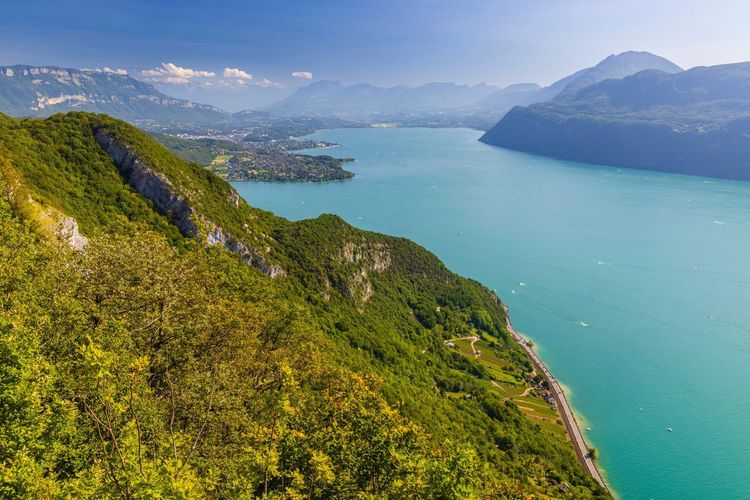
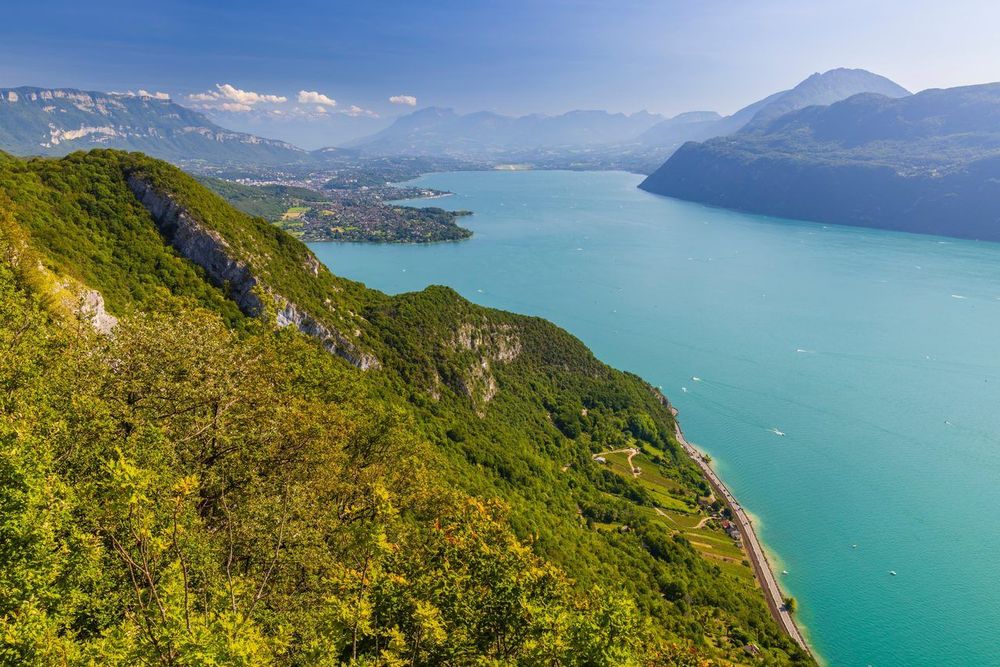
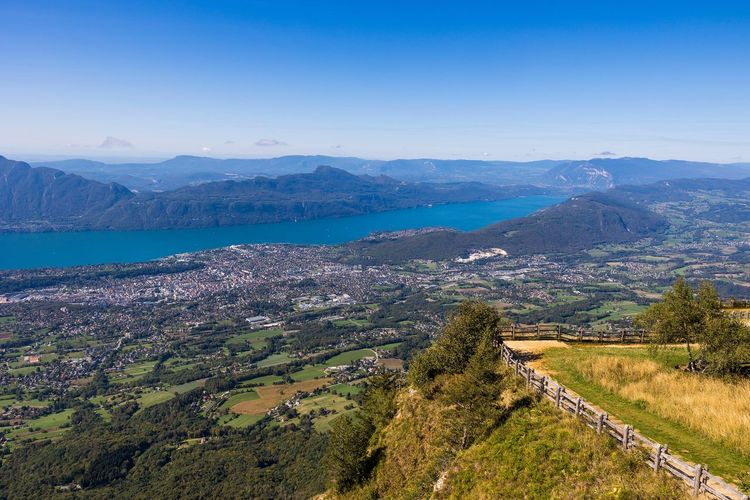
At 18 km long, Lake Bourget is the largest natural lake of glacial origin in France, and every first visit to Aix-les-Bains is organized around it. The town sits on the eastern shore, facing the Dent du Chat and the long ridge of the Mont du Chat, and much of the charm of the place comes from this almost alpine perspective over such a wide expanse of water.
The simplest way to take its measure is still a cruise. The Compagnie des Bateaux du lac d'Aix-les-Bains departs from the Grand Port, and the Heritage Promenade Cruise adds commentary on the history of the lake, its former fishing ports and its lakeside villages. Prefer to steer yourself? Electric boats that require no license can be rented at the Grand Port and the Petit Port, by the hour, to glide silently along the shore.
For swimming, the municipal Esplanade beach, at the Petit Port, remains the most convenient from the center. Those who prefer a wilder setting head north to the Plage de Chatillon, a pebble beach in Chindrieux, facing due south, at the foot of the castle of the same name, with an unobstructed view along the full length of the lake.
At the other end, the Plage municipale du Bourget-du-Lac has a different atmosphere: a jetty, pedal boat rentals and terrace restaurants just steps from the water.
If you have a free morning, finally head up to the Grotte aux Fées (73100 Brison-Saint-Innocent, rated 4.4/5 on Google from 157 reviews), above Brison-Saint-Innocent: a small, secured cave on the mountainside, reached after about two hours of walking through the forest, which offers one of the finest balconies over the lake.
For a guided tour, the Ryo Riviera des Alpes route features 14 audio tracks over about 2 km (1h16 of listening) along the lakefront, from the cruise piers to the viewpoints over the water: enough to understand what you are looking at without pulling out a map between stops.
The Belle Époque Town Center, the Thermal Baths and Their Gardens
Aix-les-Bains owes its appearance to a century of European spa guests flocking here, and the town center still tells this story almost without interruption. The logical starting point is Place Maurice-Mollard, home to the Thermes Nationaux, the historic establishment built on the Roman baths. Closed to spa treatments since 2008, the building is mostly seen from the outside and on guided tours offered by the tourist office.
On the same square, the Arc de Campanus, a Roman funerary monument from the 1st century, is a reminder that Aix's hot water was already drawing the Romans. Right next to it, the Temple of Diana, another ancient relic, houses the archaeological museum.
Two minutes on foot away, the Grand Cercle casino is worth stepping into even without wagering a cent: its Italian-style theater and the gilded mosaic ceiling of the gaming room are among the finest Belle Époque interiors in the Alps. The Notre-Dame Church of Aix-les-Bains completes this compact area.
Today's spa treatments take place a little higher up, at the Thermes Chevalley, on the heights of the town: they use the same hot springs and welcome both spa guests and passing visitors to the thermal spa.
Before heading back down to the lake, take a stroll through the Thermes floral park (Avenue Victoria, 73100 Aix-les-Bains, rated 4.6/5 on Google from 523 reviews): its flower beds and bandstand make for a quiet break, especially in the late afternoon when the light grazes the façades.
For this first tour of the center, the Ryo audio guide links the baths, Roman arch, casino and church in a few narrated stops: you move at your own pace, phone in pocket, without having to remember the order of the streets.
Hautecombe Abbey, a Spiritual Jewel on the Lakeshore
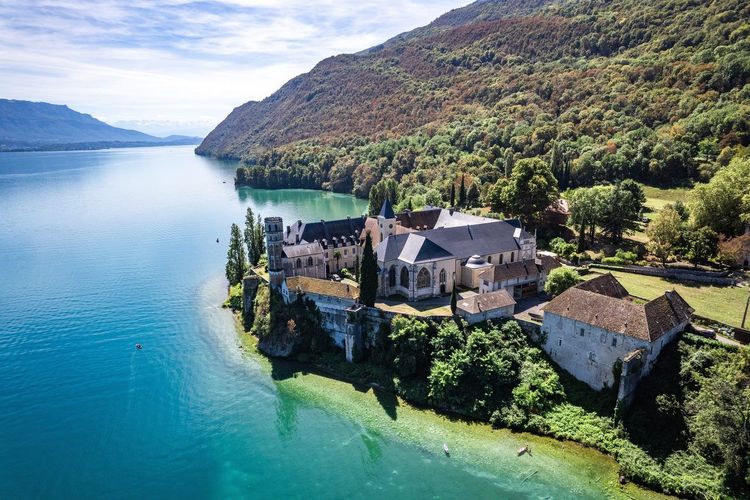
On the western shore, Hautecombe Abbey (73310 Saint-Pierre-de-Curtille, rated 4.4/5 on Google from 4,767 reviews) occupies a promontory that can be spotted from afar from Aix-les-Bains. Founded in the 12th century and then rebuilt in the 19th century on the initiative of King Charles-Felix in a richly decorated neo-Gothic style, it served as the necropolis of the princes of the House of Savoy. The abbey church holds dozens of tombs and some 300 statues, a surprising density for a site of this size.
Since 1992, the abbey has been home to the Chemin Neuf Community, and the audio-guided tour of the church (about 25 minutes, 4.50 euros in 2026) respects the life of the place, which is closed during certain services.
There are two ways to get there. By road, allow about half an hour from the center of Aix-les-Bains, going around the lake via the north. By lake, the guided cruise of the Compagnie des Bateaux leaves from the Grand Port from April to October: about one hour of sailing and a 1.5-hour stopover on site, for 18.50 euros per adult and 14 euros per child. Arriving by water is by far the most memorable option, as the abbey's façade appears at the last moment behind the promontory.
Gaining Altitude: Mont Revard, Dent du Chat and Viewpoints
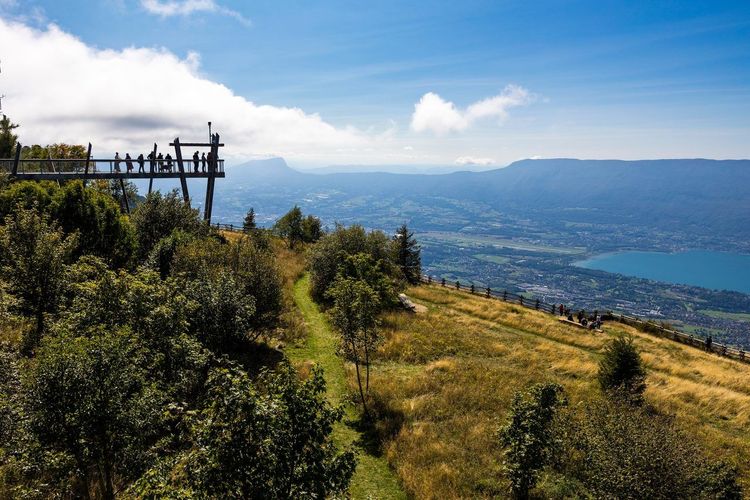
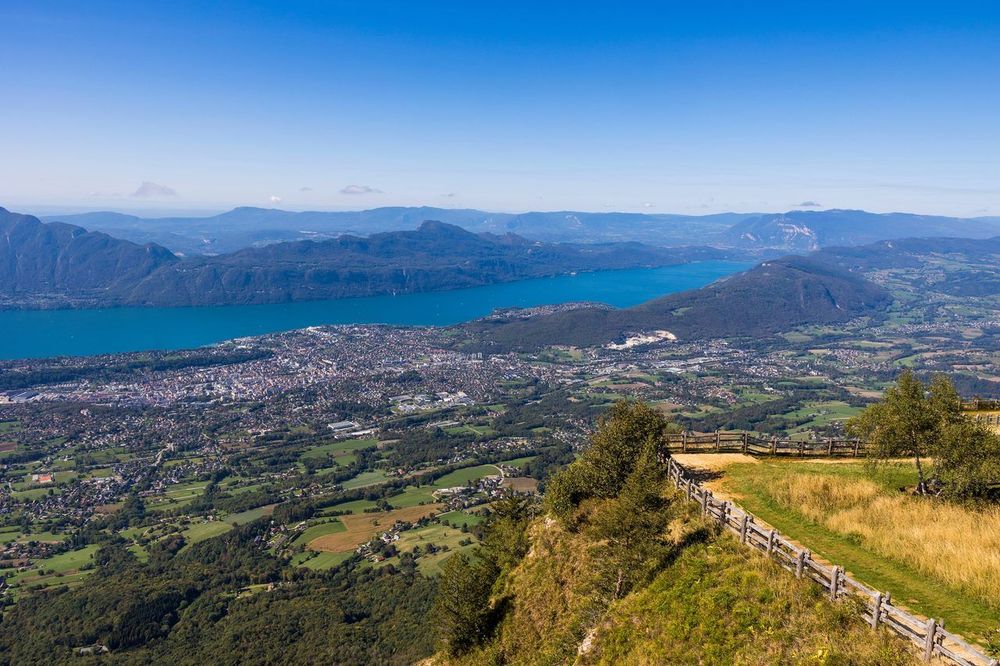
Aix-les-Bains is nestled between two very different mountain ranges, and a good part of what sets this first visit apart from a simple spa weekend happens at altitude. To the east, Mont Revard, at over 1,500 meters, is part of the Bauges Massif, a regional natural park. You can reach it by car in about thirty minutes along a winding road whose panorama improves with every bend.
At the summit, the Revard viewpoint (Le Revard, 73100 Pugny-Chatenod, rated 4.8/5 on Google from 4,588 reviews) overlooks both Lake Bourget and, on a clear day, the Mont Blanc range: a rather rare double view.
To the west, on the other side of the water, the Dent du Chat peaks at 1,390 meters on the Épine range, the last link in the Jura chain. The hike to the Dent du Chat from the Col du Chat takes about two to three hours round trip, with a final stretch fitted with cables and a view plunging almost vertically onto the lake. Bring good shoes: the trail is steep.
North of Aix, the Col de Chambotte and its Chambotte viewpoint offer the widest angle over the whole lake, ideal in the late afternoon. The Chapelle de l'Étoile viewpoint, more discreet, completes the series if you want to escape the most photographed spots. Only have time for one trip up high? Take the Revard for its easy road, then save the Dent du Chat for a half-day hike.
Museums and Culture: Faure, Archaeology and Aqualis
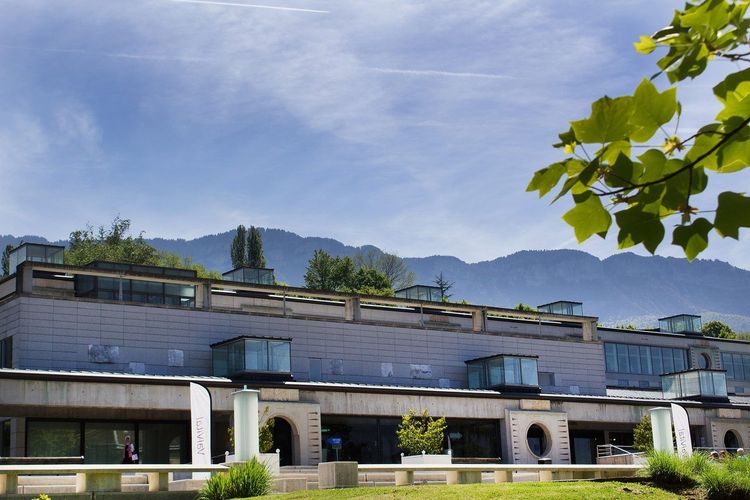
This is the point that trips up the most visitors in 2026: the Faure Museum, housed in the Villa des Chimères (1906), has been closed since December 2024 for a complete restoration. It is due to reopen in 2027 or 2028 under the name La Villa-Collection d'art, with an extension in the park. Its collection, bequeathed by the industrialist and pharmacist Jean Faure, includes more than 30 sculptures by Rodin and paintings by Pissarro, Degas, Sisley or Cézanne: make a note of it for a future stay.
The same caution applies to the archaeological museum, housed since 1948 in the Temple of Diana: it has not been permanently accessible since 2008, and only opens for occasional visits. The Roman remains are therefore mostly seen from the outside, from the Arc de Campanus to the foundations of the Thermes Nationaux.
The real cultural surprise is found by the water: Aqualis, the lake experience (52 Esplanade Jean Murguet, 73100 Aix-les-Bains, rated 4.6/5 on Google from 309 reviews), opened in 2019 at the Petit Port in a renovated former Art Deco aquarium. A space dedicated to the lake's fish, models and an immersive audiovisual experience: admission costs 3 euros (2 euros for ages 4-17), and it is an excellent fallback in rainy weather. Families will also enjoy the Impérial aviary, a free little interlude in the gardens near the former palace hotel.
Wellness and Spas: The Thermal Experience of Aix-les-Bains
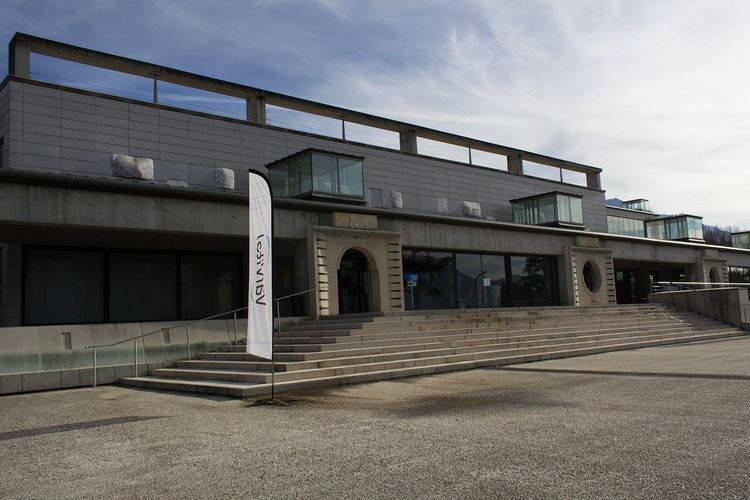
Aix-les-Bains remains above all a spa town, and the offering falls into two fairly distinct categories. On one side, the historic thermal experience: the Thermes Chevalley thermal spa continues the tradition of spa cures with thermal water treatments, in a setting that is more medical than recreational.
On the other, hotel spas, accessible without a prescription. Spa La Parenthèse, at the Hôtel Le Riviera, offers over 1,000 m² of water areas, treatments and even a flotation tank. Les Bains des Alpes - Spa Nuxe, at the Domaine de Marlioz, rely on a wooded park and a more hushed atmosphere. Le Spa de L'Incomparable, in the boutique hotel of the same name, plays the intimate card with a jacuzzi facing the lake. For a first visit, book at least half a day: it is the simplest way to understand why generations of spa guests came to settle here.
Nature and Fresh Air: Gorges, Ponds and Via Ferrata
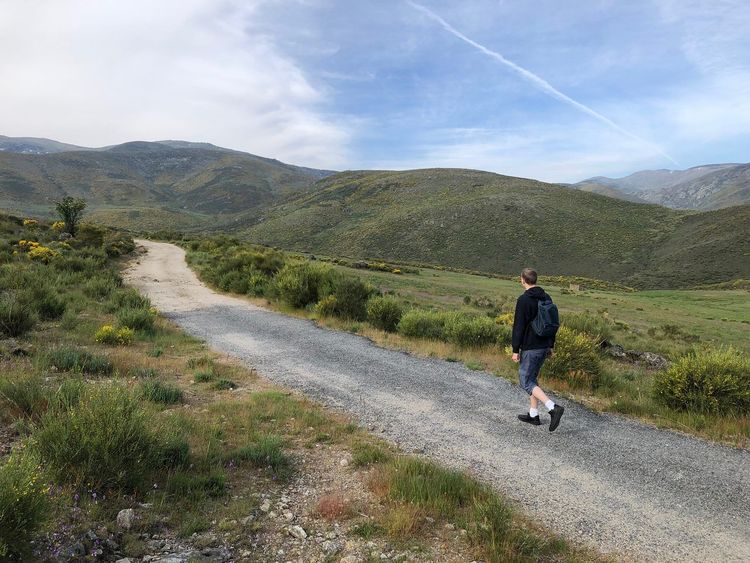
Beyond the viewpoints, three outdoor outings deserve your attention. The Sierroz gorges, in Grésy-sur-Aix, reopened after a complete rehabilitation carried out by Grand Lac in 2021: a walkway follows the torrent at the bottom of a defile carved into the rock, accessible year-round weather permitting.
The Crosagny ponds, calmer, attract bird lovers and families looking for a flat one-hour walk. For the more athletic, the Roc de Cornillon via ferrata (Col du Chat, 73370 Bourdeau, rated 4.7/5 on Google from 377 reviews), on the western shore starting from Bourdeau and the Col du Chat, offers two routes, one of them for beginners: ladders, cables and a Nepalese bridge, about two and a half hours of effort, with the lake below the whole way.
Wildlife Park and Family Outings
Coming to Aix-les-Bains with children is fairly easy: the Petit Port beach is supervised in summer, Aqualis offers workshops for ages 4-10, and both the Sierroz gorges and the Crosagny ponds are easy to explore. The short one-hour lake cruises are also very popular with younger children.
The Grande Jeanne wildlife park, often mentioned in guides, is not in Aix but in Annecy, on the road to the Semnoz: a free forest enclosure where you can see fallow deer, red deer and mouflon. Keep it in mind if you make the trip to Annecy, as it combines very well with a morning in the old town.
Chanaz and the Picturesque Villages of the Lake
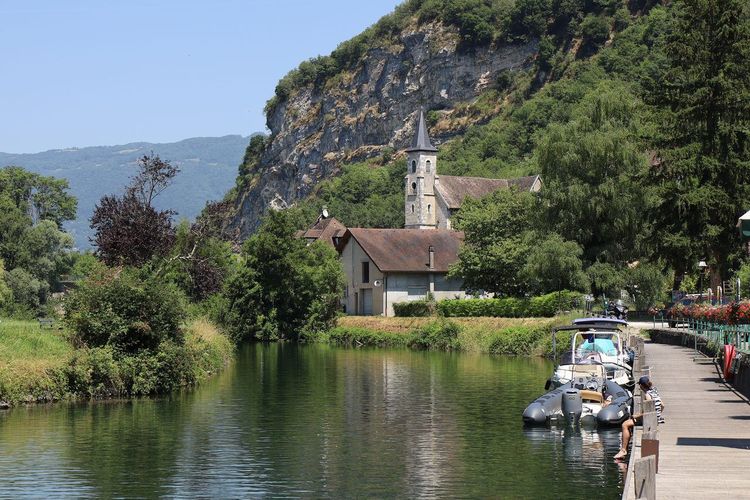
A tour of Lake Bourget reveals several villages worth a stop, even a short one. Chanaz, at the northern end, stretches along the Savières canal that links the lake to the Rhône: a walnut oil mill still in operation, low houses, boats waiting in front of the lock. Nicknamed the Savoyard Little Venice, it is the most photogenic village in the area, especially at the end of the day when the terraces come alive.
At the other end of the lake, Le Bourget-du-Lac is home to the priory and its French-style garden, founded in the 11th century, whose cloister and trimmed boxwood beds can be visited in the warm season. On the western shore, Bourdeau and its perched castle overlook the water at the foot of the Mont du Chat. Further north, the Château de Lucey (73170 Lucey, rated 4.6/5 on Google from 64 reviews), surrounded by vineyards, completes the loop if you devote a full day to touring the lake rather than just the spa town.
To organize this day step by step, our article on the villages around Lake Bourget details an itinerary with the distances between each stop, and our guide to Lake Bourget adds information on water activities.
Markets and Savoyard Specialties to Taste
The Aix-les-Bains market takes place on Wednesday and Saturday mornings, from about 7am to 12:30pm, at Place Clemenceau. Wednesday is the busiest: fruit and vegetables, cheeses, cured meats, flowers, and textile stalls until late afternoon. It is the best place to spot local producers before choosing a restaurant for the evening. The markets of Aix-les-Bains and the surrounding area then rotate among the lake communes depending on the day.
On the plate, the region stays true to its classics: tartiflette, fondue and a good part of the Savoie cheese route, with Beaufort, Tomme des Bauges and Abondance. The specialties of Aix-les-Bains also include fish from the lake, led by féra and Arctic char, served in several lakefront restaurants. For buying local products, favor the cheesemongers and delicatessens in the center over shops geared toward passing tourists.
Day Trips: Chambéry, Annecy and Albertville
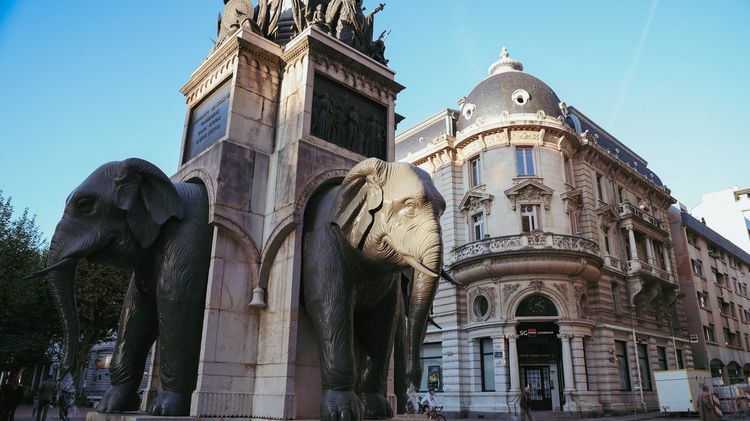
If your stay exceeds three days, Aix-les-Bains makes a practical base for exploring further. Chambéry, a city of art and history, is reached in a quarter of an hour by train and offers a dense historic center around the Castle of the Dukes of Savoy and the Elephant Fountain, and is significantly less crowded than its Alpine neighbors.
Annecy and its lake, about forty minutes by road, remain the most popular outing: old town, canals and the Palais de l'Isle justify the comparison, but arrive early in high season. Albertville, further toward the Tarentaise, will interest fans of Olympic history (1992 Games) and heritage with the medieval town of Conflans, perched above the modern city. These three excursions combine poorly into a single day: choose one and save the others for a future stay.
Recommended Itinerary for Visiting Aix-les-Bains in One Day
If you only have one day, here is the order that works best on the ground. Start in the morning with the town center: Thermes Nationaux, Arc de Campanus, Grand Cercle casino and Notre-Dame church can be covered in about two hours, starting from Place Maurice-Mollard. On a Wednesday or Saturday, make a detour to the market.
Toward late morning, head down to the lake via Avenue du Grand Port for a short cruise or a walk to the Petit Port: this is when the light on the water is at its most beautiful. Have lunch on the lakefront, then devote the afternoon to a single choice depending on your energy: the climb to Mont Revard for the panorama, the cruise to Hautecombe Abbey for the history, or a spa break if the day has been busy.
Finish with the Thermes floral park in the late afternoon, a short but restful stop before dinner. This thread, from the spa center to the lakeshore, is precisely that of the Ryo audio guide to Aix-les-Bains: the stops follow in this order, and you can restart a specific audio at any time if you improvise once on site.
Practical Information: Getting There, Where to Stay and Choosing Your Season
Aix-les-Bains is easily reached by train from Paris (about 3 hours by direct TGV) or Lyon (about 1h20), with a station right in the town center. By car, allow about one hour from Geneva and 1h15 from Lyon via the A43.
For accommodation, the thermal baths area and the Grand Port area concentrate most of the hotels, within walking distance of most sites in this guide. Campsites and rentals around Le Bourget-du-Lac or Brison-Saint-Innocent are better suited to a family stay or a van trip, with direct access to swimming.
The best time to visit Aix-les-Bains runs from May to September to enjoy the lake and the beaches, with peak attendance in July and August. Cruises to Hautecombe only run from April to October. Spring and early autumn offer gentler prices and cooler hikes toward Mont Revard or the Dent du Chat. Budget-wise, a simple stay (mid-range hotel, meals on a terrace, an 18.50-euro cruise and a spa entry) comes to around 100 to 150 euros per day per person excluding transport, a figure that climbs quickly if you add several treatments.



FAQ
How long does it take to visit Aix-les-Bains?
One day is enough to see the essentials of the town center and the lakeshore, but two to three days let you add Hautecombe Abbey, a trip up to Mont Revard or the Dent du Chat, and a little thermal relaxation between visits.
What is the average budget for a stay in Aix-les-Bains?
Plan on 100 to 150 euros per day per person for mid-range accommodation, meals and a paid activity such as a cruise or a spa, not including transport to get to the town.
What is the best time to visit Aix-les-Bains?
From May to September to enjoy the lake and the high-altitude hikes. July and August see the highest number of visitors, while May-June and September offer a good compromise between weather and peacefulness.
Is the Faure Museum open in 2026?
No. The museum has been closed since December 2024 for restoration and is due to reopen in 2027 or 2028 under the name La Villa-Collection d'art. In the meantime, Aqualis, at the Petit Port, is the best indoor cultural visit in the town.
How can you get around Aix-les-Bains without a car?
The town center, the thermal baths and the harbors are easy to explore on foot. For Hautecombe Abbey and some villages, the Compagnie des Bateaux boats and local bus lines replace the car, although access to the high-altitude viewpoints remains easier by vehicle.
Can you reach Hautecombe Abbey by boat from Aix-les-Bains?
Yes, from April to October: the guided cruise lasts about one hour, with a 1.5-hour stopover on site, for 18.50 euros per adult. The audio-guided tour of the church is paid for separately on site.
Is Aix-les-Bains suitable for a family trip?
Yes: the supervised beach at the Petit Port, Aqualis workshops, the Impérial aviary, the Sierroz gorges and flat walks around the Crosagny ponds offer several short, inexpensive options to keep children busy between more cultural visits.
Aix-les-Bains, a First Time That Makes You Want to Come Back
What strikes you after two or three days in Aix-les-Bains is how easily the town combines very different registers within such a small area: Belle Époque spa culture, an alpine lake, peaks at over 1,500 meters and villages on the water's edge, all within an hour by road or boat of the town center.
For a first visit, there is no need to fit everything into a single stay: the reopening of the Faure Museum will give you a good reason to come back anyway. Until then, keep the Ryo audio-guided tour of Aix-les-Bains on your phone, as its 14 lakefront audio stops work just as well for a first discovery as for a second, more attentive stroll.