





RyoCity
The Parthenopean City
Naples, Italy
RyoCity
The Parthenopean City
Naples, Italy
5.7 km
Distance
2h15
Durée
19
Audios
Boucle
Parcours
Shutterstock
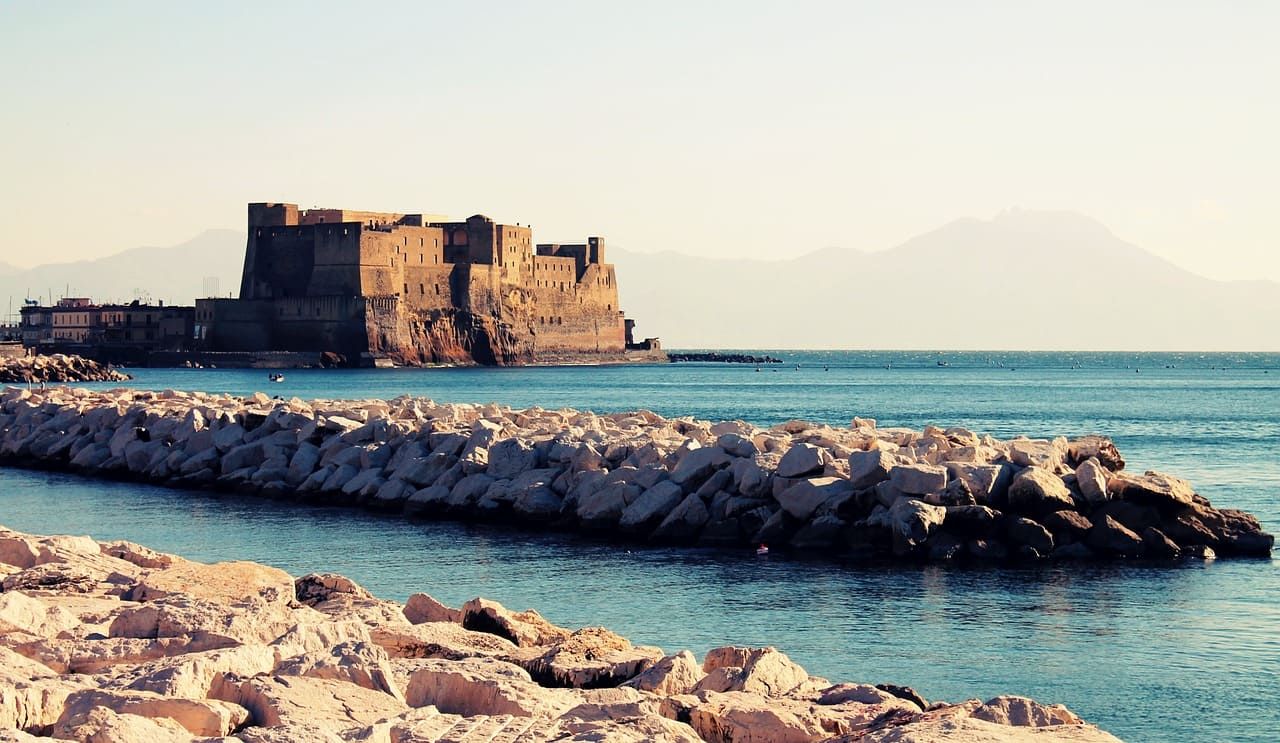
Here we are at the famous Castel dell’Ovo—the “Egg Castle”—the oldest of Naples’ four castles. It stands on the Megaride peninsula, where settlers from Cuma founded the first nucleus of the city and where, according to legend, the siren Parthenope, who gave her name to the first Greek settlement here, washed ashore. The rocky outcrop before you is now known as Borgo Marinaro, a small fishing village that grew up on the castle’s slopes around 1800. With its marina and restaurants, it’s a favorite spot for both visitors and locals. And yes, you’re probably wondering—what on earth does an egg have to do with a fortress? True, an egg isn’t exactly the most intimidating or solid symbol for a castle. The name comes from a legend that a magical egg—yes, magical—was hidden here by the poet Virgil, who in the Middle Ages was also believed to be a sorcerer. The egg was said to protect Naples from disaster for as long as it remained intact. Queen Joanna I of Naples is even accused of removing the protective egg, bringing misfortune upon the city. The castle itself was built on the remains of a lavish Roman villa from the 1st century AD, the Castellum Lucullanum. In the early 5th century, Emperor Valentinian III turned it into a fortress—significant because this is where the last emperor of the Western Roman Empire, Romulus Augustulus, lived in exile and died. The Roman remains were destroyed in the 9th century, and the first true castle on the site was built by the Normans in 1140, when King Roger made it his residence. It was altered many times over the centuries but lost importance when King Charles I of Sicily moved his court to his newly built “New Castle.” The best part? Castel dell’Ovo is open to the public, free of charge. You can explore its interior at your own pace, enjoy its architecture and exhibitions, and step out onto a balcony with one of the best views in all of Naples, looking out over the bay.
