






RyoCity
The Parthenopean City
Naples, Italy
RyoCity
The Parthenopean City
Naples, Italy
5.7 km
Distance
2h15
Durée
19
Audios
Boucle
Parcours
Shutterstock
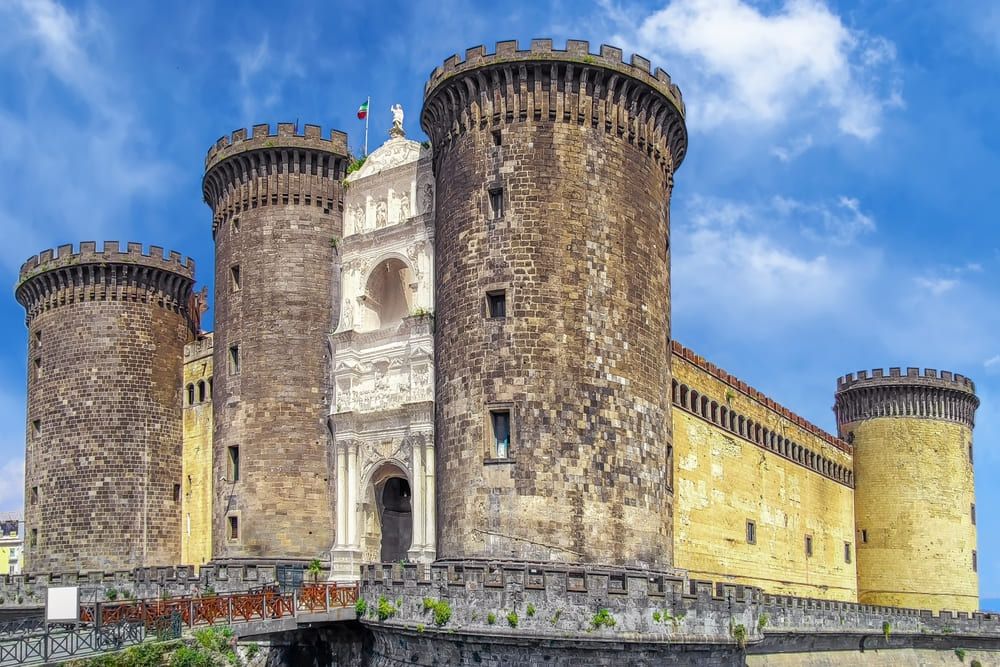
Right in front of you is Castel Nuovo: Naples’ “New Castle,” and one of its most recognisable landmarks. “New” only because, when it was built in 1279, the city already had two others. Naples’ story stretches back almost 3,000 years, from its beginnings as the Greek settlement of Parthenope, to its days as a cultural hub of Magna Graecia, through the Roman Empire, and later as the capital of the Kingdom of Naples and the Kingdom of the Two Sicilies. It stayed one of Europe’s economic powerhouses until 1860, when it became part of the newly unified Kingdom of Italy. With that kind of history, four castles in one city starts to make sense. Castel Nuovo belongs to the Angevin chapter of the story. When Charles II of Anjou lost Sicily to the Crown of Aragon, he shifted his capital from Palermo to Naples and ordered this mighty fortress—five towers, thick walls you’d never breach, and a moat all around. It went up fast, and Renaissance artists gave it its decoration. Today, the only surviving piece from that first version is the Palatine Chapel, with its beautifully carved tympanum. In 1442, the Aragonese took over and rebuilt the whole thing. That’s when the striking triumphal arch was added—white marble glowing against the dark volcanic stone of the towers. They also reinforced the defenses and added new ramparts. The showpiece inside is the Hall of the Barons, named after the nobles who, in 1486, were arrested and executed here for plotting against King Ferdinand I of Aragon. The hall is decorated with figures from legend and antiquity—Samson, Hercules, Solomon, Achilles. It served as Naples’ city council chamber right up until 2006. These days it’s home to the Civic Museum and hosts exhibitions and cultural events. Whether you go inside or just take it in from here, Castel Nuovo is one of those sights you simply can’t skip in Naples.
