





RyoCity
La Superba of Italy
Genoa, Italy
RyoCity
La Superba of Italy
Genoa, Italy
4.6 km
Distance
1h50
Durée
22
Audios
Boucle
Parcours
Shutterstock
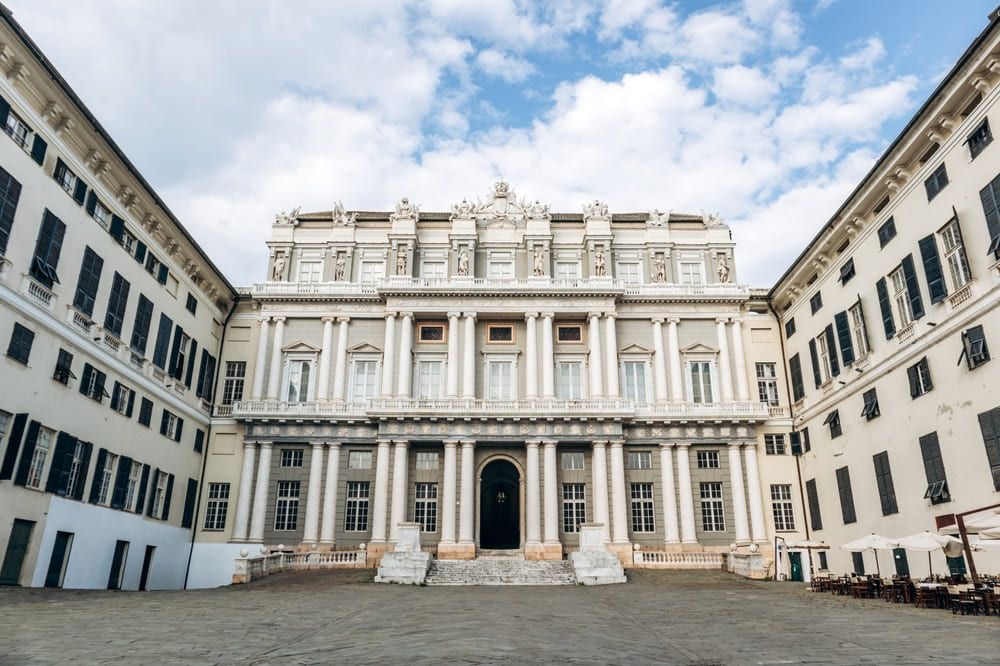
With over 120 palaces, you’d think Genoa might start to feel repetitive. But don’t worry, when it comes to size, colour, layout, and design, no two are alike. Go ahead, try to find a twin, you won’t. Especially not here, standing before one of the city’s most iconic landmarks, the Palazzo Ducale. Construction of this grand palace began in 1298, when Genoa was rising as a powerful maritime and military force in the Mediterranean. It was meant as a bold symbol of the city’s growing prestige. By 1339, the complex had become the official residence of the Doges, the elected rulers of the Republic of Genoa, who governed from the 11th century, until the Republic fell at the end of the 18th. After being severely damaged in a fire in 1777, the Palazzo Ducale was rebuilt in the neoclassical style, replacing its original Baroque appearance. That’s the style you see today, except for one part, the People’s Tower, also known as the Grimaldina. This medieval tower is one of the few surviving pieces of the original structure, and it served as Genoa’s main prison until 1930. Today, the Palazzo Ducale is protected by the city and has taken on a new life. Spanning more than 3,000 square metres, it houses the prefecture, shops, and public spaces used for exhibitions, concerts, and events, including the 2001 G8 summit.
