





RyoCity
La Superba of Italy
Genoa, Italy
RyoCity
La Superba of Italy
Genoa, Italy
4.6 km
Distance
1h50
Durée
22
Audios
Boucle
Parcours
Shutterstock
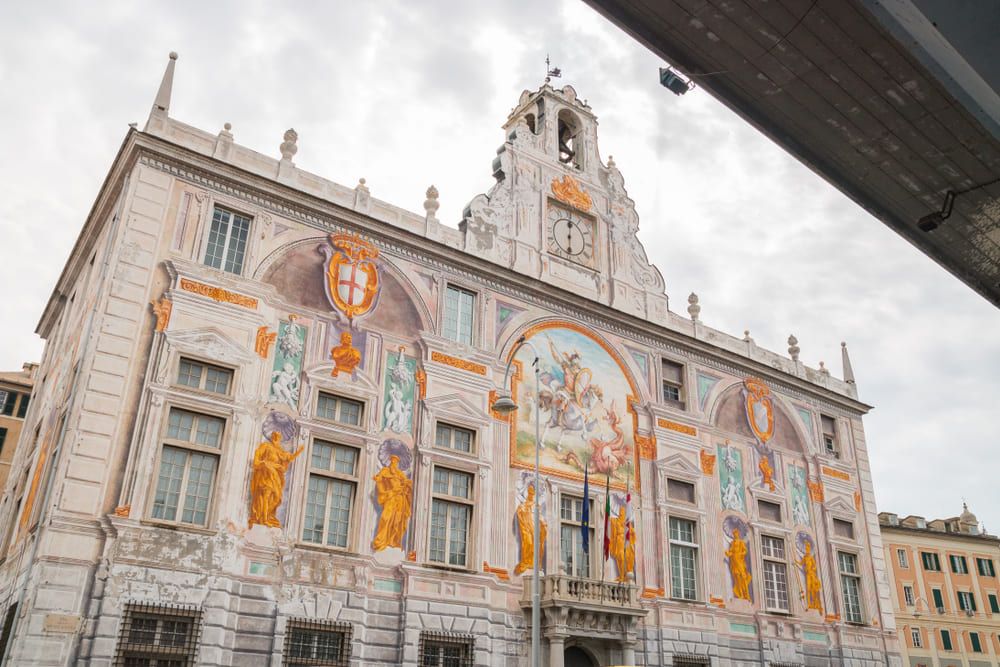
As you make your way across the port of Genoa, you just can’t miss the Palazzo San Giorgio, and for three good reasons, its size, its history, and its striking appearance. Let’s dive into the last two. The building was constructed in 1260 at the request of Guglielmo Boccanegra, the uncle of the first head of the Republic of Genoa. He wanted to gift the city with a civil building that could rival the grandeur of the nearby San Lorenzo Cathedral. But by 1262, the Palazzo had taken on a very different role, that of a prison. One of its most famous inmates was none other than Marco Polo. Captured during a naval clash between Venice and Genoa, the legendary Venetian explorer spent his sentence here recounting his travels to a fellow prisoner. Those stories became the basis for his famous work The Description of the World, also known as The Book of Wonders. In 1340, Palazzo San Giorgio became home to the city’s customs office, and eventually, one of the first banks in Italy. It wasn’t until the 16th century that the building received the stunning trompe-l'œil frescoes by the artist Lazzaro Tavarone. Expanded and restored multiple times over the centuries, the Palazzo is now home to the offices of the Port Authority. On special occasions, such as temporary exhibitions about Genoa, the doors are opened to the public, so keep an eye out if you’re curious to step nside.
