




RyoCity
La Superba of Italy
Genoa, Italy
RyoCity
La Superba of Italy
Genoa, Italy
4.6 km
Distance
1h50
Durée
22
Audios
Boucle
Parcours
Shutterstock
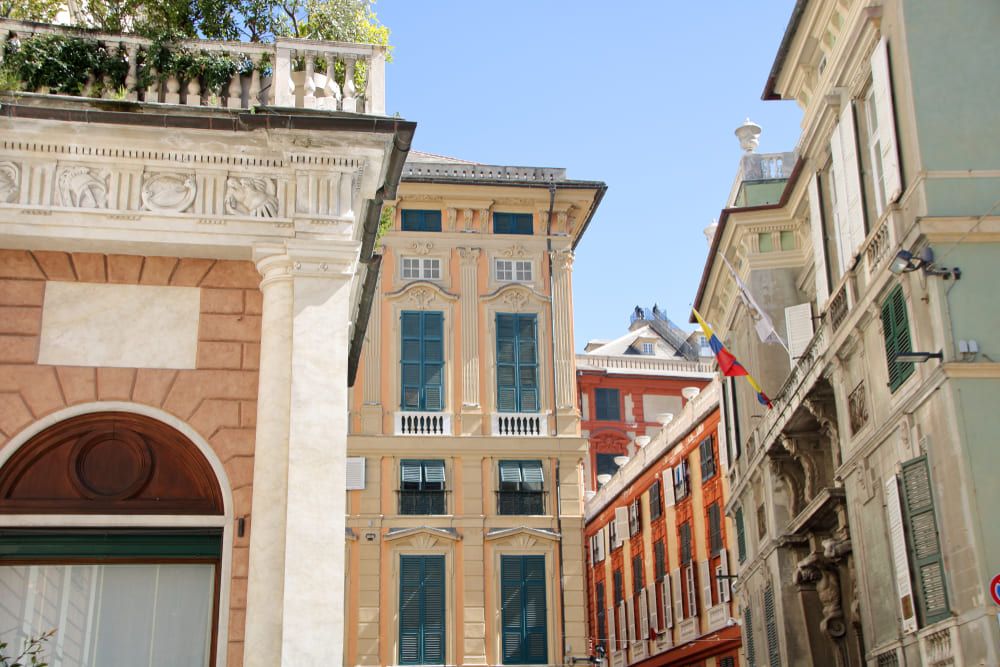
You’ve finally arrived at Via Garibaldi, and you’ll soon see why locals and visitors can’t stop talking about it. This street is full of splendour and elegance. In the 16th century, Genoa was thriving on conquest, prestige, and power. With its prime position along the Mediterranean and a knack for shrewd alliances, the city turned its maritime trade port into its greatest asset, and the key to its booming economy. As its population grew, Genoa transformed an empty plot of land into a glittering district filled with lavish residences and palaces, rising one after the other. That’s how the Via Aurea was born on the edge of the historic centre. First renamed Strada Maggiore, then Strada Nuova, it finally took on its current name, Via Garibaldi, in 1882. A true urban masterpiece, this street is lined with over a dozen small palaces, each with manicured gardens and façades adorned with stucco, marble, or exquisite frescoes. Today, three of these are open to the public, either at specific hours or by appointment. These include the Palazzo Bianco, Palazzo Rosso, and Palazzo Doria-Tursi. There’s plenty to admire for anyone drawn to the refined beauty of the Renaissance, in the city called La Superba. Or, as we say in English, The Magnificent.
