





RyoCity
Japan’s lively and food-loving scene
Osaka, Japan
RyoCity
Japan’s lively and food-loving scene
Osaka, Japan
4 km
Distance
1h45
Durée
19
Audios
Boucle
Parcours
©W236 - CC BY-SA 3.0
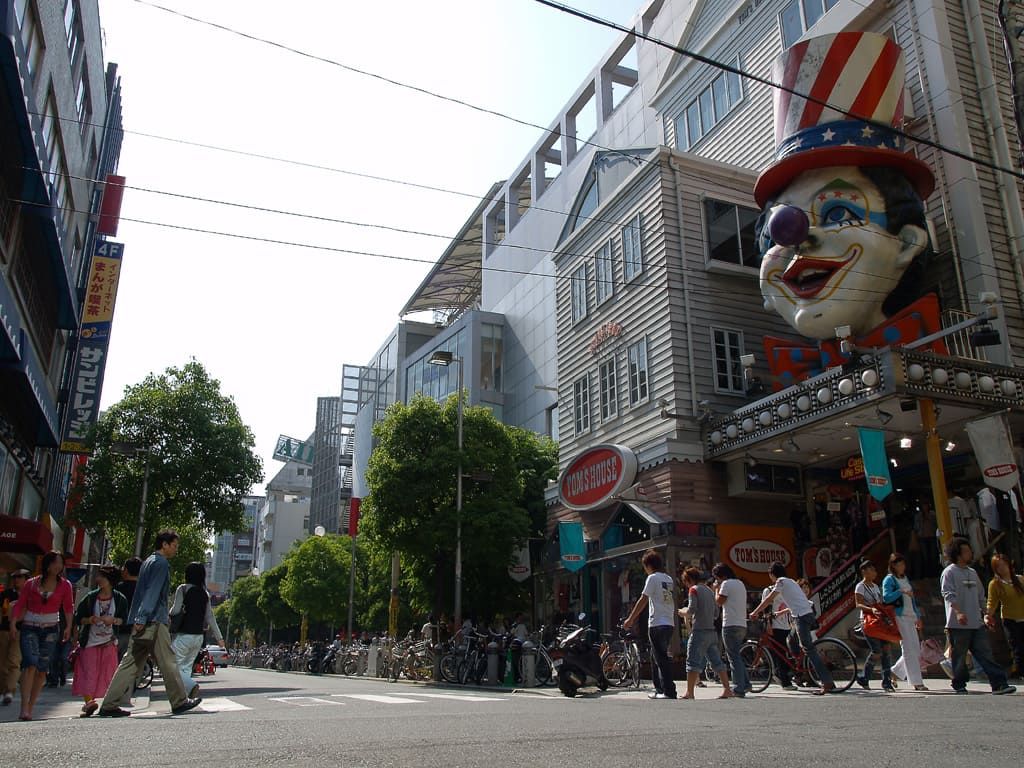
Amerikamura, often called Ame-mura, is Osaka’s most creative and rebellious district. This compact neighborhood is often compared to Tokyo’s Harajuku, a kind of trend laboratory where fashion, music, and Japanese street culture constantly reinvent themselves through contact with American imagery. Originally, this area was filled with warehouses used to store coal, but in the late 60s young entrepreneurs and surfers began importing clothes, records, and all kinds of goods from the west coast of the United States. At the time, Japan was going through a period of strong economic growth, and a new generation of young city dwellers was emerging, with more money, more free time, and above all a desire to stand out from Japan’s highly structured society. For many of them, American culture represented freedom, modernity, and individualism. Hawaii and California in particular had a powerful place in the Japanese imagination, associated with beaches, music, freedom, and the spirit of counterculture, and young Japanese travelers began visiting the United States, especially Los Angeles and San Francisco. Because rents here were very low after the coal warehouses were abandoned, small shops gradually took over the old industrial buildings. The name Amerikamura was born from this wave of jeans, vinyl records, and thrift stores, and the district quickly became the center of Osaka’s counterculture. Today the streets are packed with streetwear boutiques, vintage clothing stores, record shops, and small independent galleries, while walls covered in street art and speakers playing hip-hop give the area a very distinctive atmosphere. One small detail worth noticing is the unusual design of the streetlights. At night, bars, live music venues, and clubs take over, giving the neighborhood an atmosphere that feels both underground and festive. And if you feel like doing a bit of shopping, you might want to stop by the Big Step shopping complex, one of the district’s best-known landmarks.
