





RyoCity
The Echo of the Temples in the Ancient Capital
Kyoto, Japan
RyoCity
The Echo of the Temples in the Ancient Capital
Kyoto, Japan
5.4 km
Distance
2h15
Durée
25
Audios
Boucle
Parcours
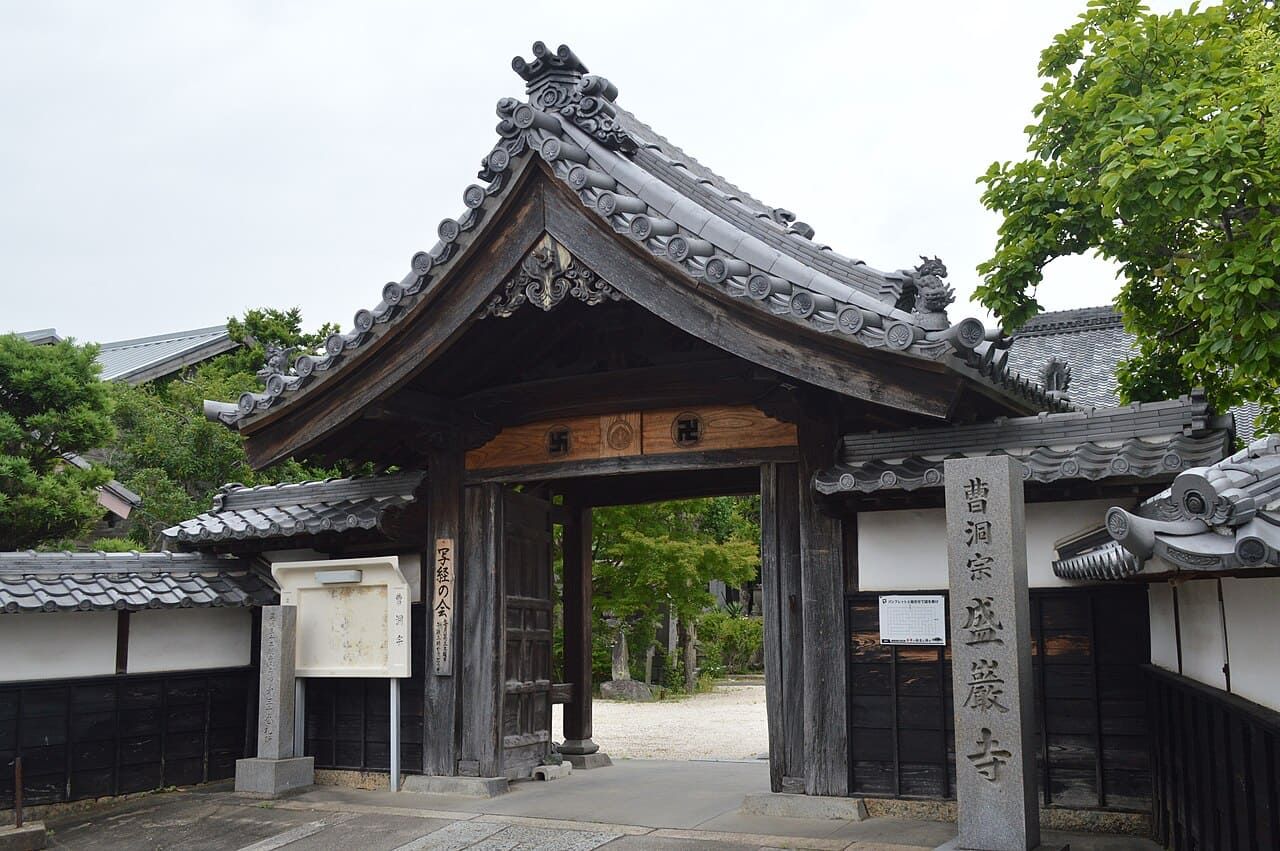
©Asturio Cantabrio BY-SA 4.0.
Right in the middle of the busy Teramachi and Shinkyōgoku arcades, Seigan-ji Temple feels almost unexpected, like a small pocket of quiet tucked between bright shop windows, neon signs, and the steady flow of people. Founded in 667 by order of Emperor Tenchi, it has lived through more than thirteen centuries of history and moved several times before settling here at the end of the 16th century, when Toyotomi Hideyoshi reorganized Kyoto and brought many religious institutions into this district. Originally linked to the imperial court, the temple later became an important center of Pure Land Buddhism devoted to Amida Nyorai, the Buddha of Infinite Light. It is often called the “women’s temple,” because from the Heian period onward it offered a spiritual refuge for court women seeking a sense of inner peace. The names of Sei Shōnagon, author of The Pillow Book, and the poet Izumi Shikibu are still connected to Seigan-ji, leaving behind a subtle literary presence that seems to linger in the air. You can see that heritage in a very tangible way through the ema, the small wooden plaques on which visitors write wishes, hopes, or sometimes short poems before hanging them up. Here, they are often shaped like folding fans, a gentle nod to the elegance and poetry of the classical court. Yet Seigan-ji is not only a place of prayer. It is also regarded as the birthplace of rakugo, a traditional form of comic storytelling performed with remarkable simplicity: a single storyteller sits on stage, using almost no props, and brings multiple characters to life just by changing voice, rhythm, and expression, creating humor through words alone. In the early 17th century, the abbot Anrakuan Sakuden, a scholar and tea master, collected and organized more than a thousand humorous tales here, laying the foundations of a tradition that is still very much alive, and that the temple continues to support through regular performances. Shaped by Kyoto’s often turbulent past, Seigan-ji has been destroyed and rebuilt at least ten times, mostly because of fires, and the current main hall, built in concrete, dates from 1964. The contrast is striking: surrounded by the noise of the city, this temple still offers a calm space where quiet prayers, memories of poetry, and echoes of laughter passed down through the centuries exist side by side.
