Walk
The Gate to the South
Marrakesh, Morocco
Walk
The Gate to the South
Marrakesh, Morocco
6.8 km
Distance
2h45
Durée
22
Audios
Loop
Parcours
Morocco opens up to you like a book of infinitely varied pages: golden sand deserts, labyrinthine medinas echoing with calls to prayer, snow-capped Atlas peaks and coastlines bathed by two seas. Travelling to Morocco means accepting to be surprised at every turn of an alley, at every sunset over the ramparts. To explore this country at your own pace, Ryo audio-guided tours accompany you through stones and stories, starting with the vibrant heart of Marrakech. Here, every sense is summoned: the scent of spices, the warmth of the sun on your skin, the music of the souks.
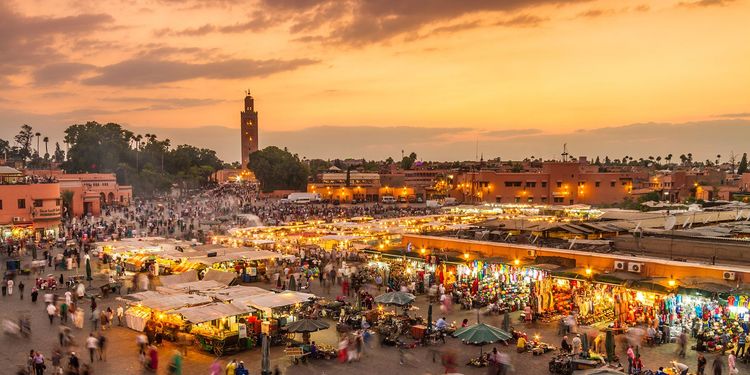
Founded in the 11th century by the Almoravids and listed as a UNESCO World Heritage Site, Marrakech is far more than a stopover: it is an experience in its own right. At the heart of the medina, Jemaa el-Fna square transforms throughout the day, from acrobats to storytellers, from wafts of tajine smoke to lanterns lit at dusk. The Ryo audio-guided tour Gateway to the South invites you to wander between the Bahia Palace, the Majorelle Gardens and the lanes of the mellah, absorbing every layer of this ancient city without ever losing yourself in its spellbinding maze.
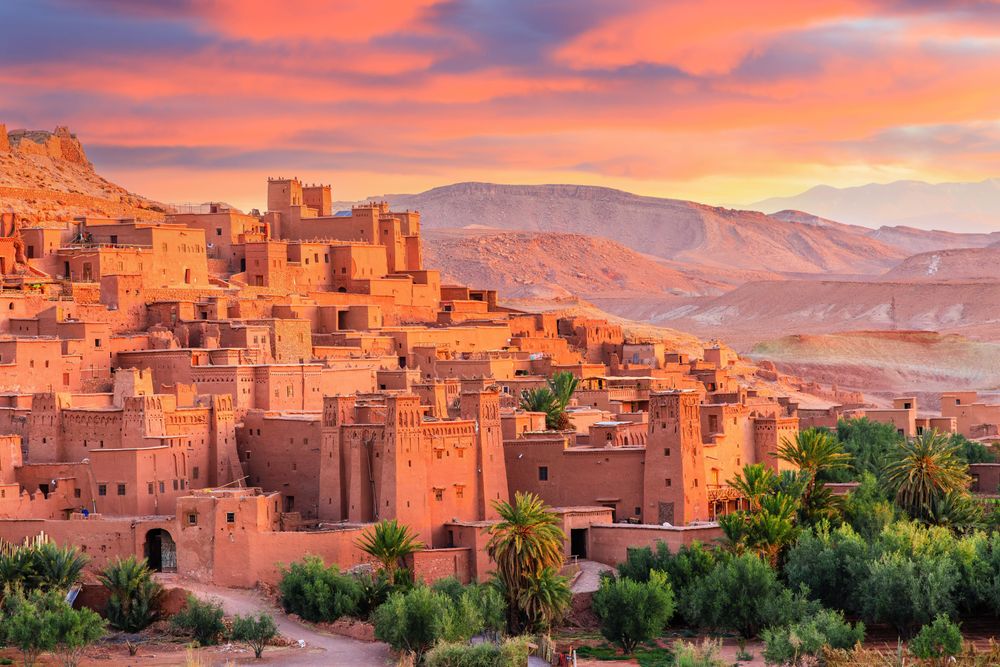
Beyond the cities, Morocco unfolds an exceptionally diverse geography. In the north, Chefchaouen, nicknamed the Blue Pearl, drapes its immaculate façades across the mountain folds of the Rif, offering an atmosphere of rare serenity. Further south, the Dadès Gorges carve through red sandstone cliffs that inspire a quiet sense of awe, while the ksar of Aït-Benhaddou, also a UNESCO listing, raises its sun-dried earth towers against the desert. To the east, the dunes of Erg Chebbi rise on the horizon like a promise: crossing this stretch of the Sahara on camelback, or simply watching the light shift across the sand, remains one of the most powerful emotions travel can offer. To the west, Essaouira and its ramparts battered by Atlantic winds serve as a reminder that Morocco is also a nation facing the ocean. Finally, the Tizi-n-Test pass, crossing the High Atlas, opens onto breathtaking panoramas for travellers who love hitting the road.
Morocco can be visited year-round, but the shoulder seasons — spring and autumn — generally offer the most pleasant conditions: mild temperatures in the imperial cities, flowering landscapes in the Atlas. Summer brings intense heat inland, making it better suited to stays along the Atlantic coast. Winter, meanwhile, surprises with its mildness in the south and occasionally allows a glimpse of the Atlas summits under snow, a striking contrast with the palm groves below.
Morocco's rail network efficiently connects several major cities, offering a comfortable travelling experience. Long-distance coaches provide an economical alternative and cover more remote destinations. To reach the gorges, the kasbahs of the south or the desert tracks, car rental or local shared taxis remain the most flexible options. In the medinas, only exploring on foot truly allows you to soak up the atmosphere — which naturally makes Ryo audio-guided tours the ideal companion for these urban wanderings.
Spring and autumn are generally considered the best seasons to explore Morocco: temperatures are mild, whether in the imperial cities or in the natural landscapes. The summer period is better suited to those who enjoy the Atlantic beaches, while winter appeals to travellers looking to discover a quieter, less crowded Morocco.
One week allows you to discover an imperial city such as Marrakech and take a few excursions into the surrounding landscapes. To journey across several regions, from the Rif to the Sahara via the Atlas, two weeks or more is recommended so you can travel without rushing and let each place fully resonate.
The train is a comfortable and reliable option for journeys between major urban centres. Long-distance coaches extend this network to destinations less accessible by rail. For desert regions and mountain roads, a rental car offers invaluable freedom. In the medinas, only travelling on foot — ideally accompanied by an audio-guided tour — allows you to fully capture the richness of the urban fabric.
Among the places that leave a lasting impression on travellers: Jemaa el-Fna square and the souks of Marrakech, the blue lanes of Chefchaouen, the dunes of Erg Chebbi at the gateway to the Sahara, the archaeological site of Volubilis with its Roman ruins, the ksar of Aït-Benhaddou and the majestic Dadès Gorges. Each of these places tells a different facet of a country with multiple identities.
Moroccan cuisine is one of the richest and most fragrant in the Mediterranean world. The tajine, slow-cooked with meats, vegetables and spices, is a ritual in itself. The pastilla, a delicate sweet-and-savoury flaky pastry, bears witness to the country's Andalusian heritage. Friday couscous, shared with family, is far more than a dish: it is a moment of social connection. And everywhere, mint tea poured from a height invites you to slow down, sit and let Moroccan time find its natural rhythm.






