





Walk
Short version - Along the canals
Amsterdam, Netherlands
Walk
Short version - Along the canals
Amsterdam, Netherlands
Distance
3.8 kmDurée
1h30Audios
21Parcours
Loop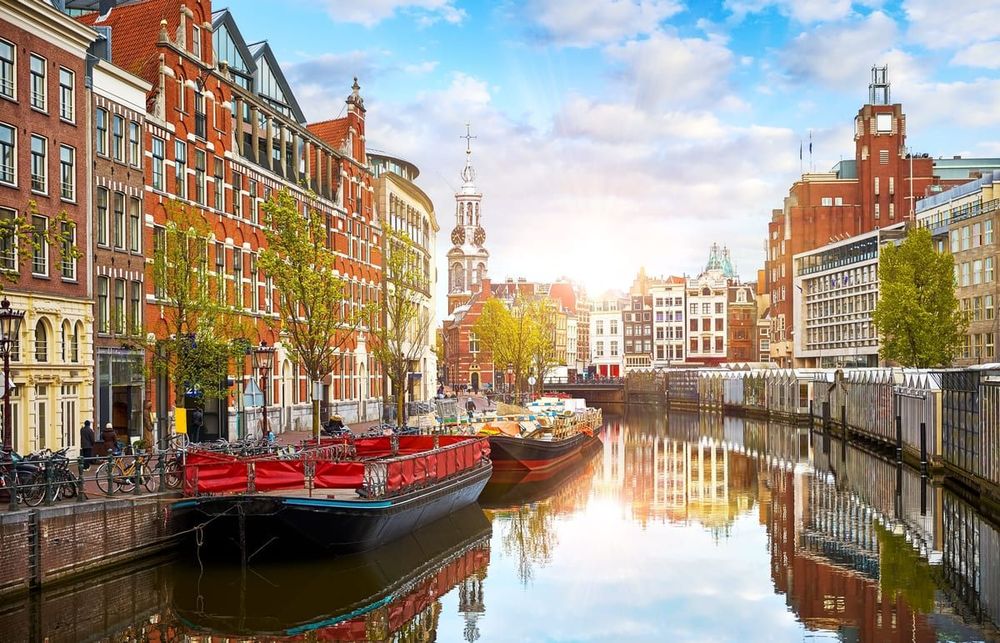
Shutterstock
The Amsterdam audio-guided tour takes you to the edge of the Herengracht canal, one of the finest of the city, lined with patrician houses inherited from the Dutch Golden Age.
The houses that line the Herengracht were built in the seventeenth and eighteenth centuries by the architects of the Golden Age, a period of prosperity during which Holland grew rich thanks to its trade. They belonged to the wealthiest families of the city. One finds there all the characteristics of Dutch architecture: houses built on piles, sometimes slightly leaning, decorated and coloured gables, raised front steps. One detail explains their narrow silhouette: at the time, the tax was calculated on the width of the façade, so that owners built tall and narrow. It is moreover in Amsterdam that one of the narrowest houses in the world is found, but not in this wealthy district.
Along the Herengracht, the gabled façades and the reflections in the water compose the very image of Amsterdam. The bridges, the trees and the leaning houses invite strolling and photography. It is one of the finest canals of the belt listed by UNESCO, perfect for grasping the elegance of the Dutch heritage along the water.
The Herengracht canal crosses the historic centre of Amsterdam, within the belt of canals listed as world heritage. Its quays can be walked freely on foot at all hours; the houses can be contemplated from the street, along the walk.
Because the tax was then calculated on the width of the façade: the narrower the house, the less its owner paid.
From the seventeenth and eighteenth centuries, built by the architects of the Golden Age for wealthy merchant families.
Aucun avis pour le moment
