Walk
A humble Arabia
Muscat, Oman
Walk
A humble Arabia
Muscat, Oman
10.4 km
Distance
4h00
Durée
29
Audios
Loop
Parcours
At the crossroads of desert, sea, and mountains, Oman reveals an Arabia few expect: gentle, proud of its traditions, generous in its landscapes. Here, travel unfolds at a different pace — that of a country that has preserved its authenticity far from the bustle of neighbouring megacities. It is precisely this singular tempo that Ryo's audio-guided tours seek to capture, starting with Muscat, the unmissable gateway to the Omani soul. Prepare to cross crystal-clear wadis, thousand-year-old fortresses, and endless dunes.
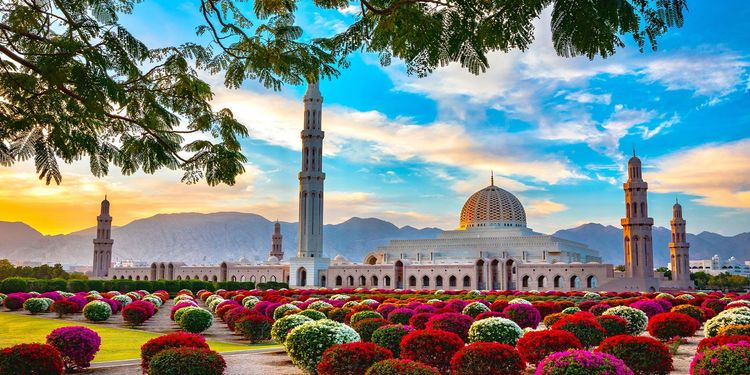
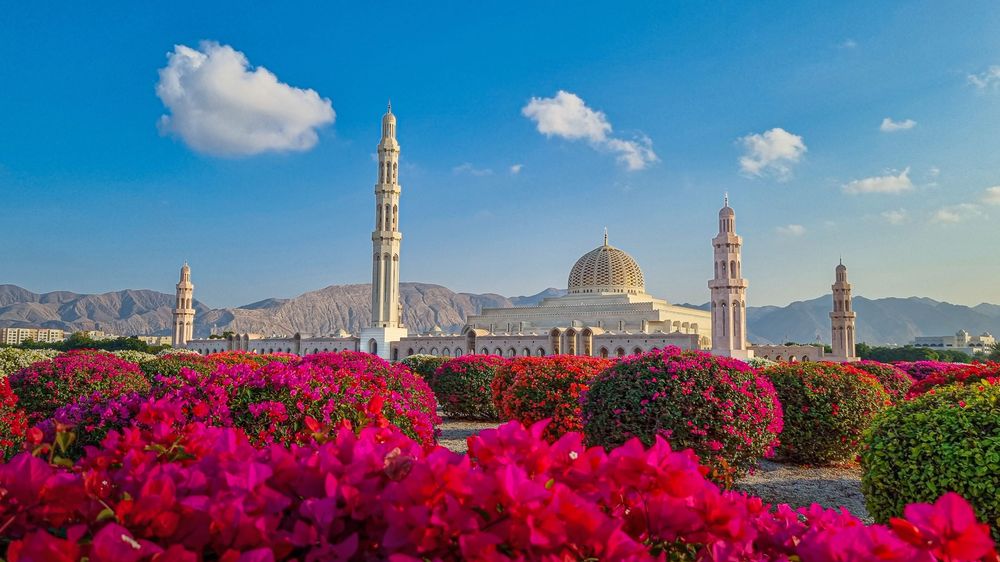
Nestled against black mountains and opening onto the Gulf of Oman, Muscat is a capital that chooses refined elegance over ostentation. Ryo's audio-guided tour "Arabia with Understated Grace" invites you to stroll along the fragrant corniche, lose yourself in the lanes of the old Mutrah quarter, and admire the Sultan Qaboos Grand Mosque, a masterpiece of white marble and colourful mosaics. With every step, the city reveals its discreet palaces, its souks scented with frankincense and rose water, and a hospitality that disarms. Muscat is not a city to skim; it is a city to listen to.
Beyond the capital, visiting Oman means accepting to be transported somewhere new at every bend in the road. Lovers of wide-open spaces will be drawn to the Wahiba Sands, a sea of golden dunes where sunsets turn to deep ochre, or to the vast Rub al-Khali desert, one of the largest sand deserts in the world. The mountains are equally impressive: Jebel Shams, the country's highest peak, offers a breathtaking panorama over the deepest canyon in the Arab world, while Jebel Akhdar surprises with its cool air and terraced gardens.
The wadis are another unforgettable facet of Oman. Wadi Tiwi, Wadi Bani Khalid, and Wadi Darbat carve oases of greenery and turquoise water into the heart of an arid landscape. Further north, the fortresses of Nizwa and Bahla tell centuries of Bedouin history and caravan trade. And on the coast, Ras Al Jinz offers a rare experience: watching, after nightfall, green turtles come ashore to nest on a beach steeped in archaeology.
Oman's climate follows a well-defined cycle. The most pleasant period to explore the country generally stretches from autumn to spring, when temperatures remain mild and well suited to hiking, desert excursions, and city walks. Summer, on the other hand, brings intense heat to most of the country, with the exception of the Salalah region in Dhofar, which is then draped in green mist under the influence of the local monsoon — a phenomenon known as the khareef. Depending on the season and your destination, travel conditions can therefore vary considerably.
Oman lends itself naturally to a road trip: a high-quality road network connects the major regions and iconic sites, and self-driving remains one of the best ways to discover the country's diversity at your own pace. Muscat is the logical starting point for venturing inland or hugging the coast. Car hire is widely available, and a four-wheel-drive vehicle proves useful for heading into the desert or tackling mountain tracks. Public transport runs between the main cities, but its frequency is limited for travellers wishing to explore more remote regions.
The ideal season generally runs from October to April, when temperatures are mild across the whole country. The months of December to February are particularly appreciated for their pleasant weather. If you wish to experience the khareef phenomenon in Salalah, summer is the time to go, though the heat can be intense elsewhere in the country.
One week is enough to explore Muscat and its surroundings, venture into a wadi, and catch a first glimpse of the dunes. For a more immersive experience covering Jebel Akhdar, Nizwa, the Wahiba Sands, and the east coast, two weeks offer a far more comfortable pace, without any rushing.
A hire car remains the most flexible option for an Oman road trip. Main roads are well maintained and signage is generally bilingual in Arabic and English. To reach off-the-beaten-track sites such as certain wadis or desert tracks, a four-wheel-drive vehicle is strongly recommended. It is possible to combine driving with walking excursions to make the most of the landscapes.
Among the sites that feature on every itinerary are the Sultan Qaboos Grand Mosque in Muscat, the fortresses of Nizwa and Bahla, the dunes of the Wahiba Sands, the canyon of Jebel Shams, Wadi Bani Khalid and Wadi Tiwi, and the natural site of Ras Al Jinz with its sea turtles. The old town of Mutrah and its corniche also rank among the most memorable experiences the country has to offer.
Omani hospitality begins with a cup of qahwa, the Arabic coffee flavoured with cardamom and rose water, served alongside fresh or dried dates. Local cuisine, shaped by the Indian Ocean trade routes, blends spices, rice, and grilled fish in dishes such as shuwa, marinated lamb slow-cooked in an underground pit, and majboos, spiced rice with meat. Craftsmanship is equally unmissable: the khanjar, the curved ceremonial dagger, and Oman's artisanal incenses have enjoyed a centuries-old reputation throughout the Arabian Peninsula.






