





RyoCity
Where Water Weaves a Thousand Stories
Aveiro, Portugal
RyoCity
Where Water Weaves a Thousand Stories
Aveiro, Portugal
3.3 km
Distance
1h20
Durée
19
Audios
Boucle
Parcours
Shutterstock
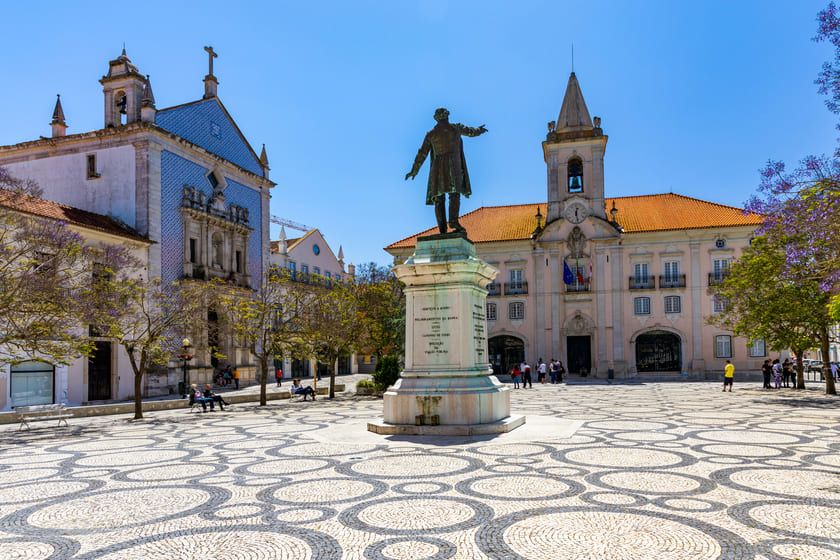
Just a few steps from the canals lies Praça da República, in the historic heart of Aveiro. Locals and visitors alike regularly cross its iconic calçada portuguesa, those traditional black-and-white mosaic cobblestones. But don’t just pass through. This square is more than a shortcut, it’s a destination in itself. Start with the Town Hall, easily recognisable by its clock tower and flags. Built around 1797, its construction was part of a wave of urban improvements that began when Aveiro was officially granted city status. Before that, the site housed the local prison. Architecturally, the building is a textbook example of the Pombaline style, named after the Marquis of Pombal, who led the reconstruction of Lisbon after the devastating 1755 earthquake. The style favoured functionality, simplicity, and cost-efficiency, which explains the building’s clean, understated design. Next door, you’ll find one of the city’s most beautiful landmarks, the Church of Misericórdia. Its graceful silhouette and blue-and-white tiles might well have been the first thing to catch your eye as you arrived in the square. Built between the 16th and 17th centuries, the church is believed to be the work of two architects, one Italian, the other Portuguese. Its richly adorned façade features a beautifully sculpted limestone portal dating from the early 1500s. Higher up, you'll spot a statue of Our Lady of Mercy, the cross of the Order of Christ, also known as the Portuguese Cross, the royal coat of arms, and an armillary sphere representing the celestial globe. Step inside and you’ll find a long, impressively tall nave, also covered in azulejos. These tiles are even older than those on the exterior, dating back to the 16th century. Finally, at the centre of the square stands a statue of José Estêvão Coelho de Magalhães, better known as José Estêvão. A native of Aveiro, he was a soldier, journalist, politician, and President of the Portuguese Parliament, dedicating his life and career to the defence of freedom. This sculpture, created by Simões de Almeida, was unveiled in 1889 in his honour. With its wealth of landmarks and stories, it’s safe to say Praça da República is more than just a place to pass through.
