Walk
The City of Dragons
Ljubljana, Slovenia
Walk
The City of Dragons
Ljubljana, Slovenia
3.7 km
Distance
1h30
Durée
27
Audios
Loop
Parcours
Between the peaks of the Julian Alps, the turquoise waters of the Adriatic, and the deep forests that cover half its territory, Slovenia unfolds a diversity of landscapes that seems almost impossible to believe in such a small space. It is a country best explored at a human pace — that of the curious traveller who prefers slow discovery to bucket lists. To explore its capital through its medieval lanes, Ryo audio-guided tours offer an intimate way to let the city tell its own story, from its legends to its hidden flavours.
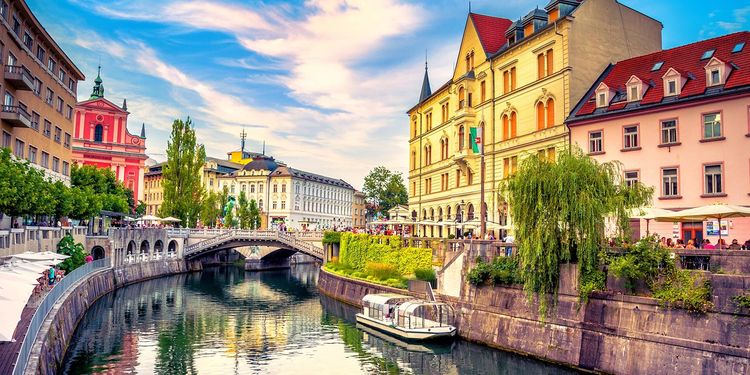
At the heart of Slovenia, Ljubljana stands out as one of the most captivating capitals in Central Europe. The dragon, the city's emblem for centuries, keeps watch from its famous bridge over a city that blends Baroque, Art Nouveau, and contemporary vitality. Along the lively banks of the Ljubljanica, hidden terraces beneath the arcades, and staircases climbing toward the castle that presides over the rooftops, the Ryo audio-guided tour The City of the Dragon reveals the anecdotes and stories that only locals truly know. A way of moving through the city as though it had been entrusted to you in confidence.
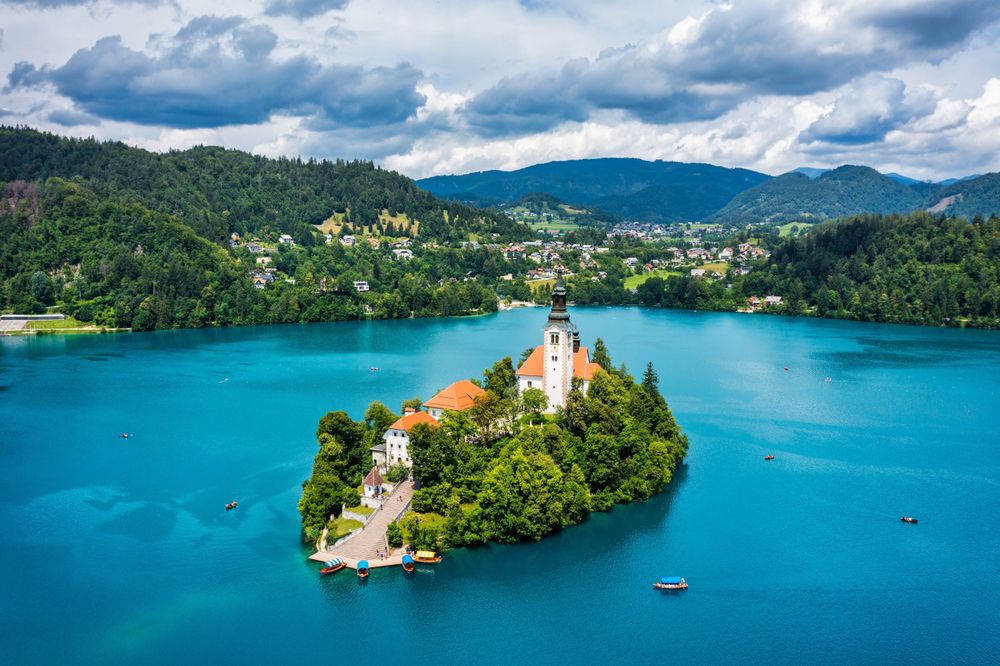
Beyond Ljubljana, Slovenia holds landscapes that stay with you long after you leave. Lake Bled and its island topped with a Baroque church are among the country's most iconic images: the mountains reflect in deep blue water, and the castle perched on the cliff overlooks the scene like a fairy-tale setting. Nearby, Lake Bohinj, wilder and less visited, offers full immersion in unspoiled nature.
To the south, the Postojna Caves and Predjama Castle, built directly into a cliff face, speak to the country's underground and spectacular dimension. Further south still, the Škocjan Caves, a UNESCO World Heritage Site, carve vertiginous chasms into the Slovenian karst. On the coast, the small town of Piran preserves the atmosphere of a Venetian port facing the Adriatic Sea, with its narrow streets and golden sunsets.
The coastline, the forests, the Vintgar Gorge, and the alpine villages all offer invitations to explore a country where every detour holds a surprise.
Spring and autumn are generally the most pleasant seasons to visit Slovenia: temperatures are mild, vegetation is vibrant, and natural sites are less crowded. Summer draws more travellers, especially around Lake Bled, but allows you to make the most of outdoor activities and festivals. Winter transforms the alpine resorts into a playground for mountain enthusiasts, while Ljubljana takes on a special charm beneath the lights of its Christmas markets.
Slovenia is a compact country, which makes travelling between regions straightforward. A car remains the most flexible way to explore the lakes, caves, and mountain villages at your own pace. The bus network efficiently connects the main cities and tourist sites. In Ljubljana, public transport and walking allow you to discover the city centre with ease.
Spring, from May to June, and early autumn, in September, generally offer the best conditions: pleasant temperatures, lush nature, and moderate crowds. Summer remains an ideal option for outdoor activities and festivals, while winter suits those who enjoy mountain sports or off-season city breaks.
A one-week stay is enough to cover the highlights: Ljubljana, Lake Bled, the karst caves, and the Adriatic coast. For a more leisurely trip combining hikes in the Julian Alps with exploration of lesser-known regions, two weeks offer a more comfortable pace. The country's compactness is a genuine advantage for travellers who want to vary their experiences without spending too much time in transit.
Car rental is often the most practical solution for reaching natural sites, as it offers great freedom of movement. Intercity buses cover most tourist destinations and represent an affordable and efficient alternative. In Ljubljana, the city is easily explored on foot or by bike, making it a particularly enjoyable stop for travellers who like to explore without constraints.
Among the sites that leave a lasting impression are Lake Bled and its island, the Postojna Caves, the cliff-carved Predjama Castle, the Vintgar Gorge, the Škocjan Caves, and the coastal town of Piran. Ljubljana, with its castle, ornate bridges, and lively riverbanks, remains the natural starting point for any exploration of the country.
Slovenian cuisine reflects the influences of its neighbours while asserting its own identity. You will find hearty dishes featuring cured meats, mountain cheeses, polenta, and warming soups. Slovenian wines, produced across three distinct wine regions, are well worth discovering. In Ljubljana, the covered markets and old town restaurants offer a taste of both traditional recipes and contemporary reinterpretations of local cuisine.






