





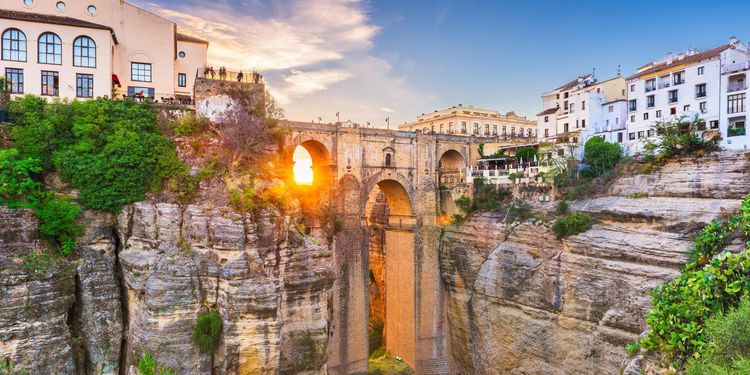
RyoCity
Suspended between Sky and Peaks
Ronda, Spain
RyoCity
Suspended between Sky and Peaks
Ronda, Spain
2.6 km
Distance
1h15
Durée
27
Audios
Boucle
Parcours
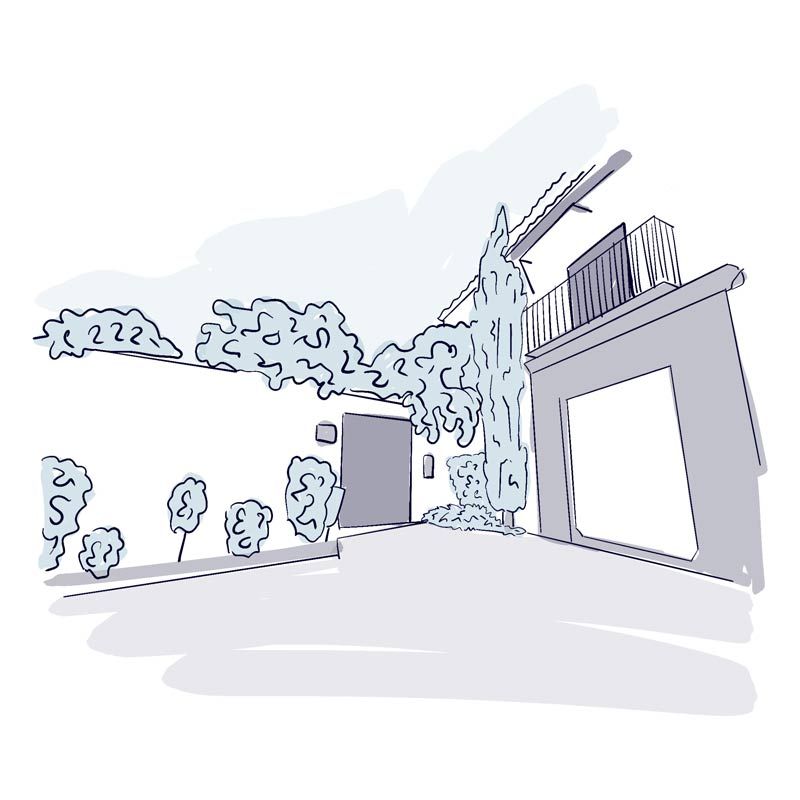
In front of you stands a discreet light-coloured façade beside a small orange tree and the statue of the poet Vicente Espinel. This is the entrance to the Casa del Gigante, an exceptionally well-preserved Nasrid palace in the heart of the old La Ciudad district. Built between the late thirteenth and early fourteenth century, it belonged to a noble Muslim family at a time when Ronda was an important centre of the Nasrid kingdom, and it survived the Christian conquest of 1485 almost intact, making it one of the most valuable surviving examples of medieval Andalusian palatial architecture. The house takes its name from a very ancient Phoenician statue, probably a Hittite god from the eighth century BC, discovered on the site. The original is kept inside, while a copy looks over the entrance courtyard, a reminder that Ronda’s roots stretch far beyond the Islamic period. After stepping through the doorway, you pass a small outer courtyard before reaching a medieval patio centred on a pool—the heart of daily life—where carved stucco and fragments of fourteenth-century Arabic inscriptions can still be seen. Upstairs, a small exhibition explains the recent restoration and places the Casa del Gigante within the wider history of the city, completing the visit of this miniature palace, considered one of the finest examples of Nasrid architecture outside the Alhambra.
