





RyoCity
Mountain Slopes, Timeless Soul
La Orotava, Spain
RyoCity
Mountain Slopes, Timeless Soul
La Orotava, Spain
2.5 km
Distance
1h00
Durée
17
Audios
Boucle
Parcours
Shutterstock
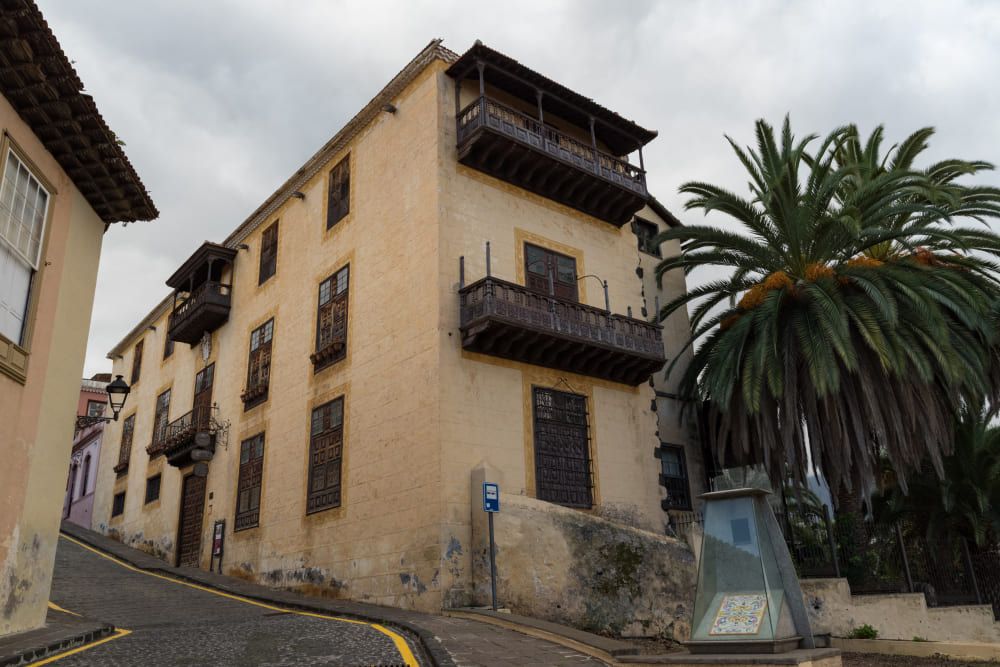
You're now in the historic heart of La Orotava, standing in front of Casa Lercaro, a stunning 17th-century mansion that's been officially recognized as a Cultural Heritage Site. It's famous not just for its elegant architecture, but also for its beautifully carved wooden balconies and lush gardens. Casa Lercaro is considered one of the finest examples of traditional Canarian architecture, and as you walk through town, you'll notice La Orotava is full of beautifully preserved bourgeois homes. The entire historic center has been declared a "historic-artistic ensemble" and is listed as part of Europe’s protected cultural heritage. The island’s prosperity between the 16th and 19th centuries was no coincidence, it owed everything to its strategic location on the route to the Americas, right in the middle of the transatlantic triangular trade, and to its incredibly fertile volcanic soil and perfect climate. In the early days, Tenerife thrived on sugarcane cultivation, built on the labour of enslaved Africans. But when sugar production took off in Central America, the island shifted to vineyards, and later, to bananas, which became one of its main economic lifelines. That era of wealth gave rise to grand homes like the one you see here. Step into the lower courtyard and you’ll find the last surviving hydraulic gofio mill, built back in the 16th century during the island's first wave of Spanish colonization. Feel free to explore the house, there's a charming home décor boutique inside, or you can relax in the patio restaurant and enjoy some delicious local specialties.
