


RyoCity
The city of sea and freedom
Cadiz, Spain
RyoCity
The city of sea and freedom
Cadiz, Spain
5.4 km
Distance
2h30
Durée
25
Audios
Boucle
Parcours
Shutterstock
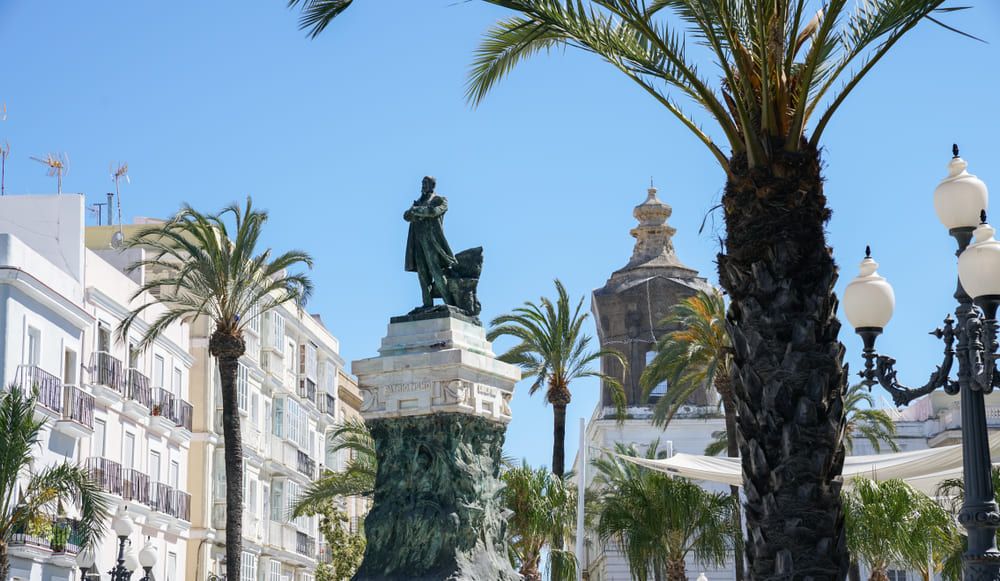
Here you are on Plaza de San Juan de Dios, the historic heart of Cádiz for more than five centuries, standing in what was once the city’s main square, known in earlier times as La Corredera. Its irregular shape often surprises visitors, but it actually follows one of the old mouths of the seawater channel that once crossed the island, giving this space its distinctive layout as far back as the Middle Ages. For a long time, this was the first place travellers saw when they arrived by sea, and from the sixteenth century onward it became the beating heart of local life, open to the docks and filled with merchants and sailors, the main commercial crossroads of Cádiz. Its golden age came with trade to the Americas, when this very square hosted the display and sale of exotic goods brought back by the Indies Fleets, until the creation of the Mercado Central eventually replaced the bustling market that had operated here at the end of the eighteenth century. In front of you stands the Ayuntamiento, the city hall, its mix of neoclassical and baroque styles rising over the square; Cádiz’s municipal government has been based here since the sixteenth century, in a building that reflects the city’s political and economic weight. To the left is the church of San Juan de Dios, which gives the square its name, and to the right the Casa de los Pazos Miranda, a fine example of local civic architecture. The square was completely redesigned in 2012, becoming a broad pedestrian space with new features and lively café terraces. The renovation also brought back the monument to Segismundo Moret, a Cádiz-born statesman from the early twentieth century who served several times as President of the Council in Spain and was known for championing social reforms. Today, Plaza de San Juan de Dios is one of the liveliest spots in Cádiz, an ideal starting point for exploring the old town, still open to the sea and the port and keeping alive the maritime and commercial spirit that has shaped the city’s identity.